The best thermal brush for blowout depends on the finish, your hair length and how much control you want while sectioning. I explain how hot air and heated brushes differ, then compare round, oval and flatter shapes.
Best Thermal Brush for Blowout: Hot Air and Heated Brushes

Hot brushes and blow dry brushes
The best hot brush for a blowout at home depends on the finish, hair length, and amount of control available during sectioning. A hot air brush combines drying and shaping, while a heated brush mainly smooths hair that is already dry. Round and oval heads can lift the roots and create movement, whereas a flatter surface gives more control when the goal is a straighter finish.
T3 Airebrush Blow Dry Brush at $150 is a practical reference for the combined drying and shaping approach. ghd Duet Style 2-in-1 Hot Air Styler at $429 represents a larger investment and a broader styling proposition, but neither price guarantees a better technique. Work with sections small enough to wrap or pass over without tangling. Keep the tool moving, especially near the ends, and leave a slight bend instead of forcing a hard curl. The range below brings together brushes and stylers with different head shapes, so compare the surface first and the extra settings second. That simple order prevents a large list of modes from distracting from the tool that suits the hair.
Hot brushes and blow dry brushes

Duet Style 2-in-1 Hot Air Styler
ghd
$429

Aire 360 Ceramic Dual Voltage Air Styler
t3
$349.99

Airebrush Blow Dry Brush
T3
$149.99

Infrared Air Styler
SLEEKE HAIR
$129

Infrared Bounce Thermal Brush
BONDI BOOST
$125

IR INFRARED Blowout Brush
SUTRA
$85

SUTRA® IR Infrared 3"Blowout Brush
SUTRA
$110

Nano Titanium 2.5" Oval Ionic Hot Air Brush
BaBylissPRO
$109.99
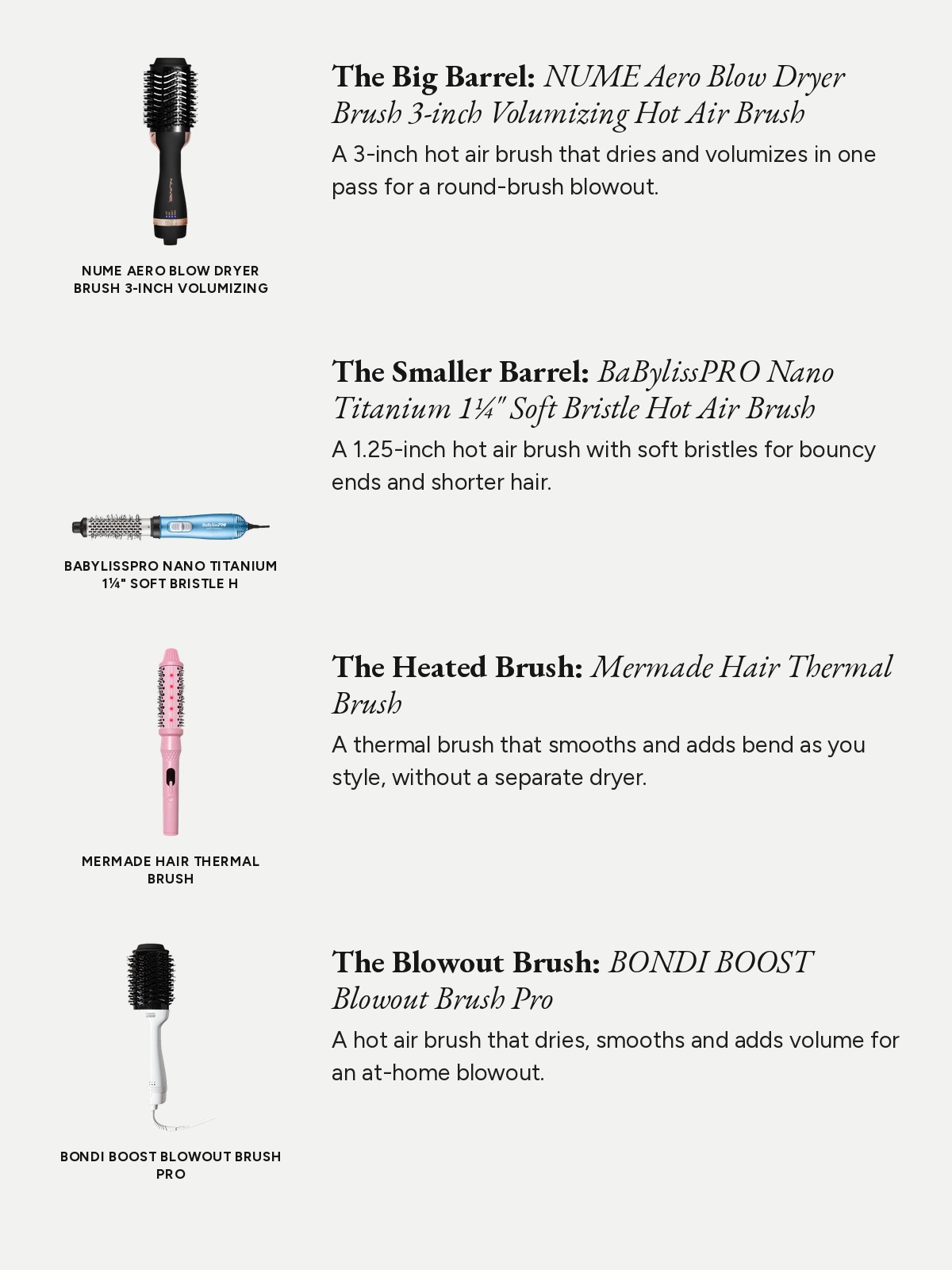
Best Heated Brush for Blowout: Comparing Shapes
This lower range is where a home blowout can become a practical weekly habit without a major equipment decision. NUME Aero Blow Dryer Brush 3-inch Volumizing Hot Air Brush at $79 favours a broad, fuller shape, while BaBylissPRO Nano Titanium Compact Hot Air Brush at $75 points toward a smaller and more portable format. The better choice depends on hair length, section size, and where the tool will be stored.
Shorter hair usually benefits from a narrower surface that can reach the root without swallowing the strand. Longer or denser hair may prefer a larger oval, but only when the airflow reaches each section evenly. Begin with towel-dried hair, use a heat protectant that suits the routine, and avoid wrapping the ends so tightly that they snag on bristles. A thermal brush around this level takes a more focused heated-brush approach, while the compact air brush is closer to a drying tool. Compare the head shape first, then choose only the settings that will actually be used. That keeps the purchase tied to a routine rather than to an impressive control panel.
$59 to $110

Hot Air Brush & 3-in-1 LED Scalp Brush
PURSONIC
$109.99

FAUXblo Thermal Blowout Brush
CALISTA
$109

Ultra Violet Thermal Brush
SUTRA
$100

Blowout Brush Pro
BONDI BOOST
$85

Thermal Brush
Mermade Hair
$85

Nano Titanium Compact Hot Air Brush
BaBylissPRO
$74.99

Nano Titanium 1¼" Soft Bristle Hot Air Brush
BaBylissPRO
$69.99

Aero Blow Dryer Brush 3-inch Volumizing Hot Air Brush
NUME
$79
Our honest take
The most expensive brush is not the most sensible choice for every home. Skip a large oval tool if the hair is short, and skip a compact brush if thick sections take too long to dry. A hot brush cannot rescue rushed sectioning, so the routine matters as much as the appliance.
The $44 option can be a smart starting point when the goal is soft volume, while a higher-priced styler makes more sense for frequent use and a broader range of finishes. Avoid buying for a promised salon result in one pass. If you take one thing away, choose the brush head that matches the hair length and keep every section moving. If you want to keep browsing, I also put together How to Apply Laura Geller Baked Foundation, Brush or Sponge and How to Dry Brush Without Overdoing It.






