Canada Goose jacket options here span long down parkas, short insulated shapes and lightweight shells. I look at coverage and temperature ratings first, then check how the coat sits over the layers I actually wear.
Canada Goose Jacket: Parkas, Short Puffers and Light Shells
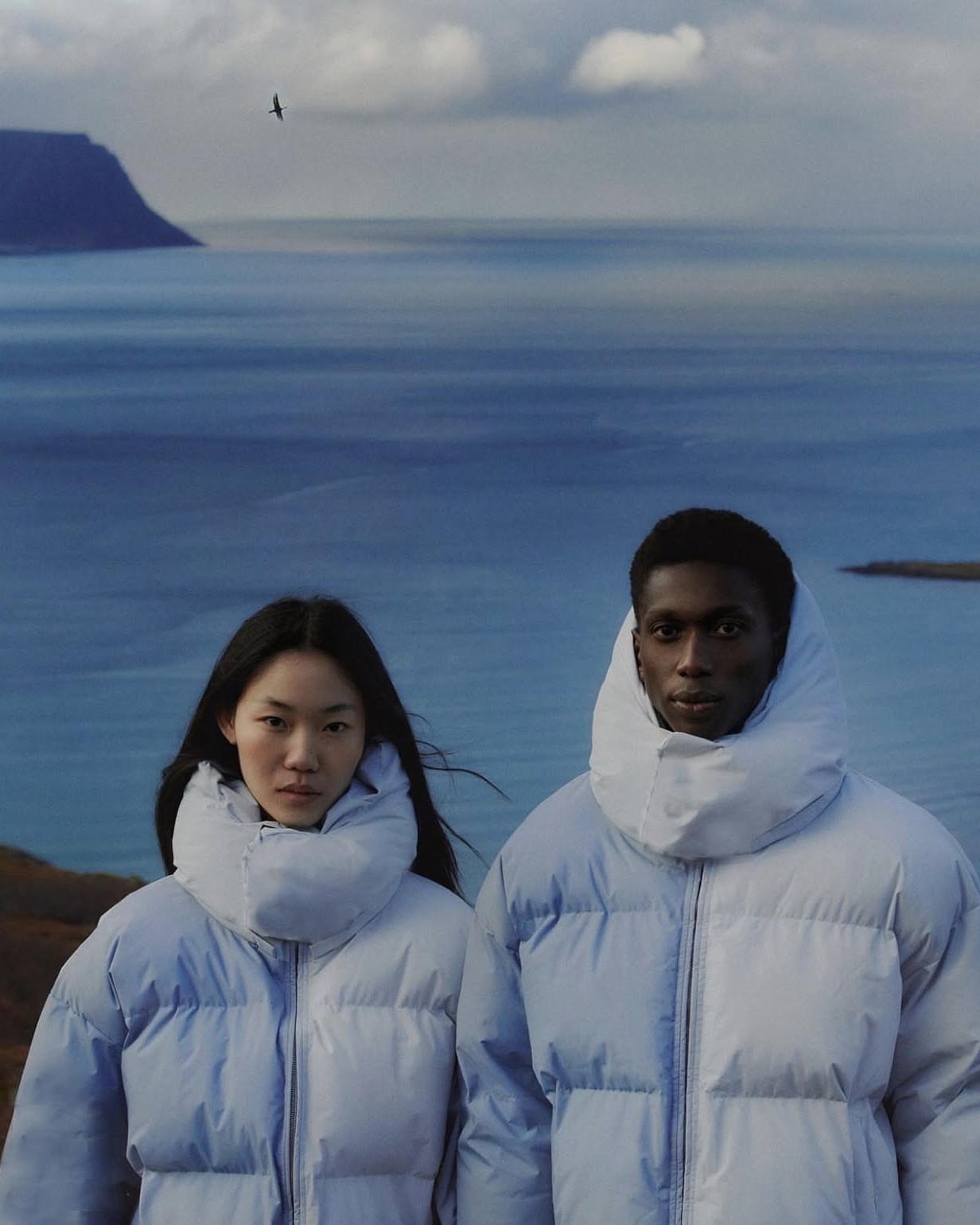
In 1982, climber Laurie Skreslet became the first Canadian to summit Mt. Everest wearing a custom parka designed and manufactured by Metro Sportswear, according to Canada Goose's history. I like a coat with an assignment.
Metro Sportswear began in Toronto in 1957 with woolen vests, raincoats and snowmobile suits. In the 1970s, David Reiss introduced a volume-based down-filling machine. That history gives the parka a practical context, not just a dramatic silhouette. A Canada Goose jacket is a decision about coverage, warmth and the day ahead. I would start with the long shapes, then read each listed temperature range as a clue to when I would reach for it.
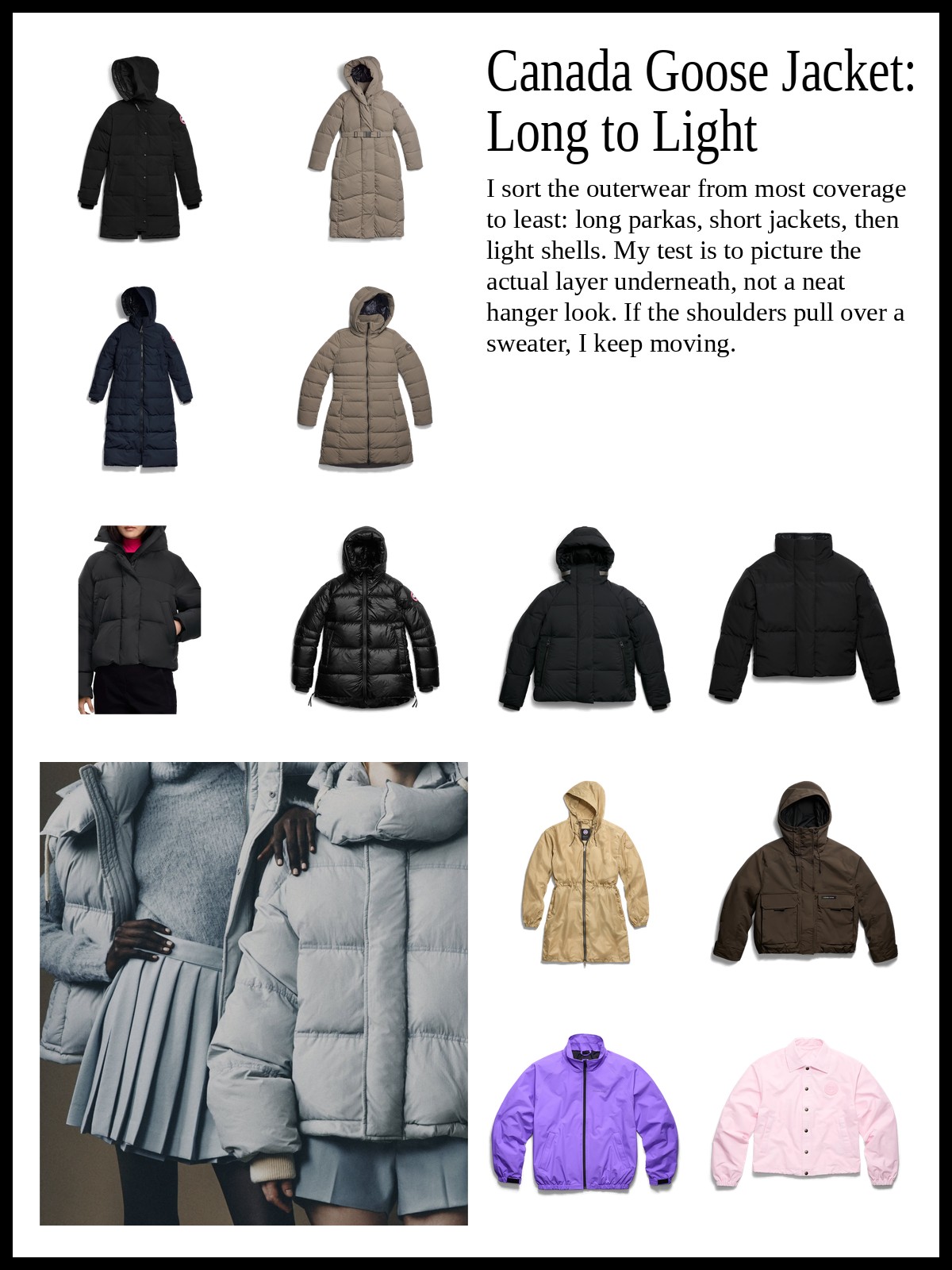
The Shelburne is a long black parka with a storm flap and a straight line, listed at 14°F to -4°F. The taupe-gray Marlow has a roomier cocoon shape and a TEI 5 rating for -22°F and below. The floor-skimming Mystique in Atlantic navy shares that rating, with a deeper hood and full-length coverage.
The Aurora is mid-thigh with smooth baffles, while the limestone Trillium adds a fitted waist and buttoned storm flap; both are listed at 5°F to -13°F. The Expedition has a substantial quilted body and a large hood, developed for scientists at Antarctica's McMurdo Station. For a shorter line, the Lucent Rose Ivy and Atlantic navy Chelsea are both TEI 3, listed at 14°F to -4°F. My fit check is to try the coat with the warmest sweater I plan to wear and lift my arms before deciding.


Short jackets, real layers
A short jacket has to clear the waistband and still leave room for the layer underneath. The Chilliwack puffer is a bomber shape with rounded sleeves, elastic cuffs and a broad hood. I would wear it with straight-leg trousers and a sturdy knit, then check the hem does not ride up when I reach forward.
The Cypress is hip-length with diagonal quilting and a wide hood, while the Junction is a compact, waist-length parka. The cropped Grandview has a stand collar and adjustable hem, and its listed range is 32°F to 5°F. Those are different proportions, even in black, and the outfit underneath will decide which one feels useful.
The royal-blue Chilliwack PBI bomber has a ribbed hem and a bold patch, so I would keep the rest of the look simple. The limestone Elba has a rounded stand collar and light padding. The Jade returns to black with a high collar, and the dusk-blue Ash pairs a cropped shape with a cream collar.
I would check the cuffs, collar and hem while wearing a sweater, then sit down and reach forward. What I would skip: treating the cropped Grandview as my only layer for a long stretch outside. Its listed range gives me a narrower use than the longer parkas, so I would keep it for shorter outings and milder cold.
Canada Goose short jackets

Chilliwack 750 Fill Power Down Puffer Jacket
Canada Goose
$1,275

Cypress Puffer
Canada Goose
$1,295

Junction Parka Black Disc
Canada Goose
$1,375

Grandview Cropped Jacket Black Disc
Canada Goose
$1,095

Chilliwack PBI Bomber
Canada Goose
$1,425

Elba Bomber
Canada Goose
$850

Jade Bomber
Canada Goose
$1,295

Ash Lightweight Bomber
Canada Goose
$850
Light shells for changeable days
A lighter jacket earns its place when the weather can change before I get home. The Lume is a sand-colored wind jacket with a drawcord hem and a high collar. The Terra Quest adds a hood and patch pockets, while the lilac Axis keeps the front simple with a stand collar and clean seams.
The pink Regency is cropped with a pointed collar and snap front, a nice contrast to the sportier shells. The white Sinclair has a high hood and zip closure, and the black Kaslo is cropped with a roomy hood and subtly gathered hem. I would pair either with a simple tee and a straight skirt or jeans, depending on the day.
The Aethera is quilted with narrow horizontal channels and a stand collar, while the Tofino is a rain jacket with an asymmetric opening and protective hood. The listed TEI 1 range for several of these is 41°F to 23°F, so I would treat them as lighter coverage rather than substitutes for the long parkas.
Before choosing, I would check that the hood turns with me and that the cuffs and hem let me move freely. Try the shell over the actual layer you plan to wear, then zip it and reach for a bag. If the shoulders pull or the hem catches, a different cut will serve better.
Canada Goose lightweight jackets

Lume Lightweight Jacket
Canada Goose
$650

Quest Lightweight Jacket
Canada Goose
$650

Axis Lightweight Jacket
Canada Goose
$595

Regency Lightweight Jacket
Canada Goose
$550

Sinclair Lightweight Jacket Black Disc
Canada Goose
$550

Kaslo Lightweight Cropped Jacket
Canada Goose
$650

Aethera Jacket
Canada Goose
$925

Tofino Rain Jacket
Canada Goose
$795
Choose by the day ahead
I would choose in order of exposure. For long, very cold stretches, I would compare the TEI 5 Marlow, Mystique and Expedition, then try each with my full winter layers. For a shorter commute, I would look at the Shelburne, Aurora or Trillium and decide whether I want a straight, smooth or fitted line.
Next I would ask how much movement the day needs. A short puffer or bomber is easier over trousers and for getting in and out of a car; a light shell suits a changeable forecast and a smaller bag. Then I would check the hood, cuffs and hem in motion. A coat is most convincing when I can forget about it and get on with the walk. If you want to keep browsing, I also put together The North Face Coat for Women and Coat Or Jacket In Between Seasons.






