Denim jackets, shirts, skirts and knits alongside the jeans, and how to wear more than one piece at once.
Denim Beyond Jeans: Building a Wardrobe Around One Fabric

Denim is a fabric, not a category
Treating denim as only trousers is why most people own six pairs of jeans and nothing to wear with them. The fabric works across a whole wardrobe: a shirt in lightweight denim behaves like a chambray and layers under knitwear, a jacket in rigid denim holds a shape that a cotton one cannot, and a knit denim pant gives the look with the comfort of jersey. Once you see it as a material with weights and finishes, the wardrobe gets easier rather than more repetitive.
Jeans, by leg shape
Sloane V-Neck Jersey Denim Tank
Z Supply
$48

Baggy Dad Women's Jeans
Levi's
$59.98

00 Super Low & Wide Kaia Worn
ABRAND
$118

AE Super High-Waisted Baggy Wide-Leg Jean
American Eagle
$41.97

Lexi Mid Rise Bowed Straight Jean - Artisan
Pistola
$188

The Ultimate Barrel Leg Jeans 2.0
Ruti
$269

The Rodeo -- Nebula
FRAME
$298
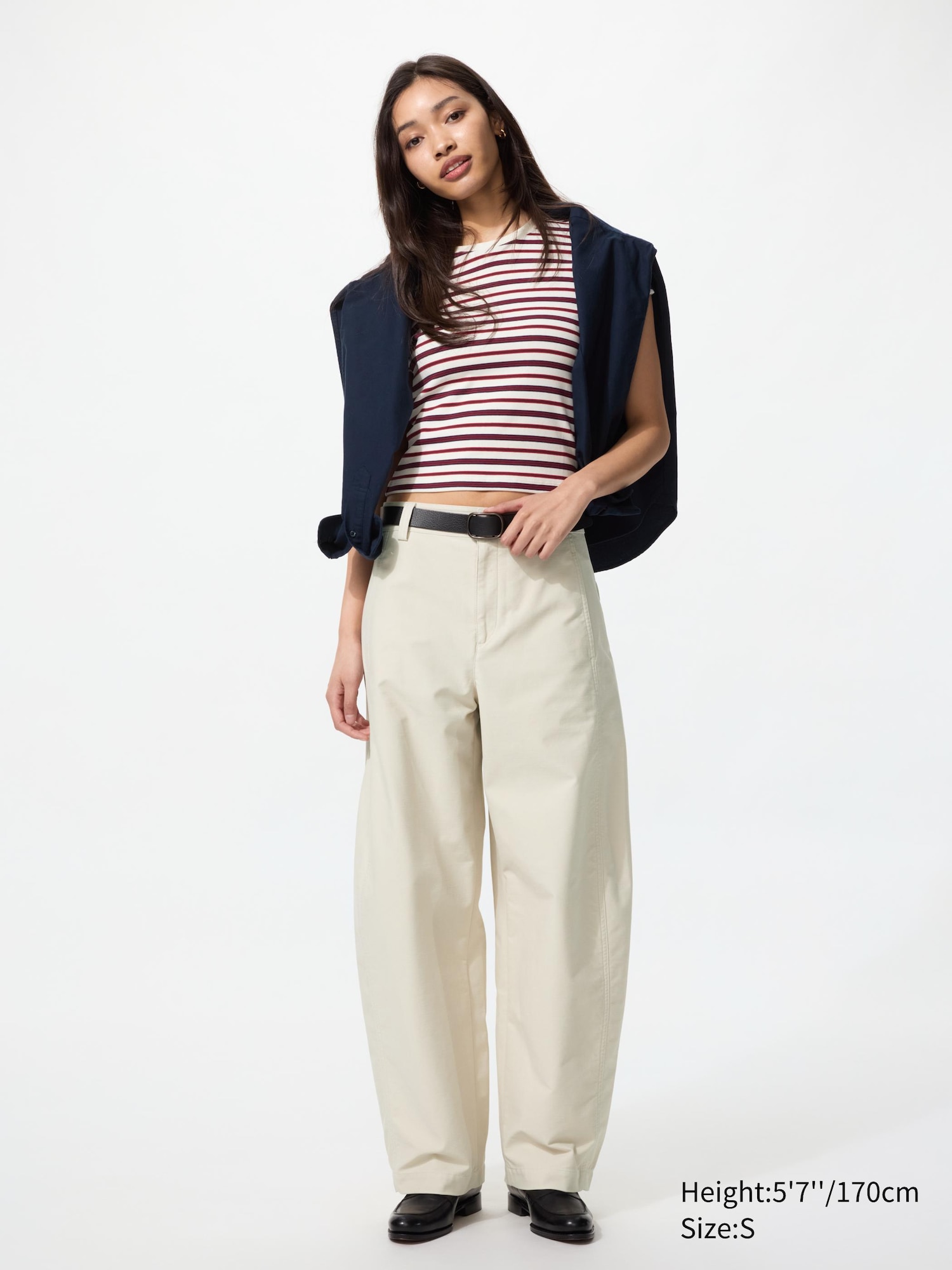
Jersey Barrel Pants
UNIQLO
$49.9
How to wear two denim pieces at once
The old rule was never, which was always too blunt. Double denim works when the two pieces are clearly different in tone or clearly identical, and fails in the middle where they look like a failed match. A pale shirt over a dark indigo jean reads deliberate. A matching jacket and jean in the same wash reads as a set. A mid blue shirt with a slightly different mid blue jean reads like an accident. Break up the middle with a belt or a tucked hem and the whole thing settles.



Weight, stretch and how it holds
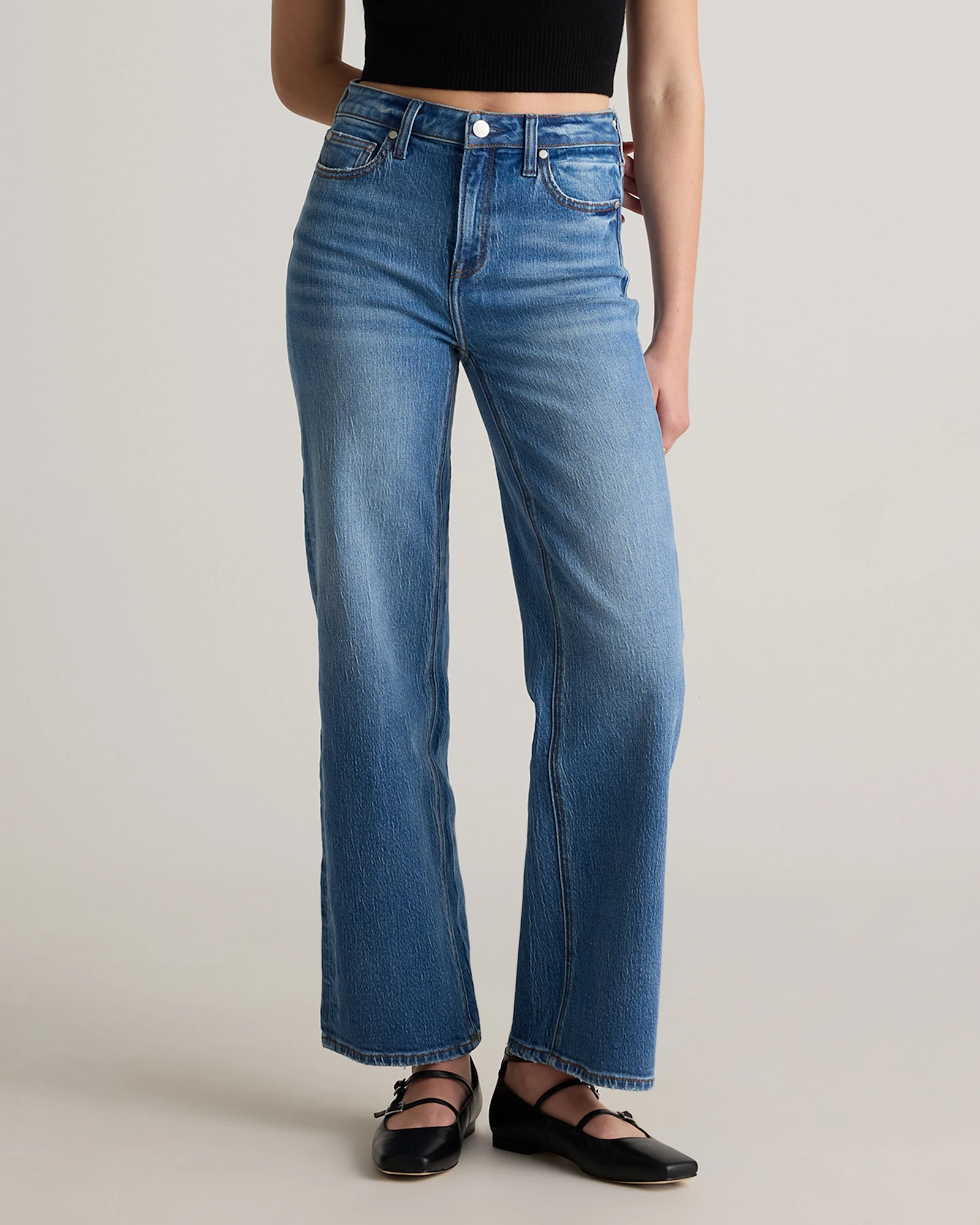
Denim weight is measured in ounces per square yard. Anything under 10 oz is a shirting weight that drapes and creases. Around 12 to 14 oz is the classic jean, structured enough to hold a leg shape. Above that you are in rigid territory that takes weeks to break in and then keeps its shape for years. Elastane changes the equation: a few per cent gives comfort and recovery, more than about three per cent and the fabric will bag at the knee by afternoon and never fully return.


Our honest take
If you take one thing away, check the elastane percentage before the price. A rigid or near rigid jean is uncomfortable for a week and then holds its shape for years, while a very stretchy one feels perfect in the fitting room and is a different garment by month three. If you want comfort, get it from the cut rather than the fibre: a wide or barrel leg in rigid denim moves more freely than a skinny with stretch, and still looks the same at six in the evening as it did at eight in the morning.