Faux marble, sintered stone and real marble behave completely differently around a glass of wine. What stains, what etches, and what wipes clean.
Do Faux Marble Tables Stain
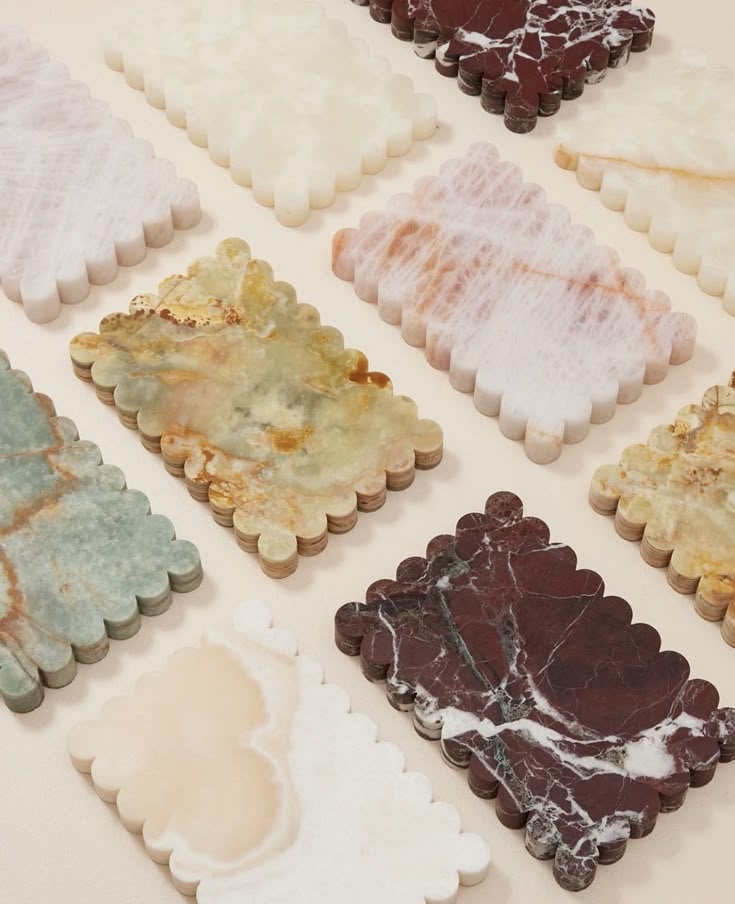
Three materials, three completely different problems
Faux marble, sintered stone and real marble get photographed the same way and behave nothing alike. Real marble is calcium carbonate, which means it is porous and reacts to acid. Lemon juice, wine and vinegar do not just stain it, they etch it, which is a dull mark in the polished surface rather than a colour left on top. Sealing slows absorption and does not stop etching, and it needs redoing periodically. Sintered stone is made by compressing minerals under heat and pressure into a dense slab. It is effectively non porous, needs no sealing, and shrugs off the acids that mark marble. Faux marble is a printed or coated look on another substrate, usually engineered stone, porcelain, laminate or a lacquered board. That last group is where quality varies most, because you are relying on the coating rather than the material underneath.
Faux marble and sintered stone tables

1 Pc. Textured Faux Terrazzo Travertine Indoor, Outdoor Side Table
TOV Furniture
$373.75

Modern Minimalist Marble-Patterned Coffee Table - Multi-Functional Center Table For The Living Room
Wayfair
$101.99
1 Pc. Textured Faux Terrazzo Travertine Indoor, Outdoor Side Table
TOV Furniture
$373.75
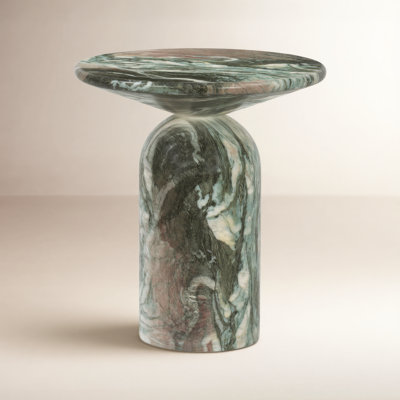
Dalissa Resin End Table with Marble Finish
Wayfair
$369

Modern Round Coffee Table with Faux Marble Tabletop and Pedestal Solid Wood, Cocktail Table for Living room & Home Decor
Wayfair
$999.99

55" Modern Oval Faux Marble Coffee Table with Sled Base & Storage Drawer, Sintered Stone Top, Vintage-Inspired Center Table
Wayfair
$550
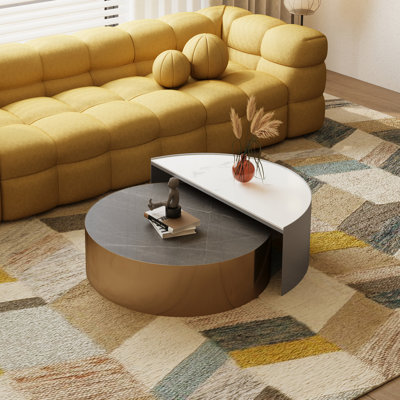
Round Nesting Coffee Table - Modern Minimalist Design with Metal Frame & Sintered Stone Top for Living Room, Small Spaces
Wayfair
$539.99
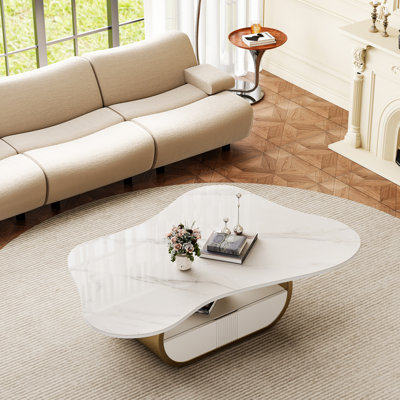
41.7" Gold Coffee Table With Abstract Shaped Design, Faux Marble Stainless Steel Base Coffee Table With Storage
Wayfair
$480
So does faux marble stain
A good faux marble surface resists staining better than the real thing, because the pattern sits under a sealed, non porous finish. What it is vulnerable to is different: heat and abrasion. A hot mug on a laminate or lacquered top can leave a bloom, and a scouring pad can dull the sheen in a patch you cannot polish back. Chips are the other honest risk, since a printed layer that gets knocked at an edge reveals the substrate colour underneath, and that cannot be sanded out the way a solid stone can. So the practical answer is yes, it can mark, but not usually from the things people worry about. Set drinks down without ceremony and wipe with a soft cloth and mild soap. Use a mat under anything hot. Skip anything abrasive or bleach based, and skip acidic cleaners even though the surface does not need to fear acid, because they attack the finish rather than the pattern.
Marble and natural stone tables
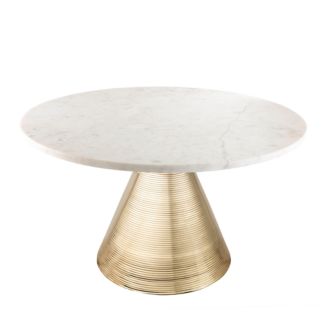
Tempo Marble Round Coffee Table
TOV Furniture
$719
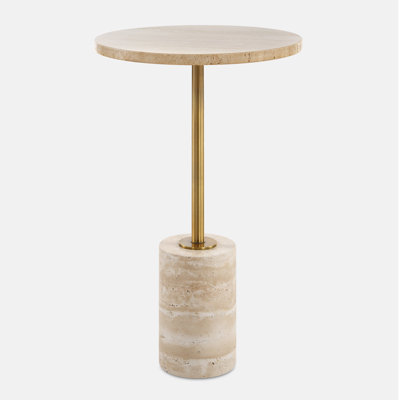
Eatontown Travertine Accent Table
Wayfair
$398.4
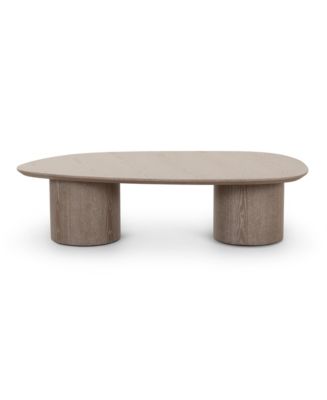
Rhema Oblong Coffee Table
TOV Furniture
$599
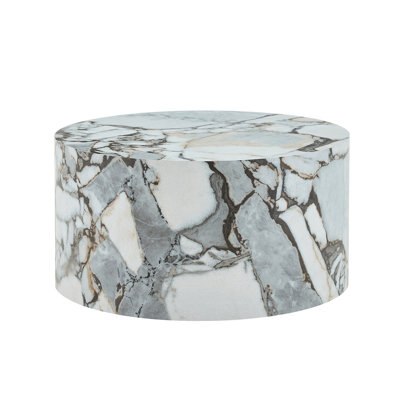
A Simple White Marble Textured Cylindrical Coffee Table
Wayfair
$309.99
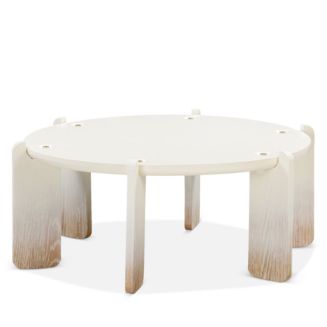
Gloria Oak Coffee Table
TOV Furniture
$539

Column Travertine Stone Finish Italian Design MgO Side Accent Table
Wayfair
$267.99
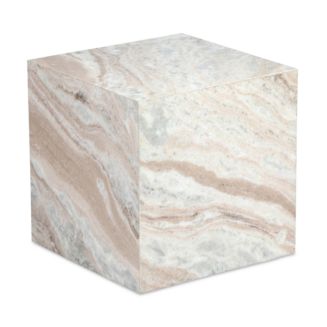
Keira Marble Side Table
TOV Furniture
$399
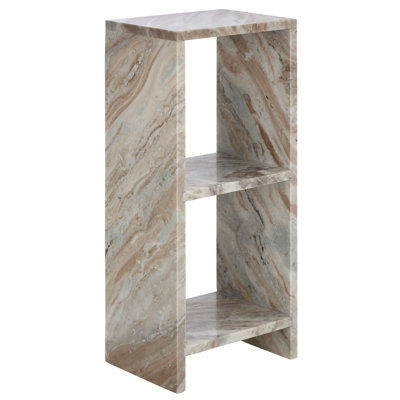
Tristin Marble Side Table
Wayfair
$189.99
Choosing between them in a real room
If the table is going to hold coffee, wine and a laptop in a busy room, sintered stone or a well made faux marble is the low anxiety choice, and the money is better spent on the base and the proportions than on genuine stone. If you want the depth and cool touch of the real thing and you accept a patina, real marble is worth it, but buy it knowing the first ring will appear early and that it becomes part of the character. Travertine sits in between: it is a natural stone with visible pores, often filled and honed, warmer in tone and softer underfoot in the hand than polished marble. It marks, and it looks better marked than marble does. Sealed wood and glass are the two alternatives people forget. Both resist acid, both show water rings, and both are far easier to move than a stone slab, which matters more than expected on a coffee table.
Sealed wood and glass alternatives
Rhema Oblong Coffee Table
TOV Furniture
$599
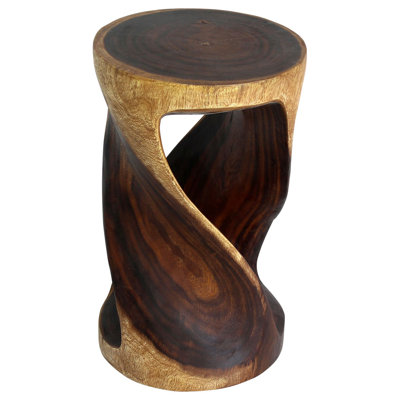
Corby Solid Wood End Table
Wayfair
$235.99
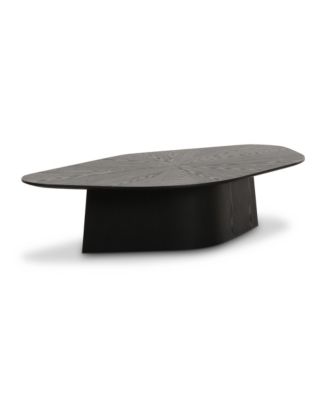
Roche Ash Low Coffee Table
TOV Furniture
$645
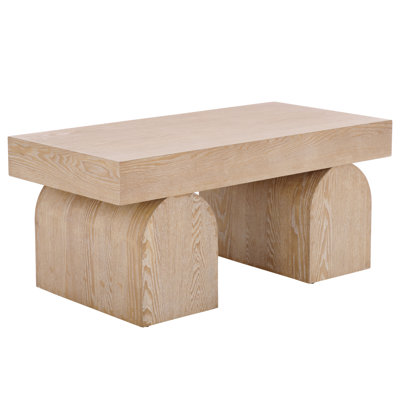
Okashu Single Coffee Table
Wayfair
$222.99
Roche Ash Low Coffee Table
TOV Furniture
$645
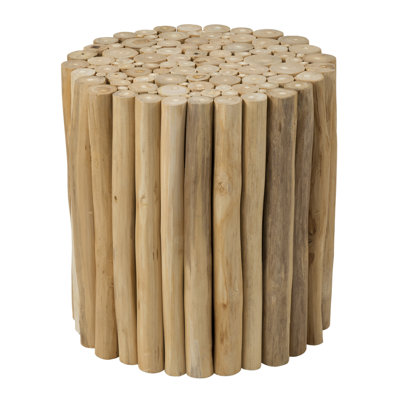
Amhold Solid Wood End Table
Wayfair
$159
Gloria Oak Coffee Table
TOV Furniture
$539
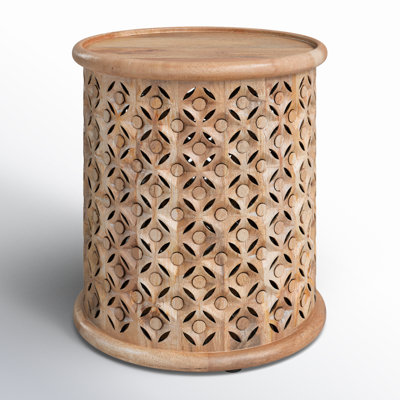
Eakin Solid Wood End Table
Wayfair
$158.99
Our honest take
If you take one thing away, match the material to the room rather than the photograph, because all three look similar in a listing and diverge on day one. Our order of preference for a living room that gets used: sintered stone, then a good faux marble with a solid edge, then travertine, then polished marble last. That is not a ranking of beauty, it is a ranking of how much attention each one asks for. Two things to check before ordering. Ask what the surface actually is, since faux marble covers everything from porcelain to printed board and the word tells you nothing on its own. And look at the edge detail in a close photograph, because that is where a coated top shows its construction and where the first chip will happen.
Shop brands in this edit

Next read

Secondhand Louis Vuitton Damier Ebene Or Damier Azur
Damier Ebene and Damier Azur are the same coated canvas in two colourways, and the secondhand market treats them as two different products.
Read Editorial
Secondhand Silk My Favs
My sixteen selects of scarves below are all ninety centimetre squares, split into two price bands