What vintage furniture actually holds in value, bracket by bracket, and which pieces are bought as furniture rather than as an investment.
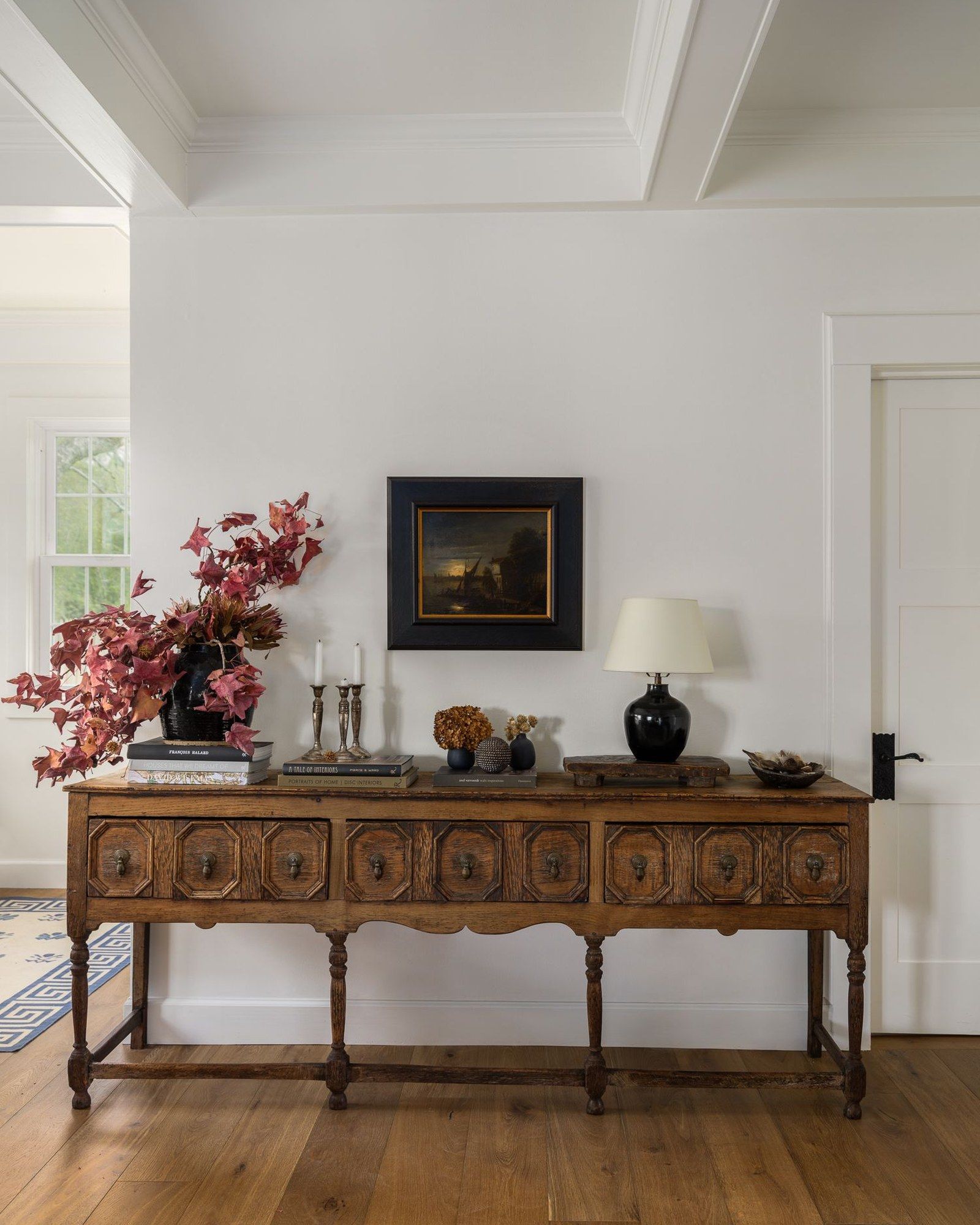
Does Vintage Furniture Hold Its Value
Mostly no, and that is the wrong question
Most vintage furniture does not appreciate. What it does, reliably, is depreciate far more slowly than new furniture, which is a different and more useful thing. A new sofa loses most of its resale value the week it arrives. A nineteen-fifties teak sideboard bought sensibly tends to sell on for close to what you paid, because the supply is fixed and the material is better than anything at that price today. In the entry bracket, roughly two hundred and fifty to eighteen hundred dollars, you are buying furniture, not an asset. Value here holds when three things are true: solid timber rather than veneer over chipboard, a construction you can repair, and a shape that is not tied to one short-lived trend. Unattributed pieces sit in this bracket, and unattributed is not the same as bad. It usually just means nobody wrote the maker down. Prices in this bracket also move with fashion rather than with quality, so mid-century teak costs more than equivalent Edwardian mahogany today and that gap has reversed before. Buy the piece you want to live with, not the period the market currently likes.
Entry Level: $250 To $1,800

Allermuir "Host" HLT1 Side Table, Simon Pengelly, White Aluminum, 2014
Allermuir, Simon Pengelly
$250

Beige "Jupmer" chair, Silesian Furniture Factory, Poland, 1960s
1stDibs
$591.43

Sweden Teak Coffee Table by Albert Larsson for Alberts Tibro, 1963
Albert Larsson
$832.73

Antique Art Deco Bauhaus Design Side Table
1stDibs
$986.5

Philippe Starck Costes Chairs for Driade 1980s
Philippe Starck
$1,096

Vintage Verner Panton Cone Chair in Original Pastel Blue Upholstery
Verner Panton
$1,420

Newly Refinished - Mid-Century Modern Walnut Coffee Table / Bench by Lane
Lane Furniture
$1,595

Green Peacock Rattan Side Chair
Creel and Gow
$1,800
The bracket where a name starts to matter
Between roughly two thousand and six thousand dollars, attribution begins to carry the price. A credenza by a named Danish workshop and an anonymous credenza of identical quality can differ by a factor of three, and the difference is documentation. This is the bracket where reading the listing properly pays. Look for a maker's stamp, a model number, a workshop label, or a reference to a catalogue. Look also for what is missing, because a listing that says style of, attributed to, or in the manner of is telling you plainly that the paper trail stops. That is fine if you are buying the object. It matters a great deal if you expect to resell. Condition language does real work here too. Expertly restored can mean a sympathetic repair or it can mean a modern finish sprayed over original timber, and only one of those keeps the value. Ask specifically whether the piece has been refinished, since a stripped and resprayed surface can take a third off the price a specialist dealer would pay, even where the object looks better for it.
The Collector Bracket: $2,005 To $5,895

Late 19th-century Swedish Biedermeier armchair
1stDibs
$2,004.94

Pop art Post modern white Gloss Laminate custom 6 drawer dresser or credenza
1stDibs
$2,400

Virgola Armchair Designed by Yaakov Kaufman for Arflex, Italy 90s
Arflex, Yaakov Kaufman 1
$2,957.14

Birch Stereo Cabinet, Mid-Century Modern Inspired Credenza, Vinyl Hifi Station
Pete Deeble
$3,400

Art Deco Side Table ‘Apu’ Model 604 by Maija Heikinheimo, Asko, Finland, 1930s
Asko
$3,785.13

Mid Century Modern Danish Teak Credenza by Axel Christensen
Axel Christensen
$4,400

Le Corbusier, Pierre Jeanneret, Charlotte Perriand LC1 Villa Church Chair
Cassina, Le Corbusier, Pierre Jeanneret, Charlotte Perriand Cassina
$4,908.84

Expertly Restored - Bernhard Pedersen Danish Modern Tambour-Door Teak Credenza
Bernhard Pedersen & Son
$5,895
At the top, you are buying provenance
Above seven thousand dollars the object and its history are priced separately, and the history is often the larger share. Documented designer pieces, early production runs and anything with an unbroken record of ownership hold value best, because that is what the resale market can verify. This is also where the least value is held by the merely large. A vast handsome cabinet with no attribution is a wonderful thing to own and a slow thing to sell. If resale genuinely matters to you, buy narrow and documented rather than big and anonymous. Ask for the invoice history, ask what has been replaced, and ask whether the upholstery is original, because reupholstering a documented chair in a modern fabric can reduce what it makes at auction. And factor in shipping honestly, since crating a cabinet across an ocean can add a four-figure sum that no resale will return to you.
The Top Of The Market: $7,000 To $22,654

Pierre Guariche Cast Aluminum Pair of Tulip Chairs Steiner France circa 1954
Pierre Guariche
$7,000

Cabinet by Unknown Designer in Mahogany, Gemla Fabrikers AB, Sweden, 1930s
Gemla
$7,688.55

Dovetail 4 x 2.5 Vinyl Storage Cabinet Solid Natural Walnut with Flip Bins
Andrew Forseth, Blake Tovin, Matt Richmond
$8,550

Baron Low-Back Canaletto Walnut With Gray Leather Upholstery Chair
Giorgetti S.p.A.
$9,270

Contemporary Handmade Glossy Yellow Ceramic Raft-Inspired Coffee Table
Ethan Streicher, Streicher Goods
$10,000

Early 19th Century Swedish Blue Painted Pine Display Cabinet
1stDibs
$12,300

Lake Credenza, in White Oak, by August Abode
1stDibs
$16,000

Shagreen, Quartz & Onyx Nesting Coffee Tables with Brass Details by Kifu Paris
Kifu Augousti
$22,654.5
Our honest take
We would buy vintage because it is better made and better looking at the price, and treat any value it holds as a bonus rather than a plan. If you want an asset, this is not the category. If you want a sideboard that will still be a sideboard in thirty years, it is the only sensible category. We would avoid buying at the top of the market for resale reasons alone, and we would be sceptical of any listing where the condition notes are shorter than the design history. Read the notes, not the romance. One more thing: the pieces that hold value are almost never the ones that photograph best, because a perfect finish on an old piece usually means it has been refinished. If you take one thing away, pay for documentation and solid timber, and let the patina stay where it is. If you want to keep browsing, I also put together Cane And Rattan Furniture and How To Mix Antique And New Furniture.