French makeup, from a decisive red lip and sheer complexion to soft eyes, blush, and French pharmacy skincare. I like the history as much as the lipstick, and I would keep the rest of the face spare.
French makeup: Red Lips, Skin Tints, and the French Pharmacy
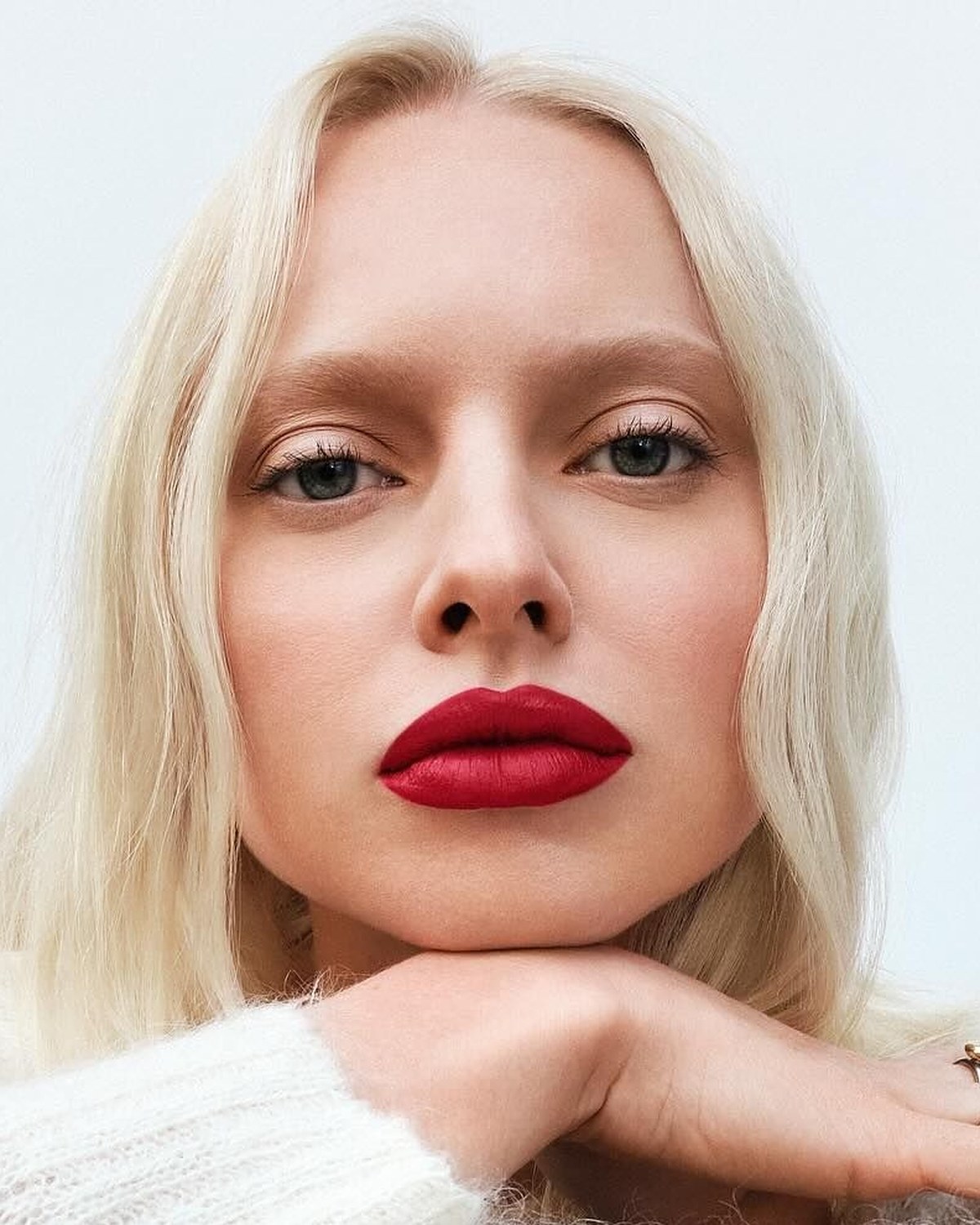
The case for one focus
In 1993, at grape harvest in Bordeaux’s Château Smith Haut Lafitte, Mathilde Thomas and her collaborators met Professor Joseph Vercauteren, from the Bordeaux pharmacy university. He told them grape seeds held powerful plant antioxidants. Two years later, they launched three products with grape-seed polyphenols and went to pharmacists, who tested the formulas and gave the new brand a chance. That is a neatly French makeup origin story to me: a beauty idea that starts in the vineyard and gets its first real audience across a pharmacy counter.
I like the edit that emerges from that meeting of heritage and restraint. WWD asked Violette Serrat to explain the French red lip, and her answer is to keep one focal point: let the color be bold while the rest of the appearance stays natural. I would take that as permission to give a strong lip the room it needs, rather than define every feature at once.
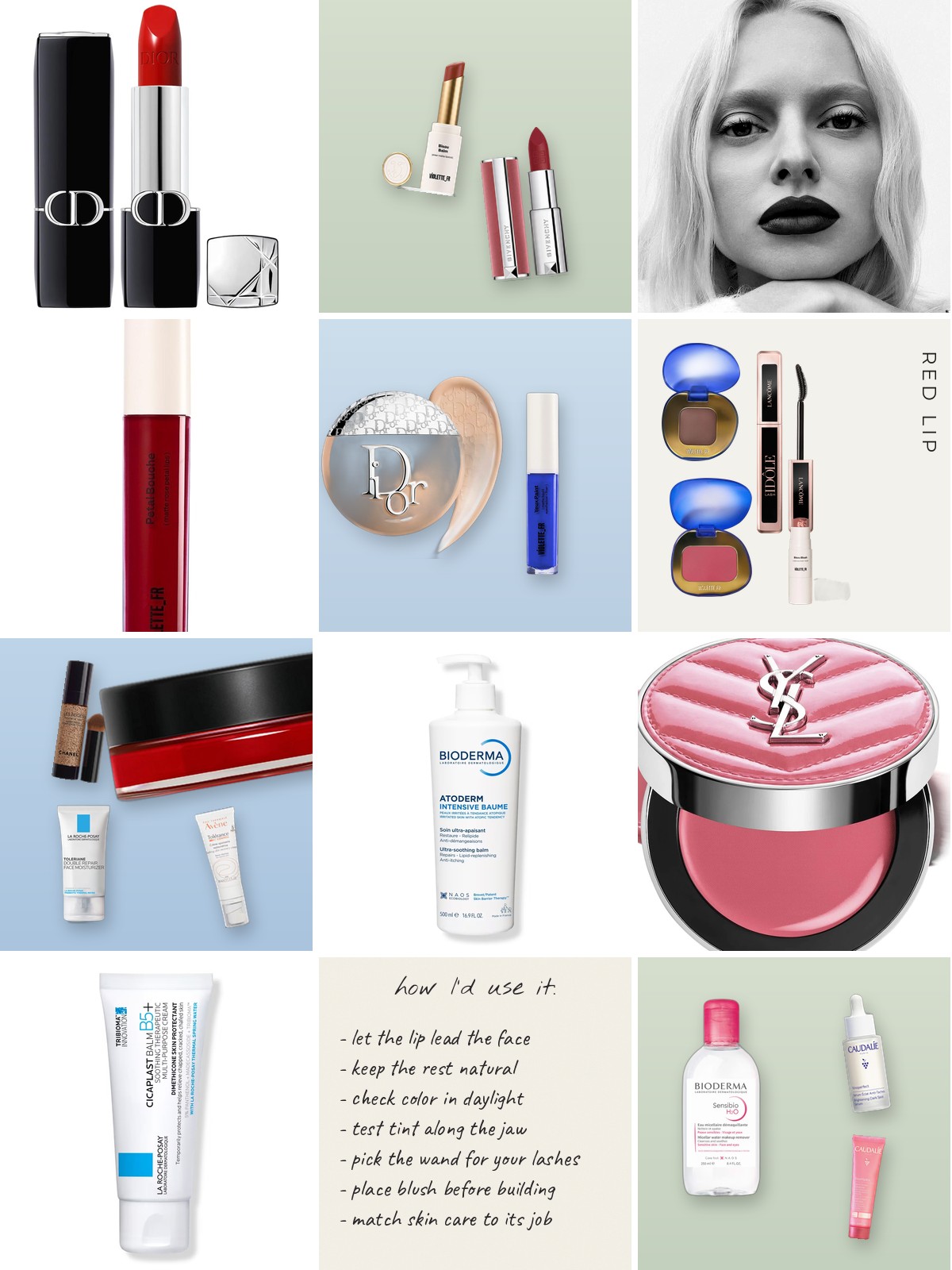
The Dior Rouge Refillable Lipstick in 999 is a satin red in a refillable magnetic case, while Violette_FR’s BISOU BALM in Mon Cheri is a warm brown red with a softly blurred finish. For a deeper crimson, I would look at PETAL BOUCHE in Amour Fou, which builds from a diffused wash toward more intensity. Givenchy’s Le Rouge Velvet in R15 Sculptural Red goes cooler and bluer, and its sheer velvet formula in 37 Rouge Grainé gives a warmer, brighter red option.
I would choose the lip first, then let the rest of the face follow. Check the color in daylight beside your natural lip tone, and keep the rest of the makeup simple enough that the red still reads as the decision.
French red lipsticks

Rouge Refillable Lipstick
Dior
$50

BISOU BALM Sheer Matte Lipstick, Mon Cheri
Violette_FR
$30

PETAL BOUCHE Liquid Longwearing Matte Lipstick, Amour Fou
Violette_FR
$31

Le Rouge Velvet Matte Long-Lasting Lipstick, R15 Sculptural Red
Givenchy
$49

Le Rouge Sheer Velvet Matte Lipstick, 37 Rouge Grainé
Givenchy
$48

Kiss Kiss Blur Matte Long-Wearing Lipstick, 510 Petal Red
Guerlain
$50

ROUGE COCO Longwear Satin Lipstick, 118 New York
Chanel
$53

ROUGE ALLURE Luminous Intense Lip Colour, 99 Pirate
Chanel
$53
Skin tints and cushions
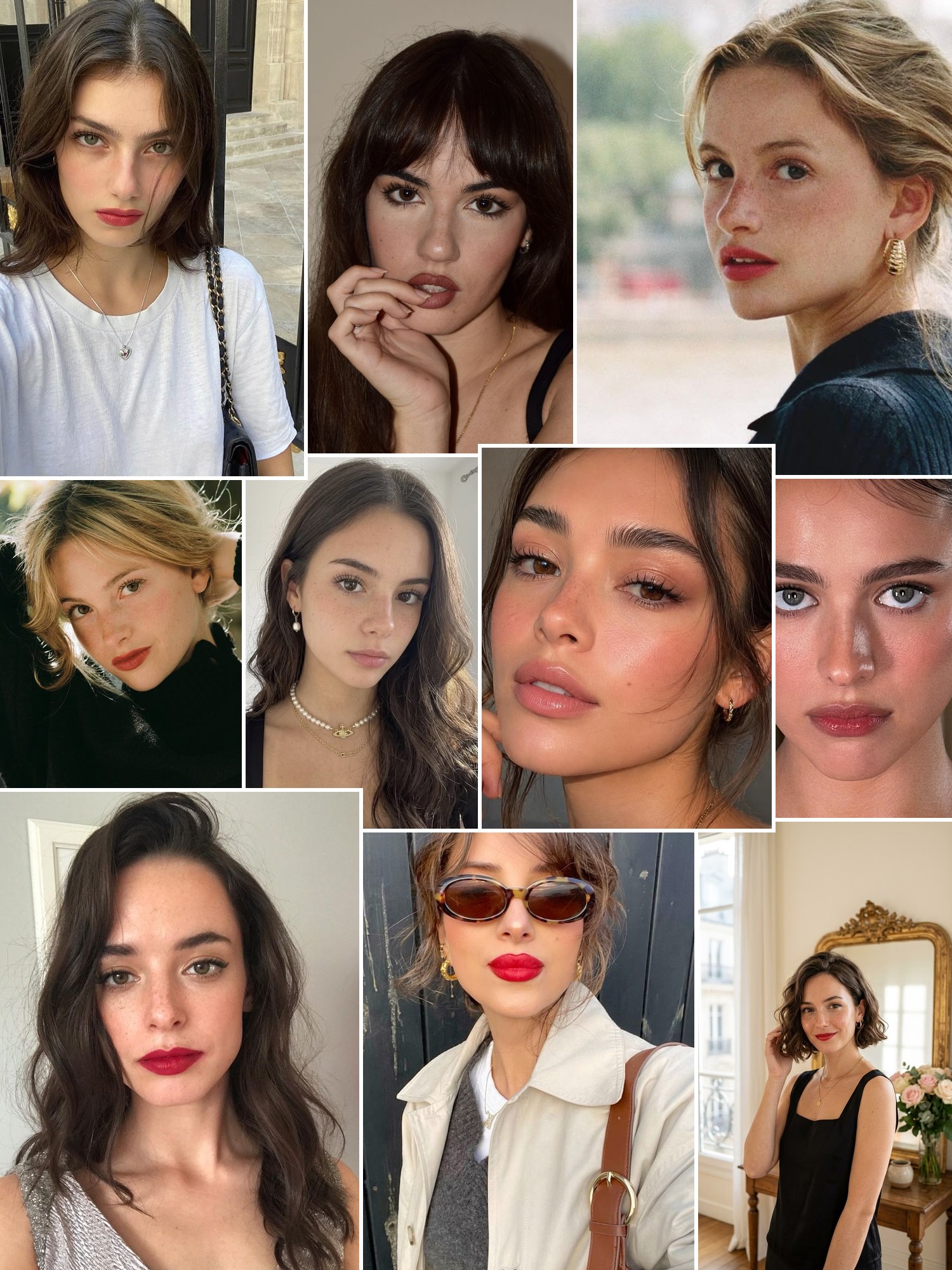
A complexion base should leave room for the skin to look like skin. WWD’s interview with Violette Serrat puts skincare and small touches of concealer ahead of heavy foundation, which feels like a useful way to sort this group: light coverage first, more only where you want it.
Dior Backstage Glow-Up Skin Tint in 2.5N brings tinted moisturizer and SPF 20 together in one pump bottle. The YSL Skin Affair Soft Glow Cushion in MW4 is a compact option with a soft glow, while Chanel LES BEIGES Water-Fresh Complexion Touch in B20 uses concentrated pigment droplets in a lightweight gel. Sisley Phyto-Teint Nude in 3 C Natural is an oil-free fluid for sheer coverage; YSL NU Bare Look Tint in 16 leans into a fresh, dewy look.
If I wanted a little more coverage without losing that barely-there idea, I would compare the serum textures too: Lancôme Idôle 3 Serum Supertint is buildable and luminous, and Givenchy Prisme Libre Glow Serum Foundation can be applied with a damp sponge for lighter coverage.
I would test the shade at the jaw in daylight, then check whether the coverage still looks even around the nose and mouth. What I would skip: choosing a tint by the bottle or campaign alone when the shade range and undertone are the actual decision.

Backstage Glow-Up Skin Tint Hydrating Tinted Moisturizer SPF 20, 2.5N
Dior
$55

Skin Affair Soft Glow Cushion Foundation, MW4
Yves Saint Laurent
$49

LES BEIGES Water-Fresh Complexion Touch, B20
Chanel
$72

Idôle 3 Serum Supertint Skin Tint, 20 N
Lancôme
$45

Phyto-Teint Nude Oil-Free Foundation, 3 C Natural
Sisley Paris
$125

NU Bare Look Tint Foundation, 16
Yves Saint Laurent
$48

Prisme Libre Glow Serum Blurring and Hydrating Foundation, 3 N
Givenchy
$63

Skin Feels Good Hydrating Skin Tint Healthy Glow Foundation SPF 23
Lancôme
$37
Mascara and soft eye
Brown mascara changes the mood before it changes the routine. The WWD feature makes the case for one focal point rather than a fully drawn face, so I would keep the eye soft when a red lip is doing the talking.
Yves Saint Laurent Lash Clash in Uninhibited Brown gives the group a deep brown option, with its oversized conical brush. For a more precise length look, Lash Latex has a high-precision brush and a flexible, smudge-resistant formula. Dior Overcurl uses a curling brush, while Chanel Le Volume combines long and short bristles for an eye-opening effect. Those shapes matter more to me than a dramatic name: I would pick a wand by the lashes I want to reach, not by the loudest promise on the tube.
A whisper of color can still be the interesting part. Violette_FR YEUX PAINT in Dieu Bleu is a matte royal blue liner-shadow, and PLUME EYESHADOW in Bois Brûlé offers a sheer brown wash that can be built toward smoky. Lancôme Lash Idôle’s curved wand and microbristles make it another option for a lifted, fanned-out finish.
I would compare brush shape and formula notes before deciding, and pair a blue flick with otherwise quiet makeup. Keep the liner close to the lash line if the lip is already carrying the look.

Lash Clash Extreme Volume Mascara, Uninhibited Brown
Yves Saint Laurent
$34

Lash Latex Sculpting and Lengthening Mascara
Yves Saint Laurent
$34

Iconic Overcurl Mascara
Dior
$35

Overvolume Extreme Volume Mascara
Dior
$38

YEUX PAINT Liquid Eyeshadow and Eyeliner, Dieu Bleu
Violette_FR
$32

PLUME EYESHADOW Feather Matte Veil and Feather Shimmer Veil, Bois Brûlé
Violette_FR
$32

Le Volume Mascara
Chanel
$40

Lash Idôle Volumizing Mascara, 01 Black
Lancôme
$30
Blush and tinted balm
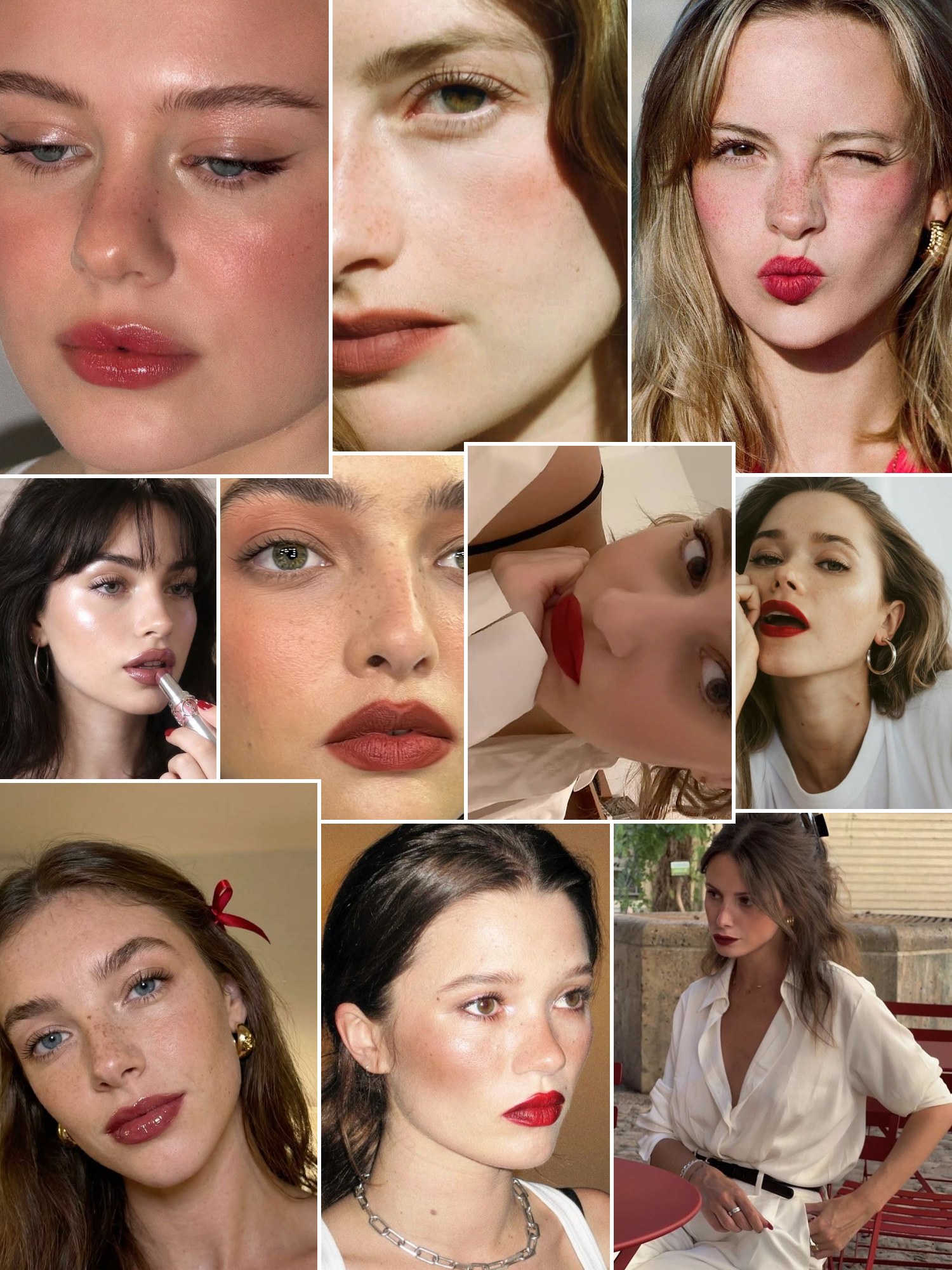
A cream blush and a tinted balm give me a simple color map: one shade on the cheeks, then a softer echo on the mouth. The history of French pharmacy beauty has room for this more sensory side too. Marie Claire describes the mid-1990s arrival of brands including Caudalie, Nuxe, Garancia, and Filorga as a turn that helped make pharmacies places for beauty as well as health.
YSL Make Me Blush in 44 Nude Lavalliere is a cool pink cream, while Violette_FR PLUME BLUSH in Rose Fumé moves toward smoky pink with a cream-to-powder finish. BISOU BLUSH in Louise combines neutral pink beige tones in a stick with an attached blending brush. For lips, YSL Candy Glow in Lavender Blaze is a sheer lavender pink balm, and Guerlain Kiss Kiss Bee Glow in Honey Glow gives a natural beige tint.
I would keep the undertones in conversation rather than match everything exactly. A smoky cheek with a barely-there lip feels different from a neutral pink cheek beside Dior Addict Lip Glow in light pink. Chanel N°1 Lip and Cheek Balm in Red Camellia is the compact choice when the same red can do both jobs.
At the mirror, I would check how the balm shade reads on lips as well as in the pot, and whether the blush can be placed lightly before building. That keeps the color idea flexible, not overly coordinated.

Make Me Blush Longwear Natural Glow Cream Blush, 44 Nude Lavalliere
Yves Saint Laurent
$46

PLUME BLUSH Feather Matte Cream-to-Powder Cheek Melt, Rose Fumé
Violette_FR
$34

BISOU BLUSH Marbled Cream Blush Stick, Louise
Violette_FR
$36

Candy Glow Tinted Butter Balm with Maracuja Oil, 10B Lavender Blaze
Yves Saint Laurent
$43

Kiss Kiss Bee Glow Hydrating Tinted Lip Balm, 309 Honey Glow
Guerlain
$43

Addict Lip Glow Balm
Dior
$42

Rose Perfecto Hydrating Tinted Lip Balm and Gloss, 220 Luminous Pink
Givenchy
$43

N°1 Lip and Cheek Balm
Chanel
$50
French pharmacy skincare
A French pharmacy shelf has a history that starts closer to health care than to a beauty counter. Marie Claire traces dermocosmetics to doctors and pharmacists who extended the use of thermal waters beyond spa cures, then follows the pharmacy’s later move toward a more sensory beauty offer. Embryolisse adds a specific Paris chapter: Doctor Tricot, a dermatologist at Saint-Louis Hospital, developed the Lait-Crème Concentré preparation in 1950, and dermatologists began prescribing it in 1952.
That history gives me a useful lens for this group, which is about different needs rather than one universal routine. La Roche-Posay Cicaplast Balm B5 is a fragrance-free face-and-body balm with panthenol, shea butter, glycerin, and thermal spring water. Toleriane Double Repair is a daily moisturizer with niacinamide. Avène Cicalfate+ is a protective cream, while Tolerance Control is the richer daily cream for reactive skin described in the product notes.
Bioderma Sensibio H2O is the clear-bottle micellar water for face and eye cleansing; Atoderm Intensive Balm is the larger pump for very dry skin. Caudalie’s Vinoperfect serum carries the vineyard thread into this set: the brand says its first three grape-seed-polyphenol products launched in 1995, and the later Vinoperfect story centers on patented vine-sap viniferine. VinoHydra Sorbet Cream is the lighter jar with grape water and chamomile.
I would match the label to the specific job and check the ingredient list for sensitivities. What I would skip: treating a pharmacy shelf as a one-size-fits-all prescription.

Cicaplast Balm B5 Soothing Therapeutic Multi Purpose Cream, 1.3 oz
La Roche-Posay
$20.99

Toleriane Double Repair Face Moisturizer with Niacinamide, 1.3 oz
La Roche-Posay
$12.99

Cicalfate+ Restorative Protective Cream, 1.3 oz
Avène
$26

Tolerance Control Skin Recovery Cream, 1.3 oz
Avène
$40

Sensibio H2O Micellar Water Face Cleanser for Sensitive Skin, 8.4 oz
Bioderma
$14.99

Atoderm Intensive Balm for Very Dry to Atopic Skin, 16.9 oz
Bioderma
$29.99

Vinoperfect Brightening Dark Spot Serum Vitamin C Alternative, 1 oz
Caudalie
$82

VinoHydra Sorbet Cream Moisturizer with Hyaluronic Acid, 2 oz
Caudalie
$38
How I would choose the edit
I would decide the focal point first: a vivid red lip, a softly finished complexion, or a quiet eye. Then I would choose the texture that suits that idea, whether that is a satin lipstick, a skin tint, or a cream blush with a tinted balm. The small test is practical: compare the shade in daylight, read the product notes for coverage and finish, and make sure the routine still feels like your own.
I would keep the pharmacy products in their own lane, too. Their history runs from thermal-water expertise and dermatologist-developed creams to the vineyard beginnings of Caudalie, not from a single Parisian face or one fixed formula. That is what I like about the story: it starts at harvest in Bordeaux, then walks through a pharmacy door.






