Hermès sandals, from Oran and Chypre slides to espadrille wedges, flat sandals and mules, make this edit about shape rather than one famous H. I explain how I would size a pre-owned pair and what I would inspect before wearing it.
Hermès Sandals: The H That Began With Three Straps
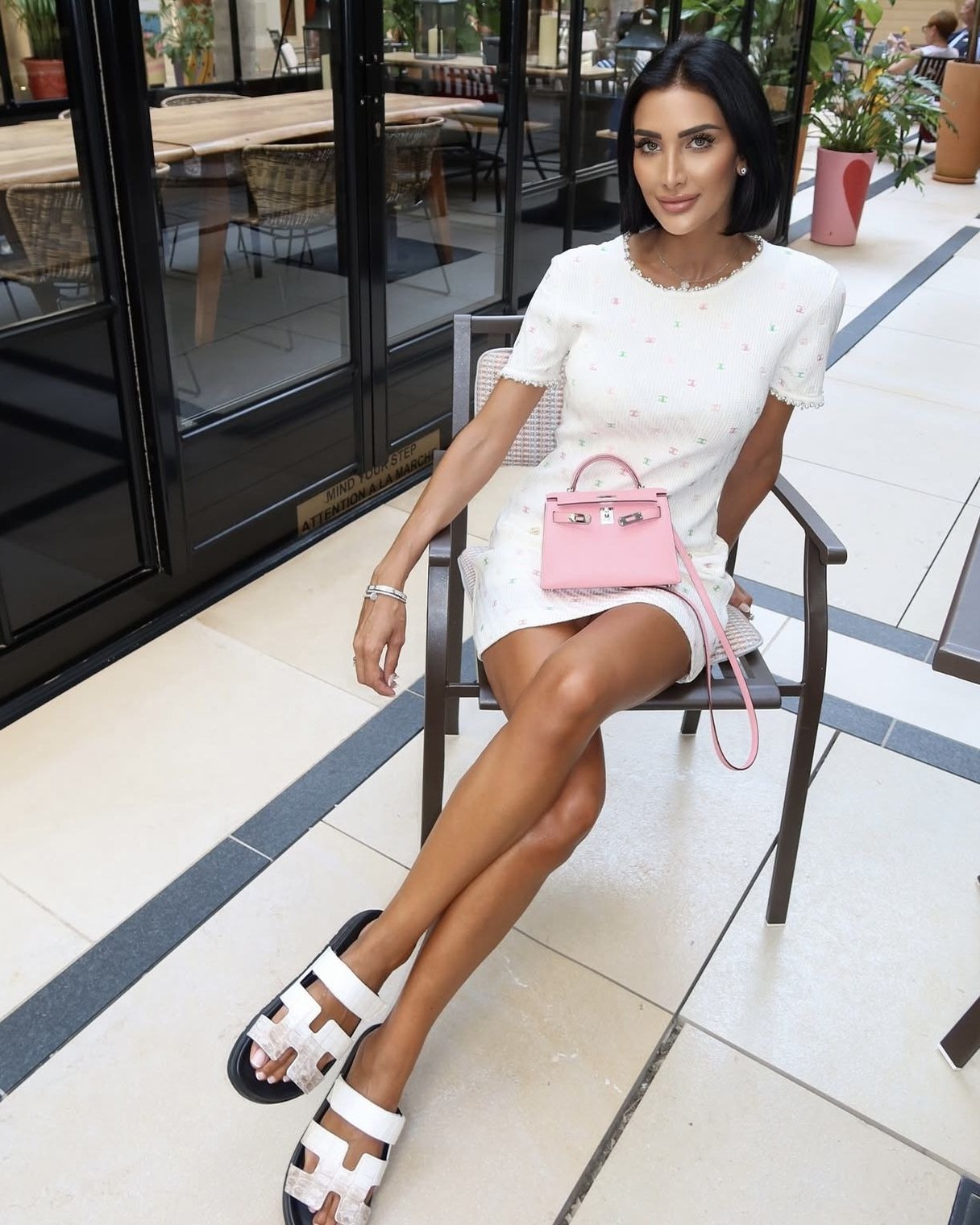
In 1997, Pierre Hardy designed the Hermès Oran sandal around a collection theme of “Africa.” He later said the H shape was not intentional; it appeared when three straps were connected. I love that. A shape people recognize began as a way to hold the foot, and the sandal’s most memorable detail was almost a byproduct.
Hardy has worked at Hermès since 1990, and I like how this little story changes the way I look at the rest of the edit. Hermès sandals can bring the Oran to mind first, but there are slides, wedges, flats and mules here too. I would choose by the days I actually need a pair, not the name I already know.
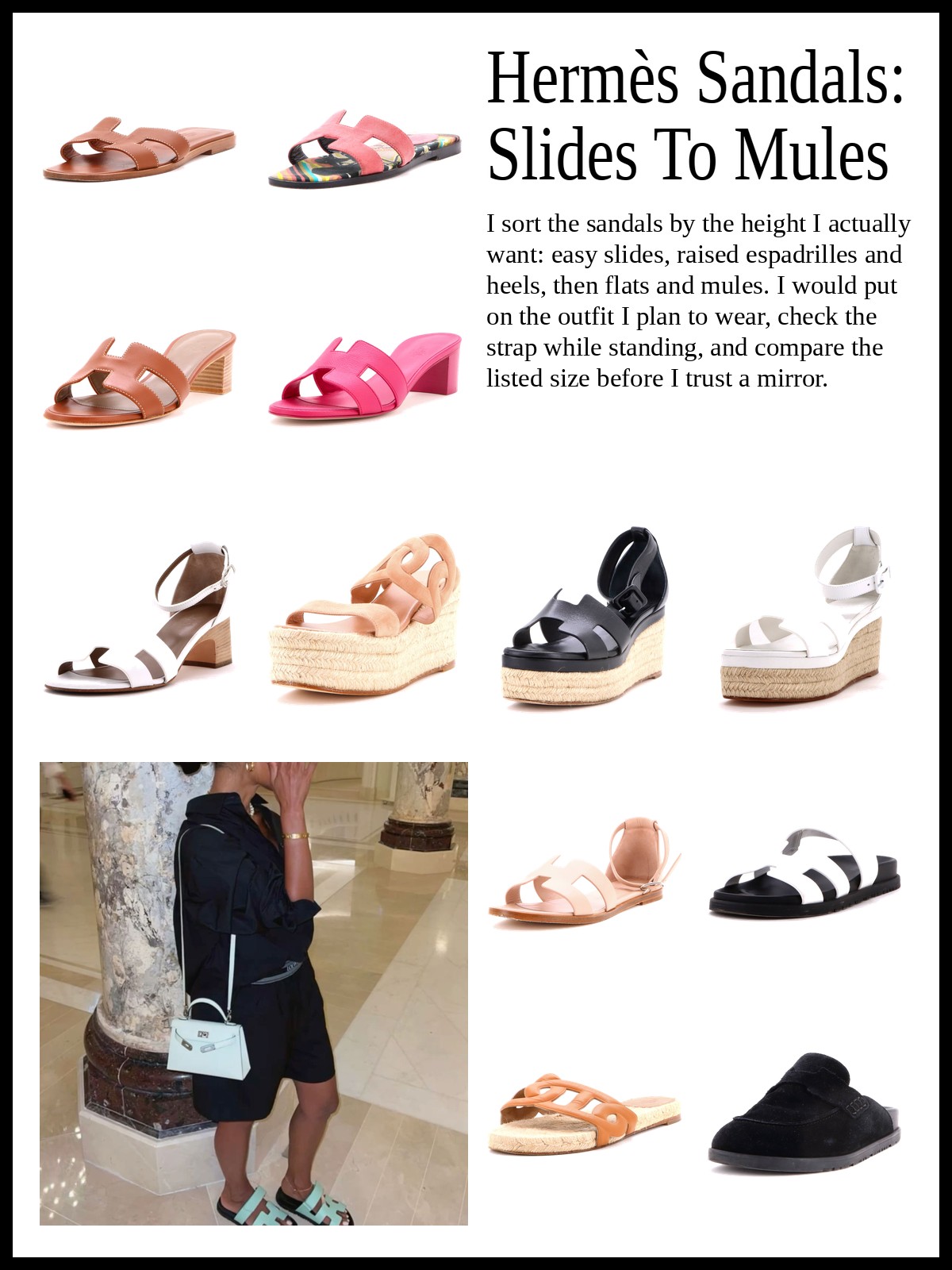
The brown leather Oran has the easiest line for me, while the pink suede Oran feels like the same idea in a softer color. Brown and pink leather Oasis, black leather Chypre, black Lagune and brown Extra slides each suit a different kind of quiet outfit. I would wear the brown Oran with loose linen trousers, the pink one with a simple cotton dress, and the black Chypre with washed denim. The pink suede Chypre with shearling is a more particular mood; I would save it for cooler days, not the beach.
Every pair here is listed in a specific European size, and each listing is a single pair. I would compare the number with a sandal that already fits me, ask for the footbed length in centimeters if it is listed, and give a half size a look when one is available. Then stand in the pair: toes and heel should stay on the footbed, and the strap should hold without pinching. That test tells me whether the shoe is for walking, not just a mirror.
Oran, Oasis and Chypre slides


A little height, well tested
The first thing I check on a raised sandal is whether the heel and strap feel like they belong to the same shoe. The white leather Encens has a cleaner line for a long skirt, while the neutral suede Ithea espadrille wedge reads softer with linen trousers. The black and white Elda espadrille wedges are the easiest color choice of this set, but I would look at the upper as carefully as the height.
The brown ILONA 90 is the more dressed-up option; I would wear it with a column dress or cropped tailoring. Tipoli in black and Legend in camel brown make sense with a lower-key outfit, while the multicolor Ines is the pair I would let lead, with plain denim and little else competing. If I were packing just one, I would choose based on the hem I expect to wear most, not the event I might attend.
Espadrille wedges need a little movement test. Walk a few steps on a hard surface, pause, turn, and check whether the heel stays centered and the strap holds without biting. With any raised pair, I want to feel supported rather than perched.
What I would skip: a high heel that only works with one dress already long gone from my closet. I would try ILONA 90 or the white Encens with the actual hem before deciding the height makes sense.
Wedges, espadrilles and heeled sandals

Encens Heeled Sandals, Leather
Hermès
$850

Ithea Espadrille Wedge Sandals, Suede
Hermès
$550

Elda Wedge Espadrilles, Leather
Hermès
$940

Elda Wedge Espadrilles, Leather
Hermès
$1,090

ILONA 90 Heeled Sandals
Hermès
$946.84

Tipoli Espadrille Wedge Sandals
Hermès
$900

Legend Wedge Sandals
Hermès
$850

Ines Wedge Sandals
Hermès
$623.19
Flat pairs for the walk
A flat should earn its place on the walk home, not only in a dressing-room mirror. The neutral leather Santorini and white leather Genius are the clean, bare-footed choices; the brown leather Famosa espadrilles bring more texture without asking me to add another color. I would start with straight jeans or a long cotton skirt and let the shape show.
The black suede Go mules and black leather Oz mules make the edit feel less strictly summery. The brown suede Oz with shearling is a small-weather exception I would keep for cooler days. Dune, in tan brown and silver, and the tan-brown Lisboa Chaine d’Ancre flats are the sharper options here; I would pair them with simple trousers and a plain top, so the shoes have room.
Fit needs a different check for a flat: walk a full length of the room and make sure the back of the heel does not lift out of the shoe or the front edge crowd the toes. With suede or leather, I would also look closely at wear, especially at the footbed, seams and sole. Most pairs are pre-owned, so I would ask for clear photos of any marks. It is useful to know that the pair feels stable in motion before being charmed by its shape.
Flat sandals, espadrilles and mules


My order of operations
I would narrow the choice by the day I need it for. For an open slide, compare the brown Oran with black Chypre; for height, try the neutral Ithea or black Elda with the hem I plan to wear; for a flat, see whether Santorini or Dune feels more natural on a longer walk.
Then I would check the stated European size against a sandal I already own, ask for the footbed length in centimeters if it is available, and try a half size when the options allow. Each listing is one pair, so the exact size can disappear while I consider it. Most are marked pre-owned; ILONA 90 and Dune are listed unworn, and Tipoli is listed new. I would read the condition notes and inspect the sole, footbed and straps before deciding.
The Oran’s H began when three straps met. My decision starts where my foot meets the shoe. If you want to keep browsing, I also put together The Best Summer Sandals and Birkenstock Guide.






