An Hourglass palette guide for people who like their powders and shadows organized. It covers the Ambient Lighting and Curator palettes, the same shades as singles and minis, and the brushes that apply them.
Hourglass Palette: Ambient Lighting, Curator and the Brushes
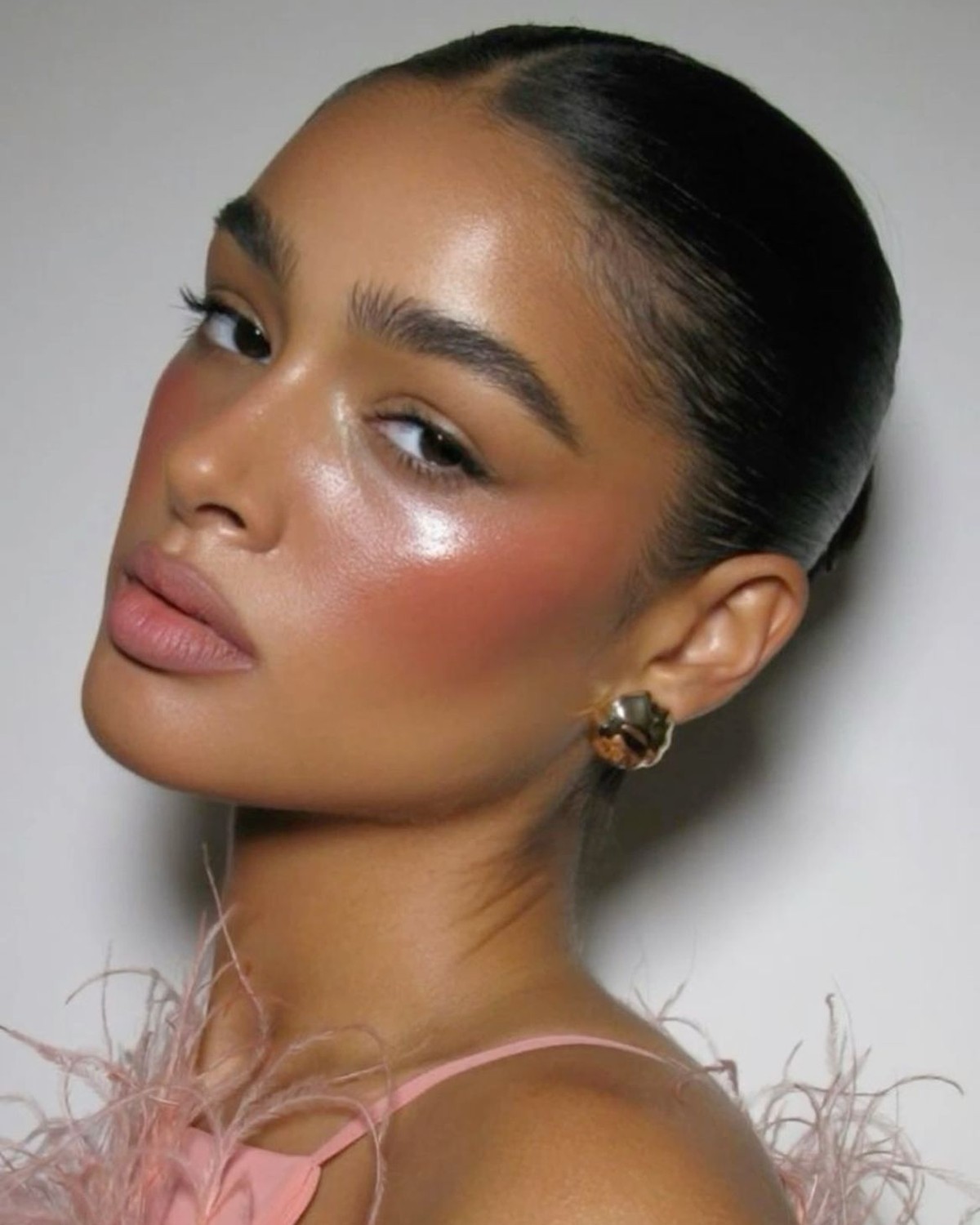
Hourglass says it was founded in 2004 by beauty industry veteran Carisa Janes, and the brand's whole personality comes from one slightly odd idea: light. Janes told The Cut that her mother's pink lightbulbs inspired Ambient Lighting Powder, and that other brands were still busy matching powders to skin tones when this one arrived. In a 2015 interview she described wanting a powder that infuses flattering light onto skin, using a technology called photoluminescence, so skin looks gorgeous rather than sparkly. I find that a refreshingly honest brief. Not glitter, not a filter, just a soft glow.
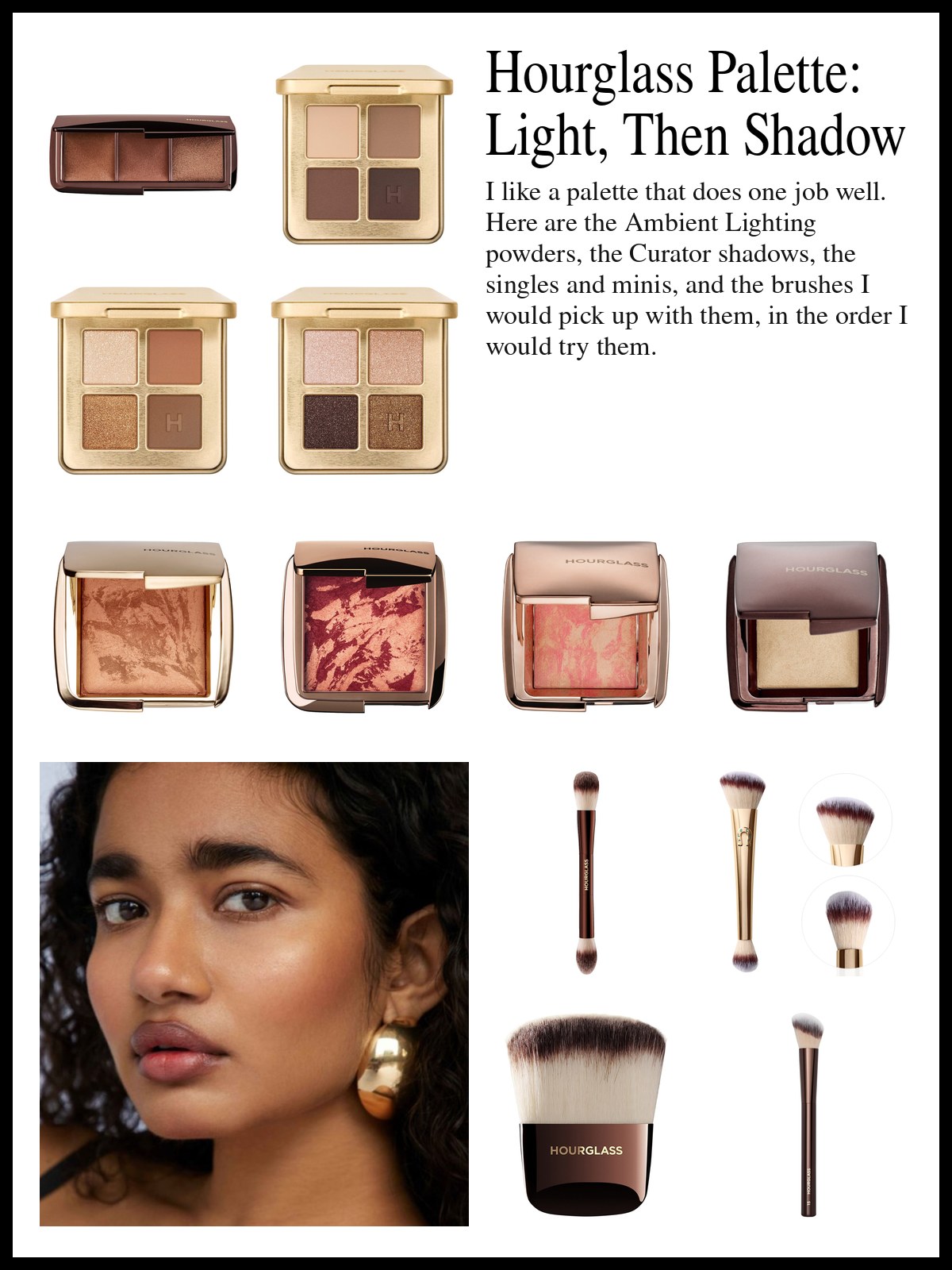
So when I say Hourglass palette, I mean two families that behave very differently. The first is Ambient Lighting. Hourglass describes the Ambient Lighting Palette as a curation of finishing powders, three shades per volume, in three volumes, using Photoluminescent Technology, and you can wear them alone or layered. In this lineup that means the Ambient Lighting Palette, the Ambient Lighting Palette Volume II and the Ambient Lighting Palette Volume III. If you are new to the idea, start by picking one volume and playing with layering two shades on the high points of your face before you commit to anything else.
Then there are the Ambient Lighting Edit Unlocked palettes, here the Ambient Lighting Edit Unlocked Palette in Luck, the Ambient Lighting Edit Unlocked Palette in Hope and the Ambient Lighting Edit Unlocked Limited Edition Holiday Palette. These are limited-edition face palettes with new shades of finishing powder, blush, bronzer and highlighter, and they come with charms by French jewelry designer Lauren Rubinski. Hourglass says it donates 5% of net profits from the Unlocked collection to the Nonhuman Rights Project, which it has supported since 2017. That is a lovely detail, though I would still buy a palette because I wanted the shades.
The second family is Curator, the eyeshadow side. The Curator Eyeshadow Palette in Minimalist, in Futurist, in Expressionist, in Realist and in Modernist are the five named ones, and the plain Curator Eyeshadow Palette sits beside them. Futurist is the warm one, with a pale champagne shimmer, a sand matte and a golden copper metallic. Expressionist pairs a pink opal and a warm peach with taupe brown, and Realist is the softest, all peach, dusty rose and a bronzed rose shimmer. Modernist is the cool one, with a soft creamy beige, a plum taupe metallic, a cool taupe and a black plum. Realist and Modernist are the two I would look at for warm peach and cool taupe. The Curator Five-Pan Palette is different: Hourglass describes the Curator Refillable Palette as a reusable tin and recycled-plastic palette in 1-pan, 3-pan and 5-pan sizes, built to snap in any of the 40 Curator refill shades. So the five-pan is where your own singles live. Pick the filled ones if you want a decision made for you, and the five-pan if you enjoy making your own.
Ambient and Curator palettes

Ambient Lighting Palette Volume III
Hourglass
$75

Curator Eyeshadow Palette in Minimalist
Hourglass
$68

Ambient Lighting Edit Unlocked Palette in Luck
Hourglass
$98

Ambient Lighting Edit Unlocked Limited Edition Holiday Palette
Hourglass
$98

Ambient Lighting Palette Volume II
Hourglass
$75

Ambient Lighting Palette
Hourglass
$75

Curator Eyeshadow Palette
Hourglass
$68

Curator Five-Pan Palette
Hourglass
$19

Curator Eyeshadow Palette in Futurist
Hourglass
$68

Curator Eyeshadow Palette in Expressionist
Hourglass
$68

Curator Eyeshadow Palette in Realist
Hourglass
$68

Ambient Lighting Edit Unlocked Palette in Hope
Hourglass
$98
Pick your shade, then your size
Once you know which palette you like, the singles are how you keep going. The Ambient Lighting Powder is the one that started the whole conversation, and the Ambient Strobe Lighting Powder is the same idea turned up for the high points. Hourglass describes Vol III as including a strobe highlighter, which tells you where the strobe idea sits in the range. I would hold a single powder up to a window before buying: the light you see in daylight is the light it is built around.
Next, the cheek products. The Ambient Lighting Blush and the Ambient Lighting Bronzer are the pair I would look at together, because they share a name and a finish idea with the powders. Blush goes on the apples and a little up toward the temple; bronzer goes where the sun would hit, along the top of the forehead and the cheekbone. If you are layering, powder goes last and lightly. A common mistake is using all three at full strength on the same spot, so tap your brush off first and build in thin layers.
If you want shade names to start from, the Ambient Lighting Blush Collection in Mood Exposure is a soft plum and the one in Diffused Heat is a bright poppy, so they cover the cool and the warm end. For bronzer, the Ambient Lighting Bronzer in Radiant Bronze Light is the warmer one, and the Ambient Lighting Bronzer in Nude Bronze Light is a softer medium tan with a champagne pearl, the one I would hand to someone with fair skin.
Beyond the compacts, the Unreal Liquid Blush and the Unreal Radiant Glow Liquid Highlighter are liquid versions of the same cheek idea, the Ambient Soft Glow Foundation is the base that goes with the powders, and the Veil Translucent Setting Powder is a loose powder to set it. I would use the liquids first and the powder lightly on top.
Now the minis. The Mini Ambient Lighting Blush, the Mini Ambient Lighting Powder and the Mini Ambient Lighting Bronzer are the sensible way to find out which of the shades you actually reach for. They are also the ones I would keep in a travel bag, because a full-size compact is a lot to carry for an overnight. Minis are for the person who likes to test a thing before she builds a routine around it.
Finally, the odd one out: Scattered Light Glitter Eyeshadow. It is the only loose sparkle in the pile, and it sits properly on the eyes rather than on the cheeks. I would press it on over a shadow from one of the Curator palettes with a fingertip or a dampened brush, and keep it to the center of the lid. The light-bending powders are about glow, and this one is about shine, so it is worth keeping the two jobs separate.
Singles, minis and more glow

Ambient Lighting Bronzer
Hourglass
$58

Ambient Lighting Blush
Hourglass
$48

Mini Ambient Lighting Blush
Hourglass
$32

Mini Ambient Lighting Powder
Hourglass
$32

Mini Ambient Lighting Bronzer
Hourglass
$32

Ambient Lighting Powder
Hourglass
$58

Ambient Strobe Lighting Powder
Hourglass
$48

Scattered Light Glitter Eyeshadow
Hourglass
$30

Ambient Lighting Blush Collection in Mood Exposure
Hourglass
$48

Ambient Lighting Blush Collection in Diffused Heat
Hourglass
$48

Ambient Lighting Bronzer in Radiant Bronze Light
Hourglass
$58

Ambient Lighting Bronzer in Nude Bronze Light
Hourglass
$58

Unreal Liquid Blush
Hourglass
$38

Unreal Radiant Glow Liquid Highlighter
Hourglass
$38

Ambient Soft Glow Foundation
Hourglass
$60

Veil Translucent Setting Powder - Talc Free
Hourglass
$26
The tools that do the blending
Brushes are the least glamorous part of any makeup drawer, and the part that decides how everything else looks. A good powder shade with a poor brush gives you a patchy cheek, and the reverse is also true. Start with the face brushes. The Ambient Lighting Edit Brush and the Ambient Lighting Edit Unlocked Brush in Luck are made to go with the palettes of the same name, which is a nice way to keep a set matched. The Ambient Powder Brush is the larger, softer one, and the No. 15 Blush Brush is for the cheek. The Ambient Soft Glow Foundation Brush is the one I would use when I want a lighter hand with base. I would use a fluffy brush for the powders, swirled once and tapped off, so the glow stays soft. The Veil Powder Brush is the big soft one for the setting powder, and the Vanish Foundation Brush and the Vanish Seamless Finish Concealer Brush are the base brushes if you want the whole face matched.
The numbered face brushes fill in the rest. The No. 1 Powder Brush is a large dome for loose or pressed powder, and the No. 2 Foundation/Blush Brush is the medium dome I would use for base, blush and highlighter.
For eyes, there is a small system hiding in the numbers. The No. 3 All-Over Eyeshadow Brush is for putting one shade across the lid. The No. 9 Domed Eyeshadow Brush is for packing and patting color on, and the Nº 12 Beveled Shadow Brush is for the crease and the outer corner. For the lower lashes and the edges, the No. 11 Smudge Brush and the No. 13 Precision Smudge Brush handle the smoky part, while the No. 14 Detail Setting Brush is for the small places where you want a little more control.
Two more eye brushes sit beside those. The No. 4 Crease Brush is the small one for contouring the crease, and the No. 6 Tapered Blender Brush softens the edges around the corners of the eye.
What I would skip: buying every brush in one go before you have used a single palette. Pick one face brush and one eye brush, wear them for a few weeks, and notice what you wish they did. Also skip using one brush for both a dark shadow and a pale highlight without cleaning it in between, or the pale shade will turn muddy fast.
Brushes for powder, shadow and base

Ambient Lighting Edit Brush
Hourglass
$52

Ambient Lighting Edit Unlocked Brush in Luck
Hourglass
$56

Ambient Powder Brush
Hourglass
$40

No. 15 Blush Brush
Hourglass
$48

No. 3 All-Over Eyeshadow Brush
Hourglass
$39

No. 9 Domed Eyeshadow Brush
Hourglass
$39

Nº 12 Beveled Shadow Brush
Hourglass
$39

No. 11 Smudge Brush
Hourglass
$39

No. 13 Precision Smudge Brush
Hourglass
$39

No. 14 Detail Setting Brush
Hourglass
$40

Ambient Soft Glow Foundation Brush
Hourglass
$52

No. 16 Highlighter Brush
Hourglass
$48

No. 1 Powder Brush
Hourglass
$72

No. 2 Foundation/Blush Brush
Hourglass
$62

No. 4 Crease Brush
Hourglass
$39

No. 6 Tapered Blender Brush
Hourglass
$34
How I would build a small kit
If I were building a small Hourglass kit from this lineup, I would go in the same order as the page. One palette first, whichever one fits how you already get ready: an Ambient Lighting volume for a face that wants a bit of light, or a Curator palette if the eyes are where you play. Then one brush that fits it, and only then a single or a mini.
Here is a simple test. Put the product on one cheek only and look in daylight, then in the light of your bathroom. If you like both, keep it. If you only like it in one, you have learned which room it belongs in. Hourglass has said it was cruelty-free from its first launch in 2004 and became a fully vegan brand in 2020, so you do not have to hunt through the line to find that out, and the founder's own pink lightbulb story is a decent reminder that the idea behind this brand was always about how skin looks in light. Keep it simple, test it in the window, and add one thing at a time. If you want to keep browsing, I also put together Hourglass Makeup, Built on a Mother's Pink Light Bulbs and Hourglass Vanish Concealer Swatches and Creamy Picks.








