MAC lip gloss starts with Lipglass Clear, launched in 1997 and still the gloss makeup artists reach for to look wet on camera. I follow the Lipglass family through Air, Blow and Cushion, the glossy oils and sticks, and other ways to wear shine.
How One Clear Pot Became a Whole MAC Lip Gloss Family
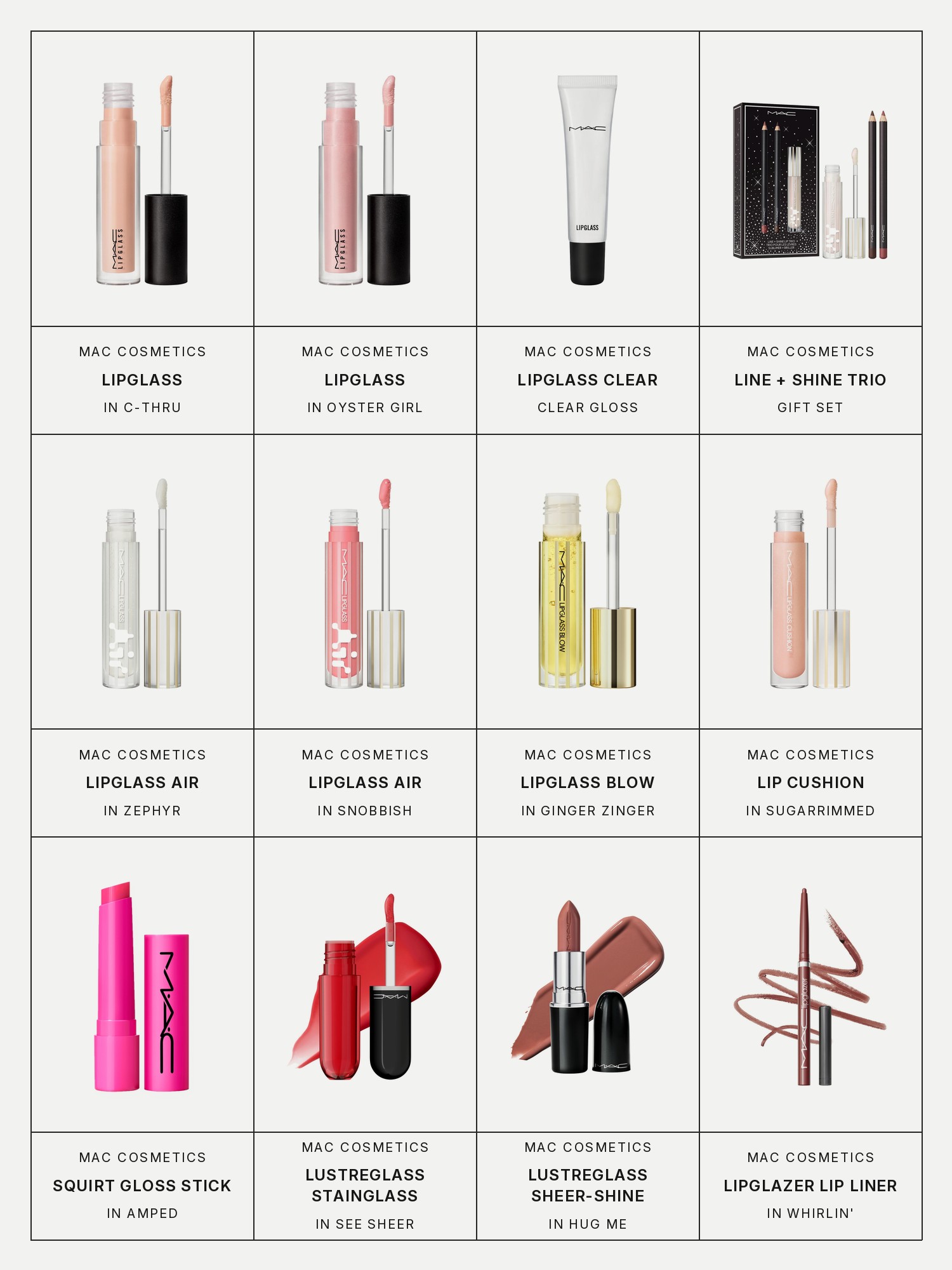
The most useful thing I learned about MAC gloss came from a makeup artist on a film set, not a beauty counter. Lipglass Clear, launched in 1997, is so viscous that it does not move, which is why crews reach for it when an actor has to look wet and the shot has to match for hours. MAC's artists say the Stranger Things team used so much that MAC sent over a jar, and that it was used for sweat on Top Gun Maverick too. That is a long way from a sparkly gloss in a teenager's bag. MAC itself began in 1984 in Toronto, when Frank Toskan, a makeup artist, and Frank Angelo, a salon owner, wanted makeup that photographed well. One newsletter recalls that the brand once insisted the original was its one and only foray into gloss, and then Lipglass kept growing anyway. That is the arc of every mac lip gloss on this page: a professional tool that people simply would not stop asking about. The first four are the family at its most literal, with C-Thru, Oyster Girl, the clear original and a holiday trio.


Air, Blow and Cushion
Grid two is where MAC stopped making one gloss and started making several ideas about shine. Zephyr and Snobbish are Lipglass Air, the non-sticky version, with a paddle applicator and a blend of coconut, jojoba and meadowfoam seed oils. Zephyr is clear and Snobbish is bubblegum pink, so between them you have the whole range from barely there to unmistakable. If the original clear lip gloss always felt like too much for your daily life, this is the one to try.
Then come the oils. Blow is a plumping lip oil with ginger root extract, capsicum and menthol crystals that MAC says give a subtle tingle. Lip Cushion, in the warm pearly pink Sugarrimmed, is a gel-to-oil formula that MAC says gives up to 72 hours of hydration. My tip: test any tingling formula on the lower lip only for the first ten minutes. If you like the sensation, go all the way across. Blow has a jumbo applicator that loads a lot of product, so press it on rather than sweeping back and forth.


Sticks, tints and a glossy liner
Grid three takes the gloss out of the tube. Squirt is a gloss stick in Amped, a pink, with the same ginger and menthol tingle as Blow and a translucent, non-sticky shine. Lustreglass Stainglass in See Sheer, a grapefruit pink, is a tint that MAC says lasts up to 12 hours without transferring. Lustreglass Sheer-Shine lipstick in Hug Me, a blushed nude, is more balm than lipstick and finishes with reflective pearls. Lipglazer in Whirlin', a dirty rose, is a glossy liner that lines, fills and gives a soft shine in one step.
What I would skip is loading a wand of gloss over a full lipstick and hoping for the best. It drags the color into the corners of the mouth and leaves a smear by lunch. Take a tiny bead, MAC's own advice for the clear original, and dab it on the center of the lip. The pieces in this grid are already glossy, so the trick is layering less, not more.
Shine in other shapes


Shine is a habit
I keep a clear gloss in every bag I own, and I have never once regretted it. Gloss is the easiest way to make a mouth look freshly awake, and it forgives almost everything. Pick the texture that suits how you live, keep it where you can reach it, and reapply whenever you remember. That is really all shine asks. If you want to keep browsing, I also put together The 90s Lip Is Back and LolaVie. If you want to try the layering idea itself, I wrote about clear lip gloss over lipstick and how little it changes the color.






