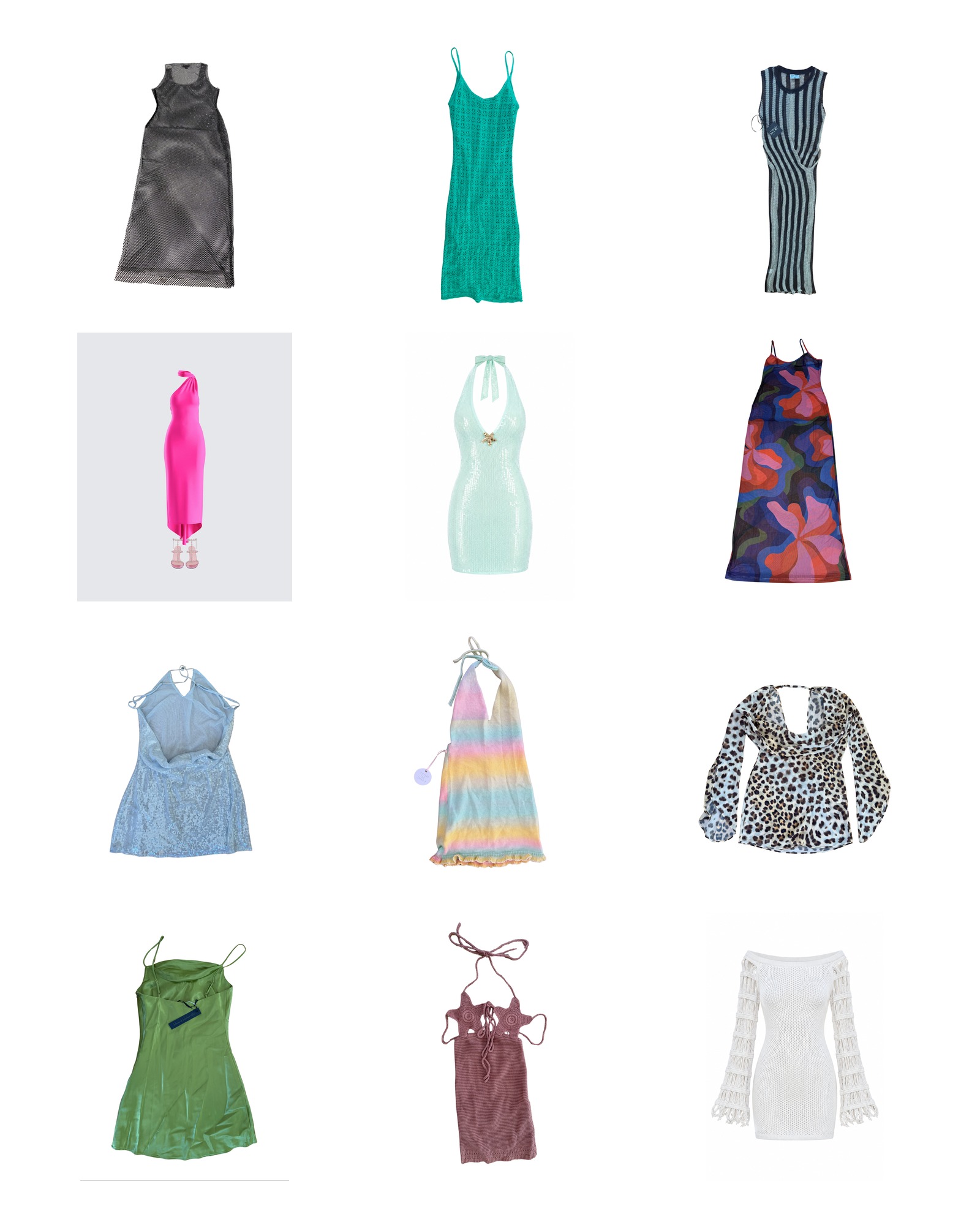
How to buy a designer dress online without a fitting room, using length, fabric and garment measurements rather than your usual size.
How To Buy A Designer Dress Online Without Trying It On
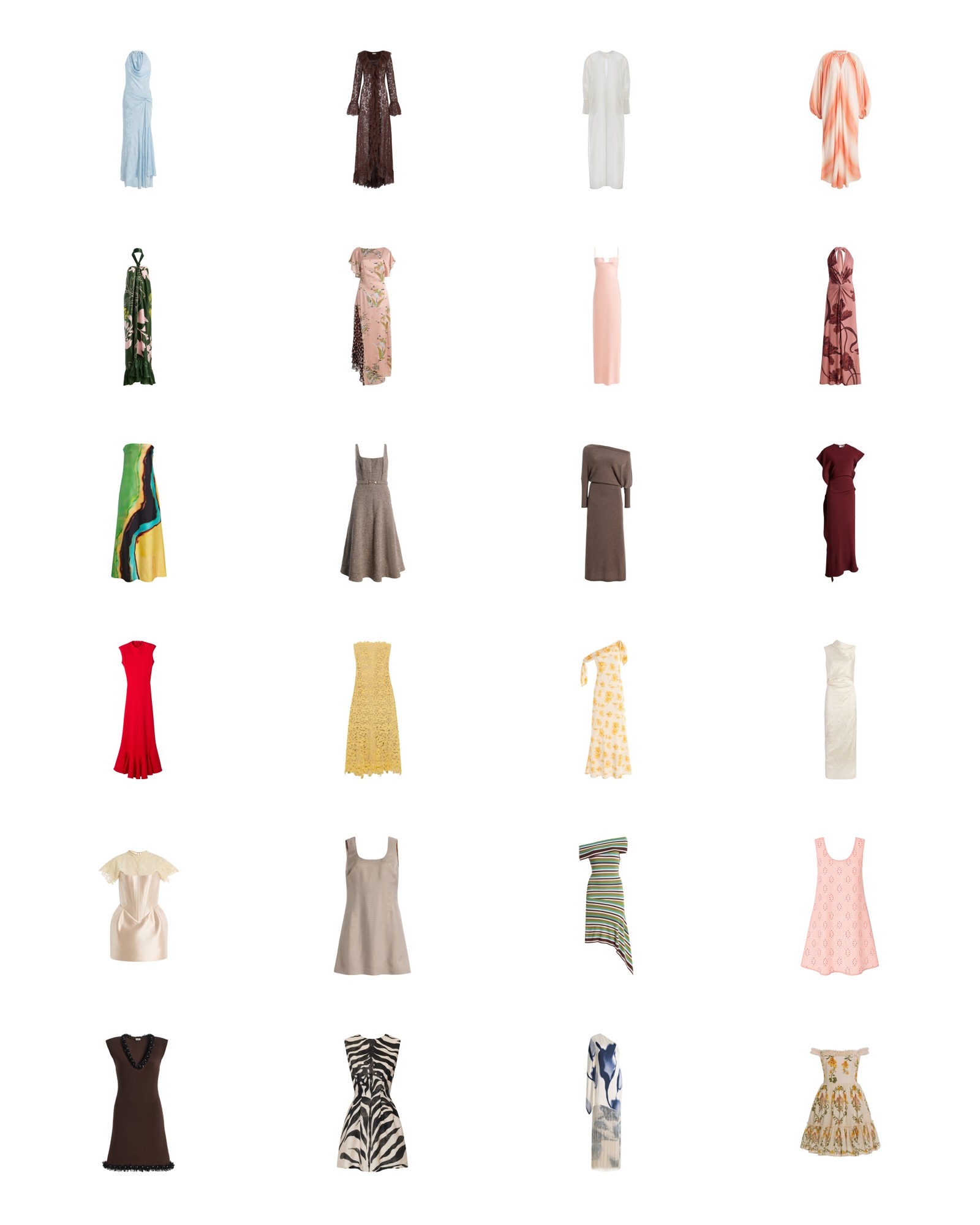
How to buy a designer dress online without trying it on
The honest starting point is that you cannot judge a dress from a product photograph, so stop trying. What you can judge is the specification, and designer listings carry more of it than most shoppers use. Start with length, because it is the single detail that decides whether a dress works on your frame, and it is the one thing a straight-on studio image hides completely. The three grids below are split by length for exactly that reason. Then read the fabric, the closure and the model's height, which is almost always stated. A dress that is described as bias-cut silk behaves nothing like one in structured cotton, even at the same measurements, and that behaviour is what people mean when they say something did not suit them.
Maxi dresses

Kelly Chiffon Maxi Dress
Anna October
$820

Marine Keyhole Voile Maxi Dress
DARKPARK
$850

Exclusive Tourig Cotton Maxi Dress
Marrakshi Life
$850

Halter Satin Maxi Dress
VERANDAH
$795

Fawn Stretch-Silk Maxi Dress
STAUD
$795

Exclusive Square Bra Satin Maxi Dress
BEVZA
$780

Exclusive Pura Maxi Halter Dress
Andres Otalora
$780
Read the measurements, not the model
Designer sizing is not standardised and never has been, so ignore the number on the label and find the garment measurements. Compare them against a dress you already own and love, laid flat, rather than against your body, because that removes the guesswork about ease. Three numbers do most of the work: shoulder to hem for length, the narrowest point of the waist, and the widest point across the hips. If a dress is unlined and cut on the bias, size to your hip. If it is structured with a zip, size to your ribcage. Watch for anything described as one-size or oversized, which usually means the shoulder seam sits somewhere unpredictable. And check the return terms before you check out, especially on made-to-order and final-sale pieces, because that is where online dress buying actually goes wrong.
Midi dresses

Aura Strapless Silk Midi Dress
Christopher Esber
$1,495

Dalia Midi Wool Dress
Cara Cara
$1,495

Kasos Cashmere Midi Dress
Altuzarra
$1,395

Victoria Draped Fluid Cady Midi Dress
Victoria Beckham
$1,550

The Palmier Open-Back Ruffled Crepe Midi Dress
Jacquemus
$1,550

Sera Floral Raffia Bustier Midi Dress
SIMKHAI
$1,295

Moiré Daisy Silk-Crepe Midi Dress
Rodarte
$1,595

Wool-Blend Jacquard Column Midi Dress
Marina Moscone
$1,250
Length is the decision, not the detail
Maxi, midi and mini are not styling preferences so much as proportion tools, and they behave differently on different frames. A maxi reads as formal almost regardless of fabric, which makes it the safest length for an event and the riskiest for anything requiring a chair and a train platform. Midi is the most demanding because the hem lands somewhere on the calf and where exactly it lands changes the whole line, so it is the length most worth measuring rather than eyeballing. Mini is the most forgiving to buy remotely, since the hem has less distance in which to go wrong, but it is the least forgiving to sit down in. If you are ordering more than one, order across two lengths rather than two sizes of the same dress. You will learn more from the comparison and return the one that loses.
Mini dresses

Exclusive Catalina Satin Mini Dress
De La Vali
$730

Eloise Micro-Plaid Mini Dress
KALLMEYER
$725

Extension-Drape Striped Cotton-Blend Knit Mini Dress
Christopher Esber
$745

Papiro Mini Dress
Pepa Pombo
$755

Suki Embellished Jersey Mini Dress
SIMKHAI
$695

Karibu Linen Mini Dress
Andres Otalora
$690

Exclusive Vivian Printed Mini with Fringe
SIRAPOP
$689

Boreal Cordillera Mini Dress
Agua by Agua Bendita
$680
Our honest take
Buy the fabric you can live with, then the length, then the size. Bias silk and fluid crepe forgive a lot and photograph beautifully, but they show everything underneath and they need care you may not want to give. Structured cotton and heavy jacquard hold a shape and hide more, at the cost of comfort in heat. What we would avoid ordering blind is anything strapless or corseted, because that fit depends entirely on your ribcage and no measurement chart will tell you how it sits. We would also stop ordering three sizes of one dress, which feels prudent and mostly just delays the decision. If you take one thing away, measure a dress you already love and shop against those numbers instead of against your size.
Shop brands in this edit




Next read
Secondhand Louis Vuitton Damier Ebene Or Damier Azur
Damier Ebene and Damier Azur are the same coated canvas in two colourways, and the secondhand market treats them as two different products.
Read Editorial
Secondhand Silk My Favs
My sixteen selects of scarves below are all ninety centimetre squares, split into two price bands