Silk holds heat better than it looks like it should. The trick is what you put over it, under it and on your legs.
How to Wear a Silk Dress in Cold Weather

Silk is warmer than it looks
The instinct is to put silk away in October, which is backwards. Silk is a protein fiber, closer to hair than to nylon, and protein fibers trap air and regulate temperature. That is why the same slip dress that keeps you cool in August is not actually a cold-weather problem. It is a coverage problem.
What makes a silk dress feel wrong in winter is bare arms, bare legs and a thin single layer with nothing between it and the wind. None of those are the fabric's fault. Solve them and a silk dress becomes one of the more useful things in a cold-weather wardrobe, because it drapes under knitwear without adding bulk the way a cotton dress does.
Start with what you already own. A bias-cut silk dress in a deep color, a midi length rather than a mini, and sleeves or no sleeves depending on what you plan to layer. Lilibeth Silk Dress at $328 is the shape that takes layers best: fitted enough that a sweater over the top does not swallow it.
Silk dresses that layer well
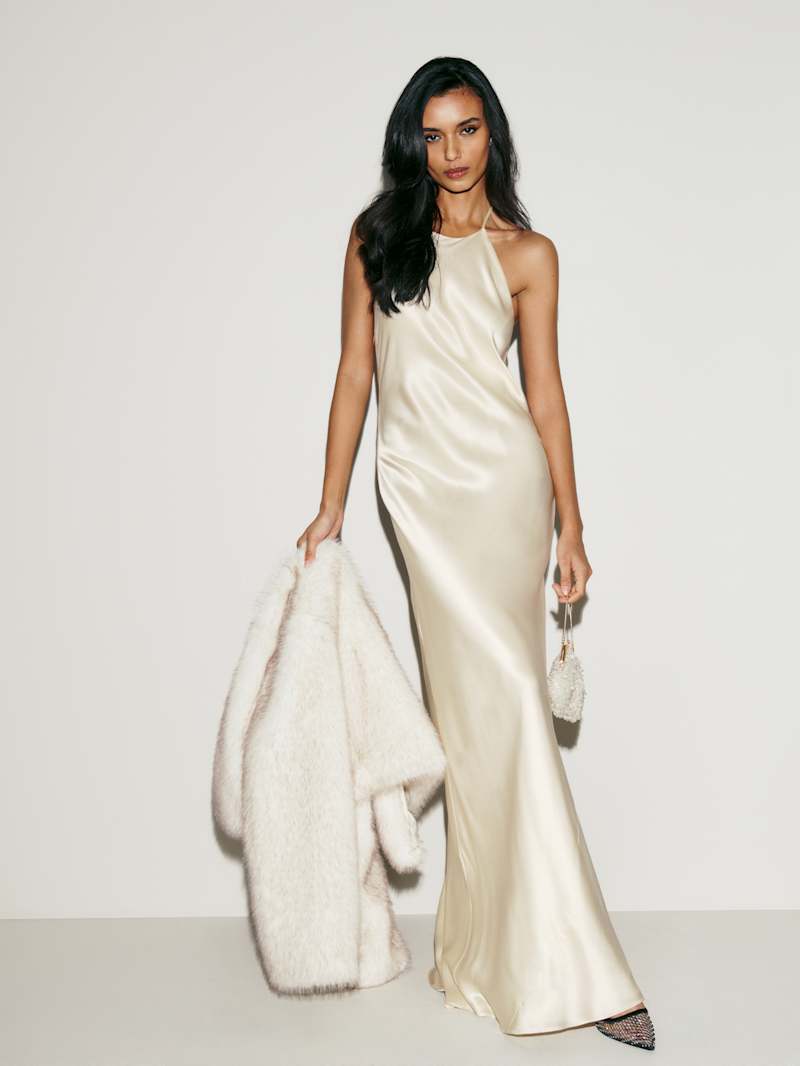
Jeany Silk Dress
Reformation
$378

Anaiis Silk Dress
Reformation
$398

Jillian Silk Dress
Reformation
$378
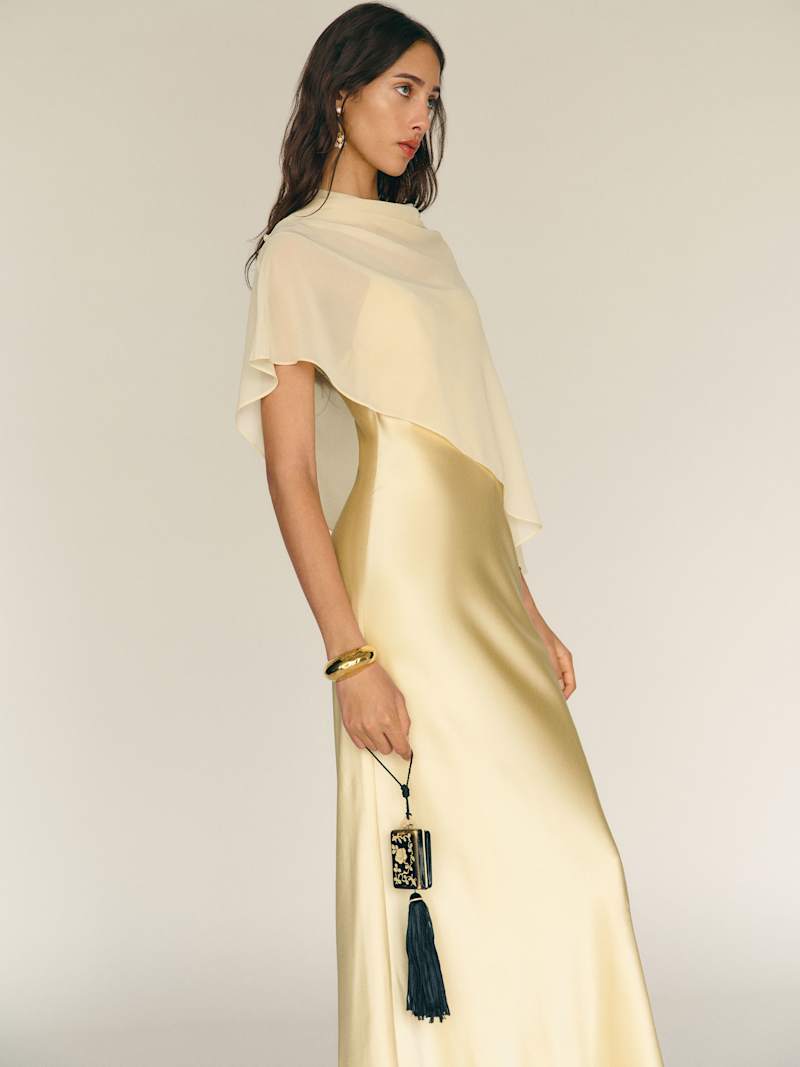
Lilibeth Silk Dress
Reformation
$328
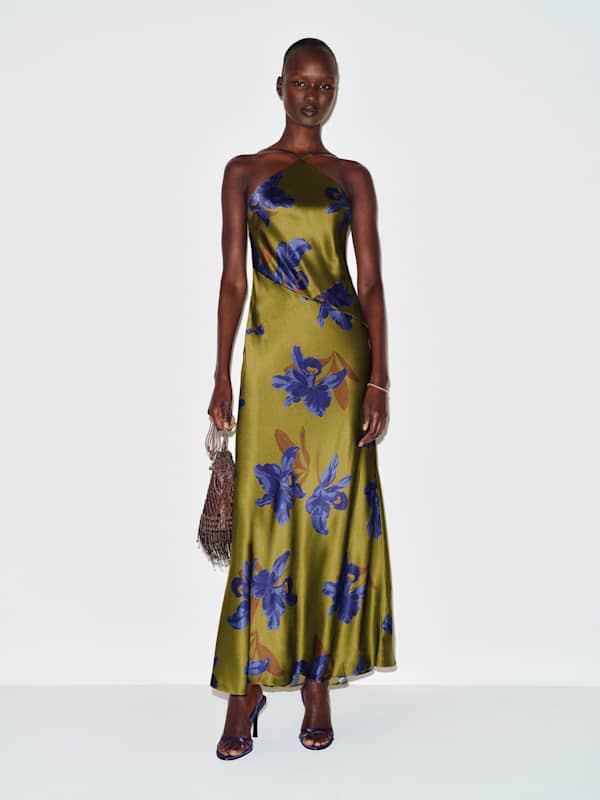
Emilee Silk Dress
Reformation
$378

Avielle Silk Dress
Reformation
$298
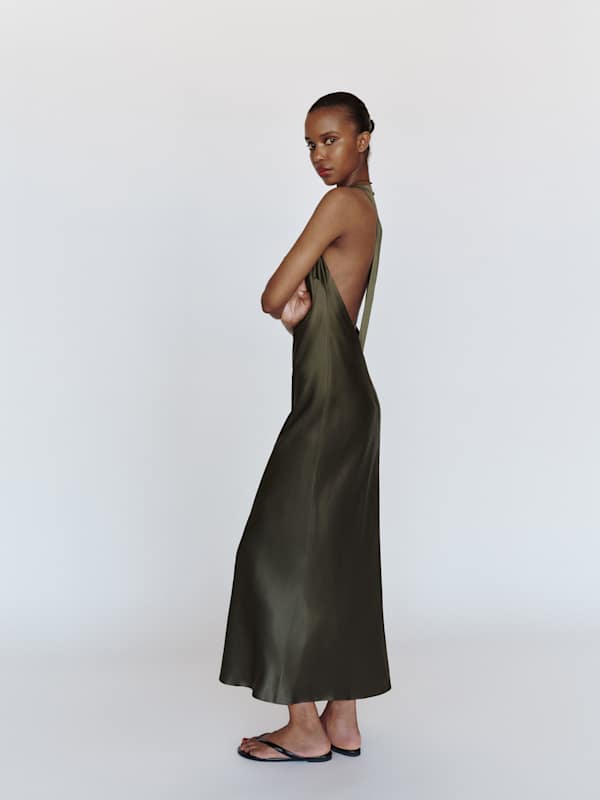
Noe Silk Dress
Reformation
$378
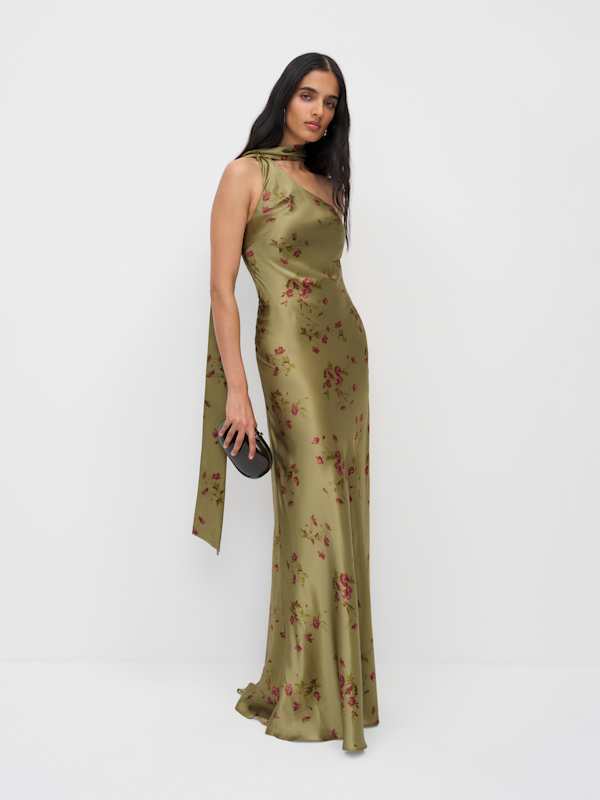
Jazzlyn Silk Dress
Reformation
$378

Sacha Silk Dress
Reformation
$348
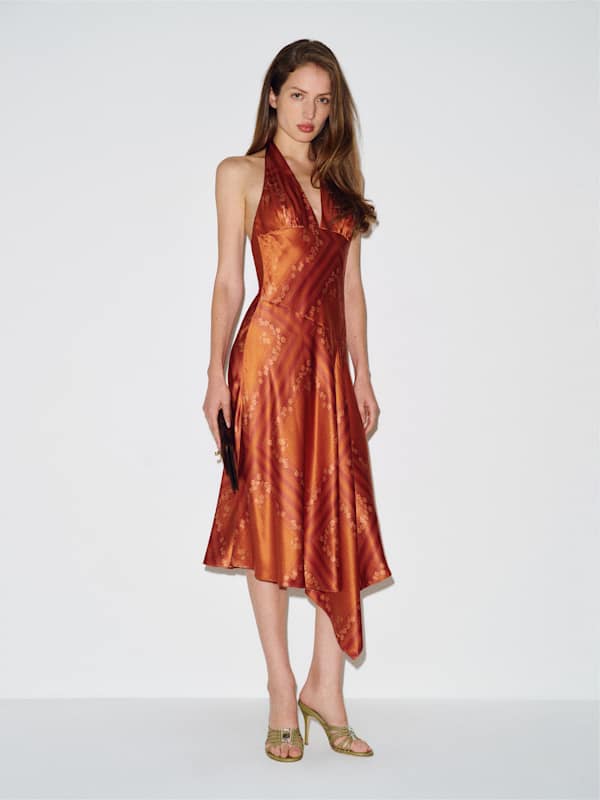
Benedita Silk Dress
Reformation
$348
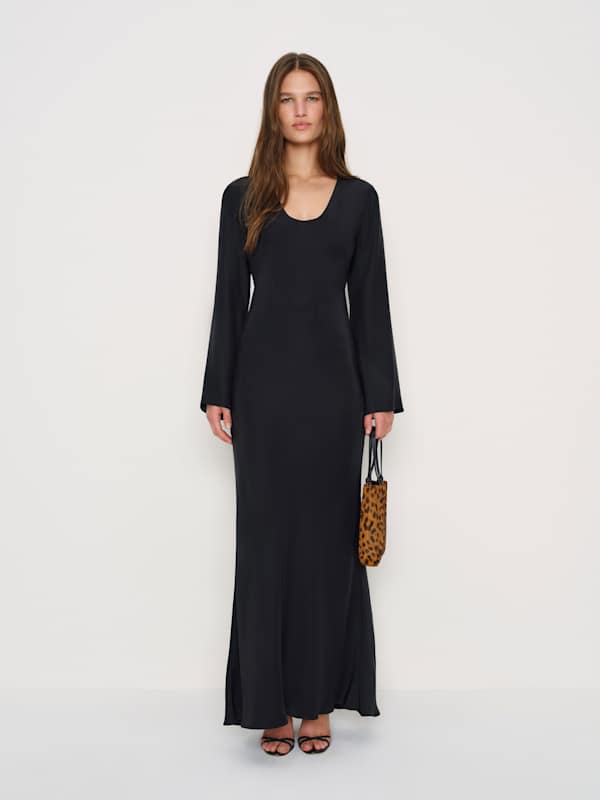
Vivia Silk Dress
Reformation
$298
What to layer, and in what order
There are three layering positions and they read completely differently.
Over the top, cropped. A shrunken crewneck or a fine-gauge V-neck worn over the dress turns the skirt into a skirt. This is the most reliable version and the one that looks deliberate rather than cold. Keep the knit short or shrunken so the dress's waist still reads. A Sligo Shrunken V-Neck at $375 sits at the natural waist and stops there.
Under the straps. A long-sleeve fine knit or a slim tee worn beneath a slip dress covers the arms without changing the silhouette. This only works if the knit is genuinely thin. Anything chunky and the straps sit wrong.
Over everything, open. A cardigan left unbuttoned is the least fussy option and the easiest to take off indoors.
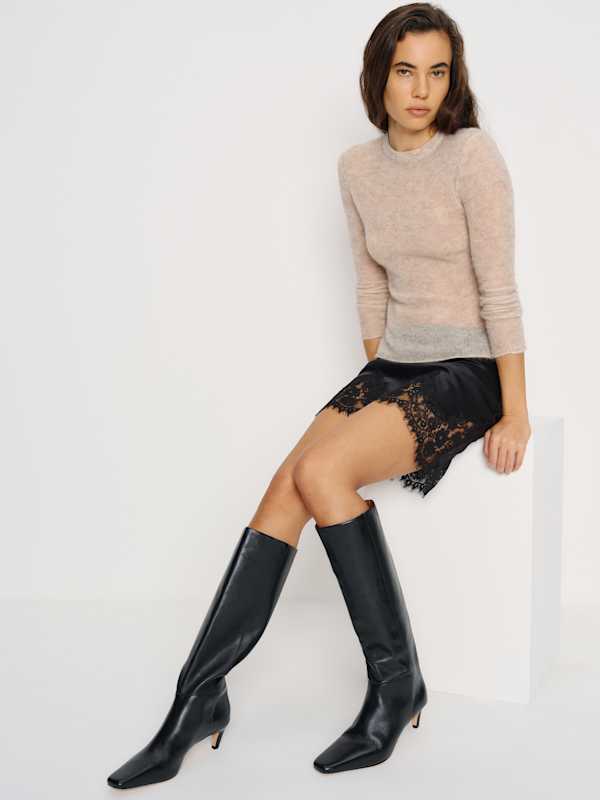
On the legs, opaque tights in black or a color close to the dress, plus a boot with some shaft height. Sheer tights in January look like an accident.


The skirt version of the same idea
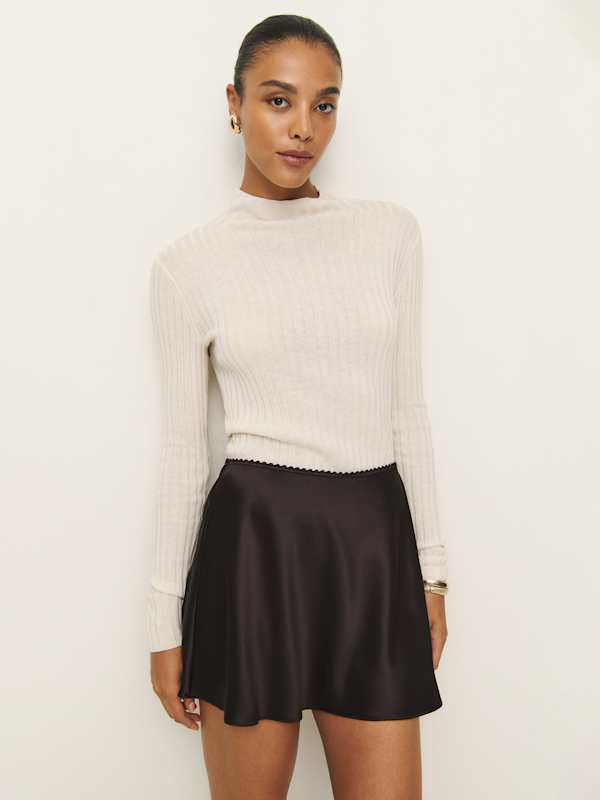
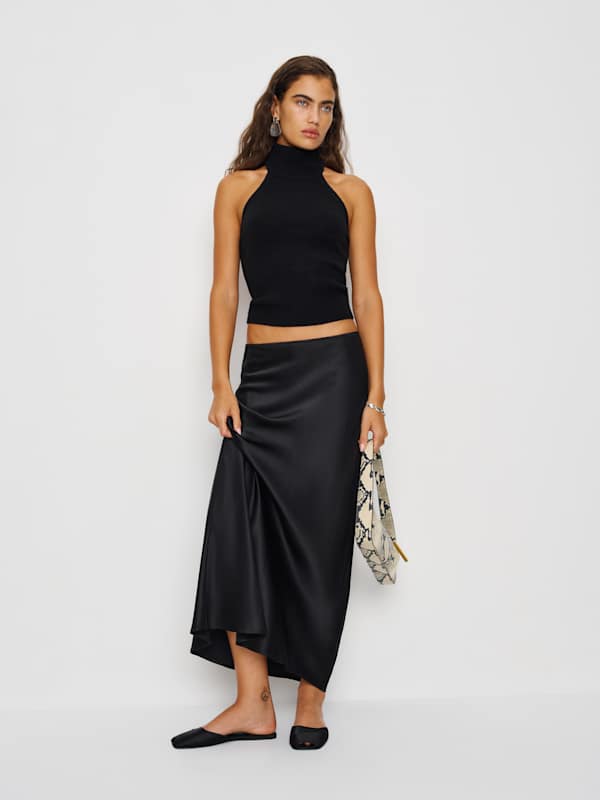
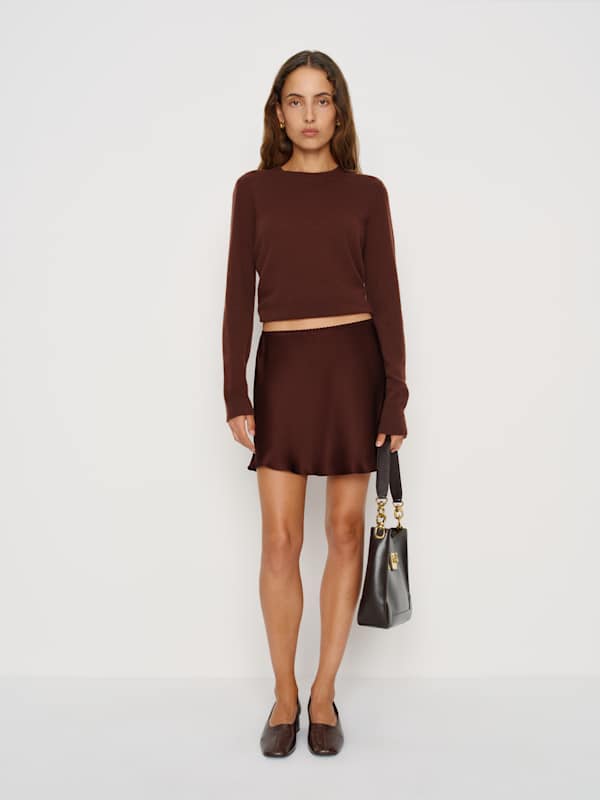
If a full silk dress feels like too much commitment for a Tuesday, the separate does the same job with less risk. A silk or satin bias skirt plus a heavy knit is the single most-copied cold-weather outfit of the last few years, and it works because the proportions do the arguing for you: fluid on the bottom, substantial on top.
The practical advantages are real. You can wear the skirt with a knit you already own, you can wash the knit separately, and you can wear it to an office where a slip dress would not pass. A Carolina Silk Skirt at $248 is a true bias cut, which means it moves and skims rather than clinging.
One warning. Bias-cut silk shows every line underneath it. Seamless underwear, and if you are wearing tights, put them on before you check the mirror rather than after. Length matters too: a midi that ends mid-calf reads elegant, while one that ends at the widest part of the calf rarely does.
Silk skirts, if a dress feels like too much


The questions people actually ask
Can you wear silk in winter? Yes. Silk regulates temperature rather than only cooling, so the fabric is not the issue. Bare arms and bare legs are. Add a knit and opaque tights and the dress works down to genuinely cold weather with a coat over it.
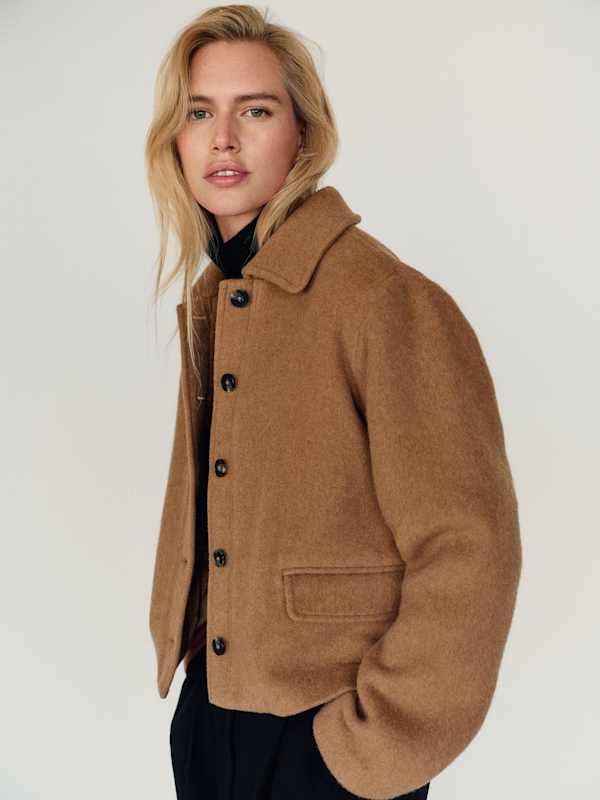
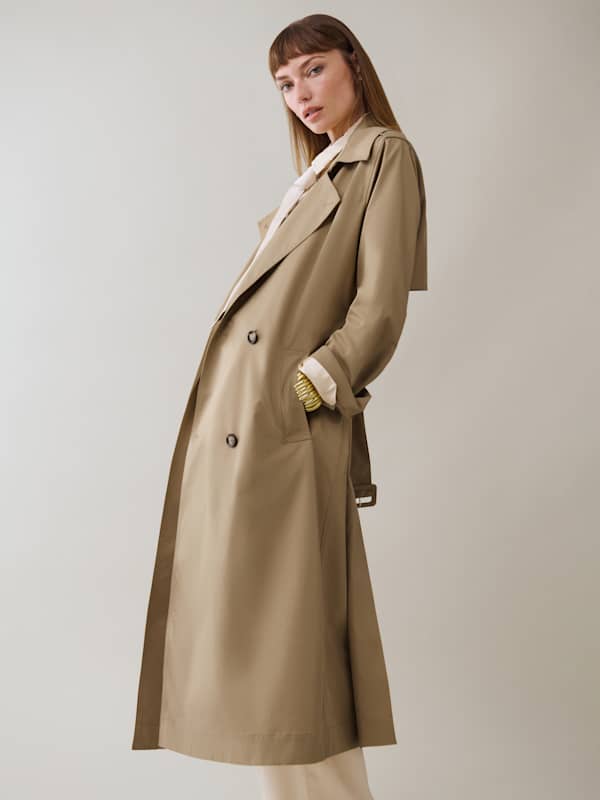
What coat goes over a silk dress? Anything with a defined shoulder and a length that either stops above the dress hem or falls below it. A coat that ends within an inch or two of the hem looks unresolved. A trench or a longer wool coat is the safe answer.
Will a sweater over silk make it wrinkle? A little, at the waist. Bias-cut silk drops most creases within an hour of wear. If you need it crisp on arrival, steam rather than iron, and hang the dress rather than folding it in a bag.
Tights or bare legs? Opaque tights, 40 denier or heavier, in black or a shade near the dress. Sheer tights read as a compromise.
Boots or heels? Both work. A knee boot under a midi is the most weather-honest version.
Boots, coats and the things that make it work


Shop brands in this edit


Next read

How to Style Slouchy Wide-Leg Jeans
Wide-leg jeans work when the proportions above and below them are deliberate. Rise, hem length and the top decide everything.
Read Editorial
What to Wear to a Fall Wedding as a Guest
A fall wedding usually means a cold outdoor ceremony and a warm indoor reception. One outfit has to survive both.


