A kojic acid serum earns its place in a brightening routine through an unglamorous origin, since the ingredient was first isolated from the mold used to ferment rice into sake. It works by blocking the enzyme skin uses to produce melanin in the first place, which puts it in the same functional category as stronger prescription brighteners without the same restrictions. This edit compares how different formulas pair it with niacinamide or vitamin C, and what a fair timeline for seeing a change actually looks like.
Kojic Acid Serum: The Fermentation Byproduct Doing More Than Vitamin C

A brightening ingredient with an unglamorous origin
The mechanism here is straightforward: this kind of brightening ingredient blocks the enzyme skin uses to produce melanin, rather than just sloughing off pigment already sitting on the surface. That puts it in the same functional category as stronger prescription brighteners, without the same regulatory baggage, which is why it usually shows up paired with a second active like niacinamide rather than sold alone. Apply it on clean skin before moisturizer, in the thin layer a serum or ampoule texture is built for. Some versions lean warmer with an added botanical mixed into the niacinamide base, which can feel more calming on skin that flushes easily. Introduce it a few nights a week at first, since it will not lighten a spot overnight and pushing straight to daily use only raises the odds of irritation.
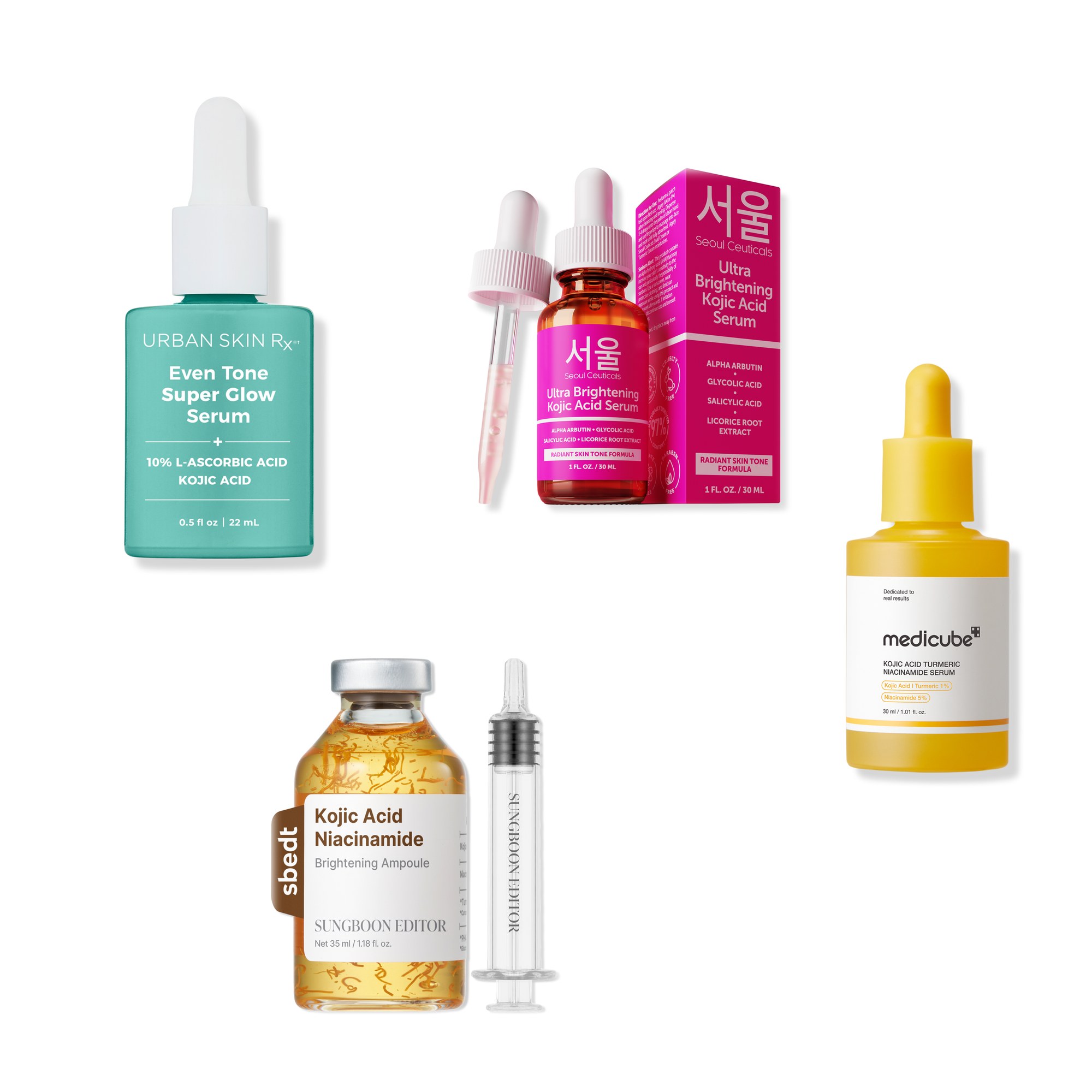


Pairing it with vitamin C
Layering this ingredient with a high concentration of vitamin C is the most aggressive stacking in a brightening routine, so it deserves a slow start. Apply the brightening step on clean, dry skin, let it settle for a minute, then follow with a simpler formula that keeps the ingredient as the clear lead if your skin is still finding its tolerance for actives. Patch test any new combination somewhere inconspicuous before putting it on your face. A formula that stings on first use is not necessarily working harder, and skin that protests is a reason to dial back, not push through. The next morning, sunscreen matters more than which pairing you used the night before.


Our honest take
This ingredient genuinely does something distinct from most brightening actives, since it slows new pigment production at the source instead of only removing what has already surfaced, which is why it shows up in formulas aimed at stubborn dark marks specifically. What gets oversold is speed. Existing dark spots have already deposited pigment deeper in the skin, and no serum clears that on a weekly timeline, whatever a turmeric or niacinamide addition implies on the label. It can also be genuinely irritating on its own, which is exactly why every formula here buffers it with a second active rather than selling it alone. If you take one thing away, introduce it a few nights a week before going daily, and pair it with sunscreen every single morning, because new pigment forms fastest on skin left unprotected after an active like this has thinned the surface. If you want to keep browsing, I also put together CeraVe Vitamin C Serum and the Routine Built Around It and Naturium Azelaic Acid, the 10% Serum and Its Rivals.






