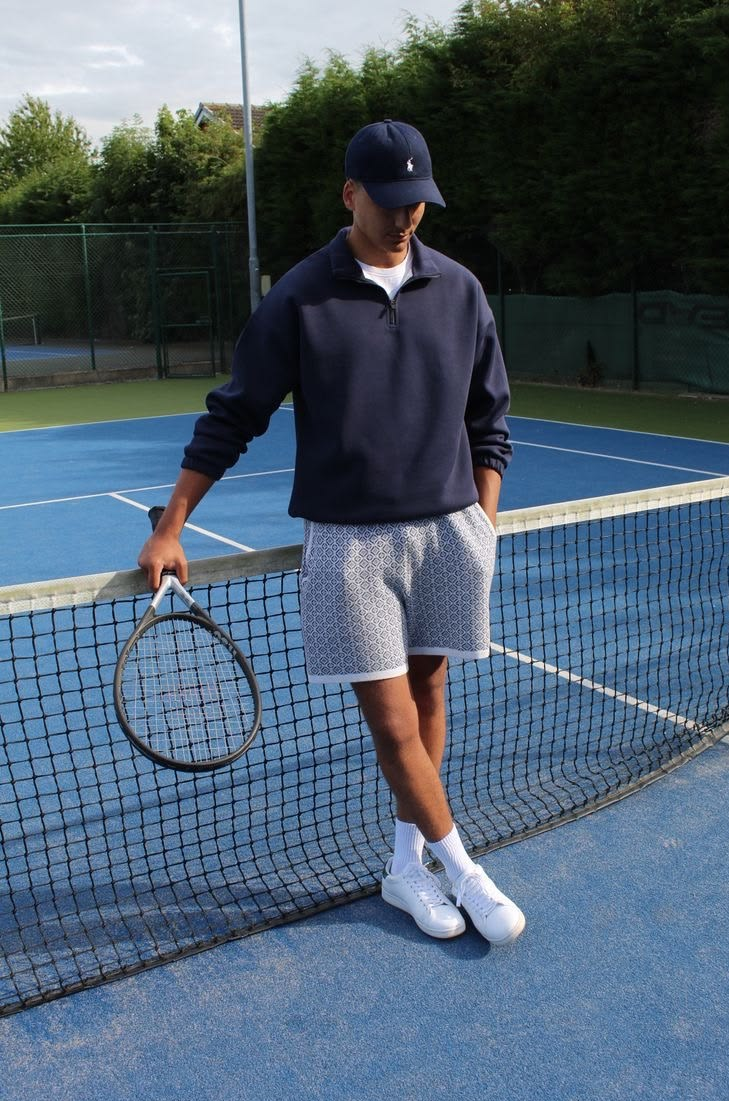
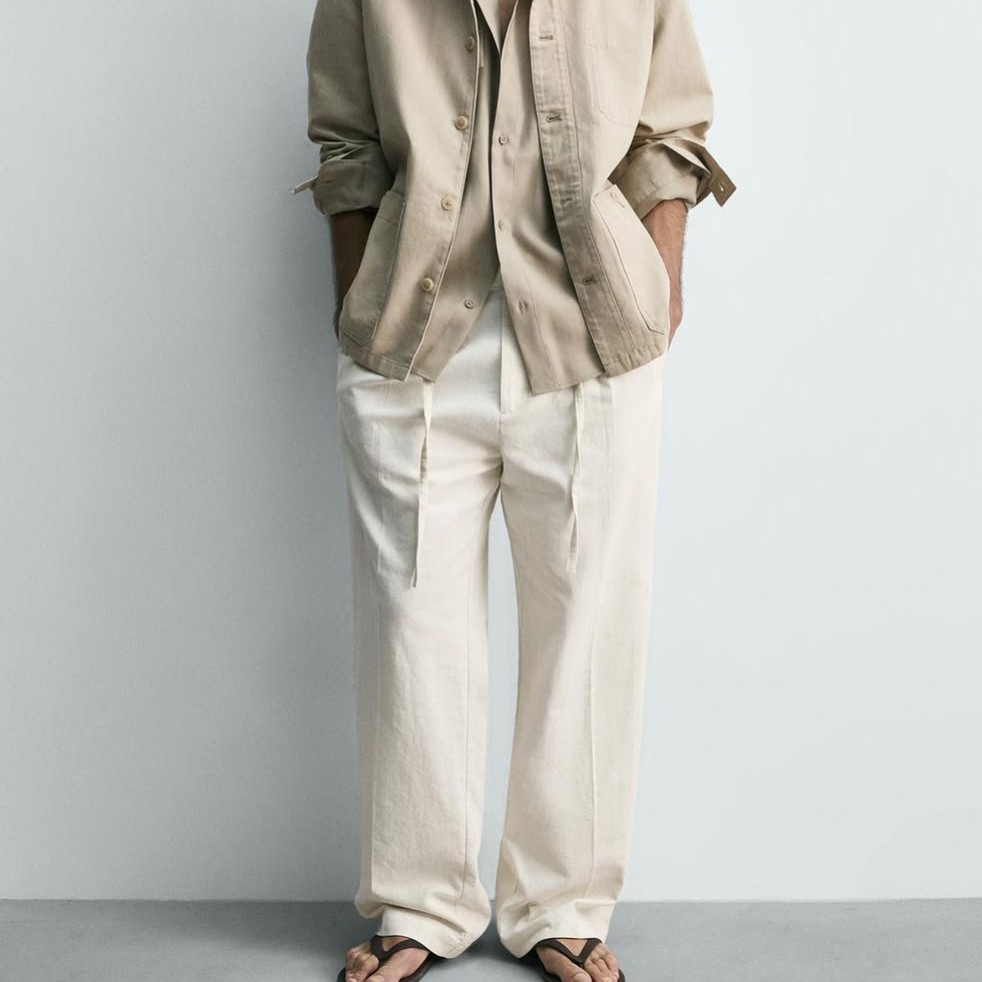
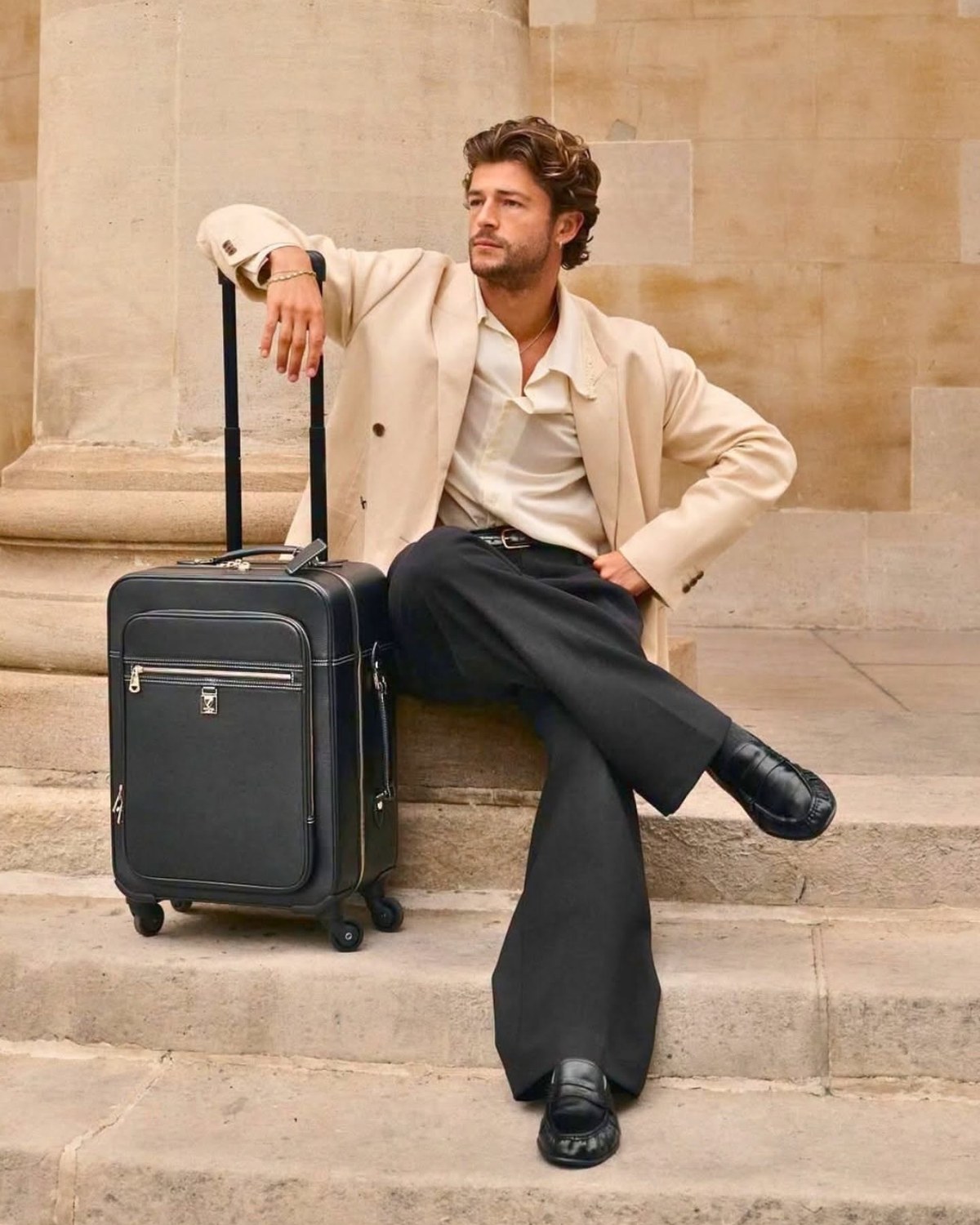
Five notes for button-down shirts: poplin, stripes, borrowed volume, silk, and denim. I like a shirt that can look composed while the rest of the outfit stays a little loose.
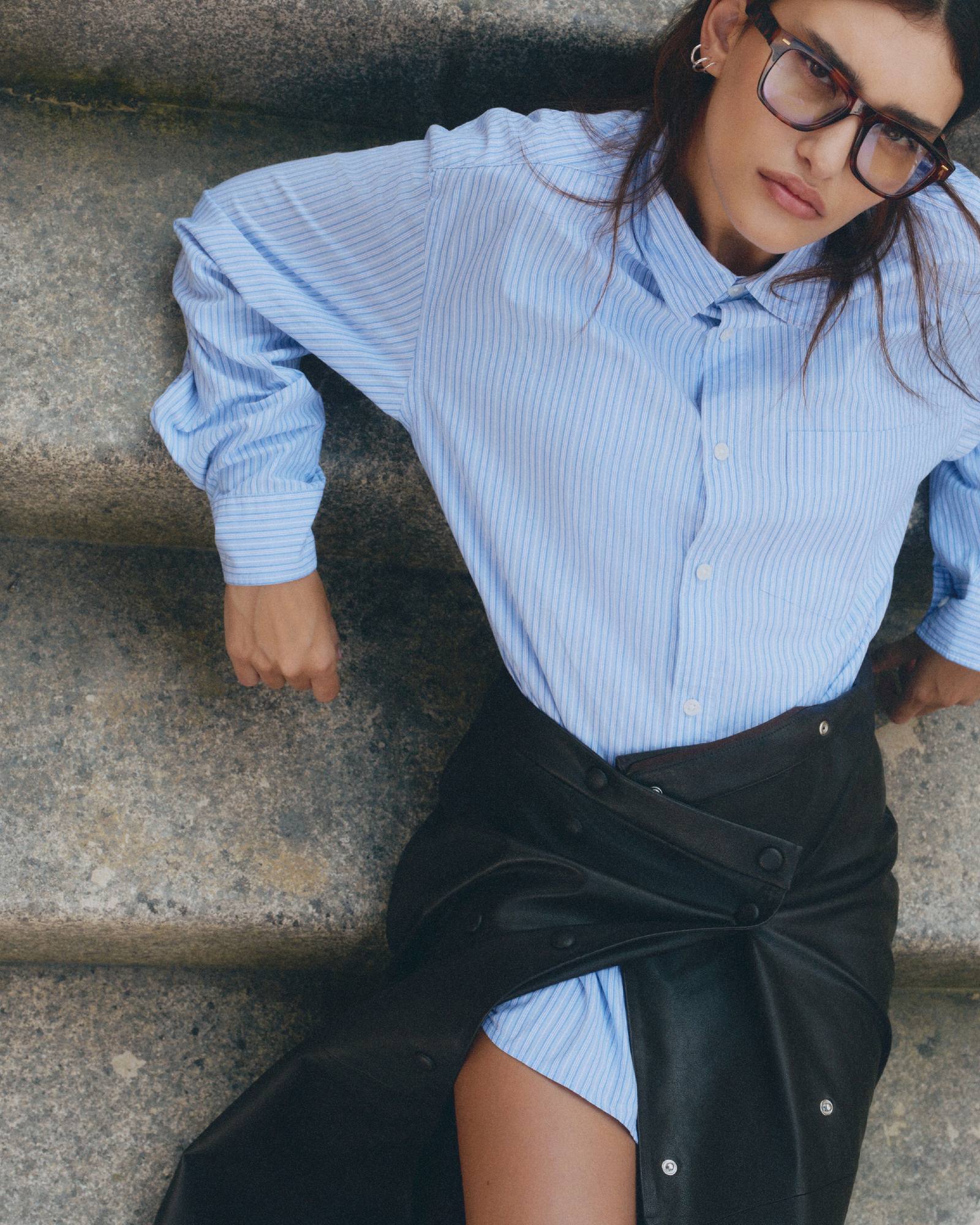
The Button-Down Shirts Edit: Five Lessons in Leaving One Cuff Unfastened
The shirt with a second job
There is a particular kind of shirt I notice before I notice the person wearing it. Within approximately four seconds, I have clocked the collar, the cuff, and whether the hem is tucked or making its own case. I have no shame about this.
But somewhere between the office dress code, the crisp-white-shirt mandate, and the demand for a new silhouette every six months, button-down shirts have gotten a little complicated. We are told to choose one clean classic and also to find a striped one that is somehow both oversized and fitted. This is an ambitious job description for a shirt.
Which brings me to John Brooks in England in 1896. Brooks Brothers says he watched polo players pin down their collars so they would not flap during play, then introduced its button-down collar in 1900. I love that the original problem was wind in your face, not an office dress code.
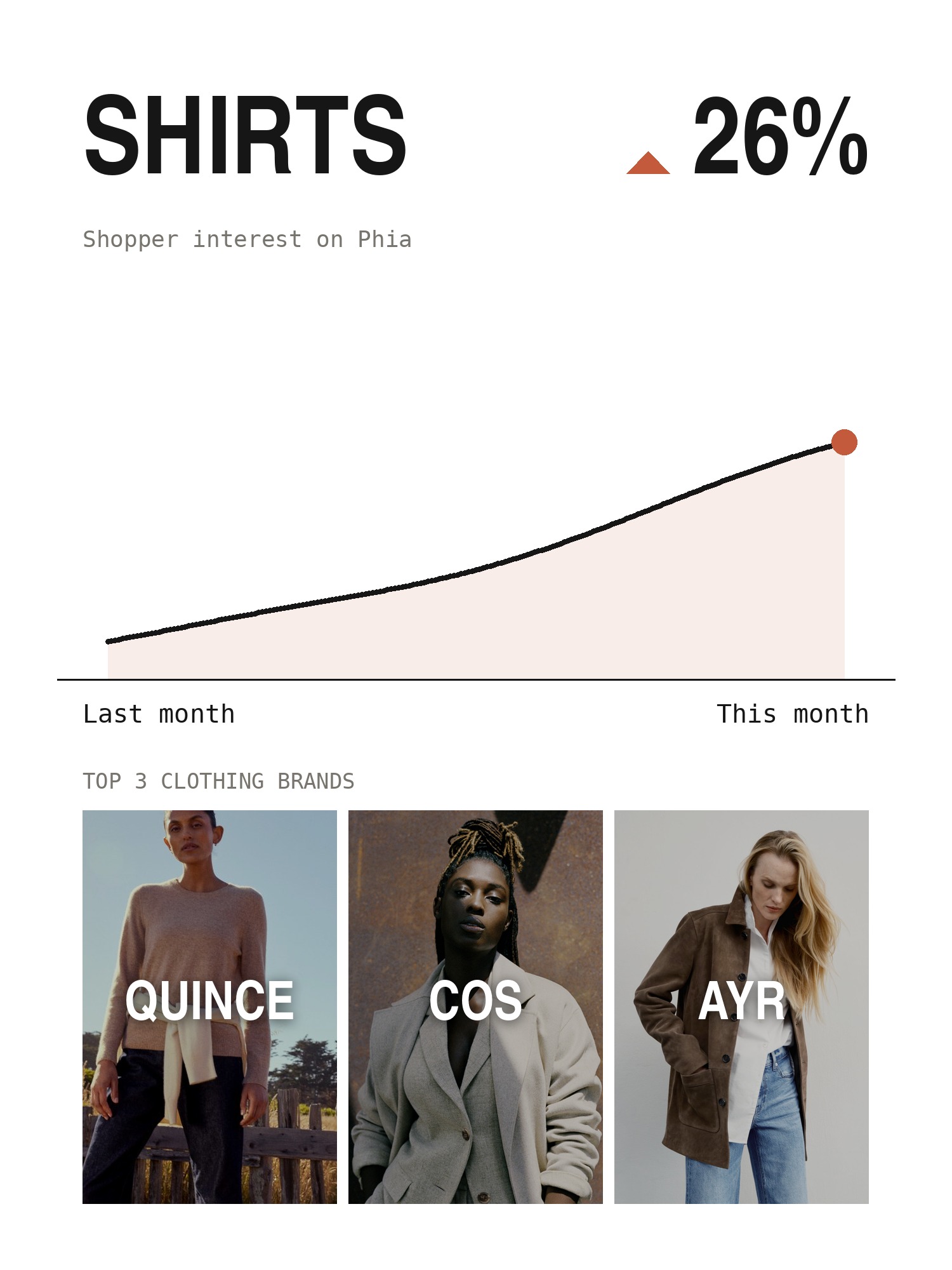
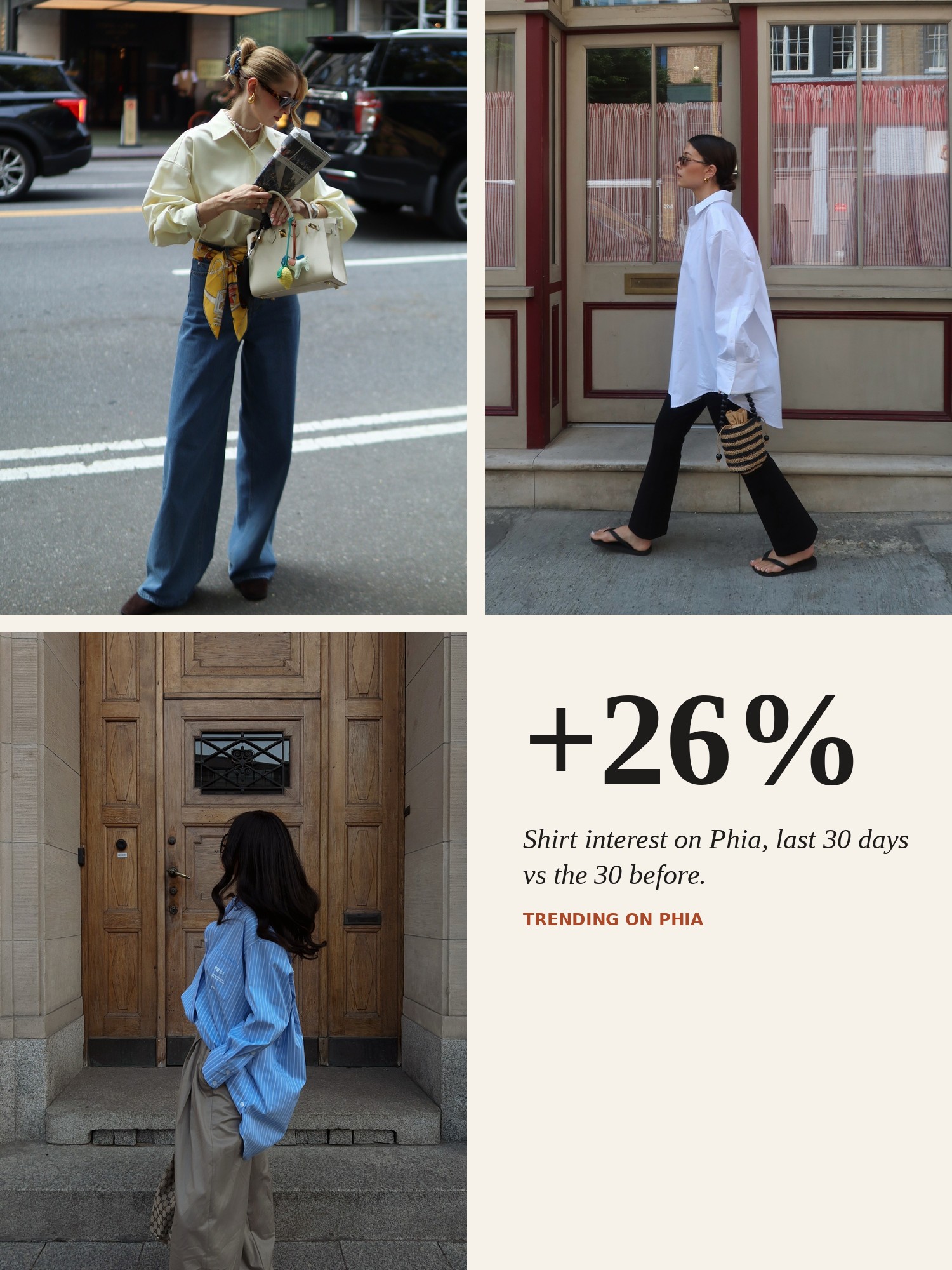
Phia shopper data shows interest in shirts rose 25.5% in the last 30 days versus the previous 30, the fastest rise of any clothing category. I read that as an invitation to take the category seriously again, not a rule to buy five.
Some of this is a lesson in fabric, some in proportion, and some in remembering that a silk shirt needs its own kind of attention. So, here are five lessons in making a shirt do more than sit politely in a closet.
1. Let the fabric make the first argument.
My first test for a white shirt is its cloth, not its collar. Quince is the top clothing brand on Phia over the last 30 days, which is a useful reminder that a plain cotton shirt can still be a live choice rather than a uniform. The ranking cannot tell me why anyone chose it, but it does make the simplest version worth looking at closely.
Quince’s 100% organic-cotton poplin has the familiar long sleeve and button front; Abercrombie & Fitch’s oversized cotton poplin adds a chest pocket and curved hem. COS keeps its Classic Cotton Poplin Shirt crisp, with a pointed collar and tonal buttons, while Madewell’s Easy Poplin Button-Up is washed cotton with a spread collar and button cuffs. The small construction choices change the mood without changing the basic assignment.
Frances Valentine puts an embroidered heart on its white poplin, and Bode’s Redbud shirt adds redbud embroidery plus an attached sash that can cinch or flare. I would reach for either when I want white to have a point of view, not just a blank space under a jacket.
Button it, sit down, and raise both arms before deciding the fit is easy. If the placket pulls or the hem climbs, it is only easy in the product name. What I would skip: a shirt that asks every other piece in the outfit to be equally crisp. Although a tiny embroidered detail may be what finally makes white feel personal.
White poplin button-down shirts

100% Organic Cotton Poplin Long Sleeve Shirt
Quince
$39.9

100% Cotton Poplin Oversized Shirt
Abercrombie & Fitch
$60

Classic Cotton Poplin Shirt
COS
$89

The Easy Poplin Button-Up Shirt
Madewell
$88

Cotton Blend Poplin Button-Up Shirt
Anne Klein
$79

Perfect White Button Down Cotton Poplin
Frances Valentine
$198

Cinched Cuff Stretch Poplin Shirt
Habitual
$98

Redbud Cotton Poplin Button-Up Shirt
Bode
$578
2. Give the stripe some texture to play against.
A stripe looks more relaxed when the cloth has texture underneath it. Ralph Lauren traces Oxford cloth to a 19th-century Scottish mill, where fabrics were named for universities; Oxford endured for its hardy weave and versatility. That history helps explain why a blue-and-white Oxford can feel familiar without looking like a uniform.
COS ranks second among clothing brands on Phia over the last 30 days. It is one data point, not a verdict on a shirt, but I like that the label’s cotton Oxford sits beside a whole family of stripe ideas here. Everlane Boxy Oxford pairs blue-and-white pinstripes with two oversized pockets, while the white Oxford keeps the pattern quiet. Polo Ralph Lauren adds a blue-and-white Oxford with an embroidered pony; Madewell offers a smoked-claret Y-neck and Faherty has a red-and-white Coastal Stripe in poplin.
MANGO keeps its sky-blue cotton-lyocell stripe subtle, H&M turns green and white into a loose washed Oxford, and Petal & Pup goes olive. For a quick styling test, hold the shirt next to the jacket or cardigan you actually reach for; if the stripe reads clearly against it, you already have a useful pairing.
What I would skip: matching a loud stripe with three more competing patterns just to prove you can. Although a good Oxford can carry a whole outfit, it does not need to chair the meeting.
Oxford and striped button-down shirts

The Boxy Oxford
Everlane
$66

The Must-Have Oxford Shirt
Everlane
$49

Oxford Cotton Button-Up Shirt
Polo Ralph Lauren
$128

The Signature Stripe Y-Neck Shirt
Madewell
$98

Coastal Stripe Relaxed Organic Cotton Button-Up Shirt
Faherty
$56.79

Stripe Cotton Blend Poplin Button-Up Shirt
MANGO
$59.99

Oxford Shirt
H&M
$24.99

Wren Oversize Stripe Button-Up Shirt
Petal & Pup
$59
3. Borrow the volume, then reclaim the shape.
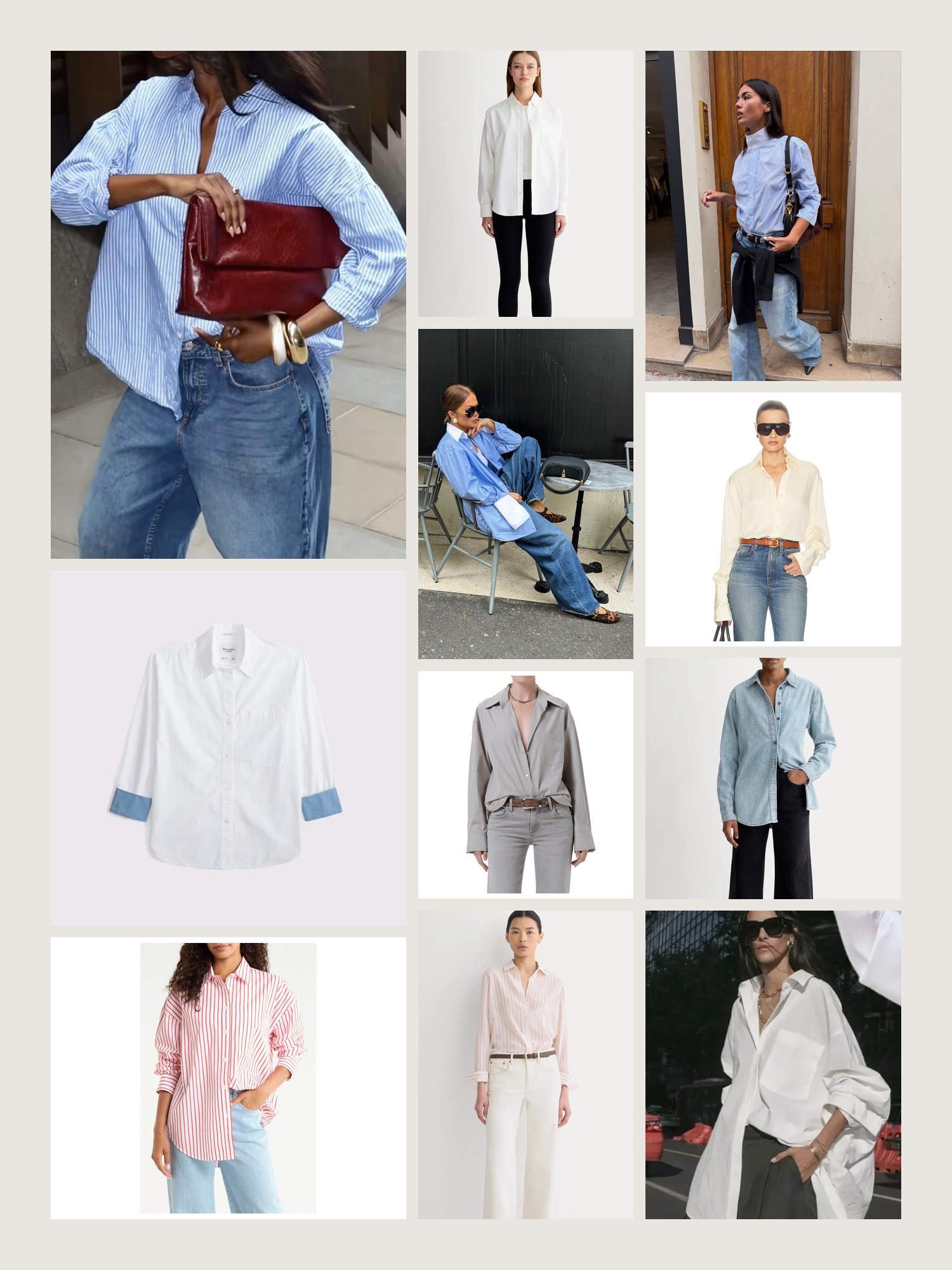
One useful thing about a borrowed silhouette is that it has a history, not just a size label. Vogue Arabia notes that women adopted elements of masculine tailoring by the end of the 19th century. Ralph Lauren later introduced its first women’s Oxford in 1971, with the embroidered Polo Pony initially sewn onto the cuff. A shirt can keep its menswear references and still be cut for a different body and a different day.
The Shirt by Rochelle Behrens calls its blue-and-white version The Boyfriend Shirt and uses no-gap buttons; Citizens of Humanity’s Thea is an oversized cotton shirt with a curved shirttail. Foxcroft’s Riviera-blue Non-Iron Boyfriend Button-Up keeps a classic collar and pocket, while Favorite Daughter’s oversized plaid is explicitly inspired by classic menswear. Frank & Eileen’s Eileen is relaxed flannel, and R13 takes the white shirt to a stand collar and dropped shoulders.
Lafayette 148 gives its blue hydrangea poplin a longer back hem, while Commando’s black oversized shirt is cut from four-way-stretch Italian microfiber. The proportions are different enough that “oversized” is not one single instruction.
Try the shirt open over a fitted layer, then button it and half-tuck it. Compare where the shoulder, cuff, and hem land in both versions. Although a shirt borrowed from a boyfriend should not require anyone else’s measurements.
Oversized and boyfriend button-down shirts

The Boyfriend Shirt
The Shirt by Rochelle Behrens
$157

Thea Oversized Cotton Boyfriend Shirt
Citizens of Humanity
$288

Non-Iron Boyfriend Button-Up Shirt
Foxcroft
$128

The Boyfriend Plaid Cotton Shirt
Favorite Daughter
$198

Eileen Relaxed Button-Up Flannel Shirt
Frank & Eileen
$258

Stand Collar Boyfriend Button-Up Shirt
R13
$745

Oversize Organic Cotton Poplin Boyfriend Shirt
Lafayette 148 New York
$698

Classic Oversize Button-Up Shirt
Commando
$228
4. Let silk have a little structure.
Sometimes the collar is the entire plot. Vogue Arabia reports that Palmer Harding builds its label around shirt construction and form, beginning by draping new shapes in cotton before adding recognizable shirting codes. That is a useful way to look at silk too: start with the cut, placket, and shoulder, then notice the sheen.
Quince offers washable stretch silk with a notch collar and a 19mm fabric weight; Everlane makes a washable-silk shirt with a point collar and rounded hem. FRAME uses leopard print, puffed shoulders, and covered buttons on its Prairie Silk Shirt, while Alice + Olivia gives its Willa garden-sprig florals on silk. Helsa adds a little elastane to cream charmeuse, Vince cuts its wolf-gray charmeuse on the bias, and Reiss hides the buttons on its navy satin shirt.
FRAME’s Contrast Tie shirt makes its tie removable, so the same collar can read polished or spare. I would reach for that sort of detail when the rest of the outfit is plain, and let a printed silk do the talking with simple trousers.
Here is my practical check: hang the shirt, undo the buttons, and look at how the placket falls before deciding whether you want it tucked or loose. The care label gets the final say on cleaning. Although the quietest silk shirt may turn out to be the one with the most to say.
Silk and satin button-down shirts

Washable Stretch Silk Notch Collar Blouse
Quince
$79.9

The Must-Have Shirt in Washable Silk
Everlane
$104

The Prairie Silk Shirt
FRAME
$498

Willa Silk Top
Alice + Olivia
$182

The Relaxed Silk Shirt
Helsa
$288

Bias Silk Button Down Shirt
Vince
$448

Ameira Silk Satin Button-Up Shirt
Reiss
$355

The Contrast Tie Silk Shirt
FRAME
$498
5. Treat denim as another shade of shirting.
The denim shirt is less a substitute for jeans than a way to change the proportion of the same familiar cotton story. On Phia, jeans interest was down 11.3% in the last 30 days versus the previous 30. I would not read that as a decree to abandon denim; it is a nudge to try the fabric somewhere other than the usual five-pocket shape.
Quince makes its chambray shirt from Tencel lyocell, while Everlane uses regenerative cotton for its denim shirt. Madewell keeps the oversized Anchor Blue cut with a spread collar and chest pocket; MANGO adds contrast stitching and two pockets to its darker cotton version. Sézane Tazia brings a tie-panel neckline and gathered sleeves, and Frank & Eileen offers lightweight non-stretch denim made in Italy.
MOTHER Country Executive has contrast piping at the yoke and snap hardware; Levi’s Heritage Western adds a pointed collar and snap front. For a styling test, hold the shirt against the jeans you own in daylight, then choose either a close match or a clear contrast. The middle ground can make both pieces look accidental.
COS recommends ironing cotton shirts while damp with medium-high heat and steam, moving from collar to cuffs, sleeves, then body, and working around buttons. Check each garment’s care label first. Although denim may be the one shirt that makes an all-denim outfit feel like a decision.
Denim and chambray button-down shirts


A collar, not a contract
The collar is a small piece of architecture, but the outfit around it can stay low stakes. These five lessons add up to a simple permission: let cotton stay crisp, let stripes interrupt, borrow a roomier cut, give silk a shape, and let denim leave the jeans alone for once.
Any time I think I have the situation under control, another white shirt appears with a slightly different cuff and I am back to considering the evidence. I can admit that. My only hope is to be caught before the closet turns into a button-front dissertation.