The cashmere beanie edit is five lessons in ribbed neutrals, controlled slouch, one strong color, useful cuffs, and sets that can be split. I still believe a hat can start an outfit and derail a pastry stop, sometimes at once.
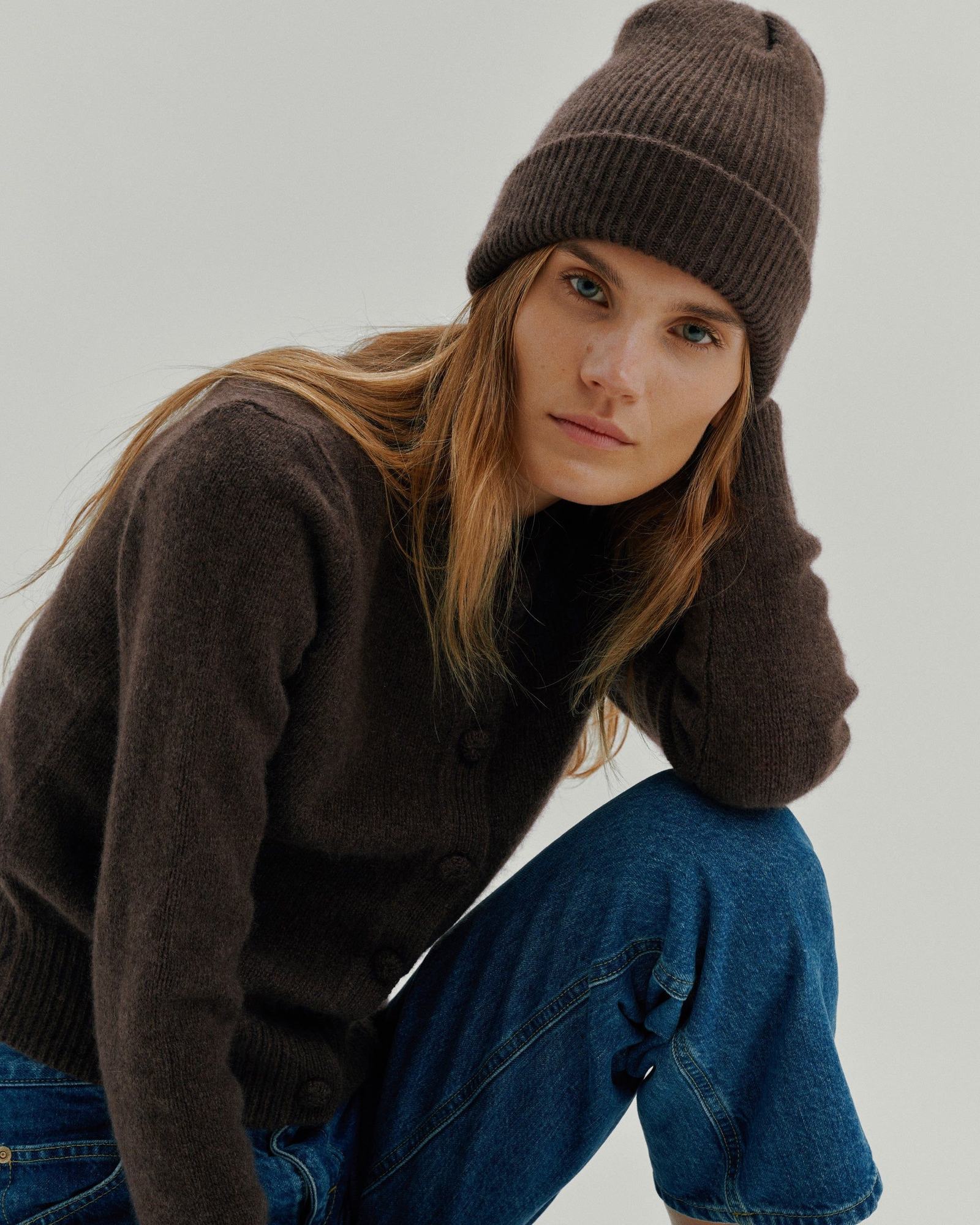
The Cashmere Beanie Edit: Five Lessons in Keeping Your Head About Winter
The Hat I Keep Reconsidering
I have a very particular winter habit: within approximately four seconds of seeing someone take off a beanie, I have assessed the cuff, the crown, and whether a small cinnamon roll could fit under it. I have no shame about this.
But somewhere between close ribbing, a cashmere beanie with a point of view, and matching gloves, getting dressed has gotten a little overworked. We are told to keep a hat quiet enough to disappear and also to make it carry the whole outfit. That is an ambitious assignment for a small piece of knitwear.
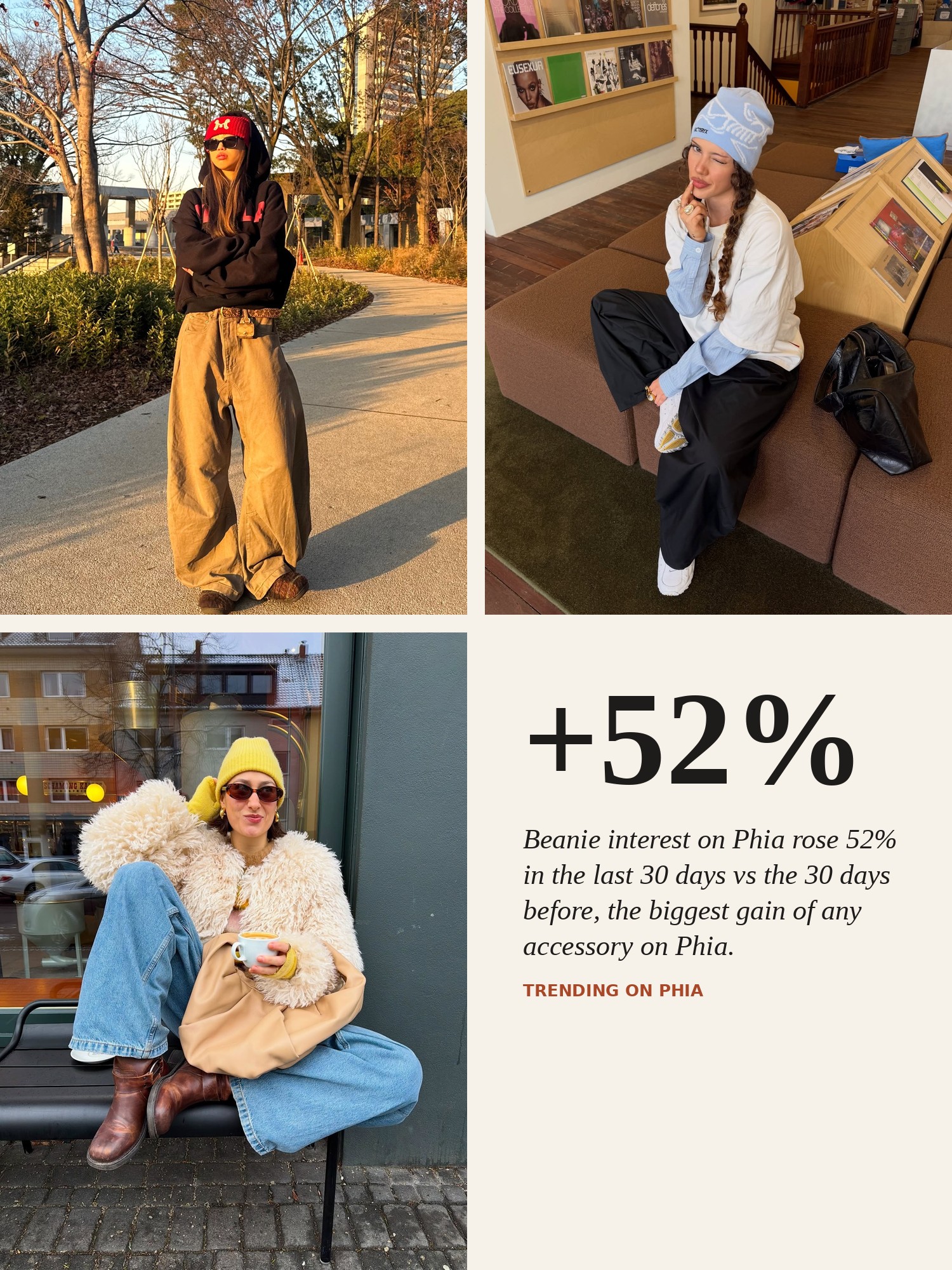
On Phia, beanie interest rose 52% in the last 30 days vs the 30 days before, the biggest gain of any accessory on Phia; sunglasses fell 22% and belts fell 20% over the same comparison. This is a beanie-category signal, not proof that cashmere alone is the cause. I like the distinction.
Which brings me to Victoria Beckham’s A/W12 catwalk in New York in 2012. AnOther reported that she dressed models in loose black beanies inspired by her husband’s headwear. A knit cap can make a reference without turning the whole look into a costume.
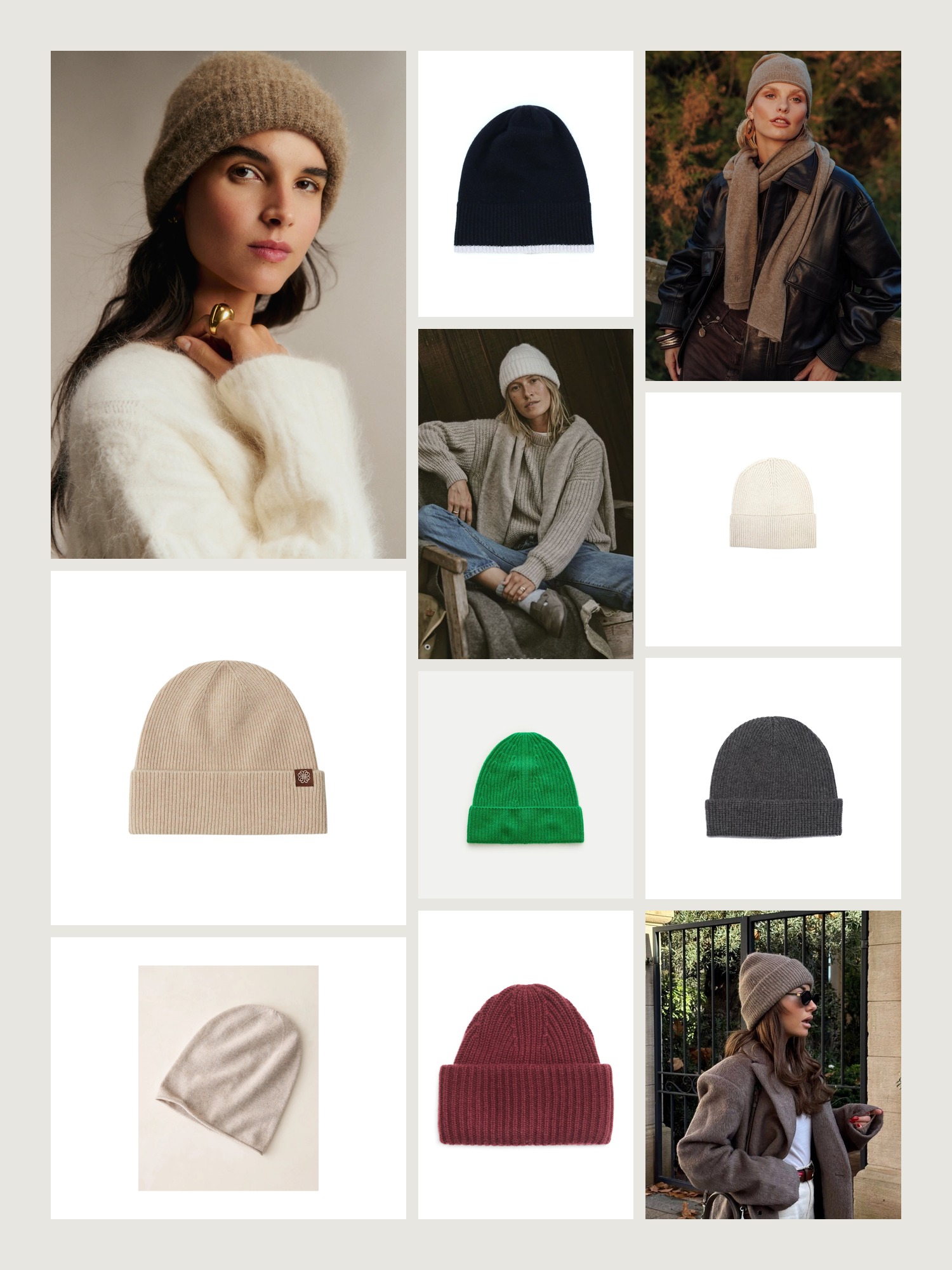
Some neutral ribs made me think about proportion. Some bright colors made me reconsider the outfit. And some little cuffs suggested the hat could have the final word without raising its voice. So, here are five lessons for choosing a cashmere beanie that looks like an idea, not a weather emergency.

1. Neutral can still have a pulse.
Neutral does not have to mean invisible. A cashmere beanie is a tiny color decision at the point where your coat ends, so I would choose it beside the outerwear I actually reach for, not in isolation. A hat can be quiet and still have a texture opinion.
Cashmere makes that choice interesting before color even enters: the Sustainable Fibre Alliance explains that cleaned cashmere is spun into yarn, then knitted or woven. Quince’s Mongolian Cashmere Ribbed Beanie in oatmeal brings a generous foldover; Gobi Cashmere’s Cashmere Rib Knit Beanie keeps the beige rib close. Lauren Ralph Lauren’s camel Signature cap has vertical ribs, while White & Warren’s black Plush Rib uses a finer midweight texture.
White & Warren’s gray Heather ribbed cap takes the same restraint into a lighter knit, and Jenni Kayne’s taupe marl cable adds shadow. LISA YANG’s Stockholm cap is the fine-rib cream version. I would let one of those textures play against a smoother coat instead of stacking rib on rib.
My practical test: hold the cap beside your coat and scarf, then choose the two fabrics that look different from arm’s length. The point is not matching every shade; it is giving the eye one soft landing before it meets your face. What I would skip: near-identical oatmeal ribs if your coat already has a strong knit-like texture. Although a neutral hat can be the most opinionated thing on an otherwise quiet outfit.
Neutral cashmere beanies

Mongolian Cashmere Ribbed Beanie
Quince
$34.9

Cashmere Rib Knit Beanie
Gobi Cashmere
$89

Cashmere Rib Cuff Beanie
Nordstrom
$49

Signature Cashmere Beanie
Lauren Ralph Lauren
$98

Cashmere Plush Rib Beanie
White & Warren
$190

Cashmere Luxe Ribbed Beanie
White & Warren
$215

Cashmere Cable Beanie
Jenni Kayne
$125

Stockholm Cashmere Beanie
LISA YANG
$190
2. A tall crown needs one anchor.
An oversized crown should look intentional, not like a hat searching for a lost map. AnOther’s styling note is to perch a beanie slightly oversized; I like that as a starting point, not a law. The crown should have room, but the cuff still needs to meet the coat collar without a wrestling match.
The Portolano toffee slouch hat is an 11-inch, chunky four-ply rib, while its black-and-heather contrast-tip style keeps the extra height but changes the finish. A Hat Attack ivory pom version can be worn cuffed or loose, and the plain Classic Slouch Hat lets the wide cuff do the work. Haven Well Within has a mushroom jersey cap with a roll hem; J.Crew brings a brushed blue cap with a fuzzier crown, plus a rugby stripe variation if the outfit needs a second color.
Damson Madder has a charcoal tie cap with ear flaps and a cable stitch, so it reads more practical than floaty. On Phia, beanie interest rose 52% in the last 30 days vs the 30 days before; that category-wide rise is a reason to rethink your hat drawer, not a cashmere-specific claim.
Practical test: I would try the crown perched first, then lower it until the cuff sits where the hat actually stays through a commute. What I would skip: a tall crown plus a huge pom plus ear flaps when the coat already has a dramatic collar. Although a hat can be oversized without making the rest of the outfit work overtime.
Slouchy and oversized cashmere beanies

Cashmere Slouchy Hat
Portolano
$147

Cashmere Beanie with Contrast
Portolano
$150

Classic Cashmere Slouch Hat with Faux Fur Pom
Hat Attack
$144

Classic Cashmere Slouch Hat
Hat Attack
$120

Cashmere Beanie
Haven Well Within
$78

Passport Exclusive Brushed Cashmere Beanie
J.Crew
$138

Brushed Cashmere Beanie in Rugby Stripe
J.Crew
$123.99

Turn Up Tie Cashmere Mix Beanie
Damson Madder
$95
3. Give color one clear job.
For color, I want one clear decision, not a committee. Naomi Campbell’s Perry Ellis by Marc Jacobs Grunge runway look in 1993 paired a knitted beanie with a check dress, suede jacket, and combat boots; one hat color can sit inside a larger idea rather than make the whole outfit match itself. That is a surprisingly generous permission slip.
J.Crew’s Green Picnic cap makes a mossy outfit feel more awake, while Quince’s burgundy version warms up navy or camel. Charter Club’s Fierce Pink cap can be the single bright point against a dark coat. Haven Well Within’s saffron roll-hem cap and Guest in Residence’s Carmine rib take two other routes into saturated color; Portolano’s baby blue slouch creates a cooler contrast.
Carolina Amato’s black-and-red heart graphic has a little wink built in. I would repeat only the color, not the motif: a scarf in the same family or a small bag can make the combination deliberate without turning into a matching set.
Practical test: put the colored cap beside your coat, then cover it and uncover it; if the outfit feels better with the color back, you have your accent. Although a red heart does not need a second heart to prove the point.
Colored cashmere beanies

Mongolian Cashmere Ribbed Beanie
Quince
$34.9

Cashmere Beanie
J.Crew
$98

Cashmere Rib Cuff Beanie
Nordstrom
$49

100% Cashmere Cuffed Beanie, Created for Macys
Charter Club
$55.65

Cashmere Beanie
Haven Well Within
$78

Rib Cuff Cashmere Beanie
Guest in Residence
$145

Cashmere Slouchy Hat
Portolano
$165

Cashmere Blend Heart Beanie
Carolina Amato
$90
4. The cuff is a proportion, not a rule.
A folded edge changes the face framing as much as the shade. A Kashmir shawl in the Spencer Museum’s collection, dated circa 1870, was pieced from more than 200 small parts by a skilled needleworker. It is a reminder that surface and construction can carry a story together. Here, the small decisions are the rib, the turnback, and the depth above your brow.
Veronica Beard has a burgundy merino-cashmere foldover that reads sporty; Charter Club gives its vanilla Fair Isle cap a patterned cuff to anchor. Helen Kaminski makes the Vivian cuff in a finer gauge. Vince adds a chunky camel rib with a deeper fisherman feel, while THE CELECT tan cap is a more open 6-gauge knit. J.Crew brings a mint cable for more texture, and NAADAM adds a scarlet rib that lets the cuff hold a clear color.
Everlane gives its charcoal rib a mostly cashmere blend with recycled fiber, nylon, and elastane, so it adds some stretch to the composition. I would turn the cuff once, then twice, checking that it reaches the top of the ear without cutting the face in half.
What I would skip: stacking ear flaps under a deep rib cuff when a high coat collar is already in play. The hat should frame, not barricade. Although a cuff is only a fold until it becomes architecture.
Cuffed and fisherman cashmere beanies

Merino Wool & Cashmere Rib Foldover Beanie
Veronica Beard
$178

Fair Isle 100% Cashmere Cuffed Beanie, Created for Macy's
Charter Club
$56.39

Vivian Cashmere Cuff Beanie
Helen Kaminski
$210

Boiled Cashmere Chunky Rib Beanie
Vince
$168

Cashmere Beanie
THE CELECT
$75

Cashmere cable-knit beanie
J.Crew
$123.99

Signature Cashmere Ribbed Beanie
NAADAM
$88

The Cashmere Ribbed Beanie
Everlane
$88
5. Let the set earn its matching act.
Matching does not require wearing the entire cast at once. Charter Club’s Fair Isle box set brings a cashmere hat, scarf, and gloves in one knit; it can be split into separate roles instead of an entire holiday uniform. Faherty’s charcoal mixed-stitch cap uses a wool-cashmere blend, while TBCo’s two-tone pink rib adds merino and elastane to its cashmere. Loulou de Saison’s Yana cap mixes wool, cashmere, and silk; Moncler’s white logo-patch style makes cashmere the small percentage inside a mostly virgin-wool rib.
Carolina Amato’s avocado H155 and Jacquemus’s beige chevron are two more blends, while Damson Madder’s red earflap cap adds ties. I would start by splitting the set: wear the hat with a plain scarf, or keep the scarf with a coat and let the gloves make a quiet appearance. You get the color relationship without the matching-pieces parade.
Pringle of Scotland advises checking the care label before washing cashmere, pressing water through gently rather than rubbing or wringing, then drying it flat away from direct heat or sunlight. Before committing to a full set, I would lay the hat, scarf, and gloves beside the coat and take one item away; if the combination still feels complete, it can work in separate parts.
Although a matching scarf and hat can be adorable, no one should have to audition all three pieces at once.
Cashmere beanie sets and blends

Cashmere Hat, Gloves & Scarf Fair Isle Boxed Gift Set
Charter Club
$208.95

Cashmere Mixed Stitch Beanie
Faherty
$128

Cashmere & Merino Ribbed Two-Tone Beanie
TBCo
$85

Yana Wool, Cashmere & Silk Beanie
Loulou de Saison
$170

Logo Patch Virgin Wool & Cashmere Beanie
Moncler
$380

H155 Ribbed Beanie
Carolina Amato
$148

Le Bonnet Chevron Virgin Wool & Cashmere Beanie
Jacquemus
$340

Turn Up Tie Cashmere Mix Beanie
Damson Madder
$95
The hat gets the last word
Five lessons, one small accessory: let texture do more than a neutral, let the crown relax, let one color speak, make the cuff suit your face, and separate the set when it needs air. I remain extraordinarily susceptible to a coordinated hat-and-scarf situation (and to the idea that one more layer will fix a late train).
Still, the best beanie is the one that belongs to the outfit and to the day, not a role assigned by a trend report. I would leave the cinnamon roll test in place. It has a very strong track record.