A floral dress can feel like fall when you tune the ground, length, sleeve, and shine instead of following a season rule. I keep returning to dark botanicals, good layers, and the small thrill of an unexpectedly useful old print.
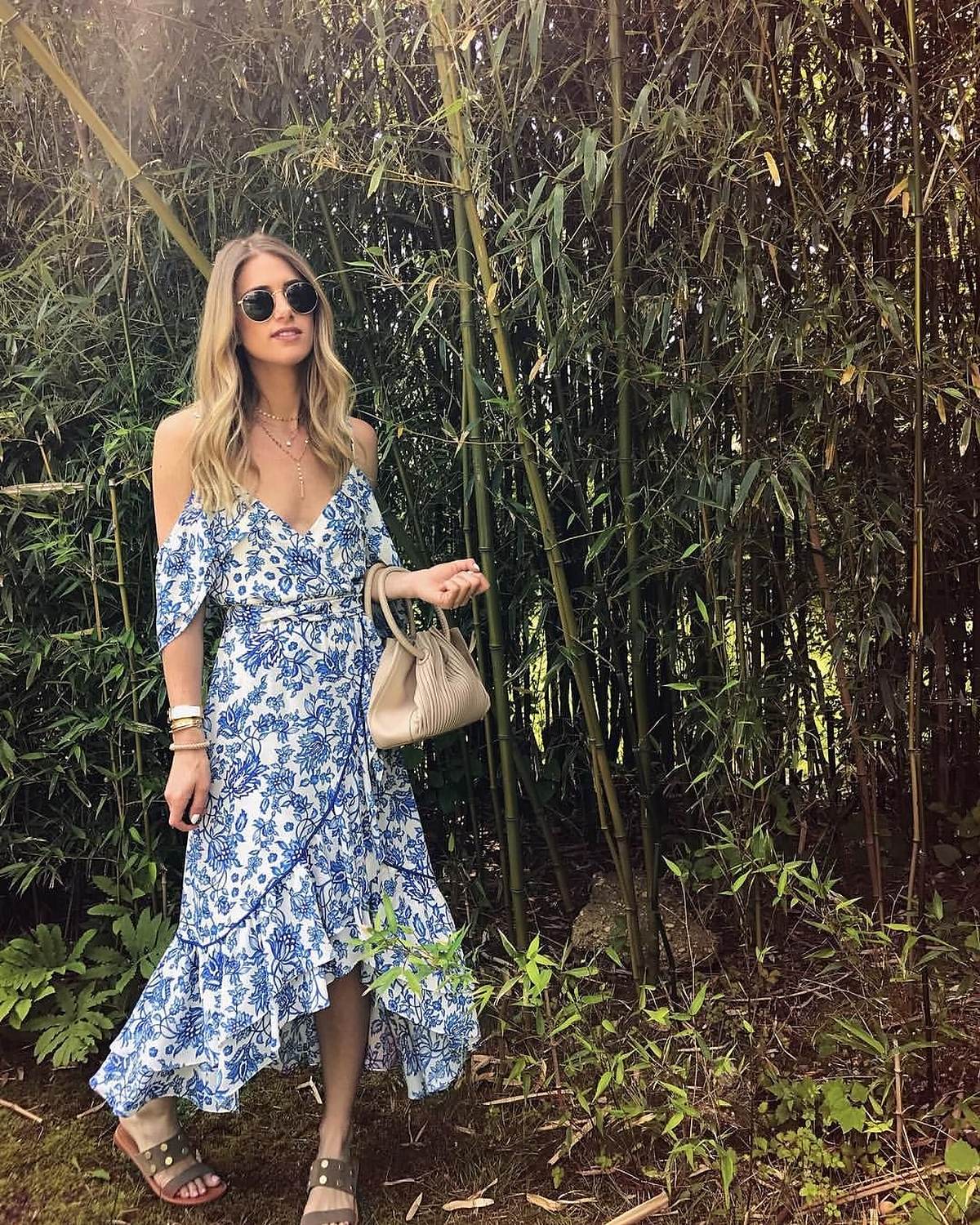
The Floral Dress Edit: Five Lessons in Letting the Flowers Stay
A print with a longer season
My relationship with a floral dress is a small, completely unscientific inspection. Within approximately four seconds I have clocked the flower scale, the ground color, and whether the print looks like a pressed herbarium or the wallpaper in a slightly haunted inn. I have no shame about this.
But somewhere between tiny ditsy petals, giant hothouse roses, and the idea that flowers belong only to spring, the floral dress has gotten a little complicated. We are told to keep prints quiet and also to wear a bouquet big enough to announce itself at the train station. That is a lot of botanical management for one garment.
Which brings me to post-Liberation Paris in winter 1947. Vogue’s retrospective places Christian Dior’s New Look in a city of full skirts and wasp-waisted Bar jackets, an extravagant silhouette imagined by a new designer after years of frugal dress. It is not a floral-print origin story. It is a reminder that a dress carries the mood of its moment, and that shape can change how a print reads.
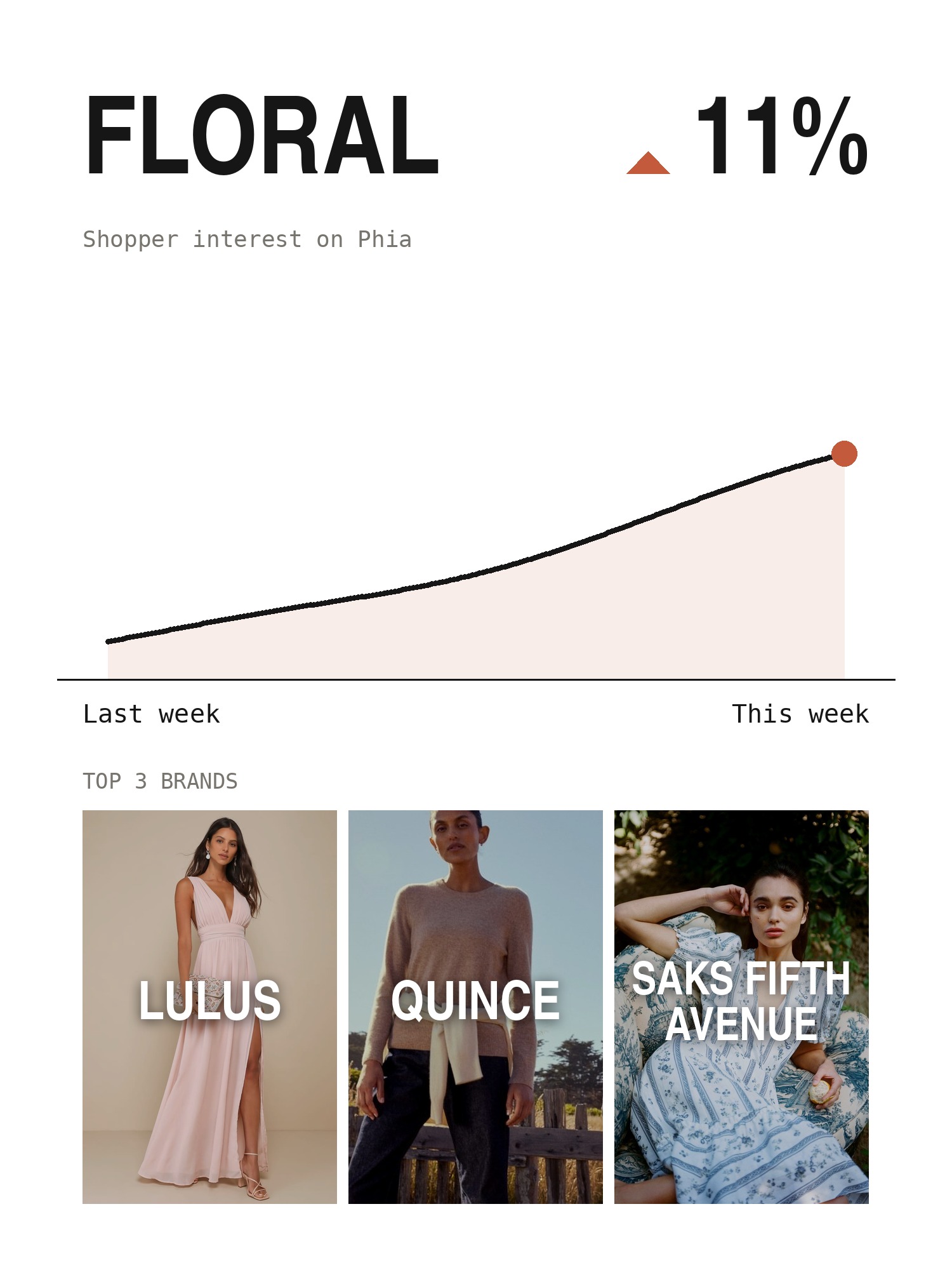
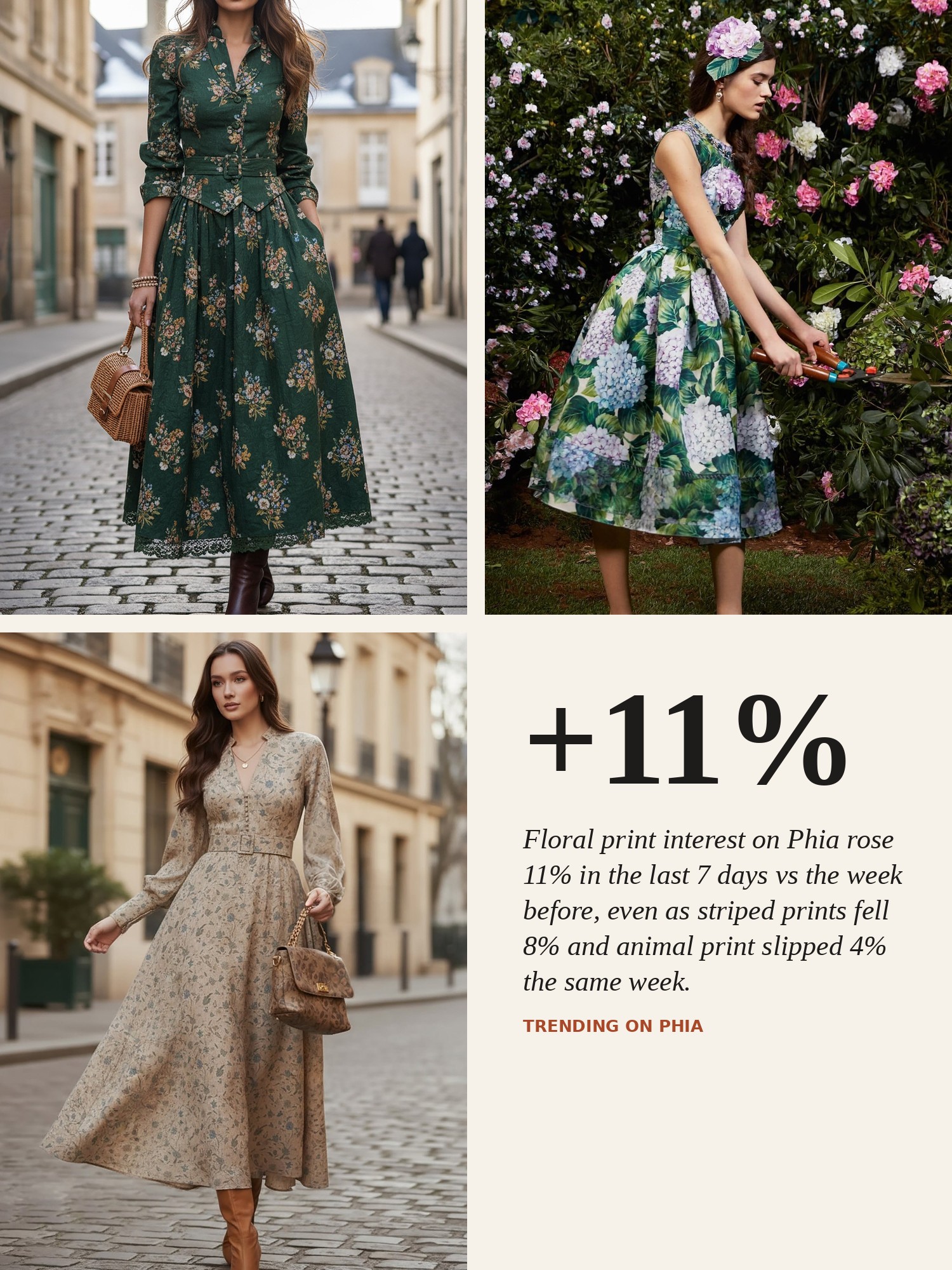
On Phia, floral print interest rose 11% in the last 7 days versus the week before. Some of what I learned is that a dark ground can make flowers feel right for a colder day. Some of it is that length and sleeves change the whole conversation, and some of it is that a slip dress can be a daytime person. So, here are five lessons for choosing the floral dress that already makes sense in your closet.
1. Dark florals deserve the night shift.
Dark florals are not a compromise. They let the bouquet stay while the background gets quieter. A fine Indian chintz textile in the V&A, dated around 1715 to 1725, was probably dress material; similar painted cottons from South India’s Coromandel Coast changed dress and furnishings when they reached Britain, Holland, and France. The history is less about pretty flowers than about color and cloth traveling with them.
This edit has that ground-color logic in several registers. Quince Black Vintage Pink Petite Floral High Neck Midi keeps the blooms tiny over black silk, while the Quince Tank Midi uses a straighter sleeveless shape. The Svea Black Floral Tiered Tie-Strap Midi goes painterly against black chiffon, and the Donna Karan New York Floral Print Midi puts pale poppies over black crepe. Ever New Courtney adds long sleeves; Tanya Taylor Thea carries rose, gold, and olive over dark fig.
My home test is to add a black collared shirt over a brighter sundress, Vogue’s fall styling suggestion, and see whether the flowers feel more autumnal rather than simply darker. Try one layer at a time. What I would skip: adding a second busy print before deciding whether the dress’s own ground already does the work. A flower can have company without a chaperone.
Dark floral midi dresses for fall

Black Vintage Pink Petite Floral Washable Stretch Silk High Neck Midi Dress
Quince
$159.9

Black Vintage Pink Petite Floral Washable Stretch Silk Tank Midi Dress
Quince
$84.9

Svea Black Floral Tiered Tie-Strap Midi Dress
Lulus
$45

Floral Print Midi Dress
Donna Karan New York
$80.55

Courtney Floral Long Sleeve Midi Dress
Ever New
$89.55

Thea Floral A-Line Midi Dress
Tanya Taylor
$495

Dark Blue Maira Floral Midi Dress
FARM Rio
$298

Floral Jacquard Dress
Adrianna Papell
$160.3
2. A long hem gives the print room.
Length changes the math. A maxi gives flowers more space, which can feel romantic or like a lot of print to coordinate. One V&A record makes the old craft feel very close: a floral longcloth made in Gujarat for the Indonesian market was hand-painted and hand-printed with wooden blocks carved in relief. The bloom was a sequence of skilled marks, not a generic decoration.
That history makes me partial to maxis with one clear point of view. Quince Washable Stretch Silk Tiered Maxi gathers pink and ivory blossoms over black silk. The Rene Black Floral Maxi turns saturated blue flowers into a halter column. Ming Wang Floral Printed Crepe de Chine Maxi Shirt Dress gives oversized ivory botanicals a button-front frame, while Significant Other Parisa places sunset-hued flowers low across white linen. English Factory Floral Print Smocked Maxi keeps pale blooms small against navy cotton.
For a practical styling test, add a straight leather trench or overcoat and ankle boots, the kind of pairing Vogue suggests for an ankle-skimming dress. If the flowers still read clearly, you do not need matching accessories. What I would skip: a second loud pattern competing with a dress that already fills the frame. Let the print be the conversation. The shoes can be a footnote.
Floral maxi dresses

Washable Stretch Silk Tiered Maxi Dress
Quince
$130

Rene Black Floral Maxi Dress
Lulus
$55.2

Floral Printed Crepe de Chine Maxi Shirt Dress
Ming Wang
$137.49

Parisa Placed Floral Strapless Linen Maxi Dress
Significant Other
$144

Floral Print Smocked Sleeveless Maxi Dress
English Factory
$130

Forever Young Javaly Floral Maxi Dress
Acler
$262

Lilah Floral Silk Maxi Dress
LoveShackFancy
$795

Theia Floral Print Halter Maxi Dress
Lovers and Friends
$250
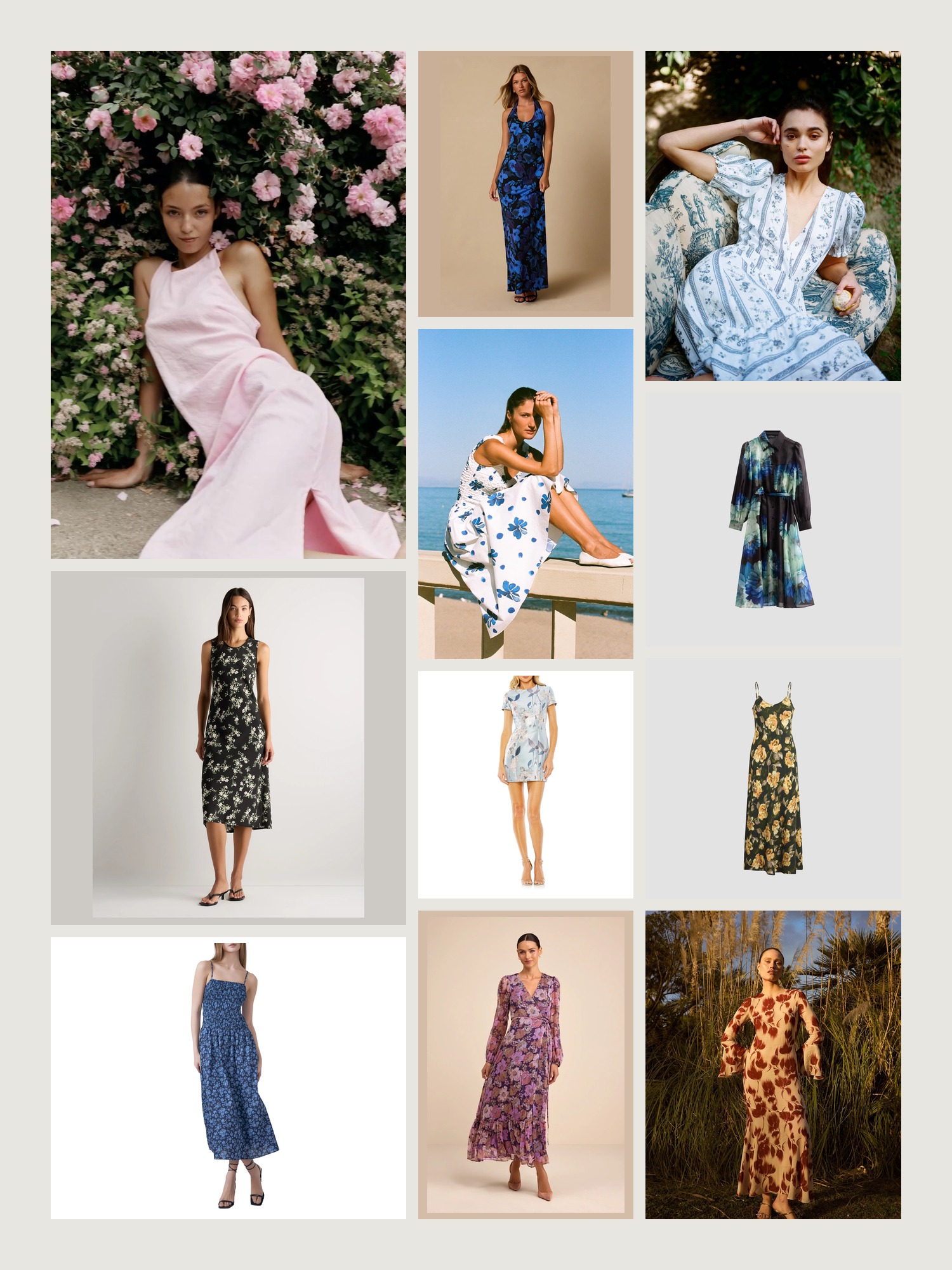
3. The mini can carry one big idea.
A short hem gives the print less acreage, so I let the neckline and shape do more of the talking. There is a useful wrinkle in the textile history here: Britain banned painted or printed cottons from 1721 to 1774, and printers worked around the restriction with fustian or linen. Copperplate printing, first used on paper, was adapted for textiles shortly after 1750. A flower print has always been a design choice and a technical one.
The Edwyn Floral Print Sleeveless Minidress sets brown flowers against a high bateau neck. The Ieena for Mac Duggal fitted mini keeps its blue print pale and loose; the Nomi Floral Print Halter Minidress packs dense blue botanicals around a braided neckline. Etro Floral Print Mini puts pink, yellow, and aqua blooms across the bodice, while Ganni Floral Print Denim Minidress adds red flowers, a collar, and a ruffled hem. Carolina Herrera Floral Sleeveless Shift Minidress sets oversized roses against midnight navy. Each one gives the eye a different place to land.
I would try a plain coat or a flat boot, then check the hem while seated. If the print stays legible and the skirt does not bunch against the layer, that is enough information. When the neckline already has a strong detail, I would keep jewelry quiet. Every inch of an outfit does not need to audition.
Floral mini dresses

Edwyn Floral Print Sleeveless Minidress
Princess Polly
$65

Short Sleeve Fitted Floral Mini Dress
Ieena for Mac Duggal
$298

Nomi Floral Print Halter Minidress
SUGARLIPS
$79

Floral Print Mini Dress
Etro
$1,650

Lachine Botanical Print A-Line Mini Dress
Acler
$495

Floral Sleeveless Shift Minidress
Carolina Herrera
$2,790

Floral Print Denim Minidress
Ganni
$310

Evermore Floral Mini Dress
Bardot
$125
4. Sleeves can do the layering for you.
Sleeves are their own kind of weather plan. A V&A record of an eighteenth-century gown notes that printed fustians, linens, and cottons could be washed, unlike the silks and wools used for dress at the time. That is a historical clue about the practical appeal of printed cloth, not a care instruction for any dress now. For a current garment, I would still read its label, especially when silk is involved.
The Feeling Sweet purple floral wrap maxi uses sheer balloon sleeves above an ankle-length skirt. IVONNE Black Mini sets red blooms under long puff sleeves, while Zimmermann Floral Linen & Silk Long-Sleeve Minidress has elastic-cuff volume. Elie Tahari Kataleya gives ink-dark flowers a belted shirt-dress shape with long button-cuff sleeves; Elie Tahari Romy uses sheer organza sleeves over teal and blue blooms. Ulla Johnson Amari takes the full-length route in black jersey and jewel-toned flowers.
Try one layer over the dress and notice whether the sleeve still has room to show. The black collared-shirt idea can sharpen a light sundress, but here I would let the sleeve be the detail. What I would skip: a jacket cuff that covers a balloon sleeve, unless hiding the very thing you chose is the point. A good sleeve needs a little space.
Long-sleeve floral dresses

Feeling Sweet Purple Floral Print Long Sleeve Wrap Maxi Dress
Lulus
$63.2

Black Mini Dress With Red Floral Print And Drawstring Waist
IVONNE
$109.5

Floral Linen & Silk Long-Sleeve Minidress
Zimmermann
$719.99

Kataleya Floral Stretch-Silk Self-Belt Midi-Shirtdress
Elie Tahari
$545

Romy Floral Organza Self-Belt Midi Shirtdress
Elie Tahari
$525

Amari Floral Long-Sleeve Maxi Dress
Ulla Johnson
$490

Long Sleeve Floral Print Dress
Desigual
$119.4

Melise Long Sleeve Floral Print Body-Con Dress
AFRM
$118
5. A slip can go almost anywhere.
Slip dresses invite a different kind of attention. The V&A account of chintz-making describes outlines, resist, and color painted over many steps, with dyes drawn from fermented iron, pomegranate, indigo, and other combinations. It makes me look twice at where the flowers land, not only what colors they use.
Milly Lily Floral Satin Maxi lets an ombré bloom travel down a bias-cut slip. Favorite Daughter Golden Flowerbed sets oversized gold flowers against black crepe-viscose, and Veronica Beard Kieren gives satin florals a pleated sweetheart bodice. AMUR Coralee carries painterly pink blooms across a carmine bias-cut maxi. Quince Moonstone Blue Heirloom Floral uses washable silk with a softly draped neckline; Lee Mathews Bluebell adds a contrast lace hem.
My styling test is to hold a plain blazer next to the dress, then a knit, and see which one lets the print stay legible while changing the formality. For daytime, I would try a cardigan or an open button-up; for dinner, a clean jacket. I do not need every satin slip to pretend it is an evening gown. Some can simply be a dress that catches a little light and keeps its flowers.
Floral slip and satin dresses

Lily Floral Satin Maxi Slipdress
Milly
$177.74

The Favorite Floral V-Neck Maxi Dress
Favorite Daughter
$111.59

Kieren Floral Satin Midi Slipdress
Veronica Beard
$798

Coralee Floral Slip Maxi Dress
AMUR
$398

100% Washable Silk Maxi Slip Dress
Quince
$109.9

Favorite Icon Dark Blue Floral Satin Cowl Neck Slip Midi Dress
Lulus
$55.2

Bluebell Slip Silk Dress
Lee Mathews
$141

Seaside Garden Slip Floral Maxi Dress
VICI
$71
Flowers get to stay
The lessons add up to a quieter kind of permission: let the ground color do some work, choose a length that suits the day, and give the print enough space to be itself. I still have a weakness for a dress with a slightly overgrown garden, approximately one minute before I decide I need to take it somewhere.
And flowers are not the only print in the story. On Phia, striped print interest fell 8% in the last 7 days versus the week before, while animal print slipped 4% in the same week. Trends are weather, not instructions. I may still be talked into one more bouquet, but I am at least getting better at asking whether it has somewhere to go.