The Ordinary beginner retinol I would start with is Retinol 0.5% in Squalane, used twice a week with a barrier cream over it and sunscreen every morning. I walk the whole ladder up to Retinal 0.2% Emulsion, plus the creams and sunscreens to wear with it.
The Ordinary Beginner Retinol: Which Serum to Start With
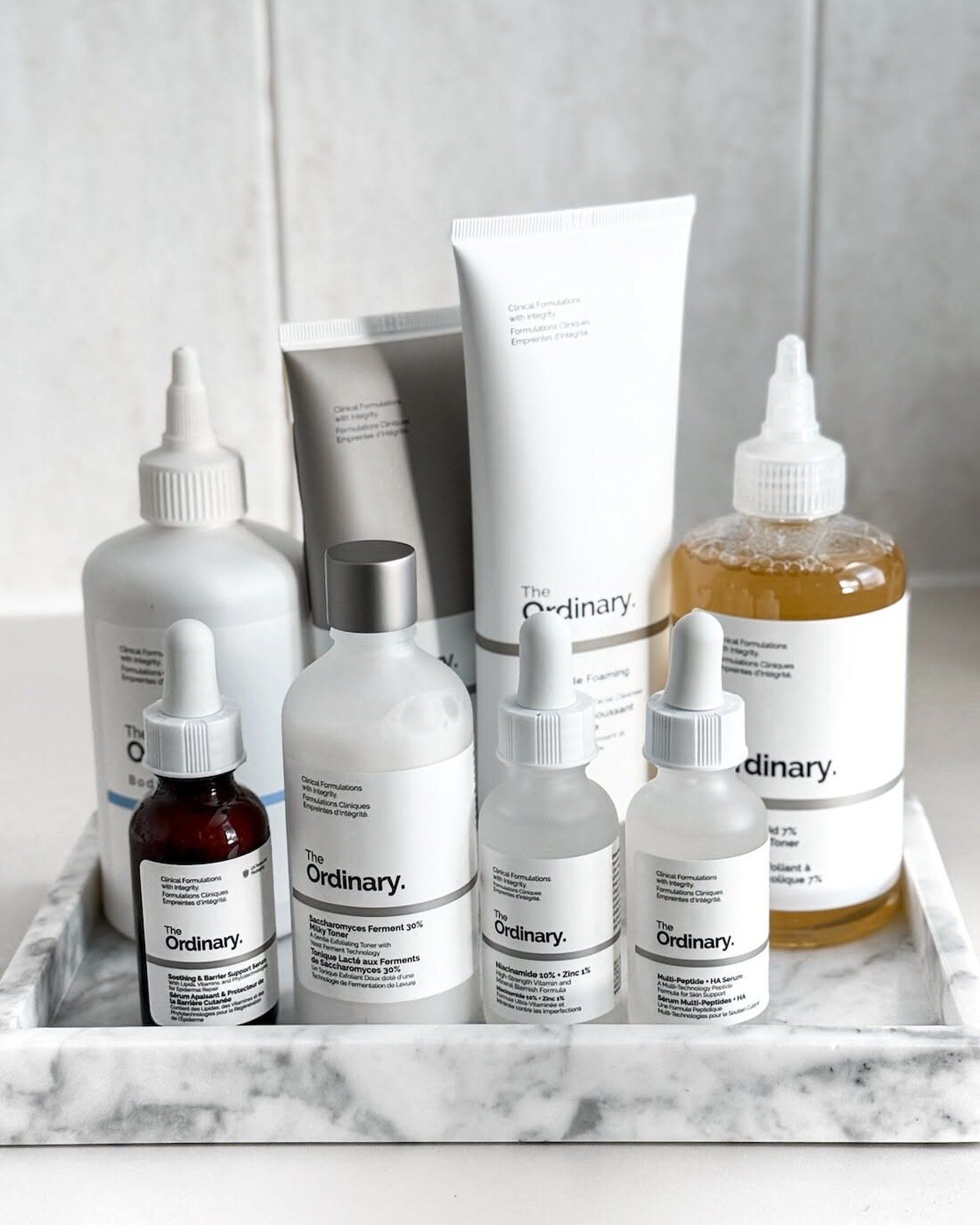
The retinol ladder
George Wald won a share of the 1967 Nobel Prize in Physiology or Medicine for working out the chemistry of vision. Part of what he showed is that vitamin A is a component of rhodopsin, the light-sensitive pigment in the retina. Vitamin A, in other words, is part of how you see this sentence. The same family of molecules sits in a small dropper bottle on your bathroom shelf.
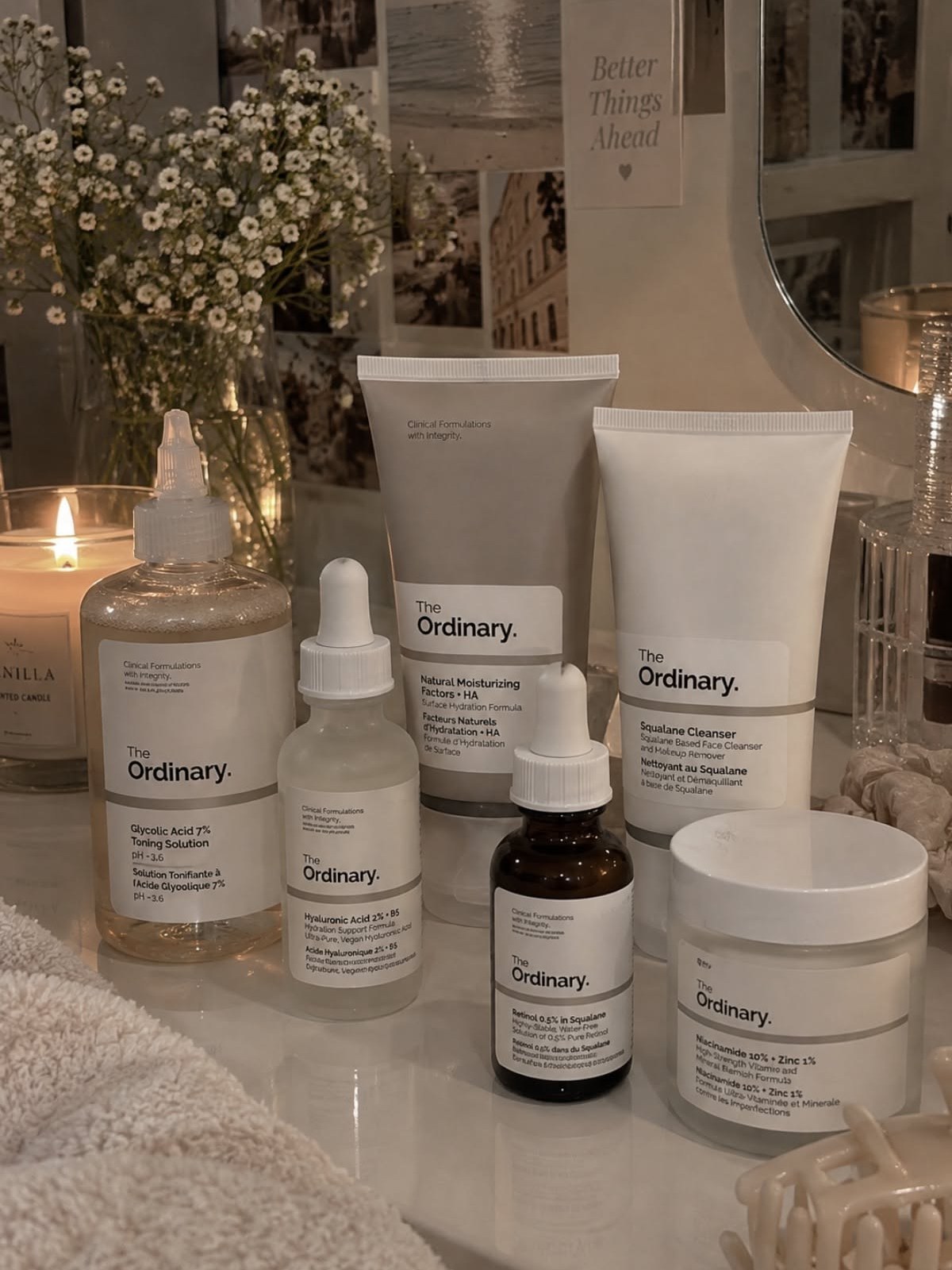
The Ordinary retinol range is the friendliest way I know to meet that family. The brand says it was founded in 2016 by Brandon Truaxe, to "bring integrity to the industry," and that skincare should be "effective, honest, and accessible to everyone." The Estee Lauder Companies completed its purchase of parent company DECIEM in May 2024. What has not changed is the naming. Every label reads like a lab tag, with the percentage right there, so you can see the ladder: Retinol 0.2%, then 0.5%, then 1% in Squalane, with retinal and Granactive Retinoid off to the side. The brand's own advice is to start at the bottom and slowly work your way up.
The trick is to treat the percentages as rungs, not as promises. Retinol 0.5% in Squalane is the middle rung, a water-free serum you use a few drops at a time in the evening. Retinal 0.2% Emulsion sounds gentler, but the brand calls it its highest-strength retinoid and suggests it for experienced users, starting once a week. Granactive Retinoid 2% Emulsion is the one that does not need converting on the skin, according to the brand, a middle path if retinol has been fussy for you.
The rest of the first grid is the peptide side of the shelf. Argireline Solution 10%, Matrixyl 10% + Hyaluronic Acid, Multi-Peptide + Copper Peptides 1% and the Multi-Peptide + Hyaluronic Acid Serum are the non-retinoid options for fine lines, and GF 15% Serum is the odd one out, a repair serum for evenings when retinol needs a night off.
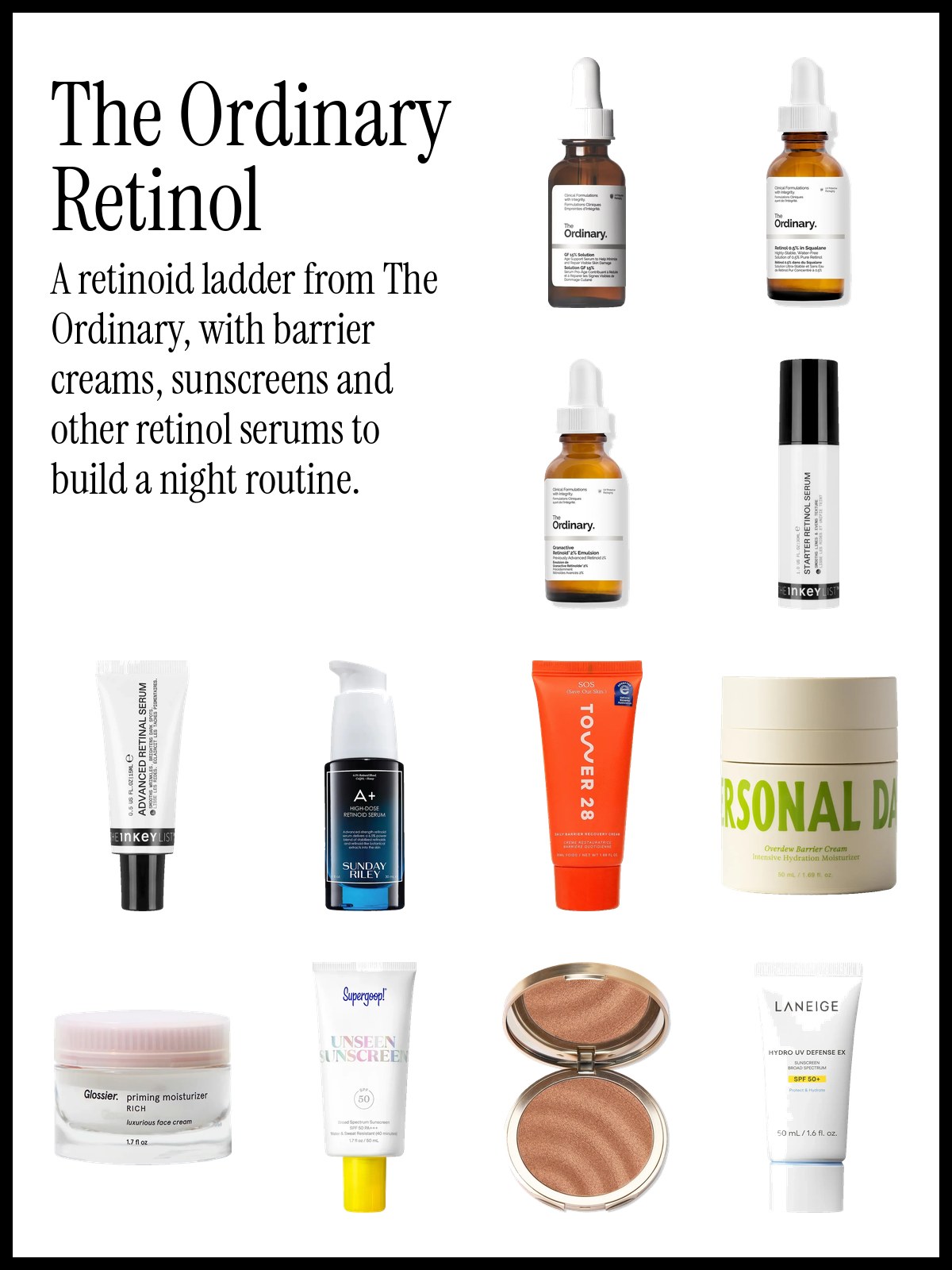
The Ordinary retinoids and line smoothing serums

Retinol 0.5% in Squalane, Intermediate Retinol Serum
The Ordinary
$9.3

Granactive Retinoid 2% Emulsion for Wrinkles and Uneven Texture
The Ordinary
$12.1

Retinal 0.2% Emulsion High-Strength Retinoid Nighttime Treatment
The Ordinary
$14.9

Argireline Solution 10% for Reducing Fine Lines
The Ordinary
$9.7

Matrixyl 10% + Hyaluronic Acid for Fine Lines and Wrinkles
The Ordinary
$10.9

Multi-Peptide + Copper Peptides 1% for Wrinkles and Skin Elasticity
The Ordinary
$32

Multi-Peptide + Hyaluronic Acid Serum for Firmness and Elasticity
The Ordinary
$19.9

GF 15% Serum for Visible Skin Repair and Wrinkles
The Ordinary
$15.5
Other retinol and retinal serums
Start with one rule: change one active at a time. If you add a new retinoid and a new moisturizer in the same week, you will never know which one made your cheeks sting.
Once you know how your skin takes a retinoid, the alternatives are worth a look. The INKEY List's Starter Retinol Serum is named for exactly what it is, a first rung, and its Advanced Retinal Serum is the step up. Sunday Riley's A+ High-Dose Retinol Serum and Dr. Dennis Gross's Extra Strength 0.5% with ferulic acid are the more serious, more polished bottles. OLEHENRIKSEN's Double Rewind is 0.3% retinol, a number that sits neatly between the beginner and intermediate steps.
First Aid Beauty's Ultra Repair Retinol Complex Serum is the one I would look at first if you want a retinol from a repair-minded line. Shani Darden's Retinol Reform uses 1% encapsulated retinol, and Medik8's Crystal Retinal is a retinal serum for people who already know they like the category.
A pairing I like: keep The Ordinary's retinol 0.5% on three nights of the week and use one of these on the others only if you enjoy the texture more. Otherwise you are simply doubling up on retinoids, and the brand itself says not to use its retinol with other retinoids.
What I would skip: a new retinoid the week before a wedding, a beach trip or anything with a camera. Give it a quiet month first.

Starter Retinol Serum for Fine lines + Wrinkles
The INKEY List
$15

Advanced Retinal Serum for Fine lines + Wrinkles
The INKEY List
$22

A+ High-Dose Retinol Serum
Sunday Riley
$85

Ultra Repair Retinol Complex Serum
First Aid Beauty
$49

Double Rewind Pro-Grade 0.3% Retinol for Fine Lines & Wrinkles
OLEHENRIKSEN
$72

Advanced Retinol + Ferulic Perfectly Dosed Retinol Extra Strength 0.5%
Dr. Dennis Gross
$42

Retinol Reform with 1% Encapsulated Retinol for Fine Lines & Wrinkles
Shani Darden Skin Care
$75

Crystal Retinal Age-Defying Vitamin A Night Serum for Wrinkles
Medik8
$87
Barrier creams and ceramide moisturizers
Try this: put your retinoid on, wait a couple of minutes, then press a barrier cream over the top instead of rubbing it in. Pressing keeps your skin calm, and the cream sits between the retinoid and the air.
This is the shelf that makes the rest possible. Tower 28's SOS Daily Barrier Recovery Cream is the one I would hand to anybody with reactive skin, and Personal Day's Overdew Barrier Cream is a softer, more cushioned choice. Glossier's Priming Moisturizer Rich has ceramides in the name and feels like a real face cream, not a sheet of cold cream. ILIA's Barrier Build Skin Protectant Cream also carries ceramides and works well as a last step on dry evenings.
YISE Beauty's Xtremely Rich Skin Barrier Moisturizer is for the nights when your cheeks feel tight even before the retinoid. AESTURA's ATOBARRIER365 Cooling Hydro Soothing Water Cream is the light one, a gel-like water cream for summer or for oilier skin. Skinfix's Skin Barrier Restoring Gel Cream and Hanyul's Red Rice Hydrating Cream with ceramide round out the lighter side.
A pairing I like: the lighter creams in warm months, the richer ones once the heating goes on. Your retinoid stays the same. Only the cushion changes.
What I would skip: exfoliating acids on the same night as a retinoid. One active is plenty for one evening, and the barrier cream is there to repair, not to referee.

SOS Daily Barrier Recovery Cream
Tower 28
$24

Overdew Barrier Cream
Personal Day
$42

Priming Moisturizer Rich Face Cream with Ceramides
Glossier
$35

Barrier Build Skin Protectant Cream – Moisturizer with Ceramides
ILIA
$64

Xtremely Rich Skin Barrier Moisturizer with Ceramides
YISE Beauty
$68

ATOBARRIER365 Cooling Hydro Soothing Water Cream Moisturizer
AESTURA
$32

Skin Barrier Restoring Gel Cream
Skinfix
$54

Korean Red Rice Hydrating Cream Moisturizer with Ceramide
Hanyul
$40
Facial sunscreens for daytime
Here is a test I like for sunscreen: put it on, then rub your fingertips together. If it rolls into crumbs, you will stop wearing it, and the retinoid becomes pointless.
Sunscreen is the daytime half of the pairing. The Ordinary's own retinoid guide says retinoids go in the evening and sunscreen goes on every day. Supergoop's Unseen Sunscreen SPF 50 is the one to try if you want nothing to show on the skin. Kosas's Dreambeam Comfy Smooth SPF 40 is the soft, comfortable one, Kopari's Sun Veil Illuminating SPF 30 adds a little radiance, and Summer Fridays' ShadeDrops is a mineral milk, a lighter idea of what sunscreen can be.
LANEIGE's Hydro UV Defense is hydrating by name, which helps when your retinoid is drying you out. Goldfaden MD's LumiShield and Dr. Dennis Gross's All-Physical Lightweight Wrinkle Defense are the ones to compare for a daily face lotion, and FULLY's Rice Ceramide Moisture Barrier Sunscreen SPF 50 brings a little barrier support into the morning step.
A pairing I like: barrier cream at night over the retinoid, then a hydrating sunscreen in the morning, so the skin always has something soft on top.
What I would skip: relying on makeup with SPF to do the job. Use a proper layer of sunscreen first, then whatever you like over it.

Unseen Sunscreen SPF 50
Supergoop!
$38

LumiShield Broad Spectrum SPF 50
Goldfaden MD
$48

Sun Veil Illuminating Sunscreen SPF 30
Kopari
$48

Hydro UV Defense Sunscreen Broad Spectrum SPF 50+
LANEIGE
$30

Dreambeam Comfy Smooth Sunscreen Broad Spectrum SPF 40
Kosas
$40

ShadeDrops Broad Spectrum SPF 50 Mineral Milk Sunscreen
Summer Fridays
$38

All-Physical Lightweight Wrinkle Defense Broad Spectrum Sunscreen SPF
Dr. Dennis Gross
$45

Rice Ceramide Moisture Barrier Sunscreen SPF 50
FULLY
$19
Which Ordinary Retinol to Use First: The First Rung
I think The Ordinary's greatest trick is that it makes retinoids feel like a simple system instead of a dare. The ladder is right there on the label, and the brand's advice to go slowly is the best advice on the shelf.
So I would begin with Retinol 0.5% in Squalane twice a week, a barrier cream over the top and a sunscreen you actually like in the morning. Watch your skin for a month, then add a third night. Wald spent a career on what vitamin A does in the eye. You only have to be patient about what it does on your face. If you want to keep browsing, I also put together CeraVe Resurfacing Retinol Serum and The Ordinary Soothing & Barrier Support Serum Gets Its Pink From a Vitamin.






