The average price of a candle worth buying runs fifty to a hundred and thirty dollars in a small format, roughly a dollar a gram of wax. I go from small formats to the large pours and holders, and where the money really goes.
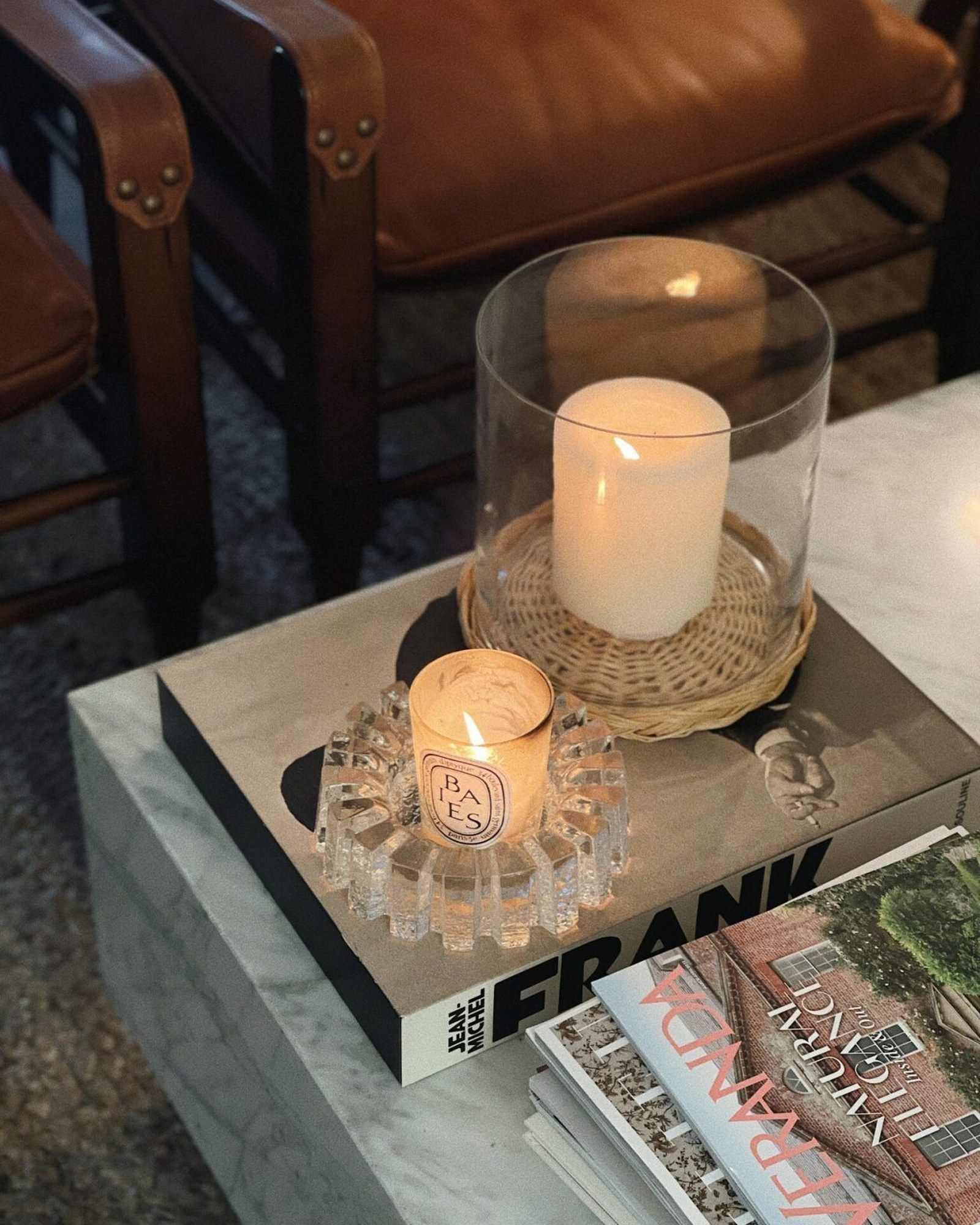
Average Price of a Candle: What a Good Scented One Costs
The honest number is about a dollar a gram of wax
A good scented candle costs somewhere between fifty and a hundred and thirty dollars for a small format, and the reason is boring rather than mystical. You are paying for fragrance oil load, wax quality and a hand-poured vessel, roughly in that order. Small formats are the right way to test a house before committing, because a seventy gram candle gives you the scent without asking you to live with it for eighty hours. At this end, look at the wax rather than the label. Coconut and rapeseed blends throw scent at lower temperatures than paraffin and burn more evenly, and beeswax burns longest but carries fragrance least well. Burn time is the number worth comparing across brands, since it makes the price per hour visible. Trim the wick to about five millimetres each time and burn for at least an hour so the pool reaches the edge, or you will tunnel a candle and waste a third of it.
The Small Formats, $30 To $135

Orange Candle
Moda Domus
$30

Joséphine scented candle, 70g
Trudon
$52

Profiteroles Candle
Moda Domus
$60

Aoyama scented candle, 260g
Astier De Villatte
$100

Reine de la Nuit Candle
RIGAUD
$105

Spiritus Sancti scented candle, 270g
Trudon
$125

Palo Santo small scented candle
Loewe Perfumes
$130

Urbino Large Iron Candleholder
il Buco Vita
$135
Then you start paying for the thing left behind
Between a hundred and sixty and three hundred and fifty dollars the vessel becomes a real part of the price, and that is not a swindle. A hand-thrown ceramic holder or a mouth-blown glass one is an object you keep after the wax has gone, which changes the arithmetic. This is also the bracket where candlesticks and holders start to make more sense than another scented pour. An unscented taper in a good holder gives you the light without competing with dinner, which is the actual reason restaurants use them. If you are buying scented at this level, buy for a specific room and a specific time of day. Heavy resins and tobacco read well in a room you use in the evening and badly in a kitchen. And check the vessel can be cleaned out, because a beautiful holder you cannot reuse is just expensive packaging. Check the vessel diameter too. A wide shallow pour needs two wicks to reach the edges, and a single-wick candle in a wide vessel will tunnel however carefully you burn it.
Where The Vessel Starts To Matter, $160 To $350

Cucumber scented candle, 330g
Loewe Perfumes
$160

Sobre ceramic candlestick
Astier De Villatte
$165

x Leanne Ford Pienza Tall Glass Candle Holder
il Buco Vita
$200

Signature Hurricane
E&S for Moda Domus
$240

Vesta scented candle, 270g
Trudon
$260

Honeysuckle medium scented candle, 610g
Loewe Perfumes
$265

Dancing Duo set of two iron candlesticks
Fourth Street
$320

Calcite candleholder
Jia Jia Home
$350
Large formats, and holders you keep for years
Above four hundred dollars there are two quite different purchases sharing a price. The first is the large pour, two or three kilograms with several wicks, which is genuinely economical per hour and made for a hallway or a big open room where a small candle does nothing. The second is a holder in crystal, silver or Murano glass, which has no burn time at all and will outlast every candle you put in it. Be clear which one you are buying. Multi-wick candles need all wicks lit every time or they burn unevenly and crater, and they need a wide clearance from anything above them. Crystal and silver holders need the wax removed with warm water rather than a blade. Both are worth it. Neither is worth it if you were actually just after a scent for a small bathroom. Storage matters more than people expect at this size. Keep a large pour out of direct sun and covered when it is not lit, since fragrance oil degrades with light and a three-kilogram candle can easily sit unburned for a year.
The Large Formats And The Holders, $400 To $1,410

Preston mini woven leather and glass hurricane candle holder
Ralph Lauren Home
$400

Tomato Leaves large scented candle, 2120g
Loewe Perfumes
$520

Oregano large scented candle, 2120g
Loewe Perfumes
$520

Drip set of nine gold-tone candleholders
Fourth Street
$585

Cire scented candle, 3kg
Trudon
$660

Carmina crystal candle holder
Reflections Copenhagen
$700

Bubble Candle set of four Murano glass candle sticks
La Doublej
$980

Torre Candlestick
Reflections Copenhagen
$1,410
Our honest take
We would buy small to test and large only once we were certain, and we would spend the difference on a holder rather than a third jar of something we like but do not love. The category is priced on fragrance oil and on hand-finished vessels, and both are real, but a candle is still a consumable and it is easy to spend four hundred dollars on eighty hours of pleasant air. The genuinely good value sits in the small formats and in unscented tapers, which almost nobody talks about because there is no story to tell. If you take one thing away, compare burn time before price, and never buy a large multi-wick candle for a room you sit in for twenty minutes at a time. If you want to keep browsing, I also put together A Short Love Letter to Lipstick, From Candle Wax to Satin Finish and Diptyque Candle Dupe.