Porcelain, crystal, silver plate and cast iron, and how to tell which is worth the money. A shoppable guide to Ginori 1735, Baccarat, Christofle and more at Bloomingdale's.
What Is Worth Buying for a Luxury Kitchen
Where the money actually goes
A luxury kitchen is not a set of matching things. It is four or five pieces that get used constantly and a handful that come out when people arrive. Knowing which is which is the whole skill.
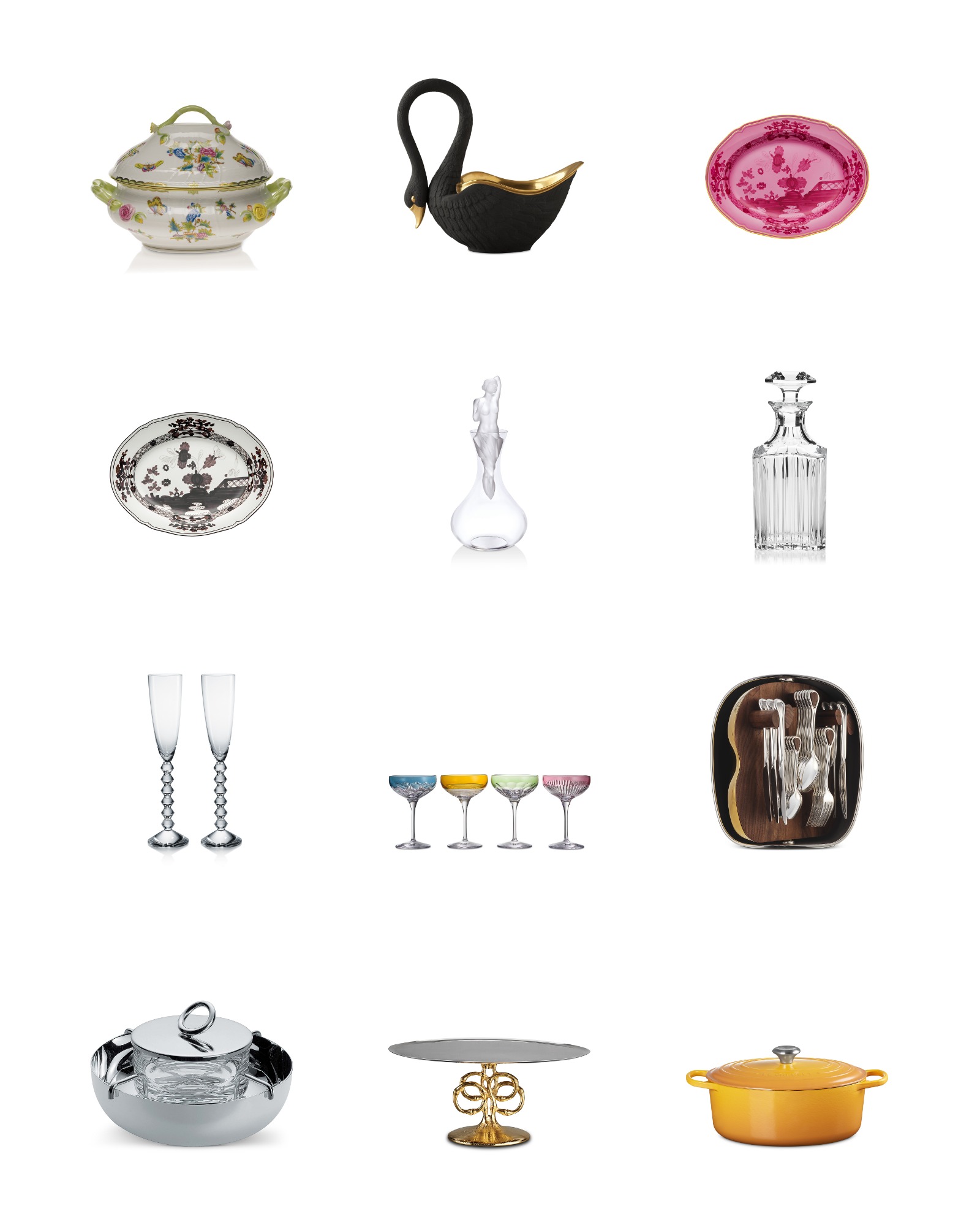
On the ceramic side, porcelain and bone china are the strongest formal materials, fired hottest and thinnest, which is why a Herend tureen or a Ginori 1735 platter can be both delicate looking and genuinely tough. Price tracks decoration, not durability. Hand painting, gold banding and small production runs are what push a platter past $500.
Crystal is priced by clarity, weight and cutting. Lead was traditionally added to soften the glass so it could be cut and polished more easily, which is why so much fine crystal still contains it, and why the lead free houses make a point of saying so. When you pick up a Baccarat tumbler and it feels heavier than it looks, that is the cost.
Silver plate is priced by the thickness of the silver layer and the weight of the base metal underneath.
Plates, Bowls and Serving Pieces

Queen Victoria Tureen with Branch
Herend
$2,905

Constance Salad Bowl, 10"
Bernardaud
$1,305

Black Swan Bowl, Large
L'Objet
$1,200

Bamboo 16 Piece Dinnerware Set, Service for 4
Juliska
$785

Gio 16-Piece Set Dinnerware Set
Wedgwood
$560

Oriente Italiano Doccia Oval Platter
Ginori 1735
$505

Meringa Platter
Ginori 1735
$445

Antico Doccia Oval Flat Platter
Ginori 1735
$370
Living with it: dishwashers, gold rims and silver plate
Most modern porcelain and bone china is dishwasher safe, and manufacturers say so on the base of the piece. The exception is metal decoration. Anything with a gold or platinum rim should be washed by hand and kept out of the microwave, because the detergent and the current will both attack it. Never stack plates directly on each other or slide one out of a pile, since the foot ring scratches the glaze underneath.
Crystal goes in the sink in warm water, one piece at a time, with a towel in the basin. Dishwashers etch it cloudy over time and no polish reverses that.
Silver plated flatware tarnishes because it is silver, and the fix is using it. Wash and dry it promptly, never leave it sitting in salt, egg or vinegar, and store it in a lined canister rather than loose in a drawer.
Enamelled cast iron is the one thing here that improves with hard use. Avoid thermal shock and metal utensils and it outlives you.
Crystal Decanters, Flutes and Glasses

Aphrodite Decanter
Lalique
$4,400

Harmonie Square Whiskey Decanter
Baccarat
$1,400

Folia Round Decanter
Saint Louis
$1,070

Vega Flutissimo Champagne Flute, Set of 2
Baccarat
$720

Mixology Color Coupe Glasses, Set of 4
Waterford
$675

Amadeo Decanter
Riedel
$650

Zelda Champagne Flutes, Set of 2
William Yeoward Crystal
$550

Harmonie Triple Old-Fashioned Tumblers, Set of 2
Baccarat
$400
How to buy it, and in what order
Start with the pieces you will use on a Tuesday. A 16 piece service for four covers everyday life, and both the Juliska Bamboo and Wedgwood Gio sets do that at a sane price. Buy the everyday set in something plain, because you will eat off it a thousand times.
Then buy one serving piece with a personality. A pink Ginori Oriente Italiano platter, a black L'Objet swan bowl, a Herend tureen. Serving pieces are the cheapest way to make an ordinary dinner look considered, and they mix happily with plain plates.
Glassware next, in twos and fours rather than twelves. Two Baccarat tumblers get used weekly. Twelve matching flutes come out twice a year.
Cookware last, and only the shapes you already cook in. A Staub cocotte and a Le Creuset oval dutch oven cover almost everything a home kitchen does, and both will still be here in thirty years.
Flatware, Serving Pieces and Cookware

Carrousel Silver Plated 24 Piece Flatware Set
Christofle
$5,450

Vertigo Small Caviar Sever
Christofle
$950

Queen Victoria Rectangular Tray with Branch Handles
Herend
$710

Evoca Cake Stand
L'Objet
$695

Round Cocotte, 13.25 Quart
Staub
$669.99

Octagon Tray, Medium
Baccarat
$580

6.75-Quart Signature Oval Dutch Oven
Le Creuset
$485

Emily 42-Piece Flatware Set - Exclusive
Hudson Park Collection
$342
Our honest take
We would rather own six beautiful plates and two beautiful glasses than a full formal service in something forgettable. Complete twelve piece sets are how good money gets spent on things that live in a cupboard.
The flatware is where we would think hardest. A Christofle Carrousel set at $5,450 is a genuine heirloom and a real commitment, and if silver care is not something you will do, the Hudson Park Emily set at $342 is the honest answer instead. Nobody at your table is grading the cutlery.
Crystal is the opposite. It is the one category where the expensive version is instantly obvious in the hand, and where a pair rather than a set keeps it affordable.
If you take one thing away, buy the serving piece before the dinner service. It changes the table more, costs less, and works with everything you already own.
Next read
Secondhand Louis Vuitton Damier Ebene Or Damier Azur
Damier Ebene and Damier Azur are the same coated canvas in two colourways, and the secondhand market treats them as two different products.
Read Editorial
Secondhand Silk My Favs
My sixteen selects of scarves below are all ninety centimetre squares, split into two price bands