Salicylic acid is an oil-soluble beta hydroxy acid, which is what lets it get down into the oily lining of a pore in a way water-soluble acids cannot. The FDA recognizes it as safe and effective for over-the-counter acne at 0.5 to 2 percent, and dermatologists tend to reach for it first for whiteheads and blackheads. I went looking for the cleansers, toners, serums and body products that use salicylic acid well, from the face down to the scalp.
What Salicylic Acid Actually Does And Which Products Use It Well
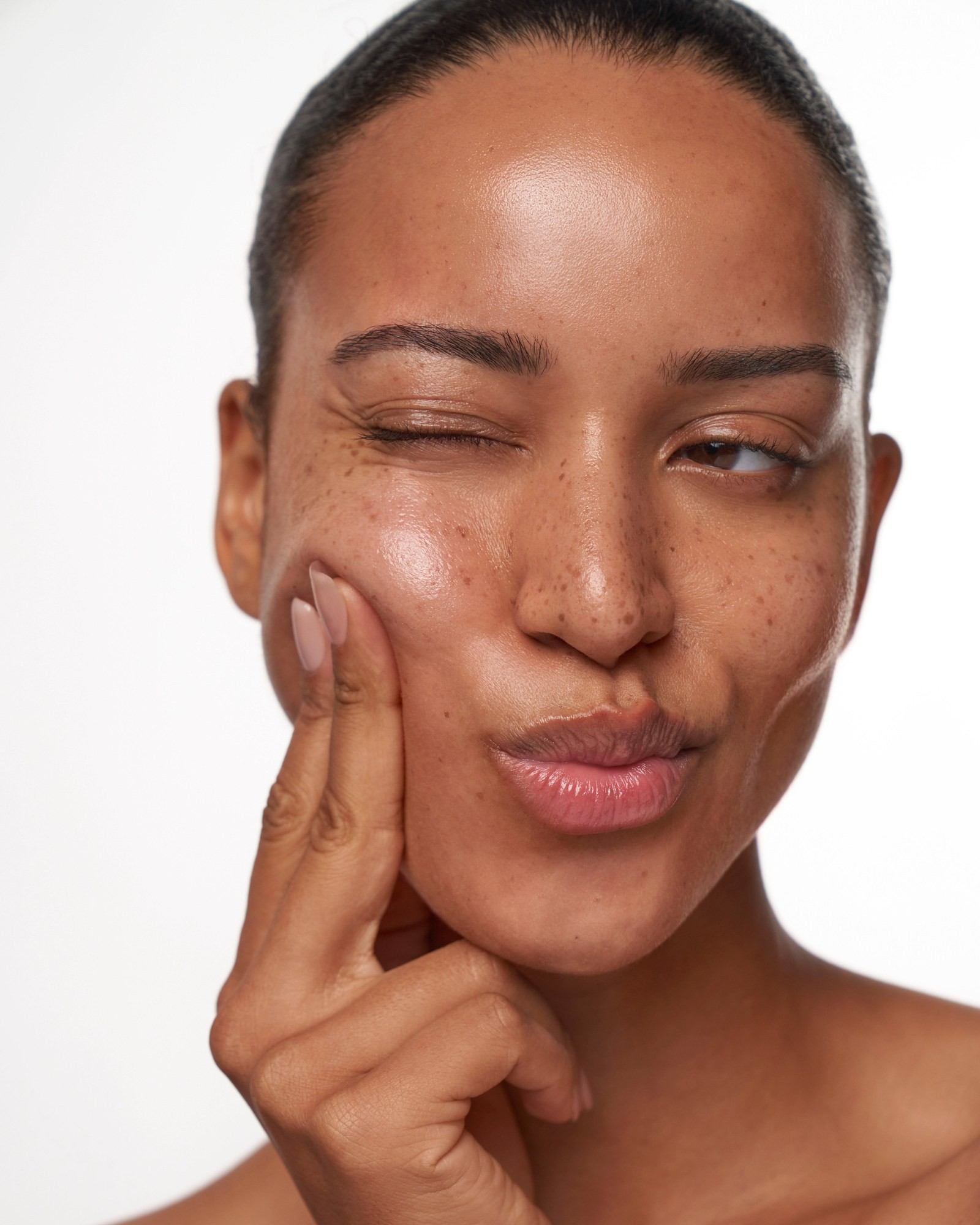
What salicylic acid is actually doing
In the spring of 1763 a clergyman in Chipping Norton, the Rev. Edmund Stone, wrote to the president of the Royal Society about a bark he had dried for more than three months over a baker's oven. It was white willow, powdered and given to about fifty people with the fevers he called agues, and he wrote that it had never failed him except in a few stubborn cases. Nobody could have told him what was in it. They only knew that a plain English tree seemed to work. The word salicylic still carries that tree in its name, from Salix, the Latin for willow.
The case for salicylic acid is a narrow one, which is exactly what I like about it. It is an oil-soluble beta hydroxy acid, so it can travel into the oily lining of a pore, where water-soluble acids like glycolic do not really go. The FDA allows it in over-the-counter acne products at 0.5 to 2 percent, and the American Academy of Dermatology says it works especially well on whiteheads and blackheads. It is not a glow ingredient. It is a pore ingredient, and it does its best work when you ask it to do only that.
The trick is to start where the acid spends the least time on your face, which is a cleanser, and grid one is all cleansers. The INKEY List's Salicylic Acid Acne + Blackhead Cleanser is the plain, no-drama place to begin. Kiehl's Acne Treating & Cleansing Face Wash and Sunday Riley's Breakout Breakup are both aimed at blemish-prone skin. Peace Out's exfoliating cream cleanser is the one I would hand to someone who dislikes foaming gels, and Yepoda's Bubble Double is the foam for people who love them. Murad's Clarifying Gel Cleanser and OLEHENRIKSEN's Daily D-Clog sit in between. Skinfix's Acne+ is the busiest formula here, with 2% BHA, azelaic acid, niacinamide and an AHA in one bottle, so I would try it after the simpler ones.
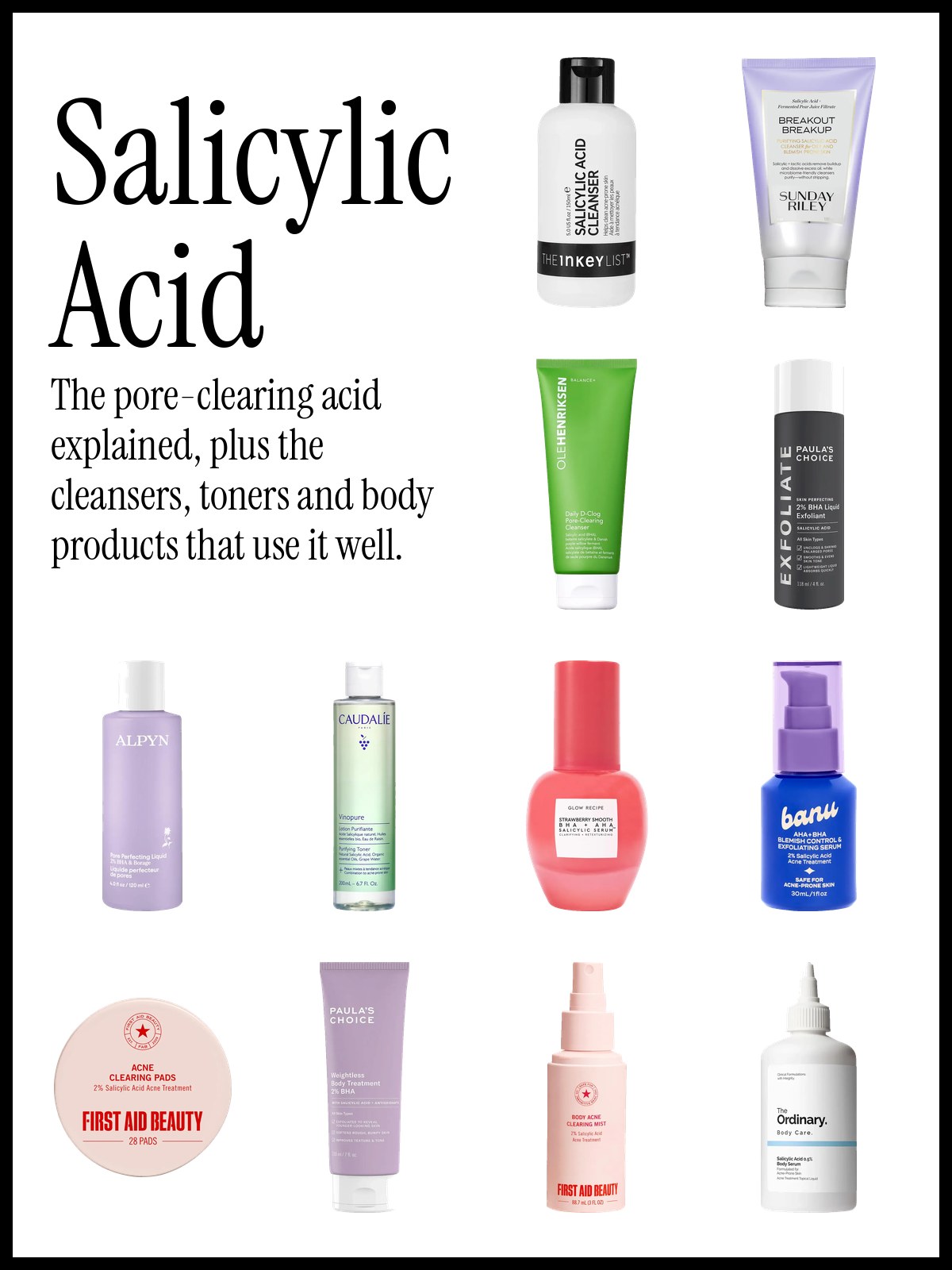
Salicylic acid cleansers

Salicylic Acid Acne + Blackhead Cleanser
The INKEY List
$15

Breakout Breakup Salicylic Acid Cleanser for Blemish-Prone Skin
Sunday Riley
$35

Daily D-Clog Pore-Clearing Salicylic Acid Cleanser
OLEHENRIKSEN
$35

Pore Perfecting Exfoliating Cream Cleanser with Salicylic Acid
Peace Out
$25

Clarifying Gel Cleanser with Dual Salicylic Acid for Acne-Prone Skin
Murad
$31

Acne Treating & Cleansing Face Wash with Salicylic Acid
Kiehl's
$29

The Bubble Double - Korean Salicylic Acid Foam Cleanser
Yepoda
$23

Acne+ 2% BHA + Azelaic Acid + Niacinamide + AHA Cleanser
Skinfix
$35
BHA toners and liquid exfoliants
Start with a three-day test. The FDA's own label wording suggests putting a small amount on a small area first, and it is the most boring, most useful thing you can do before a new toner touches your whole face.
A toner stays on skin after the rinse, which is why this group is where salicylic acid gets serious. Paula's Choice built its reputation on the Skin Perfecting 2% BHA Exfoliating Toner, and ALPYN and OLEHENRIKSEN both make 2% versions of their own, the OLEHENRIKSEN one in the Detox Drops bottle. Caudalie's Vinopure and Medik8's Press & Clear are the gentler, more gradual ones for skin that reacts easily. Fenty Beauty's Cherry Dub adds aloe juice to soften the exfoliation, while Biossance pairs its BHA with squalane and Farmacy's Deep Sweep uses moringa and papaya.
A pairing I like: the toner at night, a plain moisturizer right after, and nothing else with an acid in it. The FDA says to begin with one application a day and build slowly, and to cut back to once daily or every other day if dryness or peeling gets bothersome. That advice reads like it was written for a toner.
What I would skip: a toner on top of a cleanser that already has the acid in it. The FDA suggests limiting yourself to one topical acne medication at a time if skin gets irritated, and a shelf with three of them is how that happens.

Skin Perfecting 2% BHA Exfoliating Toner for Clear Skin
Paula's Choice
$37

2% Salicylic Acid Liquid Exfoliating Toner
ALPYN
$39

Vinopure Salicylic Acid Pore Minimizing Toner
Caudalie
$30

Cherry Dub BHA Toner with Salicylic Acid + Aloe Juice
Fenty Beauty
$36

Detox Drops 2% Salicylic Acid Toner
OLEHENRIKSEN
$34

Press & Clear Gentle Exfoliating Salicylic Acid BHA Toner
Medik8
$38

2% BHA Pore Minimizing Toner + Squalane
Biossance
$32

Deep Sweep 2% BHA Pore Cleaning Toner with Moringa + Papaya
Farmacy
$34
Serums, pads and spot treatments
One rule for anything you dab: cover the whole area where you break out, not just the spot you can see. That is the FDA's labeling direction and the AAD says the same, because the goal is to treat existing breakouts and stop the next ones.
Serums do that best. Glow Recipe's Strawberry Smooth pairs salicylic acid with AHAs for a broader exfoliating effect, and banu combines it with mandelic acid, a friendlier pairing for skin that gets touchy. Pads are the travel answer. First Aid Beauty's Acne Clearing Pads and Paula's Choice's toner pads live in a bathroom drawer or a gym bag, and Dr. Dennis Gross's Alpha Beta pads give you an AHA and a BHA in one swipe for the nights you want both.
Patches are the small, satisfying end of the group. Starface's Hydro-Star, Peace Out's Healing Dots and Kiehl's Truly Targeted liquid patch all bring the acid to one blemish, which suits the person who gets a spot or two rather than a whole face of them. Put one on clean, dry skin and leave your hands alone.
What I would skip: stacking a serum, a pad and a patch on the same evening. Pick the format you will actually use, and let it be the only acid that night.

Strawberry Smooth BHA + AHA Salicylic Acid Serum
Glow Recipe
$42

2% Salicylic Acid & Mandelic Acid Pore-Clearing Exfoliating Serum
banu
$50

Acne Clearing Pads - 2% Salicylic Acid Acne Treatment
First Aid Beauty
$24

Alpha Beta Extra Strength Exfoliating AHA/BHA Peel Pads
Dr. Dennis Gross
$94

Hydro-Star + Salicylic Acid Patches
Starface
$13

Salicylic Acid Acne Healing Dots Jumbo 40 Dots
Peace Out
$33

Truly Targeted Acne-Clearing Liquid Pimple Patch with Salicylic Acid
Kiehl's
$30

Skin Perfecting 2% BHA Exfoliating Toner Pads for Clear Skin
Paula's Choice
$16
Salicylic acid for body and scalp
Start with a map of where you actually break out. Back, chest, shoulders and scalp are all skin with pores, and the same oil-soluble logic applies below the neck as it does on the face.
Paula's Choice makes a Weightless Body Treatment at 2% BHA, and First Aid Beauty's Body Acne Clearing Mist is the one for the back, since a spray reaches where your arm cannot. Murad's Clarifying Body Spray does the same job. The Ordinary's Salicylic Acid 0.5% Body Serum is the gentler end of the range and the one I would try first on sensitive skin. Sol de Janeiro's Bom Dia Bright is a body wash with an AHA and a BHA, a lighter all-over version of the idea for the shower.
The scalp gets its own small shelf. Act+Acre's Salicylic Acid Scalp Renew Exfoliator is for an oily, flaky scalp, Verb's Dandruff Shampoo brings the acid into the wash you already do, and AAVRANI's Anti-Dandruff Scalp Serum sits beside them as a leave-on. A pairing I like: the shampoo two or three times a week, the serum only on the days it itches.
What I would skip: a body acid on skin you have just shaved or scrubbed. Give it a day, and let the acid be the only exfoliating thing on that patch of skin.

Weightless Body Treatment 2% BHA
Paula's Choice
$35

Body Acne Clearing Mist - 2% Salicylic Acid Acne Treatment
First Aid Beauty
$28

Salicylic Acid 0.5% Body Serum Exfoliating Treatment for Acne
The Ordinary
$15

Clarifying Body Spray with Salicylic Acid
Murad
$52

Salicylic Acid Scalp Renew Exfoliator For Oily + Flakey Scalp
Act+Acre
$48

Anti-Dandruff Scalp Serum
AAVRANI
$42

Dandruff Shampoo with Salicylic Acid
Verb
$22

Bom Dia Bright Clarifying AHA BHA Body Wash
Sol de Janeiro
$26
How I would build a routine around it
I think salicylic acid rewards the person with the least ambition. Stone dried his bark for three months before he gave it to anyone. You can give one cleanser or one toner six to eight weeks, which is the timeline the AAD lays out for over-the-counter acne treatment, before you add a second thing.
Start with either a cleanser or a toner, not both, and add a patch only where you need one. If you are pregnant or trying to become pregnant, talk to a dermatologist before you self-treat. And if nothing has changed by around 16 weeks, the AAD says to see a dermatologist instead of buying a fourth product. The tree did the work first. You just need the patience.
If you want one bottle to start with, here is how to use The Ordinary Salicylic Acid 2% Solution.






