Benetint was originally made for an exotic dancer who wanted a rose-colored nipple stain, according to Benefit's own history. I cover the story, how I wear it on lips and cheeks, and the tints, stains and balms that came after.
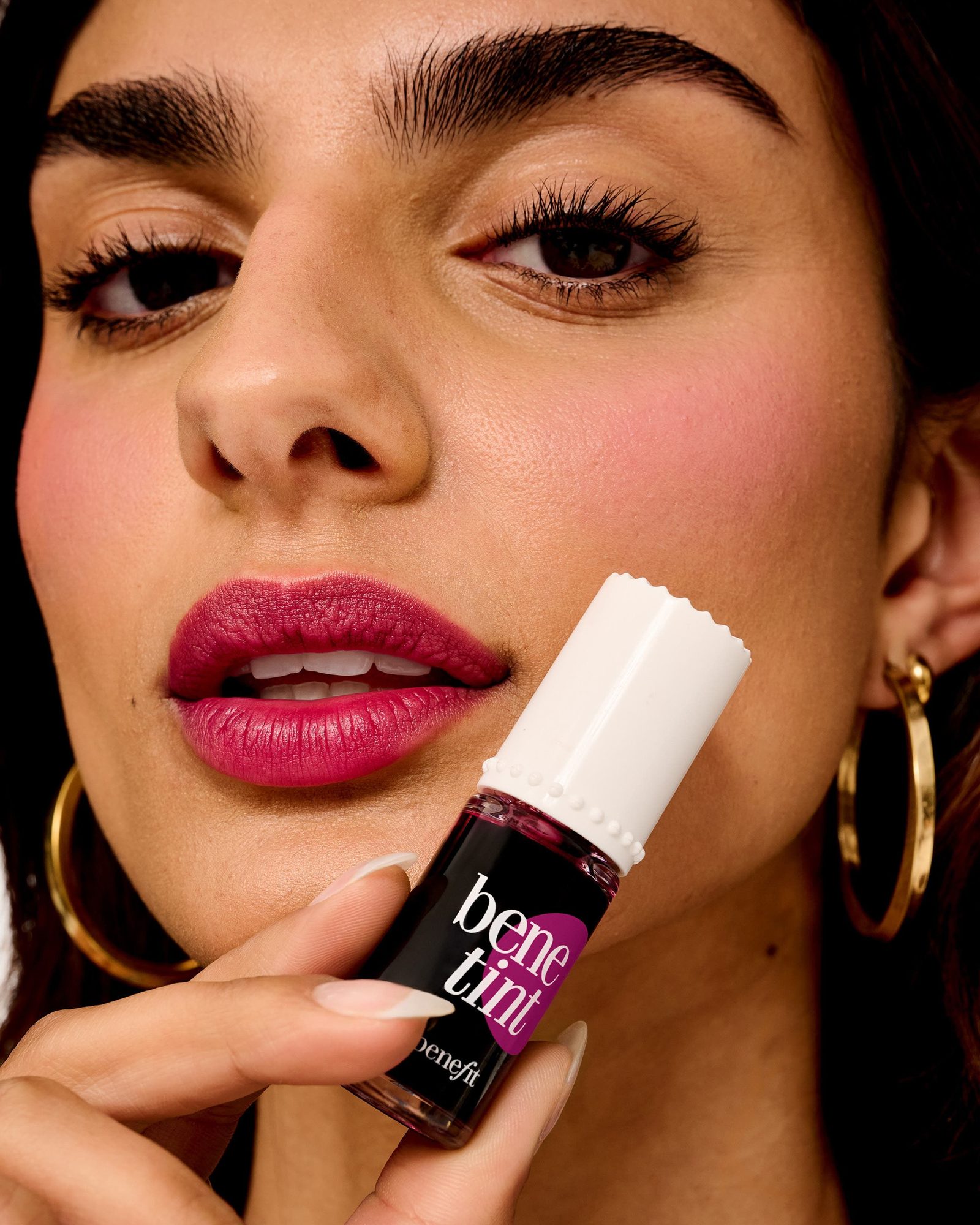
What Was Benetint Originally Made For? The Benetint Story
A rose petal stain from a shop in San Francisco
San Francisco, 1976. The Mission District had a small shop called The Face Place, and an exotic dancer walked in asking for a rose-colored nipple stain. Twins Jean and Jane Ford, who ran it, boiled rose petals with carmine and produced a rosy stain. She shared bottles with the other dancers, and word got around. Sources differ by a year on the exact date, but the scene is the same: one customer, one request, one bottle.
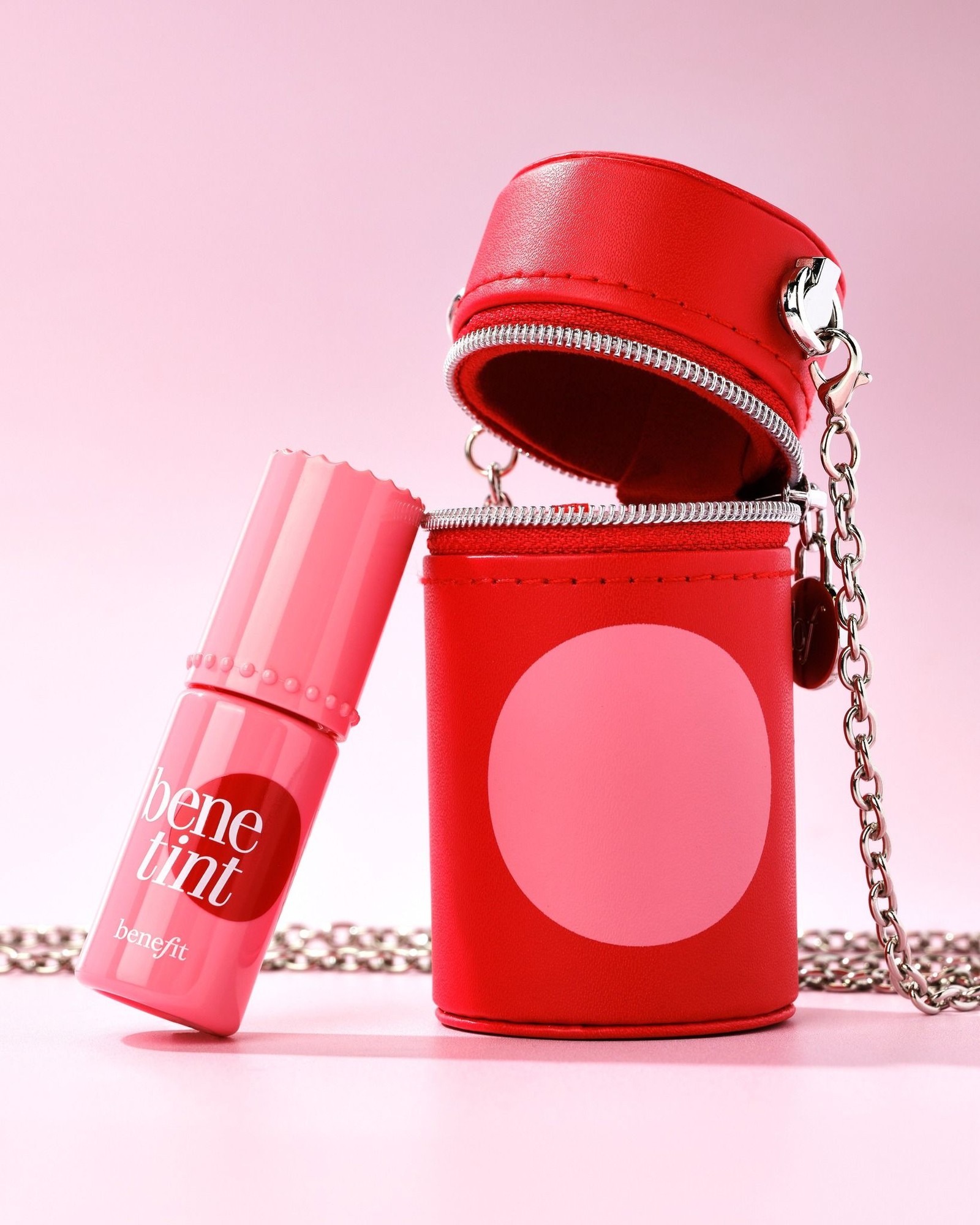
That is the reason I trust it. Benetint did not come from a trend forecast, it came from a person who wanted something specific. The shop was renamed Benefit Cosmetics in 1990, and the brand is now owned by LVMH. Today it still comes in a glass bottle with a doe-foot applicator, in three shades: Rose, Raspberry and Dark Cherry, according to Who What Wear.
The trick is to treat the whole tint family as a wardrobe of shades and finishes. Benetint itself is the rosy original for lips and cheeks. Floratint in Desert Rose is the softer, dustier pink, and Playtint in Pink Lemonade is the sweet, bright one. Lovetint is the fiery red, Gogotint is bright cherry, and Chachatint is the mango orange, which is a lot more wearable on cheeks than it looks in the bottle. Splashtint is the dewy lip tint and Plushtint is the matte one, for anyone who wants the colour without the shine.
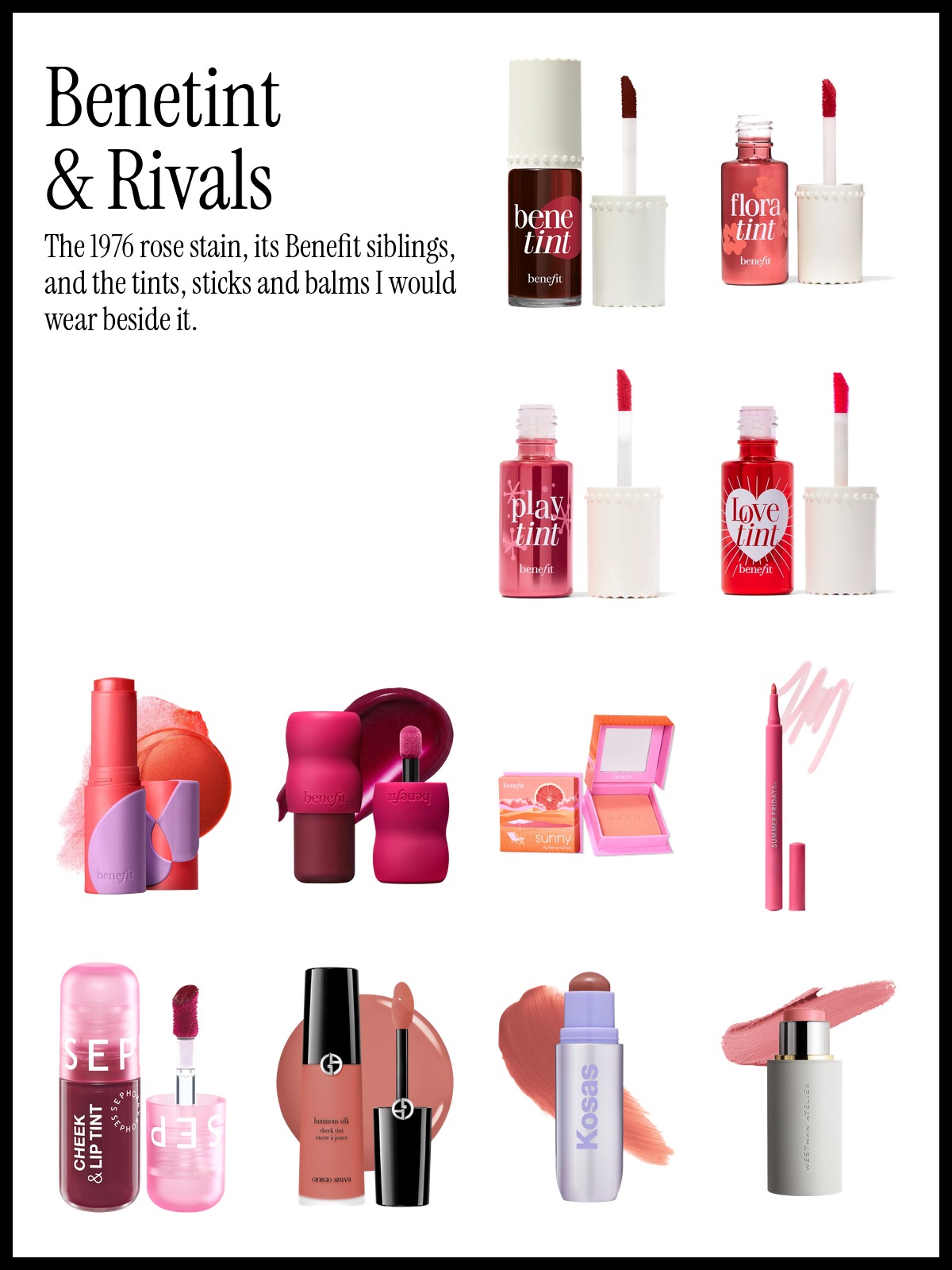
The Benefit tint family

Benetint Lip & Cheek Stain Sheer Buildable Liquid Blush Tint
Benefit Cosmetics
$28

Floratint Desert Rose Tinted Lip & Cheek Stain
Benefit Cosmetics
$28

Playtint Pink Lemonade Tinted Lip & Cheek Stain
Benefit Cosmetics
$28

Lovetint Fiery Red Tinted Lip & Cheek Stain
Benefit Cosmetics
$28

Gogotint Bright Cherry Tinted Lip & Cheek Stain
Benefit Cosmetics
$28

Chachatint Mango Tinted Lip & Cheek Stain
Benefit Cosmetics
$28

Splashtint Moisturizing Dewy Lip Tint
Benefit Cosmetics
$26

Plushtint Moisturizing Matte Lip Tint
Benefit Cosmetics
$26
More Benefit for the cheeks
Start with the finish you want, not the colour. Benefit's cheek products divide neatly into dewy, airy and powdery, and the finish decides how the blush sits with your skin far more than the shade does.
Juice Stick is a dewy gel-cream blush for people who like the skin to look moist, and Play Daze is an airy liquid, lighter on the hand and quicker to blend. The Silky-Soft Powder Blush is the one for a classic pressed finish, and it sits happily over a cream base. On the glow side, High Beam is a satin pink liquid highlighter, and Dew La La is an all-over glow liquid for people who like a wash of light. Glow La La is a blurring powder highlighter, and Cookie and Tickle is a pair of shimmer-finish powder highlighters.
Hoola Wave is a cream bronzer balm, which is my choice when I want warmth without the dry look of a powder.
A pairing I like: a dab of stain on the cheekbone, blended in, then a powder blush in a similar shade over the top. The stain gives the colour some depth, and the powder gives it staying power.
What I would skip: layering three glowy products on already-oily skin on a humid day. Choose one shiny thing and let the rest be soft.

Juice Stick Dewy Gel-Cream Blush
Benefit Cosmetics
$34

Play Daze Airy Liquid Blush
Benefit Cosmetics
$34

Silky-Soft Powder Blush
Benefit Cosmetics
$34

High Beam Satin Pink Liquid Highlighter
Benefit Cosmetics
$28

Glow La La Blurring Powder Highlighter
Benefit Cosmetics
$38

Hoola Wave Cream Bronzer Balm
Benefit Cosmetics
$36

Cookie and Tickle Shimmer Finish Powder Highlighters
Benefit Cosmetics
$39

Dew La La All-Over Glow Liquid Highlighter
Benefit Cosmetics
$39
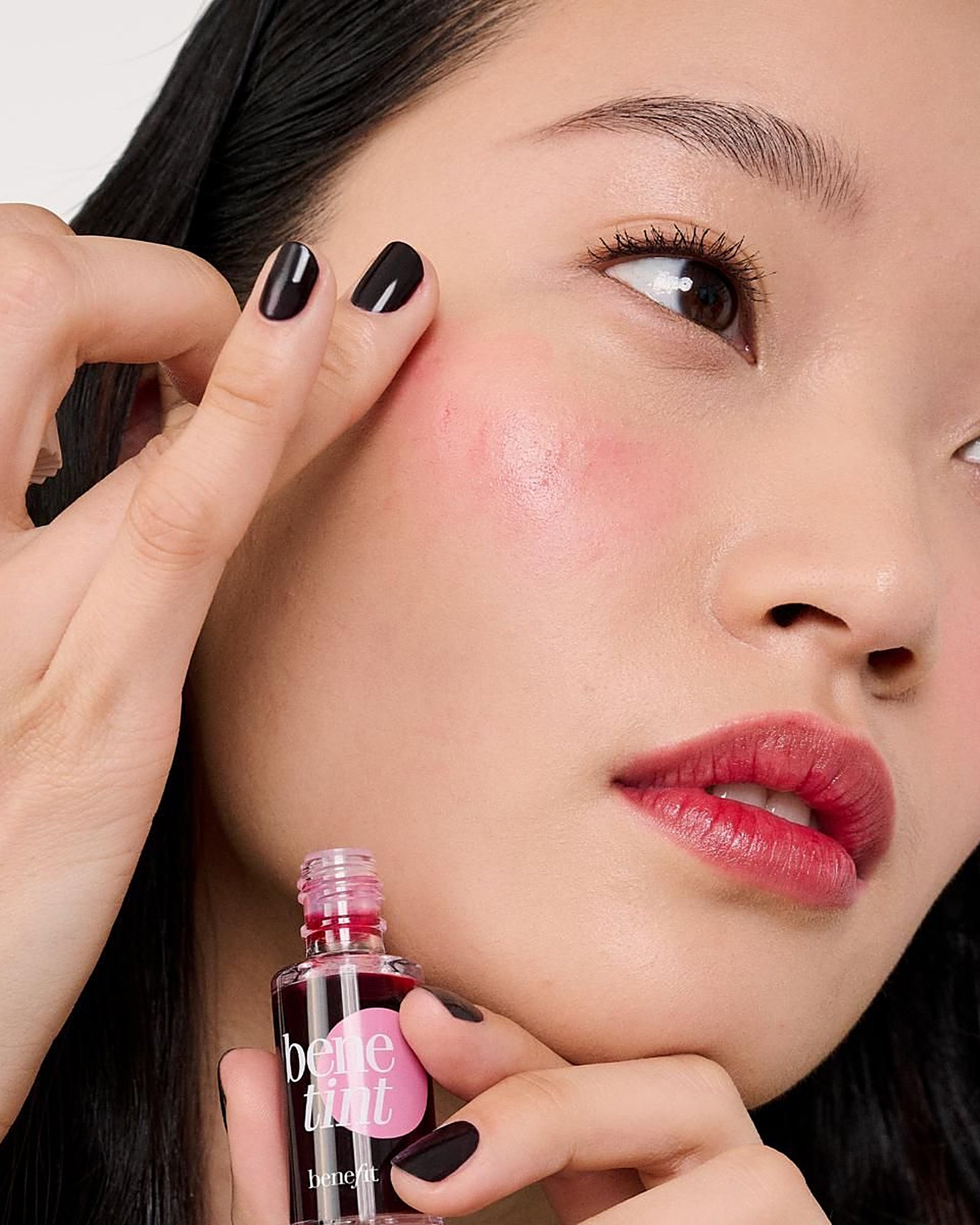
Lip and cheek stains and tints from other brands
A habit worth borrowing: apply a stain with your fingertips, not the applicator, and tap it on rather than swiping it. Tapping gives a diffused flush instead of a stripe, and it is much more forgiving if you have a heavy hand.
Summer Fridays' Flushed Lip Stain is a long-lasting lip tint, and Sephora Collection's Cheek and Lip Gel Tint is a gel version for the same double duty. Armani Beauty's Cheek Tint is a lightweight liquid blush that promises long wear, and caliray's Socal Superbloom is a dewy soft stain for lips and cheeks. Laura Geller's Serum Blush is a liquid cheek tint that leans on a serum texture, and Lancôme's Juicy Tubes Cheeks is a jelly blush tint, which is a nice texture if you like a cool, juicy finish.
For the lips only, Wonderskin's Wonder Blading is an all-day lip stain and Violette_FR's Lip Nectar is a hydrating one. Next to the original from the first grid, they are useful for figuring out which texture you prefer: watery, gel or jelly.
A pairing I like: a lip stain first, and then a clear balm on top when the colour starts to feel dry. The stain stays, the balm keeps the mouth comfortable.
What I would skip: a liquid tint over a thick, dry foundation. It grabs onto patches and looks uneven, so use it on bare skin or with a light base.

Flushed Lip Stain 12HR Long-Lasting Lip Tint
Summer Fridays
$22

Cheek & Lip Long-Lasting Gel Tint
Sephora Collection
$18

Cheek Tint Longwear Lightweight Liquid Blush
Armani Beauty
$40

Socal Superbloom Dewy Lip & Cheek Soft Stain Tint
caliray
$28

Serum Blush Liquid Cheek Tint
Laura Geller
$30

Juicy Tubes Cheeks Jelly Long-wear Blush Tint
Lancôme
$25

Wonder Blading All-Day Lip Stain
Wonderskin
$22

LIP NECTAR Hydrating Lip Stain
Violette_FR
$29
Balms, sticks and oils for lips and cheeks
Try this: keep one stick in your bag and one stain at home. The stick is what you use in a taxi or on a train, with no mirror needed, and the stain is what you use when you have time to build the colour properly.
Kosas' Impressionist Multistick is a cream blush and lip colour in one, and Westman Atelier's Baby Cheeks is the refined cream stick with a soft, blurry finish. Charlotte Tilbury's Unreal Lip and Cheek Glow adds hyaluronic acid to a stick blush. Makeup by Mario's Jelly Jar is a multi-use balm, Haus Labs' Color Fuse is a glassy blush balm stick, and Iris and Romeo's Ceramide Multi-balm is a cream blush stick for lips and cheeks.
Clinique's Pop Cheek and Lip Oil is the lightest one here, an oil for both lips and cheeks, and Kaja's Dewy Bar is a blush and lip balm in one.
A pairing I like: the stain from the first grid underneath, then a stick pressed on top. Stain first, cream second, and the colour looks as if it came from the inside.
What I would skip: a cream stick over a very oily T-zone. Keep it to the cheekbones, or go for a powder instead.

Impressionist Multistick Cream Blush Stick + Lip Color
Kosas
$34

Baby Cheeks Lip + Cheek Cream Blush Stick
Westman Atelier
$48

Unreal Lip + Cheek Glow Blush Stick with Hyaluronic Acid
Charlotte Tilbury
$44

Jelly Jar Lip & Cheek Multi-Use Balm
Makeup by Mario
$28

Color Fuse Longwear Hydrating Glassy Lip + Cheek Blush Balm Stick
Haus Labs
$34

Ceramide Multi-balm Lip+Cheek Cream Blush Stick
Iris&Romeo
$32

Pop Cheek + Lip Oil
Clinique
$27

Dewy Bar Blush & Lip Balm
Kaja
$25
Benetint, answered
Why was Benetint invented? The twins Jean and Jane Ford ran a tiny San Francisco makeup shop called The Face Place, and an exotic dancer asked them for a rose-colored stain. They boiled rose petals and carmine to make it, and she came back within a week for more bottles to share with her coworkers. That is where the word of mouth started.
What is the history of Benetint? Benefit says Jean and Jane Ford opened The Face Place, a tiny makeup shop in San Francisco, and that Benetint was born when the dancer placed her order. The shop was later renamed Benefit Cosmetics, and the brand is now owned by LVMH. Sources disagree on whether Benetint dates to 1976 or 1977, so I leave the year out.
What is Benetint made for today? Today Benefit sells it as a rose-tinted lip and cheek stain. You glide it across lips or dot it on the cheeks and blend, and it works as a liquid blush and a lip tint in one.
What are the benefits of using Benetint on lips? Benefit describes the finish as sheer, non-drying and buildable, so one layer gives a soft tint and more layers deepen it. It also calls the stain smudge-proof, transfer-proof and waterproof. Those are the brand's claims, and I would test it on your own mouth.
The bottle I would buy first
I think Benetint is still the right place to begin. It is the one that started the whole family, it was invented for a real person with a real request, and today it does two jobs at once, lips and cheeks.
Put a dot on your cheekbone and one on your lip, tap it in and see how long it stays. If you like the idea, try one of the family colours in a different shade and then a stick for travelling. A dancer once asked for a rosy stain that would stay put. Fifty years later, most of us just want to skip the mirror.