This edit covers winter hats for women, from cuffed beanies and faux fur trappers to berets, bucket hats and balaclavas. I wrote it for the days when a cold wind finds your ears, with the history of each shape and a test for every fit.
Winter Hats for Women: From Crimean Knits to Shepherd Berets
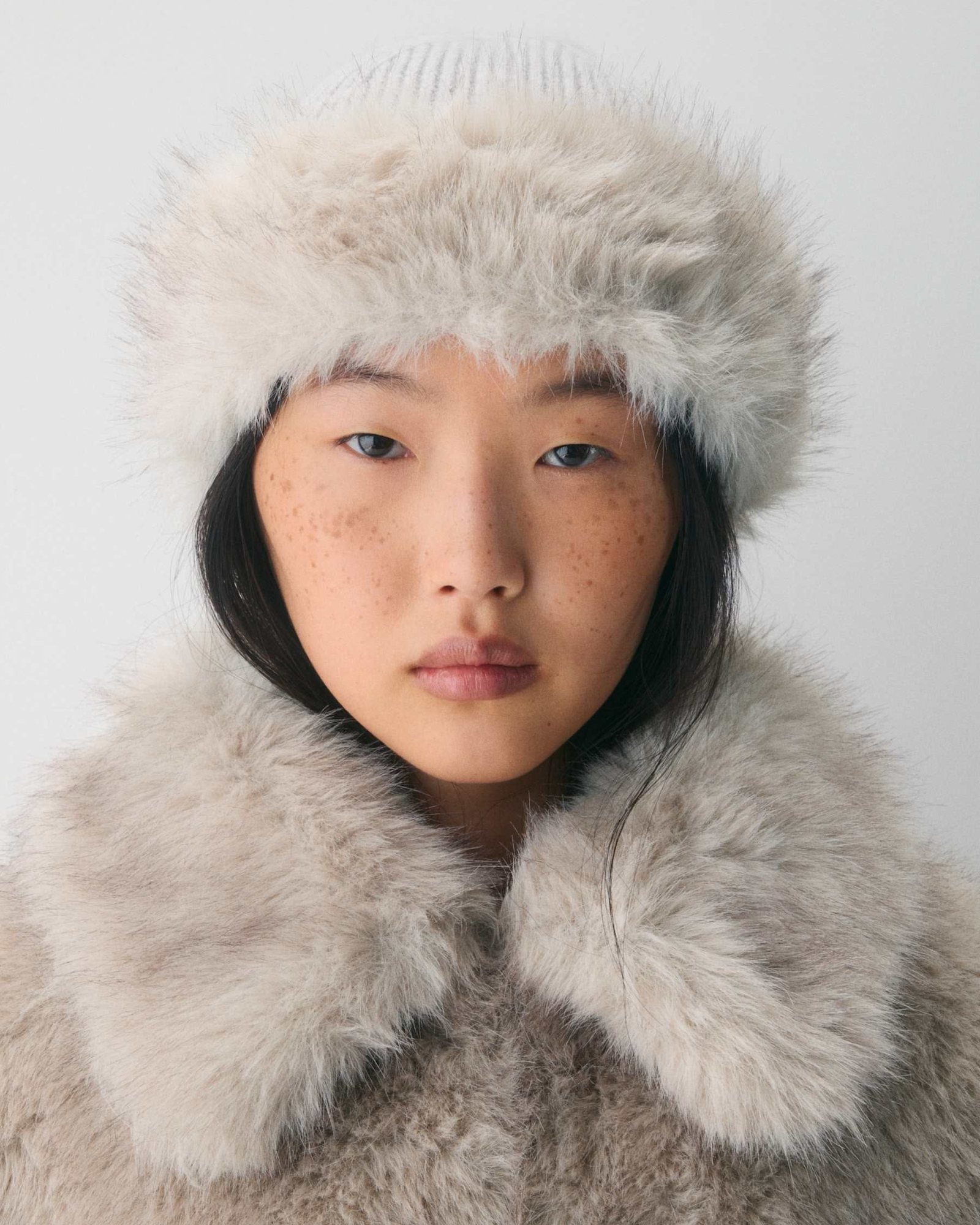
A knitted cap from Crimea
In October 1854, at the Battle of Balaclava in the Crimean War, British troops who were ill equipped for the winter pulled on whatever they could find to keep warm. One of the things that stuck was a knitted wool cap that covers the head and neck, and handmade ones were sent over from home because the soldiers' own warm clothing never arrived in time. The name "balaclava helmet" only shows up later, in 1881. That is where winter hats for women start: as a fix for being cold.
You have heard that you lose most of your body heat through your head. A 2008 BMJ paper by two Indiana University doctors, Rachel Vreeman and Aaron Carroll, traced it to an old military study in which subjects wore arctic survival suits with no hats. The head lost the most heat only because it was the only bare part. Any uncovered part of the body loses heat, they note. So a hat is one piece of a whole outfit, not magic.
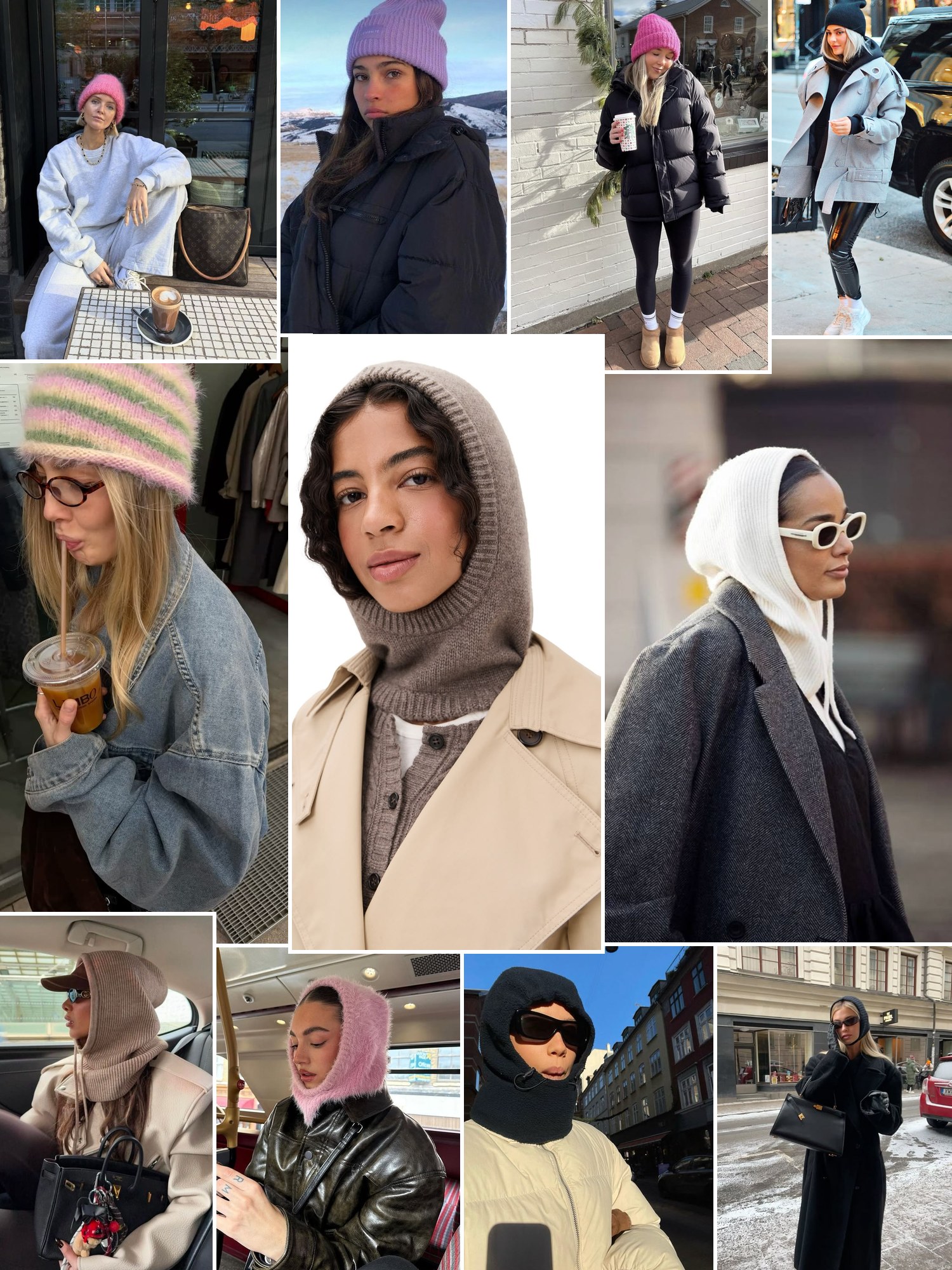
Beanies come first. The beanie began as working apparel for laborers who needed their hair back and had no use for a brim. I would start with the navy cashmere rib beanie with its deep fold-over cuff, or the Vince boiled cashmere chunky rib in black with the small leather tab. Cashmere is the downy undercoat of the Kashmir goat, and Britannica notes the fibers are finer than the best wools. For a rounder, woollier feel, the Eileen Fisher merino rib in charcoal and the rag & bone cream beanie with the little logo patch are the ones I would reach for.
The UGG in neon yellow is the one for a gray November commute, and the Portolano in burgundy suits a navy puffer. Practical tip: pull the cuff down over your ears in the fitting room and make sure the rib snaps back when you stretch it.
Beanies

Cashmere Rib Cuff Beanie
Nordstrom
$49

Ribbed Merino Wool Beanie
Eileen Fisher
$98

Blake Logo Patch Ribbed Beanie
rag & bone
$98

CozyChic Rib Beanie
Barefoot Dreams
$40

Boiled Cashmere Chunky Rib Beanie
Vince
$168

Chunky Ribbed Beanie
UGG
$58

Cashmere beanie with leather tab
Portolano
$150

Core cable logo hat
Lauren Ralph Lauren
$60
Faux fur and trapper hats, the soft ones
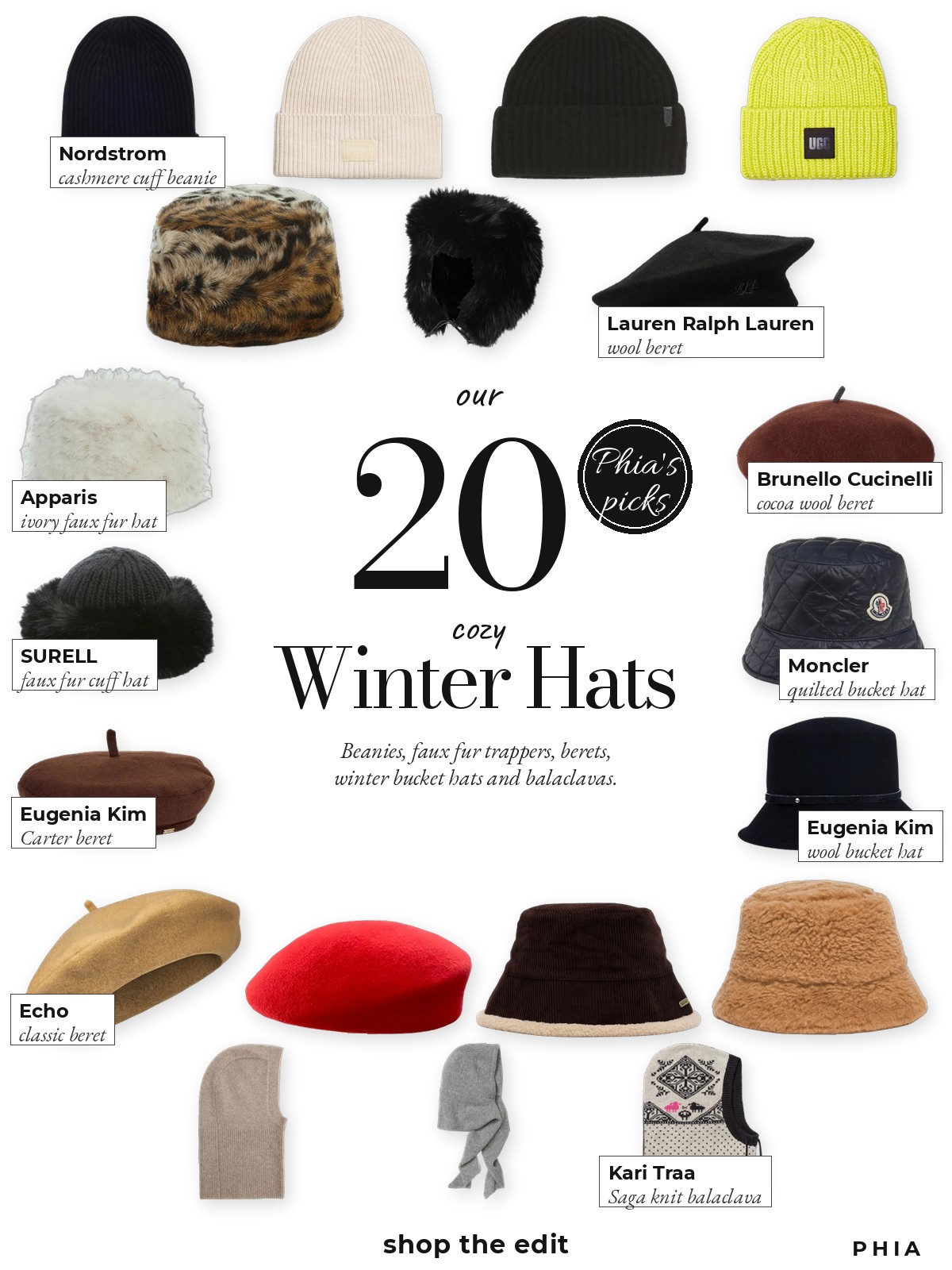
Faux fur is the loudest corner of any hat shelf, and the shapes matter more than the pile. The Apparis Margot pillbox comes in ivory and in leopard, both with a flat crown; I would put the ivory with a black coat and the leopard with plain denim.
For actual cold, I would look at the shapes that cover the ears. The Lyla Grant fur-free fox trapper in black has ties that go down for a snug fit or up for a casual look. The Lauren Ralph Lauren faux fur hat in black adds earflaps and a chin strap to block the chill, and the Nirvanna Designs hand-knit cable Russian hat in pink and gray is 100% wool with faux fur lining, which is the one I would reach for on a January walk. Bare ears lose heat like any other bare part.
Then there are the softer, more playful shapes. The SURELL cuff hat in black is a rib-knit crown with a thick faux fur cuff, the SURELL bubble hat in white is round and fluffy, and the Jocelyn roller hat in leopard has a black leather-look crown with a fur band. Fitting test: shake your head a little. A good fur hat stays put without a tight band, and the pile should not shed on your palm when you run a hand over it.
What I would skip: a pillbox on a day with real wind. It looks wonderful in a hallway and will not stay on a windy corner.

Margot Faux Fur Pillbox Hat Ivory
Apparis
$145

Margot Faux Fur Pillbox Hat Leopard
Apparis
$145
%20Trapper%20Hat&link=https%3A%2F%2Fwww.nordstrom.com%2Fs%2Ffur-free-fox-faux-fur-trapper-hat%2F8635621%3Fphia%3D1)
Fur-Free Fox (Faux Fur) Trapper Hat
Lyla Grant
$225

Faux Fur Cuff Hat
SURELL
$105

Faux Fur Bubble Hat
SURELL
$99.5

Faux Fur Hat
Lauren Ralph Lauren
$98

Hand Knit Cable Russian Hat w/ Faux Fur
Nirvanna Designs
$80

Faux Fur Roller Hat
Jocelyn
$125
Berets, from shepherds to Paris
The beret was a shepherd's cap long before it was a French cliche. Its name comes from the Béarnais word "berret", and shepherds and farmers wore it against cold, rain, wind and sun. The felted wool keeps the wearer warm and sheds some rain, and the whole thing folds into a pocket and regains its shape when you put it back on. It was built for work.
Production moved into workshops in the 19th century. Nay became a major center from 1819, and Laulhère has made berets in Oloron-Sainte-Marie since 1840. Biarritz tourism helped make "Basque beret" the common phrase. Dior later made it a symbol of French elegance.
In this edit I would start with the Lauren Ralph Lauren wool beret in black, a felted classic with a stem top, and the navy merino wool beret with its flat, rounded crown, which is the easy one. The Eugenia Kim Carter in chocolate has a small 14-karat-gold logo plate, the Echo classic in ultramarine is the one for an all-black coat, and the Binata Millinery Bini in red is handcrafted in New York from rabbit hair felt. The Brunello Cucinelli wool beret in cocoa has a subtle jeweled detail, the Manière De Voir leather beret in black is vegan leather, and the Barbour Overton is brown corduroy.
Test it by tilting the beret toward one ear in the fitting room, then checking that the band sits flat at the back and does not pinch behind the ears. If it stays put when you turn your head, it will survive a walk.


Bucket hats that work in winter
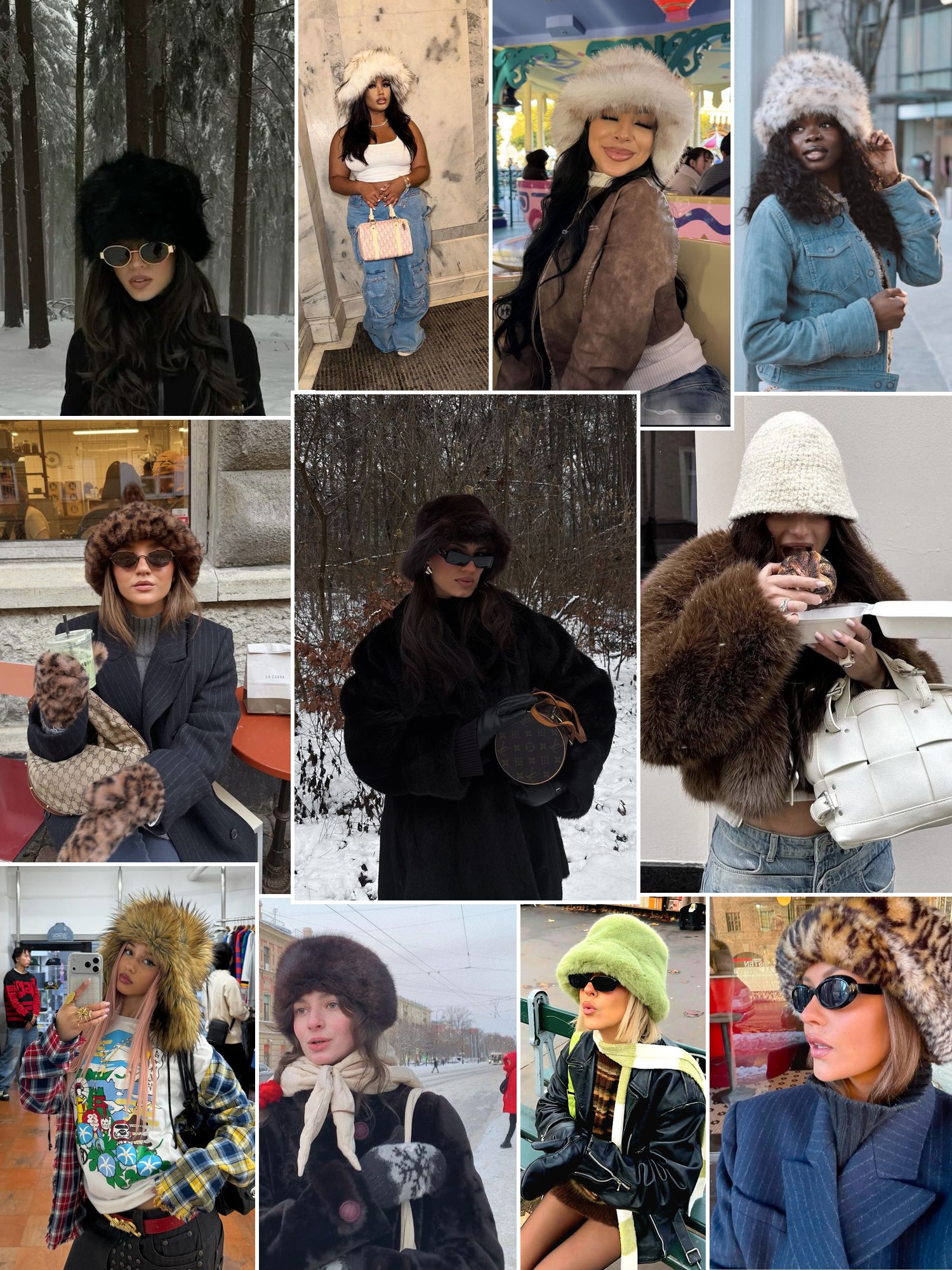
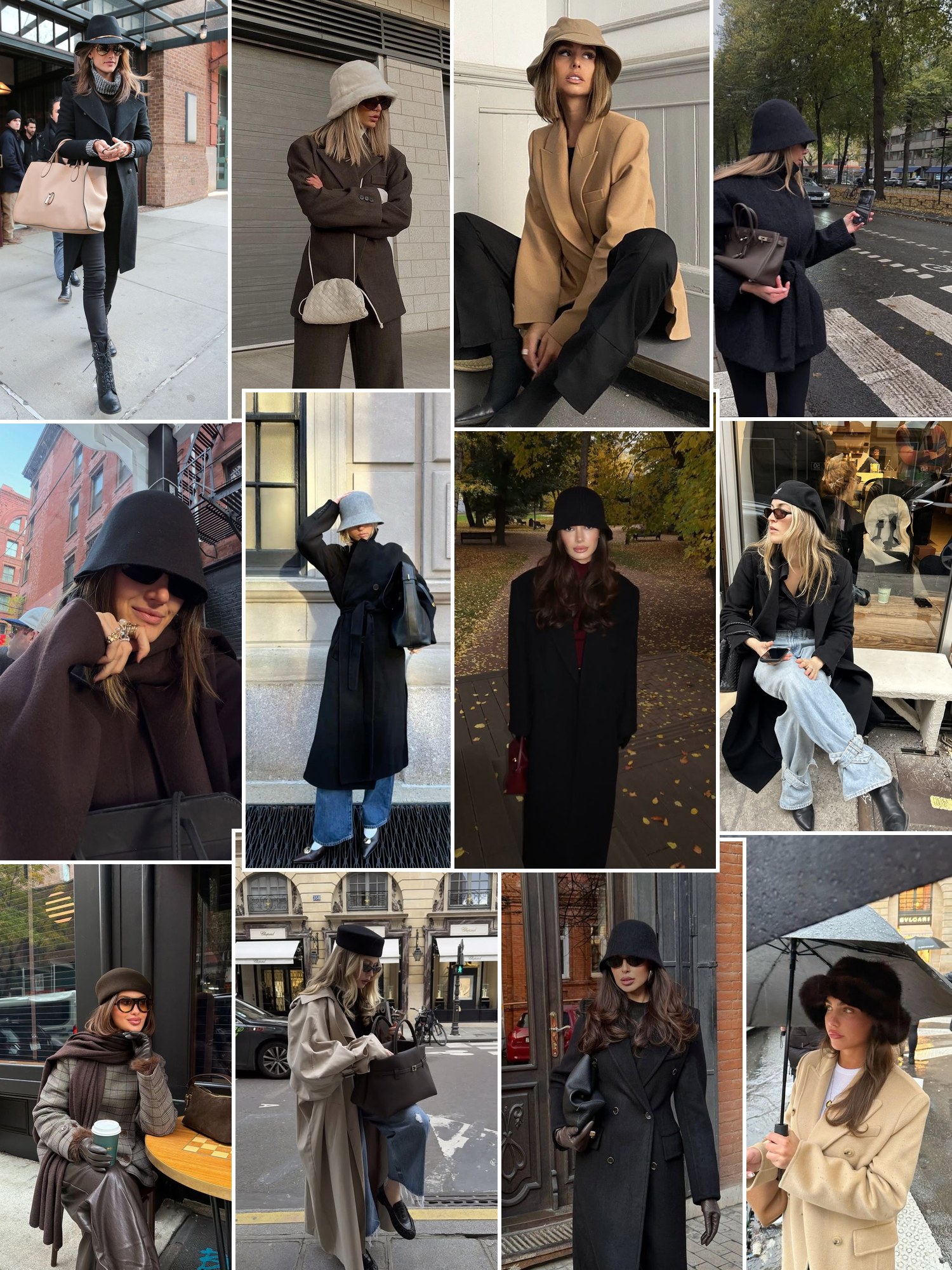
Bucket hats look like a summer idea until the fabric changes. In winter they are about padding, felt and fleece, and they cover the ears if you pull them down. That is the trick I like: a wide, soft brim sits lower than a beanie and looks less like you are about to go skiing.
The easiest pick is the Barbour Overton reversible bucket hat, brown corduroy on one side and high-pile cream sherpa trim on the other, so it changes with the weather. The Turtle Fur Stomp in black teddy fleece and the COACH fuzzy knit in maple brown are the soft, cozy ones. For a sleeker line, the Moncler diamond-quilted nylon in navy with the logo patch and the Hat Attack quilted bucket in camel both sit well over a hood or a scarf. Max Mara's Fiducia in a camel hair blend is high-pile and plush, and I would wear it with a long camel coat for a tonal look.
Two hats are made for damp days. The Eugenia Kim Jonah in navy is water-resistant wool felt with a slim cord band and a calf-hair detail, and the Brixton Elle in black wool felt has a flat top, a wide brim and an adjustable moisture-wicking sweatband. Both feel more structured than a knit.
Buying test: flip the brim up and down, then look at the inside seam. A quilted or felt bucket hat should keep its shape when you bend it, and the sweatband should not rub the forehead. What I would skip: a fuzzy knit with a heavy overcoat that already has a big collar, because the whole thing starts to pile up around your neck.

Overton Reversible Bucket Hat
Barbour
$65

Stomp Fleece Bucket Hat
Turtle Fur
$45

Diamond Quilted Nylon Bucket Hat
Moncler
$440

Quilted Bucket Hat
Hat Attack
$94

Fiducia Camel Hair Blend Bucket Hat
Max Mara
$410

Jonah Water Resistant Wool Bucket Hat
Eugenia Kim
$275

Elle Wool Felt Bucket Hat
Brixton
$89

Fuzzy Knit Bucket Hat
COACH
$95
Balaclavas and knit hoods for real cold
Balaclavas came back as a fashion accessory in the early 2020s, and I think they have stayed because they solve a problem scarves never do. A balaclava stays on, covers the ears and the neck at the same time, and you can pull it down to your collarbone when you walk indoors. It is also the Crimean winter cap in a better outfit.
If you want the most versatile one, the MANGO wool and cashmere blend in oatmeal is a ribbed hood in a soft knit. The maje yak wool balaclava in dark brown has a drawcord and a snug shape, and the Kari Traa Saga in ivory and black is a Nordic jacquard knit with a drawcord. The Ganni compact wool balaclava in navy with white lace trim is the fashion one, and the Moncler x Rick Owens in black virgin wool has a small logo patch and a ribbed trim that holds the snug fit.
For something with more drama, the Free People extra large Balabonnet in gray is a hooded knit with long tie ends for wrapping, and the Adrienne Landau Julia faux fur hood in black has a leather drawcord. The Jocelyn faux fur pom pom trapper in ivory is the one I would wear in a snowstorm with a long puffer.
Fitting test: pull it down and up, turn your head, and check that the opening does not slide over your eyes. What I would skip: a thick hood under a helmet. Choose a thin knit instead, since the bulk gets in the way.

Wool and Cashmere Blend Balaclava
MANGO
$79.99

Extra Large Balabonnet
Free People
$48

Yak wool balaclava
maje
$175

Saga Knit Balaclava, Women's
Kari Traa
$55

Compact Wool Lace Balaclava
Ganni
$235

X Rick Owens Logo Patch Virgin Wool Balaclava
Moncler
$610

Faux Fur Pom Pom Trapper Hat
Jocelyn
$110

Julia Faux Fur Hood Hat
Adrienne Landau
$195
How I would choose a hat
I would choose the hat the way I would choose a coat: by the weather you actually have. If it is a damp, windy week, I would take a cuffed beanie or a trapper with real ear coverage. If you want something for a coat and a café, a felted beret or a wool bucket hat will do.
Remember that a hat is one part of staying warm, not a cure for a cold neck and bare hands. Cover the parts that are open to the wind and you are done.
If I had to pick one, it would be a balaclava in a soft wool and cashmere knit, because it goes back to where all of this started: a knitted cap, a very cold field in Crimea, and someone at home who sent one over.






