Wooden clogs move from Swedish practical footwear to the suede-wrapped runway moment, with mules, boots and strapped silhouettes in the edit. I’d make the sole the outfit’s anchor and keep the rest of the line clean.
Wooden Clogs: From the Swedish Workshop to the Spring Runway
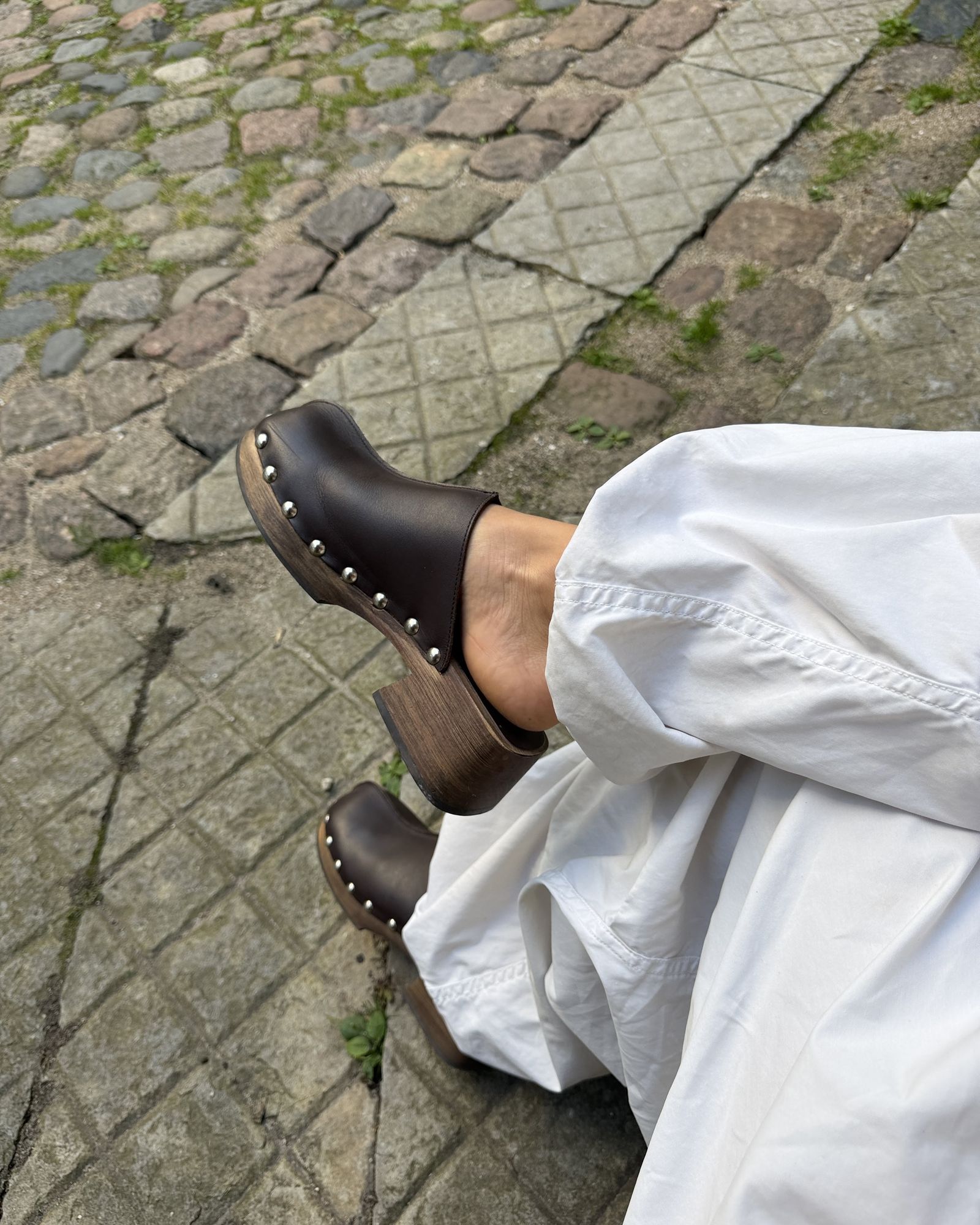
A wood sole in motion
On September 18, 2026, WWD noted wooden-heeled clogs on Bottega Veneta’s spring 2026 runway, then pointed to suede-wrapped versions for fall. I like the time jump: a wooden base that once belonged to everyday dress can now hold its own under a clean runway silhouette. The shoe arrives with its own point of view.
The history of Wooden clogs is less polished than a runway image. Researchers cited by Populär Historia think träskor came into use in Sweden in the 1500s, and the Smithsonian describes traditional examples made of poplar or willow as part of Sweden’s national dress. No.6 gives the form a New York counterpoint: it launched in Manhattan’s Little Italy/Nolita in 2005, and its clogs and clog boots are made by hand. I like a shoe that remembers both labor and authorship.
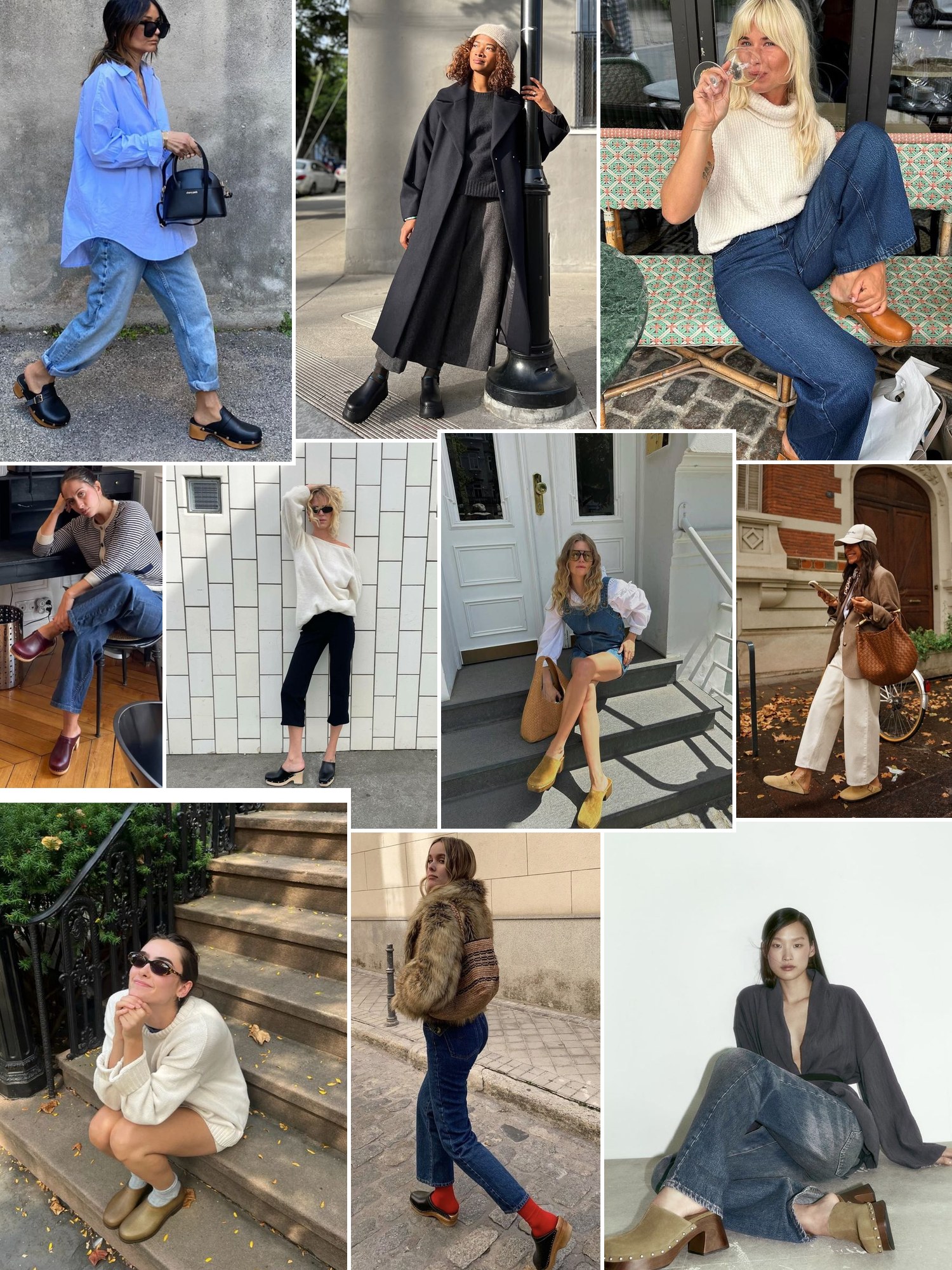
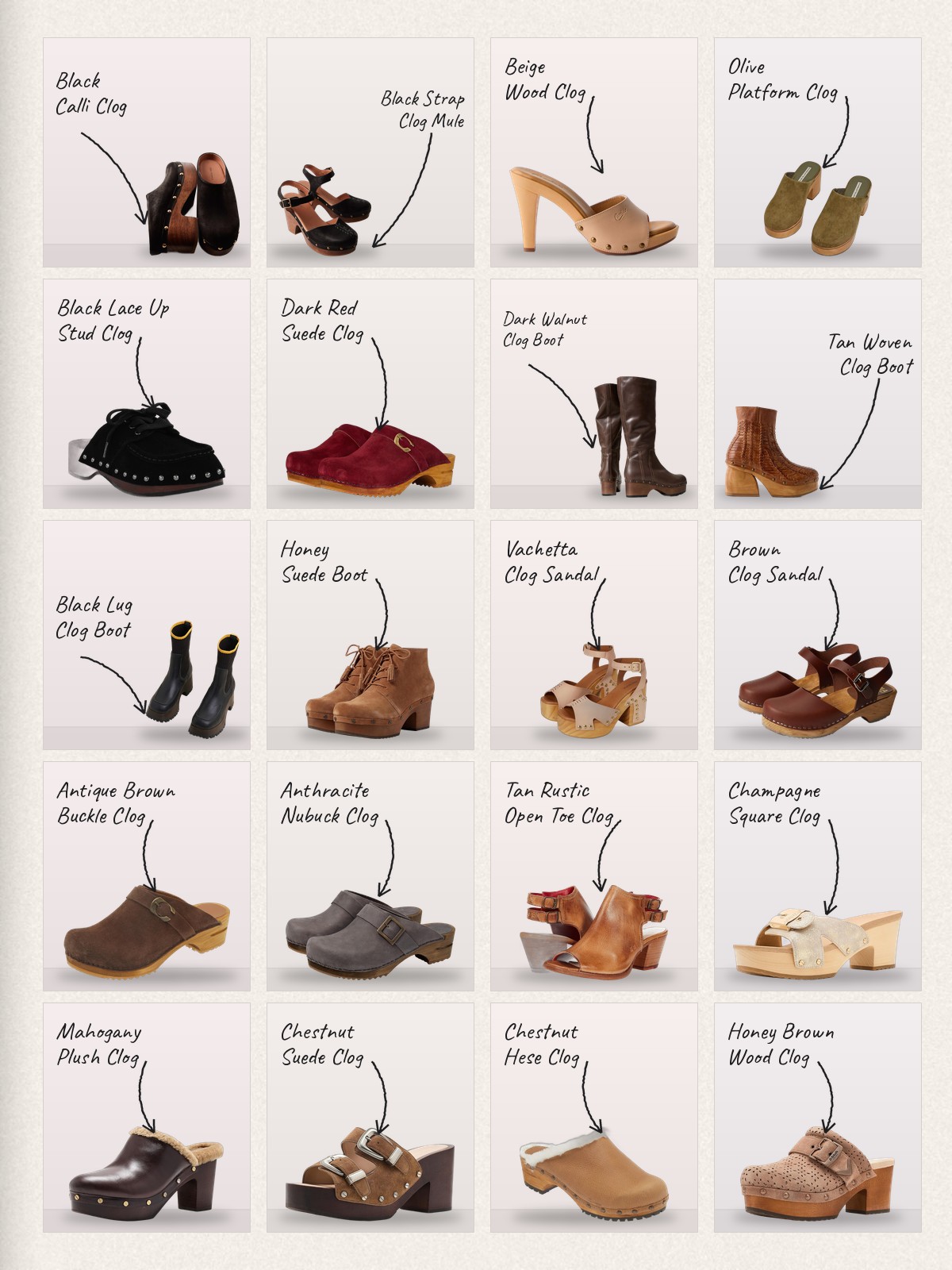
Among the mules, Calli keeps its black leather upper simple and lets the raised Caixeta platform show; Doub’s adds an adjustable ankle strap, which gives the same black base a more contained line. Candie’s is the beige option, with a sculpted woodgrain heel, while Curran makes olive suede the main event on a tall wooden platform. Soak It In adds studs to a lace-up black upper, and Sanita’s Hedi takes dark red suede to a buckle and natural-wood midsole. I would wear one of the plainer shapes with dark straight jeans, or let Curran sit under an ankle-length skirt. Before deciding, check the platform height against your usual hem so the wood is visible instead of swallowed.


Tall boots, with a wooden base
A boot changes the proportion before an outer layer gets involved. No.6 began in Manhattan’s Little Italy/Nolita as a shop for vintage and European designers in 2005; owner and designer Karin Bereson says the aim is to make pieces that complement a woman’s existing wardrobe. I like that practical brief for a silhouette that asks to be noticed.
Florence is dark walnut leather with a studded pine platform and inner zip; Grayson keeps black leather close to the leg. Juna uses handwoven tan leather over a chunky base, Holly pairs camel and olive with suede and wool, and Loma mixes black leather with knit over a lugged rubber tread. Each upper changes the boot’s mood more than another embellishment would.
The two No.6 options go taller in different directions: the pull-on boot has a five-inch shaft and shearling lining, while the eight-inch lace-up adds a kiltie and shearling too. Dr. Scholl’s honey suede clog keeps the shape shorter and adds a raised wood heel. I would pair a plain upper with straight dark jeans, but put the more textured ones under a simple wool dress. Check the shaft height beside your trouser break, and confirm where the zip or laces would sit under a winter coat. What I would skip: a full-length wide hem over a tall boot when I want the wood to read clearly. That combination hides the detail I chose the shoe for.

Florence Clog Boots
FP Collection
$398

Grayson Clog Boots
FP Collection
$298

Juna Woven Clog Boots
Bed Stu
$448

Holly Clog Boots
KUNSTEN
$550

Loma Platform Lug Sole Clog Boot
Charlotte Stone
$298

Original Chic
Dr. Scholl's
$150

5-Inch Pull On Shearling Clog Boot on Mid Heel in Spitfire
No.6
$420

8-Inch Lace Up Clog Boot with Kiltie on Mid Heel in Fudge and Olive
No.6
$475
Ankle straps and slingbacks
A strap should be doing something besides catching the light. The old Swedish craft was local work: Populär Historia notes that each Skåne village had its own clog maker, working with alderwood. That history makes a buckle feel like a useful bit of construction, not decoration I have to justify.
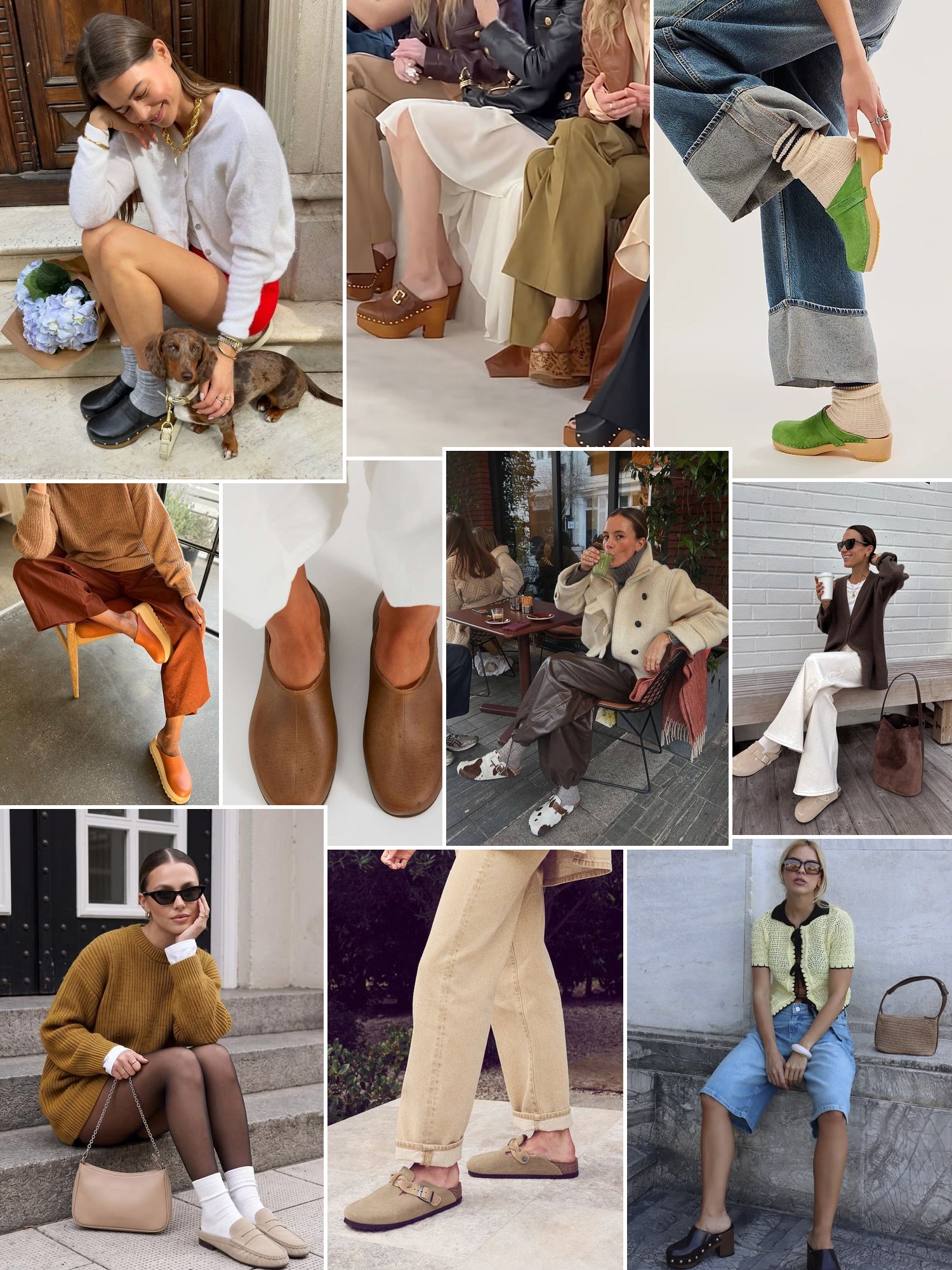
Everette pairs black leather with dome studs and a pine-wood platform; Cecily adds a Vachetta strap and open toe over a studded block heel. Sofia is brown, with an ankle buckle and lower wooden base. Sanita’s Hedi in antique brown uses a decorative strap; Urban stays quiet in anthracite nubuck with a buckle detail across the vamp. Ireni and Marie bring a peep toe into the mix, with adjustable buckles and slingback closures, while Original Max Too uses champagne-beige and a square toe.
I’d put the strapped styles with cropped straight trousers or a midi skirt and opaque tights. On an open toe, that little gap at the front is part of the line, so I would keep the hosiery smooth rather than patterned. Check the strap at its fullest adjustment and where its buckle lands against your ankle bone, then compare the sole height with your usual hem. What I would skip: a high-contrast sock with the champagne slide if the point is the shape of the toe. A plain opaque tight gives the wood and buckle the room to register.


Suede, shearling, and wood
Before looking at heel height, I would choose the surface: suede reads quiet, shearling is the detail, and the wood keeps either from going flat. Troentorp’s Swedish workshop began in 1907 with August Johansson in Troentorp outside Båstad; its history traces the wooden base to the region’s weather and available material. I like that this is a design decision with a real place behind it.
Mahogany Larken has shearling lining and a rounded toe; Halifax keeps chestnut suede over a wooden platform heel and studded base. Sanita’s Hirse pairs dark-brown European suede with a leather lining and wood midsole, while Hese adds a genuine shearling trim to chestnut leather. Daphine uses brown suede, PORON cushioning and a sculpted wooden platform; Olivia is suede with faux-fur lining, and Cha Cha makes black suede an open-toe shape.
For fall I would set the darker suede styles against charcoal tights or an easy wool skirt, without adding a second plush texture at the ankle. Calli in weathered mink has stud trim around its Caixeta platform if you want the upper to stay simple but the base to show. What I would skip: faux fur inside a clog when you are already wearing a thick fuzzy sock; the extra volume can look crowded. Compare the lining and upper in the product notes, then decide whether you want warmth to be an inside detail or a visible trim.


Open toes on carved wood
An open toe makes a wooden platform feel less heavy under an October coat, especially when the strap leaves a little of the foot visible. Sanita’s story starts on Skolegade in Herning, where Christen opened a shop and workshop in 1907 and made clogs for masons, farmers, and bakers. I like the contrast between that workwear origin and a sandal that wears the sole like sculpture.
Blyde gives saddle leather a carved wood sole and low heel, while Lyxon stacks black multi-strap over a tall wooden platform. Meret pushes the silhouette into burnt-purple lambskin with a buckle, studs, and towering wooden heel. Front Row wraps black leather around the foot; Orion uses pink woven leather with a slingback. Ranch brings honey-brown leather to a basswood sole, Maya has a chestnut upper and lacquered wood base, and Cascais keeps the toe covered with a silver-studded platform.
I would wear Blyde with a midi skirt on a day of errands, or choose Orion with dark tights when I want the pink to be the one bright detail. With wide trousers, I would choose the lowest profile and leave the hem just clear of the sole. Compare platform and heel measurements instead of reading only the total height; the difference tells you how much lift is built into the base. A sandal with this much wood can anchor a knit dress, but the outfit does not need a second architectural accessory.


Choose the wood, then the upper
To choose, I would start with the day’s hem: straight jeans give a mule a clean landing, a midi skirt lets an ankle strap show, and a coat dress can take a full clog boot. Then I’d decide how much wood I want visible, rather than starting with a color. A low carved sole is the quiet choice; a tall platform becomes the punctuation.
From August Johansson’s Swedish workshop to Bottega Veneta’s runway, the wooden bottom carries a lot of history without needing a speech. I’d pick the silhouette that makes the rest of my October outfit simpler. Let the wood be the part that remembers where it came from.






