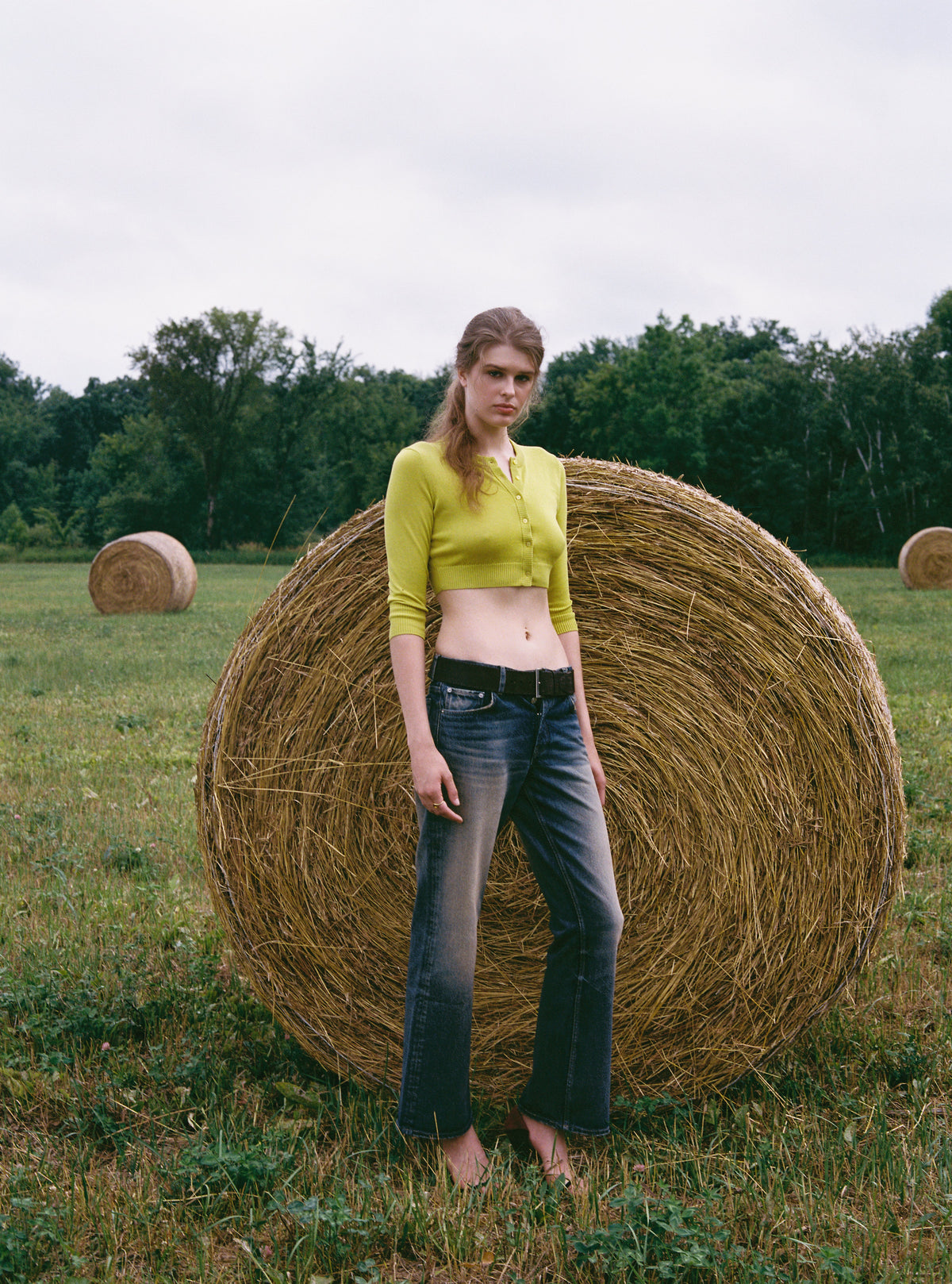
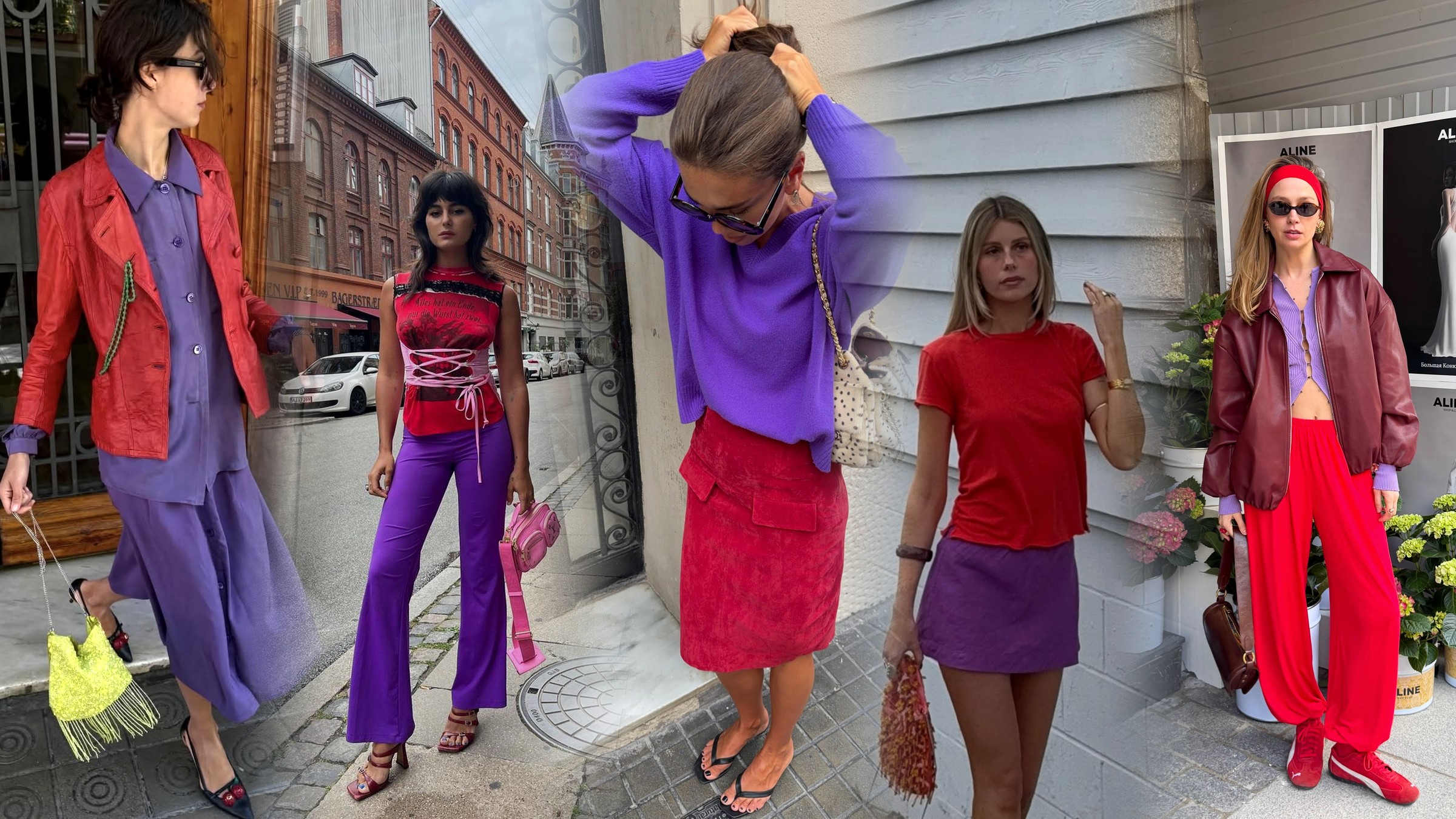
Azzedine Alaïa trained as a sculptor in Tunis before he ever cut a pattern, and it shows in everything the house has made since. He worked briefly at Dior, then Guy Laroche and Thierry Mugler, opened his own atelier in a Paris apartment on rue de Bellechasse in 1979, and built a body-first vocabulary that the industry has been borrowing ever since.
ALAÏA
Shoes
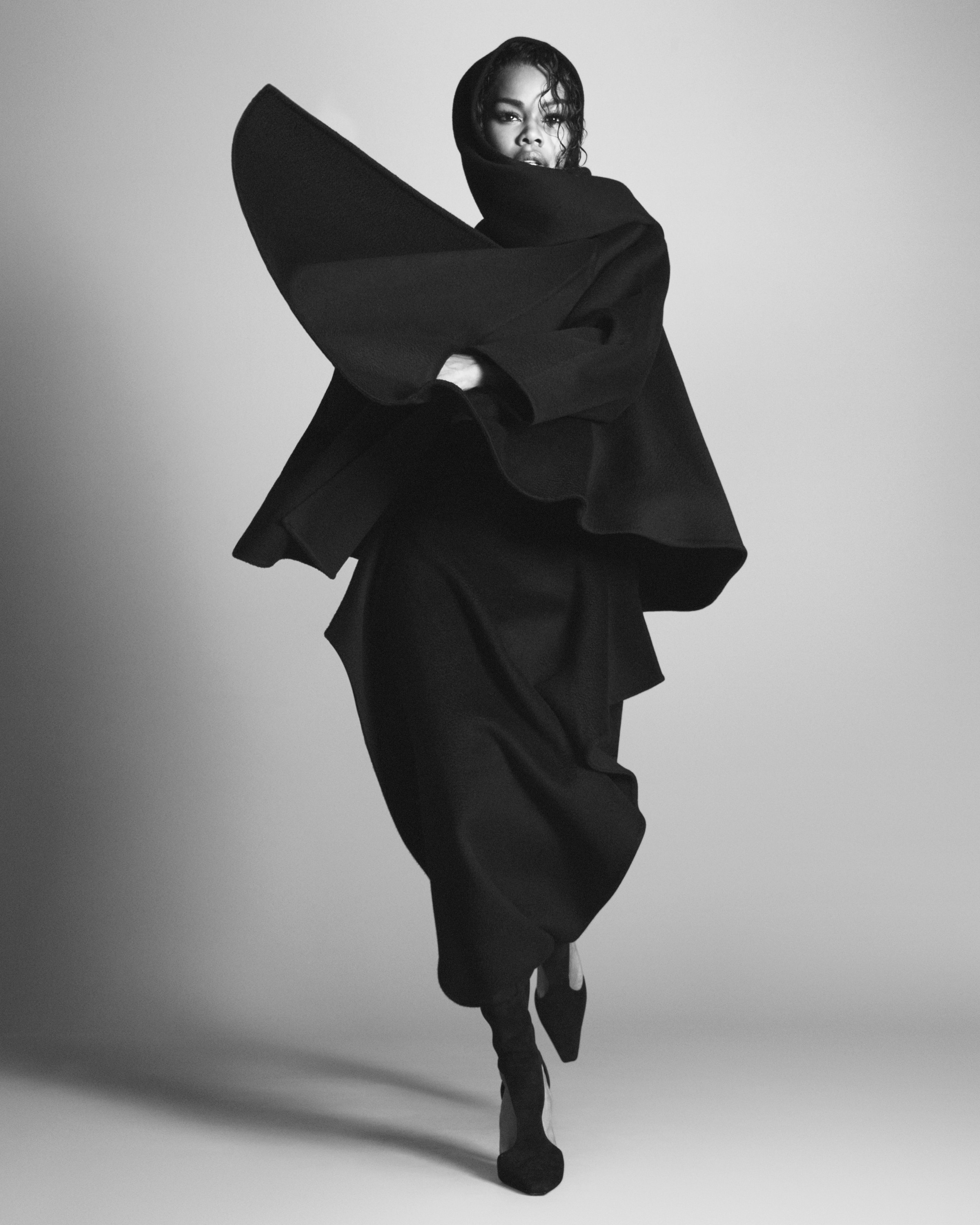
Start with the shoes, because Alaïa has always started with the body and worked outward. The sculpture training in Tunis came first, the pattern cutting second, and the house still treats a shoe as a structural problem rather than a decorative one. Mesh, laser-cut leather and the flat you can actually walk in are all house territory now.

Sheer Tulle Pumps
ALAÏA
$1,450

Sheer Tulle Pumps
ALAÏA
$1,450

Sheer Tulle Pumps
ALAÏA
$1,450

Fishnet Ballet Flats
ALAÏA
$1,190

Infra Croc-Effect Leather Sandals
ALAÏA
$1,290

Criss Cross Studded Suede Flats
ALAÏA
$1,550

Cuissardes Suede Thigh-High Boots
ALAÏA
$3,390

Fishnet Ballet Flats
ALAÏA
$990

Infra Suede Sandals
ALAÏA
$1,490

Cube Suede Thong Wedge Sandals
ALAÏA
$1,300

Infra Mesh Sandals
ALAÏA
$1,190

Invisible Patent Leather Thong Sandals
ALAÏA
$1,690

Fishnet Ballet Flats
ALAÏA
$950

Fishnet Ballet Flats
ALAÏA
$990

Fishnet Mules
ALAÏA
$960

Fishnet Mules
ALAÏA
$960

Embellished Fishnet Mary Jane Flats
ALAÏA
$1,350

Crossover Pony Hair Ballet Flats
ALAÏA
$1,350

Fishnet and Suede Sandals
ALAÏA
$1,050

Fishnet Ballet Flats
ALAÏA
$1,050

Cube Suede Wedge Thong Sandals
ALAÏA
$1,300

Shearling Leather Mary Jane Flats
ALAÏA
$1,350

Satin Wedge Thong Mules
ALAÏA
$1,150

Crystal Fishnet Ballet Flats
ALAÏA
$1,350
More Shoes
Alaïa moved to Paris in 1957 and got a very short run at Christian Dior before working for Guy Laroche and later Thierry Mugler. For years he dressed private clients out of his own apartment rather than chasing a label. That apprenticeship by proximity is why the clothes read as made for a specific woman rather than a demographic.

Fishnet Ballet Flats
ALAÏA
$950

Fishnet Ballet Flats
ALAÏA
$950

Fishnet Ballet Flats
ALAÏA
$950

Invisible Thong Leather-Trimmed Sandals
ALAÏA
$850

Invisible Thong Leather-Trimmed Sandals
ALAÏA
$850

Mesh Ballet Flats
ALAÏA
$1,190

Fishnet Ballet Flats
ALAÏA
$950

Fishnet Espadrilles
ALAÏA
$1,150

Wave Suede Slingback Pumps
ALAÏA
$1,490

Square Nubuck and Leather Knee Boots
ALAÏA
$2,400

Pony Hair D'Orsay Pumps
ALAÏA
$1,850

Suede Wedge Mules
ALAÏA
$1,450

Strappy Leather Sandals
ALAÏA
$1,450

Cube Satin Wedge Mules
ALAÏA
$1,300

Le Cœur Patent Leather Slingback Pumps
ALAÏA
$1,350

Satin Wedge Slingback Pumps
ALAÏA
$1,350

Padded Suede Sandals
ALAÏA
$1,390

Criss Cross Leather Ballet Flats
ALAÏA
$1,250

Le Cœur PVC, Leather Mules
ALAÏA
$1,390

Invisible Thong Mules
ALAÏA
$990

Leather Ballet Flats
ALAÏA
$1,290

Crystal Suede Ballet Flats
ALAÏA
$1,350

Cube Gingham Thong Wedge Sandals
ALAÏA
$1,300

Cone Laminated Leather Pumps
ALAÏA
$1,250
Still more Shoes
The atelier on rue de Bellechasse opened in 1979 and the first collection under his own name followed in 1981. By 1984 he had taken both Best Designer and Best Collection at the French Oscars de la Mode and moved into a private house on rue du Parc-Royal in the Marais. Boutiques in Paris, New York and Beverly Hills were open by 1988.

Invisible Thong Wedge Sandals
ALAÏA
$2,250

Invisible Leather Thong Sandals
ALAÏA
$1,490

Perforated Suede Mary Jane Flats
ALAÏA
$1,250

Le Cœur PVC, Leather Wedge Mules
ALAÏA
$1,590

Drop Gingham Slingback Pumps
ALAÏA
$1,490

Le Cœur PVC, Leather Mules
ALAÏA
$1,450

Fishnet Ballet Flats
ALAÏA
$950

Satin Wedge Mules
ALAÏA
$1,200

Bloom Suede Pumps
ALAÏA
$1,390

Mesh Ballet Flats
ALAÏA
$950

Mesh Pumps
ALAÏA
$1,050

Mesh Pumps
ALAÏA
$1,050

Leather Ankle Boots
ALAÏA
$1,950

Cube Suede Wedge Mules
ALAÏA
$1,350

Eyelet-Embellished Suede Ballet Flats
ALAÏA
$1,300

Cone Patent Leather Sandals
ALAÏA
$1,250

Velvet-Effect Fishnet Ballet Flats
ALAÏA
$970

Cone Suede Sandals
ALAÏA
$1,250

Infradito Metallic Leather Sandals
ALAÏA
$1,850

Infra Sandal
ALAÏA
$1,190

Infra Sandal
ALAÏA
$1,250

Sheer Pump
ALAÏA
$1,450

Ankle Chelsea Boot
ALAÏA
$1,750

Infra Sandal
ALAÏA
$1,250
Bags
The business history is unusually stubborn. Prada took a stake in 2000, Alaïa bought his own house and name back in July 2007, and Richemont came in shortly after, which is how the maison is owned today. Very few designers have ever managed to buy themselves back.

Le Teckel Small Calf Hair Flap Bag
ALAÏA
$3,550

Small Studded Suede Hobo Bag
ALAÏA
$2,370

Demi Lune Calf Hair Bag
ALAÏA
$2,550

Small Calf Hair Hobo Bag
ALAÏA
$1,750

Delta Leather Clutch
ALAÏA
$3,050

Le Teckel Medium Nubuck Bag
ALAÏA
$3,050

Le Teckel Medium Leather Flap Bag
ALAÏA
$3,050

Le Teckel Medium Leather Flap Bag
ALAÏA
$3,050

Mina 20 Studded Suede Bag
ALAÏA
$3,760

Delta Medium Leather Bag
ALAÏA
$3,900

Le Teckel Medium Leather Shoulder Bag
ALAÏA
$2,950

Le Click Medium Pony Hair East-West Shoulder Bag
ALAÏA
$3,900

Le Teckel Leather Clutch
ALAÏA
$3,800

Le Teckel Gingham Clutch
ALAÏA
$2,370

Le Teckel Medium PU Shoulder Bag
ALAÏA
$2,800

Le Coeur Braided Crossbody Bag
ALAÏA
$1,650

Le Teckel Medium Suede Bag
ALAÏA
$3,900

Le Click Medium Ocelot-Printed Twill Bag
ALAÏA
$2,930

Le Click Medium Nylon Bag
ALAÏA
$2,600

Le Teckel Medium Canvas Bag
ALAÏA
$2,650

Le Click Medium E/W Nubuck Bag
ALAÏA
$3,100

Le Bulldog Medium Leather Bag
ALAÏA
$3,200

Spiral Hardware Suede Bracelet Bag
ALAÏA
$5,300

Le Teckel Small Leather Bag
ALAÏA
$2,700
More Bags
In 2003 the collection was formally recognised as haute couture, which means the atelier work is regulated rather than marketing language. Alaïa also famously refused to show on the Paris calendar for long stretches, presenting when the clothes were ready instead. The industry eventually decided that was principled rather than difficult.

Le Click Medium E/W Calf Leather Bag
ALAÏA
$3,100

Le Teckel Leather Flap Bag
ALAÏA
$3,750

Le Coeur Leopard-Print Pony Hair Bag
ALAÏA
$2,000

Le Teckel Medium Denim Shoulder Bag
ALAÏA
$2,650

Le Coeur Straw Shoulder Bag
ALAÏA
$1,500

Le Click Small Leather E/W Shoulder Bag
ALAÏA
$2,650

Exclusive Le Teckel Small Studded Suede Shoulder Bag
ALAÏA
$2,890

Le Teckel Small Leather Shoulder Bag
ALAÏA
$2,700

Le Teckel Small Leather Shoulder Bag
ALAÏA
$2,700

Le Click E/W Medium Nubuck Bag
ALAÏA
$3,100

Le Teckel Leather Clutch
ALAÏA
$2,550

Le Click Medium Suede E/W Shoulder Bag
ALAÏA
$3,100

Le Teckel Shoulder Bag
ALAÏA
$2,950

Le Teckel Medium Shearling Leather Shoulder Bag
ALAÏA
$3,800

Le Teckel Medium Calf Leather Bag
ALAÏA
$2,950

Le Teckel Medium Calf Leather Bag
ALAÏA
$2,950

Le Teckel Canvas Clutch
ALAÏA
$2,390

Le Teckel Medium PU Shoulder Bag
ALAÏA
$2,800

La Mina E/W 25 Straw Bag
ALAÏA
$2,650

Mina 20 Nubuck Leather Bag
ALAÏA
$2,650

Mina 20 Nubuck Leather Bag
ALAÏA
$2,650

Le Teckel Medium Leather Shoulder Bag
ALAÏA
$3,250

Le Teckel Satin Clutch
ALAÏA
$2,370

Demi Lune Mesh Shoulder Bag
ALAÏA
$1,400
Still more Bags
The 1980s images are the ones that stuck. Grace Jones wore Alaïa in the 1985 Bond film A View to a Kill and at Jean-Paul Goude's New York show that same year, and Tina Turner, Madonna, Naomi Campbell and Stephanie Seymour all cycled through the studio. The nickname King of Cling was not meant as a compliment at first.

Le Teckel Leather Clutch
ALAÏA
$2,550

Le Teckel Leather Clutch
ALAÏA
$2,370

Le Click Medium Leather E/W Shoulder Bag
ALAÏA
$3,100

Le Teckel Suede Clutch
ALAÏA
$2,550

Le Coeur Leather Crossbody Bag
ALAÏA
$1,290

Le Coeur Patent Leather Crossbody Bag
ALAÏA
$1,500

Le Teckel Medium Nubuck Bag
ALAÏA
$2,950

Le Coeur Patent Leather Crossbody Bag
ALAÏA
$1,290

Le Click Leather Clutch
ALAÏA
$3,200

Le Click E/W Leather-Trimmed Bag
ALAÏA
$3,050

Mina 37 Nubuck Leather Shoulder Bag
ALAÏA
$3,550

Hobo Leather Tote Bag
ALAÏA
$3,100

Hobo Patent Leather Tote Bag
ALAÏA
$1,790

Purse Small Leather Top Handle Bag
ALAÏA
$3,210

Medium Teckel Nubuck Bag
ALAÏA
$3,050

ALAΪA Mina 20 Bag
ALAÏA
$2,650
Tops and shirting
The knitwear is where the second-skin idea is easiest to see: bandage construction, zippers used as seams, stretch treated as a structural material rather than a convenience. Alaïa was doing this decades before the rest of fashion arrived at body-conscious as a trend cycle. The tops here are the cheapest entry into that thinking, structurally speaking.

Velvet Off-The-Shoulder Bodysuit
ALAÏA
$2,500

Wool Top
ALAÏA
$2,350

Asymmetric Cotton Shirt
ALAÏA
$1,950

Second-Skin Silk-Blend Tension Top
ALAÏA
$2,010

Peplum-Hem Cotton-Blend Top
ALAÏA
$1,950

Oversized Cropped Cotton T-Shirt
ALAÏA
$800

Oversized Cropped Cotton T-Shirt
ALAÏA
$800

Tailored Cotton-Blend Top
ALAÏA
$950

Ribbed Cotton-Blend Bodysuit
ALAÏA
$850

Oversized Cotton-Wool Crop Top
ALAÏA
$1,600

Knit Wool-Blend Corset Top
ALAÏA
$1,450

Peplum-Hem Cotton Top
ALAÏA
$1,800

High-Neck Poplin Top
ALAÏA
$1,420

Belted Cotton Top
ALAÏA
$1,730

Leopard Printed Jacquard Knit Top
ALAÏA
$2,150

Zipped Denim Shirt
ALAÏA
$1,700

Oversized Cotton Sweatshirt
ALAÏA
$1,200

Ribbed Knit Silk Top
ALAÏA
$1,950

ALAÏA Short-Sleeve Asymmetric Triangle T-Shirt
alaia
$1,100

ALAÏA Godet-Sleeve Turtleneck Top
alaia
$2,730
More from the collection
Alaïa died in Paris in November 2017. The Association Azzedine Alaïa, founded in 2007 with Christoph von Weyhe and Carla Sozzani, keeps both his archive and his personal collection of other designers' work, including Paul Poiret. It is one of the more serious designer archives in private hands.

Wool Knit Maxi Dress
ALAÏA
$4,100

Latex-Jersey Maxi Dress
ALAÏA
$4,450

Cinched Velvet Mini Dress
ALAÏA
$4,450

Draped Jersey Maxi Dress
ALAÏA
$4,050

Pleated Knit Maxi Dress
ALAÏA
$5,700

Fringe Cotton Slip Dress
ALAÏA
$3,160

Balloon Cotton-Poplin Mini Dress
ALAÏA
$2,950

Gathered Jersey Maxi Dress
ALAÏA
$4,050

Tie-Detailed Slub Midi Dress
ALAÏA
$4,050

Pleated Silk-Blend Midi Dress
ALAÏA
$6,500

Knit Cinched Mini Dress
ALAÏA
$4,170

ALAÏA Mock-Neck Cap-Sleeve Seam Paneled Dress
alaia
$4,020

Shiny Latex Jersey Fitted Dress
ALAÏA
$4,450

Bustier Dress
ALAÏA
$3,600

Ribbed wool midi dress
ALAÏA
$4,100

Stretch-jersey midi dress
ALAÏA
$3,900

Draped jersey midi dress
ALAÏA
$3,900

Butterfly-Frame Acetate Sunglasses
ALAÏA
$540

Cut-Out Leather Belt
ALAÏA
$1,090

Square-Framed Acetate Sunglasses
ALAÏA
$510

Fringed High Socks
ALAÏA
$2,500

Butterfly-Frame Acetate Sunglasses
ALAÏA
$540

Mask-Frame Acetate Sunglasses
ALAÏA
$540

Butterfly-Frame Acetate Sunglasses
ALAÏA
$540
More from the collection
Richemont appointed Pieter Mulier creative director in February 2021, the first person to follow the founder. Mulier came from Calvin Klein as global creative director, and before that Dior, after years working alongside Raf Simons. His first collection landed for spring 2022.

Bustier Leather Belt
ALAÏA
$1,300

Garment-Dyed Denim Peplum Belt
ALAÏA
$1,100

Oval Sunglasses
ALAÏA
$425

Velvet gloves
Alaïa
$690

Round Denim Pants
ALAÏA
$1,550

Wool Knit Leggings
ALAÏA
$2,650

Belted Wool Straight-Leg Pants
ALAÏA
$3,300

Silk Tension Pants
ALAÏA
$3,880

High-Rise Wool Barrel-Leg Pants
ALAÏA
$2,150

Balloon Cotton Wide-Leg Pants
ALAÏA
$2,100

Panelled Cotton Pants
ALAÏA
$2,160

Cotton Barrel-Leg Jogger Sweatpants
ALAÏA
$1,300

ALAÏA Leopard-Print Nylon Balloon Pants
alaia
$2,160

ALAÏA Cotton Gabardine Ruffle Paneled Ankle-Tie Pants
alaia
$2,160

ALAÏA Embroidered Cotton Wide-Leg Crop Culotte Pants
alaia
$3,350

Pony Hair Midi Pencil Skirt
ALAÏA
$7,400

Stirrup Nylon Maxi Petticoat
ALAÏA
$5,030

Spiral Cotton-Linen Skirt
ALAÏA
$2,550

Asymmetric Leaf Godet Skirt
ALAÏA
$5,320

Gathered Jersey Maxi Skirt
ALAÏA
$3,200

Pleated Midi Skirt
ALAÏA
$4,900

Bell Cotton Poplin Maxi Skirt
ALAÏA
$2,550

Laser-Cut Leather Mini Skirt
ALAÏA
$12,790

Basque Cotton-Blend Mini Skirt
ALAÏA
$2,200
More from the collection
On 30 January 2026 Alaïa confirmed Mulier would leave after his final show in Paris that March, with the studio holding the line until a successor is named. In February 2026 the Prada Group confirmed him as chief creative officer of Versace, effective that July. So the pieces in this edit sit right at the end of a five-year chapter.

Poplin Pointed Skirt
ALAÏA
$1,730

Dome Medium Earrings
ALAÏA
$920

Dome Cuff
ALAÏA
$1,590

Necklace/Brooch
ALAÏA
$1,150

Bubble Glass and Brass Hoop Earrings
ALAÏA
$1,290

Pierced Leather Cuff
ALAÏA
$750

Edge Hoop Earrings
ALAÏA
$1,000

Bubble Brass and Glass Cuff
ALAÏA
$1,590

Cotton Cord Wide Hoop Earrings
ALAÏA
$1,150

Tailored Cotton-Velvet Coat
ALAÏA
$8,250

Pony Hair A-Line Trench Coat
ALAÏA
$18,150

Poplin Trench Coat
ALAÏA
$4,450

ALAÏA Pleated Leopard-Print Nylon Belted Trench Coat
alaia
$5,030

ALAÏA Paper Belted Midi Trench Coat
alaia
$4,450

Shearling-trimmed leather coat
ALAÏA
$13,800

Paneled calf hair trench coat
ALAÏA
$20,250

Cinched Cashmere Knit Sweater
ALAÏA
$2,950

Cut-Out Cashmere-Blend Jumper
ALAÏA
$3,200

Hooded Virgin Wool Sweater
ALAÏA
$3,650

Cut-Out Cashmere-Blend Jumper
ALAÏA
$3,200

Ribbed wool-blend sweater
ALAÏA
$2,500

Round Mid-Rise Barrel-Leg Jeans
ALAÏA
$1,500

Round Mid-Rise Barrel-Leg Jeans
ALAÏA
$1,500

Round Mid-Rise Barrel-Leg Jeans
ALAÏA
$1,500
More from the collection
Museums got there before the resale market did. Palais Galliera staged his first French retrospective in late 2013, Florence's fashion biennale showed him in 1996, and Rome's Villa Borghese hung the sculptural pieces in 2015. The clothes were always being read as objects.

High-Rise Barrel-Leg Jeans
ALAÏA
$1,500

Basque Hybrid Wide-Leg Jeans
ALAÏA
$1,800

Padded Bomber Jacket
ALAÏA
$4,090

Reversed Denim Jacket
ALAÏA
$2,100

Shorty Polka-Dot Bikini
ALAÏA
$1,750

ALAΪA Drop Slingback
ALAÏA
$1,490

100 mesh pumps
ALAÏA
$1,450

Infra 90 calf hair sandals
Alaïa
$1,550

Infra 55 embellished suede thong sandals
ALAÏA
$1,490

Medium Le Teckel Bag
ALAÏA
$2,800

Delta laser-cut leather clutch
Alaïa
$3,050

Mini calf hair shoulder bag
Alaïa
$1,750
Our honest take
Alaïa is the rare house where the founder's method survived the founder. Buy for the construction rather than the logo: the shoes and the knit are where the sculpture argument is most legible, and the leather goods are the least interesting part of the story. If you have wanted one Mulier piece, this is the window.