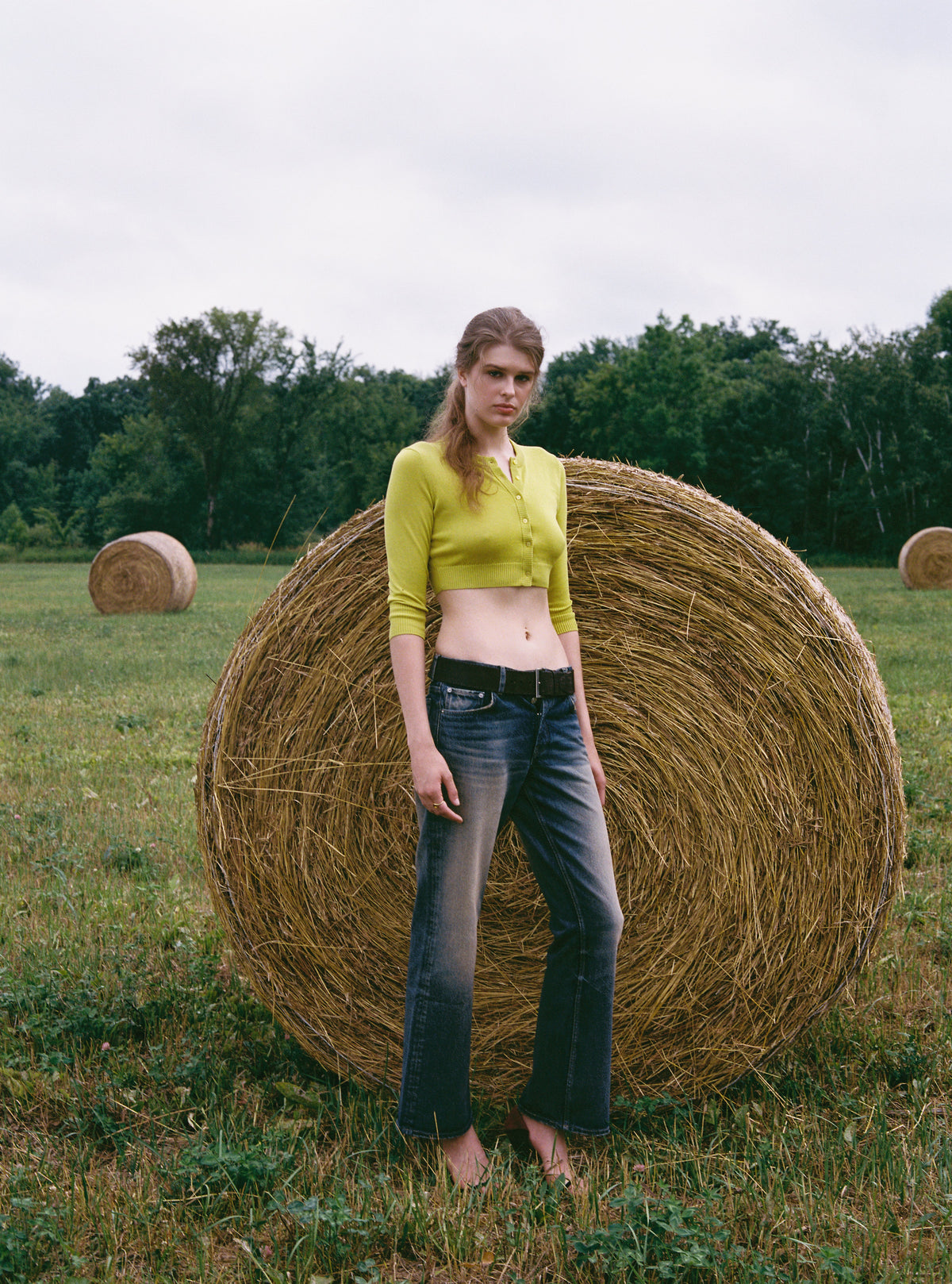
Anderson's has made belts by hand in one factory in Parma, Italy since 1966, when leather worker Carlo Valenti named the company after Savile Row tailor Anderson and Sheppard. Notes on how texture and finish, more than width or buckle, separate one Anderson's belt from the next.
Anderson's

Croc-Effect And Suede, Side By Side
Carlo Valenti started Anderson's in Parma in 1966 and named it after Anderson and Sheppard, the Savile Row tailor he admired, even though every belt has always been made in that one Parma factory. This group narrows the range down to two finishes built on that same factory work: croc-effect leather and suede. The Croc-effect leather belt gives a plain strap a reptile texture without any obvious hardware to distract from it, and the Narrow croc-effect leather belt does the same job at a slimmer width for more fitted trousers. The Suede belt takes the opposite approach, trading texture for a soft, matte surface that reads more casual than the croc-effect pieces, and the Narrow suede belt shrinks that same idea down for a smaller loop.
What I like about a factory this narrow in focus is how much variation it still finds inside one product. Croc-effect for a dressier day, suede for everything else, both made by the same hands.


Plain Leather, Textured Up
The second group moves from suede and croc-effect into textured and plain leather instead. The Textured-leather belt adds a subtle grain to an otherwise plain strap, enough detail to notice up close without changing the belt's basic profile, while the Textured-leather waist belt sits higher and narrower, built for a dress or a higher-waisted trouser rather than jeans. The Nubuck belt brings back a brushed, suede-like finish but in a slightly coarser leather than the suede piece elsewhere in the edit. A plain Leather belt closes out the group as the most straightforward option, no texture or effect, just clean leather and a simple buckle made with the same hundred-plus steps as the rest.


Texture Over Shape
Anderson's makes a strong case for belts as a place to experiment with texture rather than shape, since every piece here follows the same basic silhouette and lets the leather do the differentiating. The croc-effect and textured belts are the most distinctive, giving a plain outfit a detail worth noticing without adding a full accessory statement, while the suede and nubuck pieces stay softer and more suited to everyday wear. A narrow croc-effect or textured belt earns its place in a wardrobe more easily than another plain leather one, since it does more visual work for the same amount of space. I would keep one plain leather belt as the backup and let the textured or croc-effect piece be the one that actually gets worn every week.