Avène cicalfate is the restorative cream made for sensitive skin, and it comes from a thermal spring in southern France. Here are the Avène Cicalfate+ and Tolerance Control picks, the hydrating serums and cleanser from the same brand, and barrier creams from other labels.
Avène Cicalfate, Spring Water From Southern France and a Very Calm Shelf
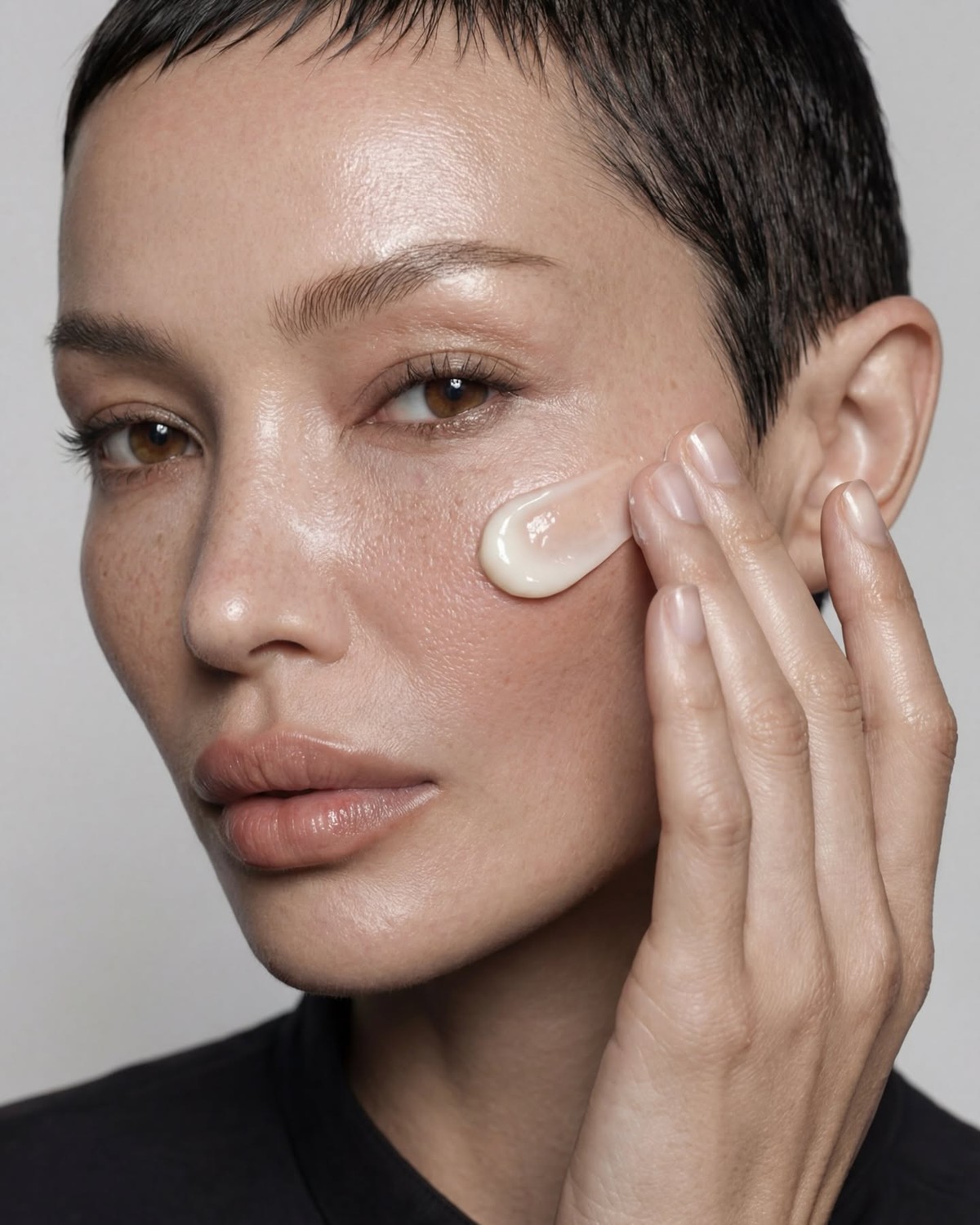
Avène Thermal Spring Water flows in the Haut-Languedoc Natural Regional Park in southern France, and the site's spa history goes back to 1736. The Eau Thermale Avène skincare brand itself was created in 1990, and the thermal water is the thread that runs through everything it makes. Cicalfate came later, in 2001, and the postbiotic ingredient known as C+-Restore, from the Cicalfate+ range, was introduced in 2019.
That is a long enough history that I trust it more than a launch from last spring. Avène cicalfate is the name most people know, and the Cicalfate + Restorative Protective Skin Barrier Face Cream for Sensitive Skin is the jar to begin with. Its key trio is C+-Restore, a copper-zinc complex and the Thermal Spring Water, and it is made for sensitive skin. I use it in the evening, on top of a plain serum, and on the corner of my nose when the cold has chapped it.
The Cicalfate+ Intensive Skin Restorative Face Serum is the lighter way in, good when a full cream feels heavy. Then there is the Tolerance Control line, made for hypersensitive skin. The Soothing Skin Recovery Face Cream is the everyday one, and the Face Balm is richer, a thicker layer for nights when skin needs more cushioning. Both are plain and a bit clinical in feel, which is exactly the point. I like that nothing on the jar tries to sound exciting. It just says what the cream is made for, and then it gets on with it. Keep them next to the sink so that they are the first thing you see after washing your face.
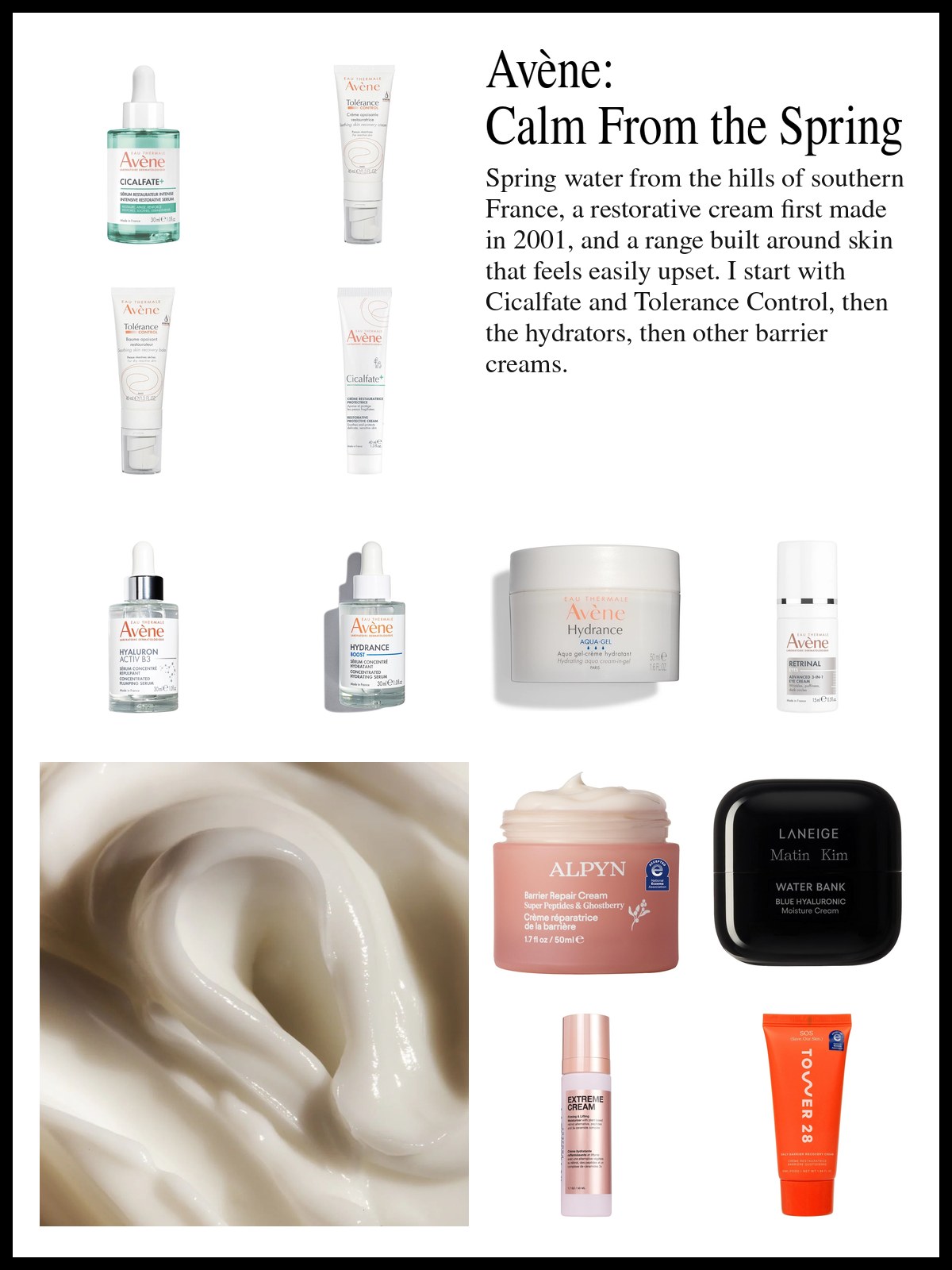
Avène Cicalfate+ and Tolerance Control

Cicalfate+ Intensive Skin Restorative Face Serum
Avène
$41.99

Tolerance Control Soothing Skin Recovery Face Cream for Hypersensitive Skin
Avène
$28.49

Tolerance Control Soothing Skin Recovery Face Balm for Hypersensitive Skin
Avène
$28.49

Cicalfate + Restorative Protective Skin Barrier Face Cream for Sensitive Skin
Avène
$18.29
Hydration from the same spring
Sensitive-feeling skin usually needs water as much as it needs protection, and the rest of the brand has that covered. This is the shelf I would build around the creams above when skin is dry but not upset.
Avène's Hydrance Boost is a concentrated hydrating serum with hyaluronic acid and vitamin B3, and Hyaluron Activ B3 is a plumping serum with the same pair, a little more focused on plumping. Pick one, not both. The Hydrance Aqua Gel Face Moisturizer with Hyaluronic Acid is the gel I would choose for summer or for oilier days, and it sits well under sunscreen.
The Tolerance Foaming Facial Cleanser is a gentle wash, a foaming wash that I find gentle on my own skin. That matters for anyone whose skin gets tight after washing, and I would start there before I added any new serum.
The Retrinal Advanced 3-In-1 Anti-Aging Eye Cream, powered by retinaldehyde, is the outlier, because it is a retinoid product and belongs to a different kind of routine. If you have never used retinoids, use it slowly, a couple of evenings a week at most, and wear sunscreen daily. Keep it well away from the lash line, and ask a doctor first if your eyelids are easily bothered. It is a nice example of how a calm range can still have one active in it.
More from Avène

Hyaluron Activ B3 Concentrated Plumping Face Serum with Hyaluronic Acid & Niacinamide
Avène
$41.99

Hydrance Boost Concentrated Hydrating Serum with Hyaluronic Acid & Vitamin B3
Avène
$29.49

Hydrance Aqua Gel Face Moisturizer with Hyaluronic Acid
Avène
$29.49

Retrinal Advanced 3-In-1 Anti-Aging Eye Cream Powered by Retinaldehyde
Avène
$34.99

Tolerance Foaming Facial Cleanser
Avène
$19.99

Hyaluron Activ B3 Triple Correction Eye Cream
Avene
$46

Cleansing Foam
Avene
$24

Thermal Spring Water
Avene
$14
Barrier creams by other houses
A barrier cream is a simple idea: give skin something to hold moisture in, and try to keep everything else out of the way. Different brands take slightly different roads to get there, and it is fun to compare them on the same face.
Caudalie's Premier Cru Skin Barrier Rich Refillable Moisturizer with Bio-Ceramides is the rich option, a cream I would keep for winter. Laneige's Water Bank Blue Hyaluronic Cream is the hyaluronic one, made for moisture barrier support. Glow Recipe's Watermelon Milk Peptide Cushion Cream is a refillable moisturizer for dry skin and barrier support, and the cushion in the name is the texture idea. Innbeauty Project's Extreme Cream combines peptides and ceramides in a refillable jar. Tower 28 Beauty's SOS Daily Skin Barrier Redness Recovery Moisturizer is made for skin that looks red and stressed, and Alpyn's Super Peptide Barrier Repair Moisturizer is a peptide cream for sensitive skin.
What I would skip: switching between barrier creams every few days. It is tempting when skin feels off, but you lose the ability to tell which one helped. I would also skip fragranced masks and strong exfoliants while skin is feeling raw. Pick one cream, use it twice a day for two weeks, and see how your skin behaves.
Barrier creams from other brands

Super Peptide Barrier Repair Moisturizer for Eczema, Wrinkles, Firming & Sensitive Skin
Alpyn
$62

Water Bank Blue Hyaluronic Cream Moisturizer for Moisture Barrier Repair
Laneige
$38

Extreme Cream Firming & Barrier Repair Moisturizer
Innbeauty Project
$50

SOS Daily Skin Barrier Redness Recovery Moisturizer
Tower 28 Beauty
$24

Premier Cru Skin Barrier Rich Refillable Moisturizer with Bio-Ceramides
Caudalie
$119

Watermelon Milk Peptide Cushion Cream Moisturizer
Glow Recipe
$40

Ultra Facial Advanced Repair Barrier Cream
Kiehl's
$48

Barrier Repair Nourishing Moisturizer
Perricone MD
$75
Keeping the shelf small
When skin is upset, I make my shelf smaller, not bigger. A gentle cleanser, one hydrating layer, one cream and sunscreen in the morning is more than enough for most days.
Introduce a new product on one side of the face first if you are unsure, and give it a couple of days. Keep the water lukewarm, pat rather than rub, and choose plain over fancy. If redness, itching or roughness sticks around, please see a doctor or dermatologist, because no cream replaces a proper look at persistent skin trouble. In the meantime, keep a note of what you have used and when. It makes the conversation with a professional far more useful, and it stops you from repeating the same guess. Most of all, be patient: skin that has felt upset for a while rarely settles in a day, and a quiet routine held steady for a few weeks is the kindest test.