A bangle slips and a cuff stays. That single mechanical difference decides which one you will actually wear, and most buying advice skips it.
Bangles or Cuffs: Which Actually Stays Put
One is sized to your hand, the other to your wrist
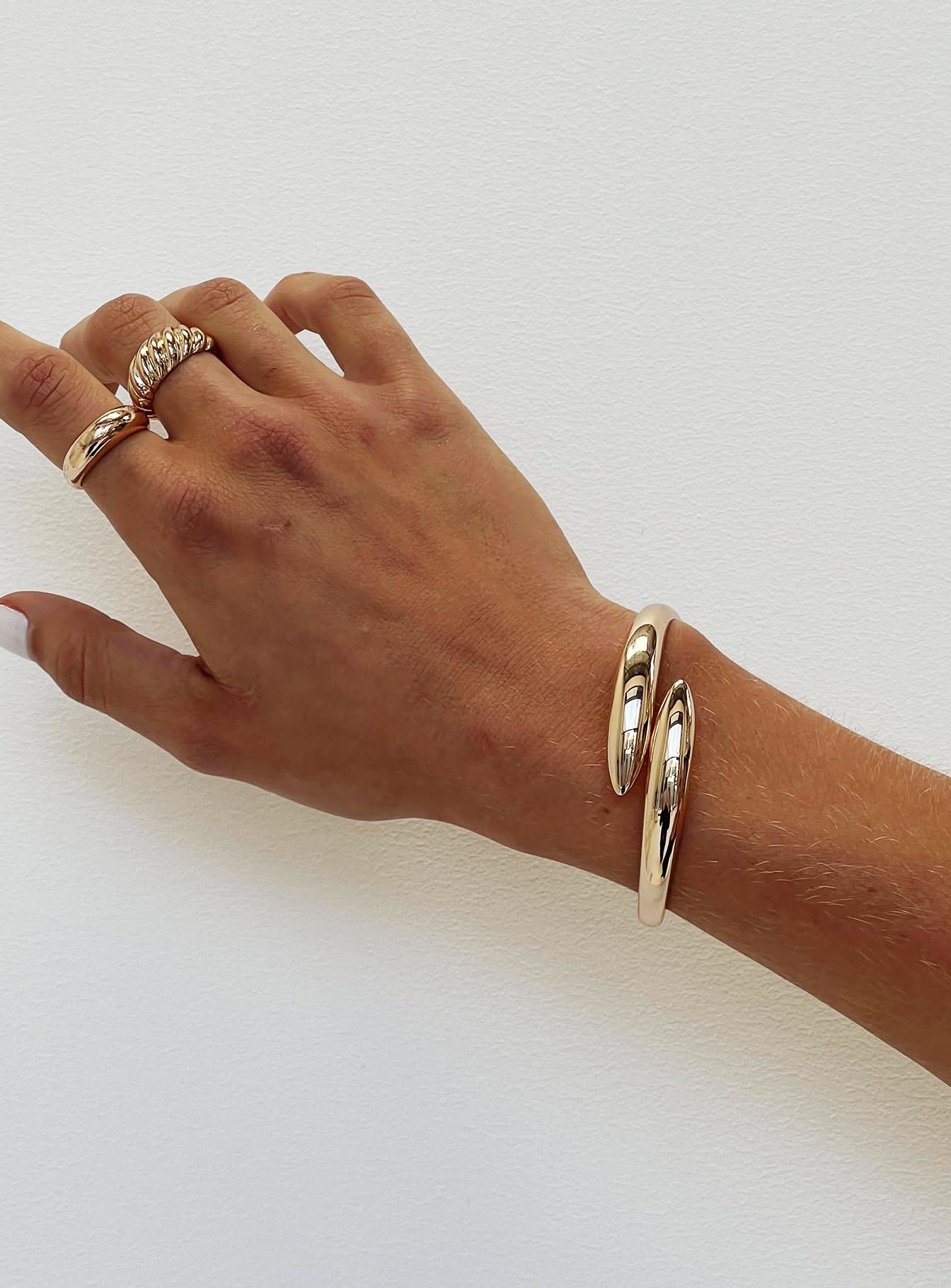
A bangle is a closed circle that has to pass over the widest part of your hand, which means it is always larger than your wrist and therefore always moving. A cuff is an open form sized to the wrist itself, and it stays roughly where you put it. That is the entire difference and it decides almost everything about how the two feel to own. Bangles slide down onto the hand when you lower your arm, they knock against a desk and a steering wheel, and they make a noise. For some people that movement is the pleasure of the object. For anyone who types, it is a daily irritation. Cuffs sit still, can be adjusted by gentle pressure, and disappear under a sleeve. What cuffs do badly is survive being squeezed repeatedly, because opening and closing a cuff work-hardens the metal at the bend and eventually it cracks. So the real trade is noise and movement against a finite number of adjustments.


Fitting, gauge and how to buy the right one
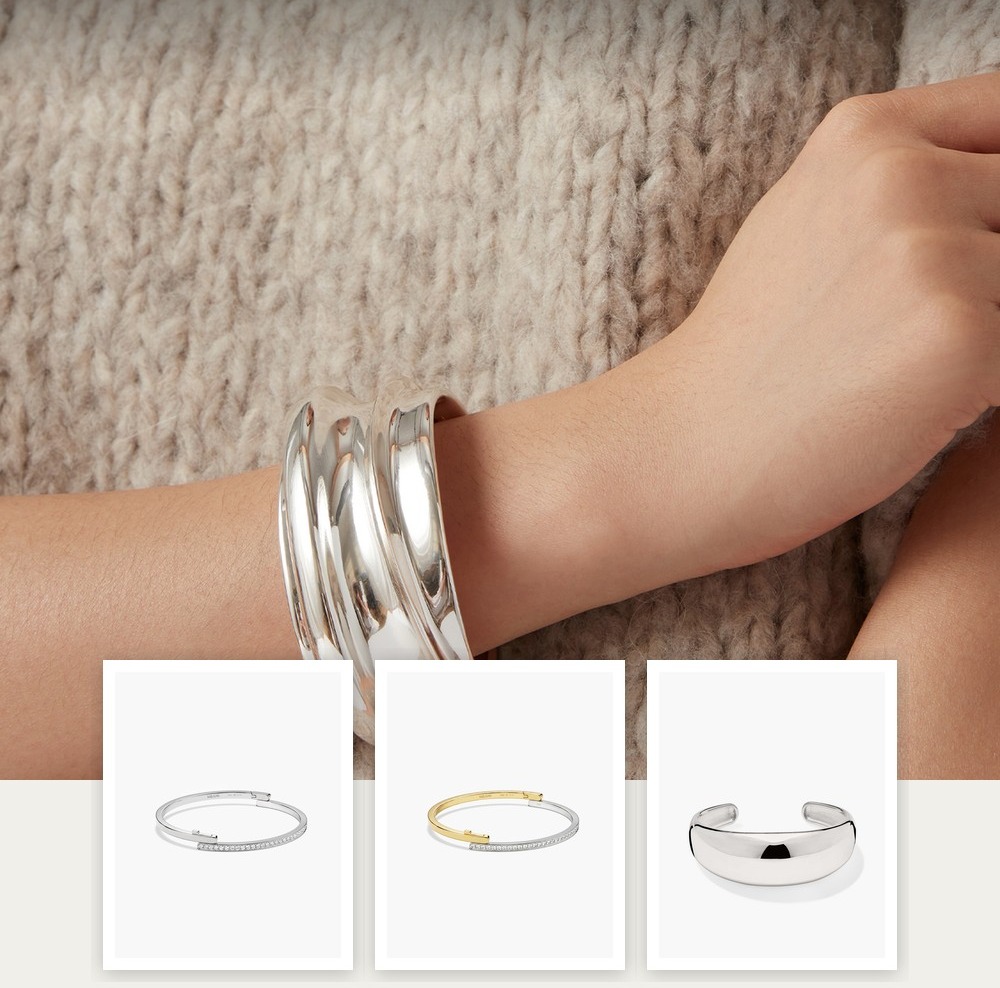
For a bangle, measure the widest part of your hand with the thumb tucked in, not your wrist, and buy to that measurement plus a little. If it fits your wrist it will not go on. For a cuff, measure your wrist and look for a piece where the gap is roughly an inch, since the gap is what lets you get it on without flexing the metal. Gauge matters more than diameter for how a cuff behaves. A thin cuff is comfortable, adjusts easily and loses its shape within a year of daily wear. A heavy one holds its shape indefinitely and is much harder to adjust, which is what you want if you intend to leave it on. Stacking changes the calculation again, because bangles stack well and sound like it, while cuffs of similar width fight each other for the same real estate. Two cuffs is usually one too many on the same wrist.


Our honest take
If you work with your hands or at a keyboard, buy the cuff. The noise question is not a small one and it is the reason so many bangles live in boxes. Buy it in a heavier gauge than feels necessary, because the thin ones deform and a deformed cuff never sits right again. If you love the movement and the sound, buy the bangle, buy two so it is clearly a choice, and accept that you will take them off to work. What we would avoid is a thin bangle on its own, which manages to be both noisy and insubstantial. Resin and lighter set pieces are a good way to test whether you like the sensation before committing to metal. If you take one thing away, measure your hand rather than your wrist before you buy a bangle, because that is the measurement the piece has to clear.
Shop brands in this edit




Next read
Secondhand Louis Vuitton Damier Ebene Or Damier Azur
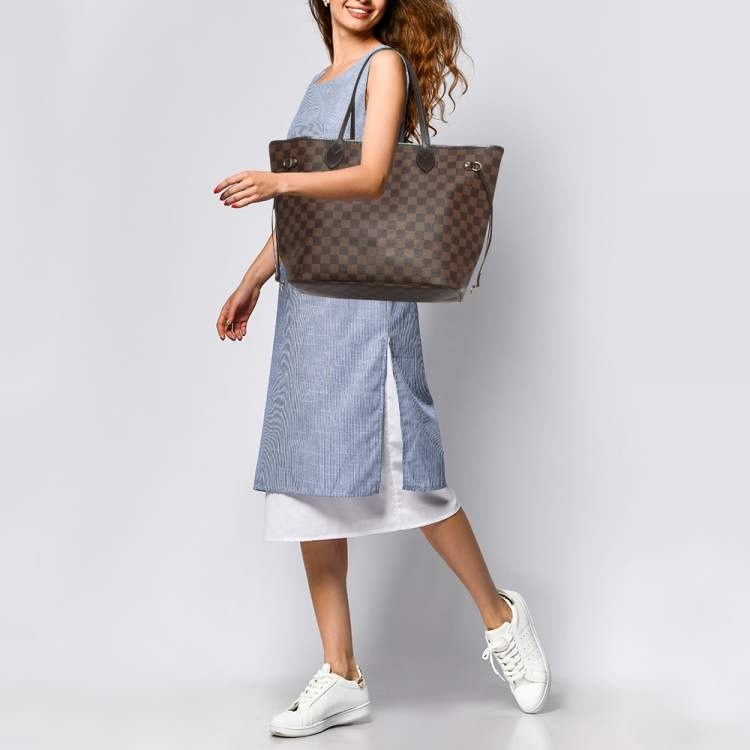
Damier Ebene and Damier Azur are the same coated canvas in two colourways, and the secondhand market treats them as two different products.
Read Editorial
Secondhand Silk My Favs
My sixteen selects of scarves below are all ninety centimetre squares, split into two price bands