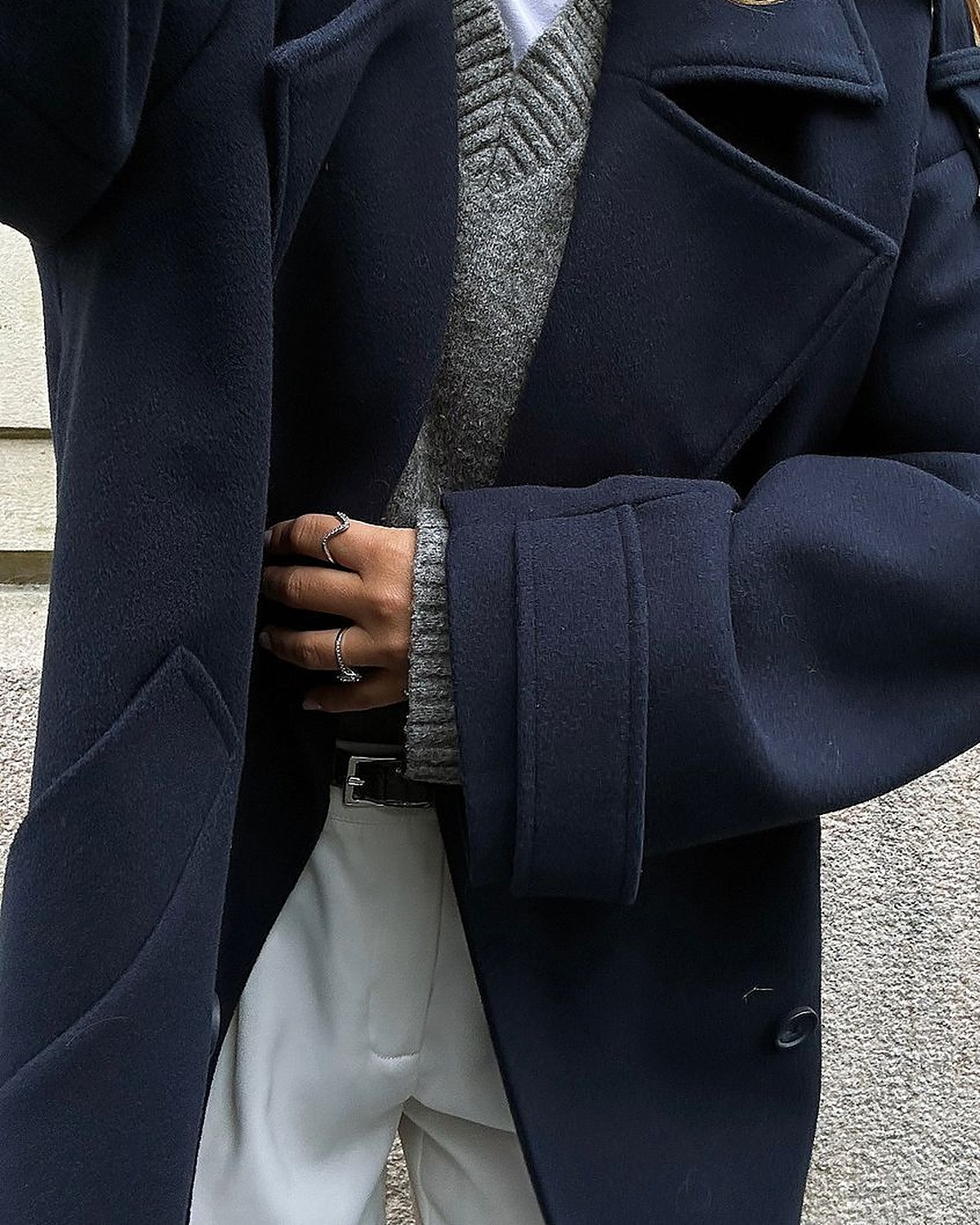
This bezel engagement ring edit moves from round and oval solitaires to sapphire centers, unusual cuts, and platinum or white gold settings. I would choose the shape first, then decide how much of its edge I want the metal to cover.
Bezel Engagement Ring: Solitaires Wrapped in Metal
The setting that stays close
In New York in 1886, Charles Lewis Tiffany introduced the raised six-prong Tiffany Setting at the jewelry house he had opened in 1837. It was a different silhouette from the older bezel, a continuous rim around a stone. The contrast still makes sense to me: sometimes the romance is in seeing a diamond lifted, sometimes in seeing the metal hold its line. That is the whole case for the rim.
A full bezel wraps the gem's edge. GIA says that perimeter coverage resists chips and everyday wear, while the smooth edge is less likely to catch on clothing or gloves. The trade is slightly less light than an open prong setting. I would take that exchange for a ring that feels neat against a knit cuff, especially when winter sleeves come back.
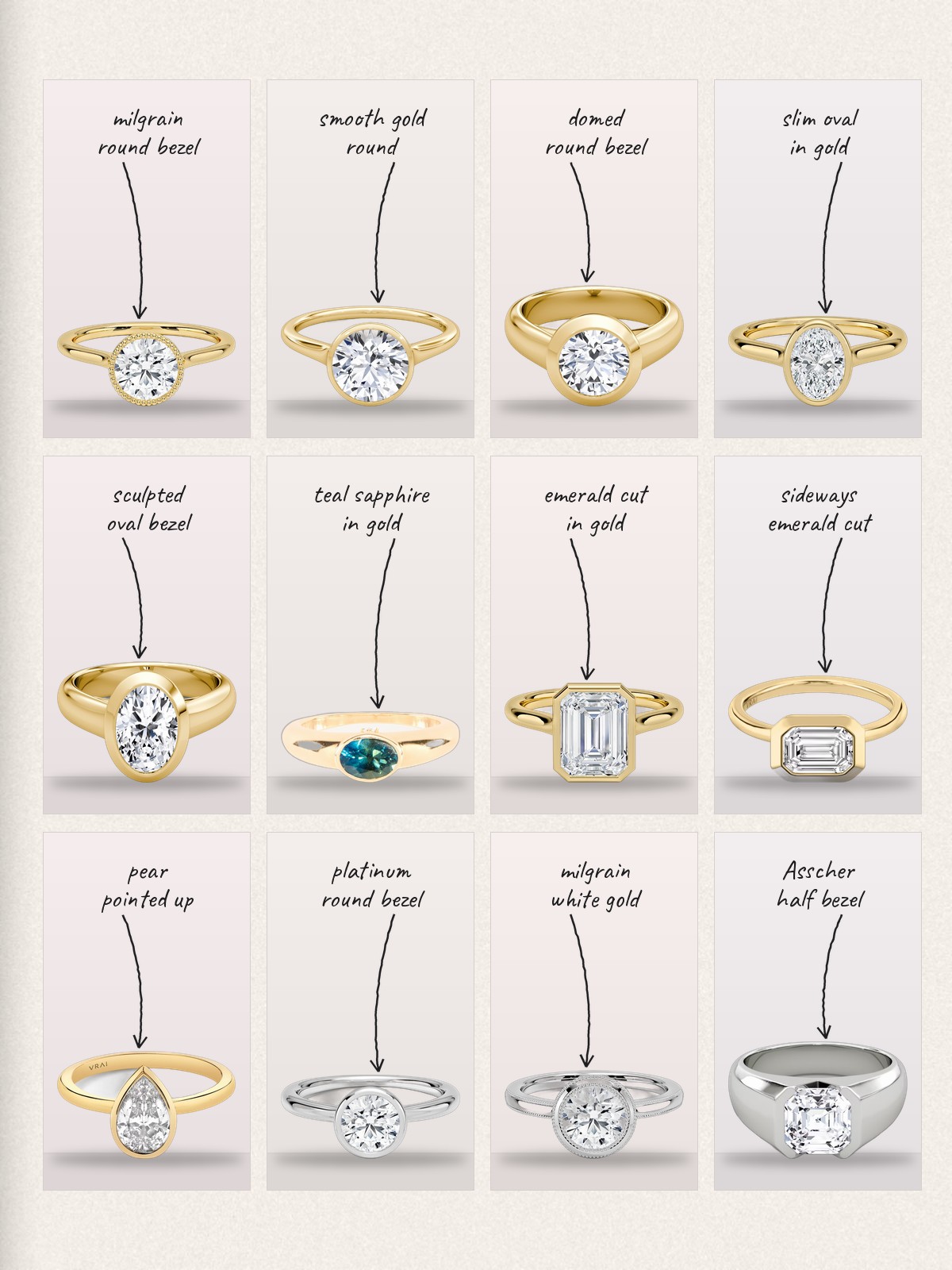
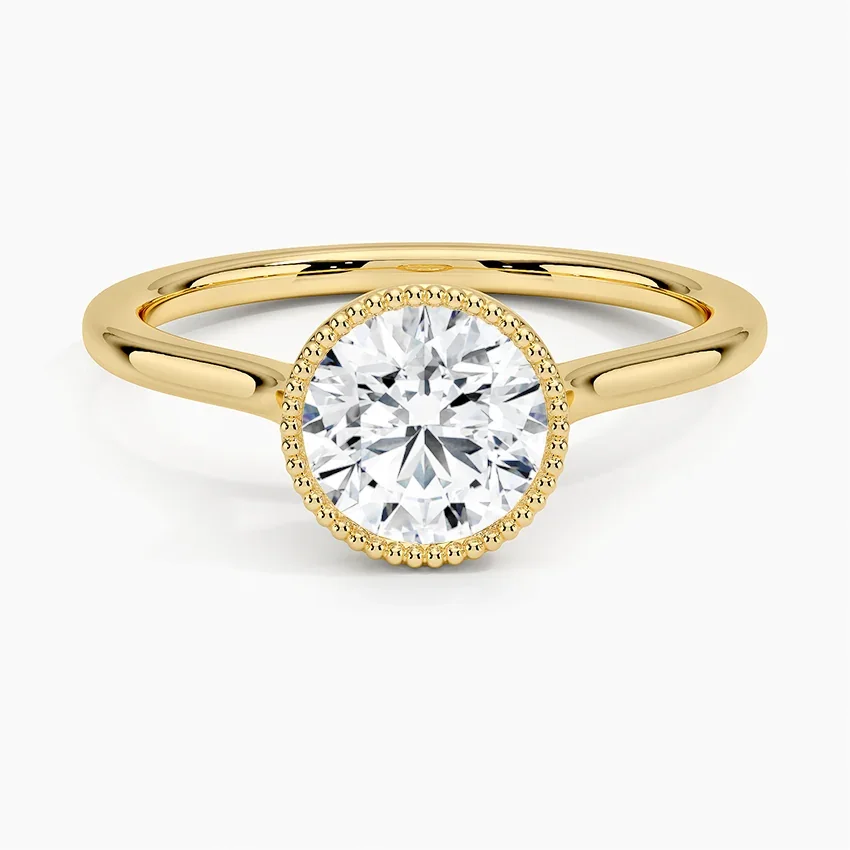
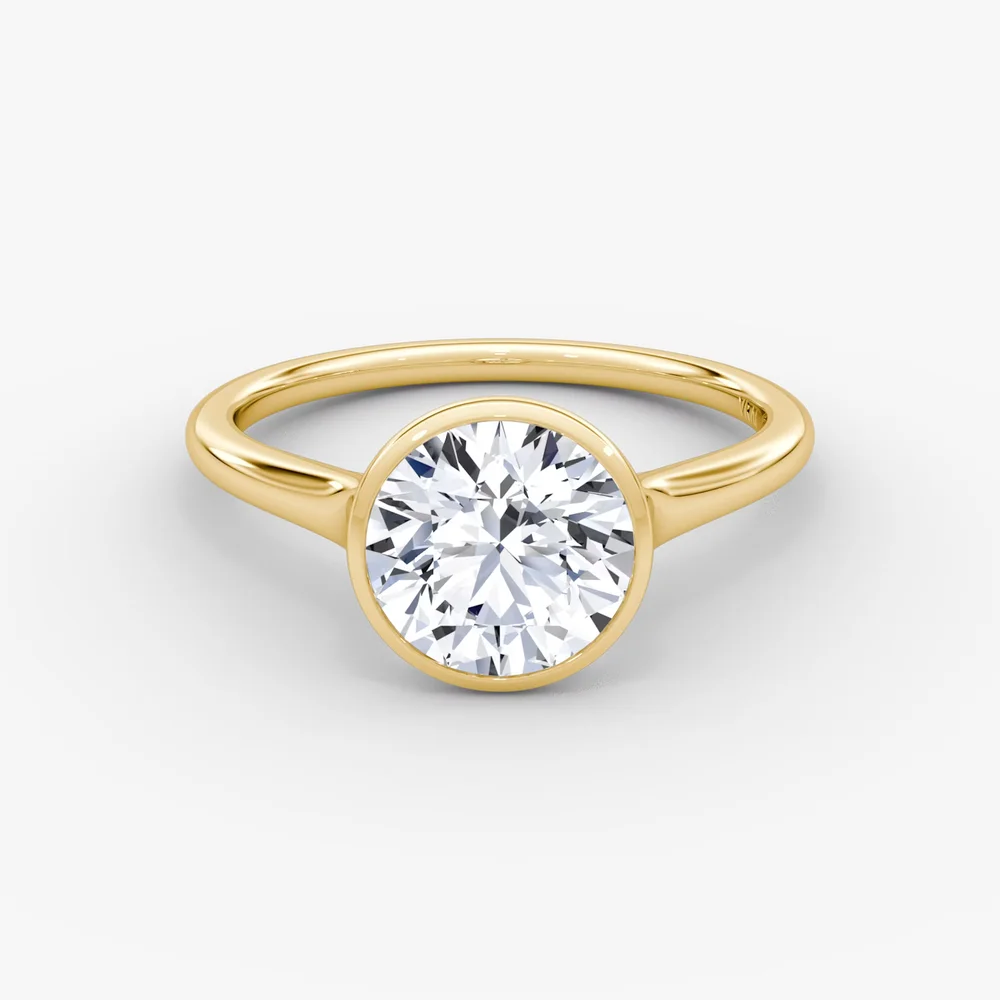
Brilliant Earth's Margot Bezel Engagement Ring gives a round diamond a milgrain full rim on a slender yellow gold band. VRAI's Flat Edge Bezel Ring goes smoother and finer, with a round lab-grown center inside a full gold bezel. Both are solitaire shapes, but the metal treatment shifts the mood: Margot has a small old-world edge, while Flat Edge reads clean with a fine chain or a silk blouse.
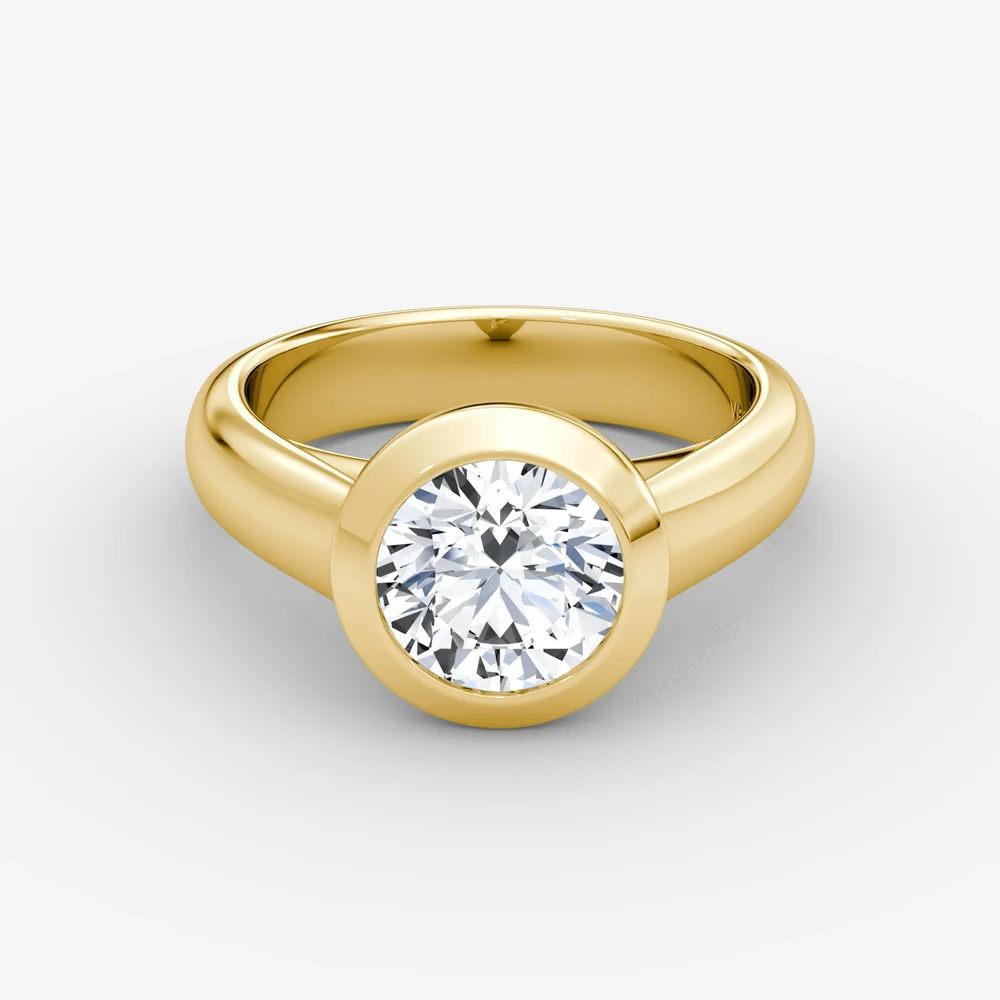
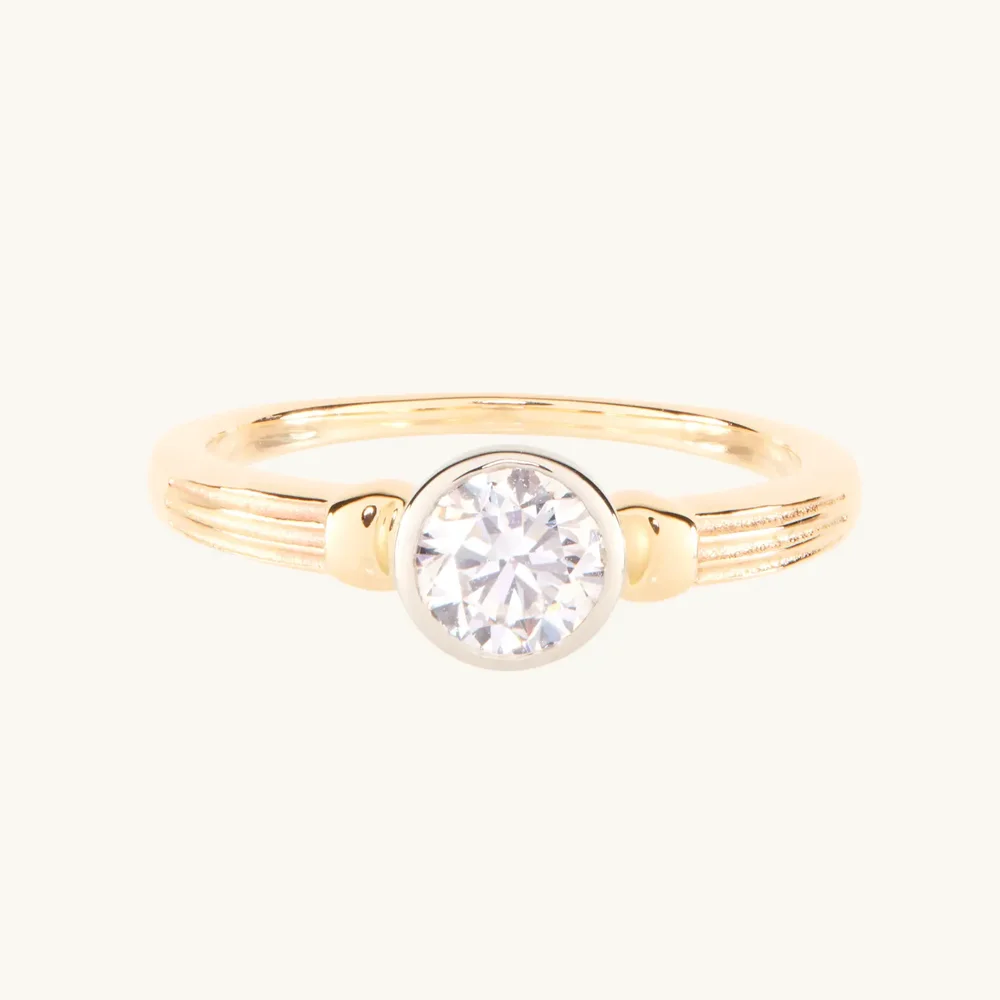
VRAI's Sculpture Bezel Ring is the bolder round, with a broad, softly domed bezel and a shoulder that rises into it. Catbird's Column Solitaire Two Tone Diamond Ring splits the frame between a white gold bezel and a graduated yellow gold band around a recycled diamond. I would compare both against a plain band and check the rim from the side; the shape should feel intentional from every angle.
Oval bezels with a little color
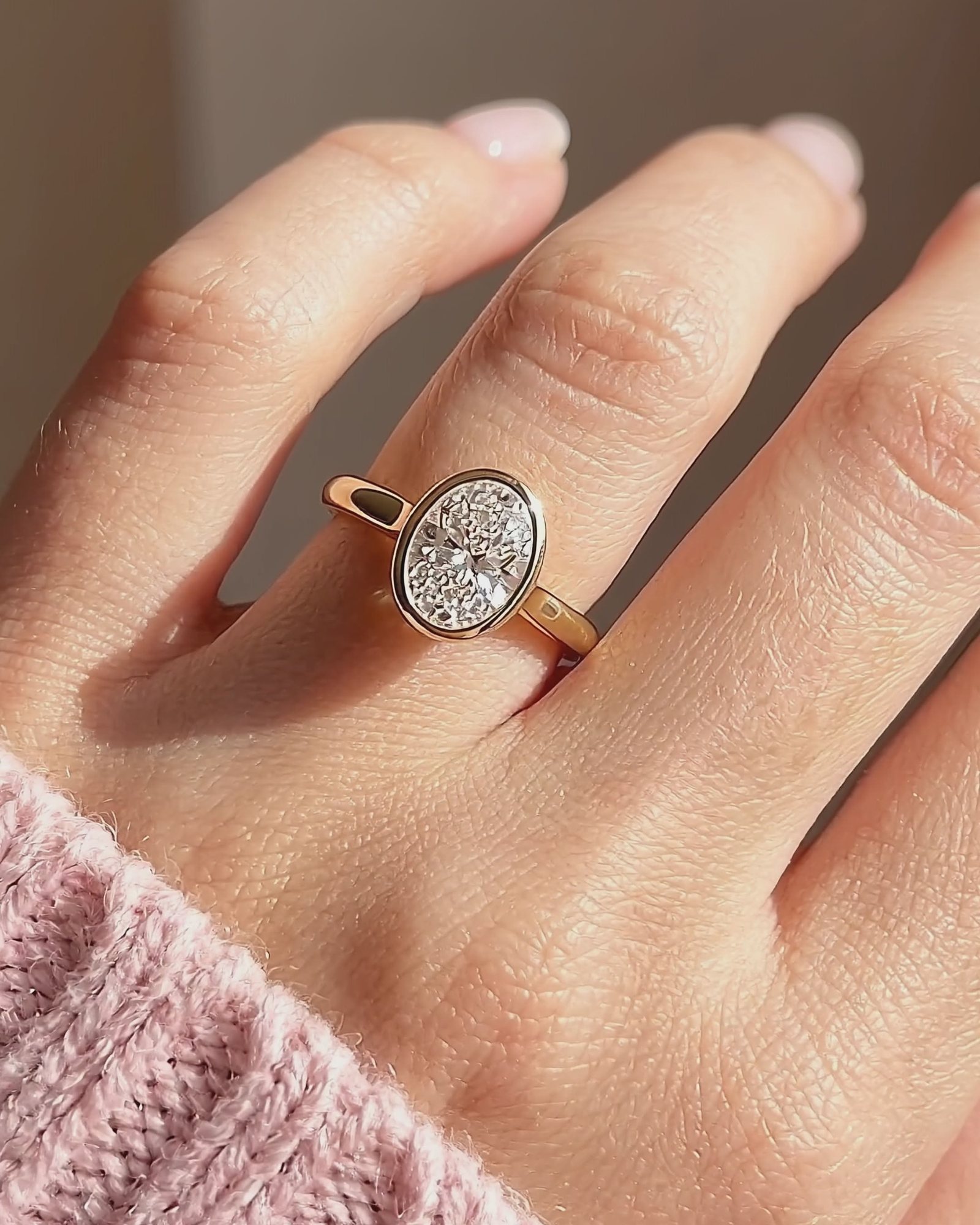
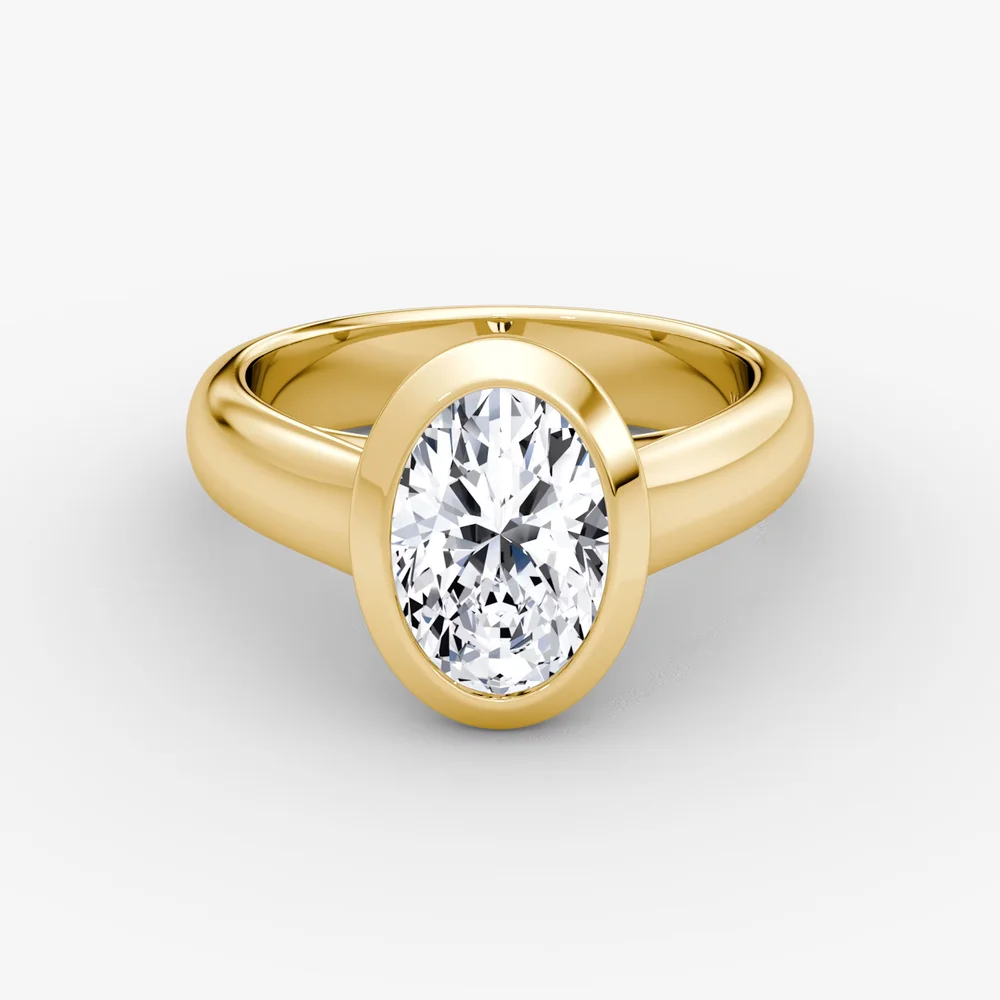
Ovals already have a long line, so a full bezel makes the shape feel deliberate rather than delicate. GIA describes the setting as a way to protect an oval and emphasize its shape, which is persuasive if gloves, coat cuffs and a cold-weather commute are part of the week. I would start by looking at the stone face-on, then from the side.
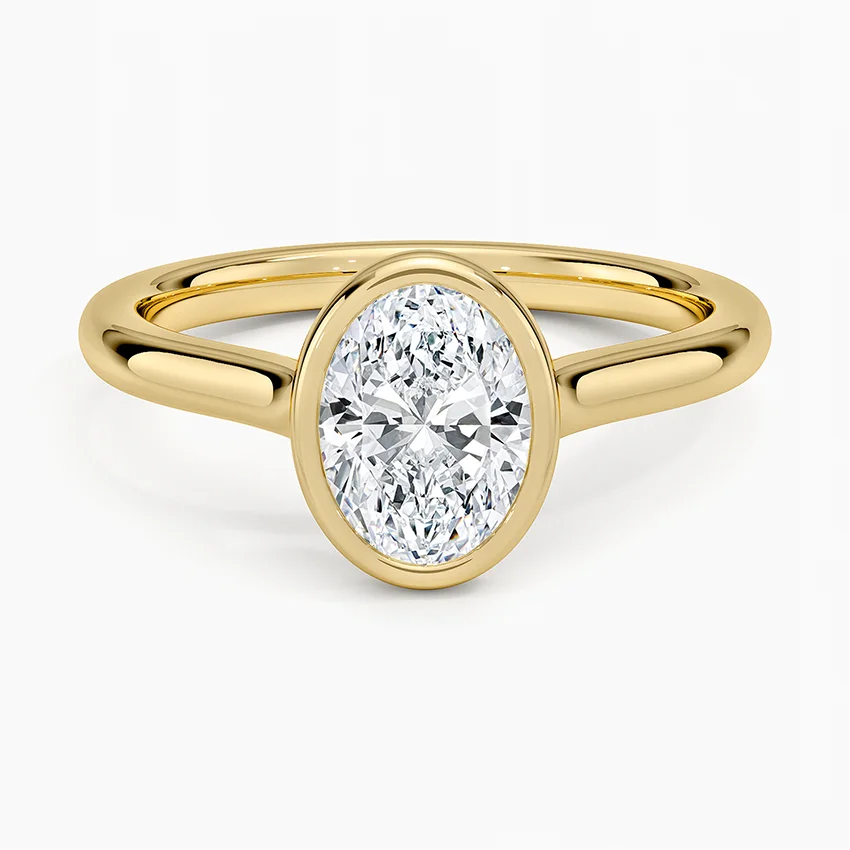
Brilliant Earth's Luna 2mm Bezel Ring with 1ct Oval Lab Diamond keeps the yellow gold band narrow at 2mm, so the oval stays center stage. VRAI's Sculpture Bezel Ring takes the same silhouette in a softer direction, with a sculpted shoulder and an oval bezel around its 1.02ct created diamond. Both read as clean solitaires; the choice is whether you want a slim uninterrupted line or a shoulder with a little more shape.
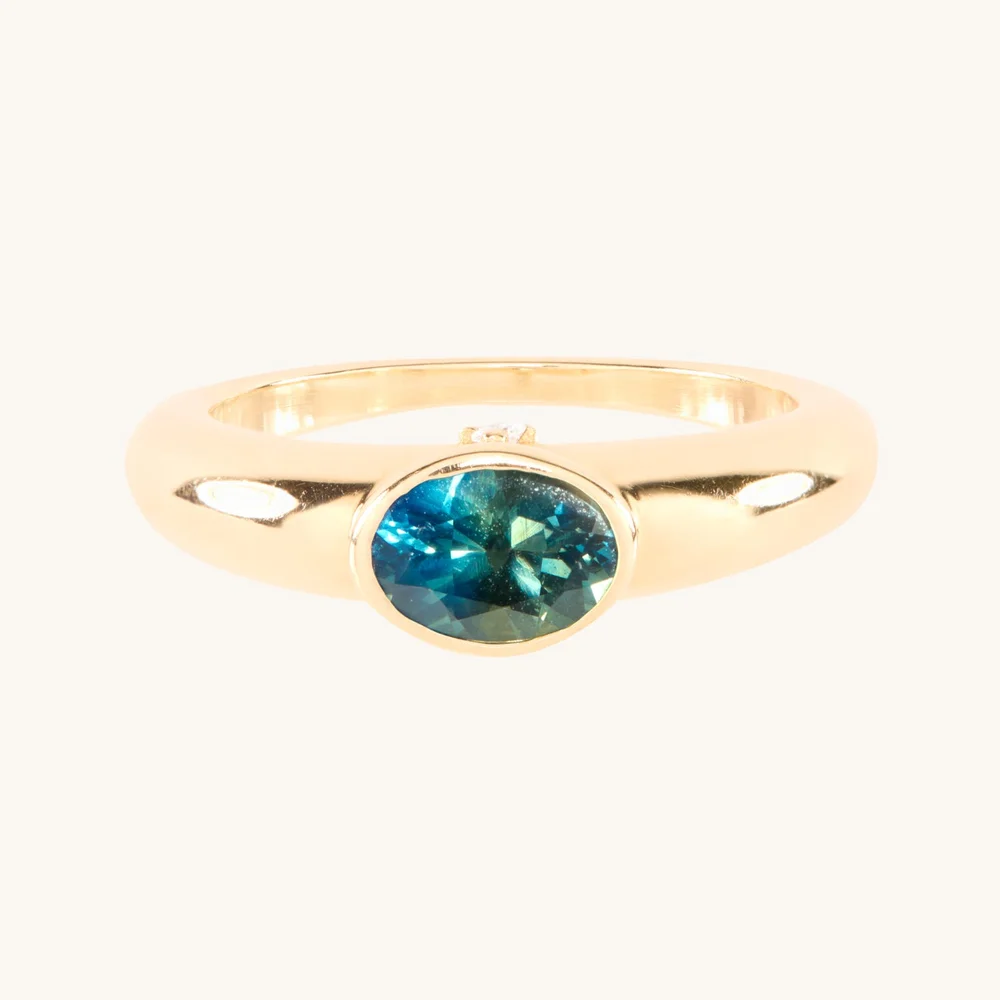
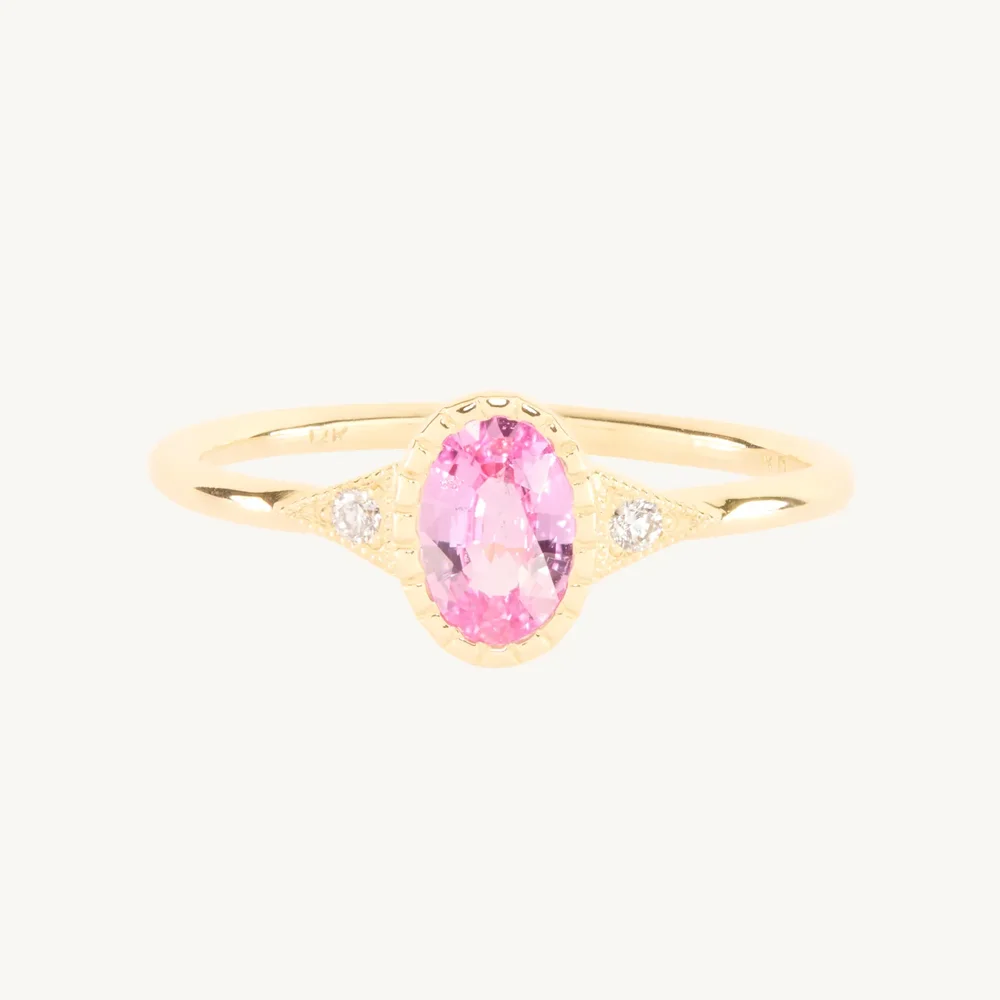
Color breaks up the sameness without changing the setting idea. BRUCE's Sedna Sapphire Solitaire Ring sets an oval teal sapphire between two small white diamond accents; Jennie Kwon Designs' Pink Sapphire Exemplar Ring pairs an oval pink sapphire with two delicate diamond sides. With a black knit or a simple satin slip, I would let the center color carry the conversation and keep the rest quiet.
When comparing a bezel engagement ring, check the metal line at the oval's narrow ends and whether the band looks balanced beside your everyday jewelry. What I would skip: a full bezel if the point is seeing as much of the stone's edge as possible; a prong setting leaves the gem more open to light, and that is a real preference, not a flaw.
Emerald, pear, and east-west bezels
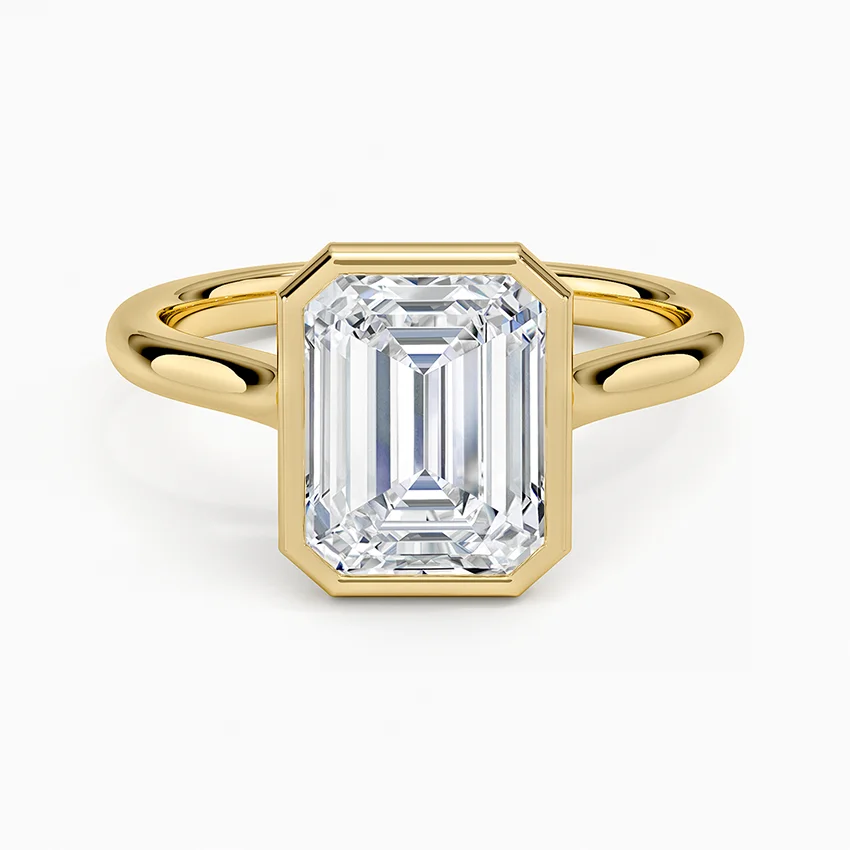
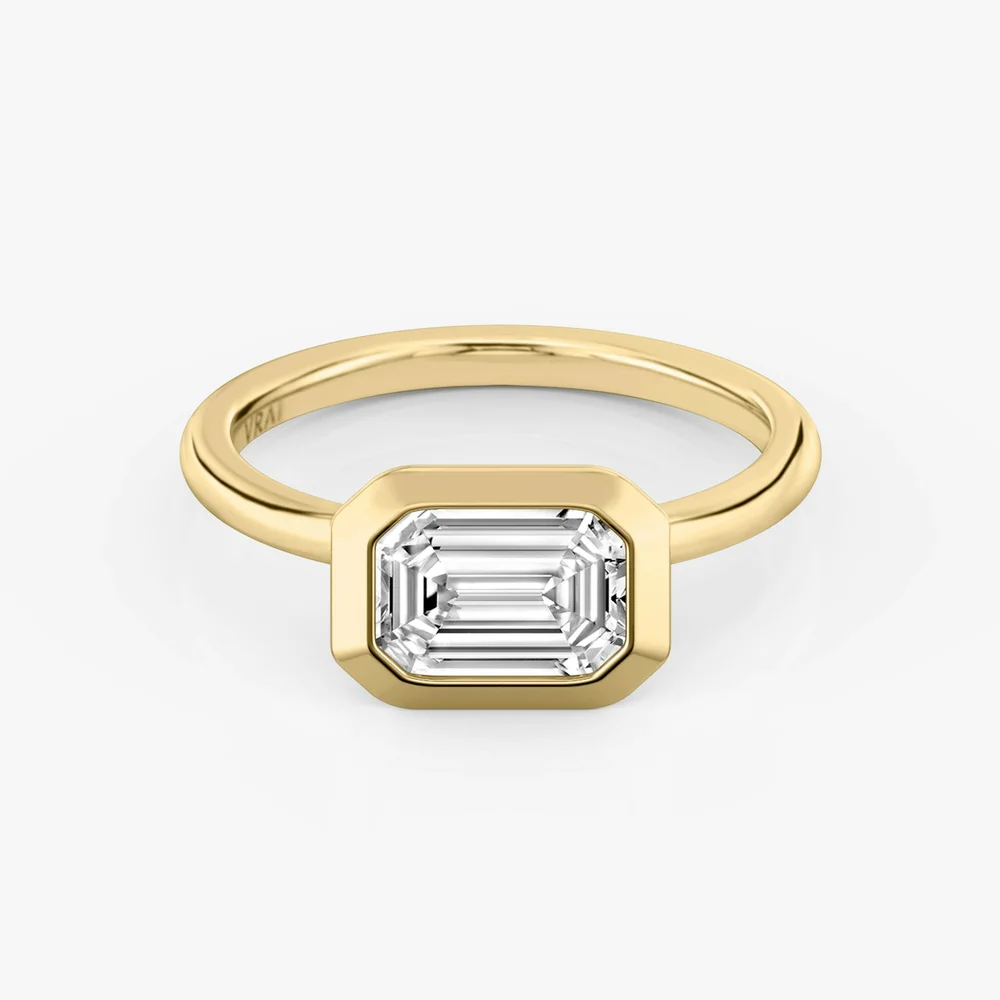
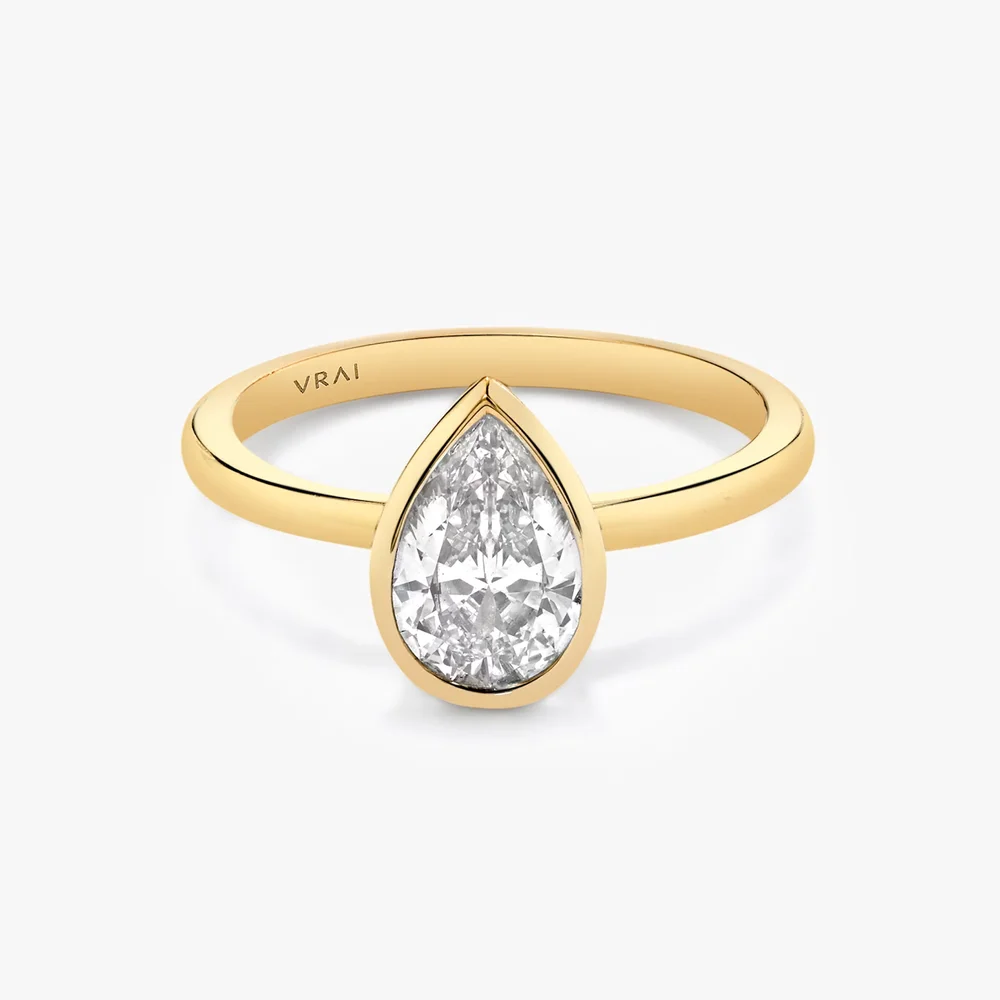
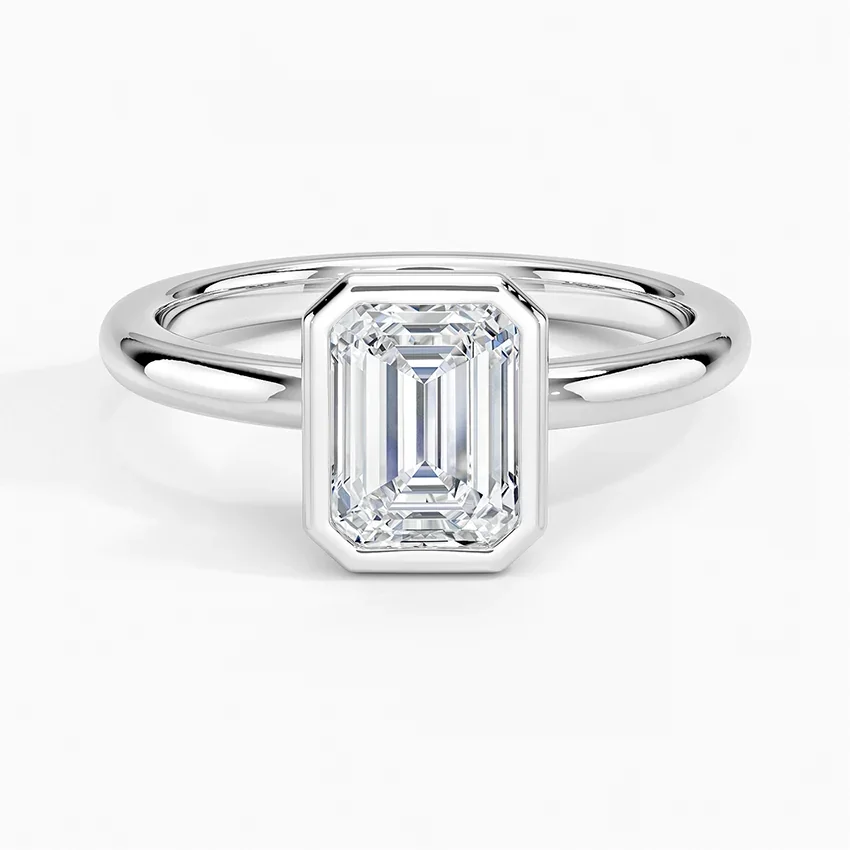
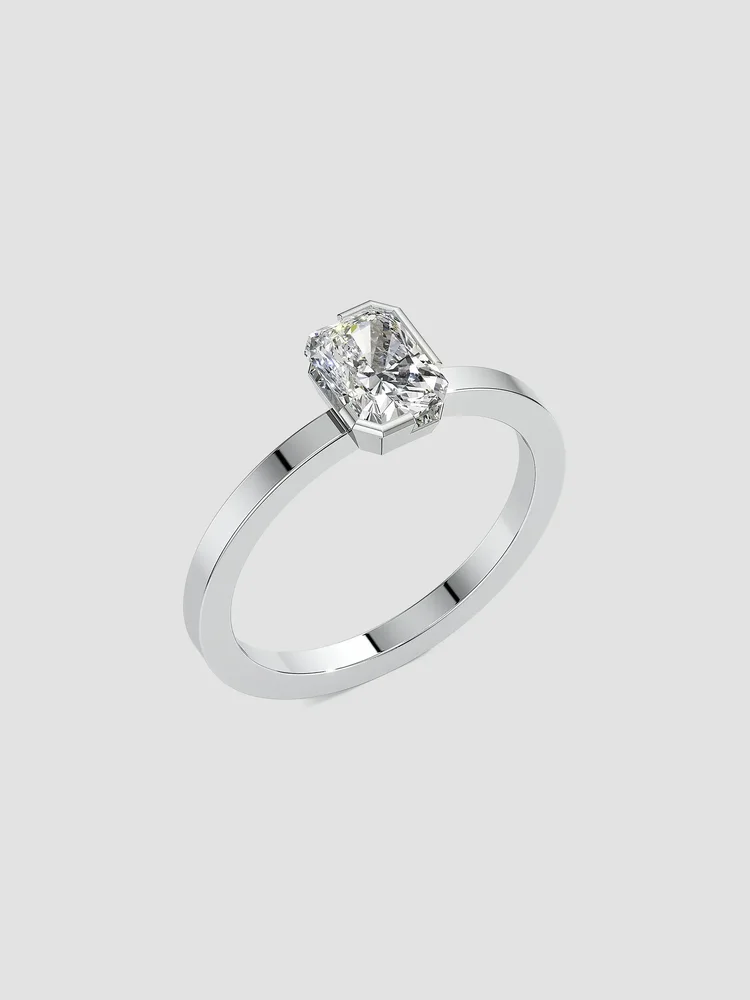
Longer cuts make the metal outline part of the silhouette. Brilliant Earth's Luna 2mm Bezel Ring with 2ct Emerald Lab Diamond traces a full bezel around its emerald cut; VRAI's Signature Bezel East West Ring turns an emerald cut sideways in a low setting. For a bezel set engagement ring, I would compare the top view with the side view before choosing the direction.
White metals, different edges
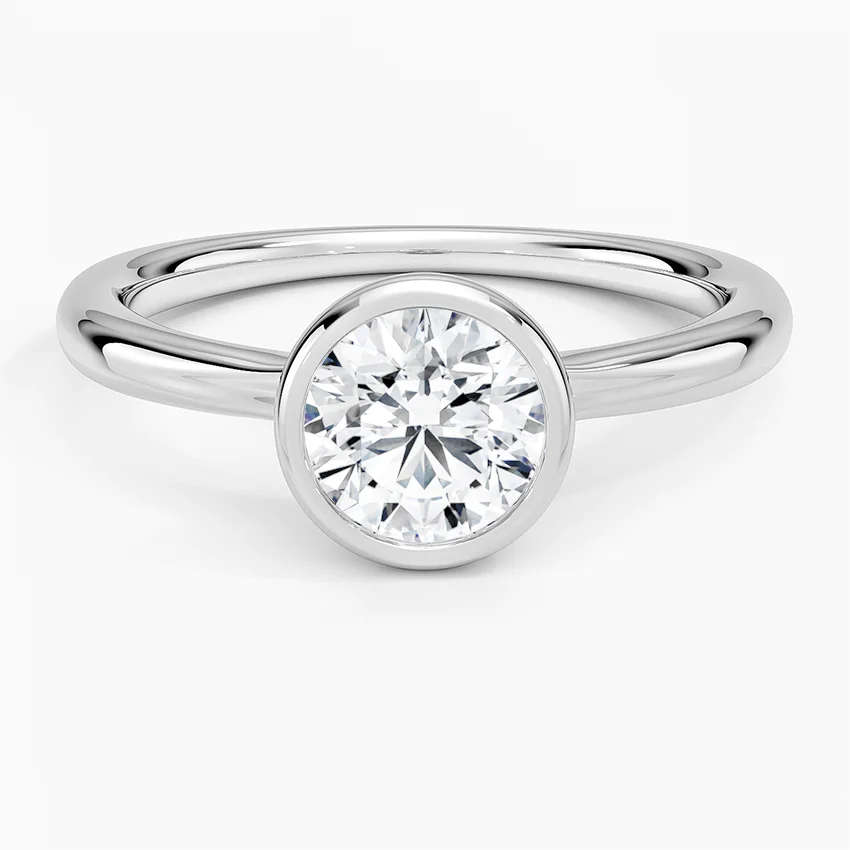
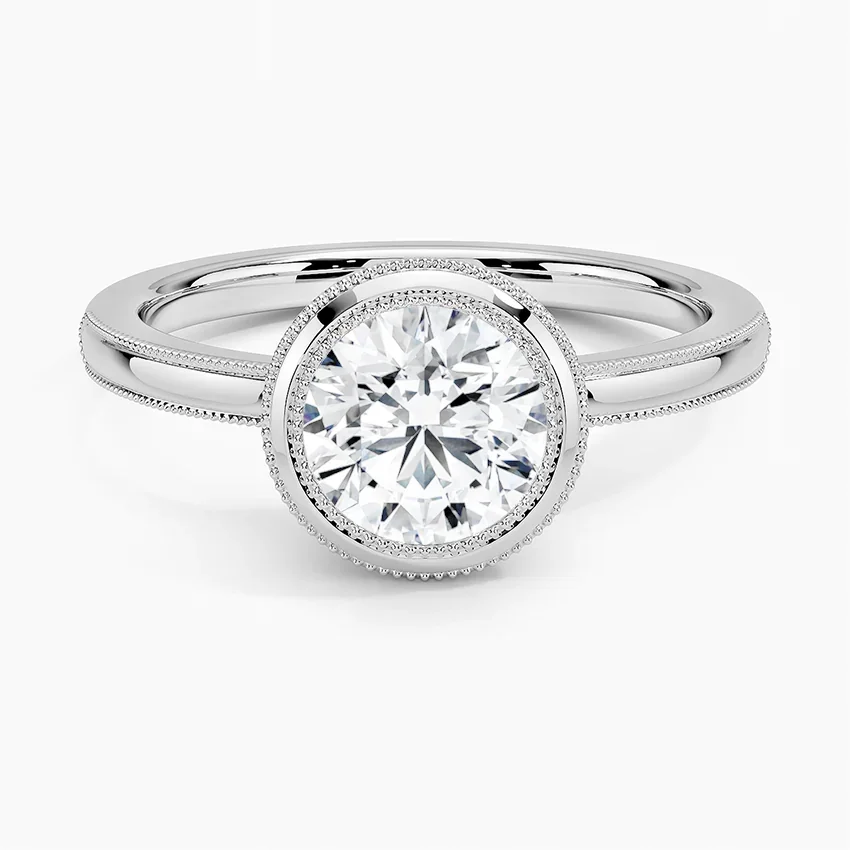
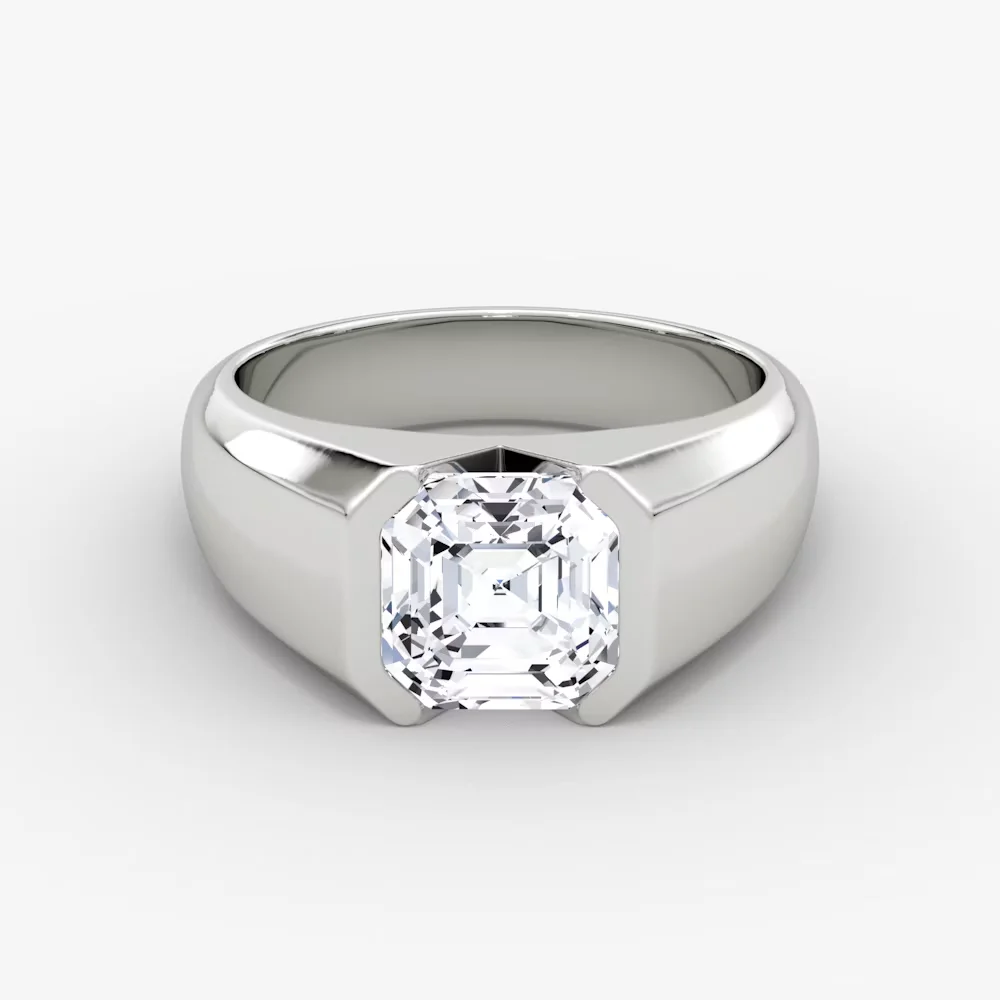
White metal keeps the outline crisp: Brilliant Earth's Freesia Bezel Solitaire Ring pairs a smooth platinum bezel with a tapered band, while Blair Bezel Ring gives a round center a milgrain bezel in white gold. For a platinum bezel set engagement ring, VRAI's Statement Signet Asscher Engagement Ring brings a half bezel, balancing edge protection and brilliance. I would check how the band sits beside a plain wedding ring.
A shape I would keep
At the end, I would choose the outline before the carat number: round for a quiet circle, oval for a longer line, emerald for a sharper edge, or a half bezel if I want more of the stone exposed. A bezel engagement ring earns its place when I want the setting to feel smooth beside a coat cuff and less likely to catch a sleeve. Tiffany introduced a raised six-prong setting in 1886; I like that the older rim still has a steady argument.