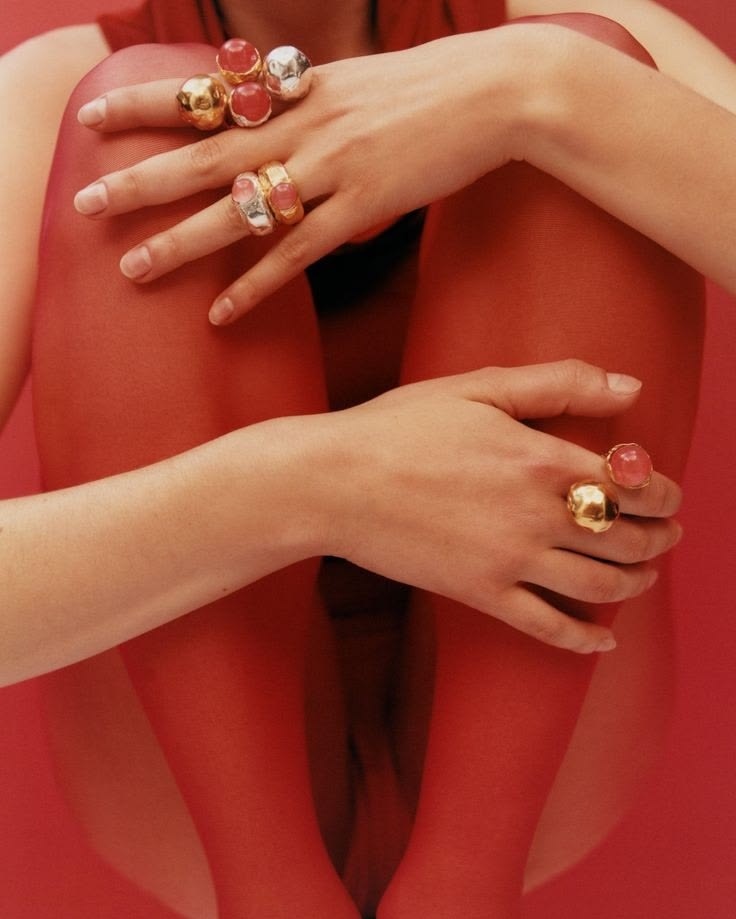
Birthstone jewellery earns its reputation for tackiness honestly. The version that works treats the stone as a colour choice rather than a novelty.
Birthstone Jewelry Without the Gimmick
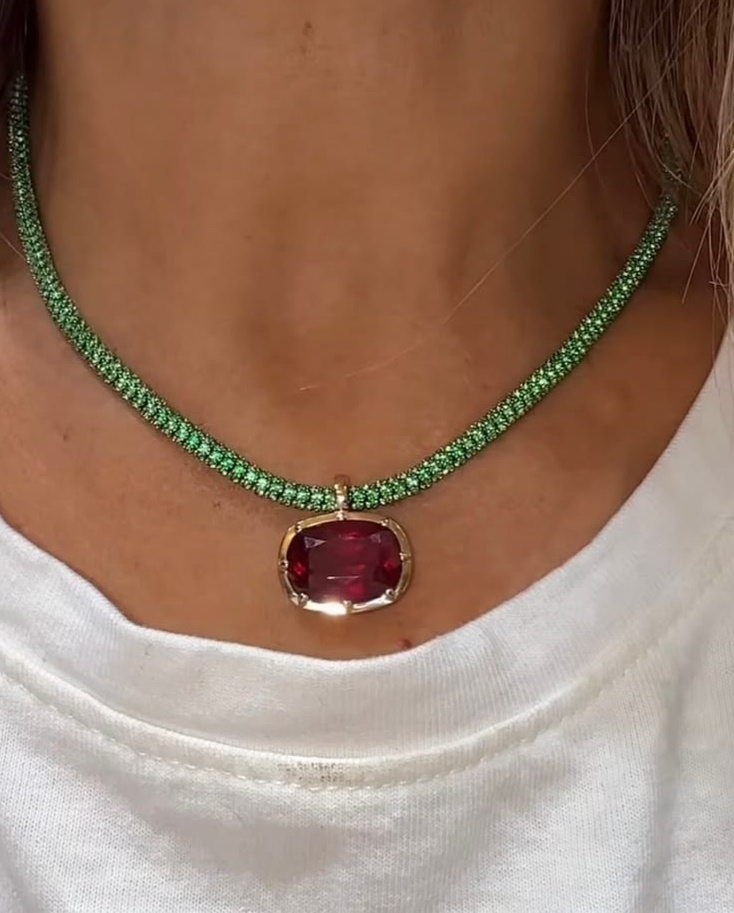
Treat it as a coloured stone that happens to mean something
Birthstone jewellery goes wrong when the birthstone is the concept. A pendant shaped like a calendar month, a ring where the stone is captioned, a set assembled so the meaning is unmissable. All of that reads as a gift shop. The version that works is a piece you would buy for the colour alone, which happens to be somebody's stone. Nobody looking at it learns anything, and that is the point. Practically this means choosing a plain setting and a good stone rather than a themed design. A bezel-set round stone on a fine chain, a single stone in a band, a pair of studs. The meaning survives entirely intact and the piece stops announcing itself. It also means being honest about the stones. The birthstone list is a commercial invention from the early twentieth century rather than an ancient tradition, and there are competing versions of it, with several months offering alternatives. That is useful rather than disappointing, because it means you can choose the stone that suits the person.
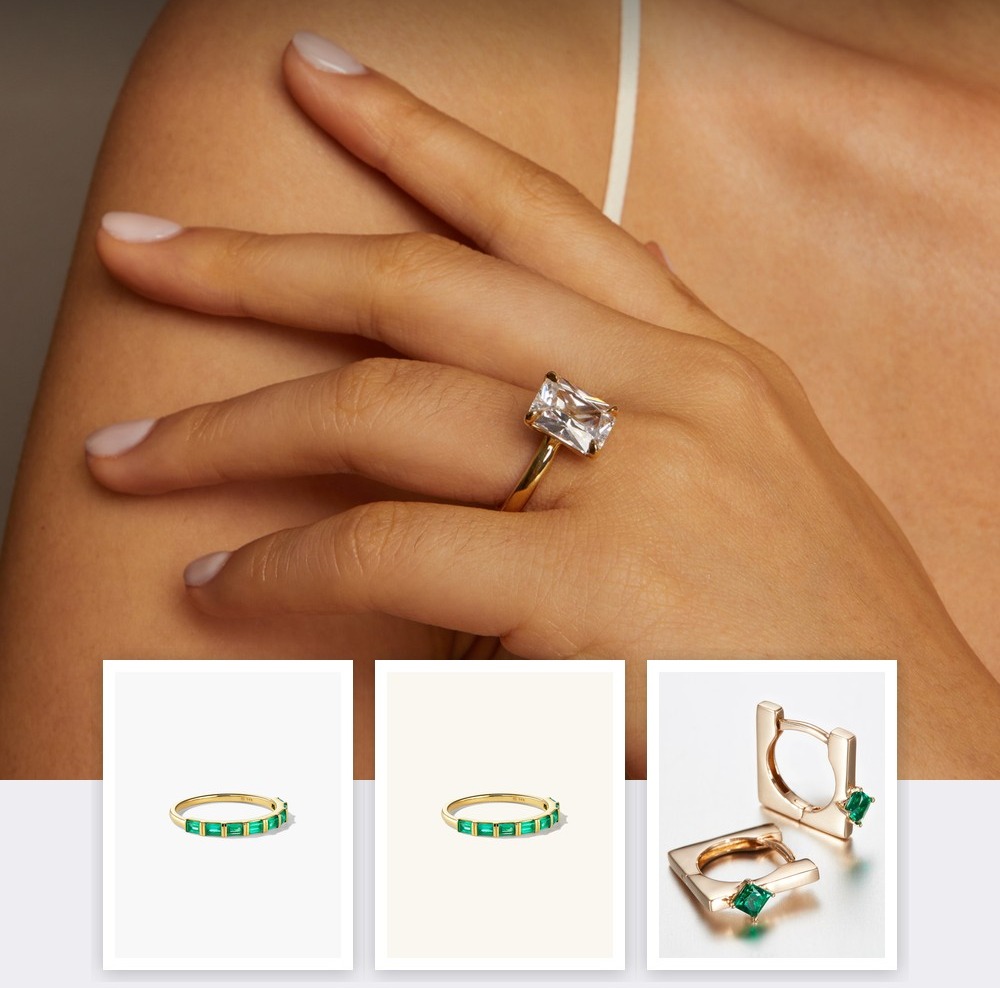
Birthstones and coloured stones

Lab Grown Diamond Emerald Tennis Bracelet
Aurate New York
$8,798

10ct Lab Grown Diamond Emerald Cut Ring
Aurate New York
$7,193

4ct Emerald Lab Grown Diamond Solitaire Ring
Aurate New York
$4,838

2ct Emerald Lab Grown Diamond Floating Signet Ring
Aurate New York
$3,958
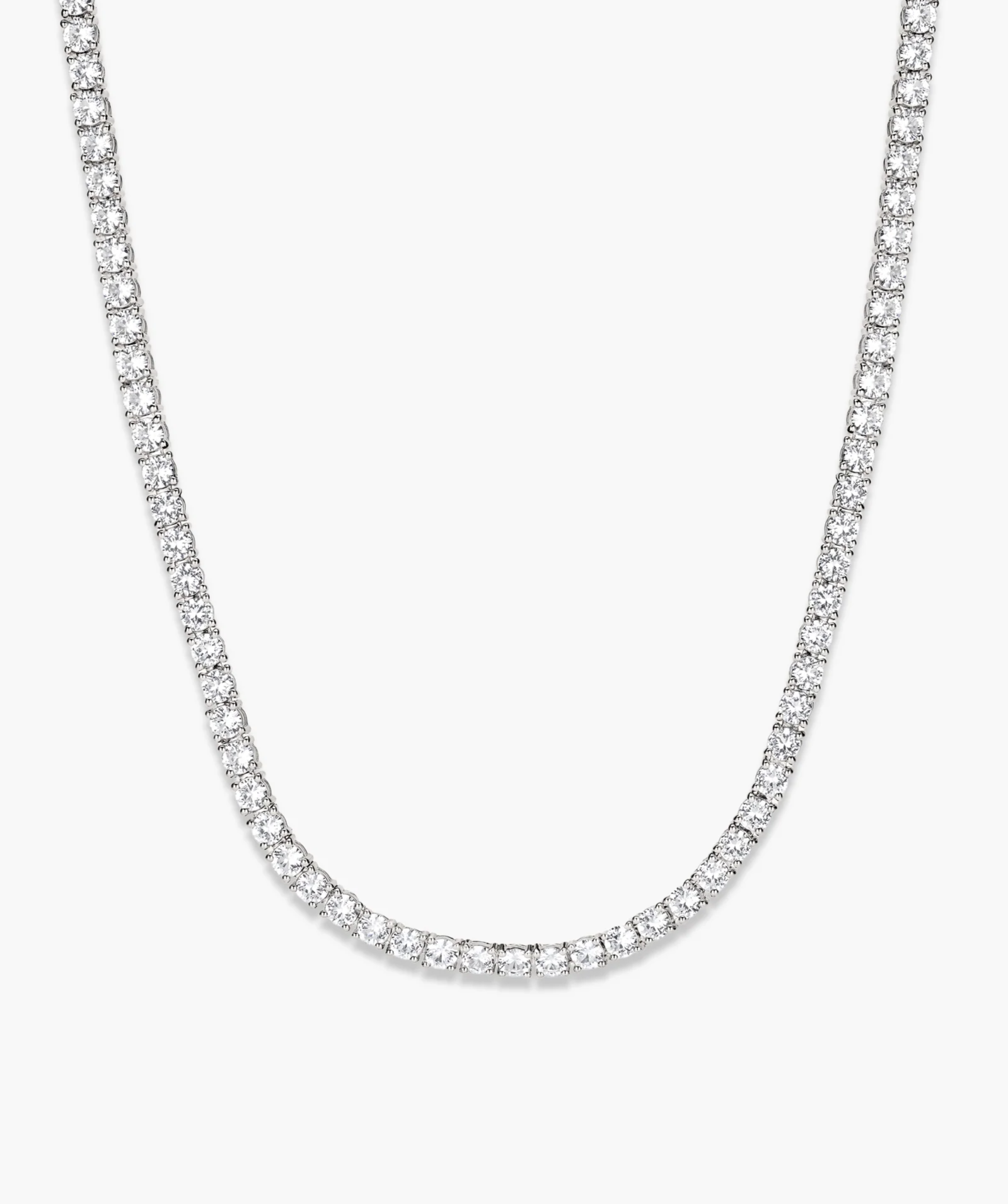
Lab Grown Sapphire Tennis Necklace
Mejuri
$1,200

Zadie Bezel Lab Grown Sapphire Tennis Necklace
Mejuri
$1,200

Baguette Emerald Half Eternity Band
Mejuri
$878

14K Princess Cut Emerald Huggie Earrings
Jenny Bird
$595
Hardness, setting and which months are awkward
The practical constraint is hardness, and it varies enormously across the list. Ruby and sapphire are extremely hard and fine in a ring worn every day. Amethyst, citrine and garnet are moderately hard and better in earrings or a pendant than on a hand. Opal, pearl, emerald and peridot are soft or fragile, and a ring in any of them will show damage within a year of real wear. This is not a reason to avoid them, only a reason to put them somewhere protected. Setting follows from hardness. Soft stones want a bezel, which surrounds and protects the stone, rather than claws, which leave the edges exposed. Depth of colour is the other variable worth paying for, since these stones are widely available in pale, cloudy versions that look grey against skin. Ask to see the stone against a hand rather than on white paper, because most coloured stones look considerably better on a lit background.


Our honest take
Buy the stone for the colour and let the birthday be a private bonus. If the person's stone is one of the soft ones, buy earrings or a pendant rather than a ring, and do not let a shop assistant tell you an opal ring is fine for daily wear, because it is not. If the colour genuinely does not suit them, use one of the alternative stones for that month, which is entirely legitimate and nobody polices it. We would avoid multi-stone family pieces, where every child gets a stone in one row, because the design is dictated by arithmetic and it always looks it. And we would avoid pale, washed out versions of any of these stones. If you take one thing away, choose the stone you would buy if it meant nothing, and let the meaning be the thing only two people know.
Shop brands in this edit




Next read
Secondhand Louis Vuitton Damier Ebene Or Damier Azur
Damier Ebene and Damier Azur are the same coated canvas in two colourways, and the secondhand market treats them as two different products.
Read Editorial
Secondhand Silk My Favs
My sixteen selects of scarves below are all ninety centimetre squares, split into two price bands