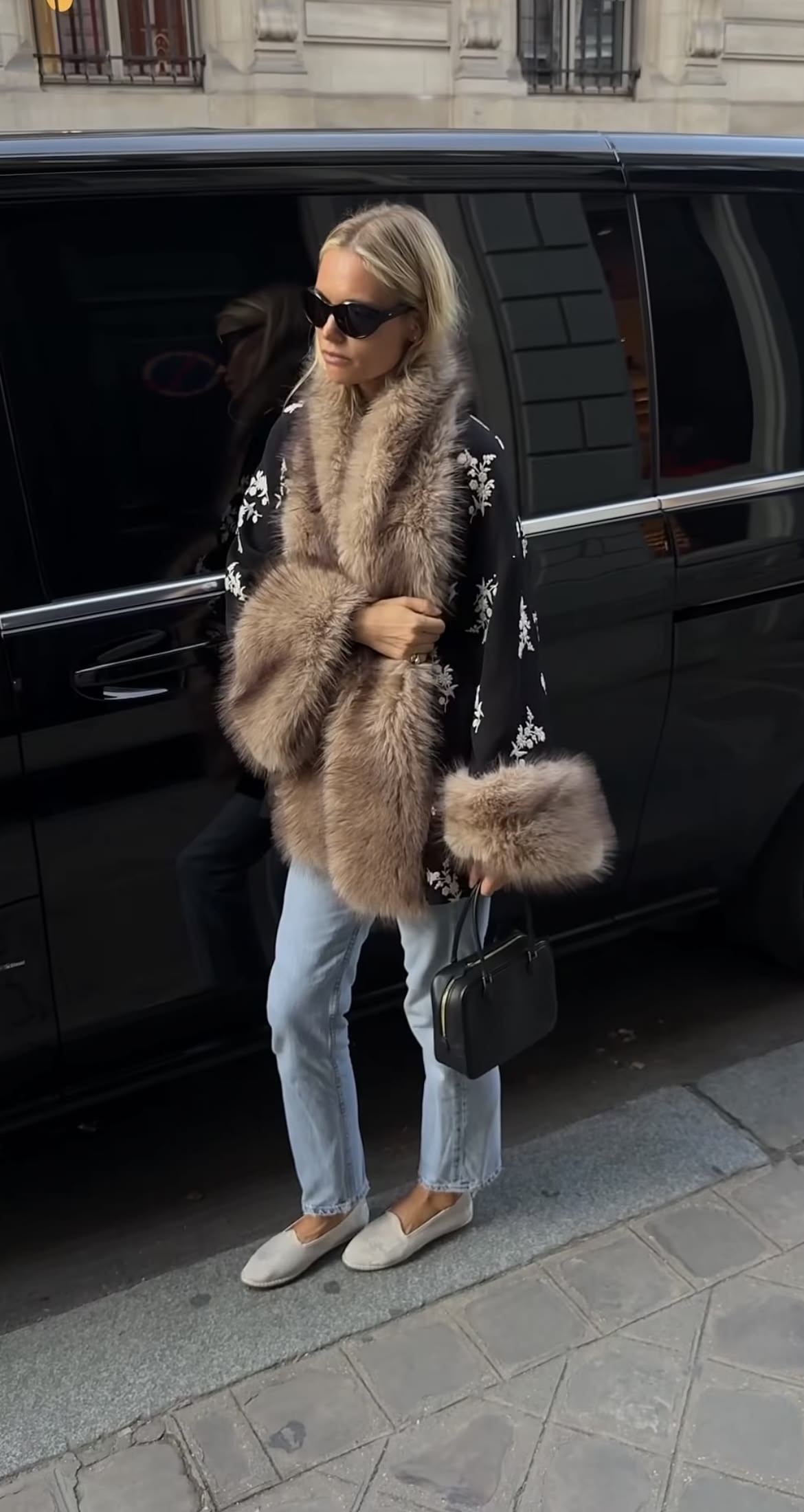
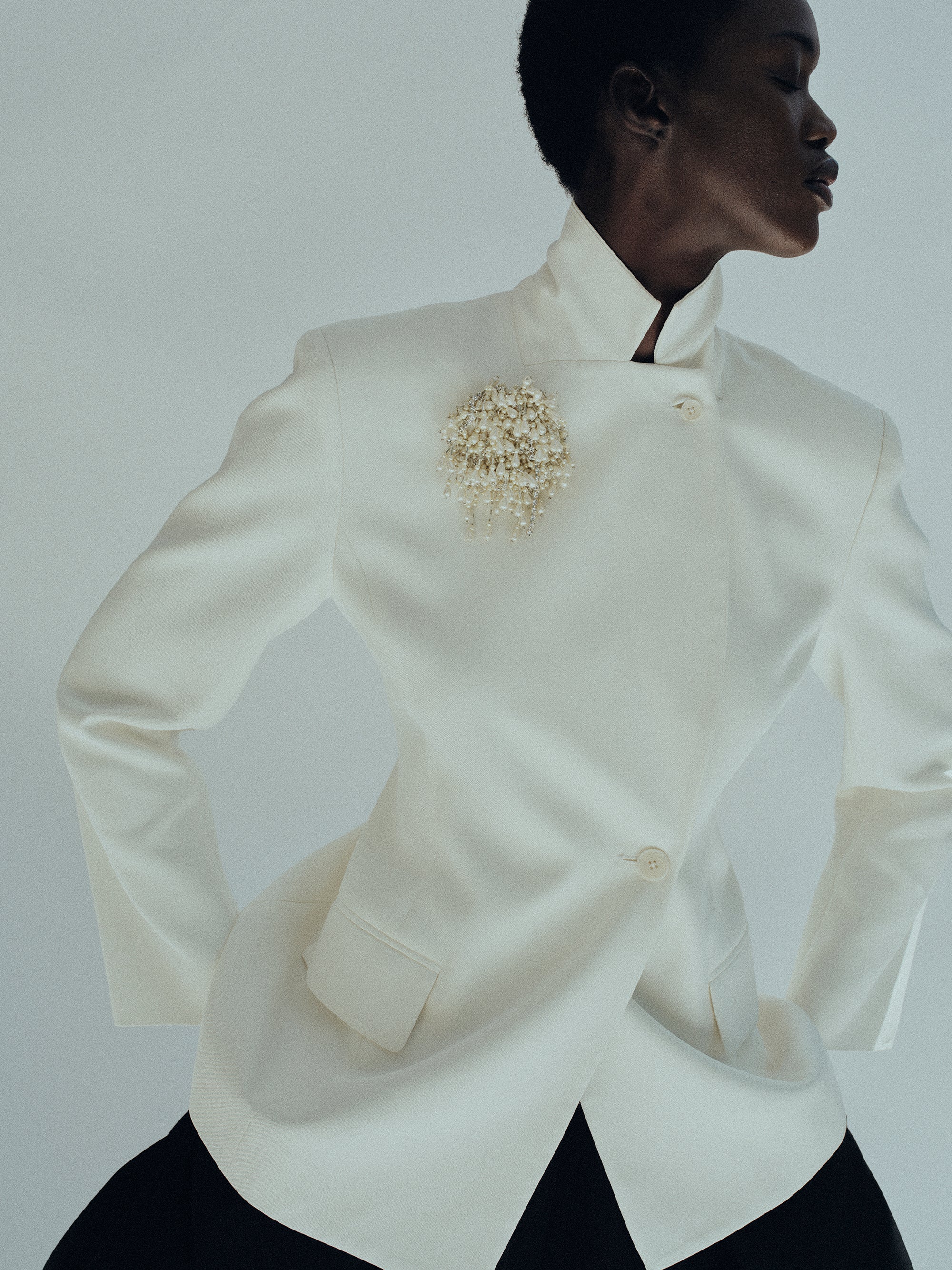
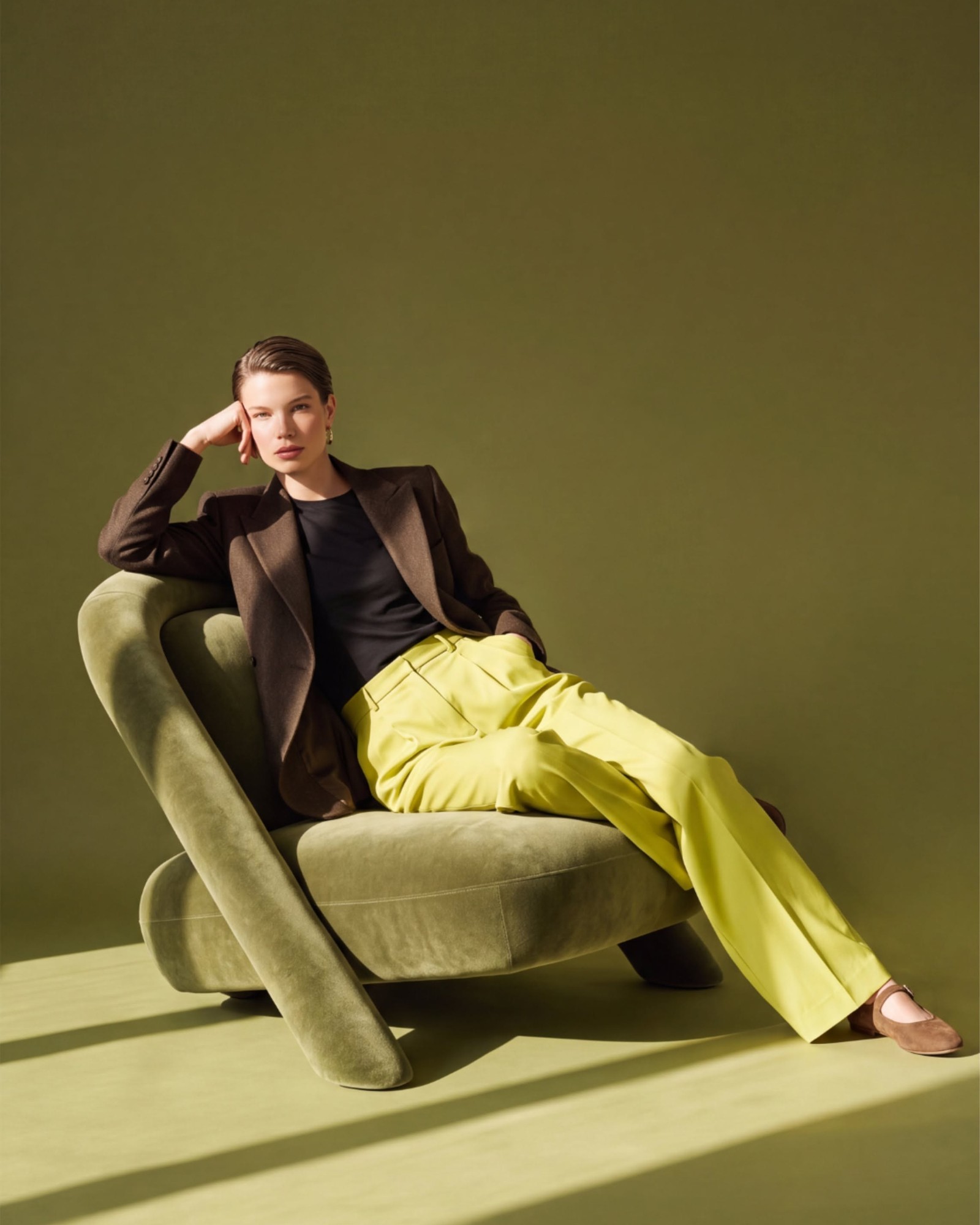
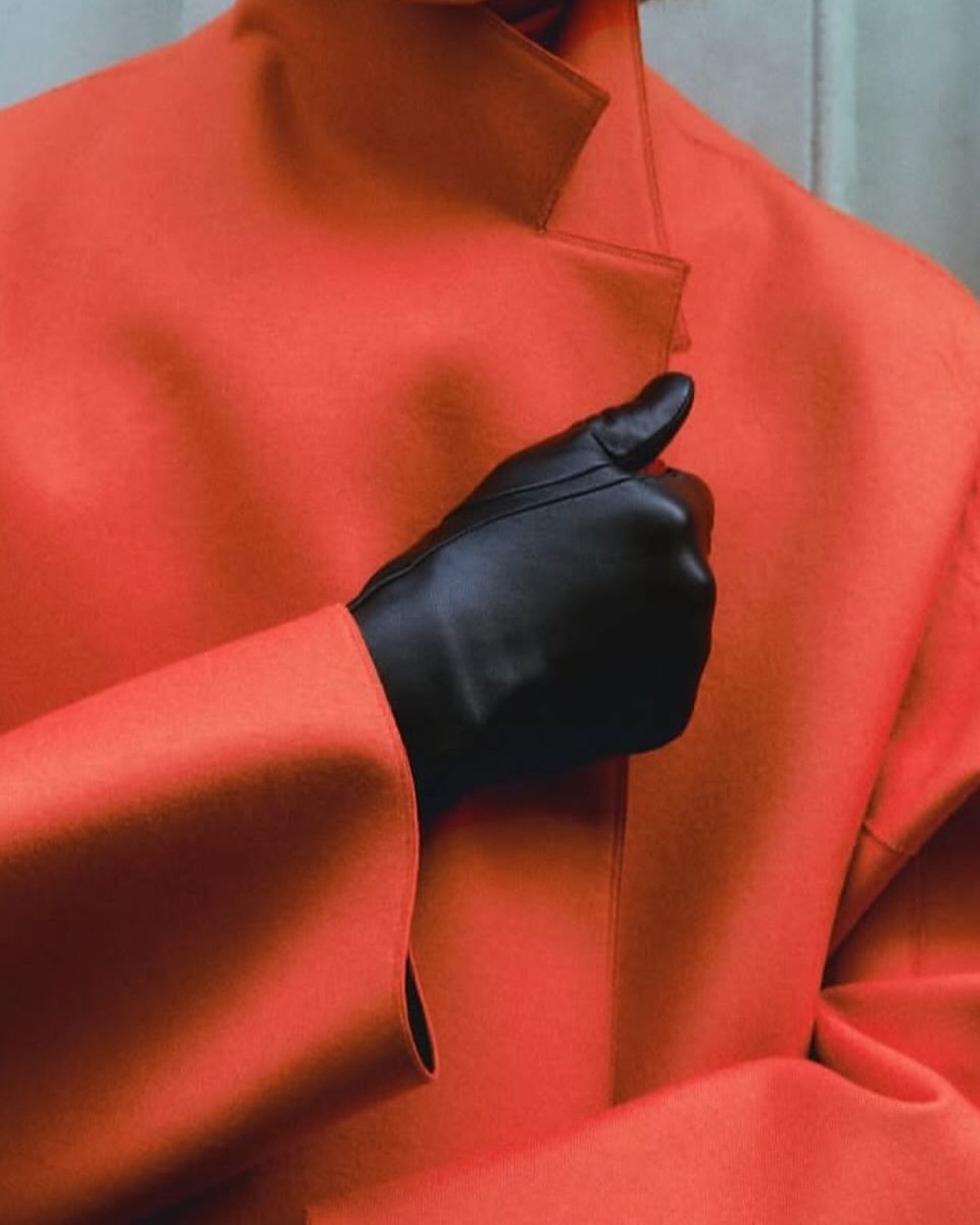
A blue coat can give a familiar outfit a new point of focus, from a quiet indigo layer to a deeper navy tone. I choose the shape around the day and let the color do just enough.
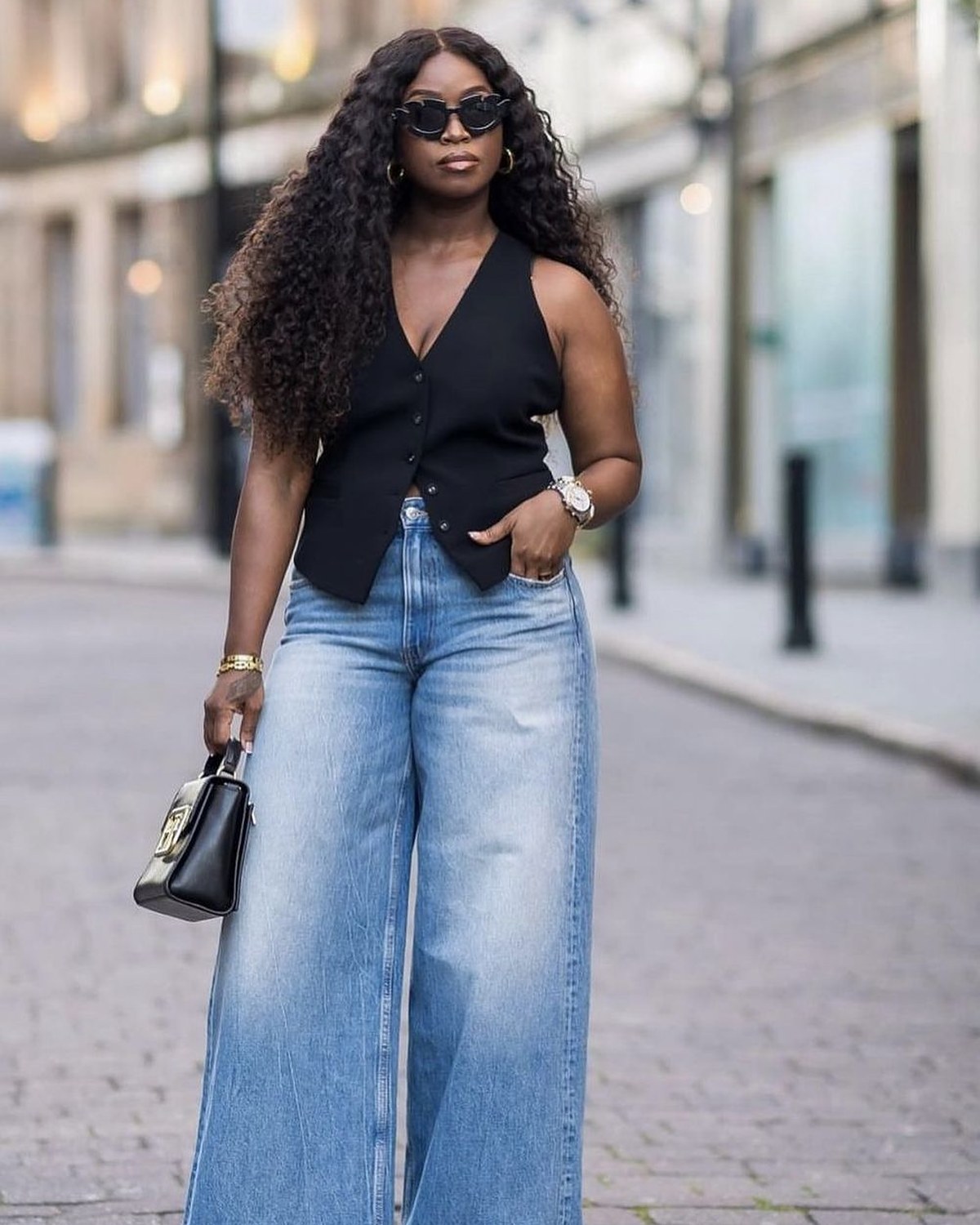
Blue Coat: A Shopper's Guide to Fit, Fabric and Style
Color With Intention
A blue coat has a way of making the ordinary parts of getting dressed feel more deliberate. I think first about the shade and shape, then about what I need the coat to do for the day. A deep navy can sit quietly beside black or grey, while an indigo tone can bring a softer contrast to a neutral outfit. The coat does not need an elaborate layer underneath; a clean sweater or simple shirt gives the outer layer room to set the mood. For a commute, I would prioritize a silhouette that feels comfortable over whatever I already wear most. For dinner, a belt or a sharper line can make the same color feel more considered. I would skip trying to match every accessory to the coat. A blue coat looks more natural when the rest of the outfit offers one or two complementary notes instead of repeating the same shade everywhere.
Shop Blue Coat
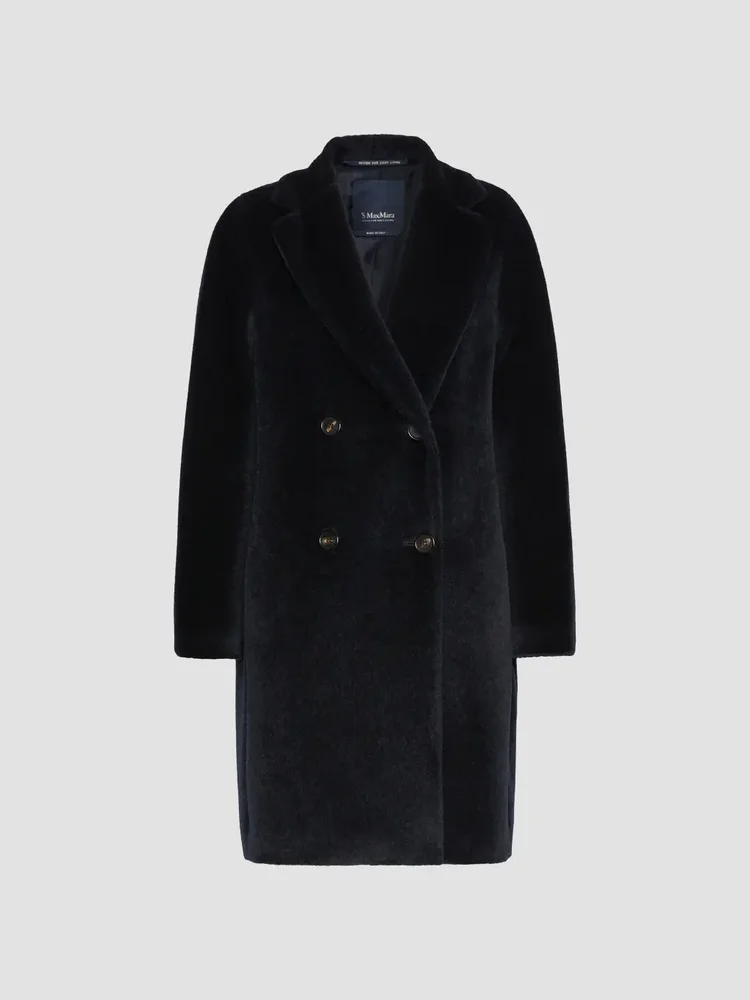
Alpaca and Wool Midi Coat
Max Mara
$2,190
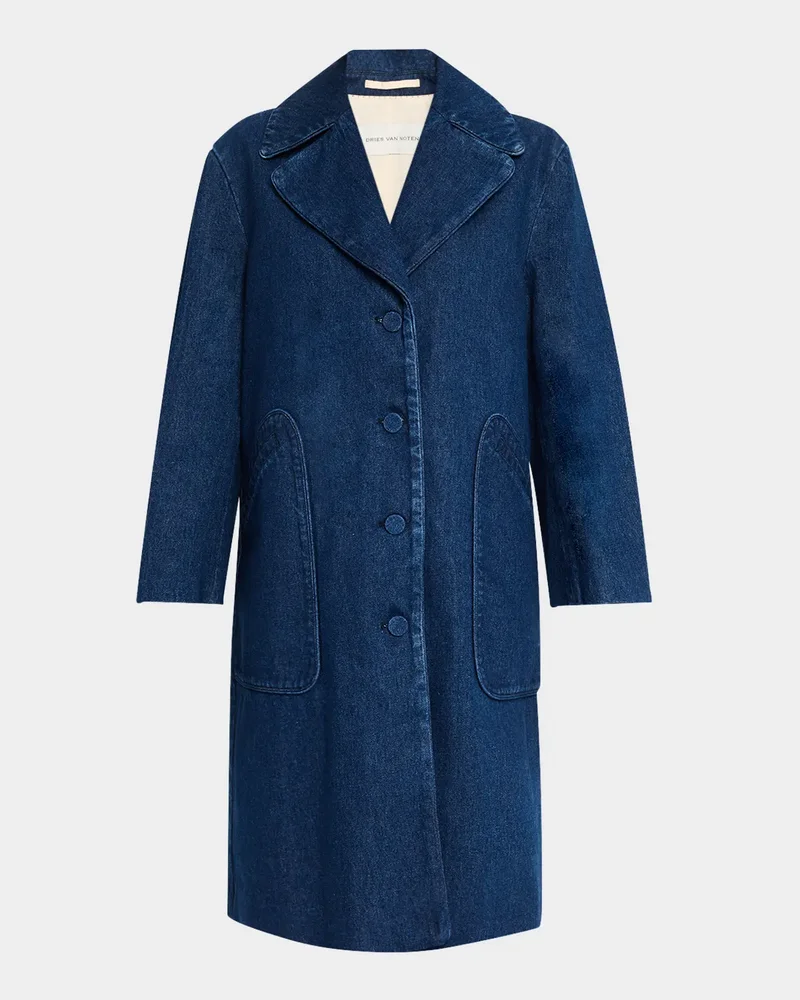
Ricca Long Denim Coat
Dries Van Noten
$853.99
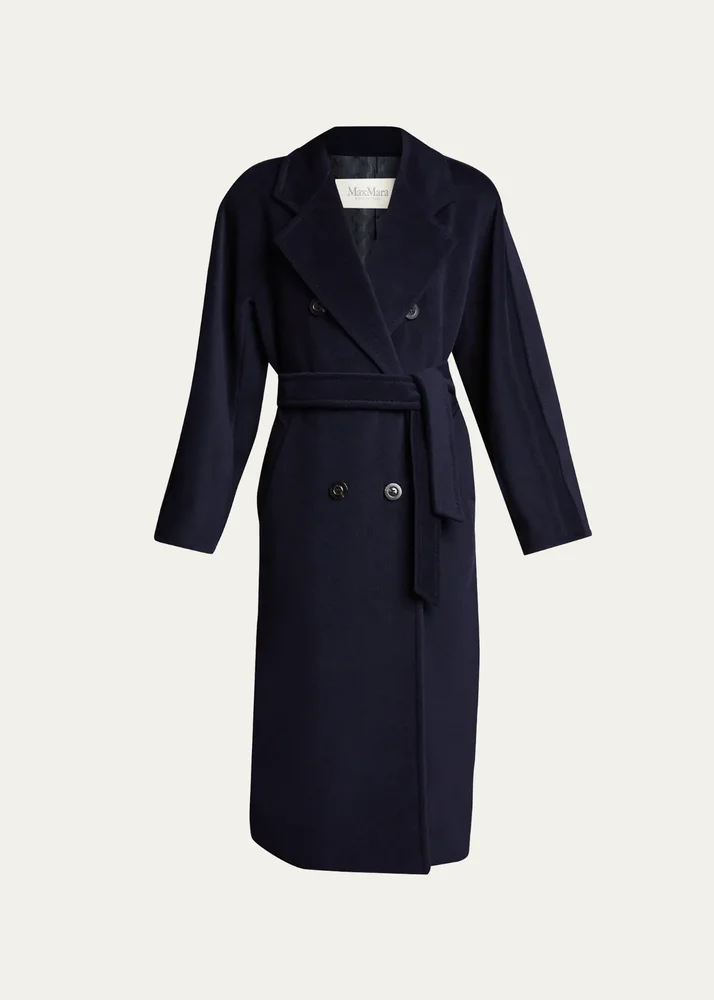
Madame Belted Wool/Cashmere Coat
Max Mara
$4,490
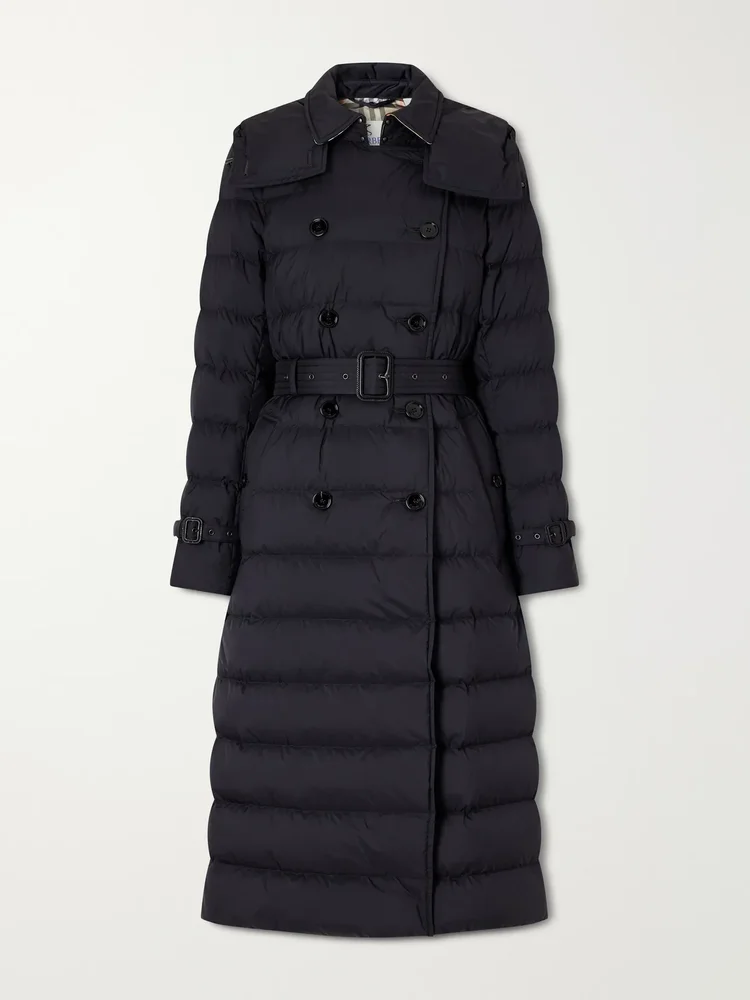
Belted double-breasted quilted padded shell coat
Burberry
$1,995
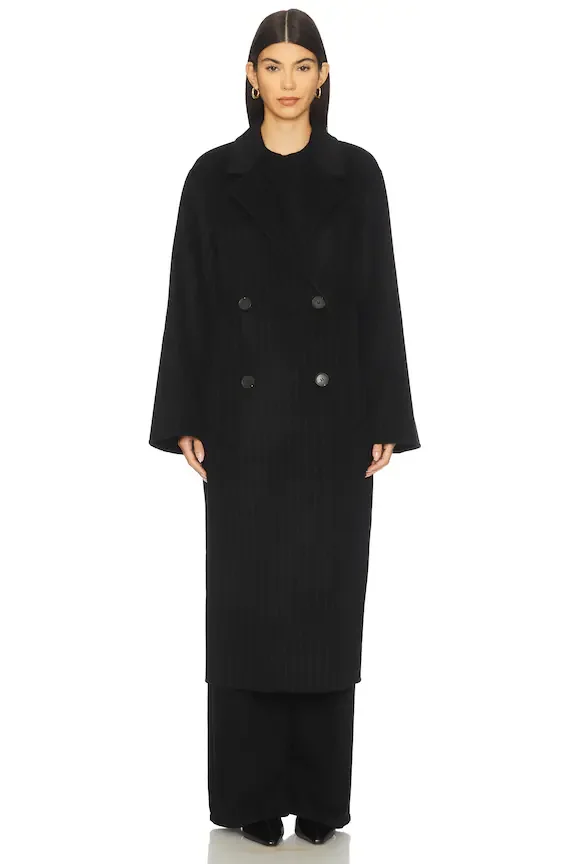
Clara Coat
Ivy Oak
$243
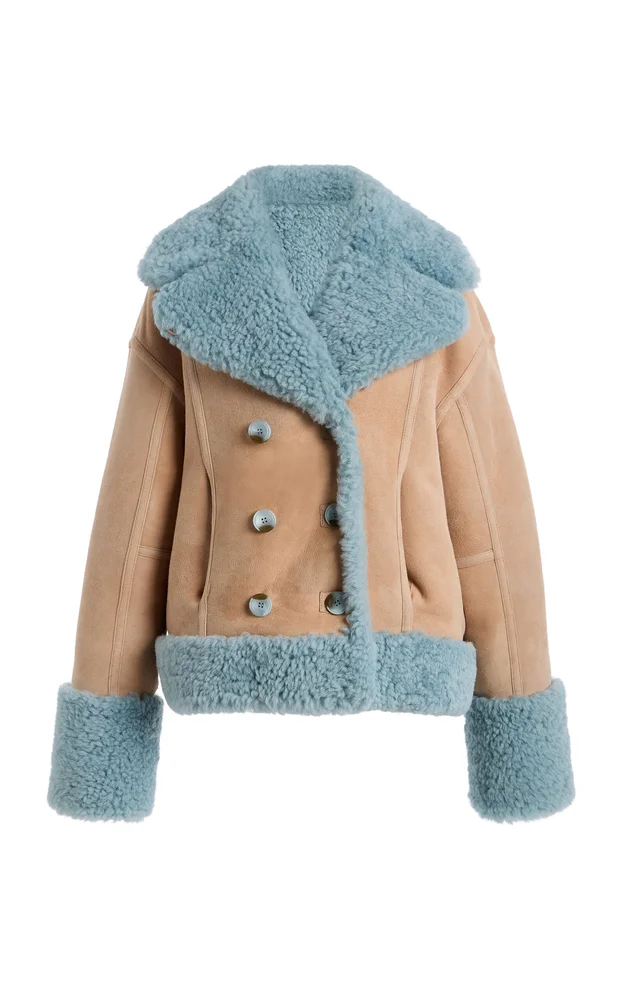
Nisha Shearling Coat
Ulla Johnson
$2,800
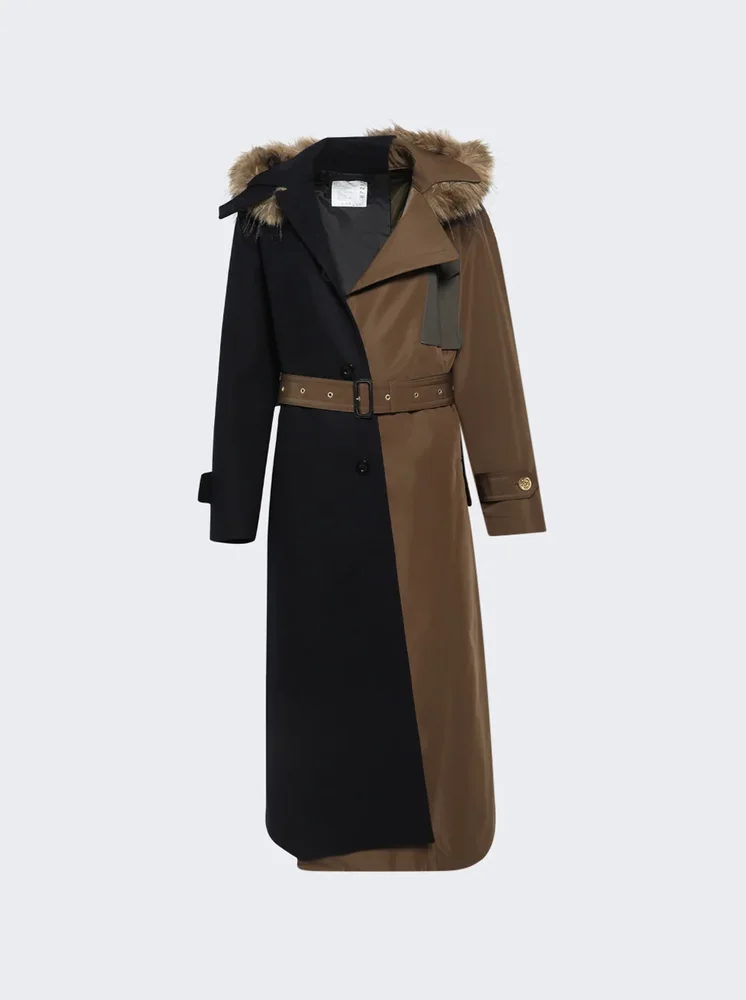
Wool Flannel X Taffeta Bonding Coat 645 CAMELxNAVY
Sacai
$2,520
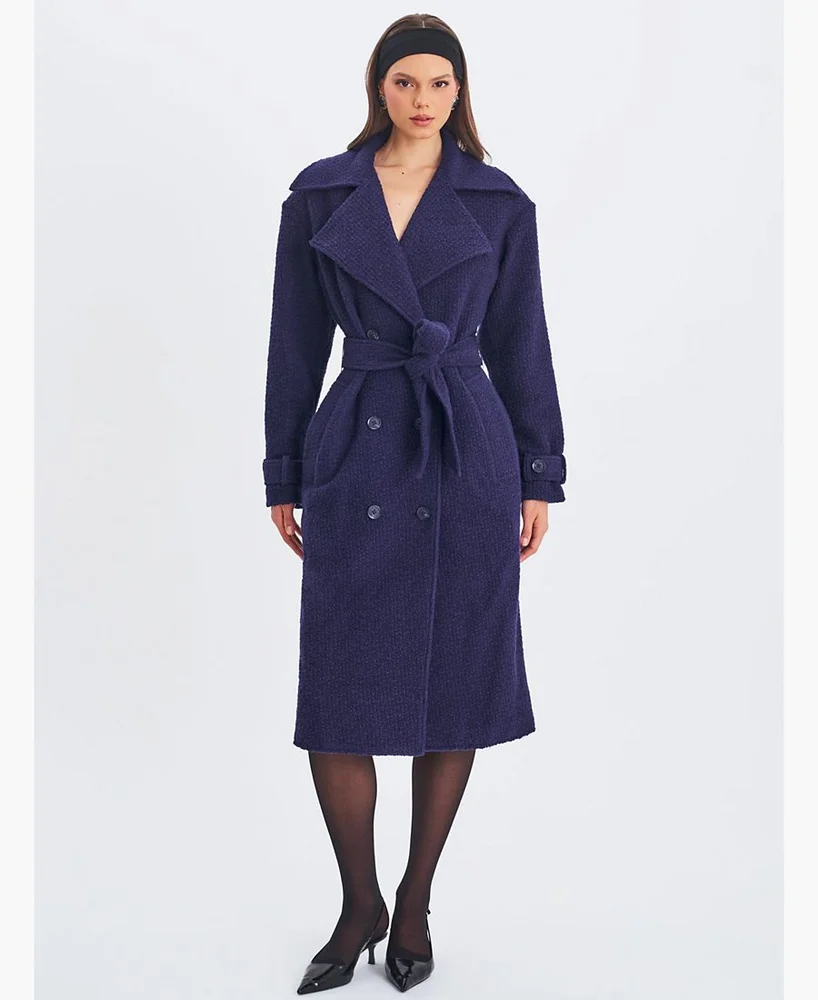
Women Jaelyn Midnight Blue Wool Blend Double-Breasted Belted Coat
Miss Circle
$399
Indigo In The Mix
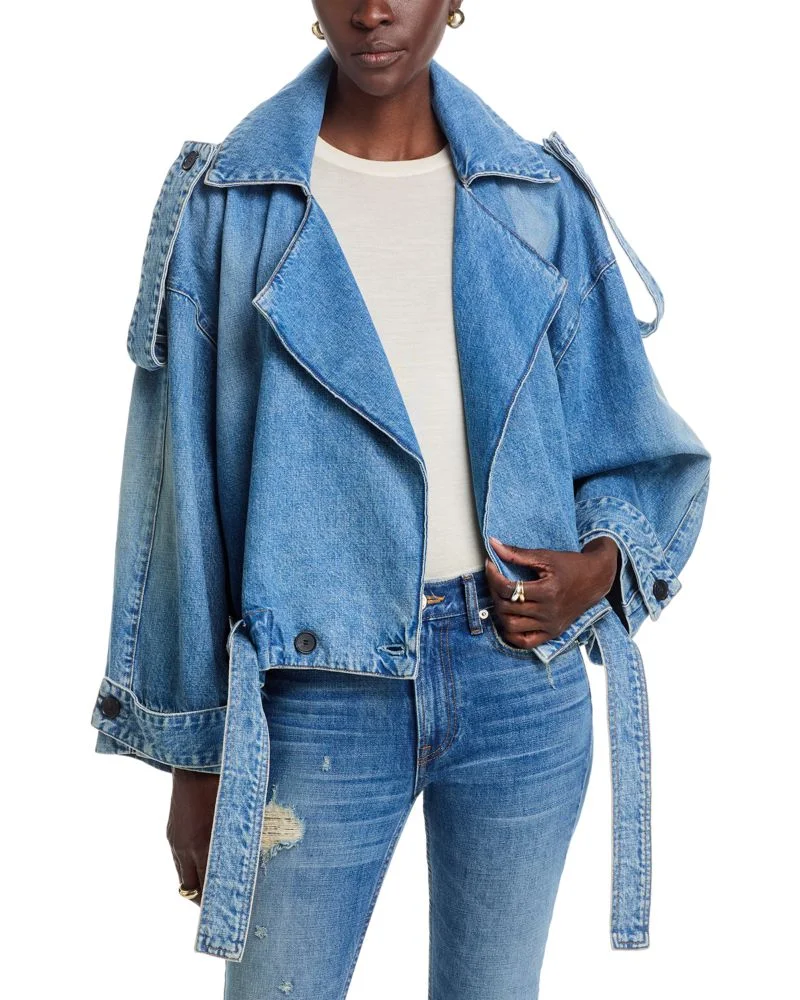
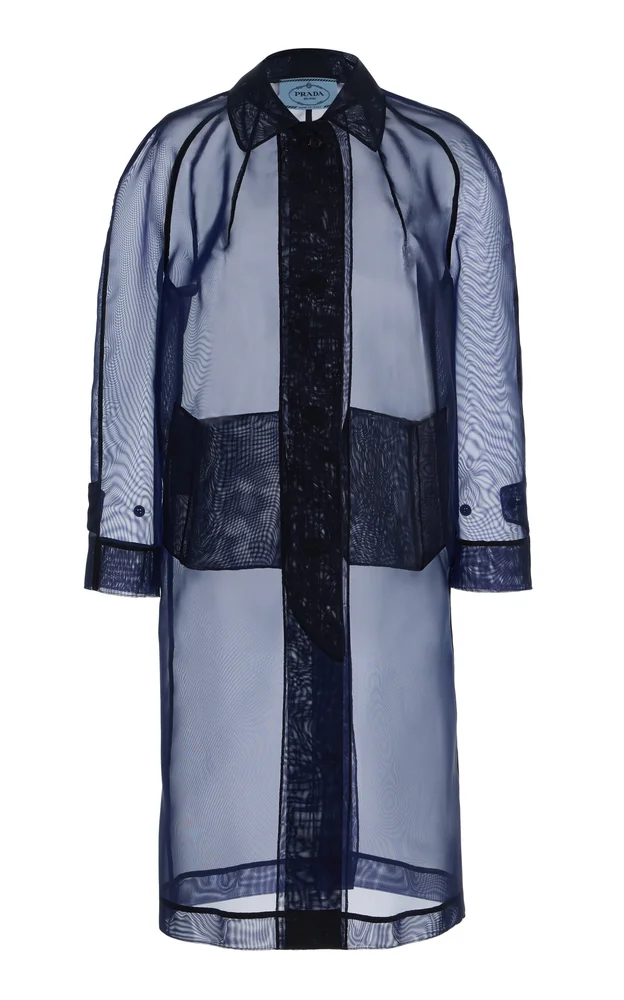
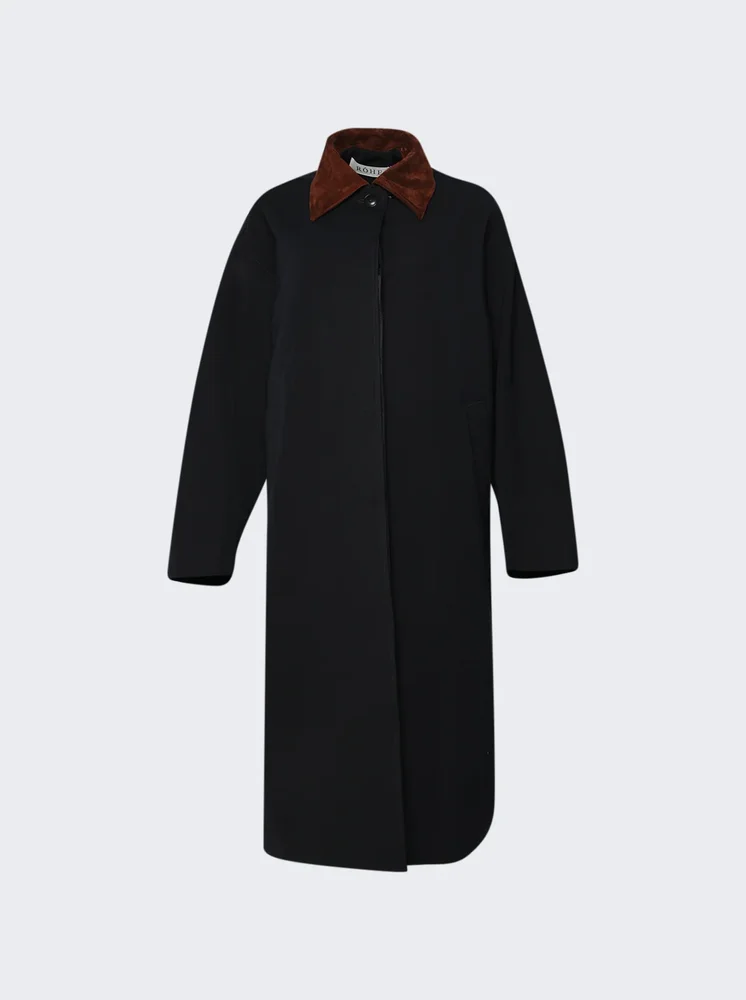
The Brandon Maxwell Regan Denim Trench Coat in Indigo makes its color explicit, while the Róhe Suede Collar Coat NAVY names a deeper tone. The Dries Van Noten Double-breasted floral-jacquard coat brings a pattern into the conversation. I would decide which detail should lead, then keep the rest of the outfit simple enough to support it. A blue coat can be a useful choice for a weekday meeting or an outdoor dinner when you want color without a bright palette. If the floral jacquard is the focal point, I would skip another strong print underneath. With the indigo trench, a plain top lets the color stand out; with navy, lighter neutral pieces can add contrast. Think about the occasion and how much movement you want from the layer before you settle on a shape.
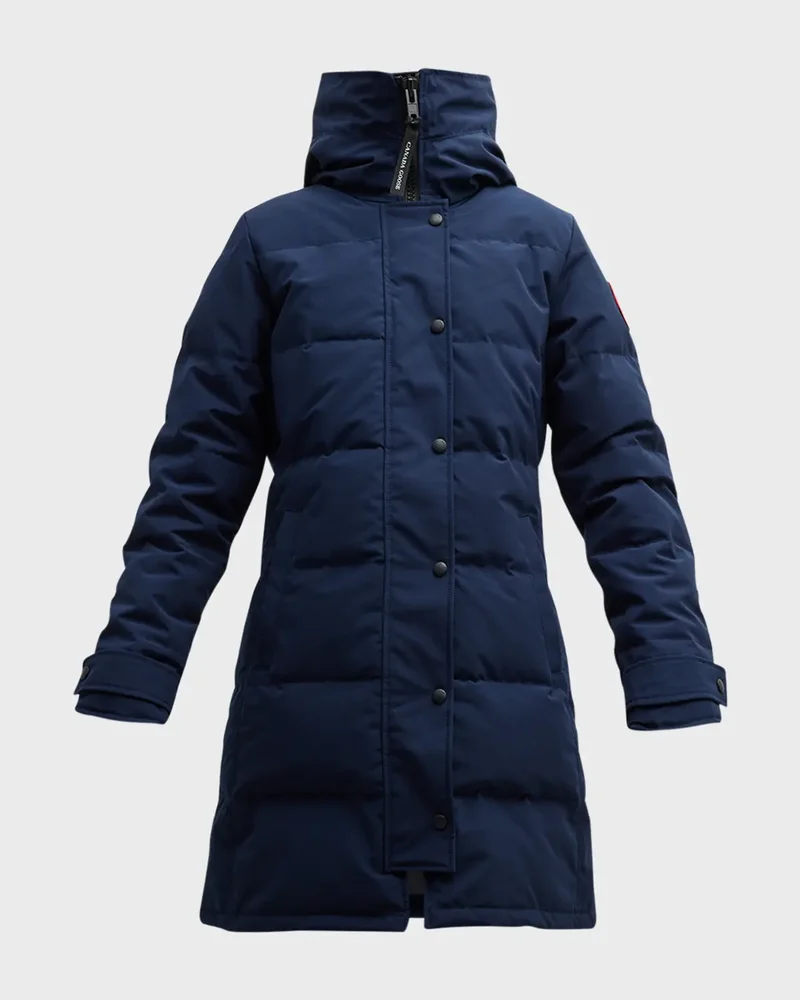
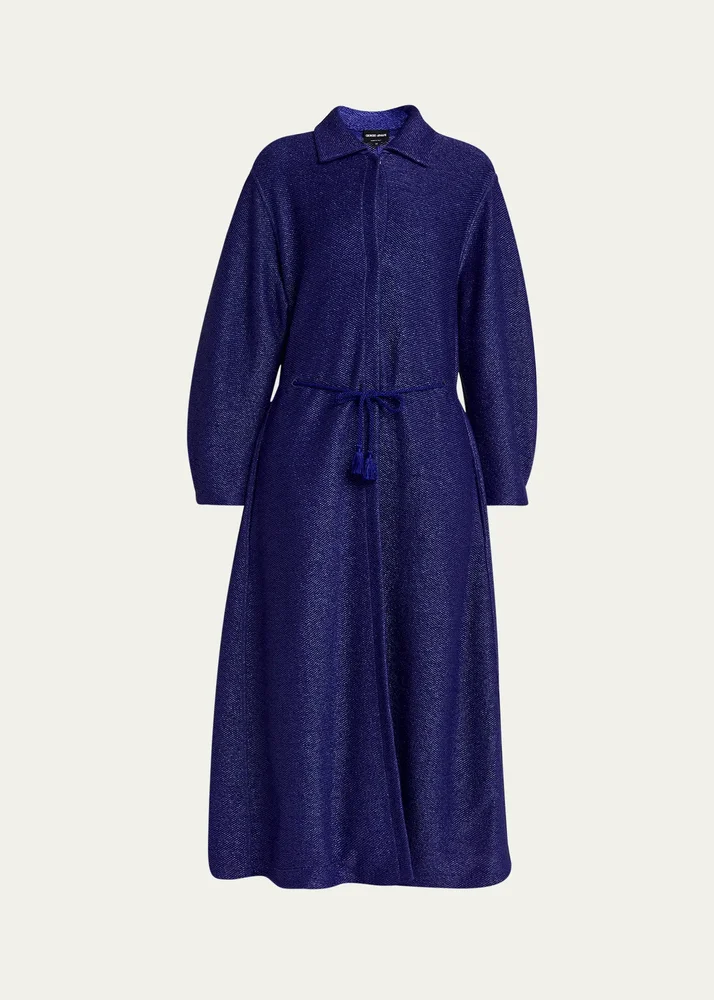
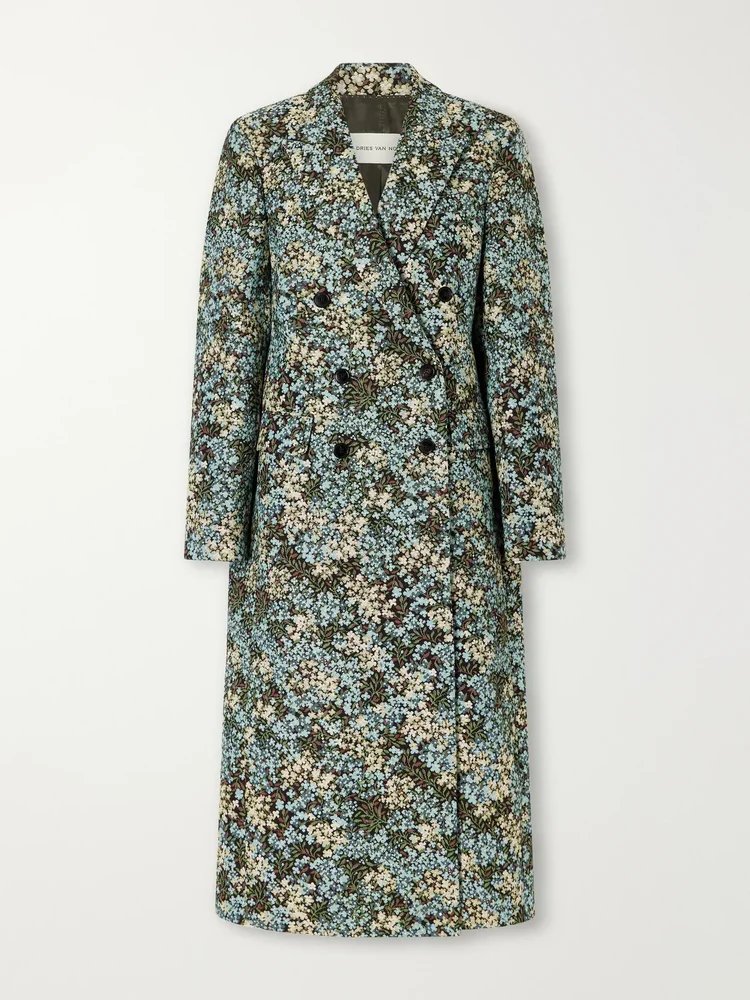
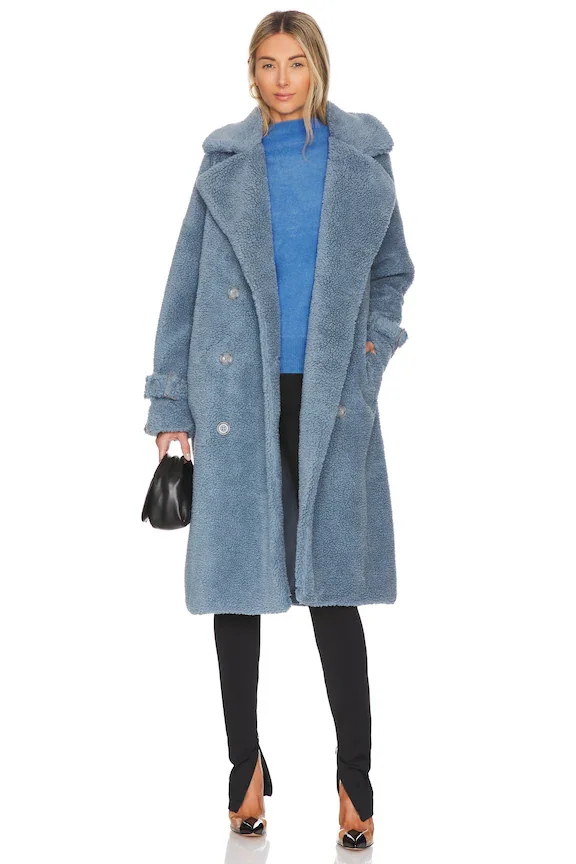
Shape Before Color
This group includes different coat shapes, from the Cinzia Rocca Lightweight Wool Three-Button Coat to the Burberry Darliston Check Quilted Coat With Belt. The Chloe Virgin Wool-Blend Double-Breasted Coat names a classic closure, while the Kiton Single-Breasted Quilted Overcoat offers another described structure. I would choose by the layers I expect to wear underneath and by the kind of day ahead. A blue coat looks especially clear when paired with a simple knit and trousers for a workday, but the same restrained approach can suit a weekend walk. The check and belt already add detail, so I would skip piling on another busy pattern. If you want the coat to be the main color note, keep shoes and bag understated. It is easier to make a strong outer layer feel wearable when the rest of the outfit is uncomplicated.
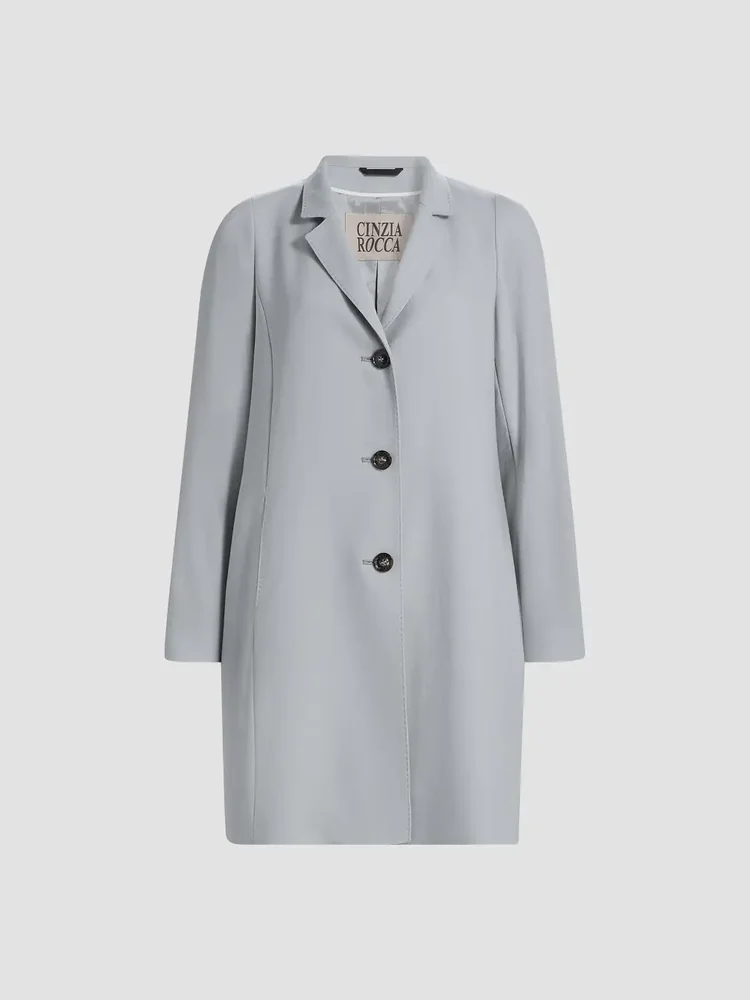
Lightweight Wool Three-Button Coat
Cinzia Rocca
$413.99
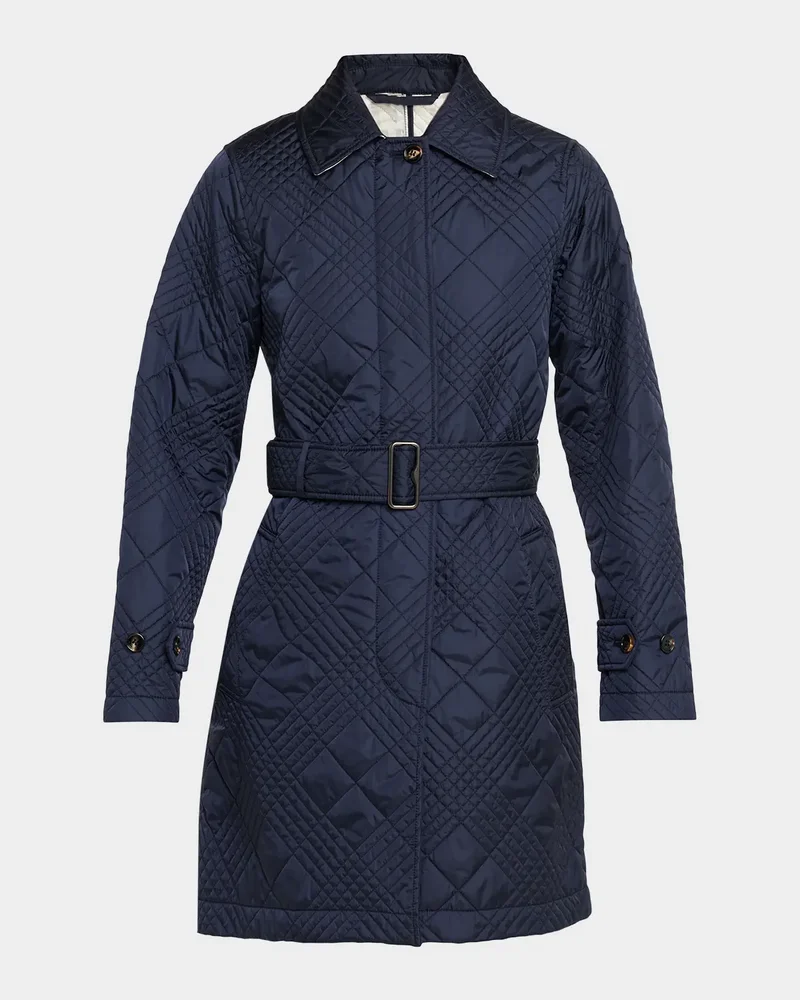
Darliston Check Quilted Coat With Belt
Burberry
$1,995
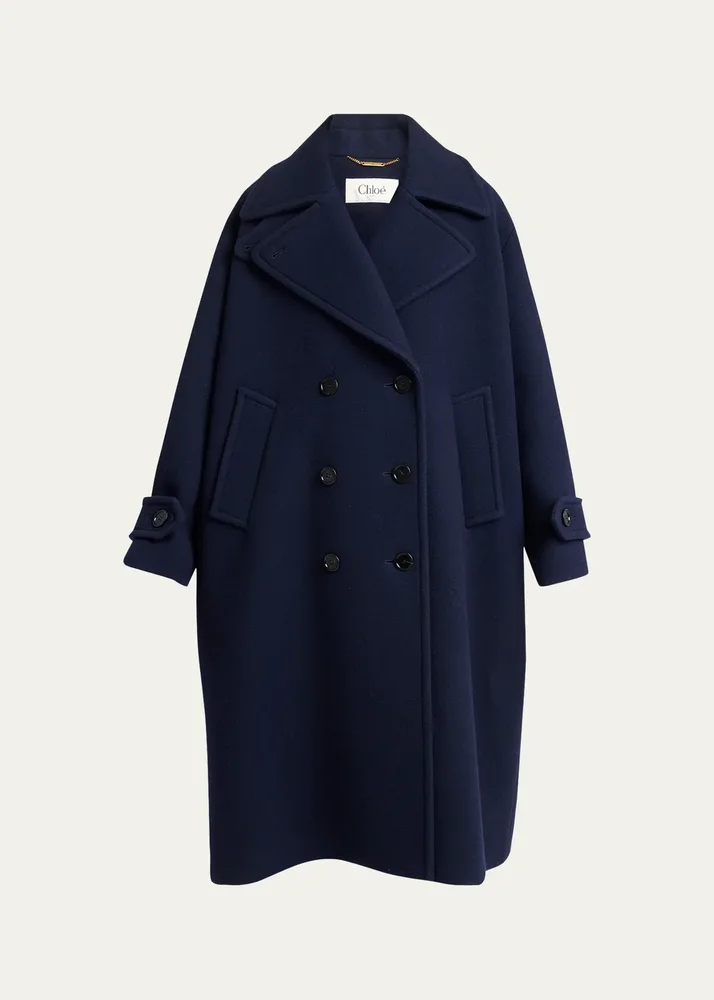
Virgin Wool-Blend Double-Breasted Coat
Chloe
$3,650
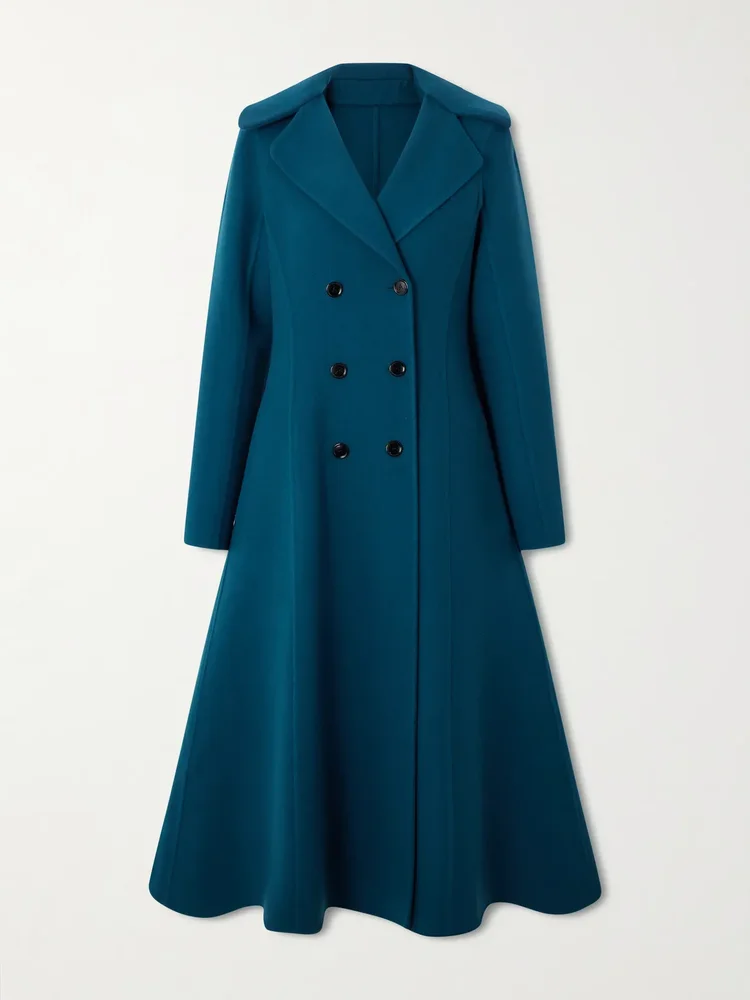
Double-breasted wool coat
Alaïa
$6,500
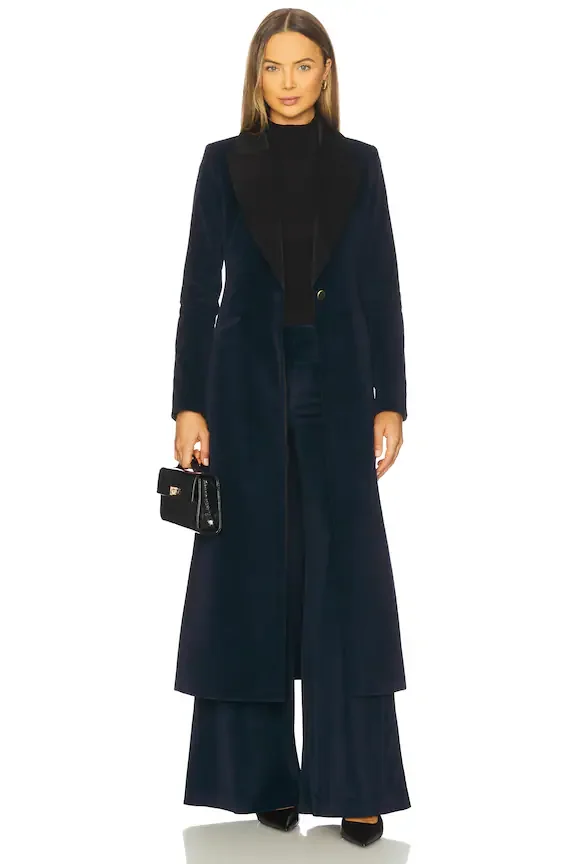
Theo Notch Collar Coat
Alice + Olivia
$699
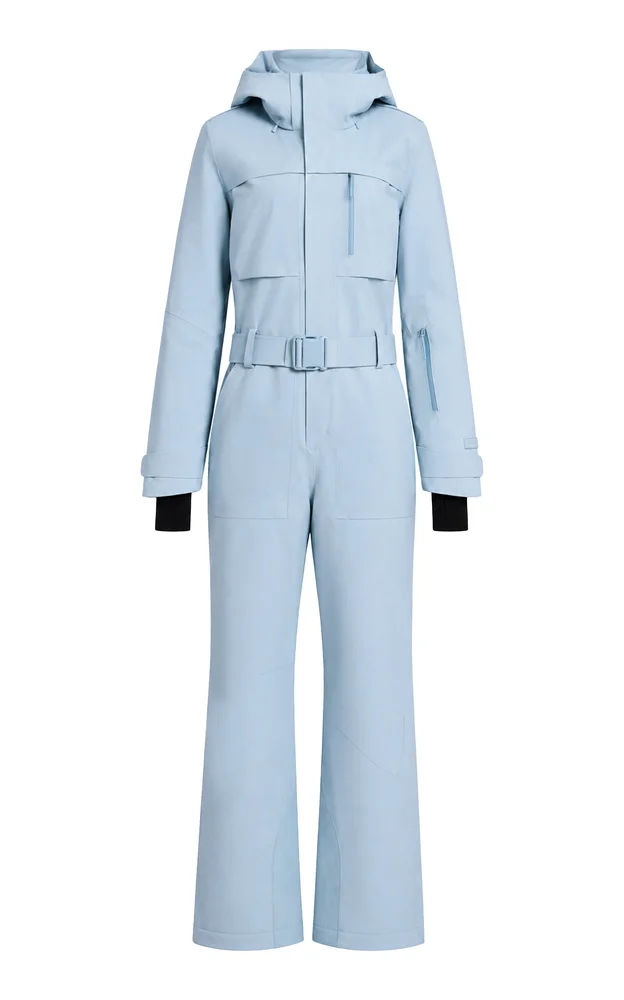
Murphy Ski Suit
Halfdays
$695
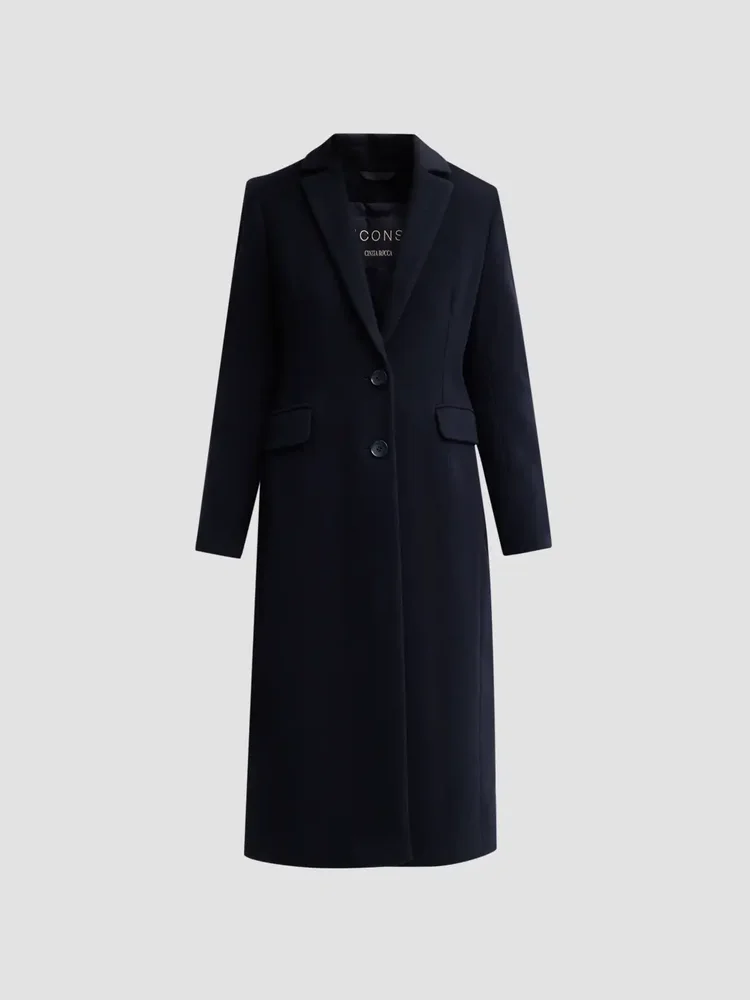
Icons Wool-Blend Longline Coat
Cinzia Rocca
$1,230
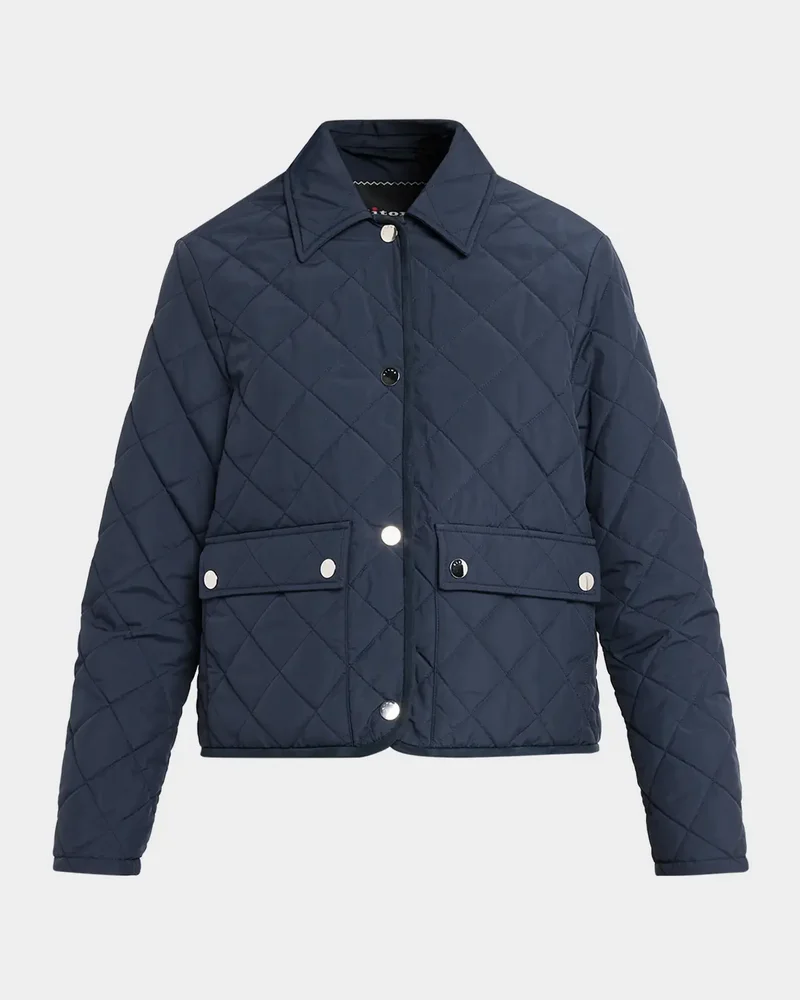
Single-Breasted Quilted Overcoat
Kiton
$1,075.99
Texture Has A Say
The Mackage Blithe-STP Wool and Leather Belted Coat names two materials and a belt, while The Row Carlina cotton-blend bouclé coat makes texture part of its description. The L'agence Bradley Linen Trench and the ALAÏA Suede Trench Coat offer two more named material directions. For a weekday commute, I would pair one of these with a plain base layer and a bag that does not compete with the coat. A blue coat can feel especially grounded when the rest of the outfit stays tonal, even if the materials differ. What I would skip is adding several textured pieces at once; one clear surface is enough to give the outfit interest. If the coat already has a belt or a distinct texture, let it set the shape and keep the layers underneath uncomplicated. The result feels polished without feeling overworked.
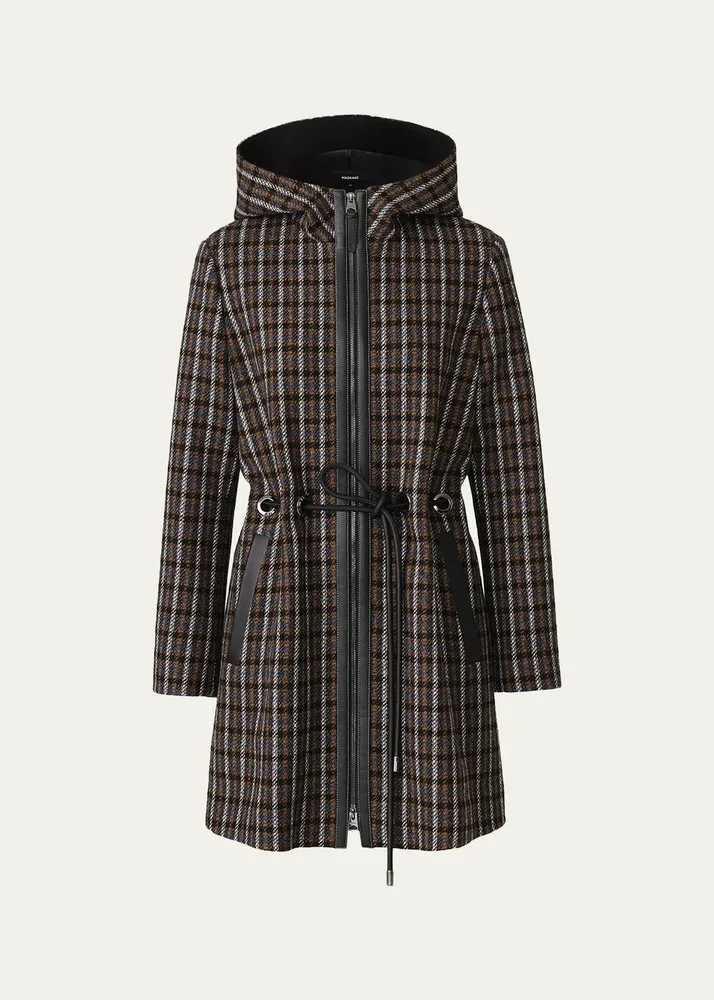
Blithe-STP Wool and Leather Belted Coat
Mackage
$1,150
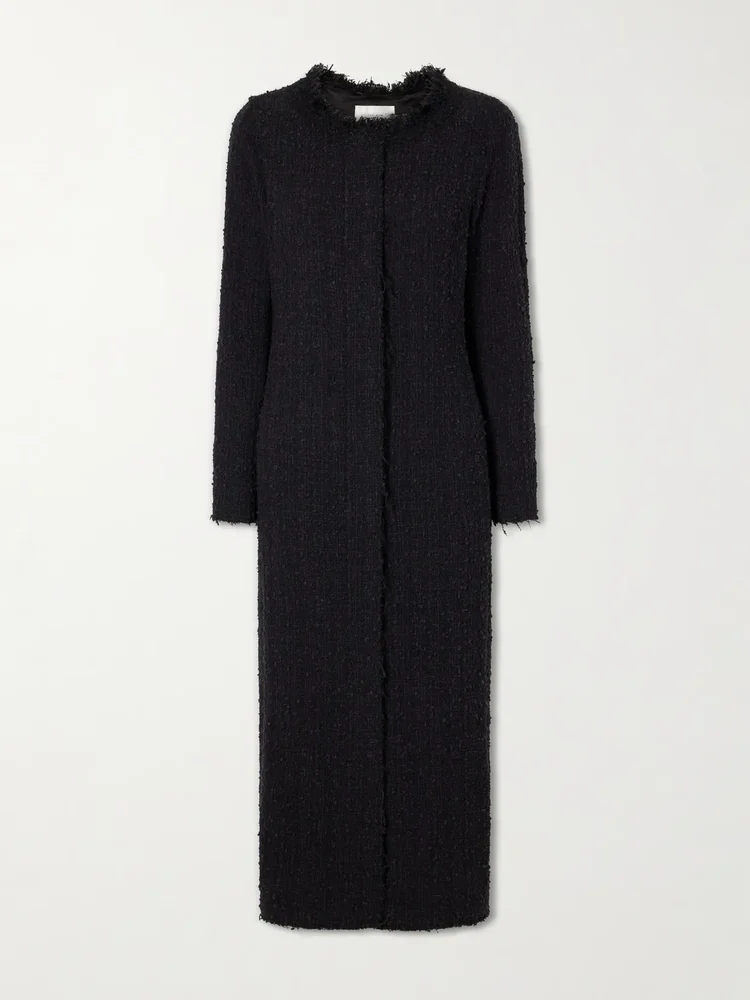
Carlina cotton-blend bouclé coat
The Row
$6,700
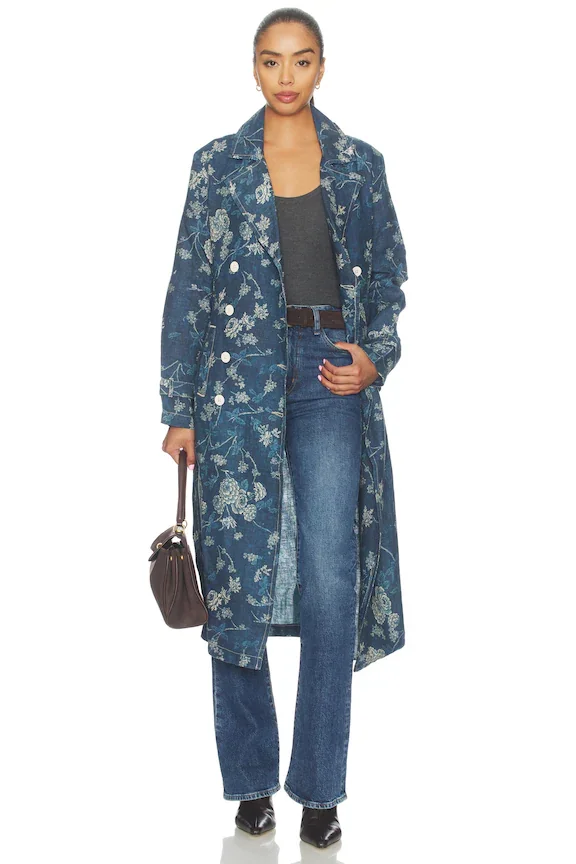
Bradley Linen Trench
L'agence
$695
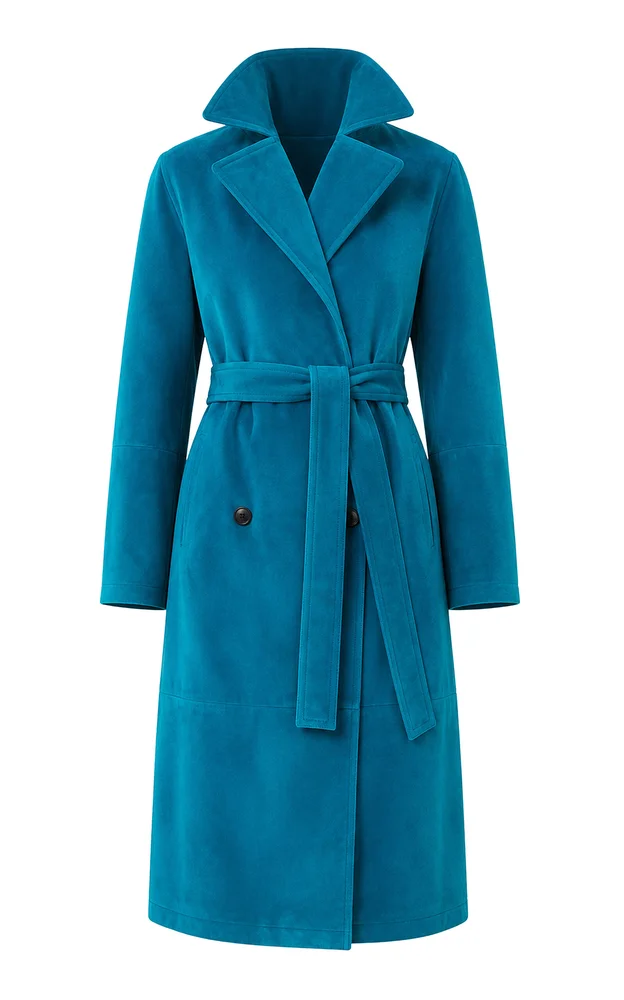
Suede Trench Coat
ALAÏA
$15,350
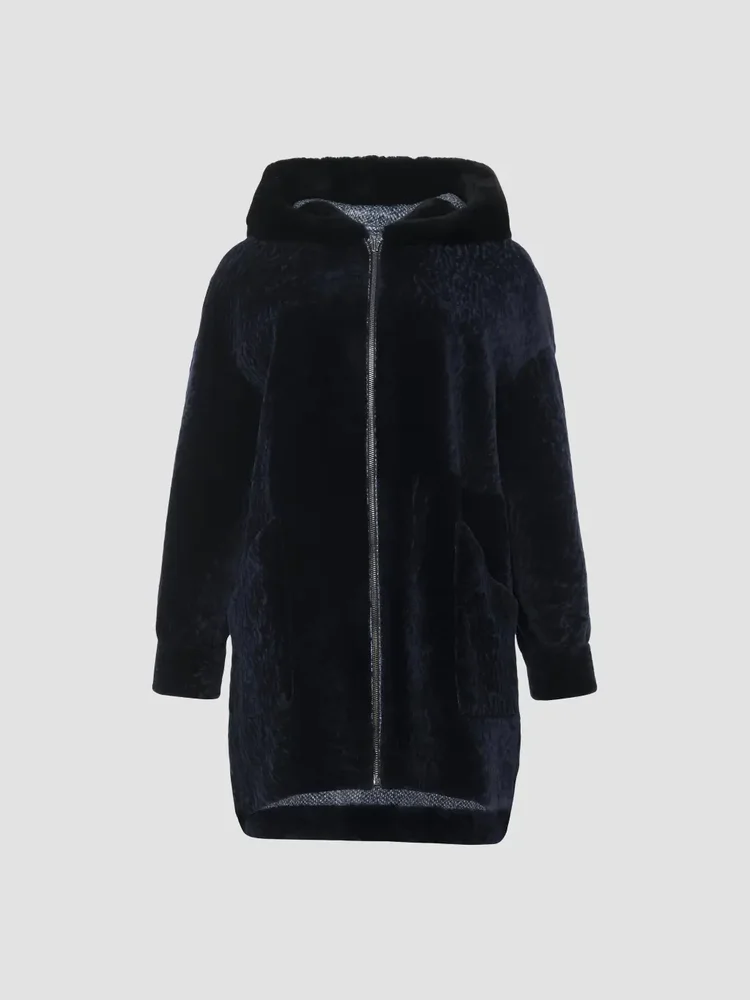
Reversible Select Shearling Lamb Parka
Gorski
$2,240
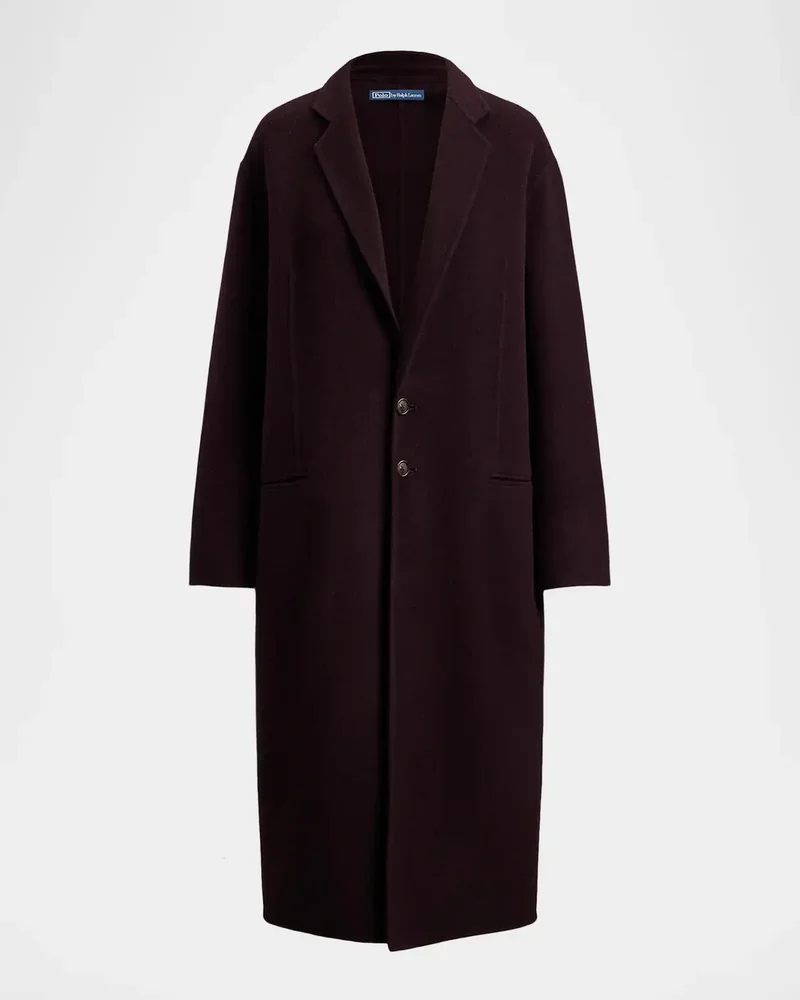
Double-Faced Long Wool Coat
Polo Ralph Lauren
$698
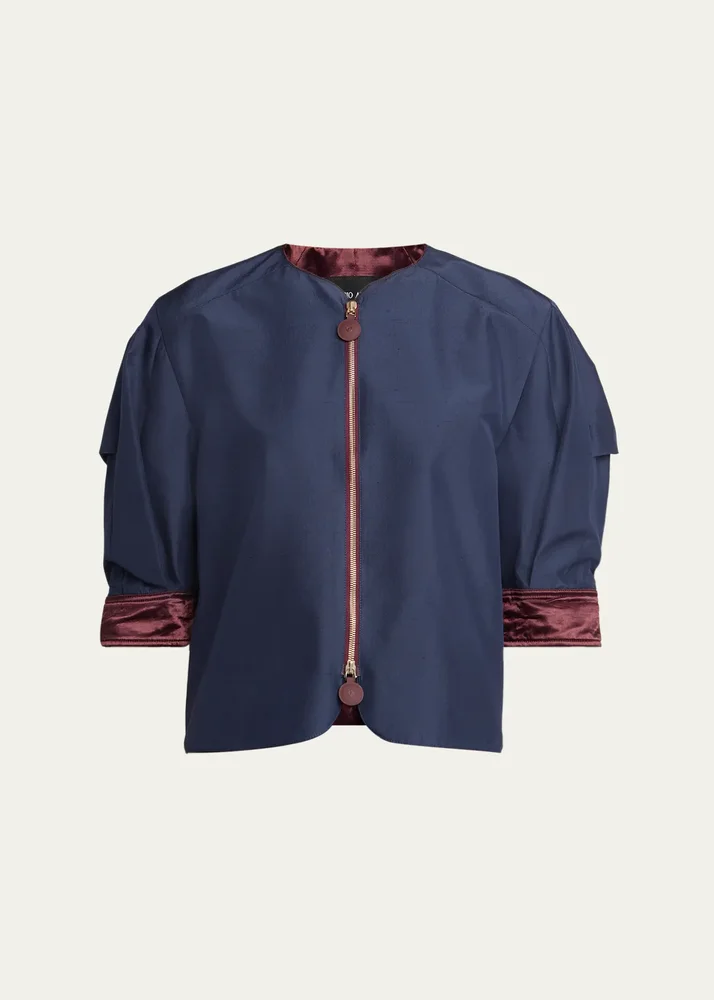
Short-Sleeve Silk Shantung Caban Coat
Giorgio Armani
$5,200
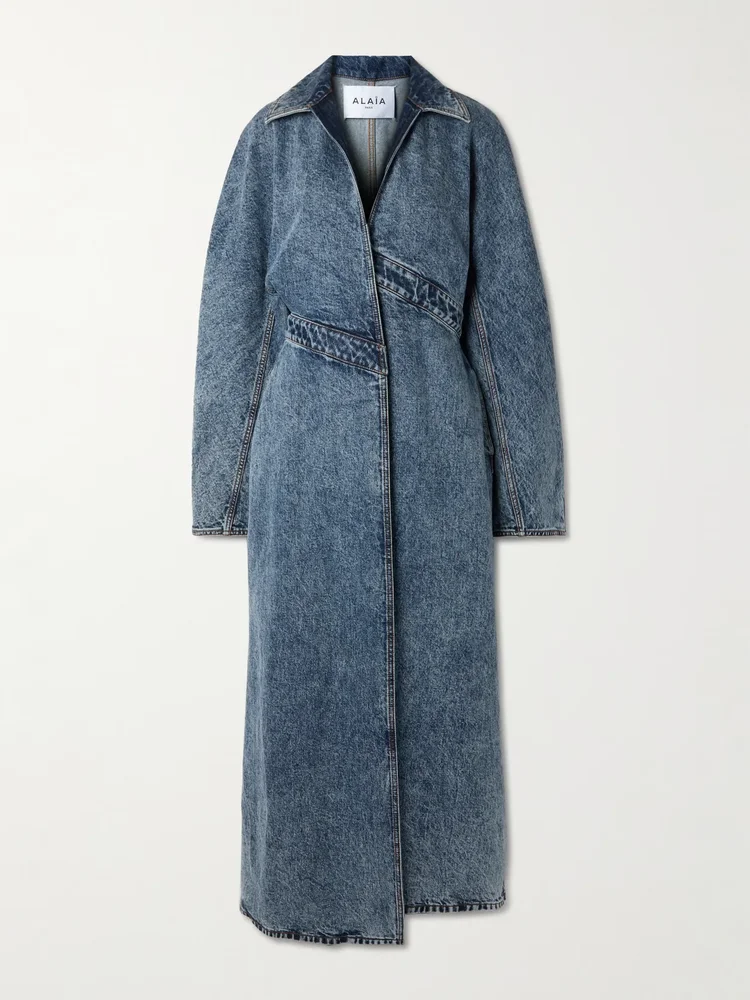
Spiral asymmetric denim coat
Alaïa
$3,750
Make It Personal
The final group runs from the Anine Bing Pascale Trench to the Weekend Max Mara Double Wool Broadcloth Peacoat and the Issey Miyake Correlation Draped-Back Double-Collar Coat. The Simkhai Rumi Wool-Blend Belted Long Coat names a longer belted shape, while the Moncler Lightweight Wool Puffer Cardigan offers a lighter-sounding layer by name. I would choose one for a weekend plan or a day when the coat is the first thing people notice. A blue coat can make a neutral outfit feel intentional, but the shade need not be repeated elsewhere. If the silhouette is already distinctive, I would skip extra layers with competing collars. Keep the base relaxed, then let the cut and color make the outfit feel like yours.
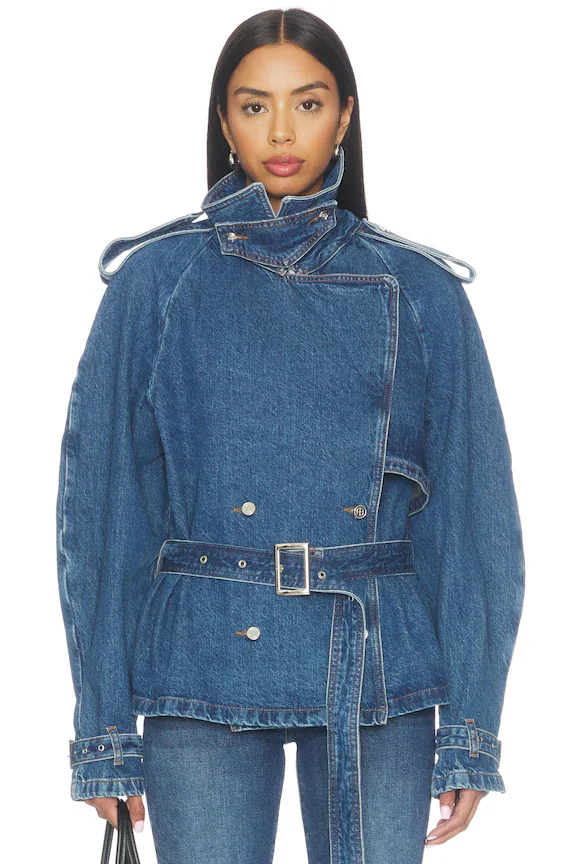
Pascale Trench
Anine Bing
$450
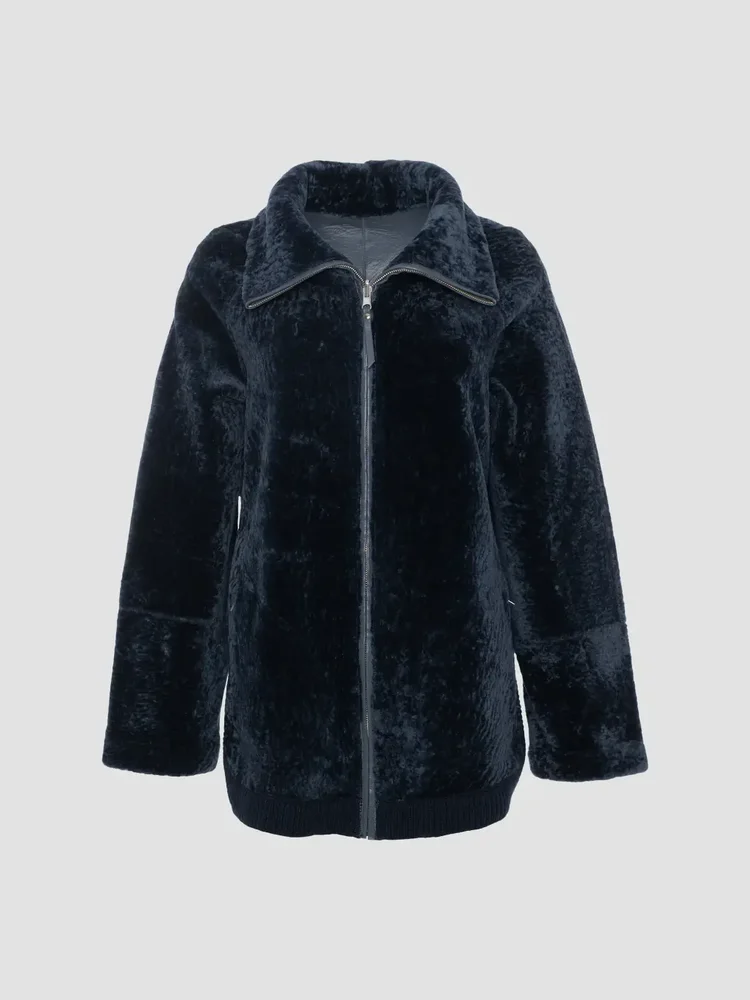
Textured Shearling Lamb Zip Coat
Gorski
$1,750
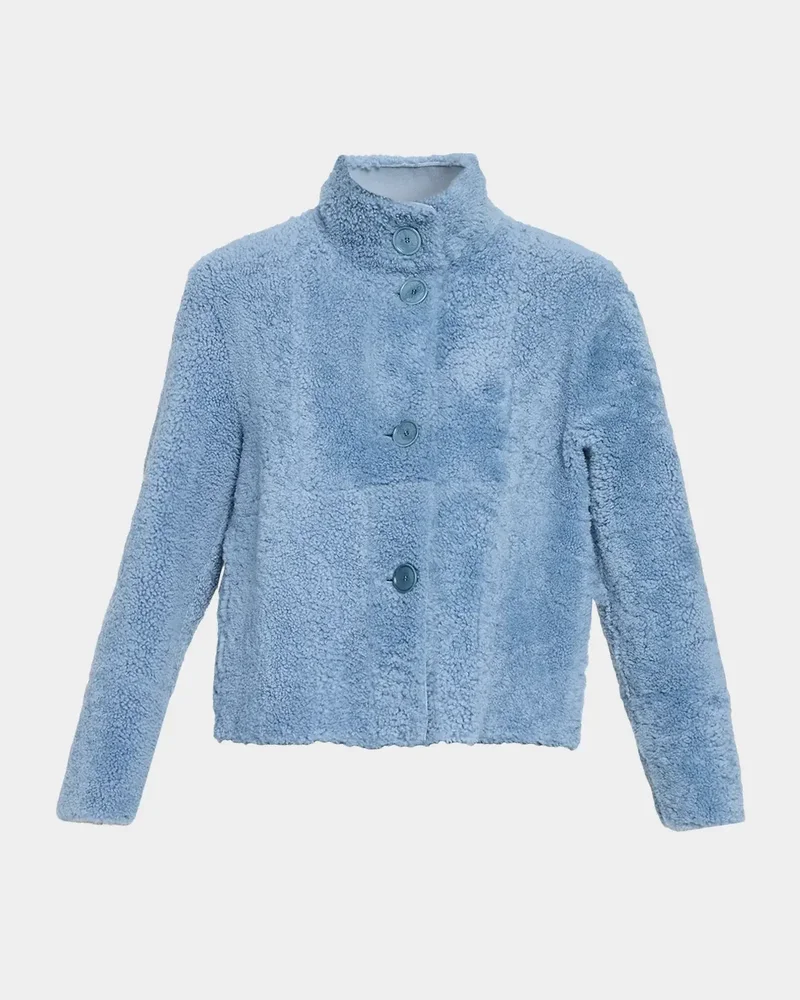
Throw Over Lamb Shearling Reversible Coat
Akris Punto
$3,990
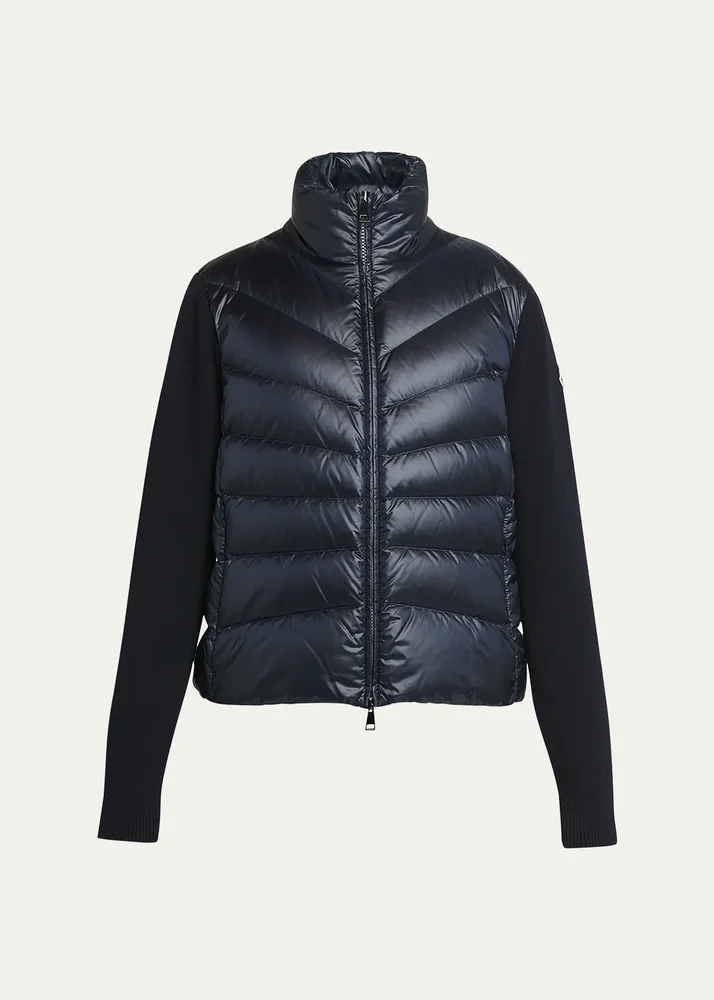
Lightweight Wool Puffer Cardigan
Moncler
$1,380
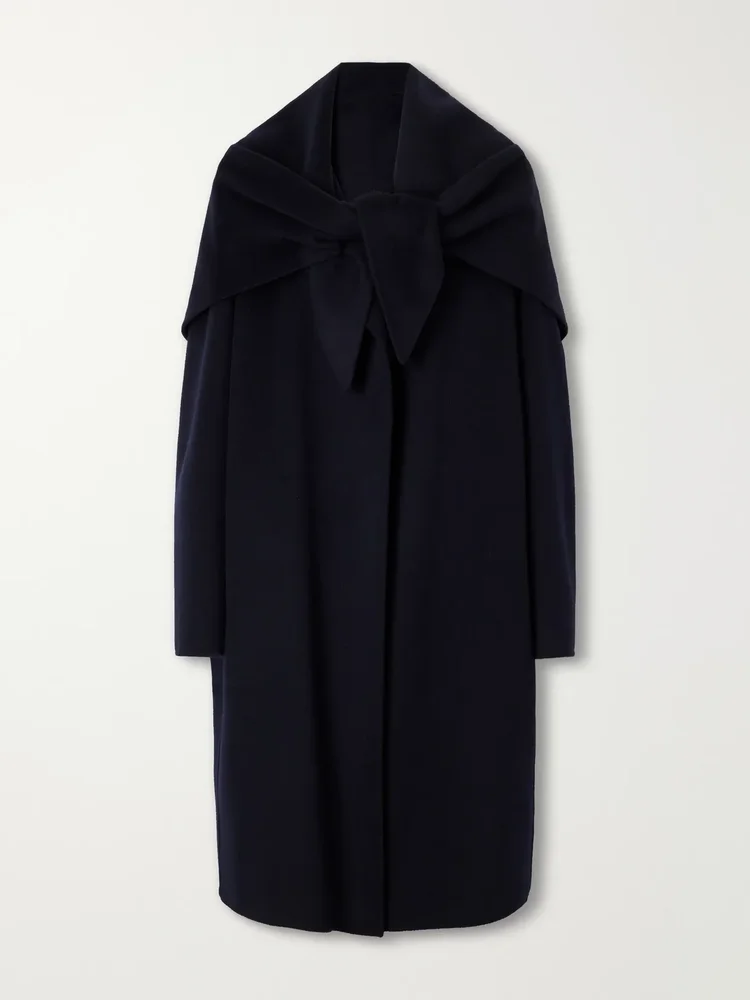
Scarf-detailed brushed wool-doublé coat
Toteme
$1,680
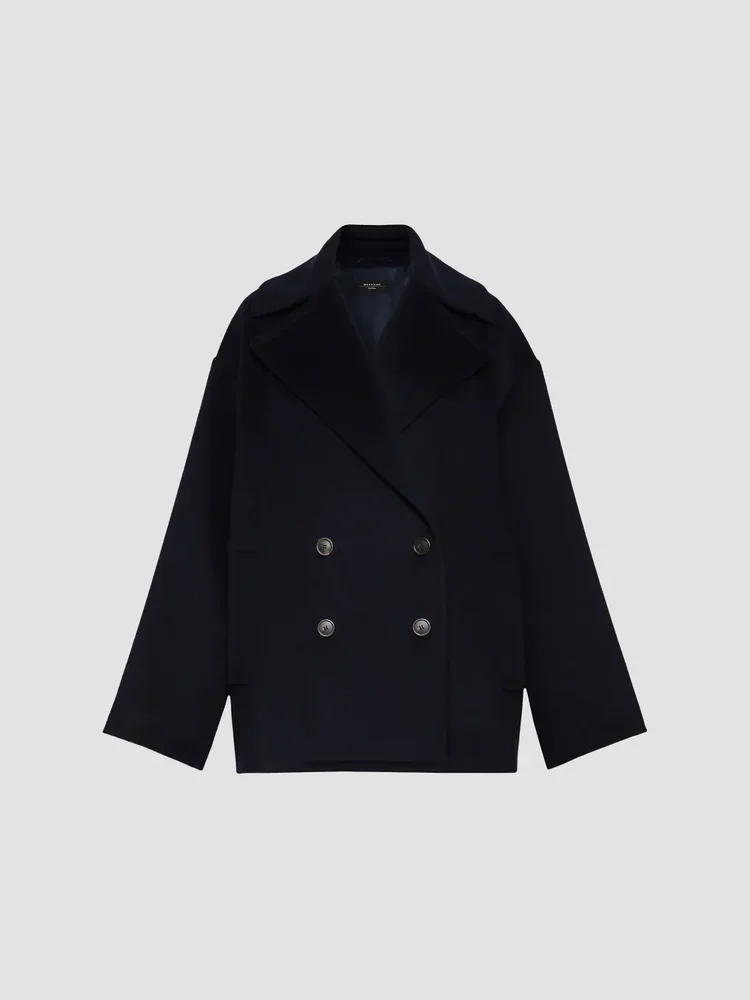
Double Wool Broadcloth Peacoat
Weekend Max Mara
$985
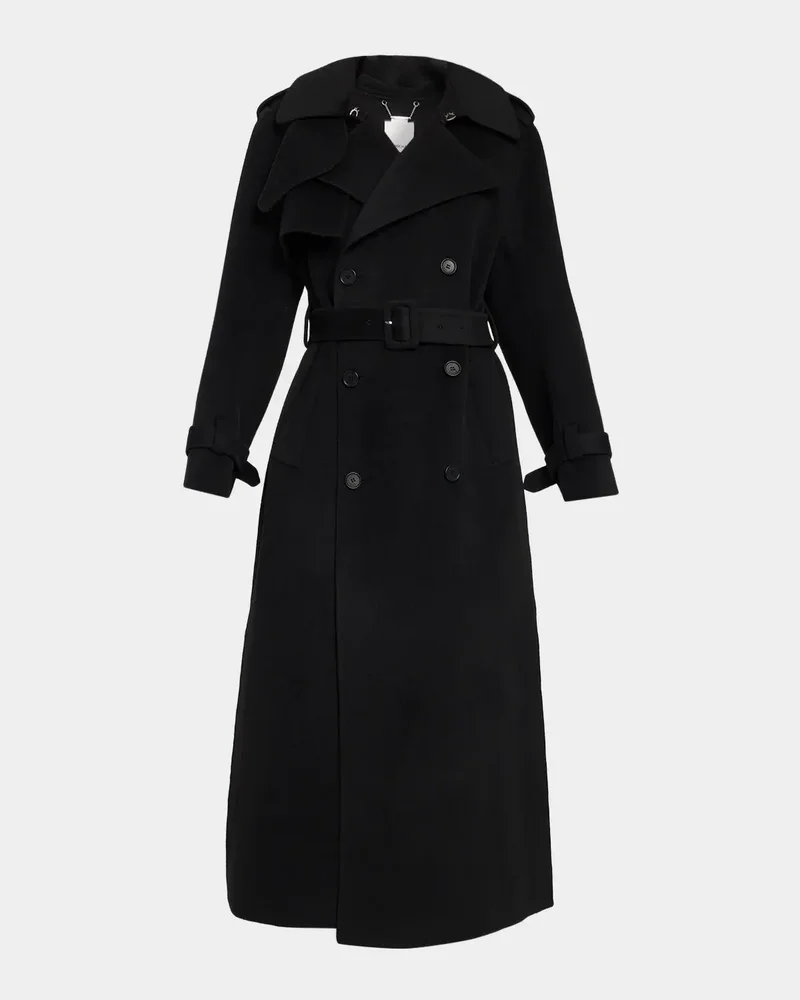
Rumi Wool-Blend Belted Long Coat
Simkhai
$1,095
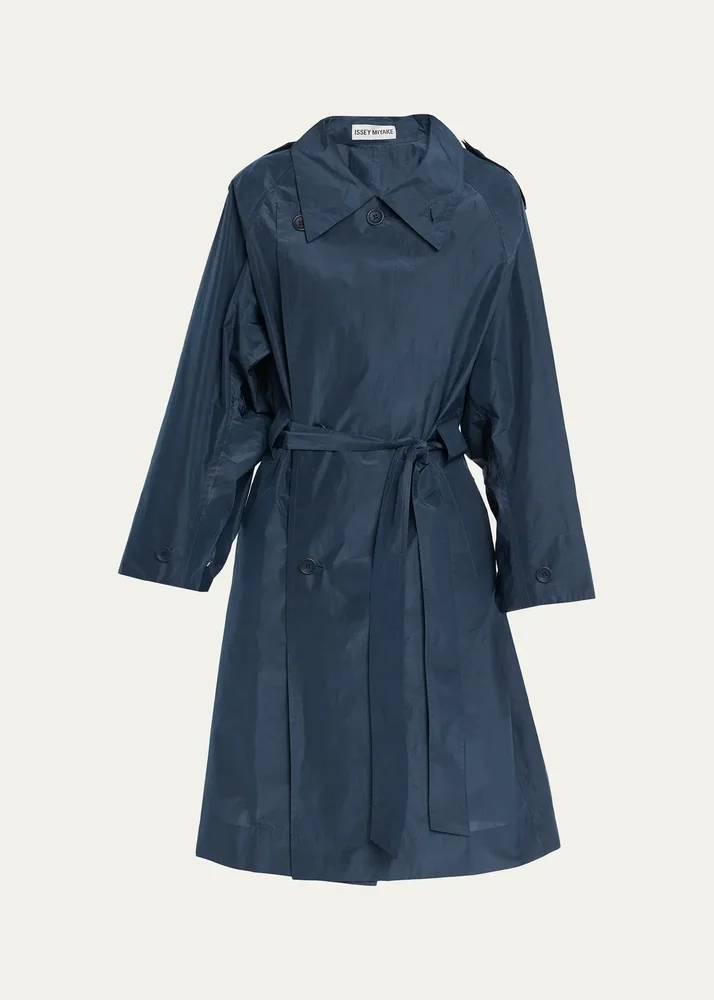
Correlation Draped-Back Double-Collar Coat
Issey Miyake
$2,985
The Coat You Reach For
I think a blue coat works best when it fits the rhythm of the day as well as the palette. Choose the silhouette for the layers underneath, then let the shade do its work beside calm neutrals. For an active day, keep the outfit simple and comfortable; for a dinner, a sharper line can feel more intentional. I would skip forcing an exact color match and let one contrast bring the whole look together.