A good ear is built over years, not bought in an afternoon. The order to add piercings and pieces in, and where people go wrong early.
Building a Curated Ear Slowly
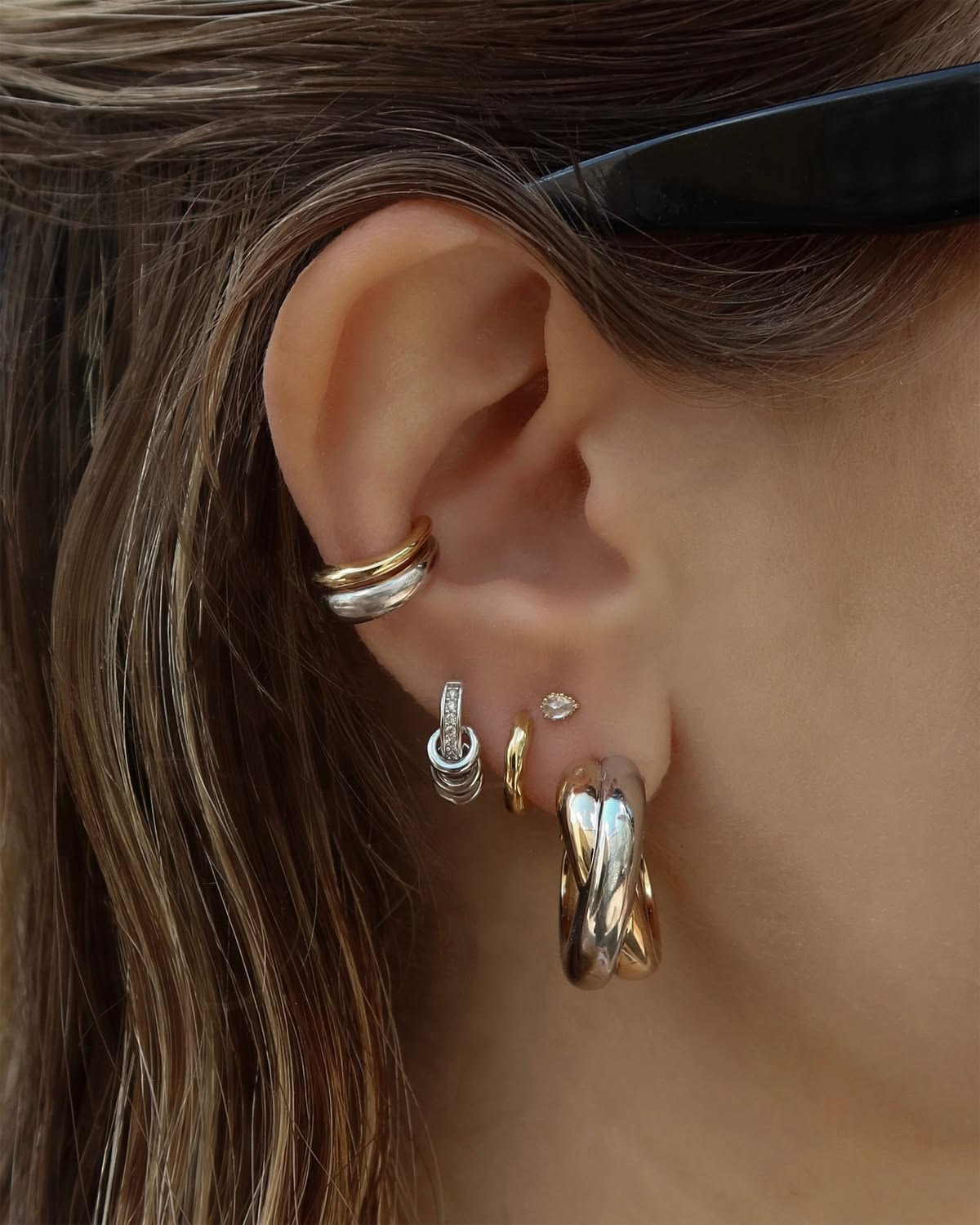
Start at the lobe and move outward
An ear that looks considered almost always got there slowly, and the sequence matters more than the pieces. Begin with a second lobe piercing, which is the most forgiving addition and heals in weeks rather than months. A second lobe gives you the ability to run a small stud beneath a larger one, which is the single most effective way to make one earring look like a plan. From there the next useful step is a third lobe or a helix, and both change the shape of the arrangement rather than just adding to it. Cartilage piercings, meaning helix, flat, conch and the rest, heal in six to twelve months rather than six weeks, which is the fact that catches people out. That healing time is why building an ear takes years, and why anyone offering you three cartilage piercings in one sitting is selling you a difficult autumn. One cartilage piercing at a time, healed properly, is the entire method.
Building the ear

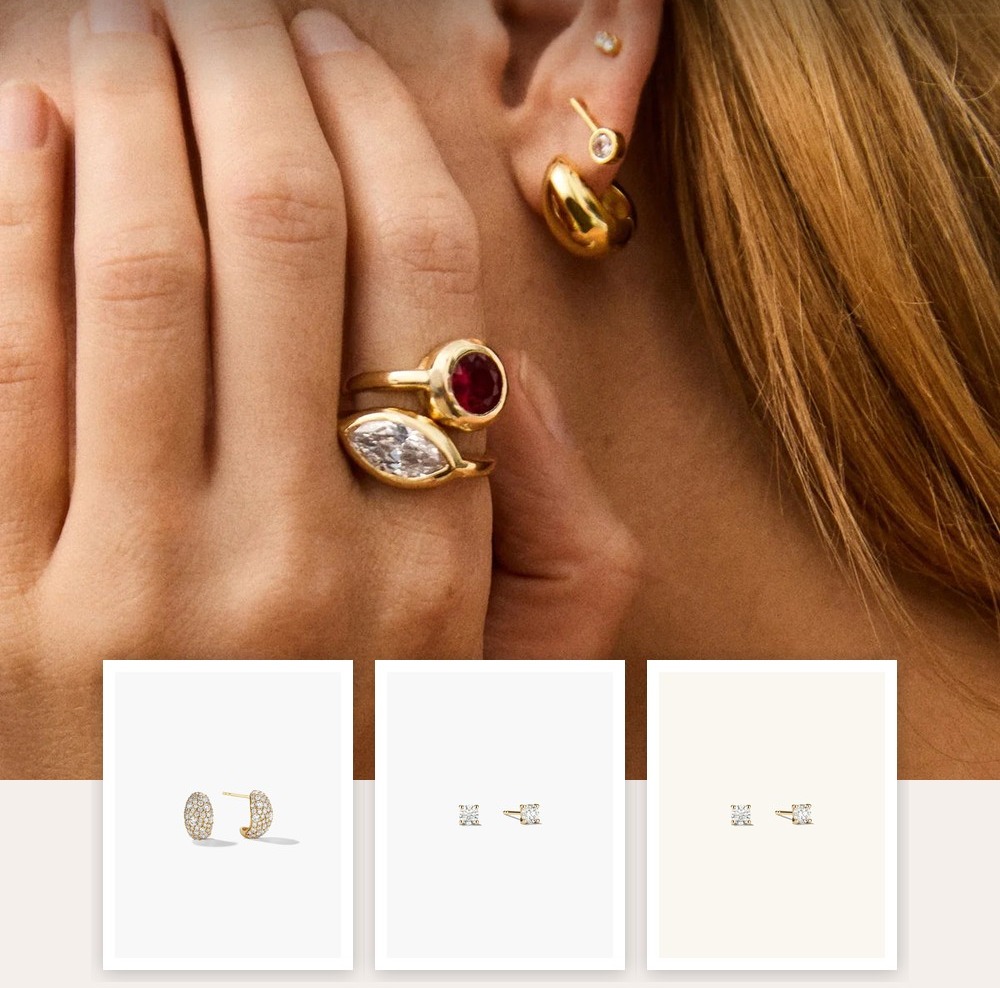
Lab Grown Diamond Eternity Stud Earrings
Aurate New York
$2,858

Dôme Pavé Lab Grown Diamond Huggies
Mejuri
$2,400

Round Lab Grown Diamond Huggie Earrings
Aurate New York
$2,145

Large Diamond Studs
Mejuri
$2,100

Lab Grown Diamond Round Studs 1 TCW
Mejuri
$1,500

10K Stacked Baguette Diamond Huggie Earrings
Jenny Bird
$995

1ct Round Lab Grown Diamond Stud Earrings
Aurate New York
$923

10K Stacked Baguette Diamond Stud Earrings
Jenny Bird
$895
Scale, metal and the arrangement that reads well
The visual rule that does most of the work is a hierarchy of size. One piece should be clearly the largest, one or two should be mid-sized, and the rest should be small. An ear of equally sized pieces reads as busy rather than built, no matter how good each piece is. Keep the largest piece lowest, on the first lobe, and let things get smaller as they move up the ear, since that follows the shape of the ear itself. On metal, mixing is fine and often better, but mix deliberately, which usually means one metal dominating and the other appearing once or twice. Three metals in one ear rarely works. For cartilage, buy pieces made for it. A flat back labret is far more comfortable to sleep on than a butterfly back and is what a good piercer will use. And buy in implant grade titanium or high karat gold for anything healing, because that is where a reaction will cost you months rather than an evening.


Our honest take
Go slower than you want to. Every regret in this category is a piercing done before the last one healed, or a cartilage piercing placed to fill a gap rather than because it suited the ear. Get one thing at a time and live with it for a season. Spend the money on the piercer rather than the jewellery, because placement is the thing you cannot change later and a beautiful piece in a badly placed hole is a permanent problem. Buy titanium while healing and save the gold for afterwards. And resist the complete ear sold as a single package, because an ear assembled all at once looks assembled. If you take one thing away, add one piercing at a time and let it heal fully, because the ear that looks effortless took four years and the one that looks busy took an afternoon.
Shop brands in this edit




Next read
Secondhand Louis Vuitton Damier Ebene Or Damier Azur
Damier Ebene and Damier Azur are the same coated canvas in two colourways, and the secondhand market treats them as two different products.
Read Editorial
Secondhand Silk My Favs
My sixteen selects of scarves below are all ninety centimetre squares, split into two price bands