Buying vintage jewellery online is mostly a question of what the listing does not say. The checks that catch a bad piece before the money leaves.
Buying Vintage Jewelry Online Without Getting Burned
Read what is missing from the listing
A good vintage listing tells you the metal, the stamp, the weight in grams, the measurements, and the condition including the flaws. A bad listing tells you the mood. If a seller has not given the weight, assume the piece is lighter than it looks. If there is no photograph of the reverse, assume there is something on the reverse. If the metal is described as gold tone, gold filled, or simply gold coloured, it is not solid gold and the wording is doing work. The single most useful photograph is a close, in-focus shot of the hallmark, and a seller who will not send one on request is telling you something. Ask for the piece on a scale, in one photograph, with the reading visible. It sounds excessive and it takes thirty seconds and it eliminates most misrepresentation. Also ask directly whether the piece has been repaired, because a previous solder repair is common, usually fine, and materially affects value.
Vintage-look picks

American Threads - Lettie Mesh Maxi Dress - Brown Polka Dot - Size Small
American Threads
$45

Maude Club - Juliet Dress - XS
Maude Club
$55

Meshki - Bellamy Lace Set - XXS
Meshki
$50

Camila Coelho White Crochet Cold-Shoulder Mini Dress
Camila Coelho
$70

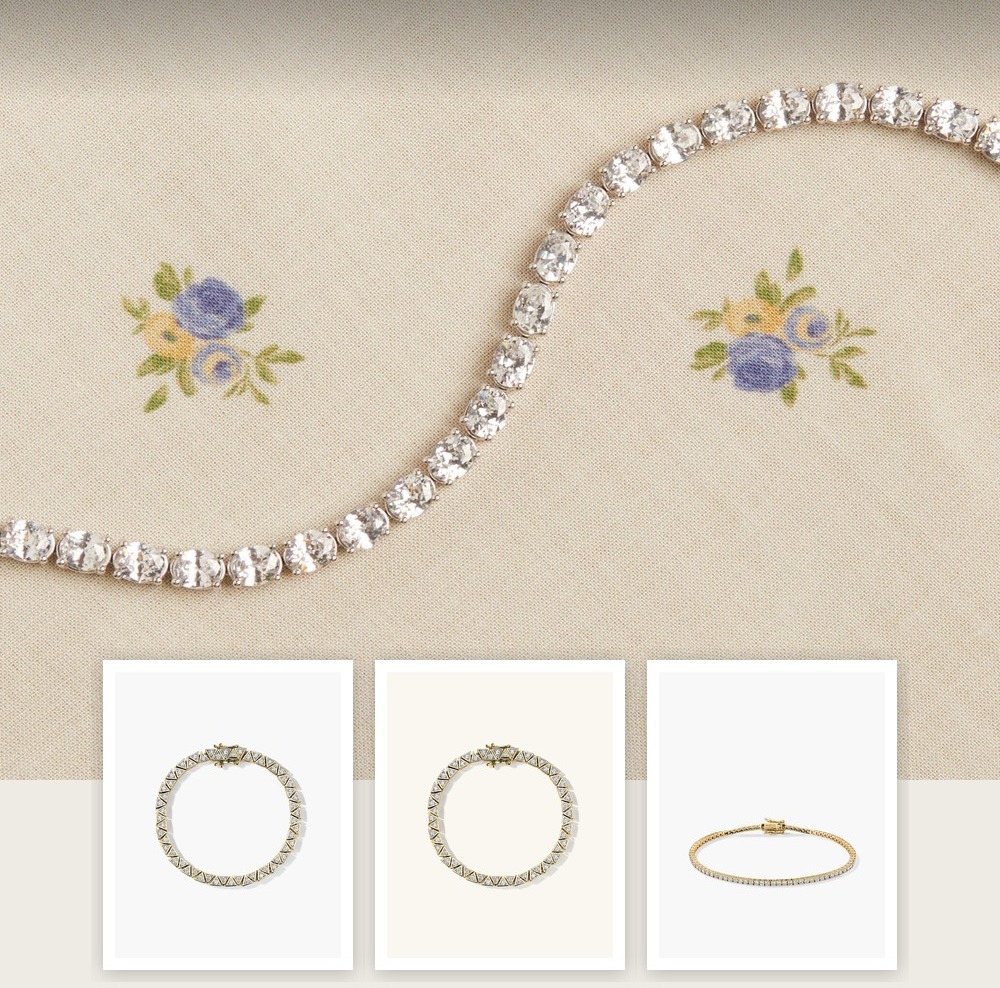
Lab Grown Diamond Graduated Modern Tennis Bracelet
Aurate New York
$8,898

Lab Grown Diamond Oval Tennis Bracelet
Aurate New York
$8,798

10ct Lab Grown Diamond Hinged Tennis Bracelet
Aurate New York
$8,447

Patra Diamond Tennis Bracelet
Mejuri
$4,400
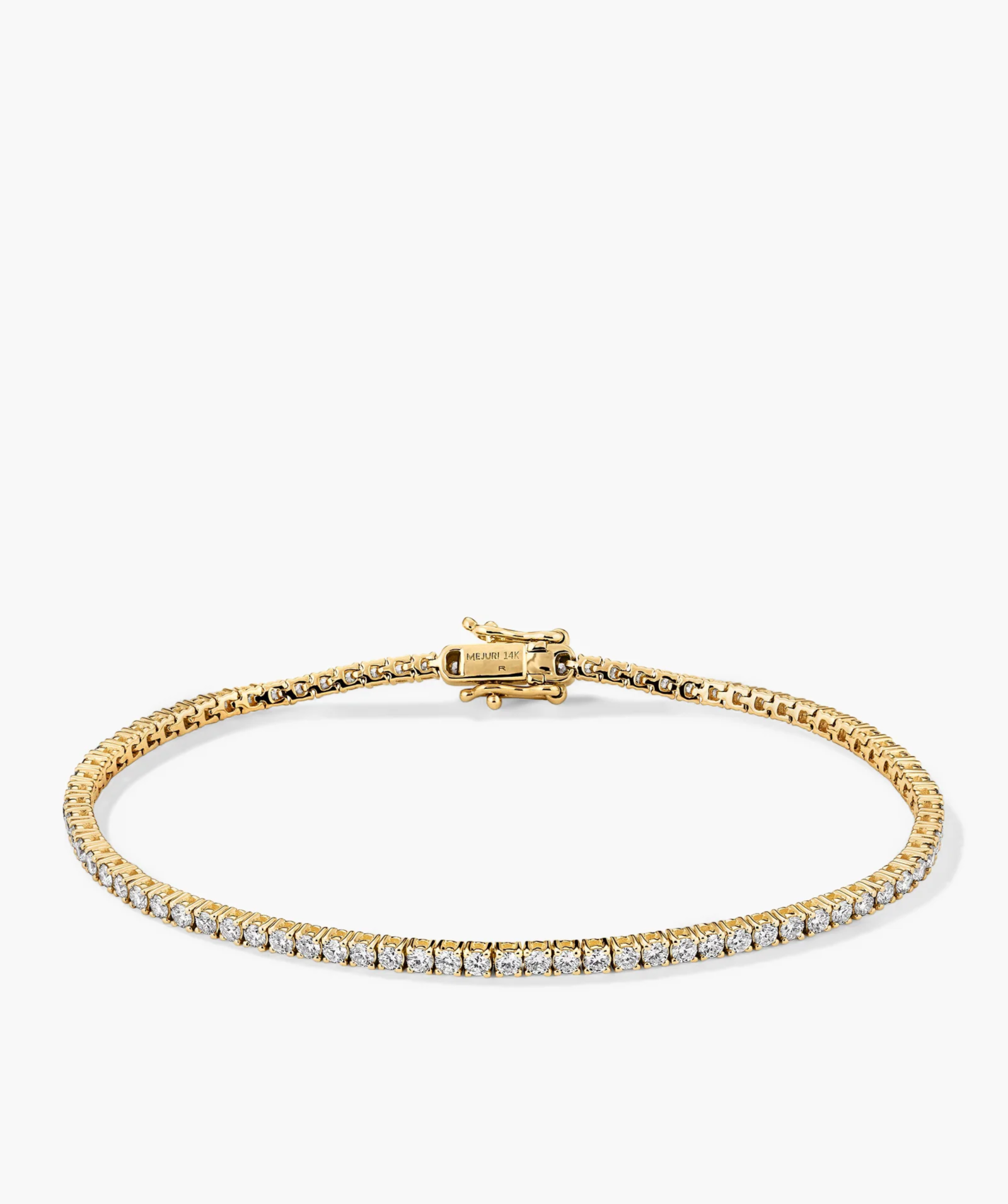
Lab Grown Diamond Tennis Bracelet 1.8mm
Mejuri
$3,200

Diamond Tennis Bracelet 1.3mm
Mejuri
$3,200

10K Pear Cut Diamond Huggie Earrings
Jenny Bird
$495

10K Stacked Baguette Diamond Necklace
Jenny Bird
$495
Condition words, returns, and what a fair price looks like
Condition vocabulary is not standardised, so treat it as marketing rather than data and rely on photographs. What matters most for wearability is the state of the clasp, the depth of wear on any high point such as the shoulders of a ring, and whether stones are secure. Ask the seller to say, in writing, that no stones are loose. On price, the floor for any solid gold piece is its metal value, which you can calculate from the weight and the karat, and knowing that number stops you overpaying for a damaged piece and stops you dismissing a bargain. Above the floor you are paying for design and condition. Pay by a method with buyer protection, always. Check the returns window and whether returns are accepted for pieces described as antique, since many sellers exclude them. And factor in resizing, which on an older ring with a pattern or an engraved band can cost more than you expect.


Our honest take
Most people who get burned buying vintage online were not deceived by a fake. They bought a real piece that was worn thinner than the photographs suggested, or a real piece that could not be resized, and the disappointment arrived a month later. So the checks that matter are the boring ones about weight and condition rather than the dramatic ones about authenticity. We would set a rule for yourself that you do not buy a vintage ring you cannot try on unless the seller accepts returns, because ring comfort is not predictable from a measurement. The grid here is contemporary jewellery in a vintage idiom rather than vintage stock, which is a reasonable route if you want the look without the risk. If you take one thing away, ask for a photograph of the piece on a scale, because weight is the number that cannot be styled.
Shop brands in this edit






Next read
Secondhand Louis Vuitton Damier Ebene Or Damier Azur
Damier Ebene and Damier Azur are the same coated canvas in two colourways, and the secondhand market treats them as two different products.
Read Editorial
Secondhand Silk My Favs
My sixteen selects of scarves below are all ninety centimetre squares, split into two price bands