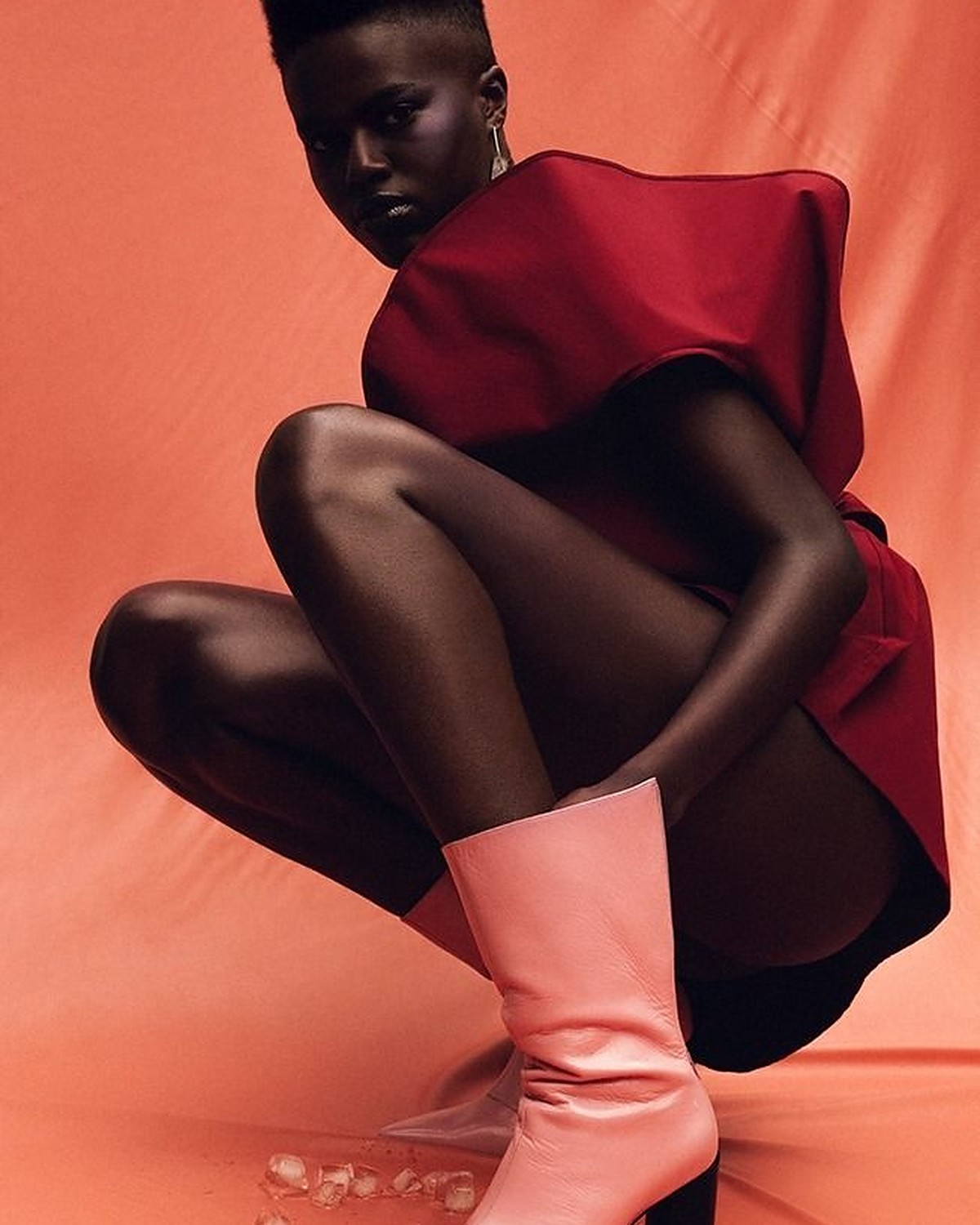
Carolina Herrera launched her label in New York in 1981, debuting a twenty-look collection at the Metropolitan Club after her friend Diana Vreeland told her to stop talking about it and just do it. She had no formal training and no fashion-industry résumé, only a reputation as one of the best-dressed women in Caracas and New York, and she built the house on tailored white shirting and ballgown-scale skirts rather than on any single runway gimmick.
Carolina Herrera
Dresses
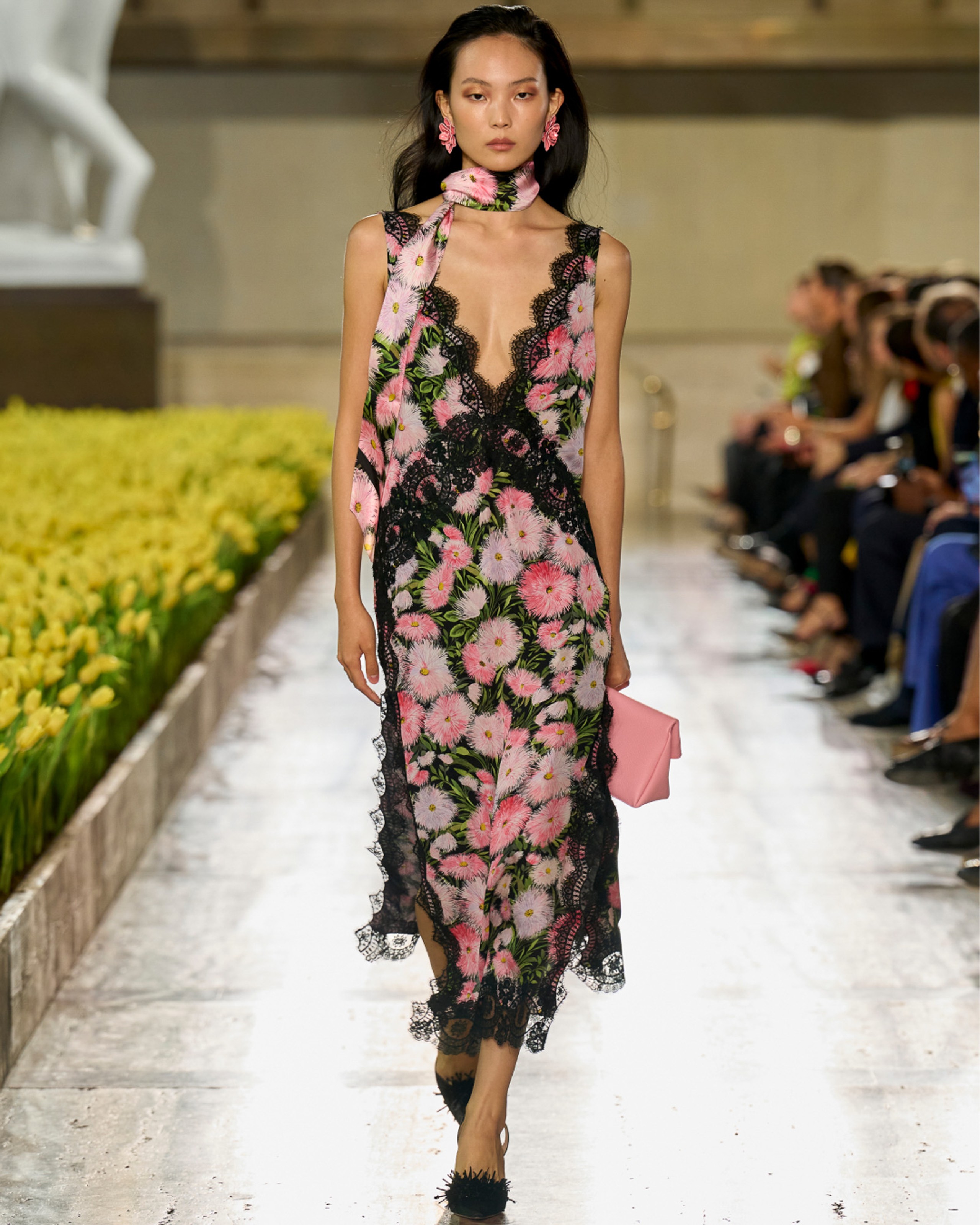
The dress is where Herrera's original idea, elegance without stiffness, still shows up most clearly. Sleeves get treated like architecture, volume is deployed on purpose, and the silhouettes read more Metropolitan Club than mood board. It is old-guard eveningwear logic applied to a brand that has outlived several generations of trend cycles.

Hand-Crocheted Midi Dress
Carolina Herrera
$3,290

Lace-Trimmed Silk Faille Ankle-Length Dress
Carolina Herrera
$5,990

Sequined Tea-Length Dress
Carolina Herrera
$2,990

Overskirt-Detailed Silk Faille Column Gown
Carolina Herrera
$5,690

Embellished Crepe Silk Organza Ankle-Length Dress
Carolina Herrera
$10,990

Embroidered Textured Tweed Ankle-Length Dress
Carolina Herrera
$3,990

Tie-Detailed Wool-Blend Midi Dress
Carolina Herrera
$1,990

Off-The-Shoulder Crepe Midi Dress
Carolina Herrera
$2,290

Off-The-Shoulder Crepe Midi Dress
Carolina Herrera
$2,290

Draped Cotton Denim-Stripe Midi Dress
Carolina Herrera
$2,290

Draped Silk-Chiffon Gown
Carolina Herrera
$5,790

Check Plaid Tailoring Midi Pencil Dress
Carolina Herrera
$2,590

Draped Hydrangea-Printed Chiffon Gown
Carolina Herrera
$4,990

Ruched Striped Cotton-Blend Halter Midi Dress
Carolina Herrera
$2,390

Hydrangea-Printed Crepe Midi Dress
Carolina Herrera
$3,290

Strapless Floral Bouquet Lurex Midi Dress
Carolina Herrera
$3,790

Button-Front Garden Floral Linen-Silk Trench Gown
Carolina Herrera
$5,890

Painted Rose Jersey Halter Midi Dress
Carolina Herrera
$1,890

Garden Floral Linen-Silk Midi Dress
Carolina Herrera
$2,990

Ruffled Garden Floral Silk-Chiffon Gown
Carolina Herrera
$5,490

Strapless Hydrangea-Embroidered Column Gown
Carolina Herrera
$4,290

Embroidered Strapless Silk-Faille Gown
Carolina Herrera
$8,990

Embroidered Check Plaid Tailoring Shift Dress
Carolina Herrera
$3,490

Belted Good Girl Shoe Print Ankle-Length Dress
Carolina Herrera
$2,490
More Dresses
A second run of dresses makes the point again from another angle: this house repeats a few ideas exceptionally well instead of chasing new ones every season. Grecian draping and ladylike proportion show up again, tuned for daytime as much as red carpet. It is consistent enough that you could date a Herrera dress by its sleeve alone.

Polka-Dot Beaded Knit Midi Dress
Carolina Herrera
$2,990

Floral Jersey Gathered Midi Dress
Carolina Herrera
$1,890

Ruched Cotton-Blend Stripe Pencil Dress
Carolina Herrera
$1,990

Striped Cotton-Blend Mini Shirt Dress
Carolina Herrera
$1,790

Striped Cotton-Blend Mini Shirt Dress
Carolina Herrera
$1,790

Draped Painted Rose Cotton-Blend Midi Dress
Carolina Herrera
$2,590

Floral Ruffled Silk-Blend Midi Dress
Carolina Herrera
$3,290

Belted Wool-Blend Flannel Midi Dress
Carolina Herrera
$2,490

Calla Lily Print Cady Ankle-Length Dress
Carolina Herrera
$2,490

Ruffled Cotton Midi Dress
Carolina Herrera
$2,190

Fan-Bodice Floral Bouquet Lurex Gown
Carolina Herrera
$4,290

Carnation Embroidered Short-Sleeve Mini Dress
Carolina Herrera
$2,690

Tiered Colorblock Lace Short-Sleeve Mini Dress
Carolina Herrera
$2,490

Rose-Print Gathered Silk Sleeveless Dress
Carolina Herrera
$1,990

Long Sleeve Off The Shoulder Midi Dress
Carolina Herrera
$1,790

Strapless Draped Gown
Carolina Herrera
$3,290

Slim Strap Pencil Dress
Carolina Herrera
$1,990

Long Sleeve Dress
Carolina Herrera
$1,043

Midi Dress
Carolina Herrera
$1,947

One Shoulder Ruched Midi Dress
Carolina Herrera
$1,533

Checked woven midi dress
Carolina Herrera
$2,590

Rouched wool-blend midi dress
Carolina Herrera
$2,690

Striped cotton-blend midi dress
Carolina Herrera
$2,390

Floral-print ruched jersey midi dress
Carolina Herrera
$1,890
Still more Dresses
By a third grouping, the pattern is obvious: Herrera's business was built almost entirely on dresses that first ladies could wear without anyone asking who made it. These lean into that same unbothered formality, cut for women who want to be noticed for posture, not for logos. It is the least trend-driven corner of the brand and arguably the most honest one.


Skirts
Skirts here inherit the same full, considered volume that made Herrera's early ballgowns a talking point in 1981. There is little interest in the current micro or midi debate, since the house has been running its own proportions since before either was a headline. They read formal even when the fabric is plain.

Sequined Midi Pencil Skirt
Carolina Herrera
$1,590

Crepe Silk Organza Knee-Length Skirt
Carolina Herrera
$1,290

Embellished Crepe Silk Organza Ankle-Length Skirt
Carolina Herrera
$3,990

Embroidered Silk-Cotton Midi Pencil Skirt
Carolina Herrera
$2,290

Cotton Midi Pencil Skirt
Carolina Herrera
$1,590

Checked Midi Pencil Skirt
Carolina Herrera
$1,190

Half-Circle Linen-Cashmere Blend Skirt
Carolina Herrera
$1,590

High-Rise Cotton-Blend Tweed Mini Skirt
Carolina Herrera
$990

Hydrangea Floral Lace Midi Slip Skirt
Carolina Herrera
$1,790

Button-Front Cotton Sateen Midi Skirt
Carolina Herrera
$1,490

Denim Knee-Length Pencil Skirt
Carolina Herrera
$990

High-Rise Hydrangea Floral Lace Midi Skirt
Carolina Herrera
$2,990

Good Girl Shoe Print Crepe Knee-Length Skirt
Carolina Herrera
$1,290

High-Rise Cotton Sateen Midi Skirt
Carolina Herrera
$1,490

3D Floral Embellished Pencil Skirt
Carolina Herrera
$10,990

Embellished Knit Pencil Skirt
Carolina Herrera
$1,590
Tops and shirting
The white shirt is practically the house crest, referenced everywhere from the runway to Herrera's own fragrance packaging. This grouping treats shirting as the brand's connective tissue between tailoring and eveningwear, structured through the collar and cuff. It is the most quietly confident category in the whole edit.

Embellished Crepe Silk Organza Floral Top
Carolina Herrera
$4,990

Silk-Cotton Knit Top
Carolina Herrera
$690

Ruffle-Trimmed Leopard Print Chiffon Top
Carolina Herrera
$1,690

Cotton-Blend Stripe Button-Down Shirt
Carolina Herrera
$990

Off-The-Shoulder Silk-Chiffon Top
Carolina Herrera
$2,190

Fitted-Waist Stretch-Cotton Shirt
Carolina Herrera
$1,290

Off-the-Shoulder Floral Silk Rosette Top
Carolina Herrera
$1,390

Belted Cotton Sateen Top
Carolina Herrera
$1,390

Belted Cotton Sateen Top
Carolina Herrera
$1,390

Calla Lily Print Cady Draped Top
Carolina Herrera
$1,490

Cropped Hydrangea Floral Lace Top
Carolina Herrera
$1,590

Collared Hydrangea-Printed Chiffon Top
Carolina Herrera
$1,590

Collared Hydrangea-Printed Chiffon Top
Carolina Herrera
$1,590

Good Girl Shoe Print Crepe Shirt
Carolina Herrera
$1,390

Good Girl Shoe Print Crepe Shirt
Carolina Herrera
$1,390

Long Sleeve Button Down Cropped Top
Carolina Herrera
$1,090
Trousers and shorts
Herrera's ready-to-wear rarely gets credit for trousers, since the gowns dominate the conversation, but the house has always paired hard tailoring with softer volumes elsewhere in a look. This grouping shows that instinct: clean lines built to be worn under a more dramatic top. Nothing here is trying to be the main event.

Tailored Wool-Blend Cigarette Pants
Carolina Herrera
$1,090

Waistband-Detailed Cotton-Twill Wide-Leg Pants
Carolina Herrera
$1,390

High-Rise Linen-Cashmere Blend Wide-Leg Pants
Carolina Herrera
$1,590

High-Rise Garden Floral Silk Wide-Leg Pants
Carolina Herrera
$2,490

High-Rise Cotton Sateen Wide-Leg Pants
Carolina Herrera
$1,290

High-Rise Hydrangea-Printed Crepe Wide-Leg Pants
Carolina Herrera
$2,490

Embellished Camila Pant
Carolina Herrera
$2,990

Camila Pant
Carolina Herrera
$792
Knitwear
Knitwear is the category where Herrera's formality relaxes slightly without disappearing. Pieces keep the label's interest in clean structure but trade the drama of the eveningwear for something closer to daily uniform. It is a useful reminder that the brand does dress women outside of galas.


Jackets and blazers
Tailoring is where Herrera's discipline is most visible: sharp shoulders, defined waists, a refusal to let a jacket go shapeless. It is a house habit that predates the current appetite for structured blazers by decades. These read like the connective layer between the brand's shirting and its gowns.


More from the collection
The rest of the assortment fills in the categories that keep a decades-old house running day to day: accessories and finishing pieces built around the same sense of formality as everything above. None of it is trying to reinvent the label, and that is rather the point of a brand now on its second creative director since 2018. It rounds out the edit without diluting it.

Halted-neck polka-dot cotton-blend twill midi dress
Carolina Herrera
$2,290

Twill Pencil Skirt
Carolina Herrera
$1,590

Midi Pencil Skirt
Carolina Herrera
$1,673

Guipure lace-trimmed mesh midi skirt
Carolina Herrera
$1,790

Thin Strap Cropped Top
Carolina Herrera
$763

Cropped cotton-blend blouse
Carolina Herrera
$1,090

Double Jersey Wool Sweater
Carolina Herrera
$1,390

Floral-Embroidered Silk-Blend Cardigan
Carolina Herrera
$1,990

Sequin Embellished Long Cardigan
Carolina Herrera
$2,590

Double-Breasted Linen-Cashmere Blend Blazer
Carolina Herrera
$2,690

Golden Ball Clip-On Earrings
Carolina Herrera
$270

Gold-tone crystal earrings
Carolina Herrera
$350
Our honest take
Carolina Herrera's staying power comes from refusing to chase whatever else is happening in fashion: the house has repeated a fairly narrow set of ideas, big sleeves, white shirting, formal volume, since 1981 and simply kept refining them. That consistency can read as safe next to louder contemporaries. But for a brand that has already outlasted its founder's own tenure at the top, safe has clearly been a workable strategy.