Designer gowns can feel easier to choose when you start with the shape and mood of the occasion. This edit compares a silk blend gown, a strapless ruffled style, fishtail lines, and lighter layered details to help narrow the field.
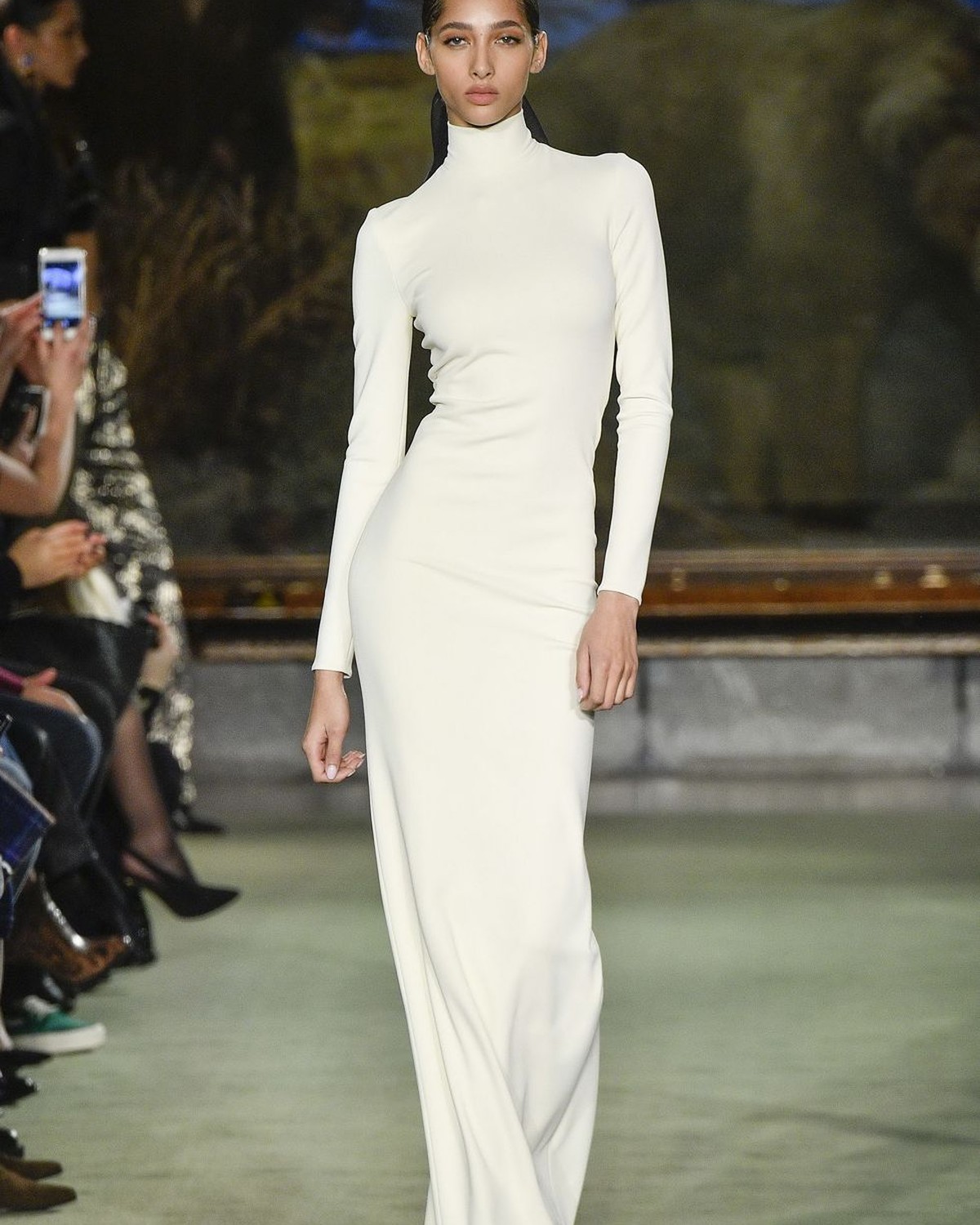
Designer gowns: Finding your kind of entrance
Designer gowns can feel easier to choose when you start with the shape and mood of the occasion.
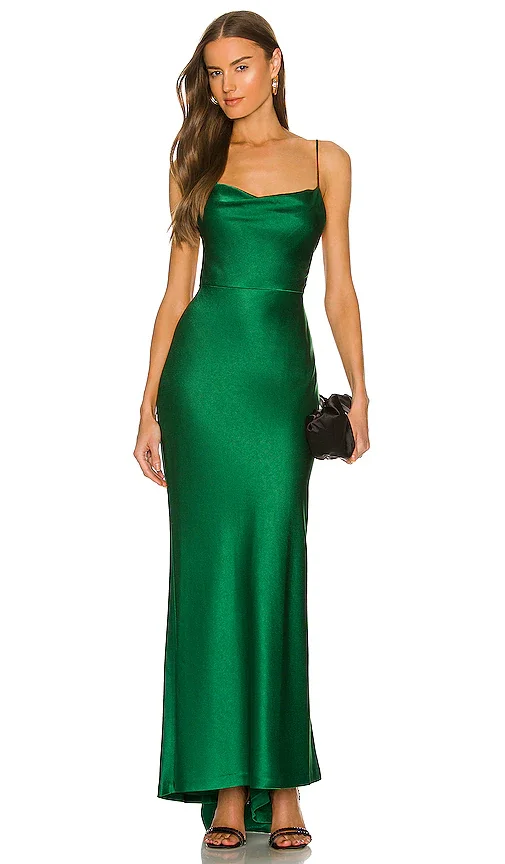
Shape Makes the Entrance
The Metropolitan Museum of Art dates Christian Dior's New Look to 1947, describing its rounded shoulders, cinched waist, and very full skirt. I like that reminder that a formal silhouette can carry a point of view before any styling happens. The designer gowns here move in different directions, from pared-back silk to visible volume, so the first useful question is not what is most dramatic, but what kind of entrance feels natural to you.
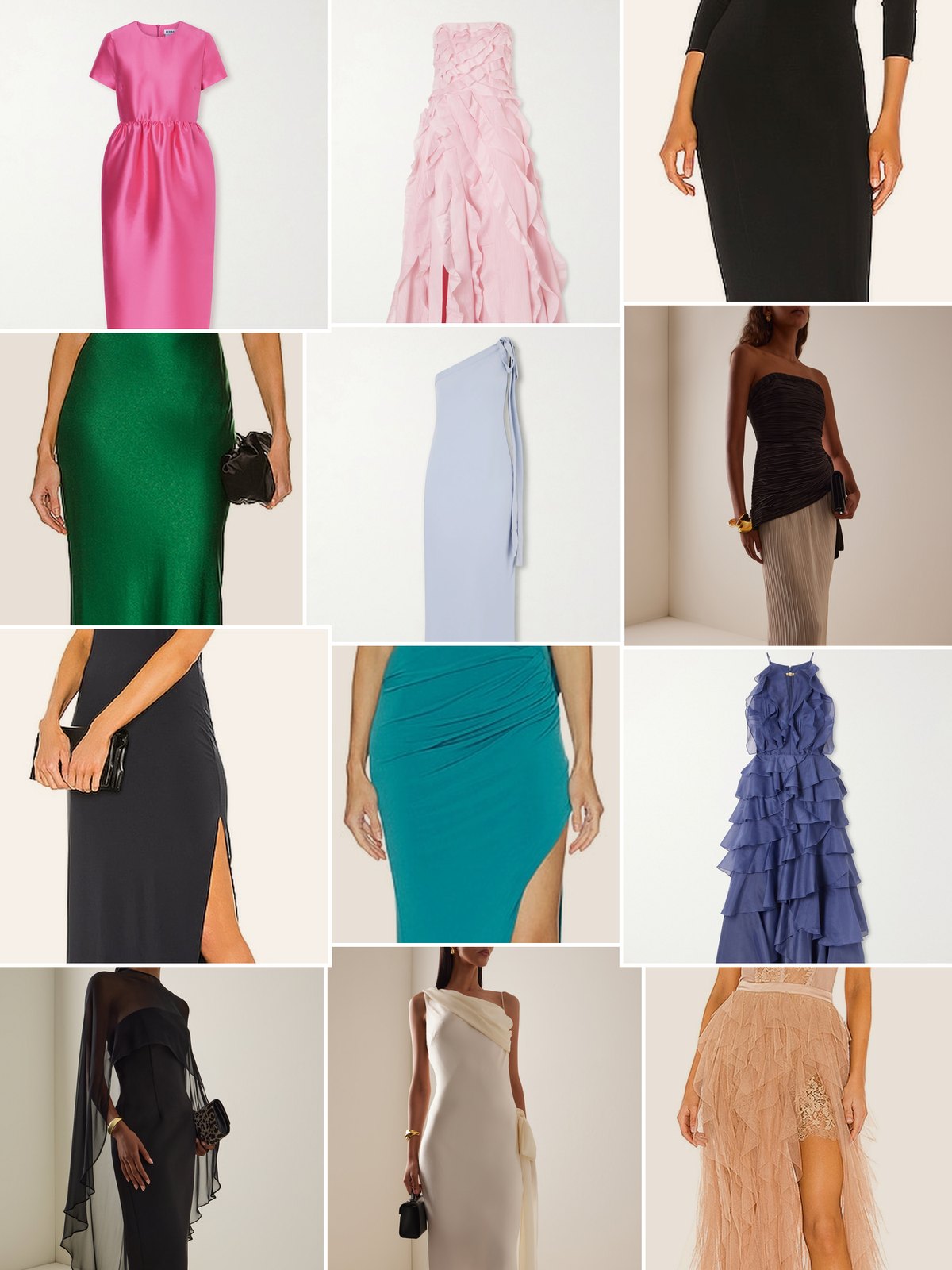
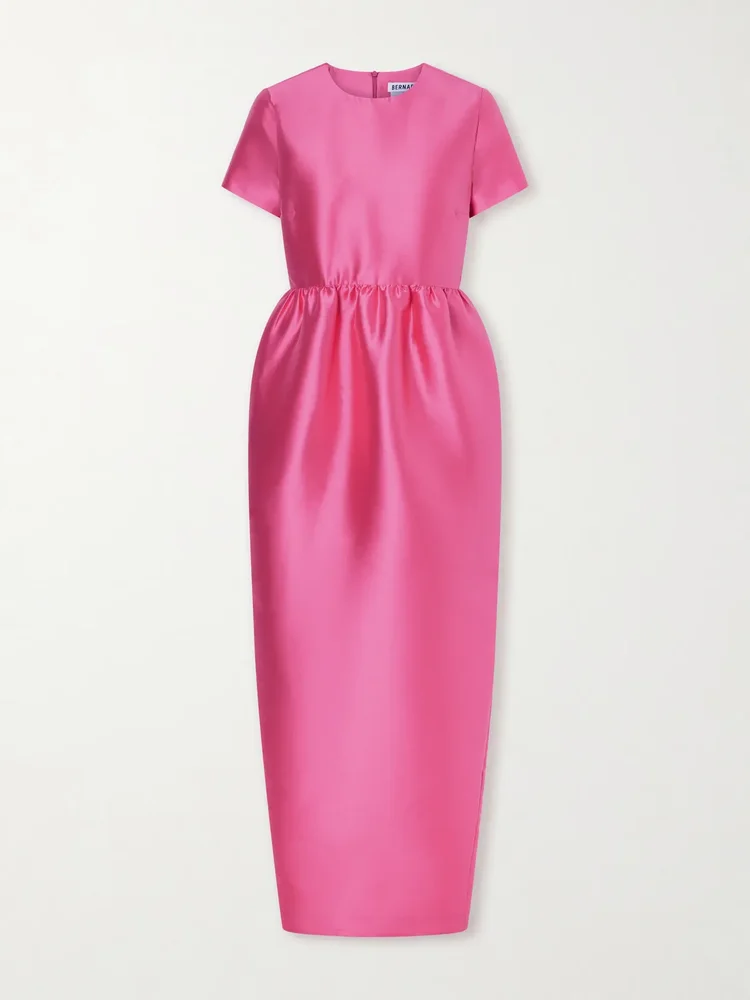
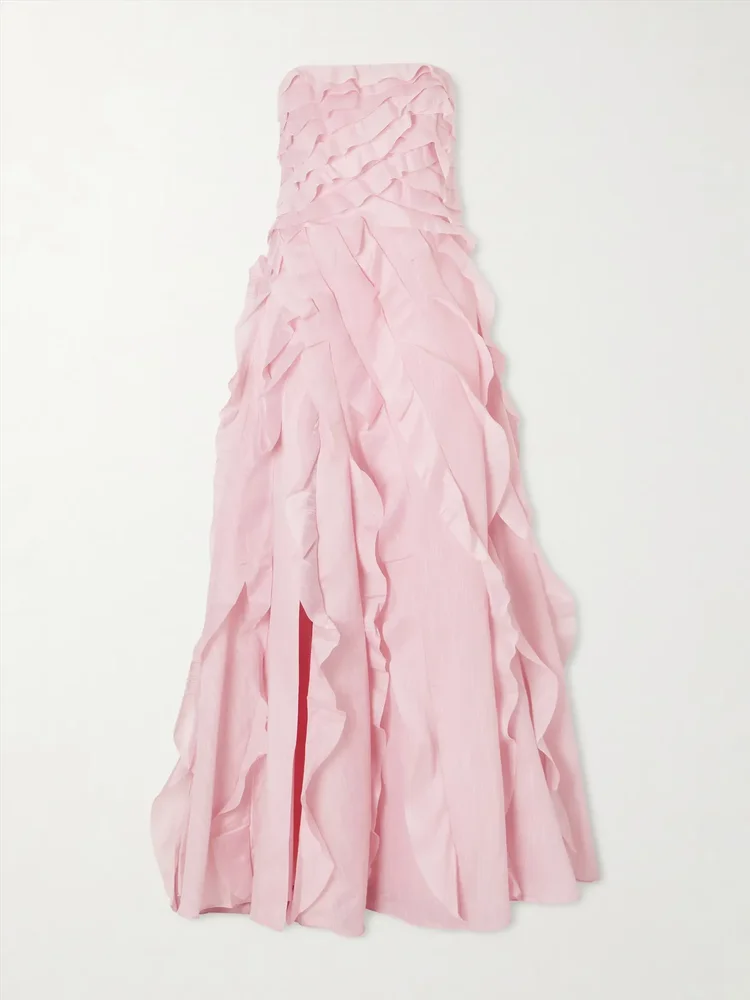
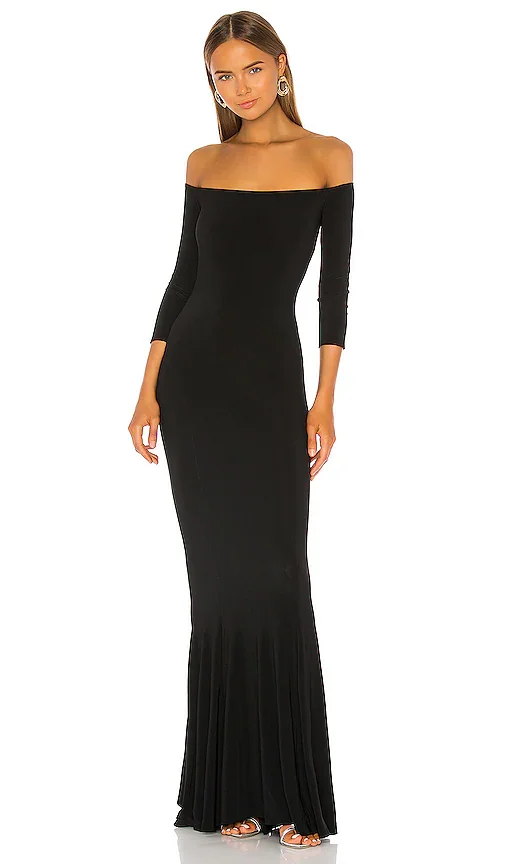
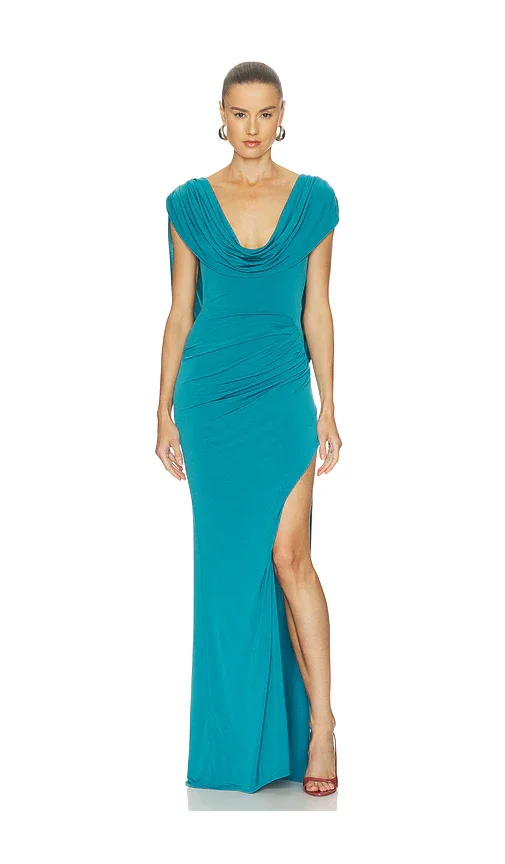
BERNADETTE's Lexi silk blend gown gives the group a silk-blend starting point, while Aje's Allairie strapless ruffled shirred faille gown is for someone who wants the bodice and ruffles to shape the mood. Norma Kamali's Off the Shoulder Fishtail Gown changes the line again, with an off-shoulder neckline and a fishtail finish named right in the title. Alice + Olivia's Montana Maxi Gown offers a maxi-length alternative without a more elaborate silhouette spelled out in its name.
I would start by matching the gown to the room: a close, seated dinner asks for a different kind of ease than a long reception with space to move. Try sitting and taking a full step in the silhouette you are considering, then imagine the shoes you will actually wear. The best choice is the one whose shape makes you feel present, not preoccupied with adjusting it.
A Detail That Leads
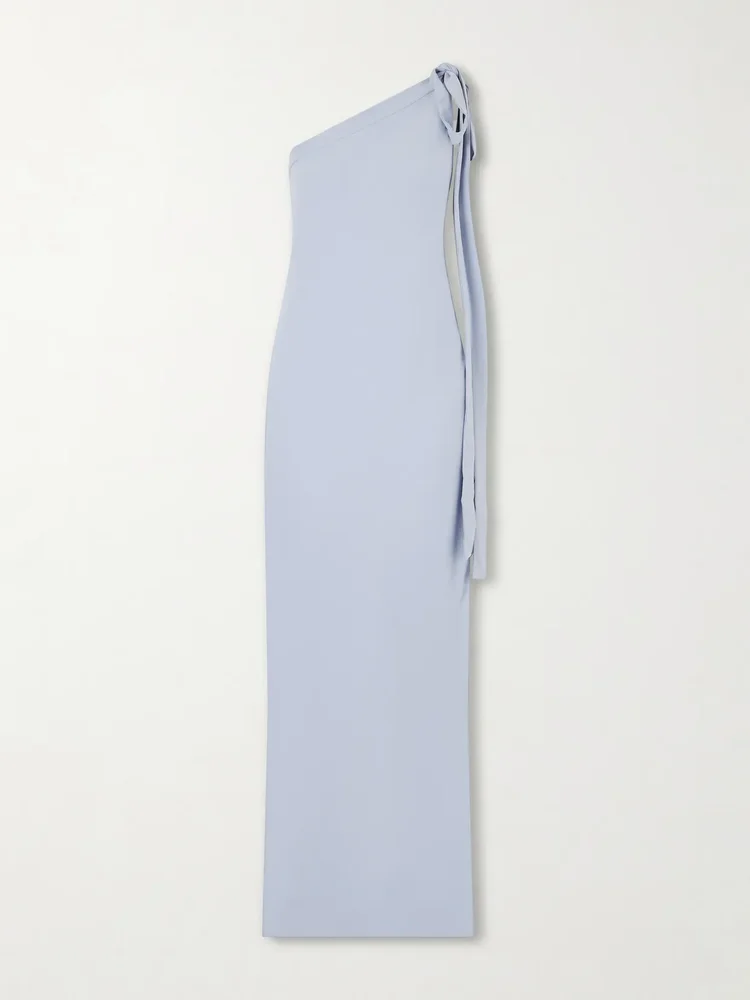
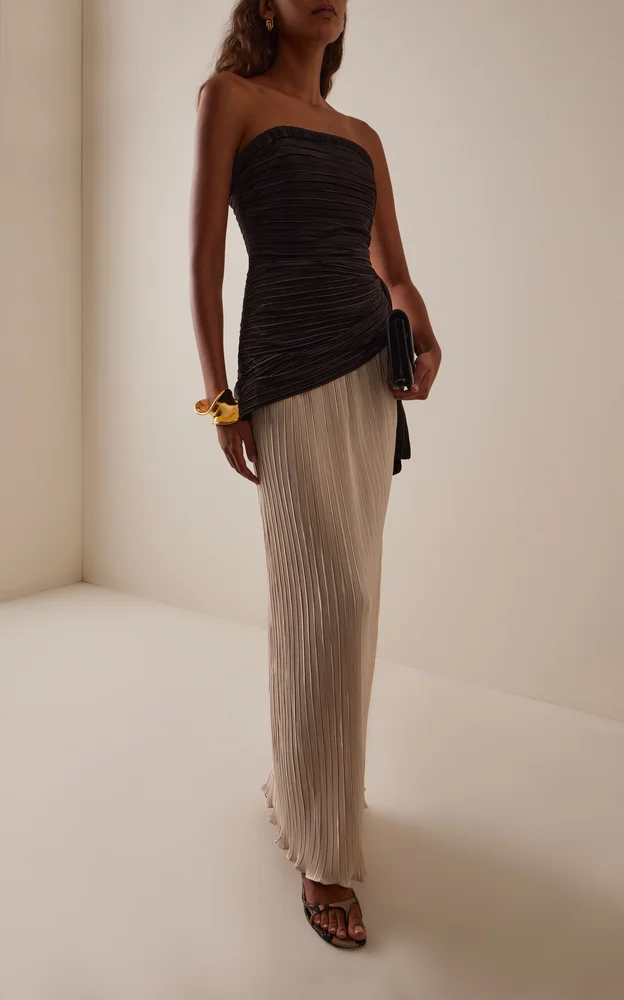
In this next group, designer gowns use one clear detail to establish the look. BERNADETTE's Alexander one shoulder bow detailed crepe gown puts the bow and asymmetrical neckline up front, while SIMKHAI's Laia Plisse Bustier Gown begins with a bustier shape and pleating. I would let one of those details lead instead of loading on extra ornament.
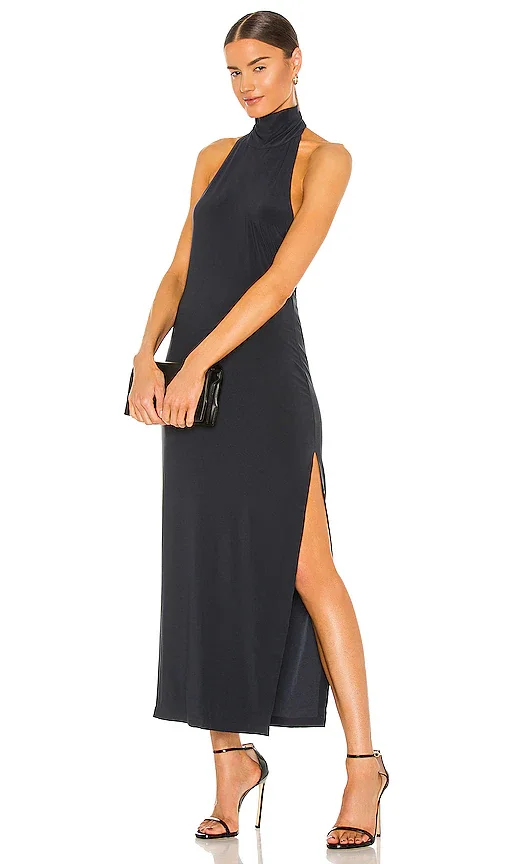
Norma Kamali's Halter Turtle Side Slit Gown brings a halter neckline and side slit into the same idea, which reads as a more graphic line than the bow or pleats. Katie May's Petranelle Gown is the name to consider when you want a gown without a specific silhouette announced in the product title. That can make it a useful foil for the more descriptive options, especially if the event itself already supplies plenty of atmosphere.
A practical test: check whether the neckline and any slit still feel comfortable when you take a long step, reach for a glass, or sit down. What I would skip is choosing the bow, pleating, halter, and slit all as competing focal points in one outfit. Keep jewelry quiet when a neckline is doing the work, and let the dress decide whether the rest should be sleek or soft.
Volume, Without the Fuss
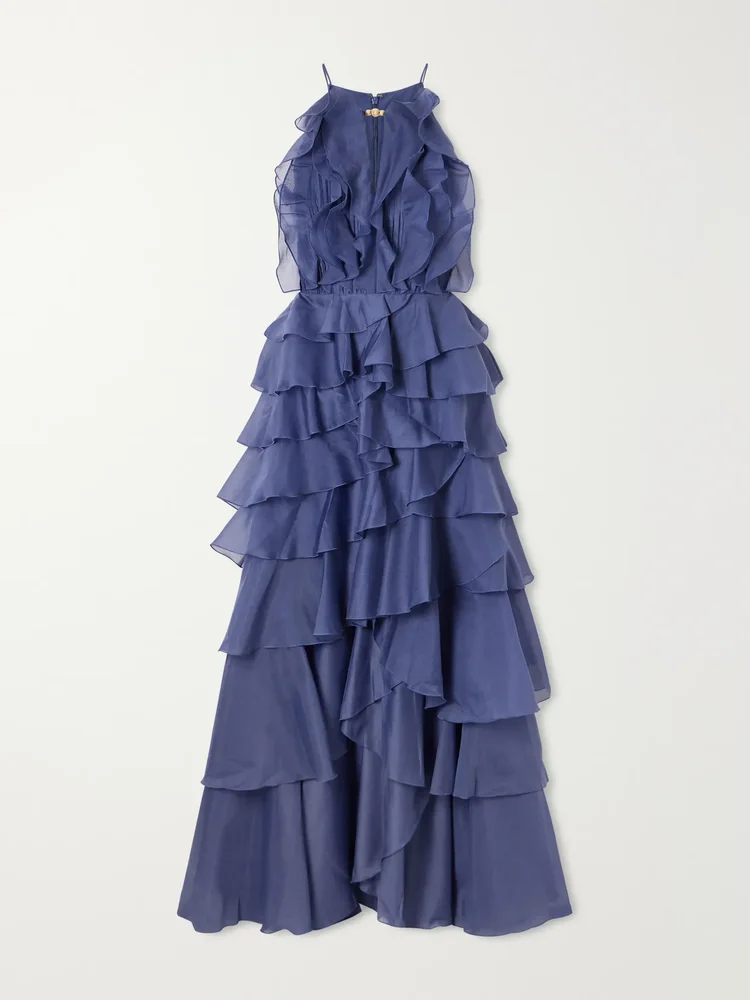
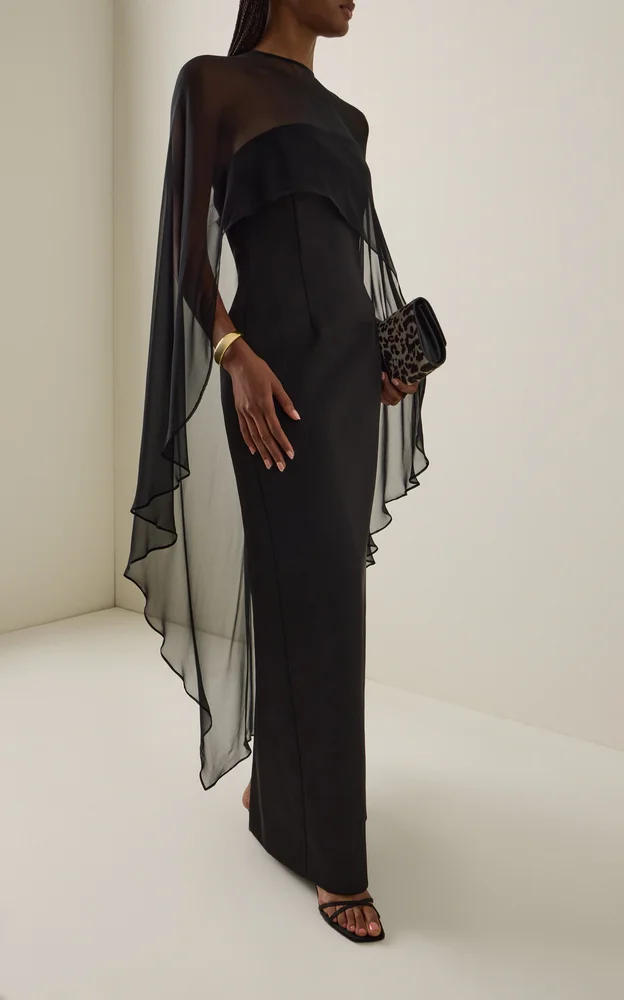
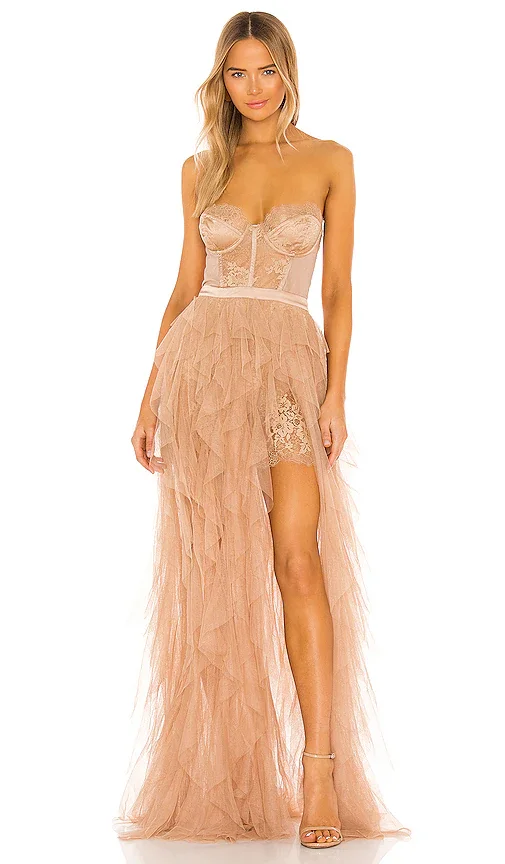
The third group takes designer gowns toward texture and movement. Aje's Cleo ruffled tiered organza gown stacks two ideas named in the title, ruffles and tiers, in a light organza fabric. SIMKHAI's Fiora Cape Chiffon Gown gives you a cape detail and chiffon, a different way to make the silhouette move without relying on a tiered skirt.
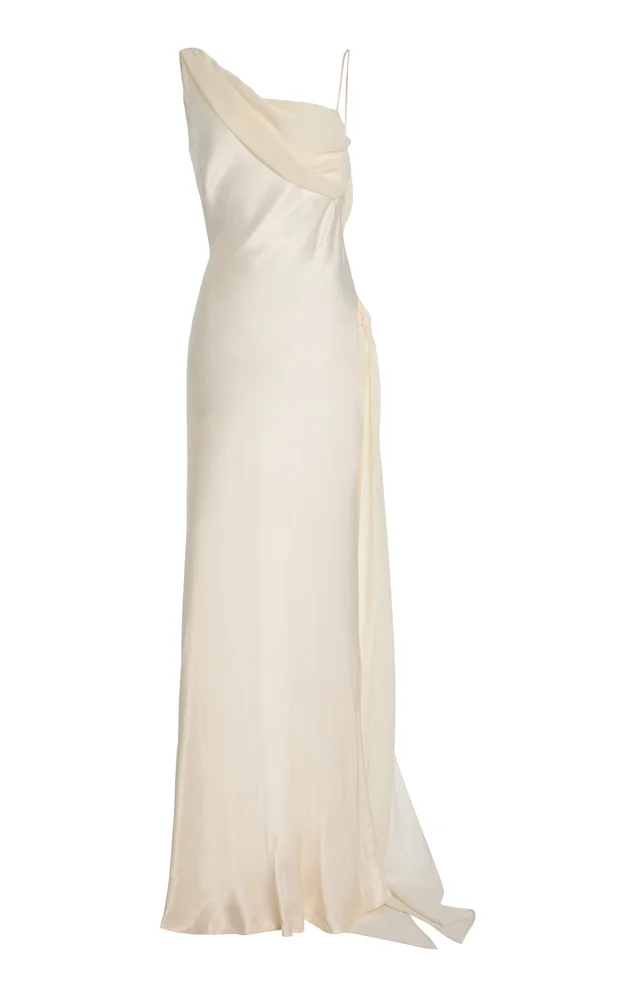
Arcina Ori's Helena Chiffon-Detailed Satin Gown combines chiffon detail with satin in its name, making it a thoughtful middle ground if you want contrast without a cape or a cascade of ruffles. For Love & Lemons X REVOLVE Bustier Gown points toward a bustier shape, a useful counterpoint to the flowing details elsewhere in the set. I would compare these by deciding whether you want the fabric to frame your movement or the bodice to anchor it.
Try the gown with the underlayer and shoes you plan to wear, then walk a few steps and turn once. What I would skip is adding a dramatic wrap to a cape or ruffled gown; too many moving layers can crowd the shape. A simple clutch and one considered piece of jewelry are often enough to let the fabric and silhouette speak clearly.
Choose the Feeling First
Designer gowns are easier to choose when you know what you want them to do: sharpen the line, soften it, or give the room a little drama. These twelve options offer different starting points, from a silk blend or maxi to pleating, a fishtail, ruffles, and chiffon details.
I would save the final decision for a full-length try-on with the shoes and underlayer already in mind. If you can sit, walk, and forget to fuss with the dress for a moment, its shape is probably working with you. Let that ease be the deciding detail, and let the gown set the tone for the evening.