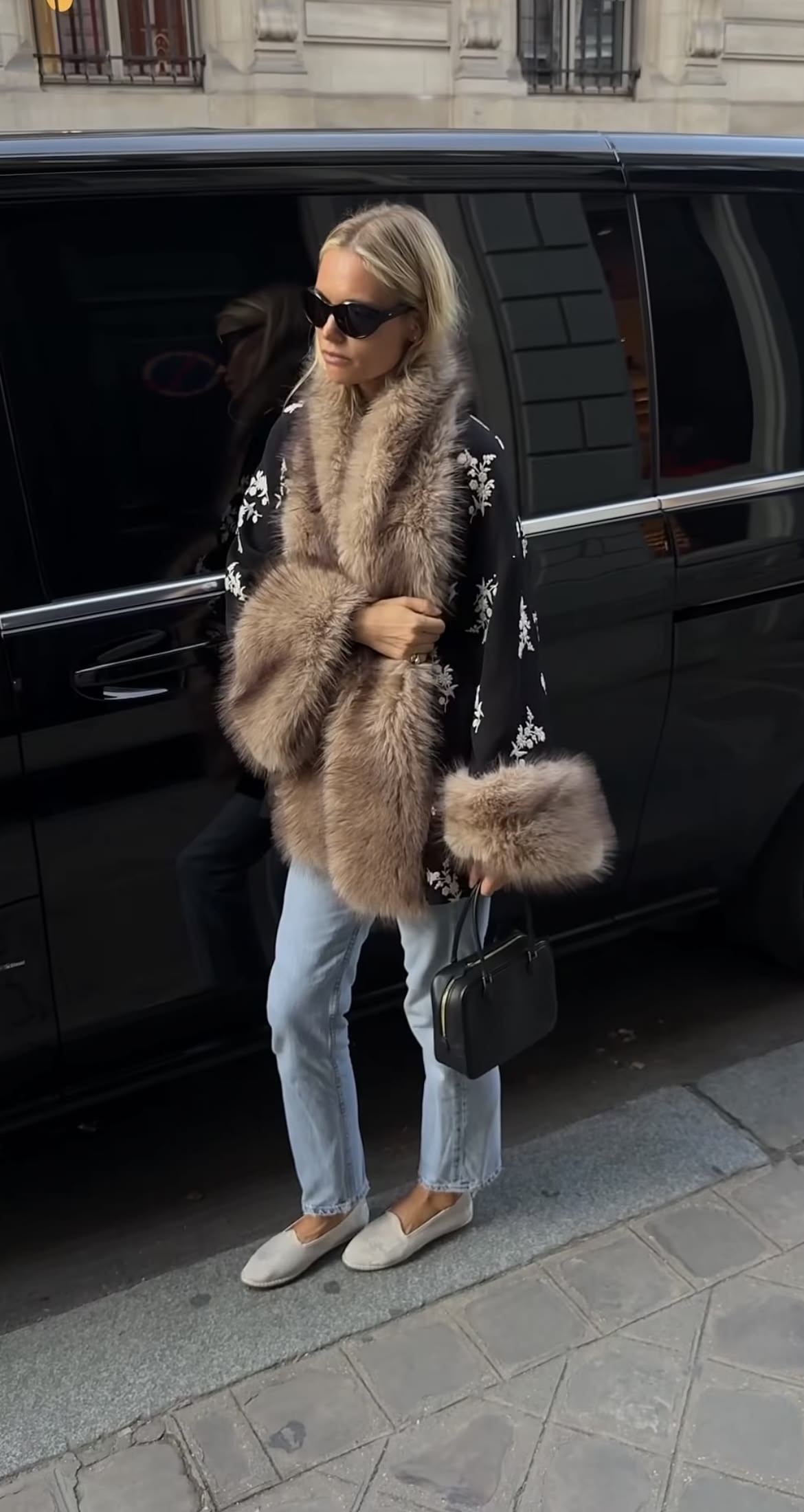
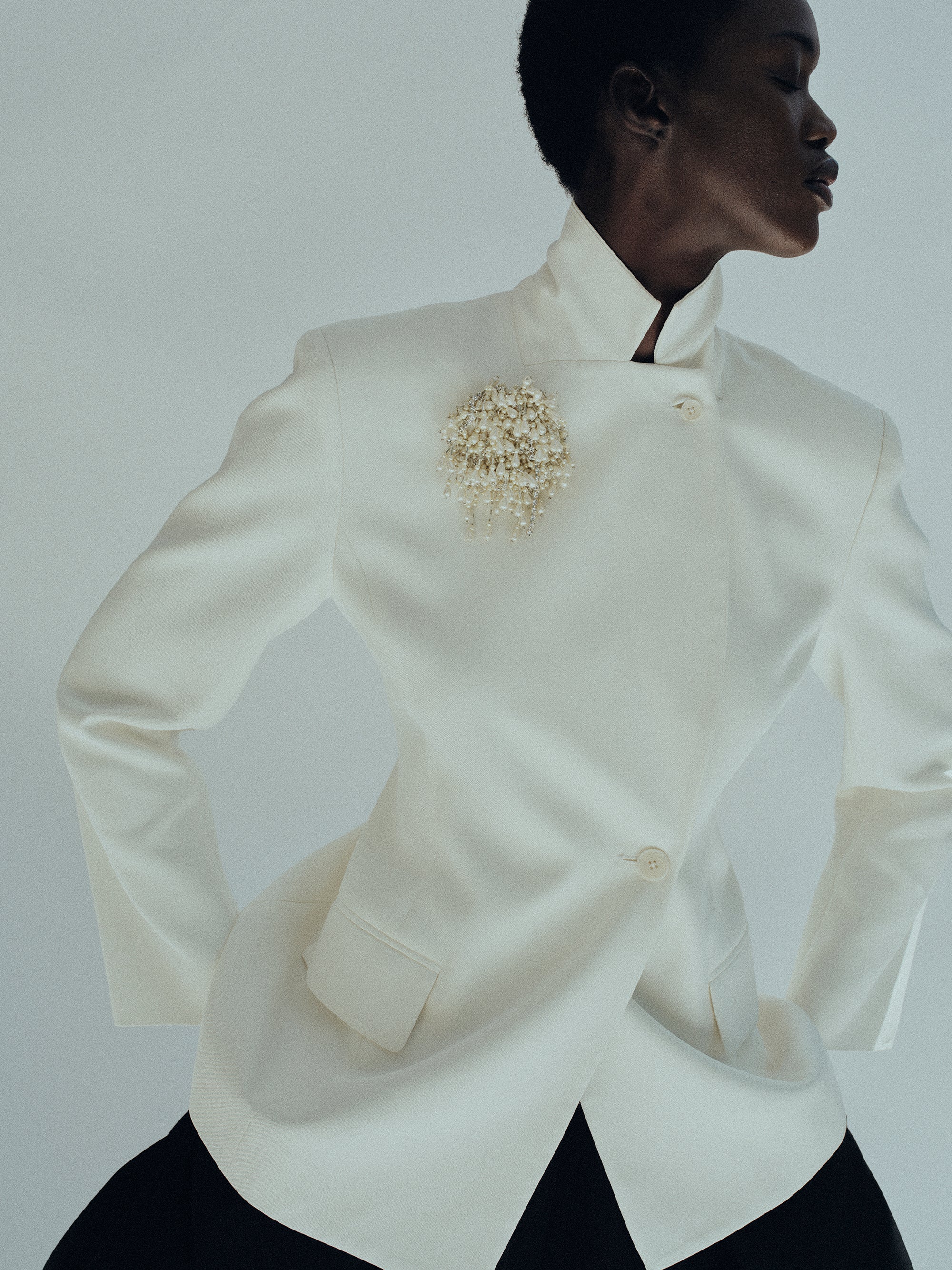
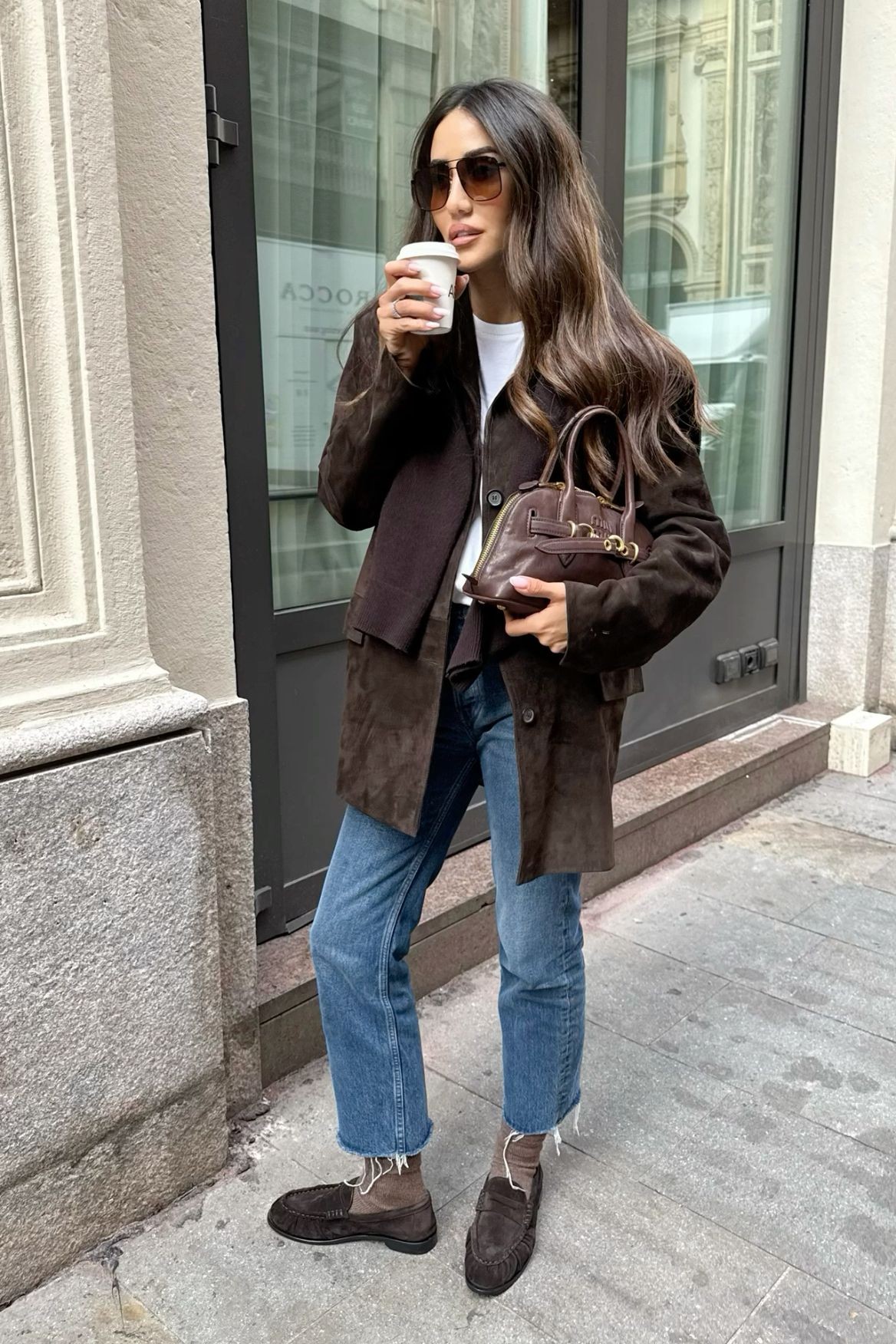
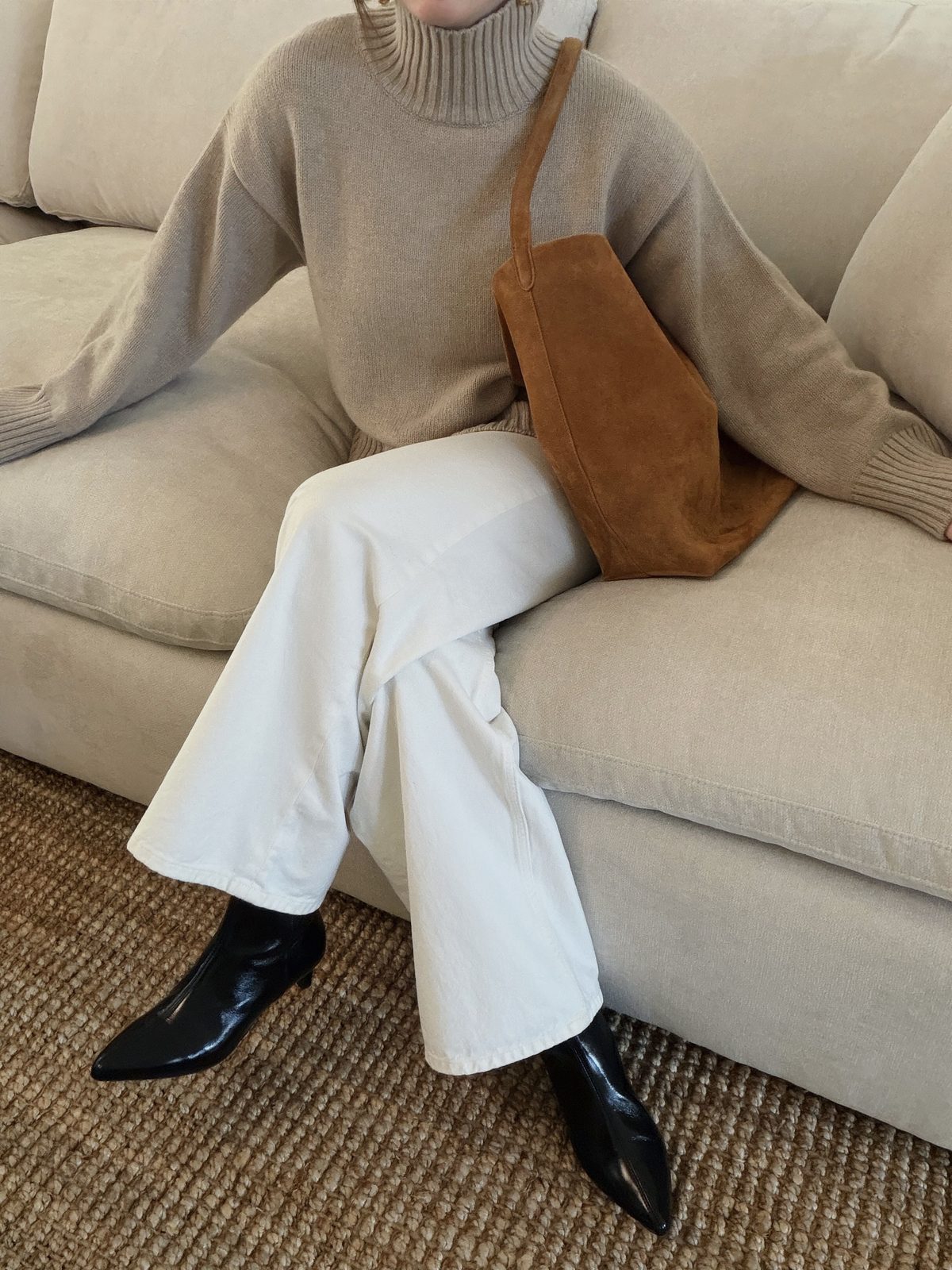
Embroidered tops bring texture and story into an outfit without asking the rest of it to compete. This edit helps you compare airy cotton, linen bustiers, and softly polished blouses by the way their stitching changes the mood.
Embroidered tops: A little history in every stitch
Embroidered tops bring texture and story into an outfit without asking the rest of it to compete.
Stitching with a past
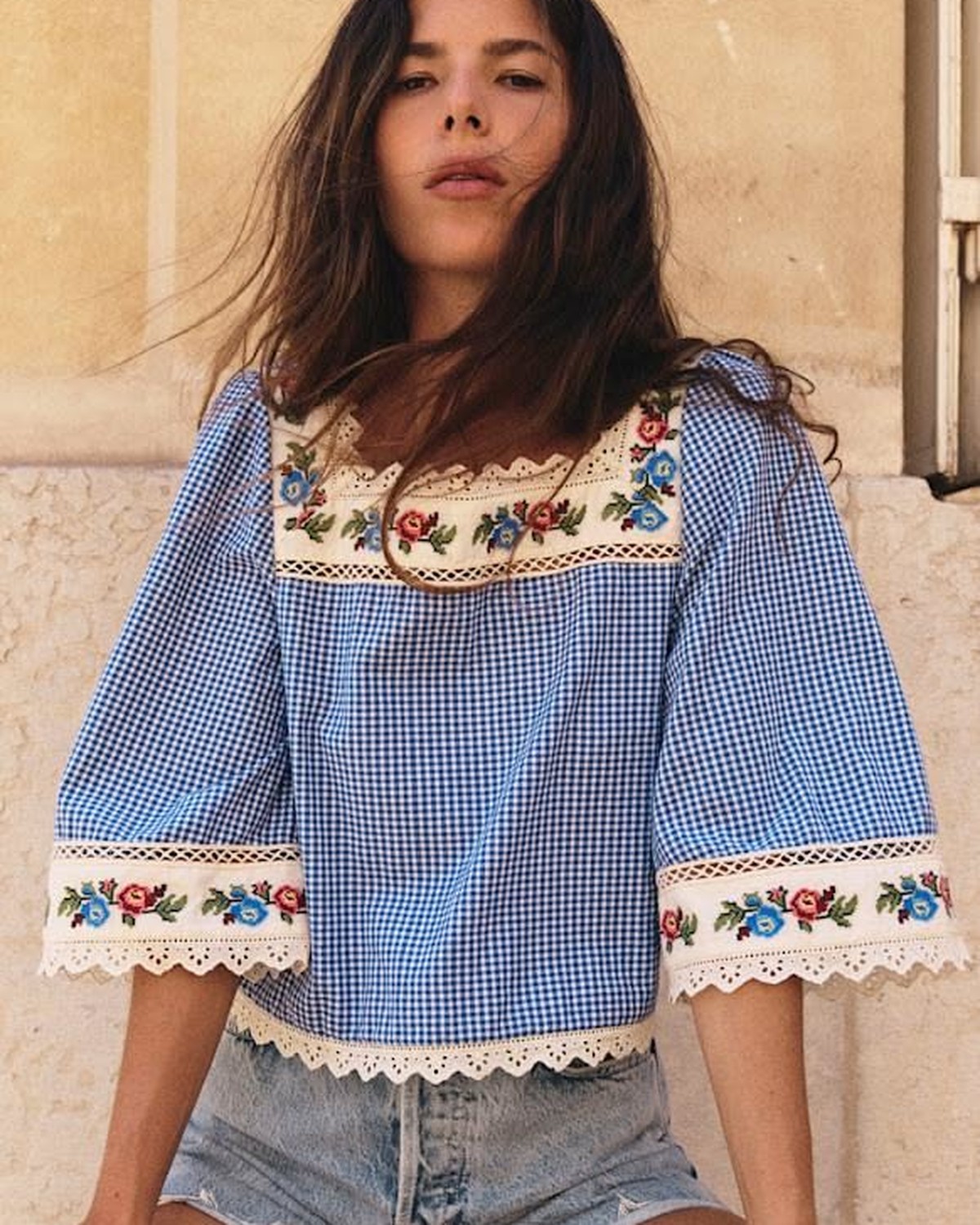
The V&A keeps a British petticoat dated 1725 to 1750 with flowers and peacocks embroidered around its hem in colored worsted thread. That small, wonderfully specific detail makes a good case for embroidery as more than decoration: a few stitches can turn a plain surface into the thing you remember. Embroidered tops work the same way now, especially when the rest of the outfit stays quiet.
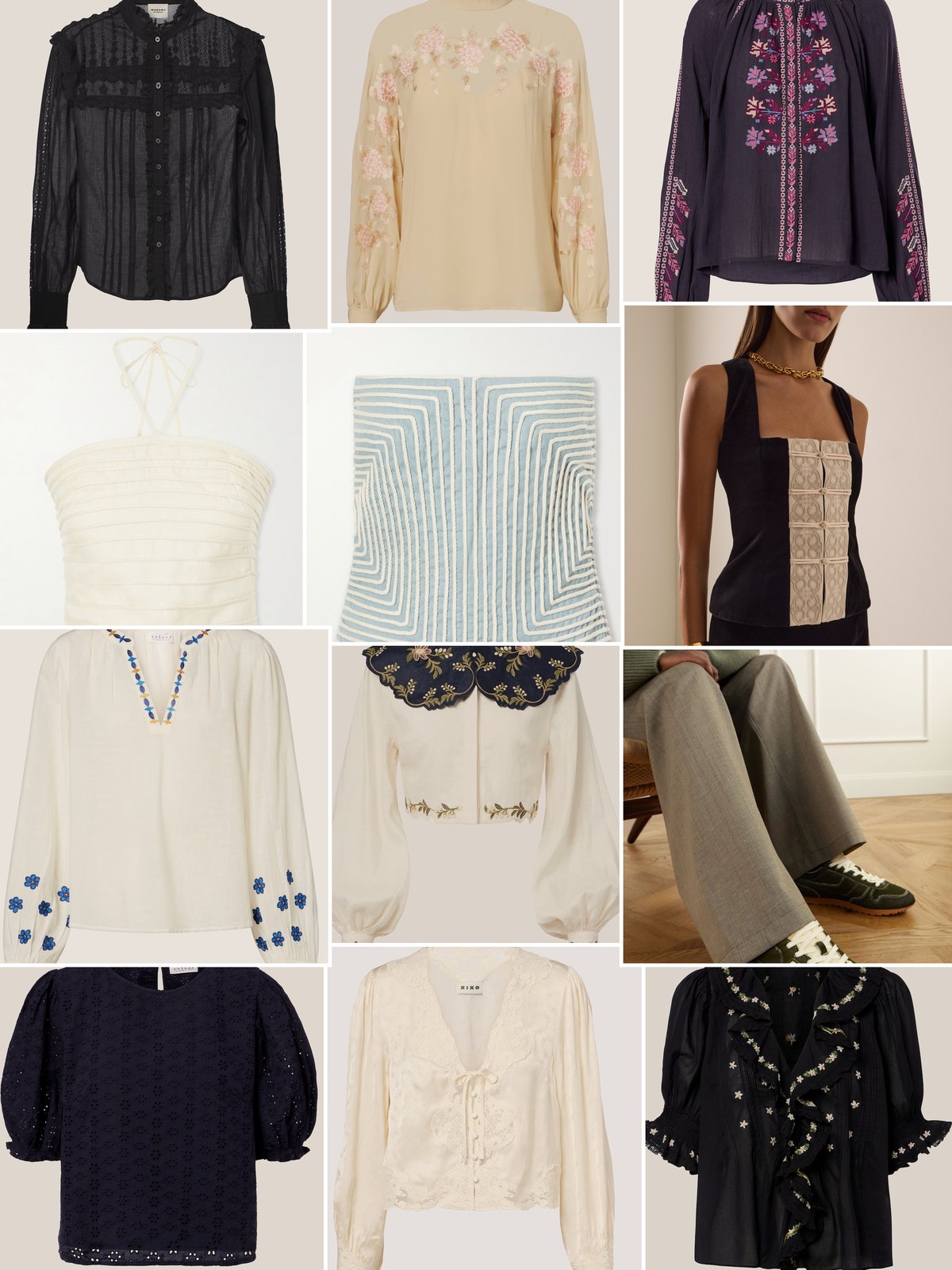
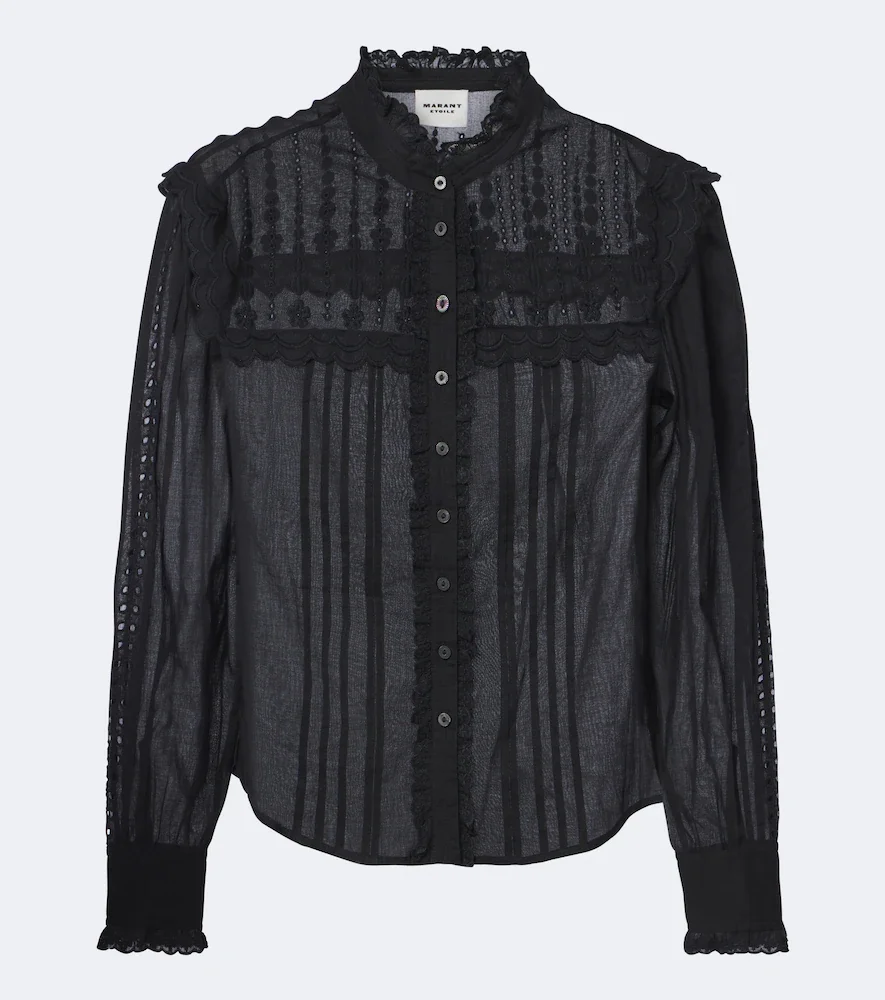
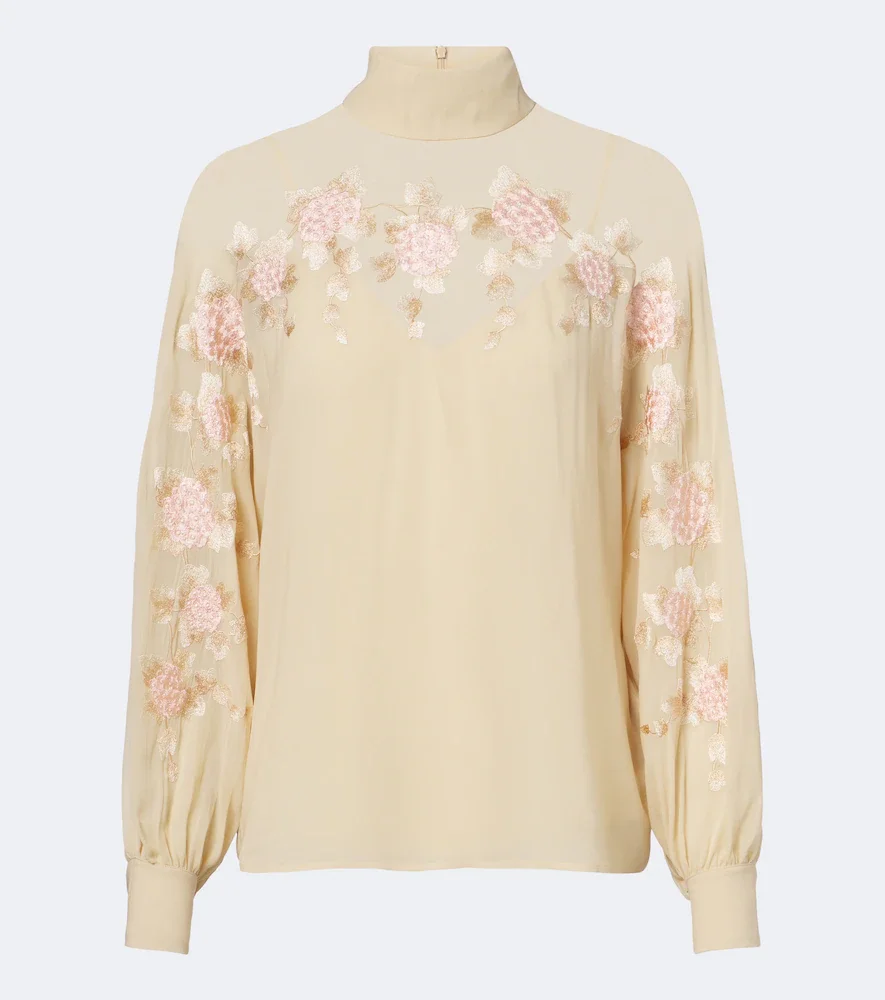
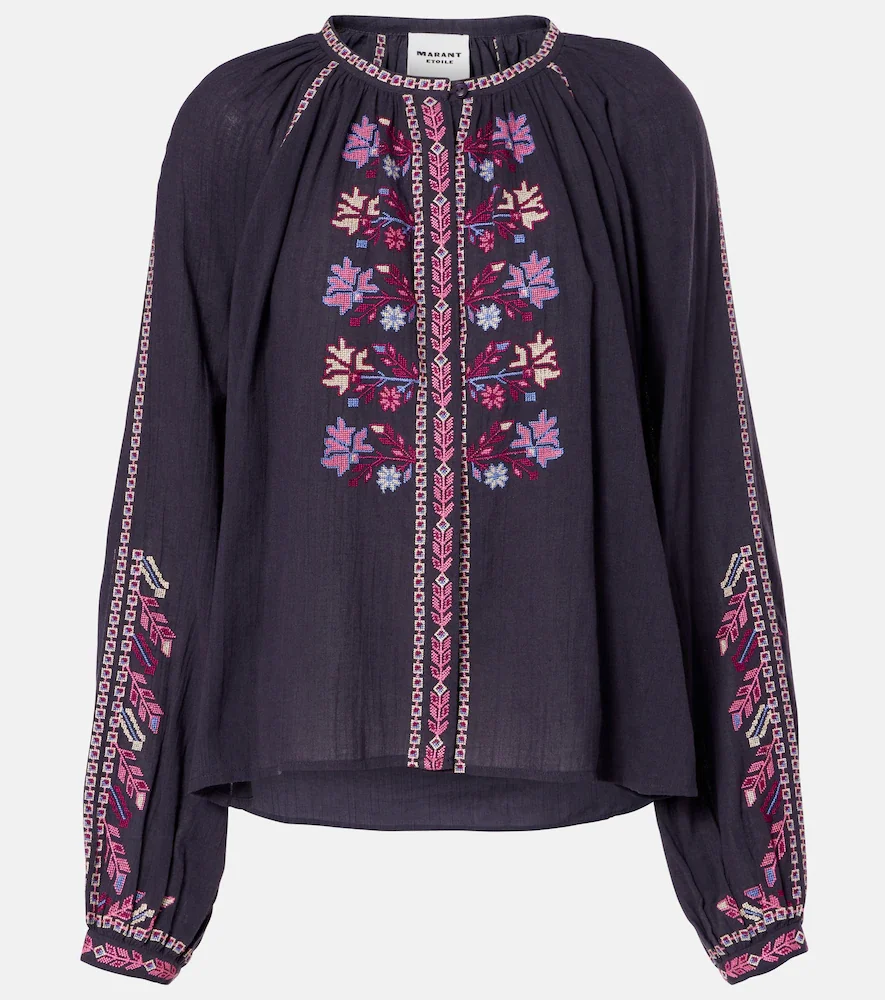
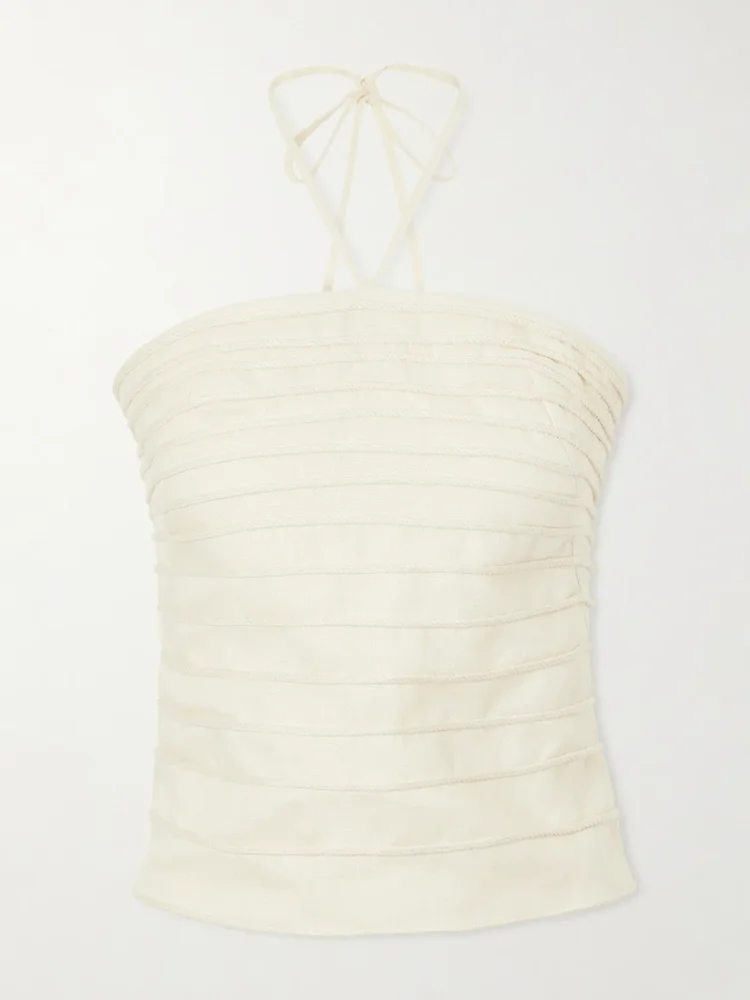
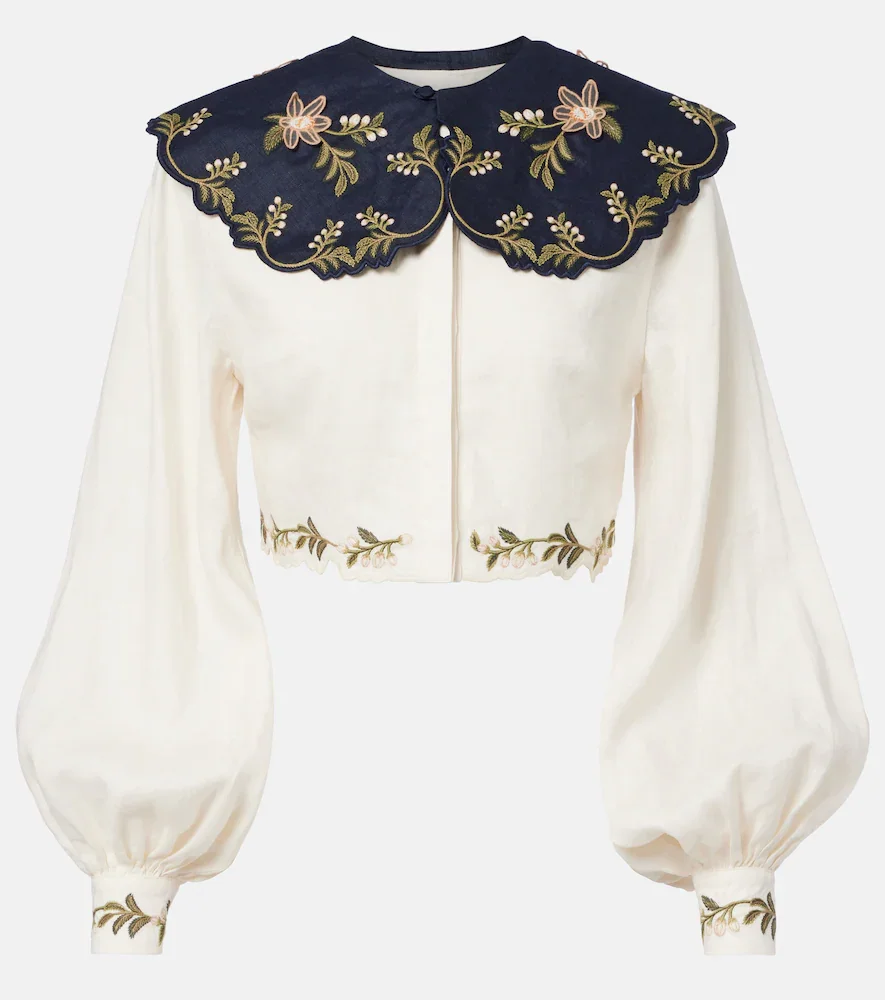
In the first group, Marant Etoile offers two different cotton moods. The Lonzie blouse is made from cotton voile, so its embroidered surface reads airy rather than dense; the Lynne is another cotton blouse, a little more grounded in its silhouette. Zimmermann's Valiant embroidered blouse is the option I would reach for when the top needs to carry the outfit on its own. Andres Otalora's En Tu Luz linen bustier changes the proportion entirely, bringing embroidery into a shaped, closer-to-the-body piece instead of another loose blouse.
The easiest way to make these embroidered tops feel considered is to let the stitchwork have one clear partner: straight-leg trousers, a plain skirt, or denim without extra trim. I would compare the embroidery's scale with the fabric before thinking about color. Fine stitching on voile can disappear against a busy print, while a more pronounced motif can hold its own against solid cotton or linen. The common thread here is contrast: softness against structure, and detail against a calmer base.
Softness and structure
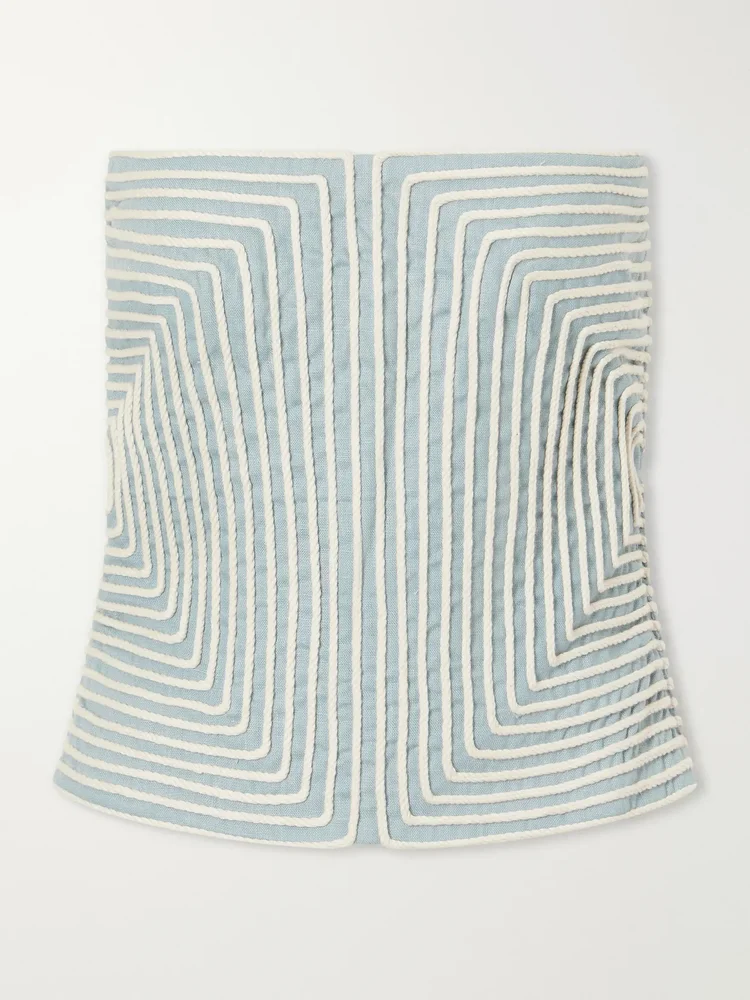
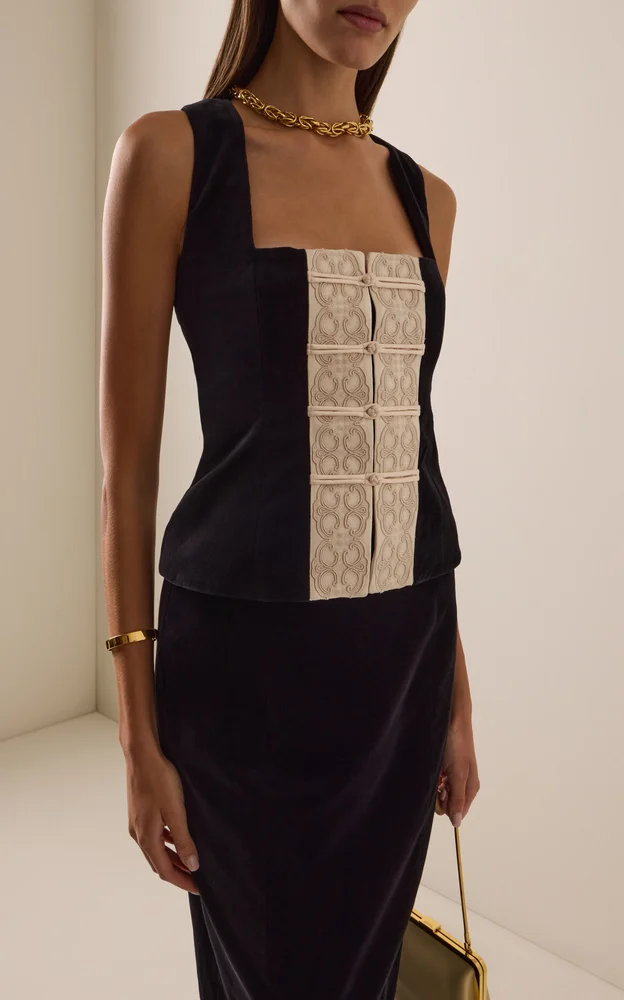
This group moves from daylit cotton to richer texture. Andres Otalora's Nyota Alma mixes linen and cotton in a bustier shape, which gives the stitchwork a little more definition than a floaty blouse. Posse's Florian embroidered cotton velvet top takes the opposite route: velvet brings depth, so the embroidery can read as part of the surface rather than a separate flourish. Velvet's Amani is an embroidered cotton blouse, a flexible middle ground between crisp and plush. Agua by Agua Bendita's Cumbre is linen, so the fabric itself suggests a breezier, more relaxed finish.
For embroidered tops in this mix, I would decide on the bottom first. A bustier can balance a fuller trouser, while velvet feels good beside matte denim or a simple wool skirt; the two linen blouses want uncomplicated shapes that let their pattern show. Check where a neckline ends against a necklace or jacket lapel, since detailed fabric can bunch visually at the same spot. The pieces differ in texture, but each rewards a little space around its strongest detail. What I would skip is stacking a loud print, ornate jewelry, and dense embroidery all at once. One lead detail is enough, and a clean belt or a single textured bag can do the supporting work.
An embroidered detour
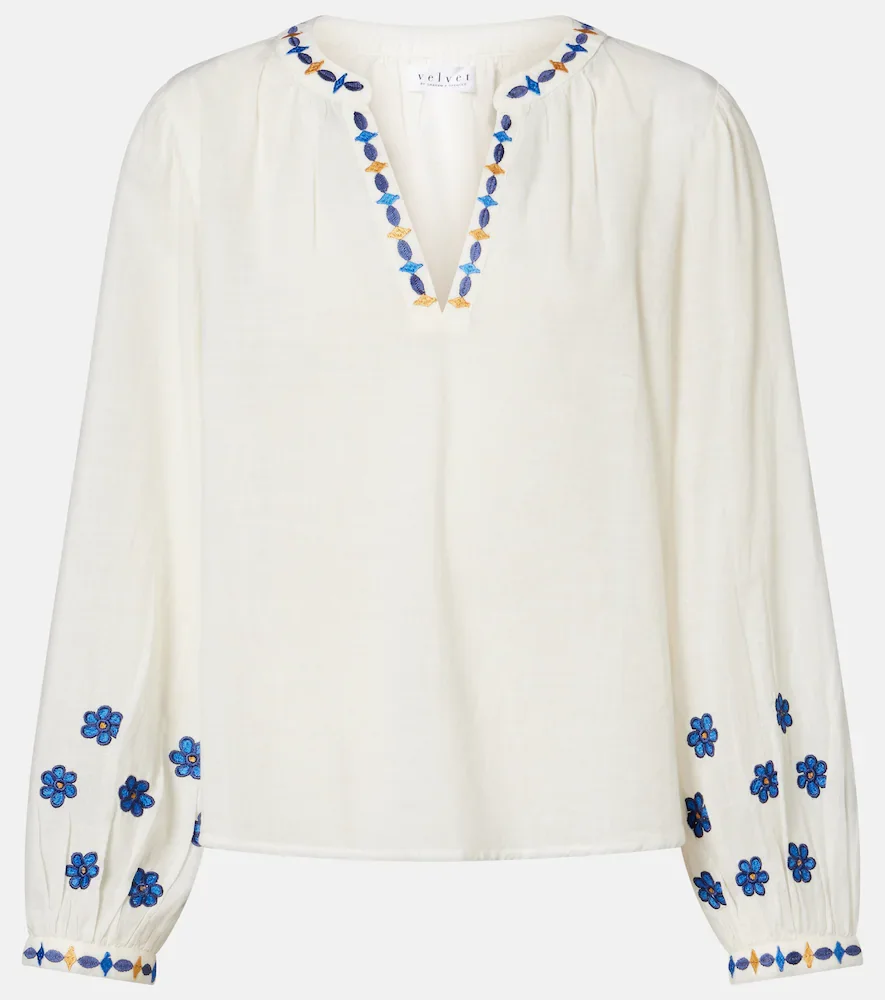
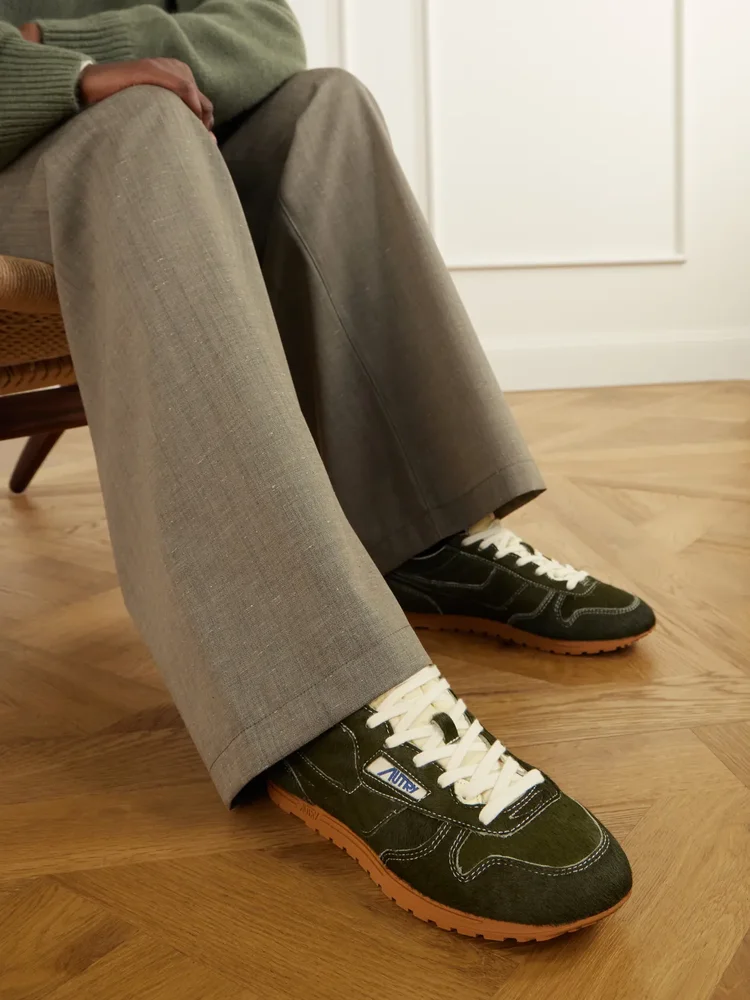
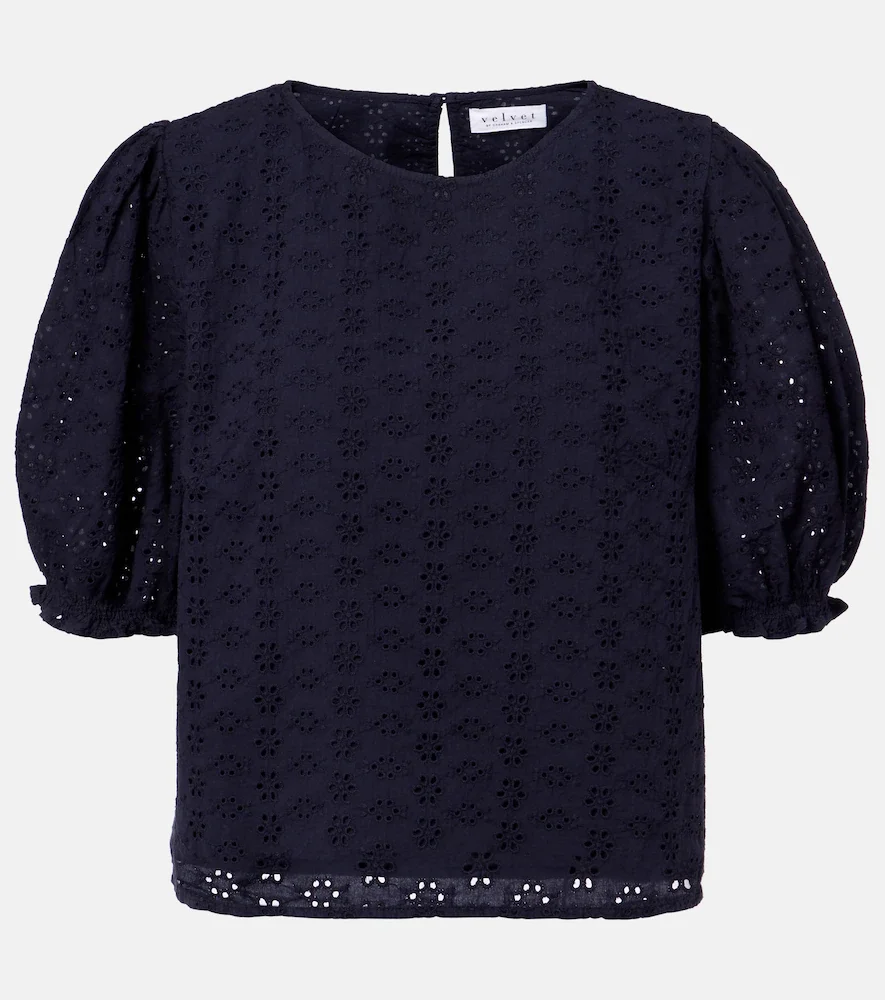
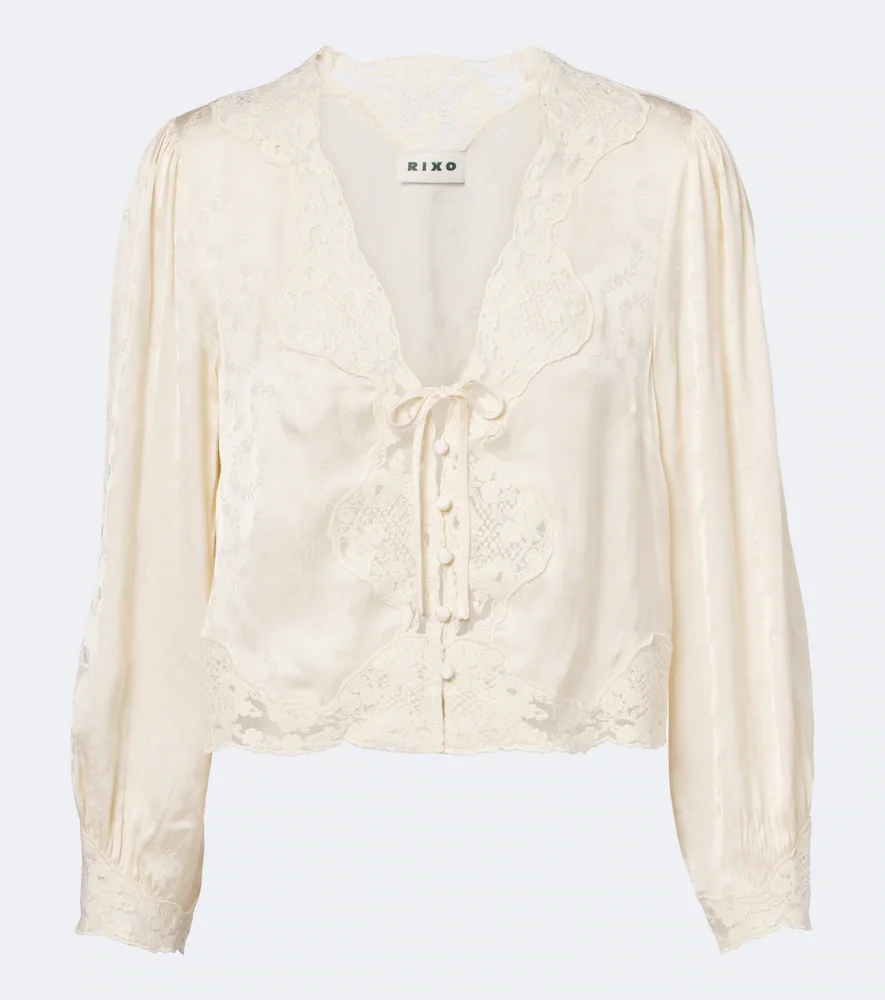
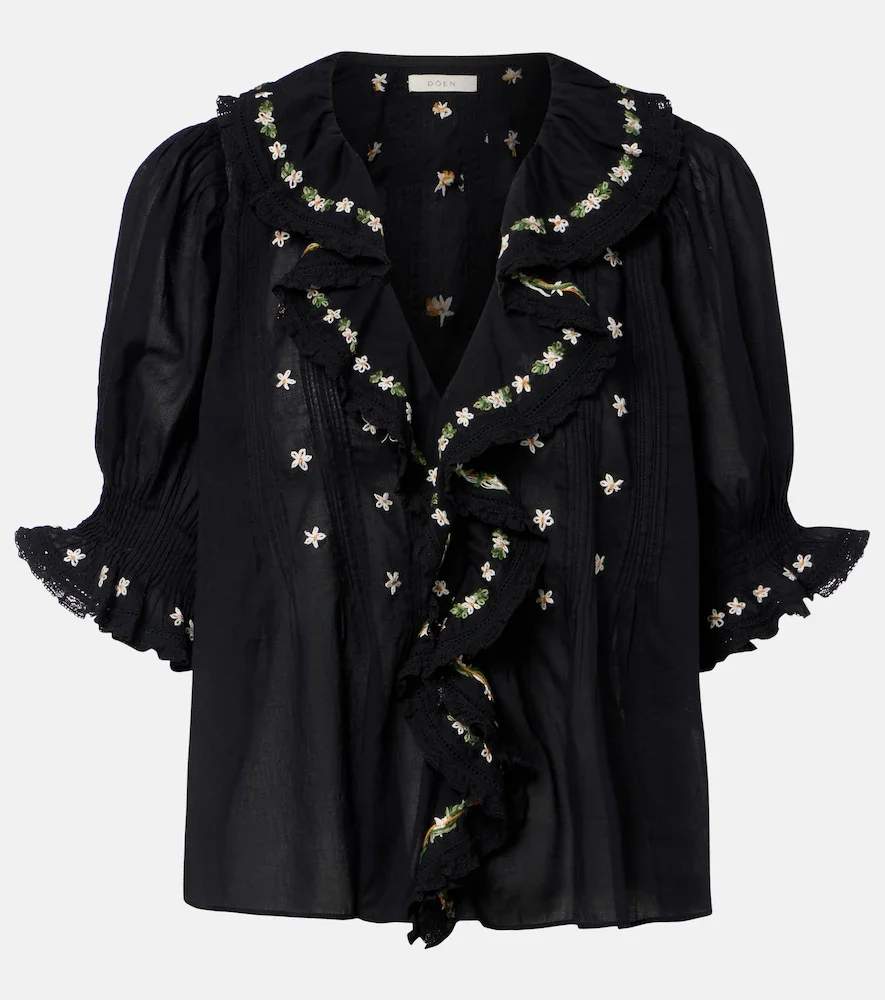
This group has one unexpected turn: Autry's Windspin Low is a calf-hair sneaker with logo embroidery, not another blouse. I like its place here because it shows how a stitched mark can move from an outfit's focal point to a small finish at the foot. Velvet's Dalyn is a cotton blouse, while Rixo's Tove adds floral embroidery to satin, a more dressed-up counterpoint. Doen's Hettie combines floral embroidery with ruffles and cotton, so it has the most romantic outline of the group.
When choosing embroidered tops from this set, consider what texture you want near your face. Satin catches light, cotton keeps the effect softer, and ruffles make a pattern feel even more expressive. Try pairing the Tove with a plain, smooth bottom and letting Hettie's ruffle stand alone; for the Autry sneaker, repeat one color from its embroidery elsewhere rather than adding another obvious motif. What I would skip is matching embroidery head to toe. A little echo feels intentional, while exact repetition can turn the outfit into a costume. If the top already carries flowers, let shoes and jewelry speak in shapes or texture instead.
Let the detail lead
Embroidered tops are easiest to choose when I start with the feeling I want rather than a rule about what belongs together. Cotton voile and linen offer a light hand; velvet and satin add a denser, more occasion-minded note; the bustier shapes give the detail a sharper outline. Even the Autry sneaker reminds me that stitching does not have to live only at the center of an outfit. Pick one embroidered piece, give it room, and let the rest of the look answer quietly. The point is not to make every detail match, but to let one considered stitch change the rhythm of a familiar combination.