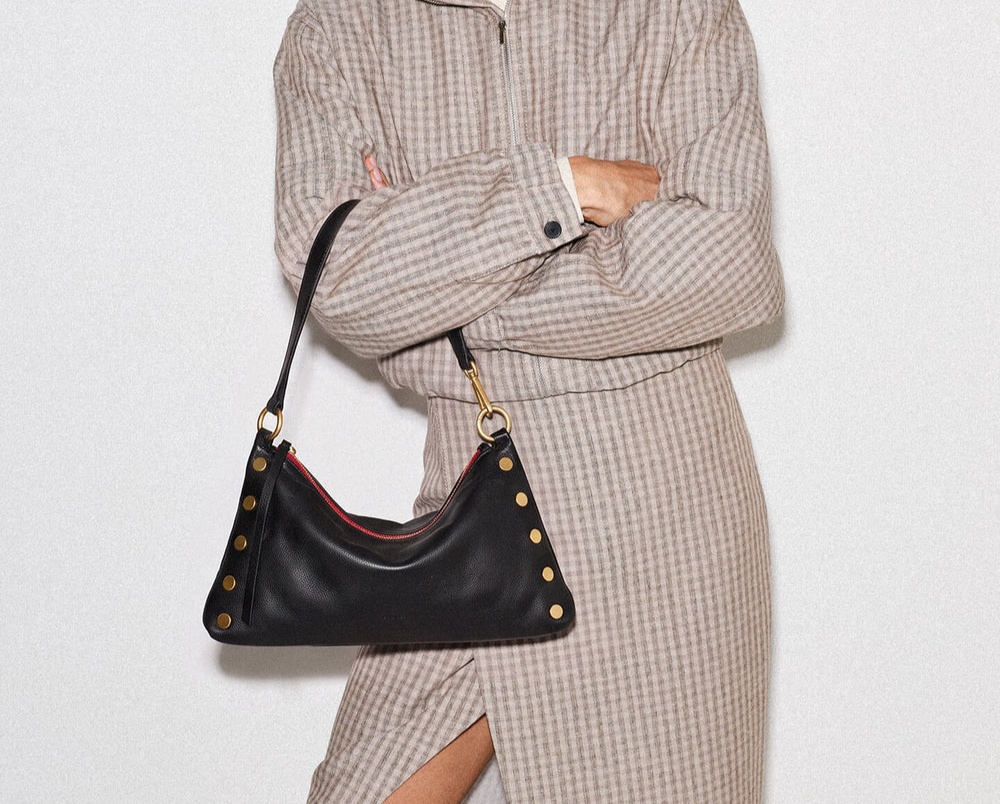
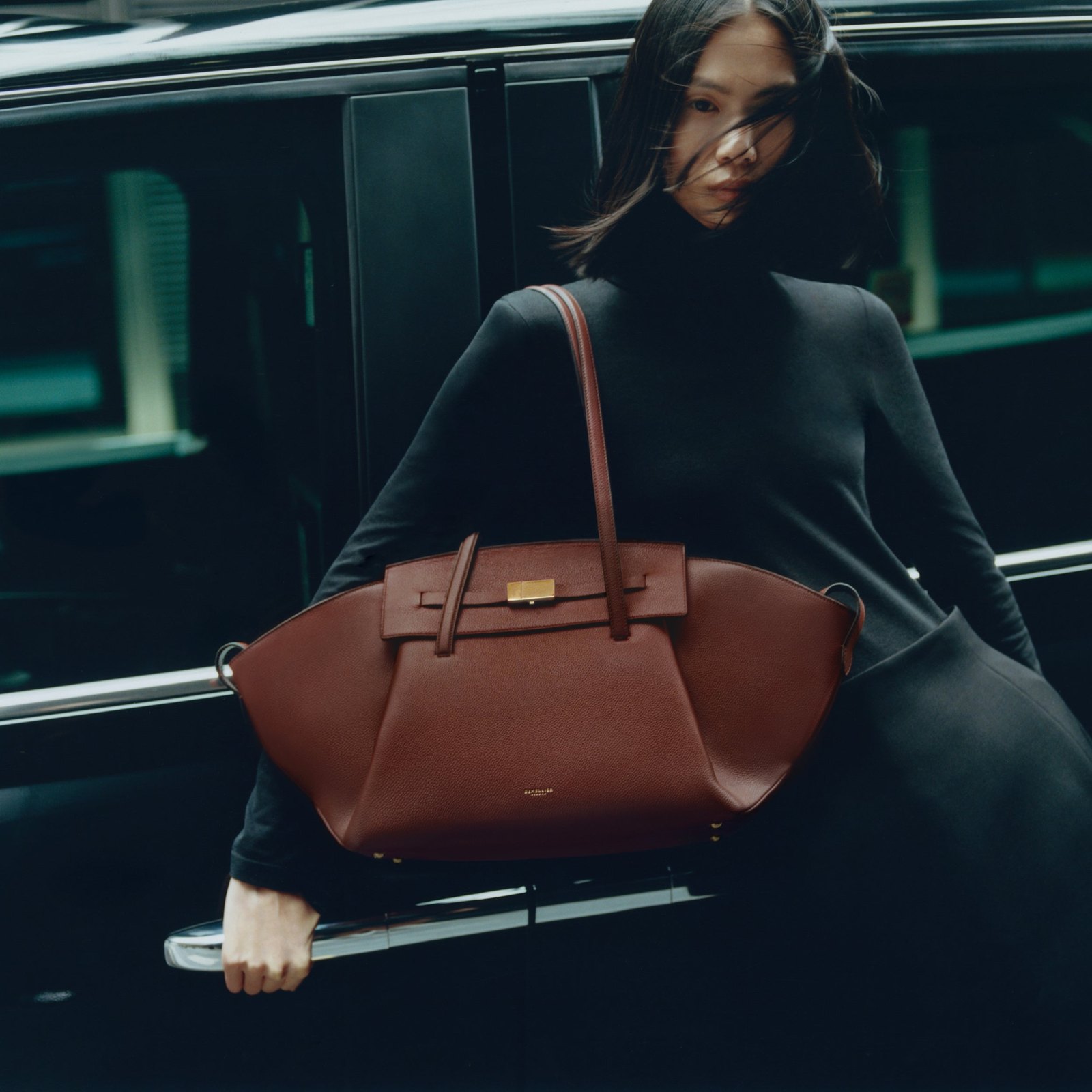
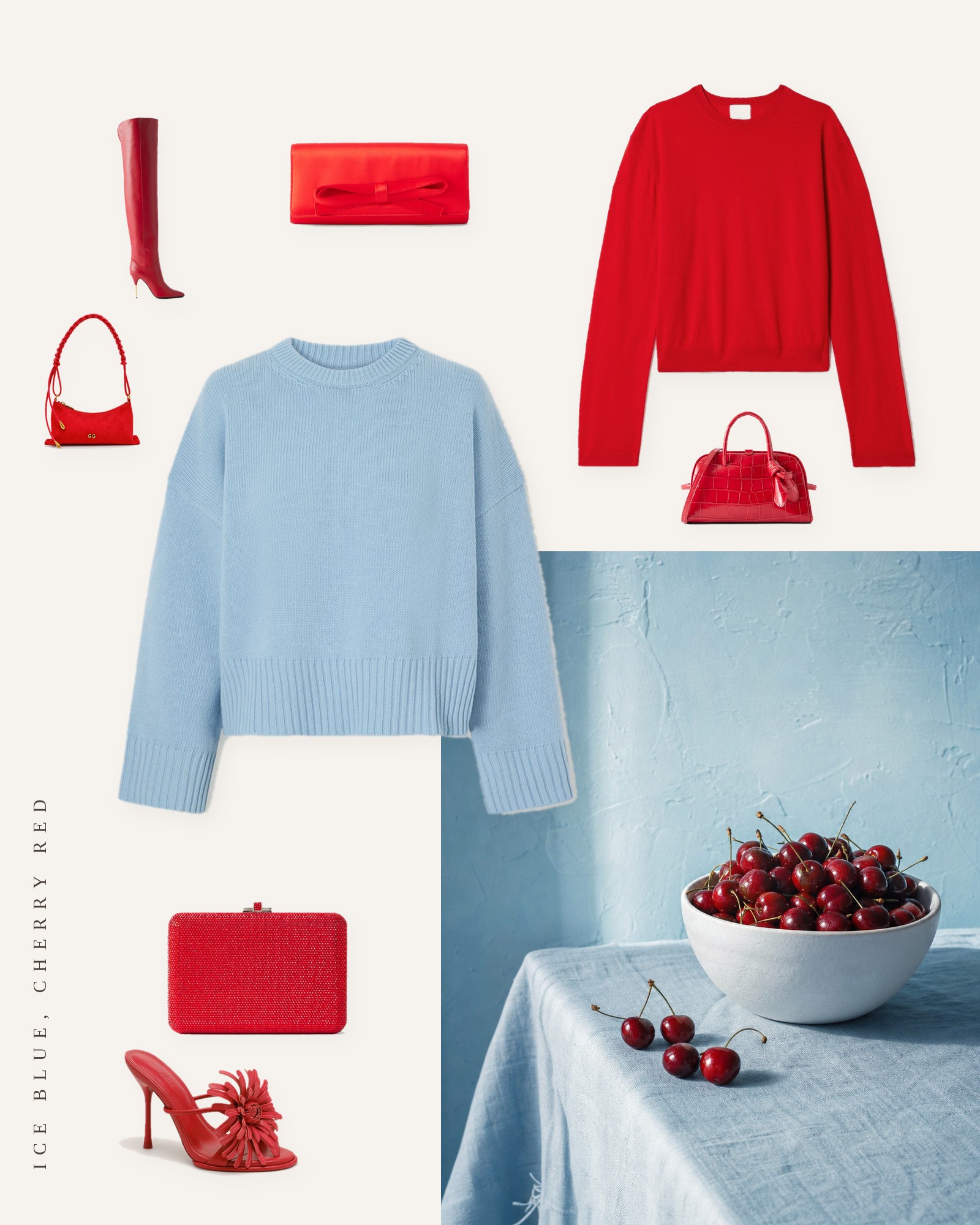
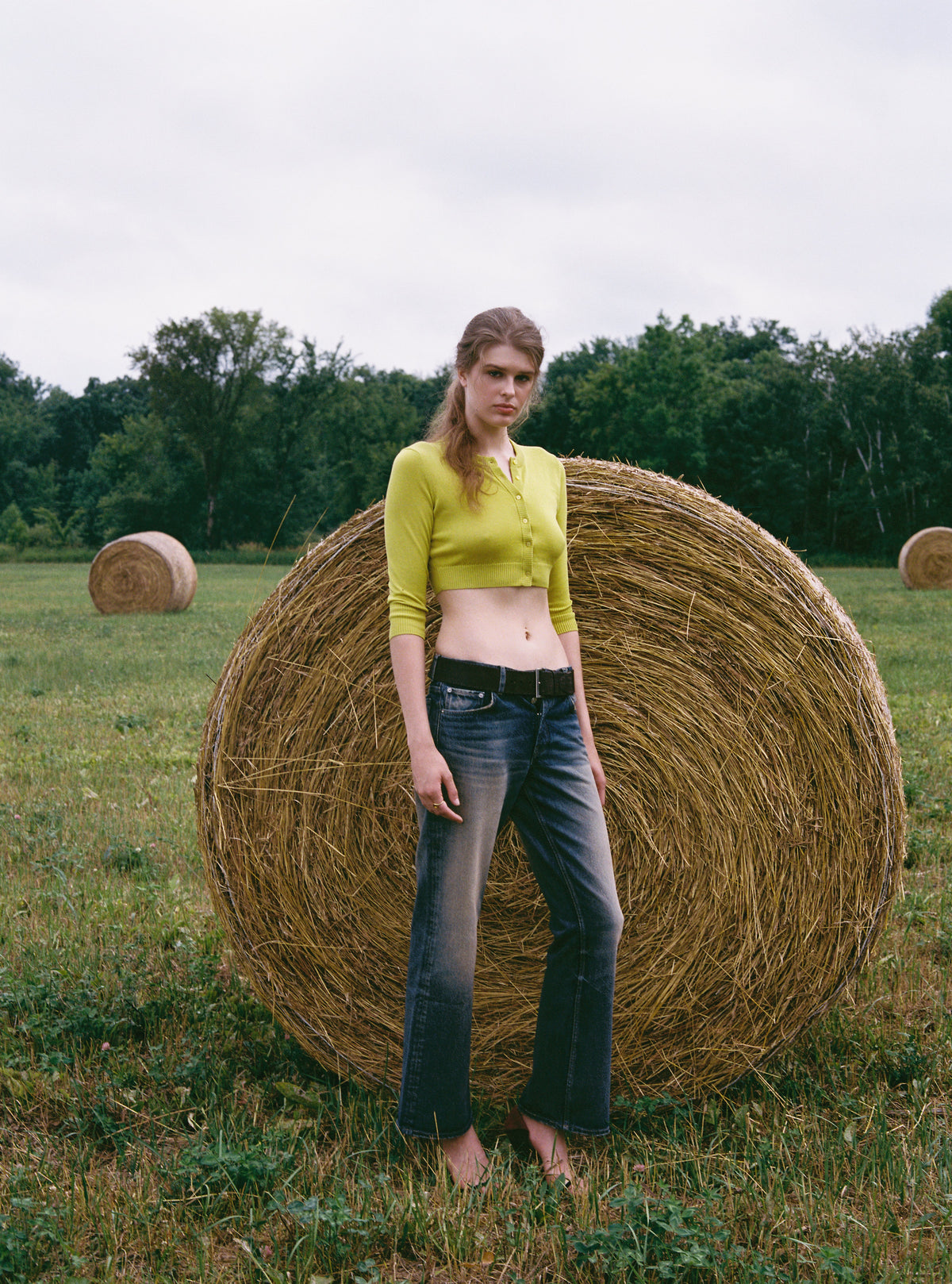
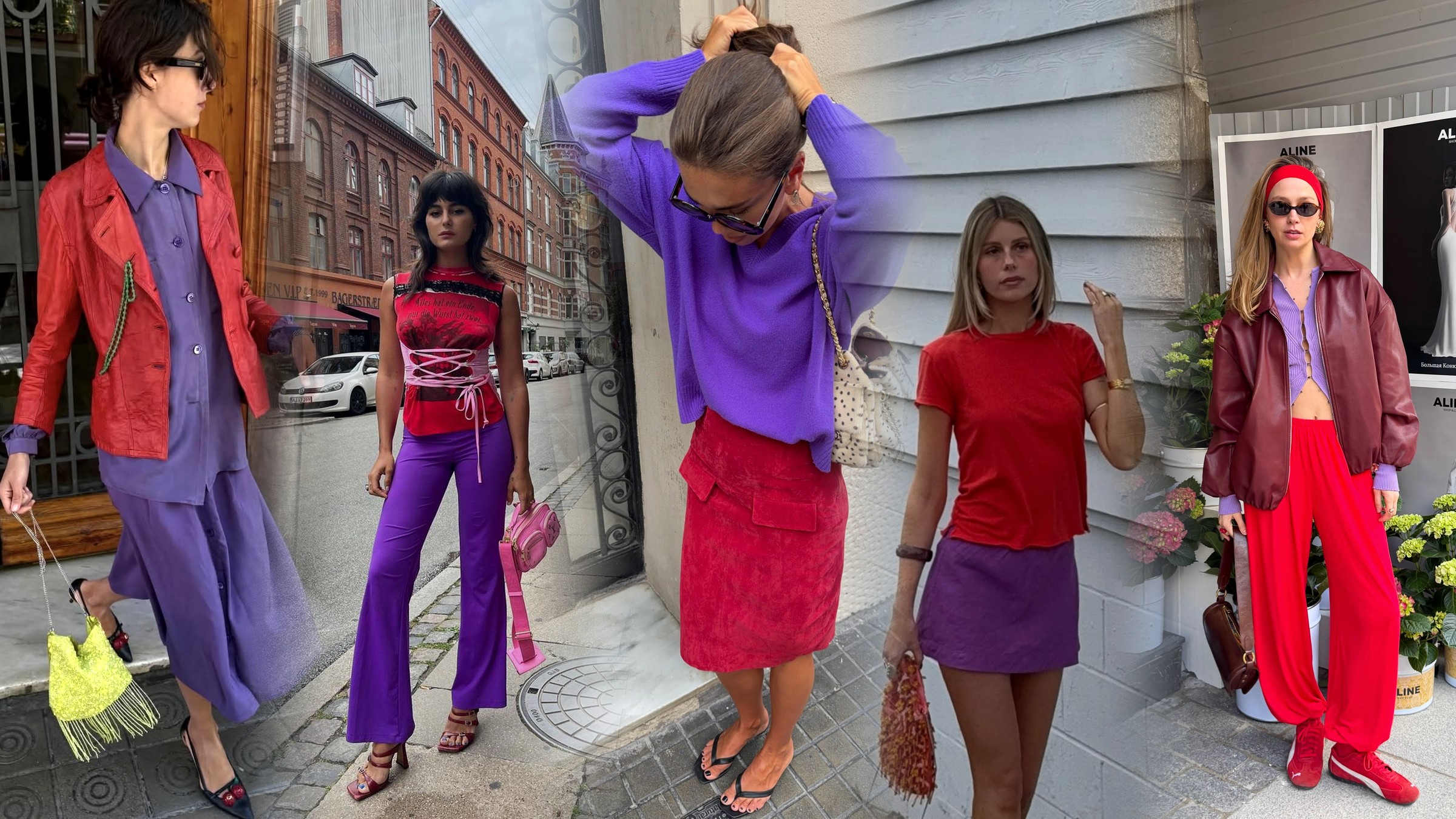
Salvatore Ferragamo trained shoemakers in Hollywood before returning home to incorporate his company in Florence in 1927, chasing better artisans than he could find in America. He spent the following decades engineering the shoe as much as designing it, patenting the cork wedge and steel shank and improvising with raffia and nylon during wartime material shortages.
Ferragamo

Shoes
Shoes are the reason this house exists at all, going back to a Florence workshop where Ferragamo trained artisans himself after concluding America could not give him the craftsmanship he wanted. The cork wedge and steel shank he engineered in the 1930s were solving real material problems, not chasing a silhouette, and that engineering instinct is still the throughline of the category. Everything else in this house was built around the shoe, not the other way around.

OFELY Calfskin Leather Knee Boots
Ferragamo
$1,590

Jasir 95 Patent Leather Mules
Ferragamo
$1,450

Dafne Alligator-Embossed Calfskin Leather Slingback Pumps
Ferragamo
$1,190

Yasminn Calfskin Leather Pumps
Ferragamo
$1,250

Bax Leather Loafers
Ferragamo
$980

Vetty Raffia Slingback Pumps
Ferragamo
$1,050

Vara 2.0 Lace Pumps
Ferragamo
$1,150

Sammy Lace Ballet Flats
Ferragamo
$1,050

Sammy Lace Ballet Flats
Ferragamo
$1,050

Sophie Sneakers
Ferragamo
$980

Witty Leather Mules
Ferragamo
$950

Witty Leather Mules
Ferragamo
$950

Cosmy Lace Sandals
Ferragamo
$1,050

Bax Leather Loafers
Ferragamo
$980

Rexy Raffia Pumps
Ferragamo
$995

Cleya 55 Slingback Pumps
Ferragamo
$1,190

Enni Leather Knee Boots
Ferragamo
$2,190

Maily Patent Leather Pumps
Ferragamo
$1,050

Maily Patent Leather Pumps
Ferragamo
$1,050

Safi 55 Embellished Satin Mules
Ferragamo
$1,250

Nena Leather Mary Jane Flats
Ferragamo
$830

Nena Leather Mary Jane Flats
Ferragamo
$850

Teresy Leather Crossover Pumps
Ferragamo
$1,050

Igea 55 Leather Mules
Ferragamo
$1,090
More Shoes
A second wall of shoes is really a reminder of how much technical range this founder built into a single category, from wartime raffia experiments to the polished evening styles that followed once luxury materials came back after the war. The house has stayed a footwear specialist even as it grew into a full luxury label. It is worth noticing which pairs still nod to those old material solutions.

Nena Woven Leather Flats
Ferragamo
$1,150

Nena Woven Leather Flats
Ferragamo
$1,150

Igea Leather Mules
Ferragamo
$1,090

Igea Leather Mules
Ferragamo
$1,090

Enni Leather Knee Boots
Ferragamo
$2,190

Teresy Leather Sandals
Ferragamo
$1,050

Karina Leather Sandals
Ferragamo
$1,390

Sol Woven Leather Pumps
Ferragamo
$1,150

Cirry 55 Leather Mules
Ferragamo
$1,690

Tatiana Suede Mules
Ferragamo
$920

Zakia Leather Riding Boots
Ferragamo
$2,090

Milly Leather Pumps
Ferragamo
$995

Briuli Leather Chelsea Boots
Ferragamo
$1,150

95mm Lipa Metallic Leather Sandals
Ferragamo
$674.99

55mm Safi Beaded Satin Mules
Ferragamo
$1,250

Soldy Leopard Calf Hair Loafers
Ferragamo
$1,090

70mm Lara Croc-Embossed Leather Pumps
Ferragamo
$1,050

Nerea 90 leather platform sandals
Ferragamo
$995

Tiane 70 embellished croc-effect leather sandals
Ferragamo
$1,250

Sara 40 embellished croc-effect leather slingback pumps
Ferragamo
$1,050
Bags
Leather goods were not part of Ferragamo's original business, they arrived decades later once his daughter Fiamma began developing handbags for the house in the 1965. The Gancini clasp that shows up across this category dates to 1969 and remains one of the few hardware signatures in luxury with an actual traceable birth year. It is a younger story than the shoes, but not a shallow one.
&link=https%3A%2F%2Fwww.modaoperandi.com%2Fwomen%2Fp%2Fferragamo%2Feast-west-hug-shoulder-bag-s-2%2F765815)
East-West Hug Woven Calf Leather Shoulder Bag (S)
Ferragamo
$3,500
&link=https%3A%2F%2Fwww.modaoperandi.com%2Fwomen%2Fp%2Fferragamo%2Fferragamo-cara-bag-xs-2%2F765814)
Ferragamo Cara Eel Skin Shoulder Bag (XS)
Ferragamo
$4,500
&link=https%3A%2F%2Fwww.modaoperandi.com%2Fwomen%2Fp%2Fferragamo%2Fferragamo-cara-bag-xs%2F765813)
Ferragamo Cara Calfskin Leather Shoulder Bag (XS)
Ferragamo
$3,400

XS Hug Soft Two-Tone Calfskin Leather Top Handle Bag
Ferragamo
$2,850

Small East-West Hug Calfskin Leather Shoulder Bag
Ferragamo
$2,500

XS Hug Soft Two-Tone Calfskin Leather Top Handle Bag
Ferragamo
$2,850

Hug East/West Leather Shoulder Bag
Ferragamo
$2,500

Gancio Medium Bag
Ferragamo
$1,850

Hug Small Raffia Top Handle Bag
Ferragamo
$3,400

Hug Leather Mini Bag
Ferragamo
$2,500

Hug Small Leather Top Handle Bag
Ferragamo
$3,500

Small Wicker Top Handle Bag
Ferragamo
$4,800

Hug Mini Alligator-Embossed Suede Clutch
Ferragamo
$2,100

Hug Mini Woven Leather Bag
Ferragamo
$4,100

Large Hug Soft Bicolor Shoulder Bag
Ferragamo
$3,800

Hug Medium Leather Bag
Ferragamo
$3,800

Hug Soft Patent Leather Shoulder Bag
Ferragamo
$3,400

Hug Soft Alligator-Embossed Suede Shoulder Bag
Ferragamo
$3,400

Hug Woven Leather Handbag
Ferragamo
$4,400

Hug Soft Alligator-Embossed Suede Shoulder Bag
Ferragamo
$3,200

Hug Woven Leather Handbag
Ferragamo
$4,400

Scarf Large Leather Tote Bag
Ferragamo
$2,100

Scarf Large Suede Tote Bag
Ferragamo
$2,100

Soft Small Leather Bag
Ferragamo
$2,600
More Bags
This grid keeps going because bags have become one of the house's largest categories since Fiamma Ferragamo's era, expanding well past the handful of shapes she first introduced. The Gancini hardware keeps recurring as the connective tissue across very different bag silhouettes. It is the clearest evidence that this house treats hardware the way other brands treat a logo.

Hug Small Calf Hair Bag
Ferragamo
$4,100

Hug Mini Fur Bag
Ferragamo
$3,600

Hug Mini Fur Bag
Ferragamo
$3,600

Hug Small Eelskin Bag
Ferragamo
$4,400

Hug Small Leather Bag
Ferragamo
$3,400

Hug Small Woven Leather Bag
Ferragamo
$5,700

Scarf Chain Leather Shoulder Bag
Ferragamo
$3,300

Scarf Chain Leather Shoulder Bag
Ferragamo
$3,500

Hug Washed-Denim Shoulder Bag
Ferragamo
$3,100

Small Hug Leather Shoulder Bag
Ferragamo
$3,000

Medium Piercing Leather Shoulder Bag
Ferragamo
$2,950

Hug Mini Alligator-Embossed Suede Crossbody Bag
Ferragamo
$2,100

Hug Belt Bag
Ferragamo
$3,420

Studio East West suede-trimmed textured-leather shoulder bag
Ferragamo
$3,200

Hug leather shoulder bag
Ferragamo
$2,500

Cara leather shoulder bag
Ferragamo
$3,700
Skirts
Ready-to-wear did not exist under Salvatore Ferragamo himself, it was his wife Wanda who pushed the house into clothing after his death in 1960 to keep the business growing beyond shoes. Skirts here carry none of the shoemaker's engineering fixations, they are a later, more conventional fashion-house category layered onto an old artisan name. That gap between the founder's obsessions and the current range is part of what makes this label interesting to shop.


Dresses
Dresses belong to the newer, Wanda-and-beyond chapter of Ferragamo, built once the house had already spent decades as a specialist shoemaker to Hollywood and European nobility. The silhouettes lean toward polish rather than experimentation, which fits a company still run with the family holding a majority stake since going public in 2011. It is the least eccentric grid here, in a house whose founding story is anything but conventional.


Jackets and blazers
Menswear and tailoring only entered the Ferragamo range in the 1970s and 80s, long after the shoes had already made Salvatore's name among Hollywood's leading actresses in the 1920s. Jackets and blazers here read as the most straightforwardly Italian-tailoring part of the assortment. They are useful precisely because they do not try to reinvent what a blazer is.


Knitwear
Knitwear sits comfortably in the newer, broader-lifestyle version of Ferragamo that developed after Salvatore's death, when the family expanded into silk, fragrance and eventually eyewear and watches. It is a low-drama category for a house whose real drama happened decades earlier in a Florence workshop. Still, the fit and finish carry over from the house's shoemaking discipline.


Trousers and shorts
Trousers and shorts round out a tailoring range that came together gradually across the 1970s and 80s, well after footwear had already defined the brand for half a century. There is nothing here trying to recreate the cork wedge moment, this is quieter, more department-store Ferragamo. It works because the house has never stopped being run with an eye for construction.


More from the collection
Whatever collects here tends to be the smaller categories, silk, eyewear or accessories, that the Ferragamo family folded into the business well after Salvatore's original shoe company, starting with silk and accessories in the 1970s. Each addition came from a specific business decision rather than a trend chase. Together they explain how a shoemaker's workshop became a full luxury house.

Sara 95 croc-effect leather slingback pumps
Ferragamo
$1,050

Hug leather shoulder bag
Ferragamo
$2,500

Leather-trimmed printed canvas shoulder bag
Ferragamo
$3,200

Hug leather-trimmed raffia mini shoulder bag
Ferragamo
$2,650

Mini Skirt
Ferragamo
$581

Mini Skirt
Ferragamo
$522

Long Sleeve Mini Dress
Ferragamo
$540

Draped Metallic Lamé Top
Ferragamo
$2,700
Our honest take
Ferragamo's footwear still carries the weight of an actual engineering history, cork wedges and steel shanks invented to solve real problems, and that credibility is hard to fake. The newer categories, built by Wanda and later generations after 1960, are competent but rarely surprising next to the shoes. Shop this one for what the founder actually invented.