Choosing a sofa for small living room layouts is mostly about three measurements and one honest question about how you sit. Here are the apartment-size sofas, settees and armless pieces I would look at.
Finding a Sofa for Small Living Room Layouts
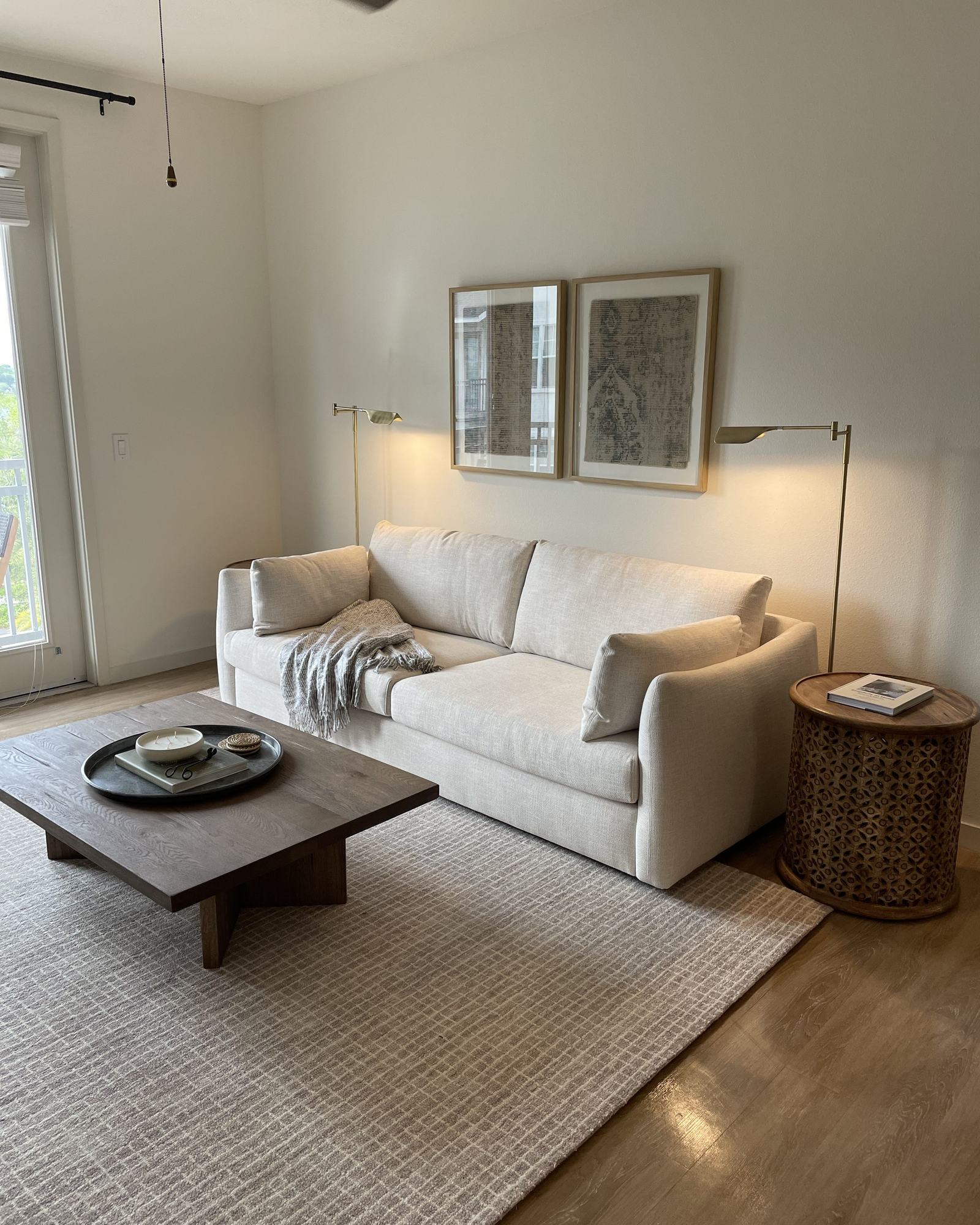
Picture the delivery. Two men carry a beautiful, deep, cloud-like sofa up three flights of stairs, set it down, and suddenly it takes up almost half the room. The closet door opens most of the way. The coffee table has to go. It is the most common small-space mistake there is, and it almost always comes from falling for one photograph.
Finding the right sofa for small living room layouts is less about style than about three numbers. Width, obviously, but also depth and arm width, which people forget. A deep sofa eats the walkway in front of it, and chunky arms can add most of a foot to the overall length without adding a single seat. Measure your room, then measure the path from the door to the window, and only then start looking.
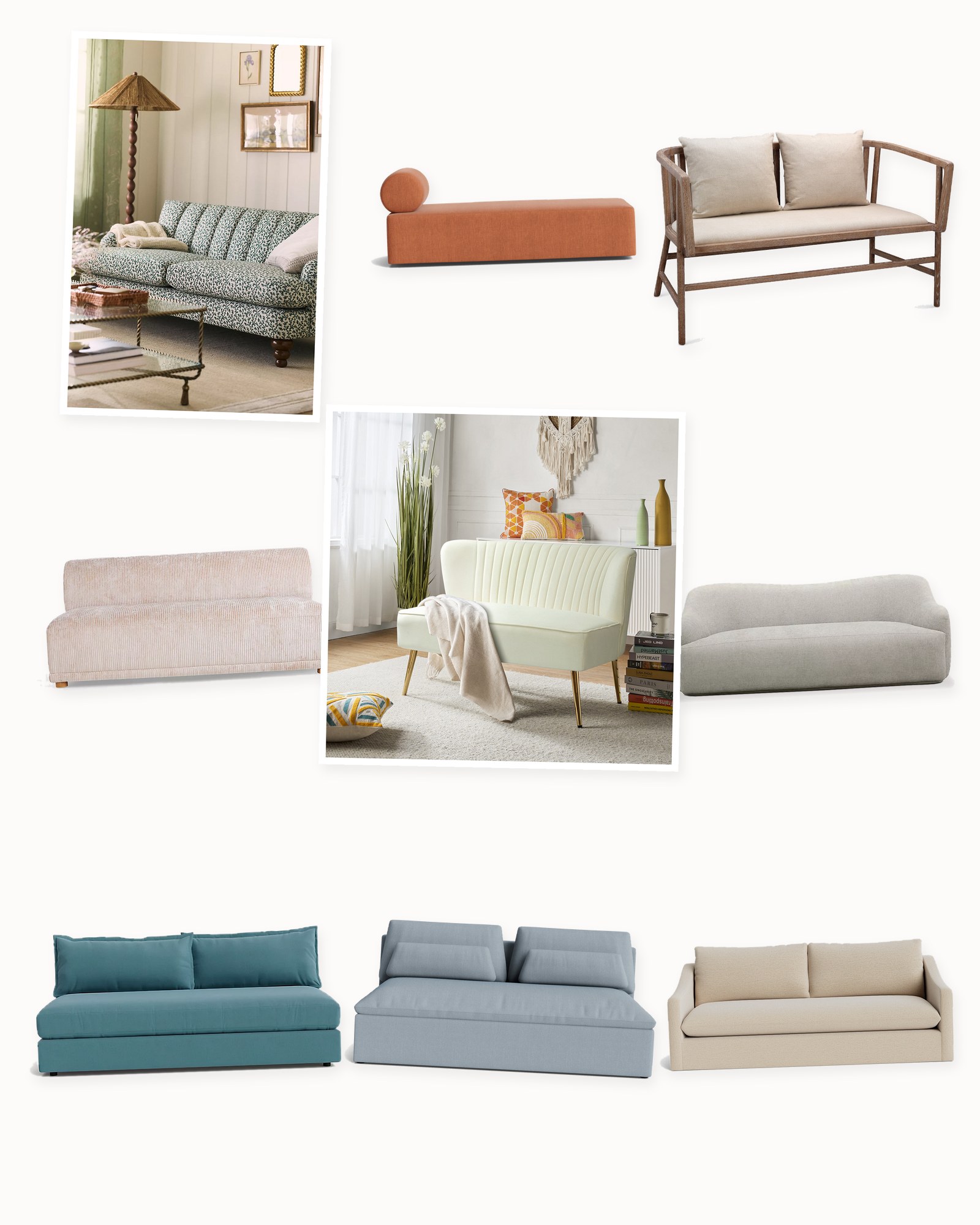
The first grid is full-size sofas that are scaled down. McGee & Co.'s Fletcher at 76 inches and the Lucille at 78, with its English roll arm, both seat three without overwhelming a room. Anthropologie's Irena is channel tufted, and the Orla curves gently, which softens a boxy room and makes it easier to walk around. McGee & Co.'s Octavia comes in several lengths, useful if your wall is an awkward size. For very small spaces, Corrigan Studio's Jadier and Ebern Designs' 63-inch two-seater are compact, and Ebern's Greigh is a curved bouclé loveseat that looks generous for its footprint.
Apartment-size sofas
&link=https%3A%2F%2Fmcgeeandco.com%2Fproducts%2Foctavia-upholstered-sofa-72-96)
Octavia Upholstered Sofa (72"-96")
McGee & Co.
$2,898

Channel Tufted 76" Irena Sofa
Anthropologie
$2,498

Jadier 66" Upholstered Loveseat Square Sofa
Corrigan Studio
$269.99

Fletcher 76" Sofa
McGee & Co.
$2,895

Orla 79" Curved Linen-Blend Sofa
Anthropologie
$1,428

63" 2-Seater Upholstered Square Arm Sofa
Ebern Designs
$349.99

Lucille English Roll Arm Sofa 78"
McGee & Co.
$4,989

Greigh Boucle Curved Loveseat
Ebern Designs
$640
Loveseats and settees, the honest small-space answer
If your room is truly small, or you want space for a chair as well, a loveseat or a settee is often the better answer. It seats two, which is how most of us actually use a sofa on a weeknight, and it leaves room for an armchair that can be turned toward conversation.
A settee is a little different from a loveseat. It usually sits higher, with a more upright back and exposed legs, which makes it feel lighter and more like furniture than a big soft pile. McGee & Co.'s Clemence at 60 inches, and their Gemma and Magda at 65, are all elegant, the kind of thing that looks right in an older apartment with tall windows. Lulu and Georgia's Sawni settee is similar in spirit with a softer line.
Loveseats are lower and cushier, for lying down with a film. George Oliver's Decato is tufted and mid-century, and House of Hampton's Carolina is a classic upholstered shape. Lulu and Georgia's Nelja by Sarah Sherman Samuel and Anthropologie's Denver are modular, which I love for small spaces, because you can add a seat later if you move somewhere bigger.
Legs matter more than you would think. A sofa raised on visible legs shows floor underneath, and seeing floor makes a room feel bigger. A skirted sofa, or one that sits flat on the ground, looks heavier even at the same size. If you are torn between two, choose the one on legs.
Loveseats and settees

Nelja Modular Loveseat by Sarah Sherman Samuel
Lulu and Georgia
$4,199

Clemence 60" Settee
McGee & Co.
$3,249

Denver Modular Armless Loveseat
Anthropologie
$1,698

Decato Mid-Century Tufted Loveseat
George Oliver
$319.99

Sawni Settee
Lulu and Georgia
$2,098

Gemma Settee 65"
McGee & Co.
$4,196

Carolina Upholstered Loveseat
House of Hampton
$409.99

Magda 65" Settee
McGee & Co.
$3,674
Armless, the space saver no one mentions
The most underrated small-space sofa is the one without arms. Removing the arms can save a surprising amount of length, which means you can fit a proper sofa where a loveseat with chunky arms would barely squeeze in. It also makes the piece feel open and easy to perch on from any side.
Lulu and Georgia's Sloman is a modular armless sofa that reads very clean and modern. Anthropologie's Celine comes in corduroy, soft and a little retro, and their Bowen is another modular armless option that you can arrange in a line or split into two seats. For the smallest rooms, Etta Avenue's Leona is a 47-inch armless velvet two-seater, barely bigger than an armchair.
The trade-off with armless pieces is that there is nothing to lean on. I solve that with two firm pillows at each end and a side table close enough to rest an elbow and a mug. It also helps to push an armless sofa against a wall or back it with a console, so it feels anchored rather than floating in the middle of the room.
What I would skip: a sectional in a small living room, unless it is truly the only seating. It fills the corner, blocks the walkway and leaves no room for a second chair. A compact sofa and one armchair will almost always seat more people, more comfortably, and they are far easier to get up the stairs.


Our honest take
Every small living room I have loved had a sofa that was slightly smaller than I thought I wanted. It left room to walk, room for a chair and room for the rug to show, and that is what made the space feel calm.
If you take one thing away, let it be this: measure depth and arm width, not just length, and tape the footprint on your floor before you order. Leave at least a couple of feet to walk in front of it. Once you see the outline on the floor, you will know within a minute whether it works, and you will never have to explain why the closet door only opens halfway. Then add one comfortable chair, and the room will seat more people than a bigger sofa ever could.