This guide to a flowy top explores draped blouses and soft volume as part of fall and winter dressing. Compare sheer, printed, and ruffled shapes, then layer them under wool jackets or over slim knits for a little movement in colder weather.
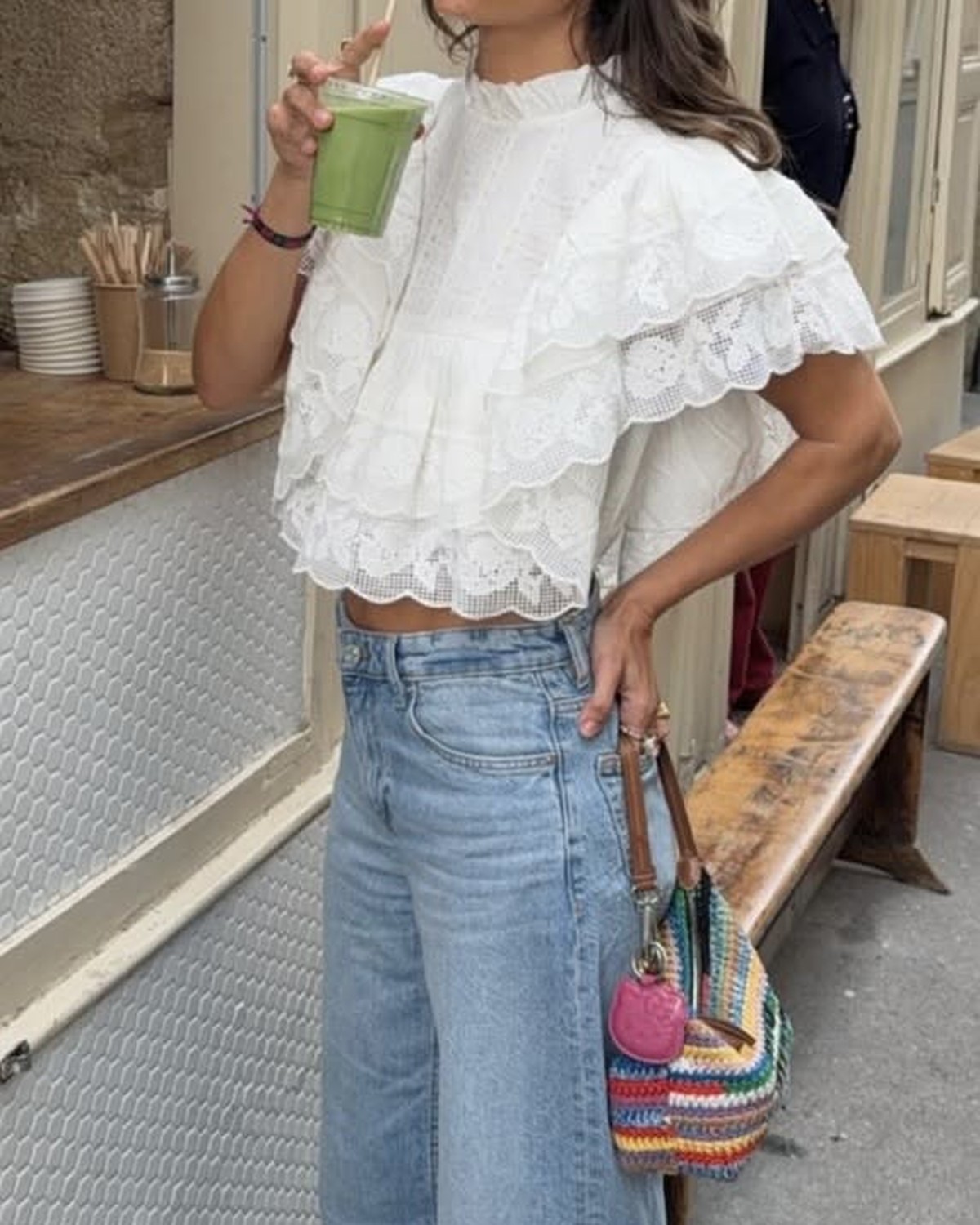
Flowy Top: The Soft Layer Winter Tailoring Needs
This guide to a flowy top explores draped blouses and soft volume as part of fall and winter dressing.
The Georgette Story
Georgette takes its name from Georgette de la Plante, a French dressmaker of the early twentieth century, and the light fabric is known for its fluid movement. That history makes sense when I look at a flowy top in fall and winter: a soft blouse can bring motion to a season full of wool coats, straight trousers, and dense knits. The key is not to leave it exposed to the cold, but to use its drape as a layer beneath something structured.
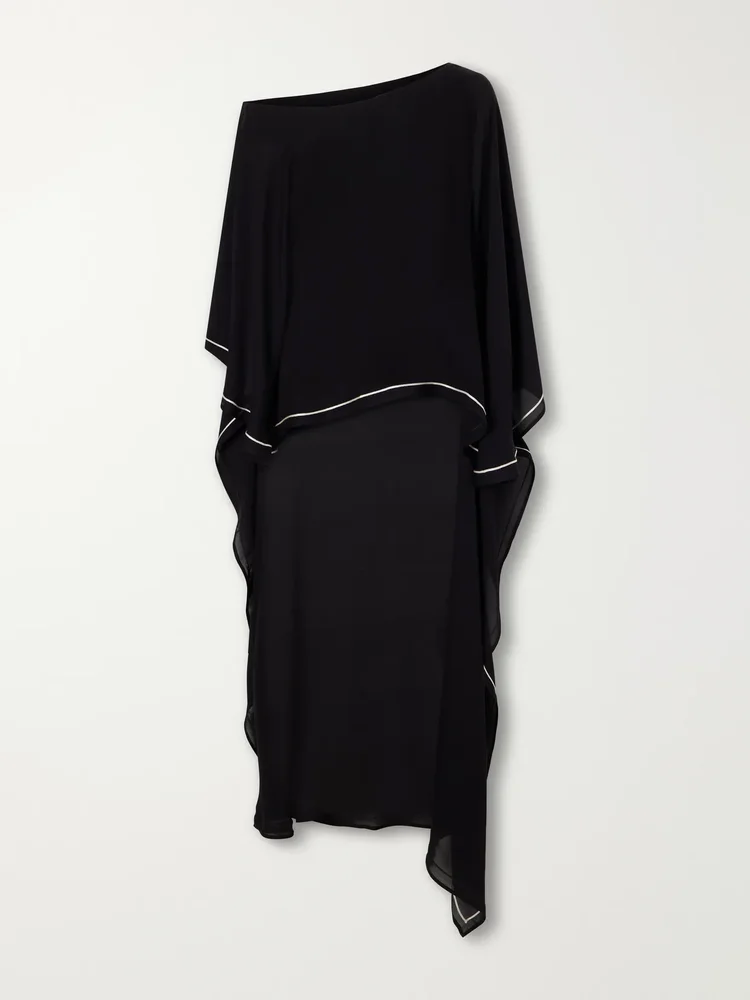
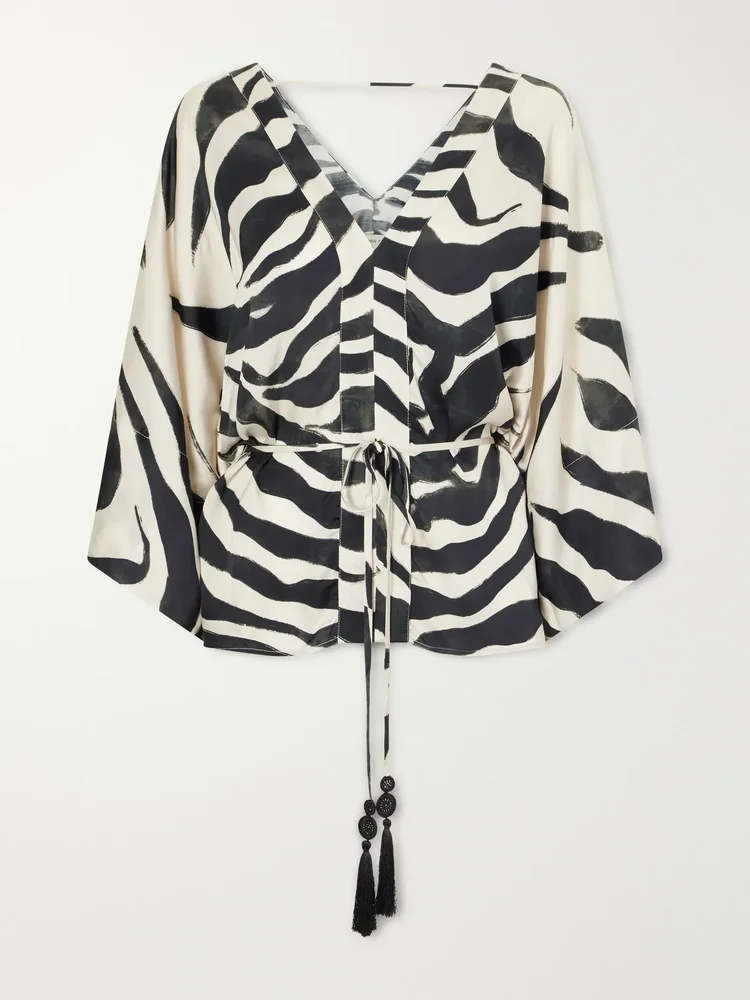
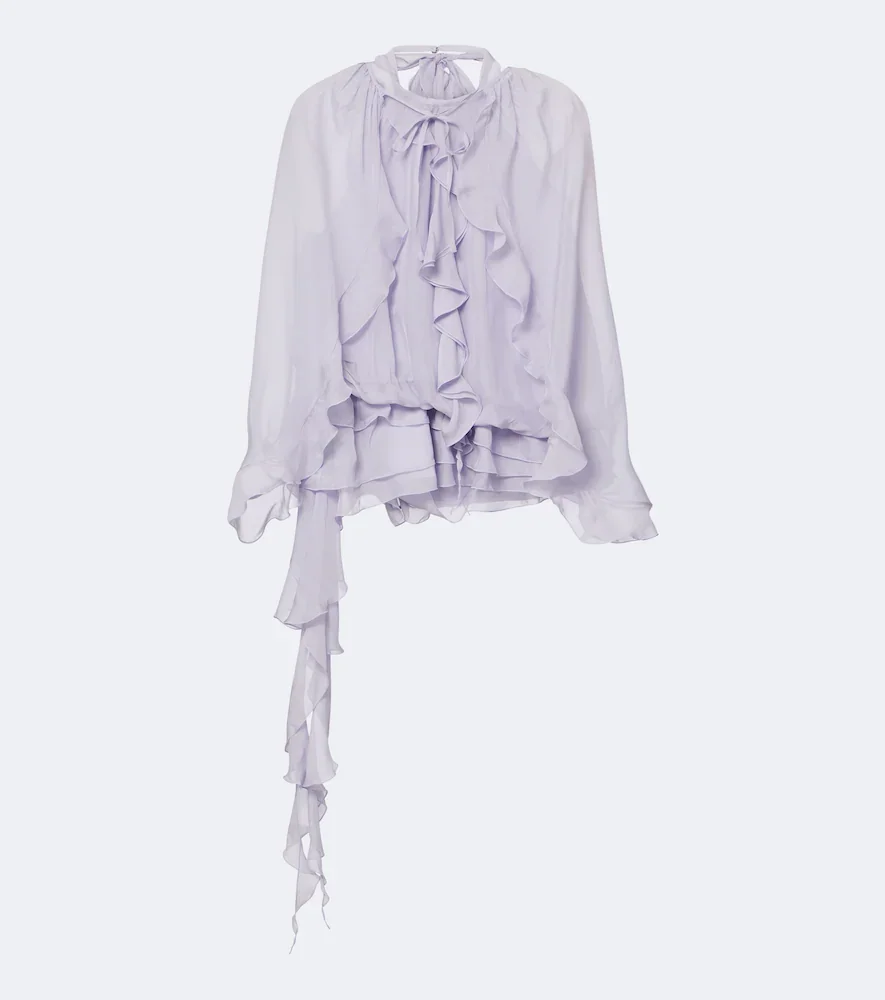
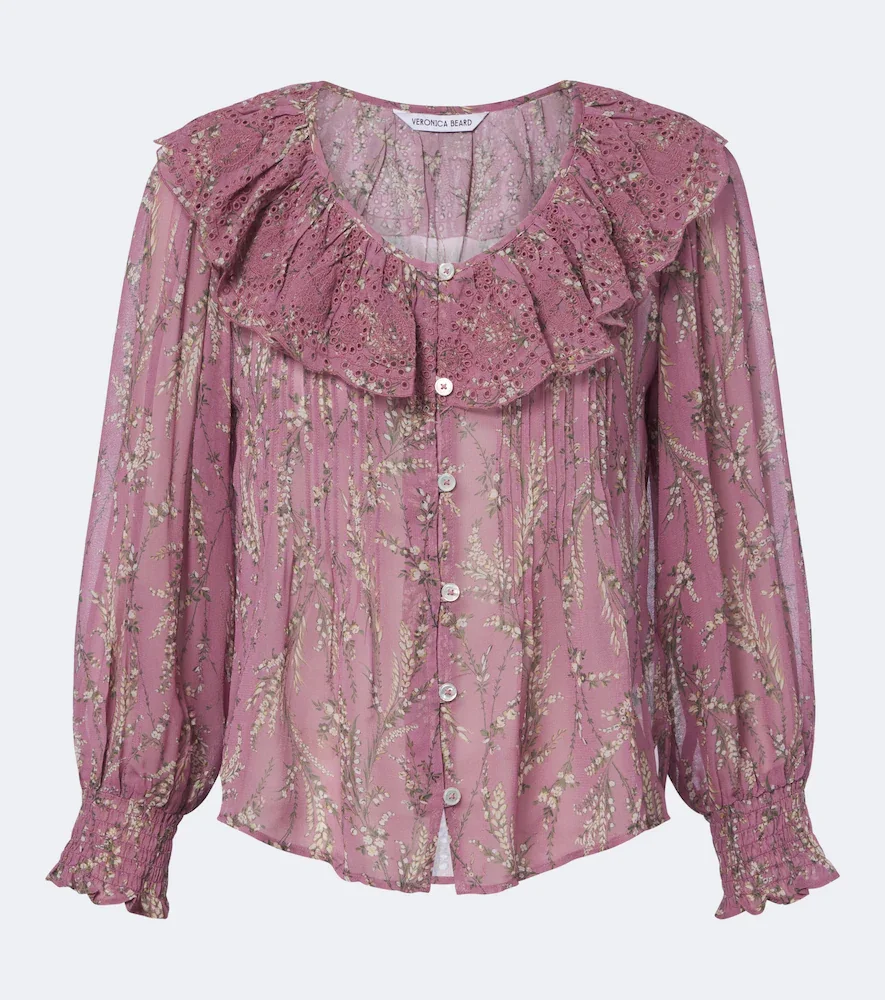
Andres Otalora's Permanecer off the shoulder silk georgette blouse sets a more romantic tone, while the Desierto Vivo printed georgette blouse brings a pattern into the same airy fabric family. Jacques Wei's Ruffled chiffon blouse offers another kind of movement through its named fabric and detail. Veronica Beard's Hewitts ruffled floral georgette blouse pairs a floral note with the same soft material language. Each one gives a different reason to keep the top half of an outfit from feeling too rigid.
For a practical winter outfit, I would layer the blouse under a tailored jacket and let only the neckline, cuffs, or ruffle show. A slim merino layer underneath can add warmth without hiding the shape, while dark trousers and a leather boot steady the softer details. What I would skip is pairing several ruffled or printed pieces together. Let the flowy top bring the movement, then give it a clear frame with a wool blazer or a long coat. That contrast makes a delicate blouse feel like a real part of the cold-weather wardrobe.
Softness Under Wool
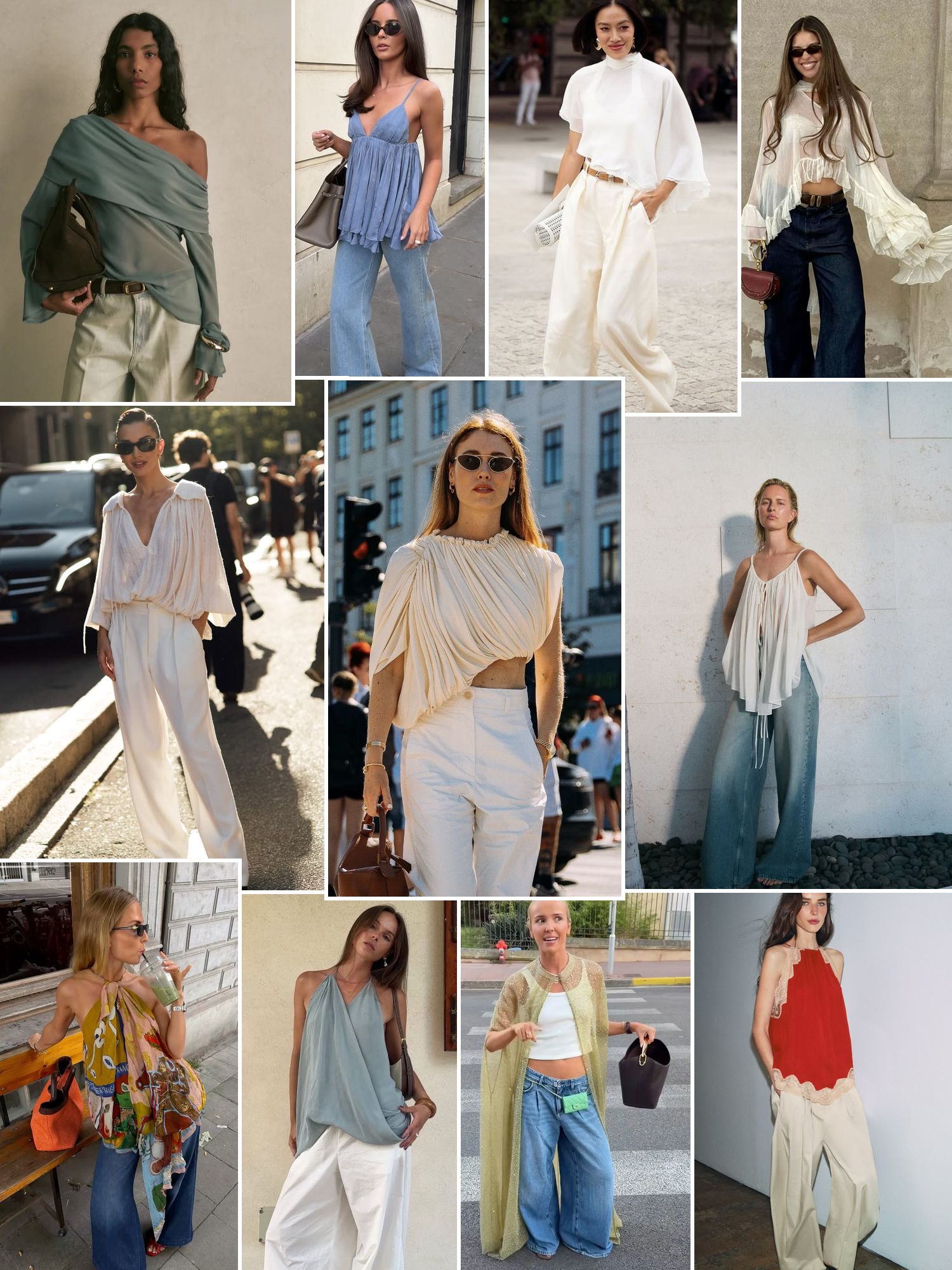
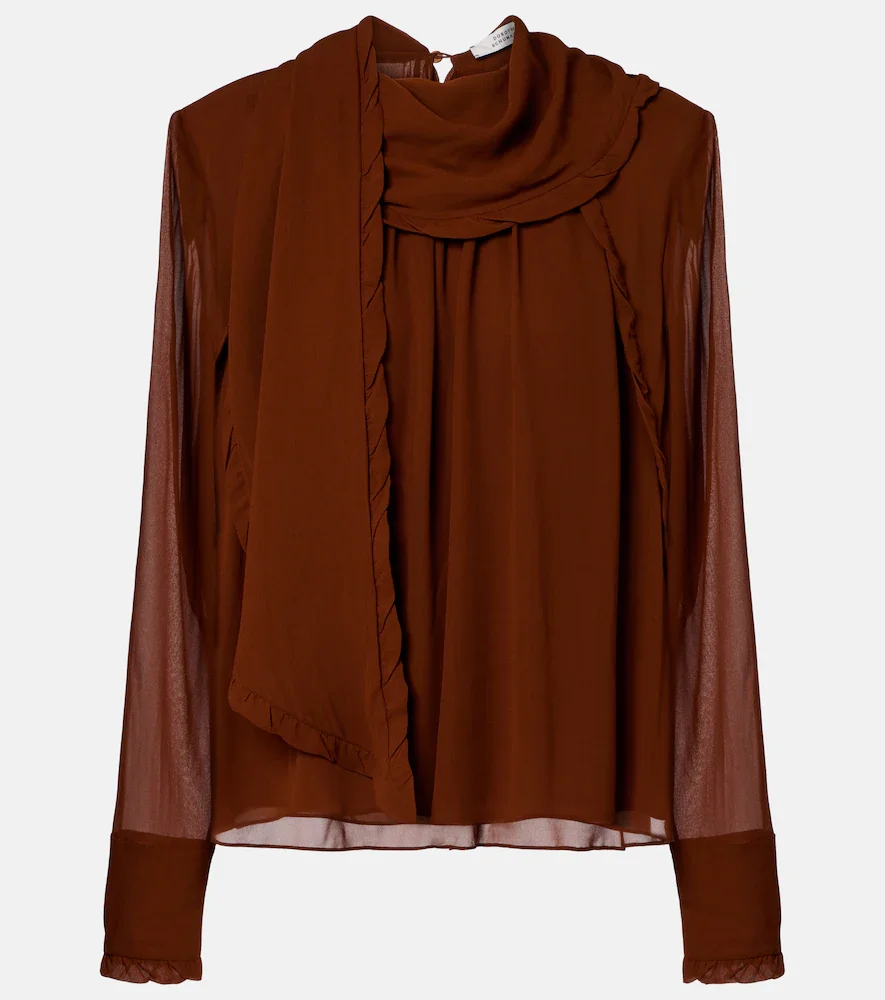
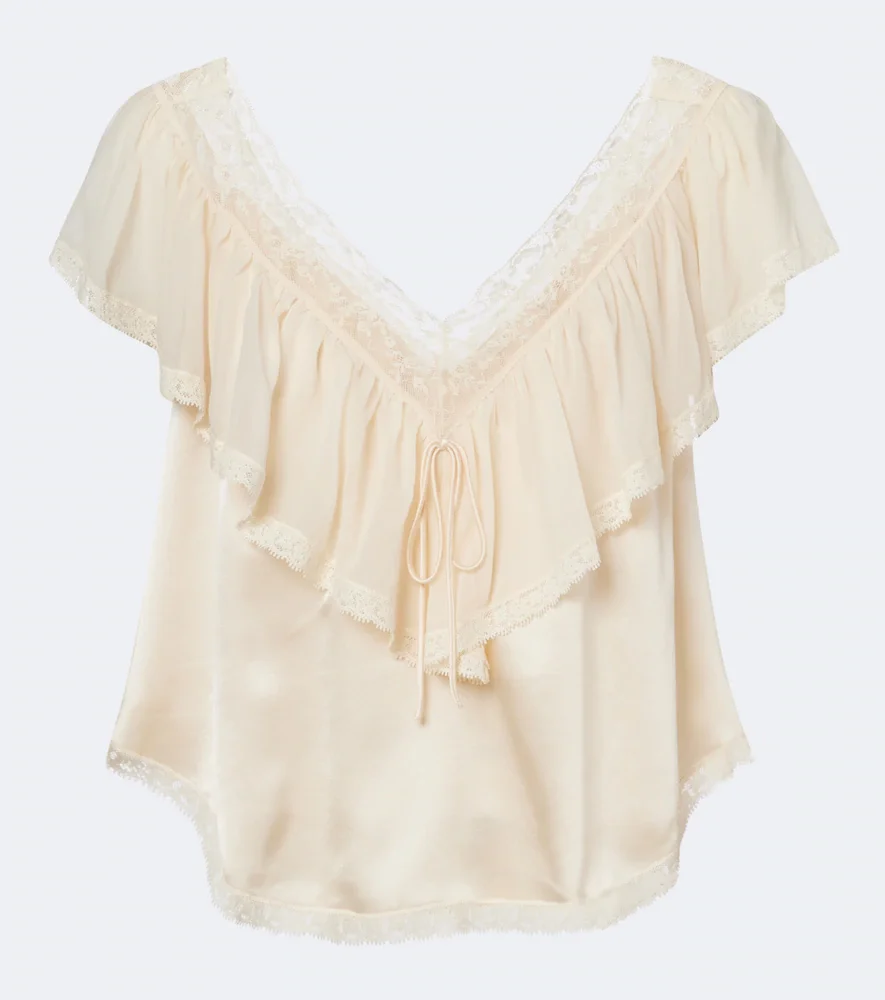
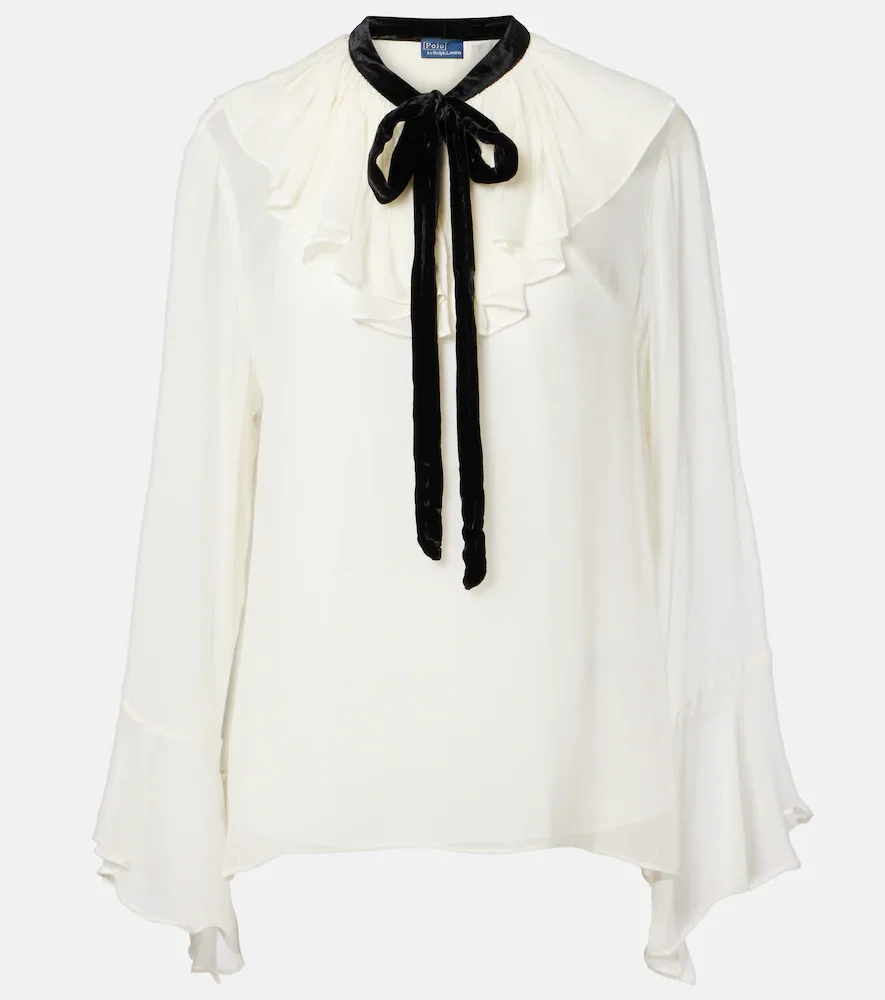
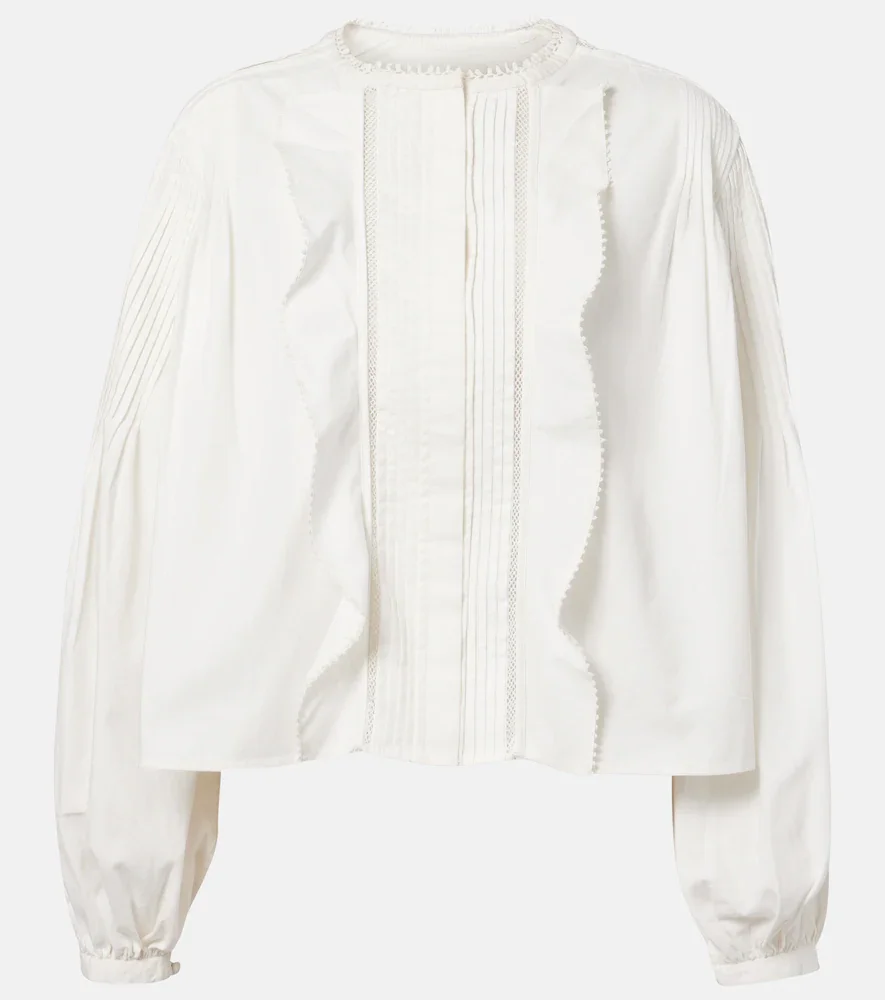
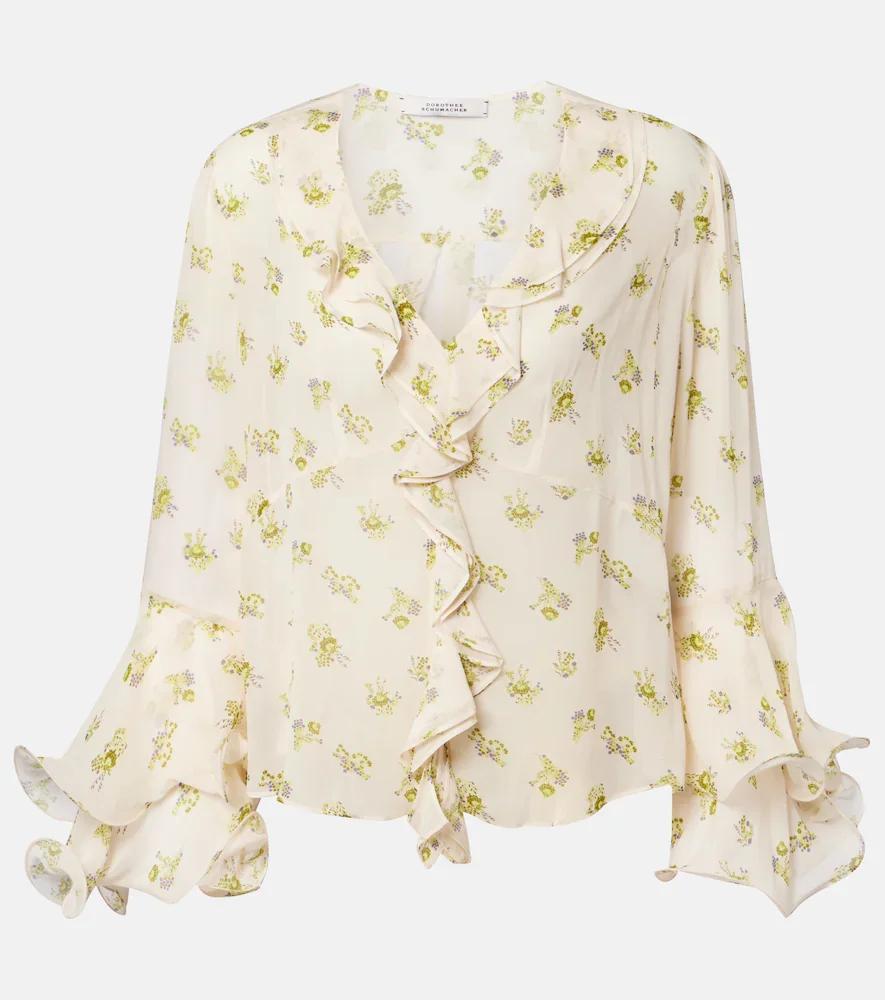
Dorothee Schumacher's Sheer Twist georgette blouse makes texture part of the story, while Dôen's Yadira lace-trimmed ruffled silk blouse introduces another delicate finish. Polo Ralph Lauren's Ruffled tie-front blouse has a more defined detail at the front, and Isabel Marant's Cubraly ruffled cotton blouse shifts the group toward cotton. A flowy top can feel very different across these materials, even when the shared idea is softness and movement.
I would style the first two under a wool jacket with a smooth lining, so the sheer or lace details have room to read without being asked to carry the whole outfit. The tie-front shape can sit over a fine-gauge turtleneck if the neckline allows, while the cotton option works with a more substantial cardigan. Keep the bottom half straight and uncomplicated, perhaps tailored trousers or a dark denim skirt with opaque tights. That makes the top's texture feel deliberate rather than fussy.
What I would skip is a bulky sweater worn over a blouse with delicate trim, because it can hide the very detail that makes the piece interesting. Instead, add warmth at the outer layer and keep the blouse close to the body underneath. Check the sleeve at the cuff before layering, since a ruffle that bunches under a coat can be distracting. The right flowy top should still look intentional when you remove your coat indoors.
A Little Movement
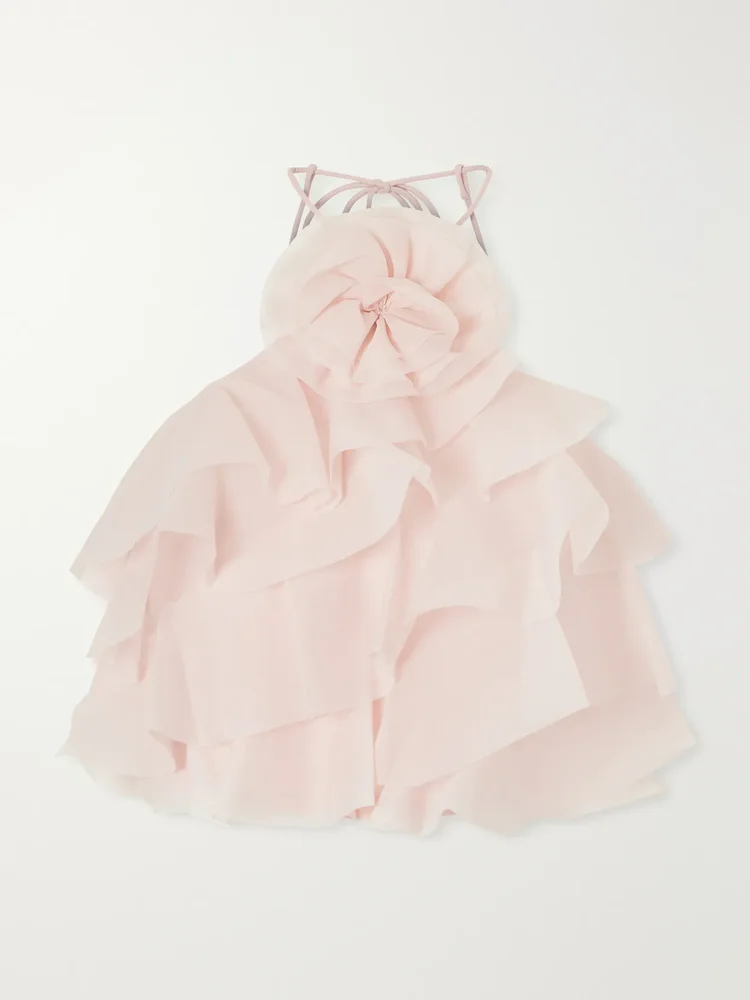
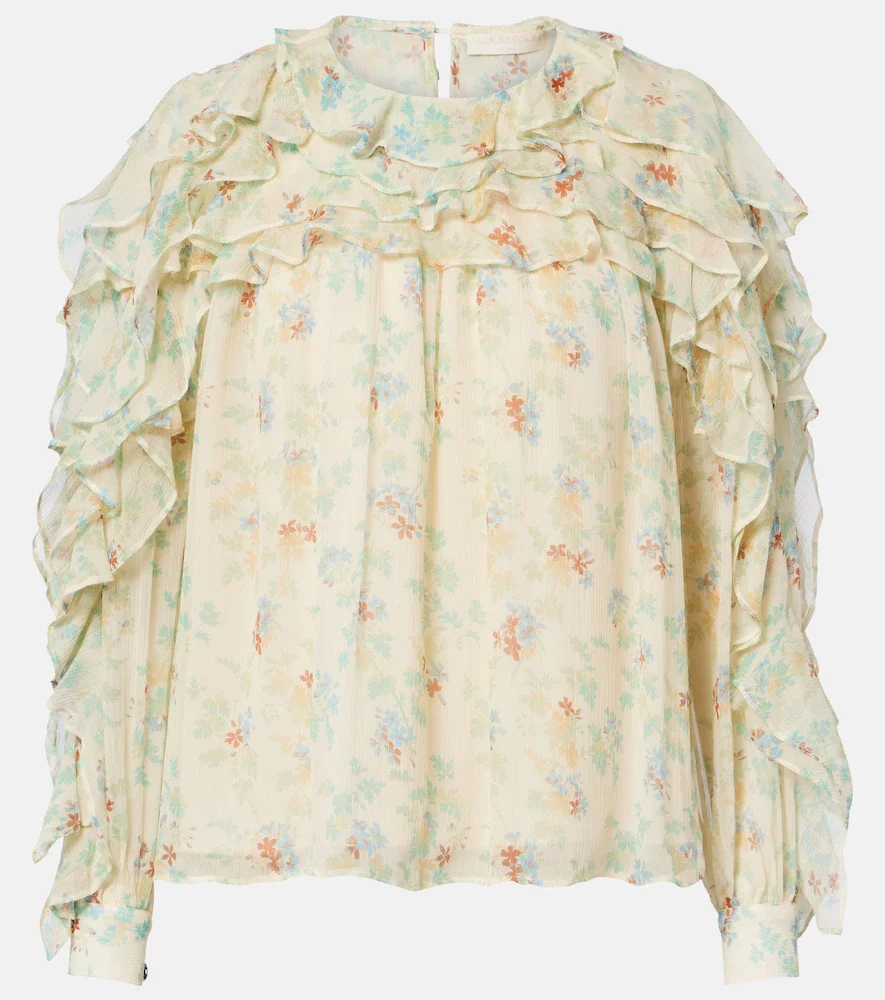
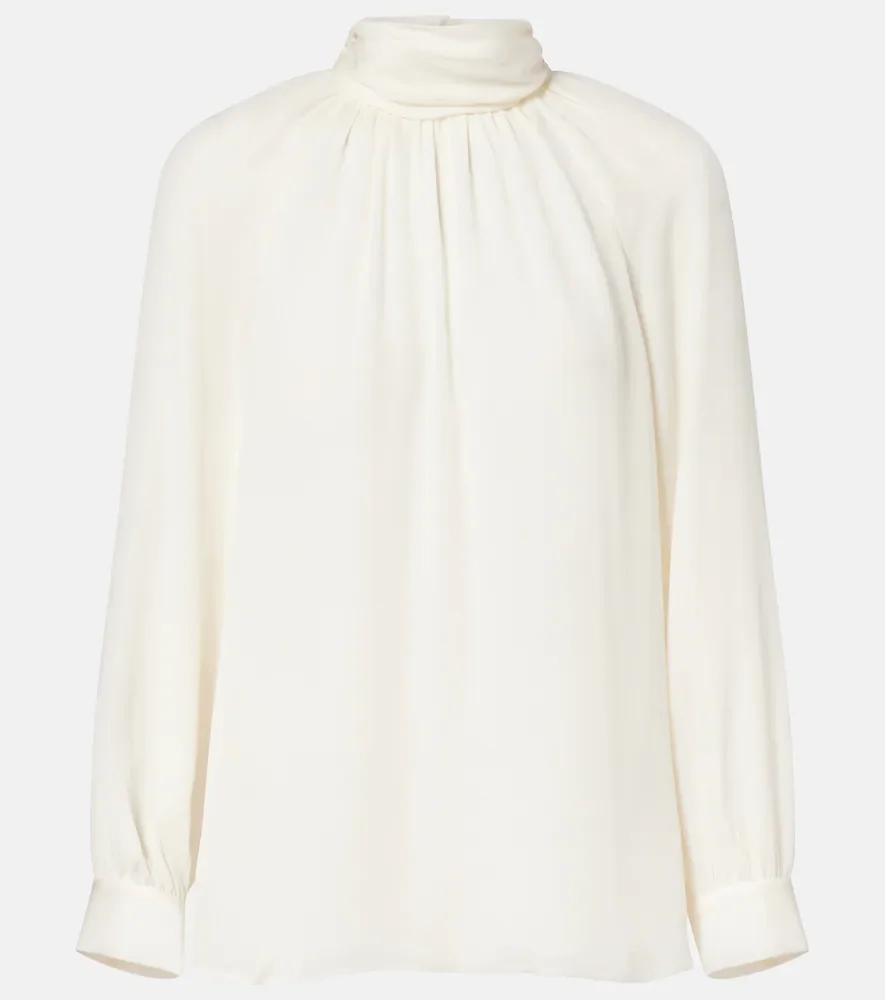
Dorothee Schumacher's Airy Daydream floral georgette blouse brings a soft print to the last group. Aje's Villa ruffled flower-detailed organza tank makes the most of a lighter, more sculptural fabric, while Ulla Johnson's Willow ruffled floral silk blouse and Nili Lotan's Axelle silk georgette blouse offer two further approaches to a fluid top. Here the flowy top can be the most expressive part of the outfit, even when the rest stays quiet.
The organza tank makes sense over a close-fitting long-sleeve knit, where the contrast in texture gives it definition and warmth. For the blouses, I would use a short wool jacket or a neat cardigan that leaves the collar and sleeves visible. A high-waisted trouser or a long straight skirt helps balance ruffles and soft volume, while boots and a structured bag bring enough weight for fall and winter.
What I would skip is putting a big scarf directly over a high-detail neckline. A compact scarf worn under the coat or a simple collarless jacket gives the blouse more breathing room. If the top has a print, repeat one quiet color elsewhere in the outfit rather than matching the pattern exactly. That small echo makes a flowy top feel integrated with the darker palette and heavier textures of the season.
The Layer That Moves
A flowy top earns its place in a cold-weather wardrobe by adding motion beneath firmer layers. This group ranges from georgette and chiffon to silk, cotton, and organza, so the details can be romantic, printed, or nearly minimal. I would choose the fabric and neckline that work with the jackets and coats already in rotation, then let that one soft piece change the line of the outfit.
Try it under a wool blazer for work, with a compact cardigan for a relaxed day, or beneath a long coat for an evening plan. Keep the trousers or skirt simple, and use boots or a substantial shoe to ground the drape. A flowy top should not feel reserved for a warm season; with a thoughtful underlayer and a clean coat, its softness is exactly what makes fall and winter tailoring more interesting.