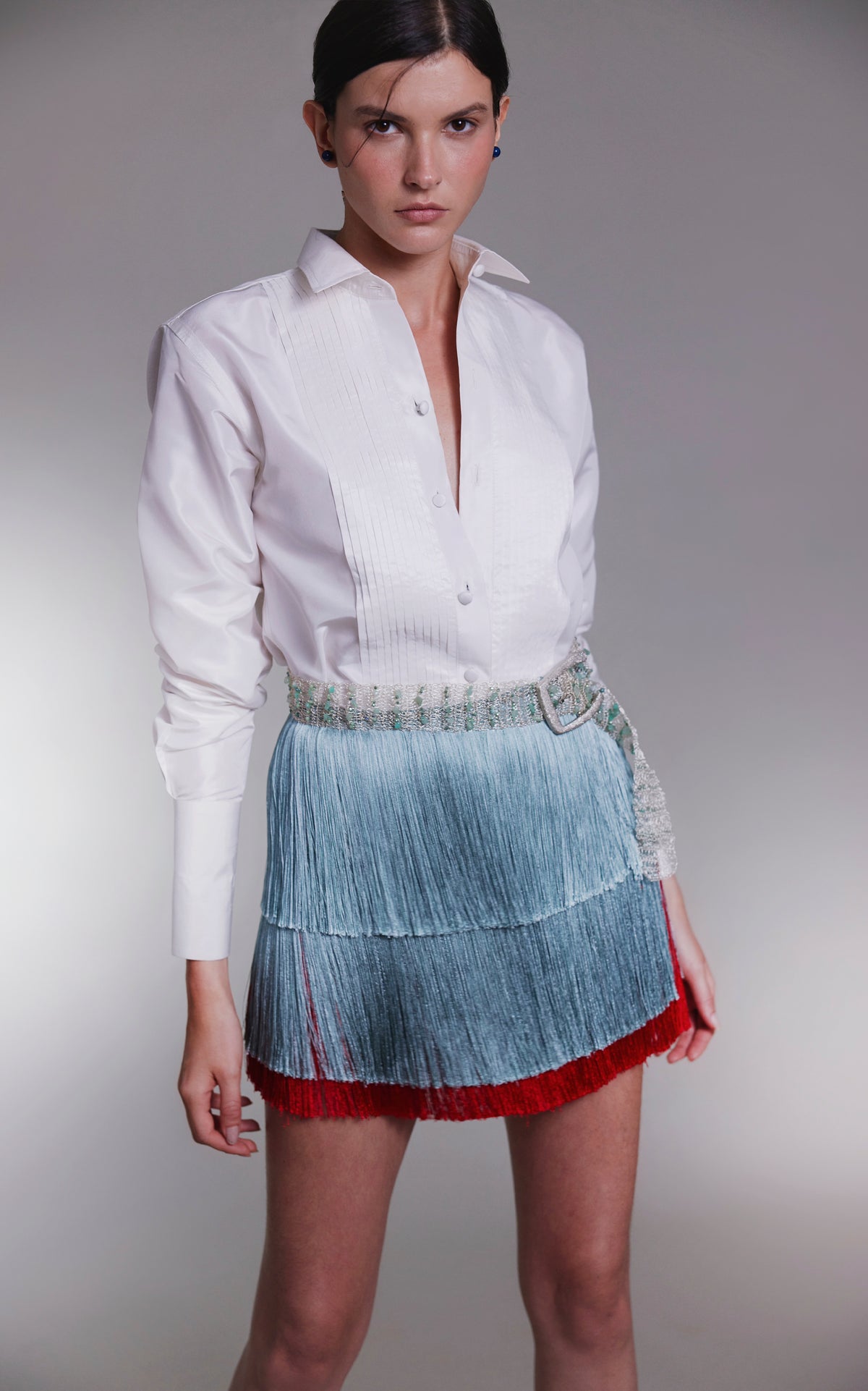
Francesca Miranda started her namesake label in Barranquilla, Colombia in 1995, launching with a menswear shirting line after years spent helping run her husband's garment business. The house is known for reviving pata de cabra, a handcrafted Colombian technique that weaves strips of fabric into fringe-like draping, used across her dresses, tops and skirts and made with local artisans.
Francesca Miranda
Dresses
Dresses are where Miranda's Colombian craft techniques show up most visibly, particularly the draped, fringe-edge pata de cabra work she has spent two decades refining. The silhouettes lean feminine and occasion-ready without tipping into costume, which tracks with a designer who moved from menswear into womenswear rather than the reverse.

Aurora Sequined Dress
Francesca Miranda
$1,790

Lora Mini Dress
Francesca Miranda
$990

Ruby Silk Dress
Francesca Miranda
$1,400

Isidora Fringed Silk-Blend Maxi Dress
Francesca Miranda
$1,700

Moonrise Sequins Mini Dress
Francesca Miranda
$1,490

Bruma Lace Maxi Dress
Francesca Miranda
$2,400

Blush Line Jersey Dress
Francesca Miranda
$1,400

Marigold Silk Dress
Francesca Miranda
$1,990

Halia Satin Dress
Francesca Miranda
$1,600

Amapola Silk Maxi Dress
Francesca Miranda
$2,400

Peony Mini Dress
Francesca Miranda
$1,400

Scarlet Fringe Cotton Maxi Dress
Francesca Miranda
$2,495
Tops and shirting
Shirting is genuinely the label's origin point, since Miranda began her career designing men's shirts before she ever touched a dress. The tops in this edit carry some of that same structural discipline, even when the silhouette is softened for women.


Skirts
Skirts are a natural home for the fringed, woven pata de cabra technique that has become synonymous with the house since the early 2000s. It is a slow, artisanal construction, and it shows in how these pieces move.


More from the collection
The remaining pieces in the current assortment, spanning the fuller range of what the house is doing this season beyond dresses and shirting. Together they show a designer who still works across menswear roots, womenswear and craft in the same collection.


Our honest take
Francesca Miranda's strongest case is craft: an artisanal technique she has actually built a house-wide language around, not just borrowed for a season. It is a less internationally known name than some labels in this category, but the handwork is real and it is worth looking closely at the construction, not just the silhouette.