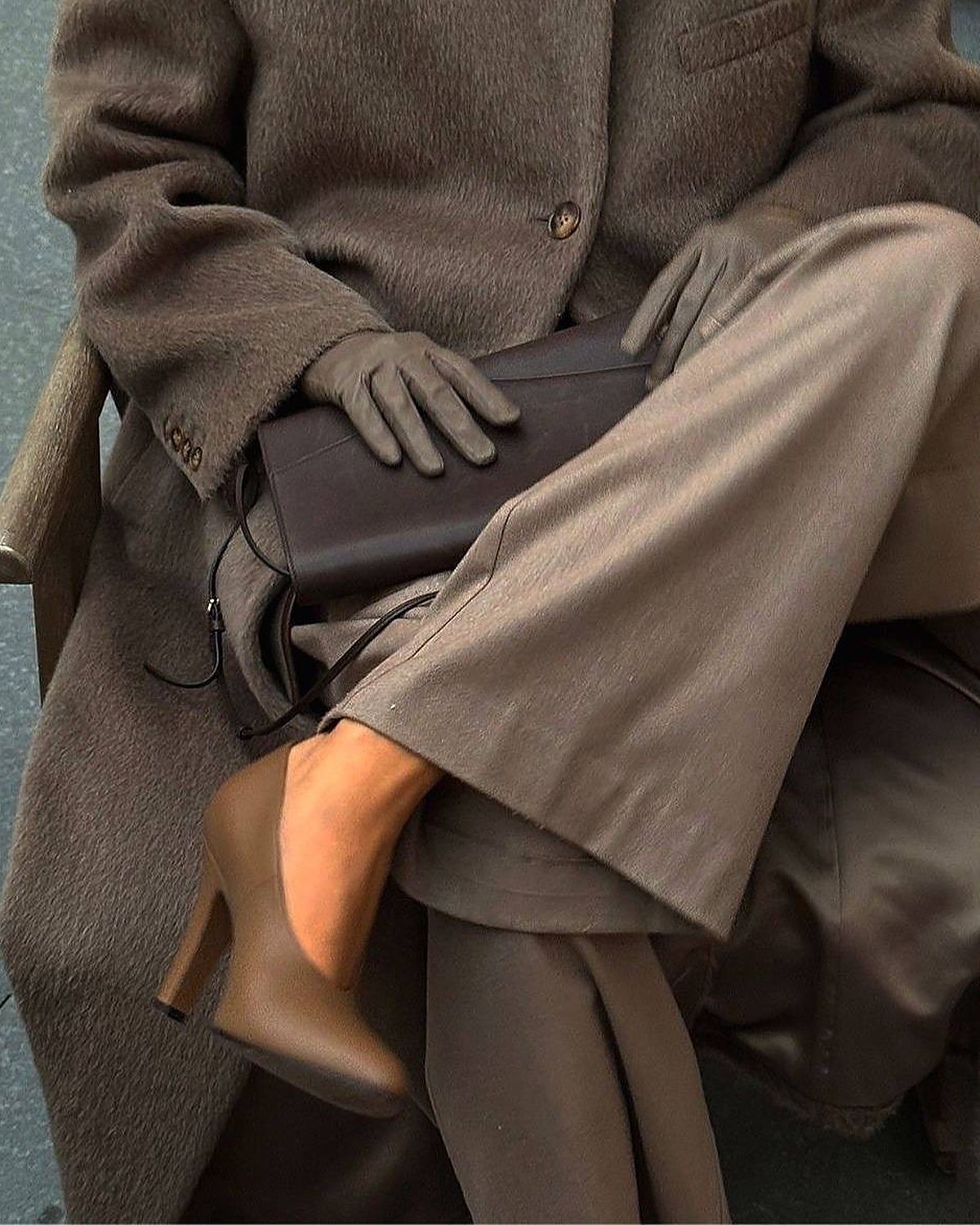
Furla bags range from shoulder shapes to workday totes and compact mini bags. I would choose by how the strap sits over a coat and what needs to stay within reach.
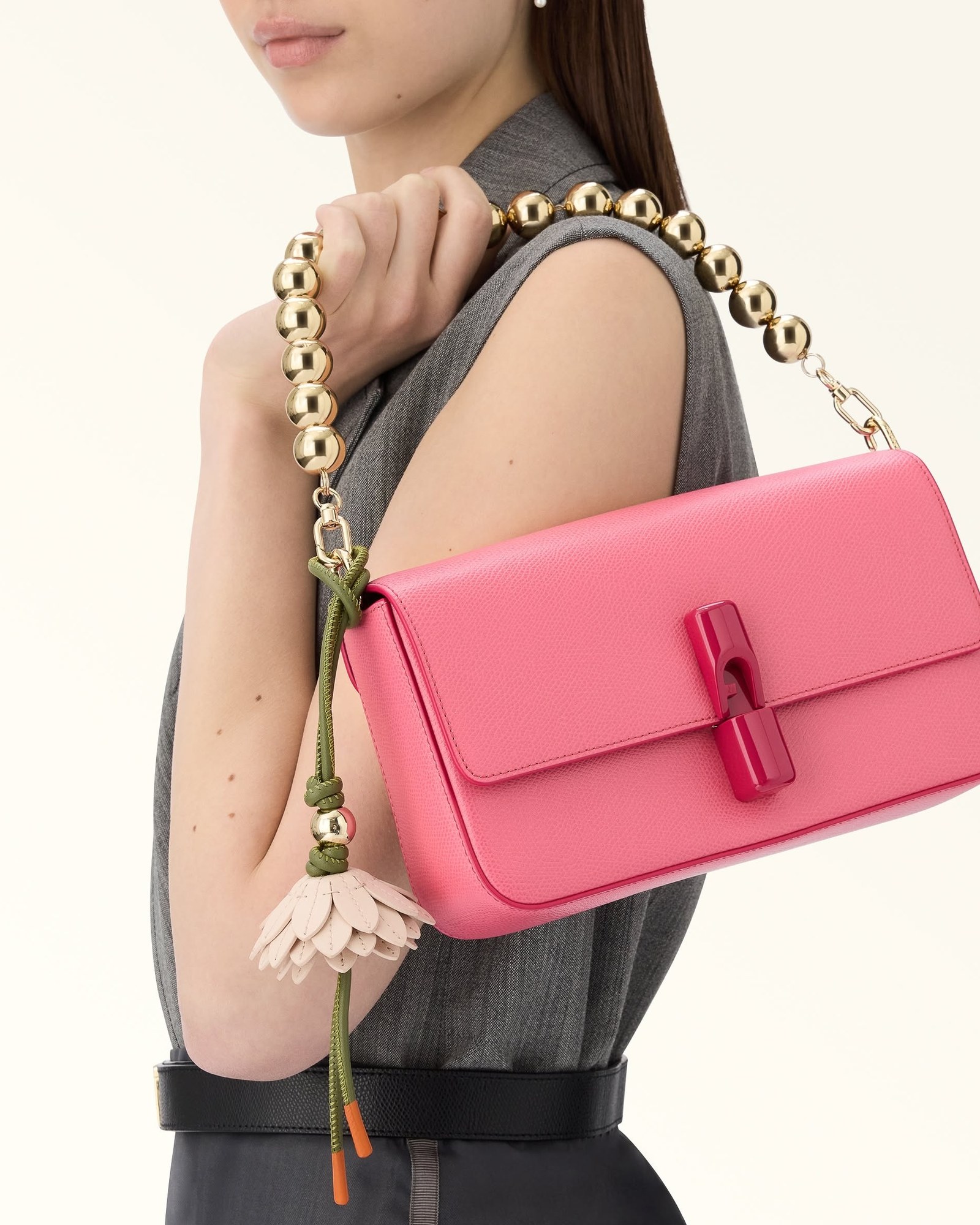
Furla Bags: What a Bologna Address Says About Shape
A Bologna shop, still open
In 1955, Aldo Furlanetto opened Furla’s original shop on Via Ugo Bassi in Bologna, and it is still operating at that address. I like that as a starting point for a bag story: one real doorway, not an invented mood. Furla also dates its origin to Bologna in 1927, a history that makes the city part of the conversation rather than just a label.
Giovanna Furlanetto has been precise about the family story: her father, Aldo, was the sole founder, and she and her brothers Paolo and Carlo helped move the company into its decisive next phase in the 1970s. The first bag collection was described around precise design, a contemporary woman, and new materials. That combination is still a useful way to read Furla bags: clear shapes, with enough detail to keep them from feeling anonymous.
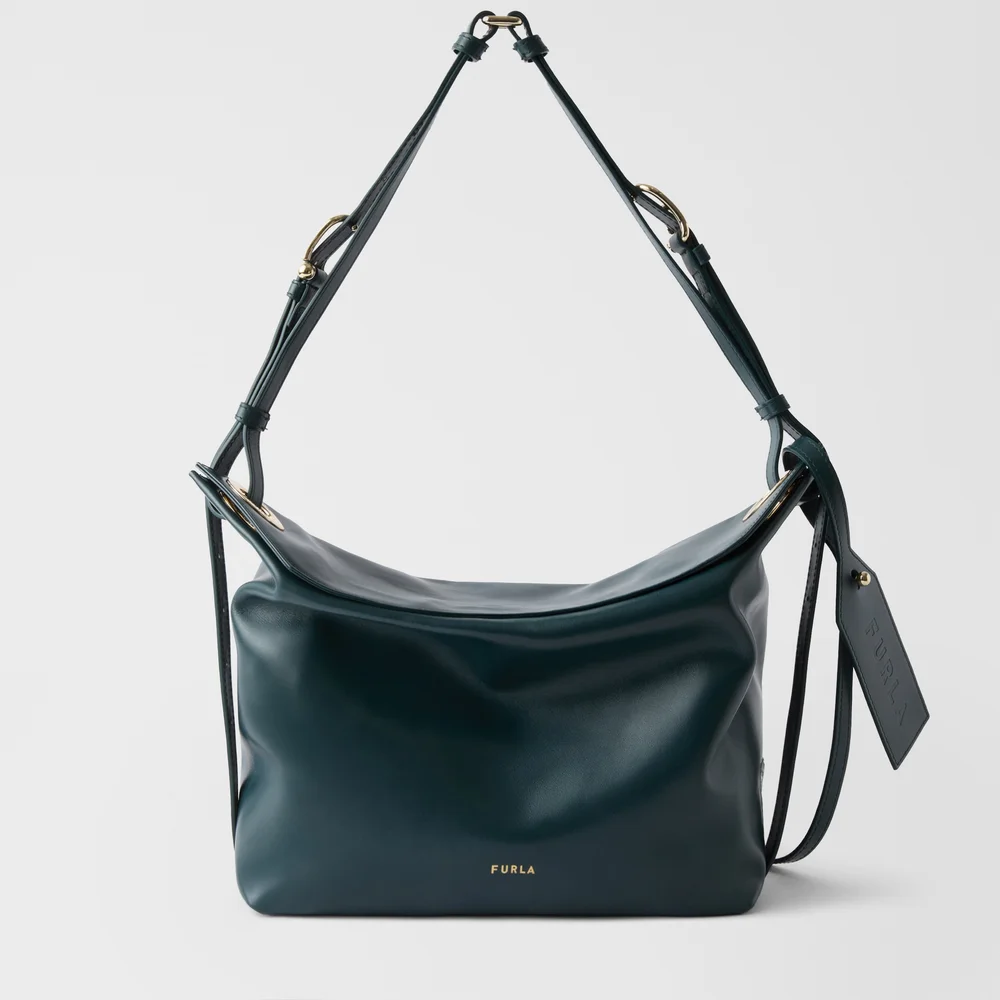
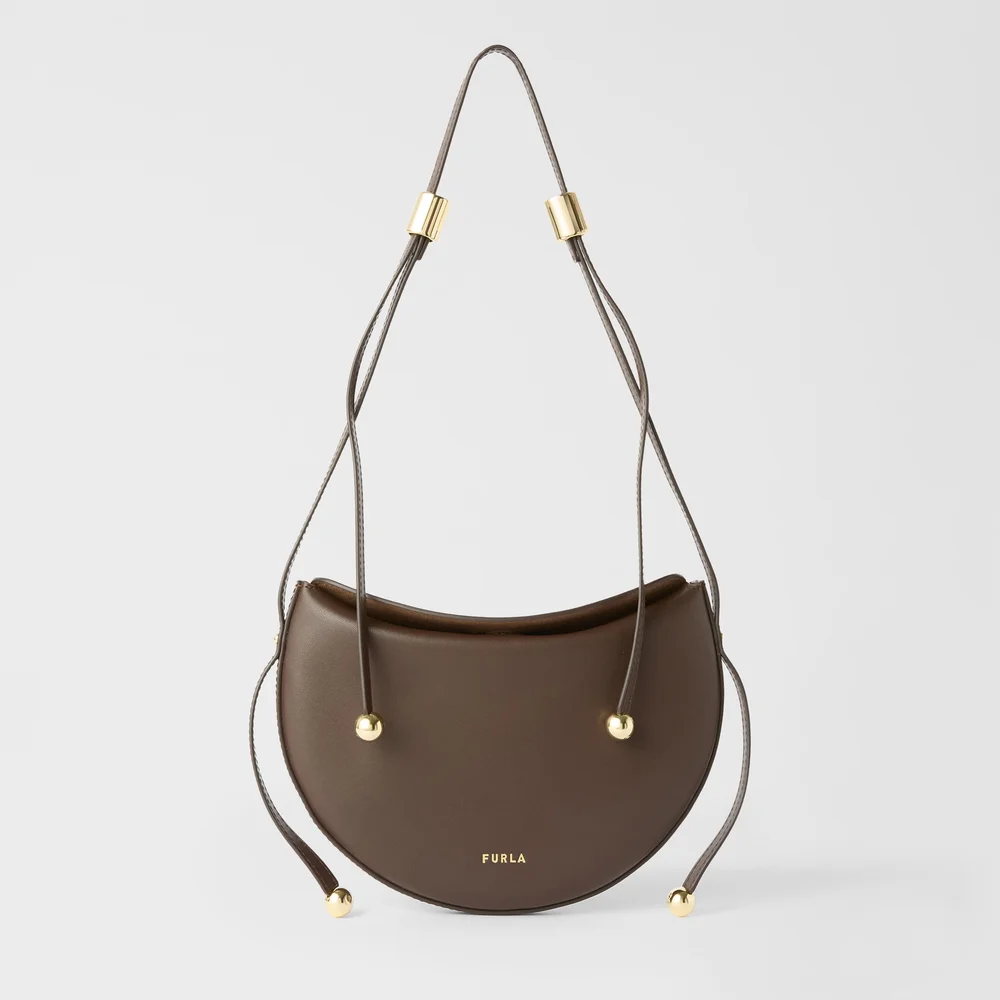
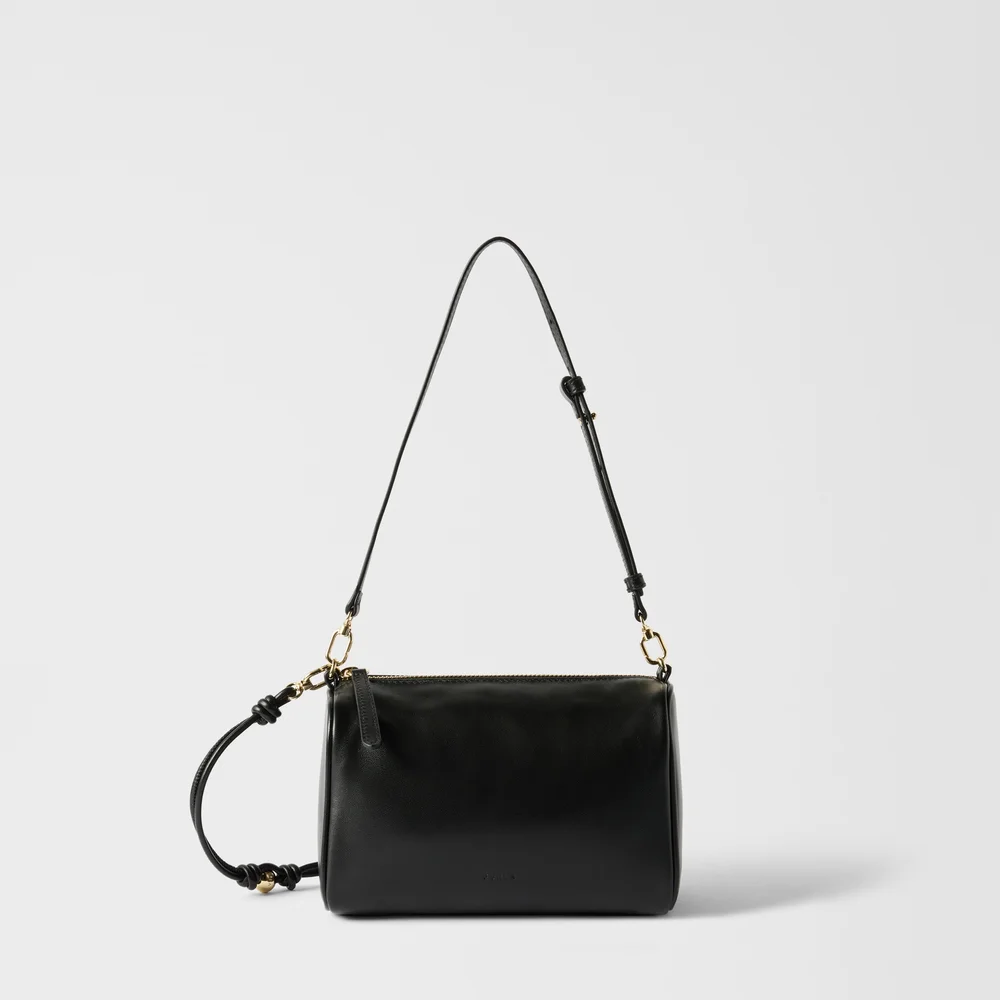
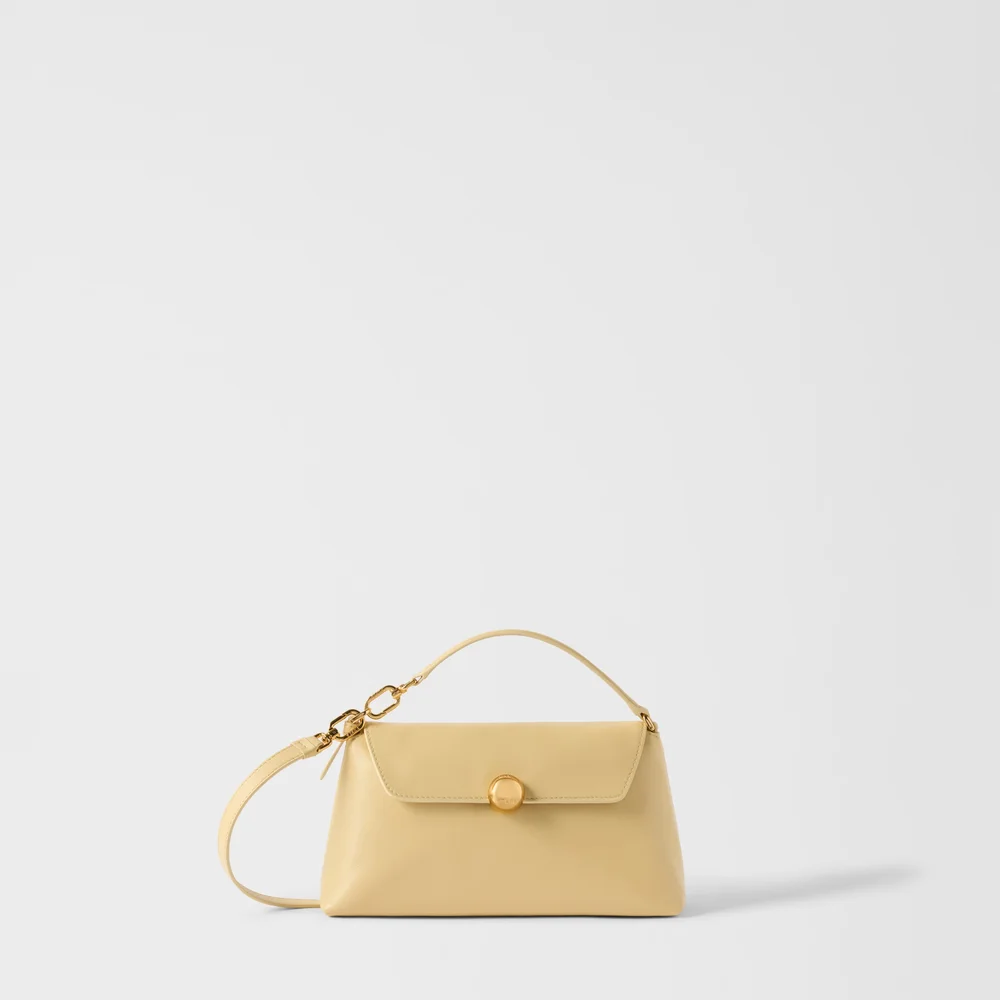
The Ginevra Shoulder Bag M has a soft trapezoid and punched details, with an adjustable handle, while the Moonstone Shoulder Bag S makes a more compact saddle shape and keeps its signature Sphere hardware. I would pair the dark forest Ginevra with a wool coat and plain knit, and let the chocolate Moonstone do the small-but-not-fussy evening job. Its magnetic closure is a detail I would check one-handed, especially with gloves.
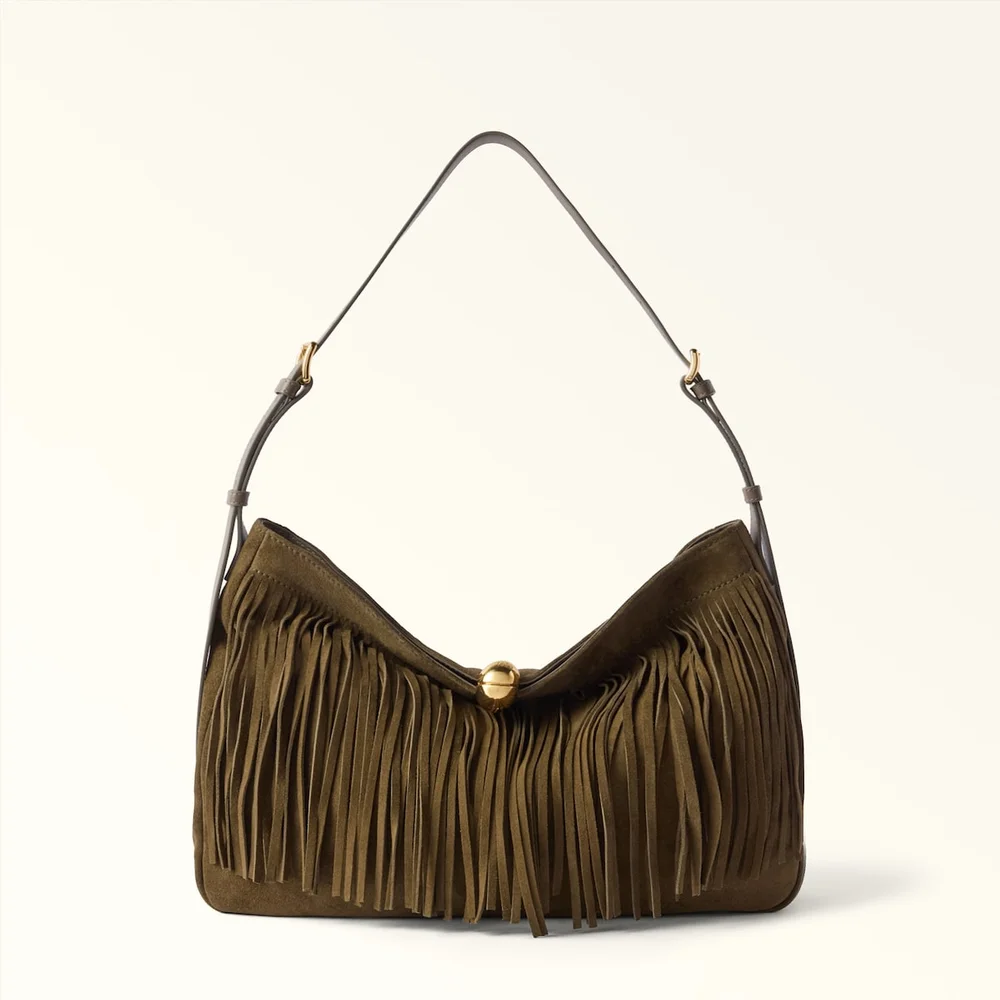
The Sfera Soft Shoulder Bag L goes in a different direction: draped suede, long fringe, bronze-tone Sfera hardware. I would keep the rest of the outfit quiet and let that movement earn its space. The Talia Crossbody is the neatest option here, with a detachable chain strap and three interior card slots. Practical tip: compare strap drop with your thickest coat before choosing a shoulder or crossbody shape.
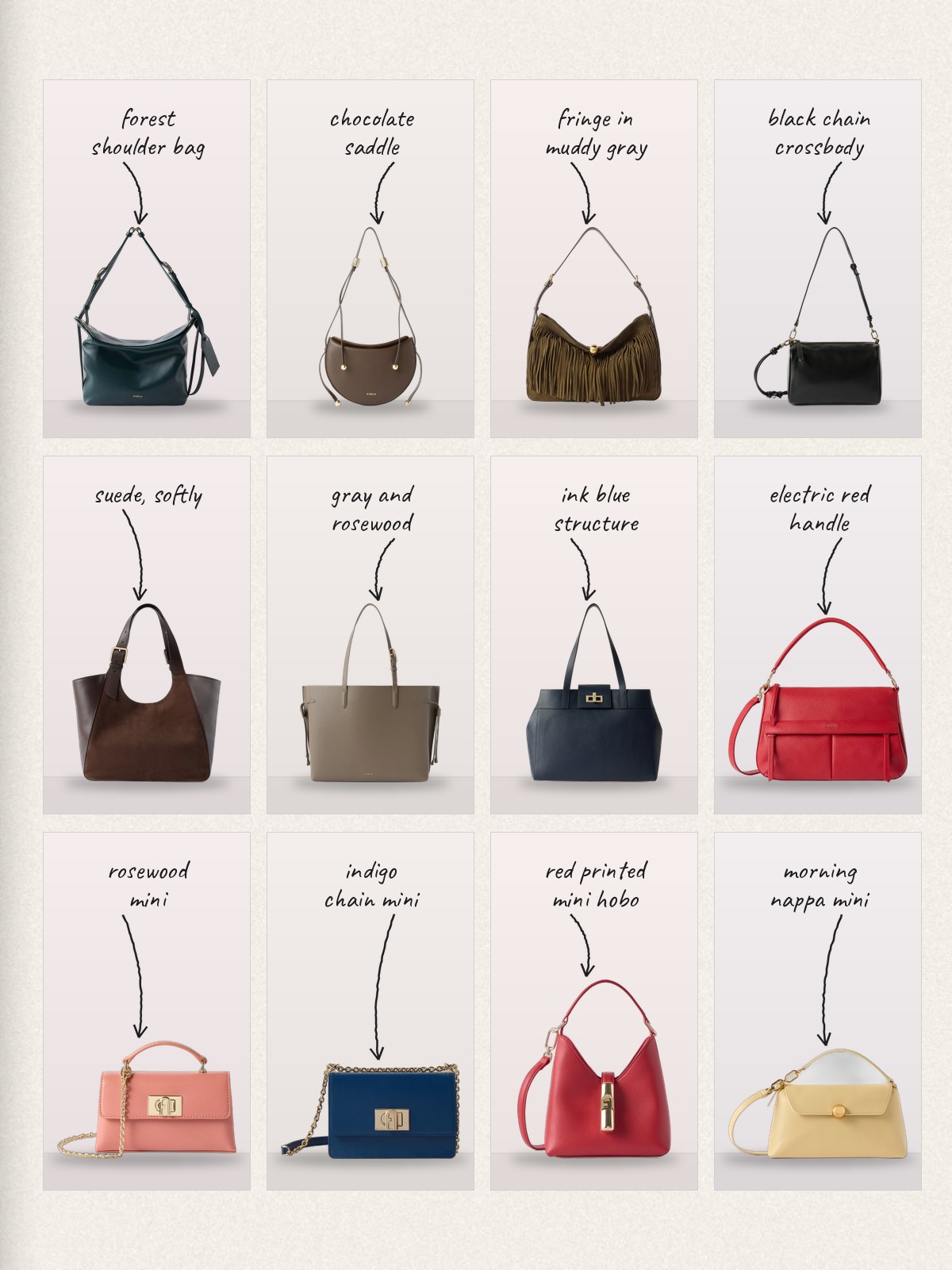
Furla shoulder and crossbody bags
Totes and top handles for the day
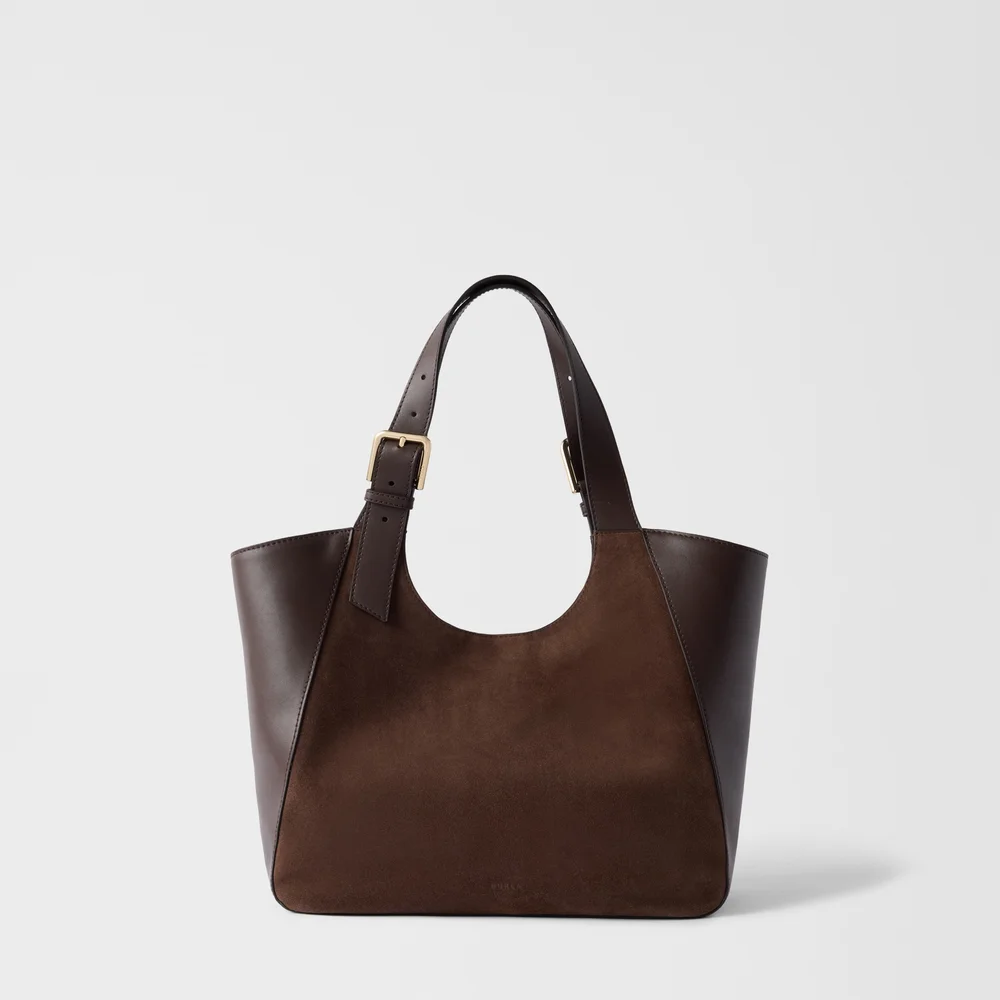
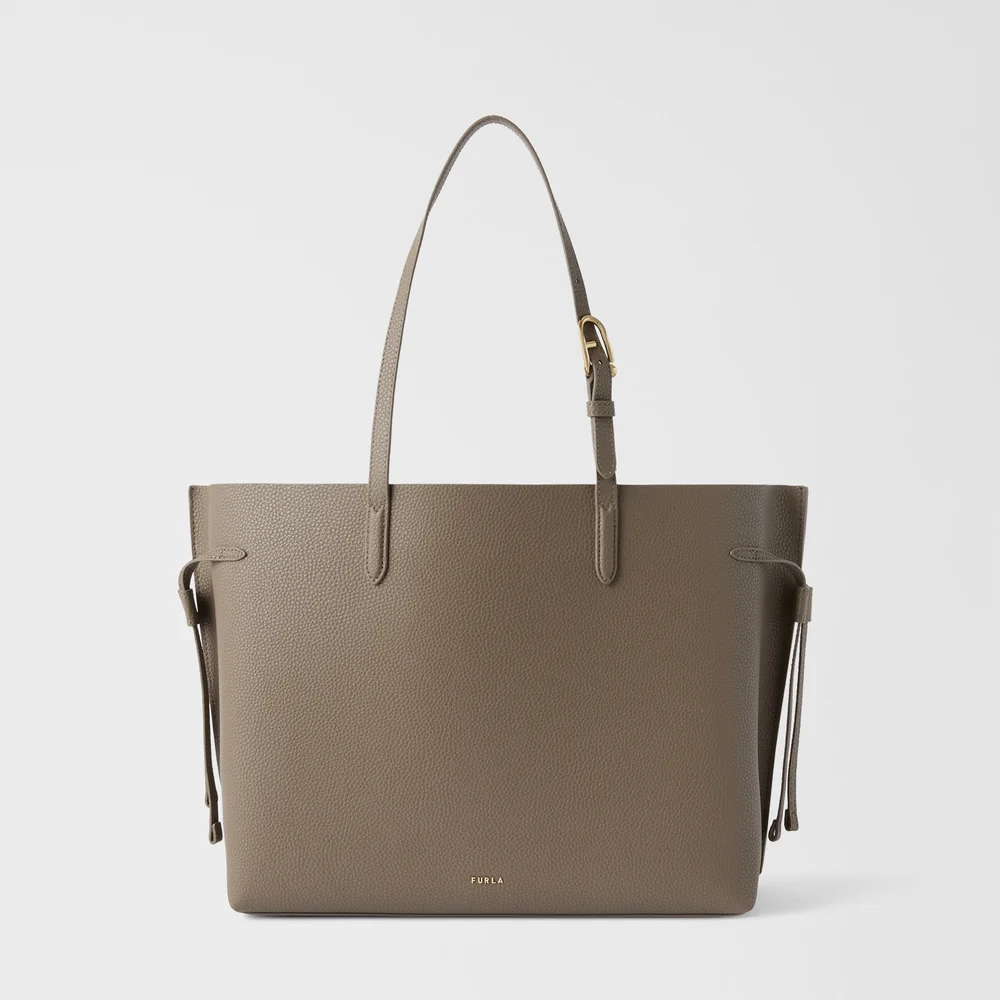
Capacity is a more honest question than color when I look at Furla bags for everyday use. The Dora Tote M pairs suede with smooth calfskin side panels, and its two handles adjust for shoulder carry; I would put it with a long coat and a scarf that can come off indoors. The Ava Tote L is more open, with color-blocked muddy gray and rosewood leather and two open compartments for keeping a notebook away from the little things.
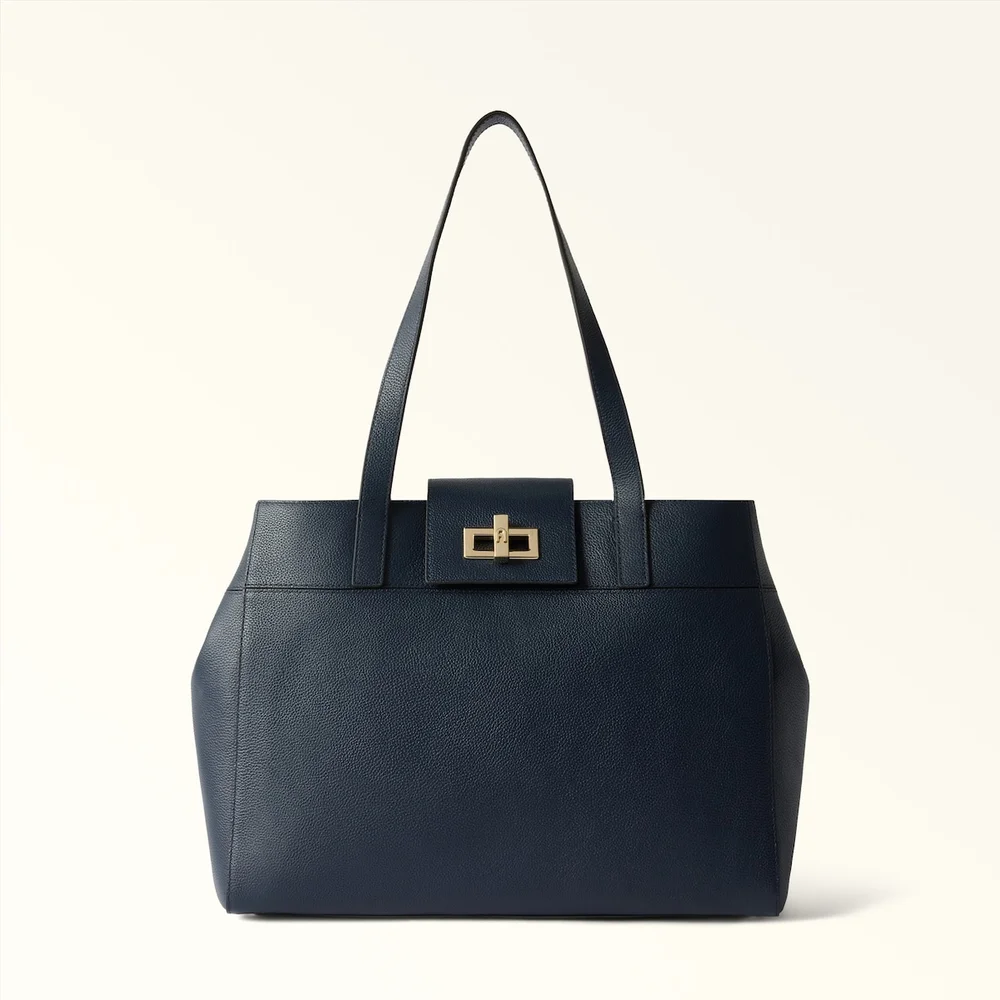
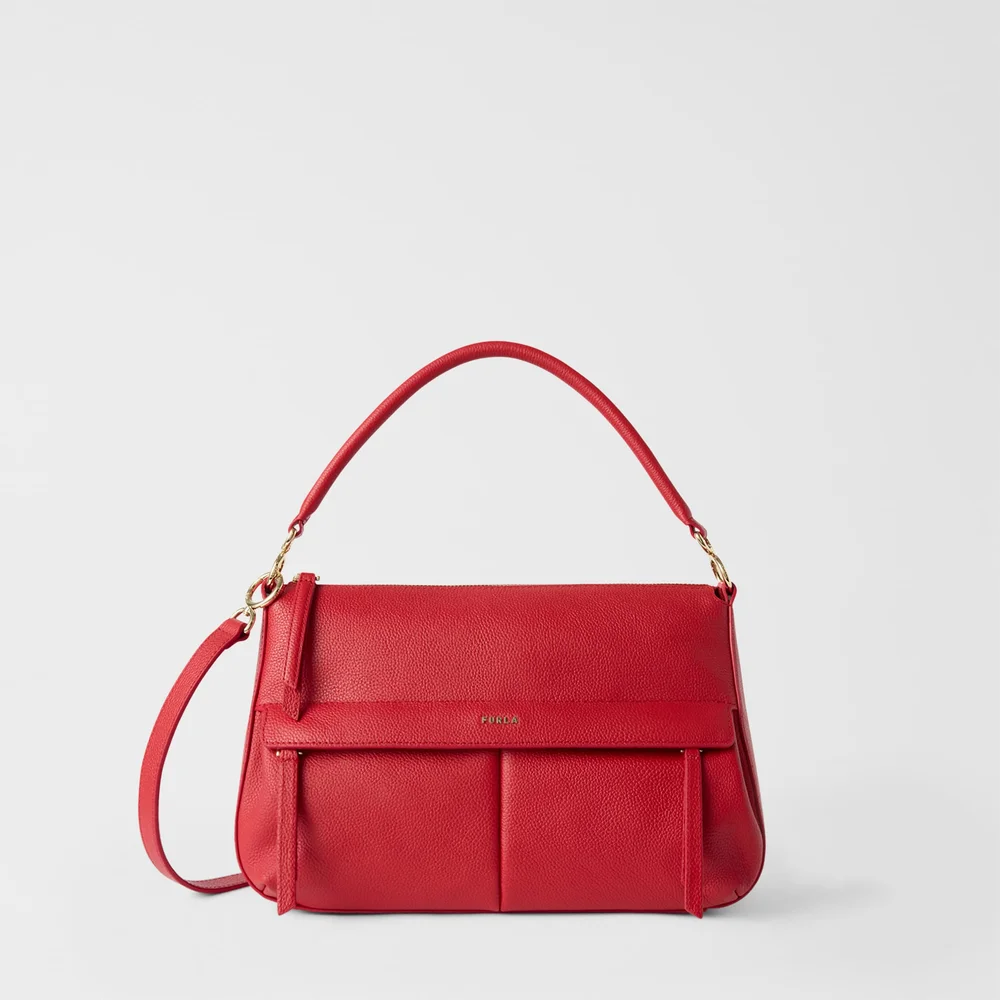
The Amelia Tote L has a structured trapezoid, covered handles and side press studs, plus a twist closure. The Isadora Top Handle M shifts the mood with electric red, a front flap and zip pockets, and its removable handle gives me a second way to carry it. For the fitting-room test, I would bring the usual notebook and pouch, then see whether the handles sit comfortably over a coat and whether the closure meets without wrestling the bag.
What I would skip: if I need to secure small essentials without stopping to look, I would pass on an open-top shape and choose a closure instead. A tote should fit the actual day, not an imaginary one.
Mini bags, with room for a little
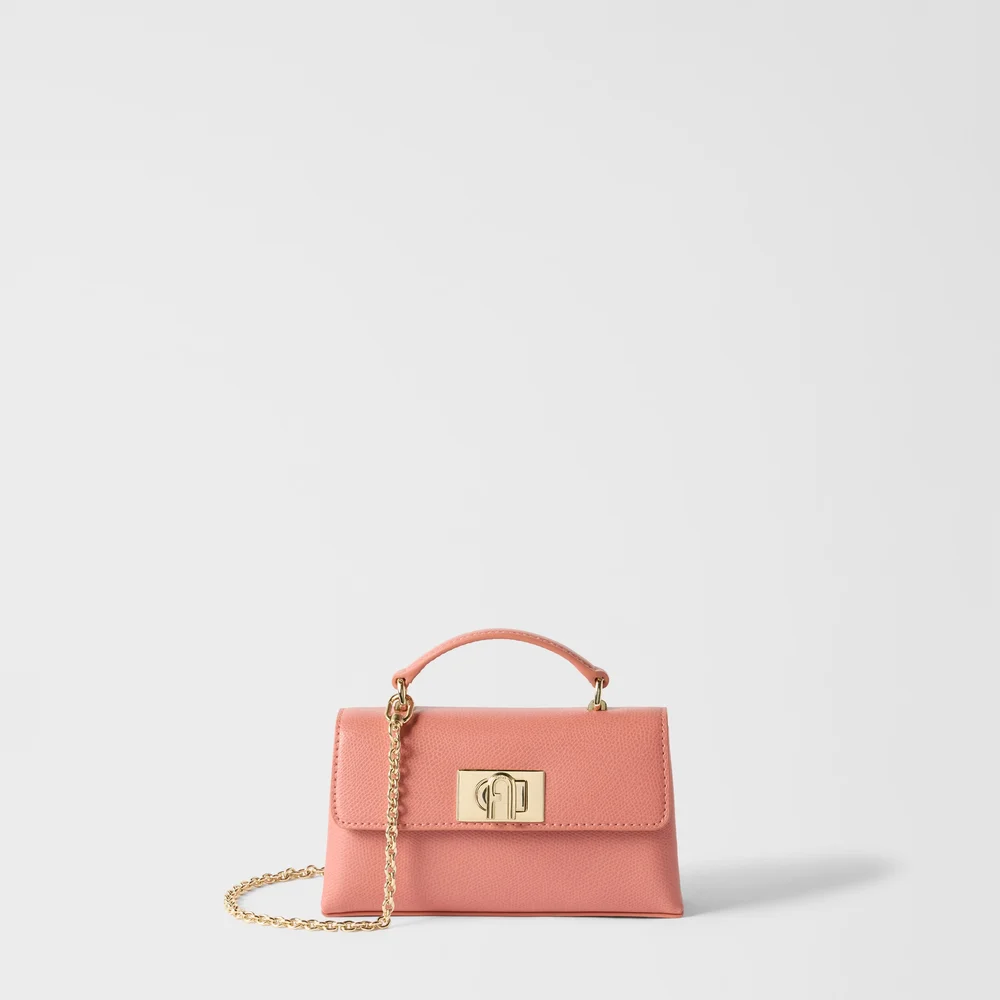
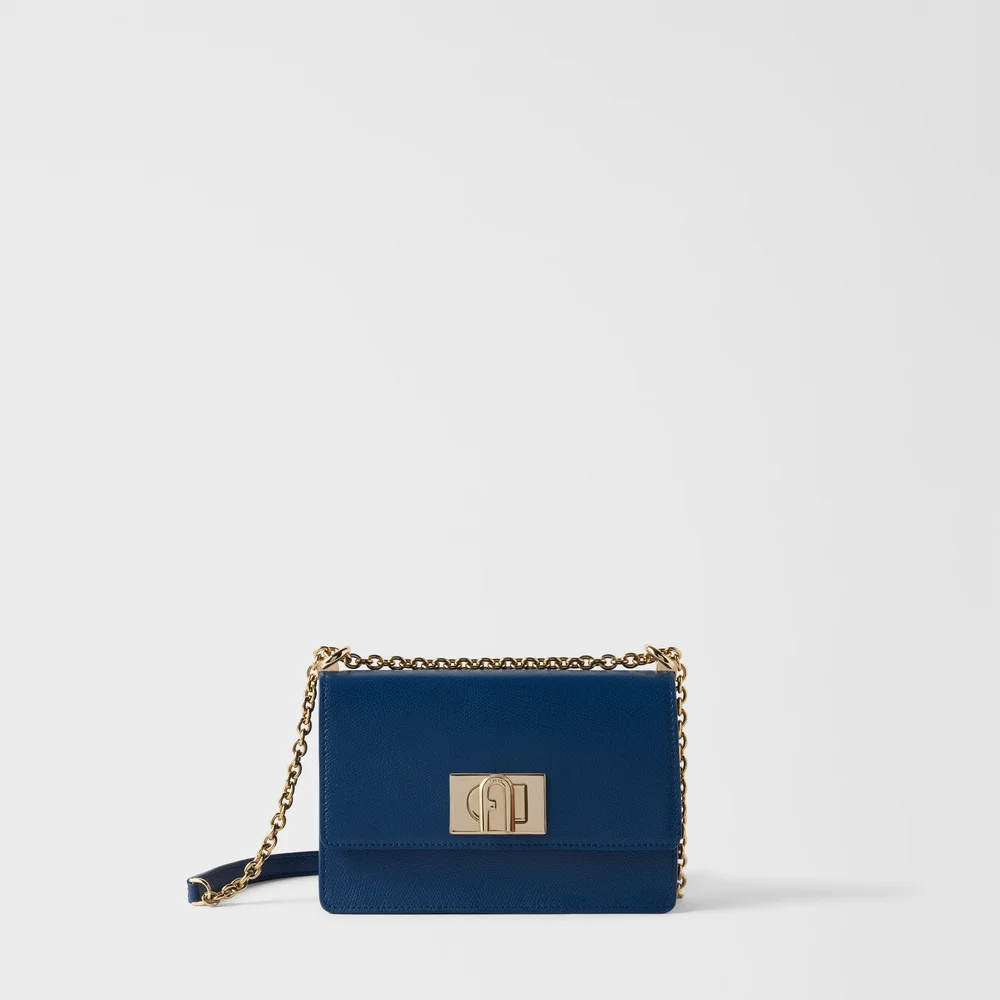
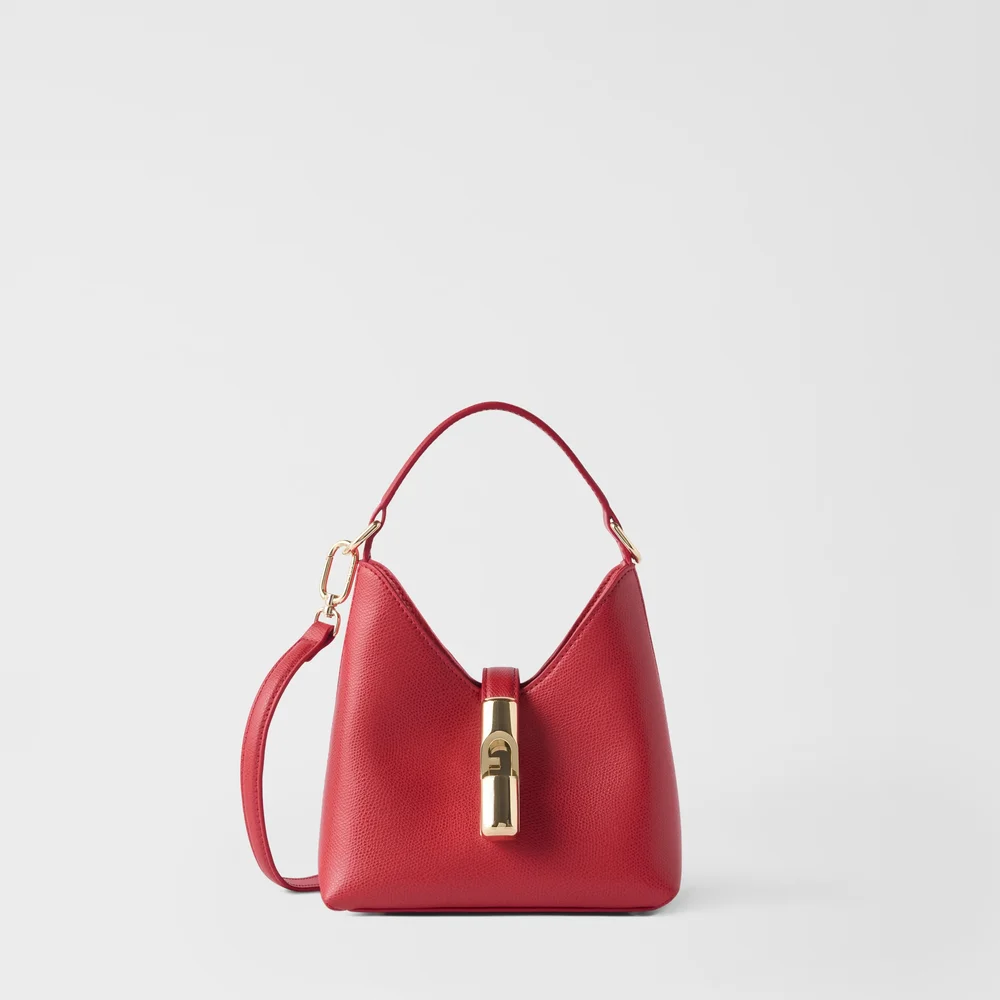
The mini Furla bags make the strap decision part of the design. The 1927 Mini Bag has a top handle, detachable chain strap and three interior card slots, while the 1927 Crossbody MINI adds a rear slip pocket and an adjustable chain strap with leather parts. I would check the chain length over a party-season coat before choosing.
The Bologna address stays with me
By late November, I would choose the silhouette around the coat I reach for most, then decide how much I want to carry in my hand. The smaller forms make sense for a dinner where keys and a card are enough; a structured tote has a different rhythm for a day with papers and an extra layer. That is my favorite part of Furla bags: the options feel rooted in a practical question, and I keep coming back to that Bologna doorway as the quiet beginning of it all.