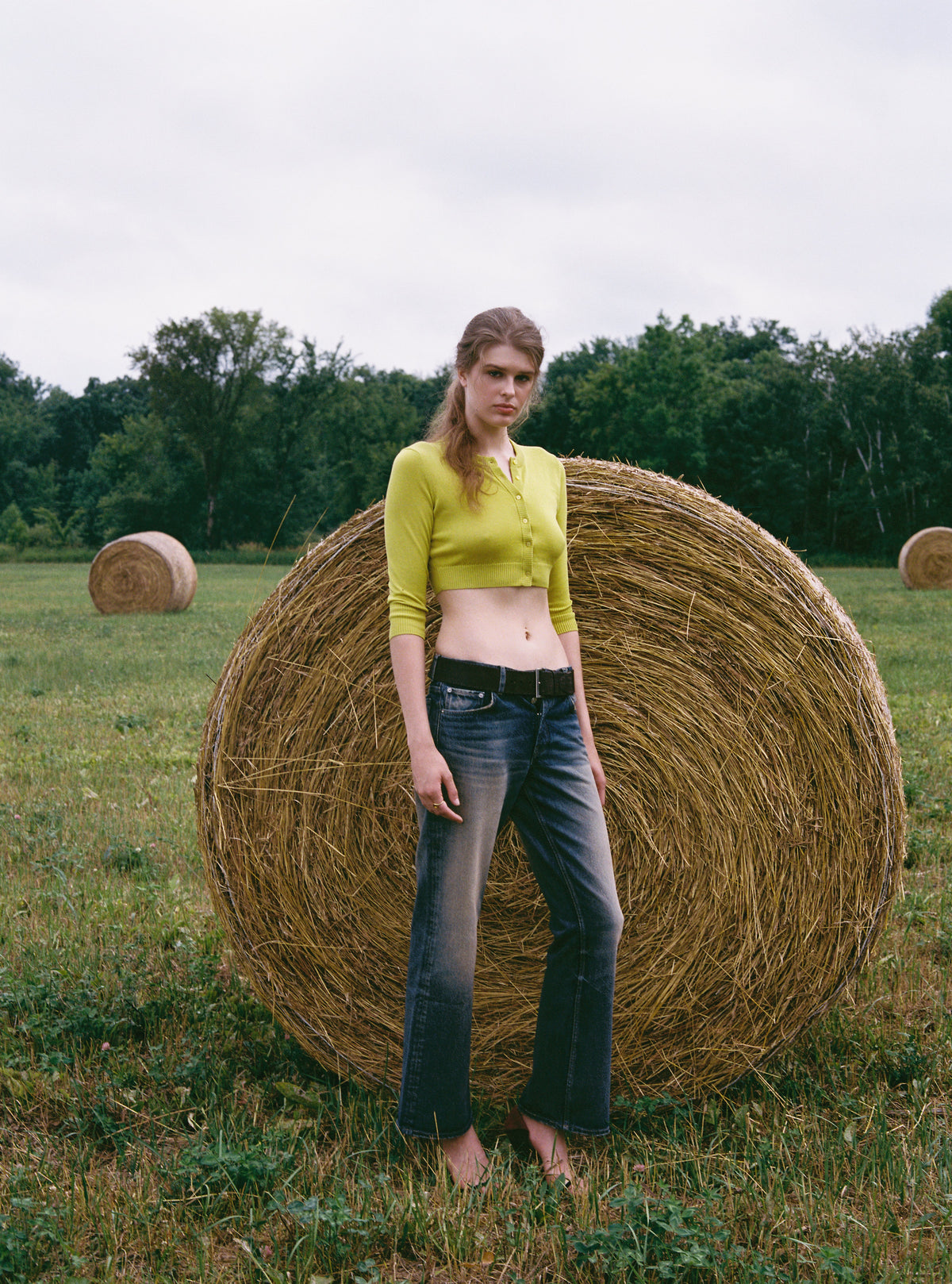
Gabriela Hearst grew up on her family's ranch in Paysandu, Uruguay, and after more than a decade working in New York design, launched her eponymous label for fall 2015 built explicitly around sustainability and a long-term view of clothing. The house has stayed close to that premise, from a partnership with the Uruguayan knitting cooperative Manos del Uruguay to a 2017 runway show run on roughly 30 percent deadstock fabric, while Hearst herself went on to lead Chloe from 2020 to 2023 as its first Latin American creative director.
Gabriela Hearst
Shoes
Hearst's design instincts trace back to a childhood spent around a working ranch, where craftsmanship existed for function first, and the footwear here follows that same logic, built for wear rather than novelty. It is a small but telling extension of a label that has always framed durability as its actual luxury argument.

Cassidy Leather Ankle Boots
Gabriela Hearst
$2,850

Duna Leather Pumps
Gabriela Hearst
$1,990

Ohio Shearling Sneakers
Gabriela Hearst
$1,490

Bocca Suede Knee Boots
Gabriela Hearst
$1,800

Strength Metallic Leather and Raffia Flats
Gabriela Hearst
$700

Emperor Flat
Gabriela Hearst
$1,150

Ohio Sneaker
Gabriela Hearst
$1,490

Fleur Flat
Gabriela Hearst
$1,450

Strength Raffia Slingback Flats
Gabriela Hearst
$850

Temperance Leather Mules
Gabriela Hearst
$1,850

Emperor Flat
Gabriela Hearst
$1,150

Strength Suede-Trimmed Slingback Flats
Gabriela Hearst
$850

Sage Leather Sandals
Gabriela Hearst
$1,000

Sardis Raffia Sandals
Gabriela Hearst
$1,200

Cassidy Leather Ankle Boots
Gabriela Hearst
$2,100

Strength Panelled Ballet Flats
Gabriela Hearst
$700

Sardis Suede-Trimmed Sandals Sandal
Gabriela Hearst
$1,250

Capitana Suede Western Boots
Gabriela Hearst
$2,450

Peggy Suede-Trimmed Raffia Pumps
Gabriela Hearst
$950

Capitana Boot
Gabriela Hearst
$2,550

Edwina Heel
Gabriela Hearst
$1,290

Capitana Boot
Gabriela Hearst
$2,550

Emperor Flat
Gabriela Hearst
$1,150

Peggy Heel
Gabriela Hearst
$950
Bags
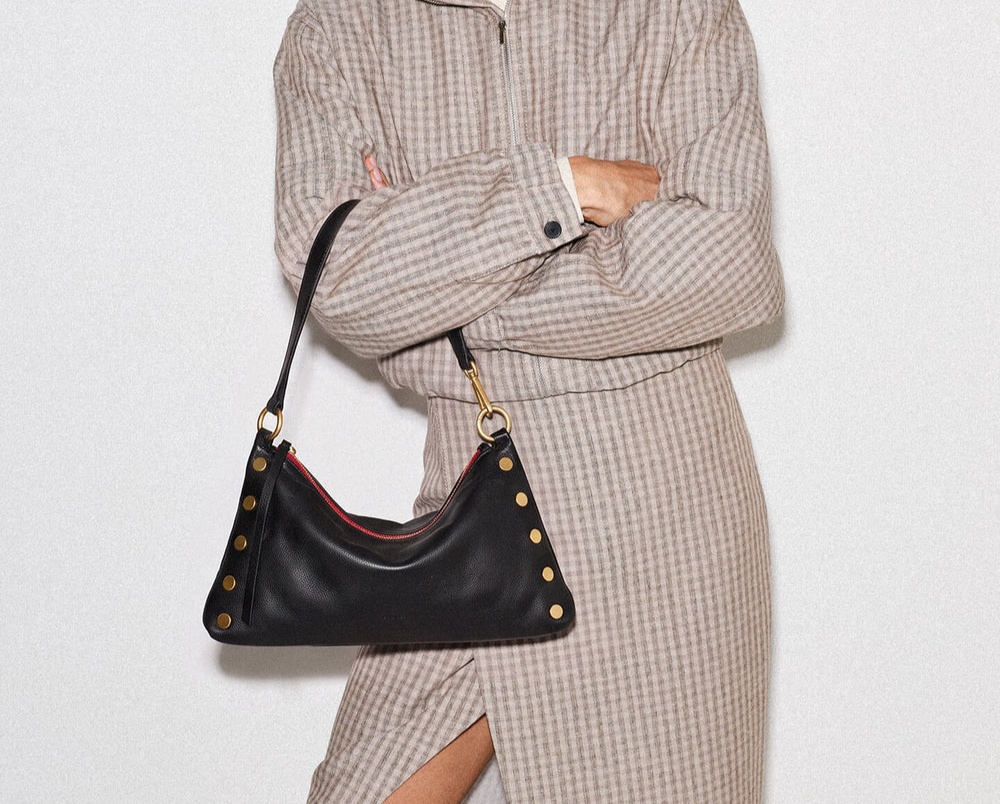
The bag category began with the Nina Bag, named for Nina Simone and originally given by Hearst to women she admired before demand turned it into a waitlisted signature, and the label has kept handbags in limited, made-to-order runs rather than mass production ever since. That restraint is unusual for a house this established and says something about what the brand actually values.

Soft Demi Shearling Clutch
Gabriela Hearst
$1,850

Small Antonia Shearling Bag
Gabriela Hearst
$3,850

Jebb Leather Shoulder Bag
Gabriela Hearst
$3,500

Marija Small Leather Tote Bag
Gabriela Hearst
$2,850

Paola Leather Clutch
Gabriela Hearst
$3,750

Marija Small Raffia-Trimmed Suede Tote Bag
Gabriela Hearst
$3,700

Marija Leather Tote Bag
Gabriela Hearst
$3,600

Callas Snake Leather Phone Case
Gabriela Hearst
$2,400

Demi Soft Leather Clutch
Gabriela Hearst
$1,590

Small Antonia Leather Bag
Gabriela Hearst
$3,850

Leonora Small Suede Bag
Gabriela Hearst
$2,970

Leonora Small Suede Bag
Gabriela Hearst
$2,970
Tops and shirting
Shirting is where Gabriela Hearst's quieter, workwear-adjacent instincts show up most plainly, structured pieces that favor precision over embellishment. It fits a designer whose whole pitch has been that clothes should be well made and long lasting rather than trend-driven.

Waite Silk-Wool Top
Gabriela Hearst
$1,900

Melina Draped Silk Top
Gabriela Hearst
$1,350

Torcello High-Neck Silk Top
Gabriela Hearst
$1,690

Peppe Turtleneck Wool-Silk Top
Gabriela Hearst
$990

Peppe Wool-Silk Turtleneck Top
Gabriela Hearst
$990

Maria Silk Satin Tank Top
Gabriela Hearst
$1,320

Peppe Turtleneck Wool-Silk Top
Gabriela Hearst
$990

Mireya Lace-Trimmed Ribbed Wool-Silk Top
Gabriela Hearst
$1,150

Frank Cashmere Polo Top
Gabriela Hearst
$750

Waite Top
Gabriela Hearst
$1,900

Maria Tank Top
Gabriela Hearst
$1,320

Cinxia Tank Top
Gabriela Hearst
$640
Dresses
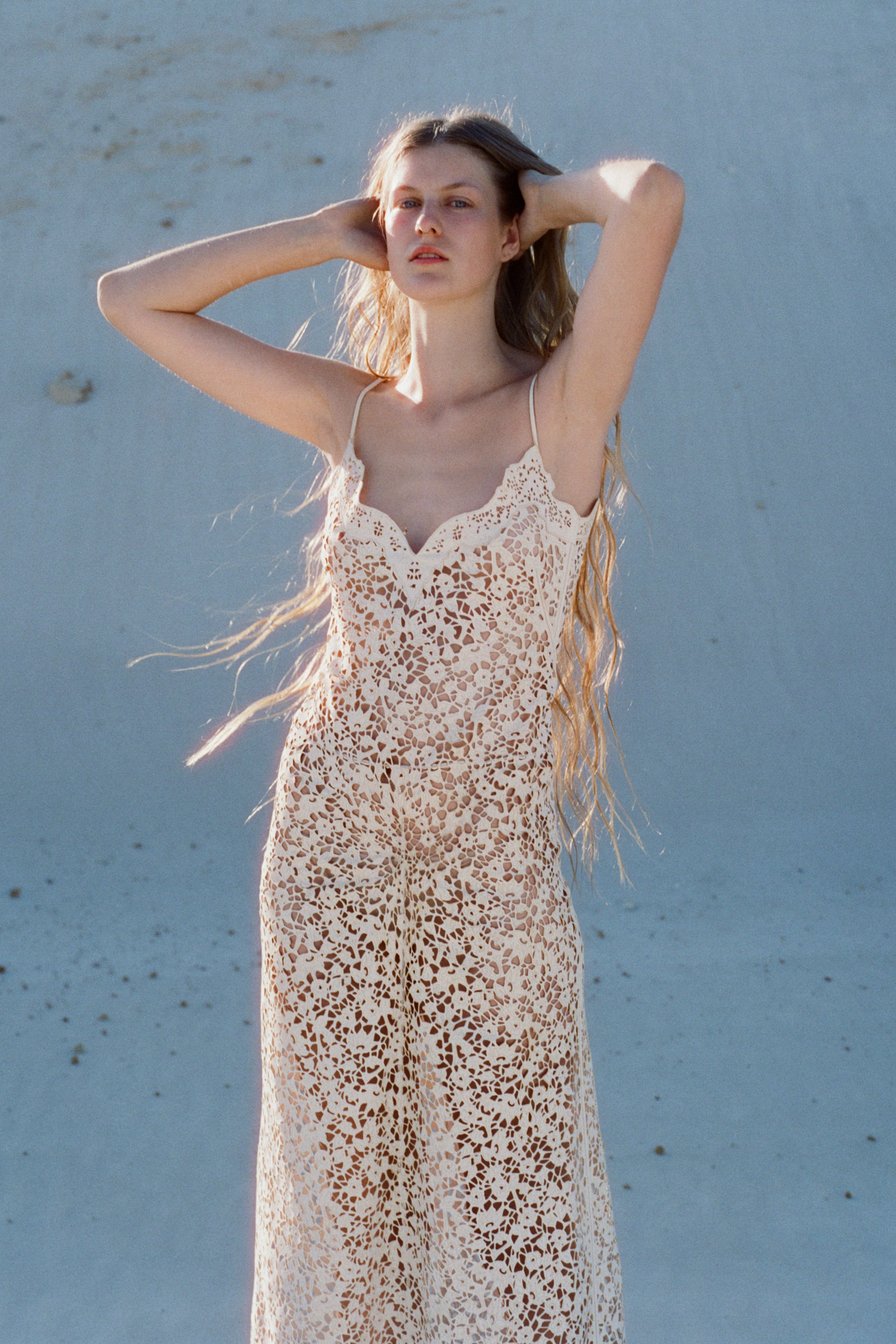
The dresses carry the same long-term-view philosophy the label launched on in 2015, tailored silhouettes meant to outlast a season rather than announce one. Hearst has talked openly about wanting a brand that felt like things that are well made, and the dresses are as good a proof point as any.

Anne Macrame Silk Maxi Dress
Gabriela Hearst
$10,800

Lulsy Lace Cashmere Midi Dress
Gabriela Hearst
$16,500

Solace Cutout Wool Maxi Dress
Gabriela Hearst
$3,950

Aberdeen Textured Silk-Wool Maxi Dress
Gabriela Hearst
$4,950

Lady Hall Cashmere-Silk Maxi Dress
Gabriela Hearst
$3,850

Peyton Ruffled Silk-Satin Midi Dress
Gabriela Hearst
$3,950

Brigita Suede Midi Dress
Gabriela Hearst
$6,650

Alessia Strapless Floral Linen Maxi Dress
Gabriela Hearst
$4,490
Skirts
Skirts here lean structured and considered, in keeping with a house that has built its reputation on materials and construction rather than surface decoration. It is a category that rewards a closer look at fabric and cut over a quick glance.

Garnet Ruffled Silk-Wool Maxi Skirt
Gabriela Hearst
$12,000

Muir Silk Maxi Skirt
Gabriela Hearst
$1,990

Wesley Checked Wool-Silk Midi Skirt
Gabriela Hearst
$1,590

Narayan Boucle Cashmere Maxi Skirt
Gabriela Hearst
$1,550

Kavya Lace-Trimmed Ribbed Wool-Silk Midi Skirt
Gabriela Hearst
$1,990

Manuela Foiled Linen Midi Skirt
Gabriela Hearst
$1,490

Camden Cashmere Speckled Herringbone Maxi Skirt
Gabriela Hearst
$2,990

Prism Skirt
Gabriela Hearst
$2,700
Accessories
Accessories round out a brand built by someone who inherited a seventh-generation ranching operation and treats material sourcing as seriously as design, a background that shows up in choices about what things are made of as much as how they look. It is a small category but a consistent one.


Trousers and shorts
The trousers and shorts continue Hearst's tailoring-first sensibility, cut with the same restraint that has defined the label since its 2015 launch. Nothing here is chasing a trend cycle, which is very much the brand's stated point.


Knitwear
Knitwear has real institutional history behind it for this house: since launch, Gabriela Hearst has worked with Manos del Uruguay, a decades-old women's knitting cooperative in her home country, to produce its hand-knits. That is a specific, sourced supply chain rather than a marketing line, and it shows in the category's weight and hand-feel.


Jackets and blazers
Structured outerwear is arguably where Hearst's design signature reads clearest, tailoring with the kind of precision that got her compared early on to an American answer to European ready-to-wear houses. It is a strong entry point into the label for anyone who has not shopped it before.


More from the collection
The rest of the edit fills in a brand that, in under a decade, went from a New York launch to a minority investment from LVMH and a Madison Avenue flagship, all while keeping sustainability as a stated design constraint rather than an afterthought. It is a fuller picture of a label that grew quickly without obviously changing its values.

Marion 35 leather knee boot
Gabriela Hearst
$2,250

Jebb leather shoulder bag
Gabriela Hearst
$3,500

Jebb leather shoulder bag
Gabriela Hearst
$3,500

Melina draped silk-satin blouse
Gabriela Hearst
$1,350

Amor Rib Knit Cashmere-Silk Midi Dress
Gabriela Hearst
$755.99

Nyra Silk Gauze Knit Sleeveless Maxi Dress
Gabriela Hearst
$899.99

Peyton Dress
Gabriela Hearst
$3,950

Wesley pleated houndstooth wool and cashmere-blend midi skirt
Gabriela Hearst
$1,590

Wesley pleated houndstooth wool and cashmere-blend midi skirt
Gabriela Hearst
$1,590

Dugald Degrade Floral Silk Pleated Midi Skirt With Belt
Gabriela Hearst
$2,650

Eglantina leather-trimmed shearling gloves
Gabriela Hearst
$1,300

Rhein cashmere and wool-blend flared pants
Gabriela Hearst
$3,100

Courtney herringbone cashmere turtleneck sweater
Gabriela Hearst
$2,750

Tellus Double-Breasted Virgin-Wool Coat
Gabriela Hearst
$4,200

Demeter Fur Coat Collar
Gabriela Hearst
$3,500

x Paul Smith Lyra Printed Silk Trench Coat
Gabriela Hearst
$7,800

Amoret Barrel-Leg Jeans
Gabriela Hearst
$1,010

Amoret Suede Straight-Leg Jeans
Gabriela Hearst
$5,500

Amoret Printed Linen Barrel-Leg Jeans
Gabriela Hearst
$1,840

Eos Wide Leg
Gabriela Hearst
$1,500

Amoret Wide Leg
Gabriela Hearst
$1,010

Lauren fringed cashmere wrap
Gabriela Hearst
$3,170

Charm Necklace
Gabriela Hearst
$550

Gold-Plated Charm Necklace
Gabriela Hearst
$550
Our honest take
Gabriela Hearst has one of the more substantiated sustainability stories in contemporary luxury, backed by an actual cooperative partnership and a runway show built on deadstock fabric rather than just language about it. The clothes ask for patience and a preference for construction over decoration, so this edit will suit a shopper looking for pieces built to hold up rather than pieces built to be noticed immediately.