G.H. Bass loafers trace a path from the company's 1876 start in Wilton, Maine, through the 1936 Weejuns and their Ivy League afterlife, then into lug soles, tassels, suede, and color. I would begin with the black Whitney, then choose how much sole and ornament I want.
G.H. Bass loafers: How a Norwegian Slip-On Made Room for a Penny
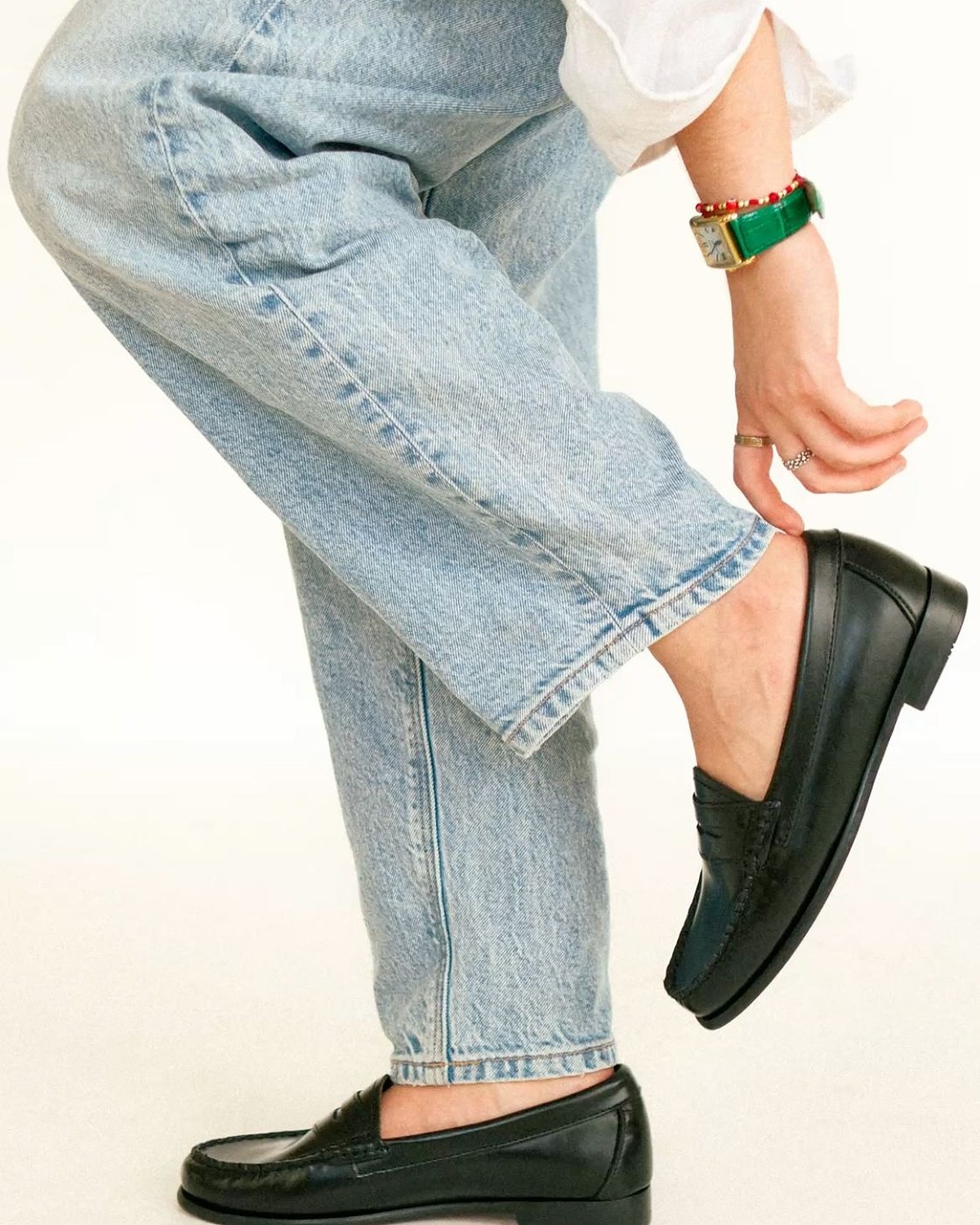
A coin slot with a past
On March 9, 1876, George H. Bass began making shoes in Wilton, Maine. The brand's own timeline puts the beginning there, before the Weejun had a name or a penny keeper. In 1936, Bass introduced Weejuns, inspired by and named after a Norwegian farmer's slip-on, and that is the thread I want to follow: a shoe built to move between a working origin and a college wardrobe.
An Esquire team spotted Norwegian slip-ons in Palm Beach in 1935, and Bass was commissioned to recreate the style. On campuses, students put coins into the strap's diamond cutout, and the penny loafer got a name of its own. By the late 1950s the penny loafer was a collegiate standard; the Ivy look carried Weejuns beyond American campuses in the 1950s and early 1960s. I like the two-step history: a local Maine shoemaker, then a shoe that traveled without laces.
Start with the black Whitney Weejuns: hand-sewn moccasin seams and beefroll detailing give the plain penny strap enough detail to read clearly with navy trousers and a white shirt. The wine version would bring a warmer note under a gray suit, while the light-brown and cream Whitneys have softer contrast with dark denim or wool tights and a skirt. I would keep the black and white pair for a graphic outfit and olive for a more muted one. Before choosing a color, I would compare its vamp against the hem I plan to wear most; the toe and keeper are the focal point, so the trouser should stop without swallowing them.

G.H. Bass Weejuns Penny Loafers

Whitney Weejuns Penny Loafer
G.H. Bass
$195

Whitney Weejuns Penny Loafer
G.H. Bass
$195

Whitney Weejuns Penny Loafer
G.H. Bass
$195

Whitney Weejuns Penny Loafer
G.H. Bass
$195

Whitney Weejuns Penny Loafer
G.H. Bass
$195

Whitney Weejuns Penny Loafer
G.H. Bass
$195

Whitney Weejuns Penny Loafer
G.H. Bass
$220

Whitney Weejuns Penny Loafer
G.H. Bass
$195
Lug soles and Mary Janes
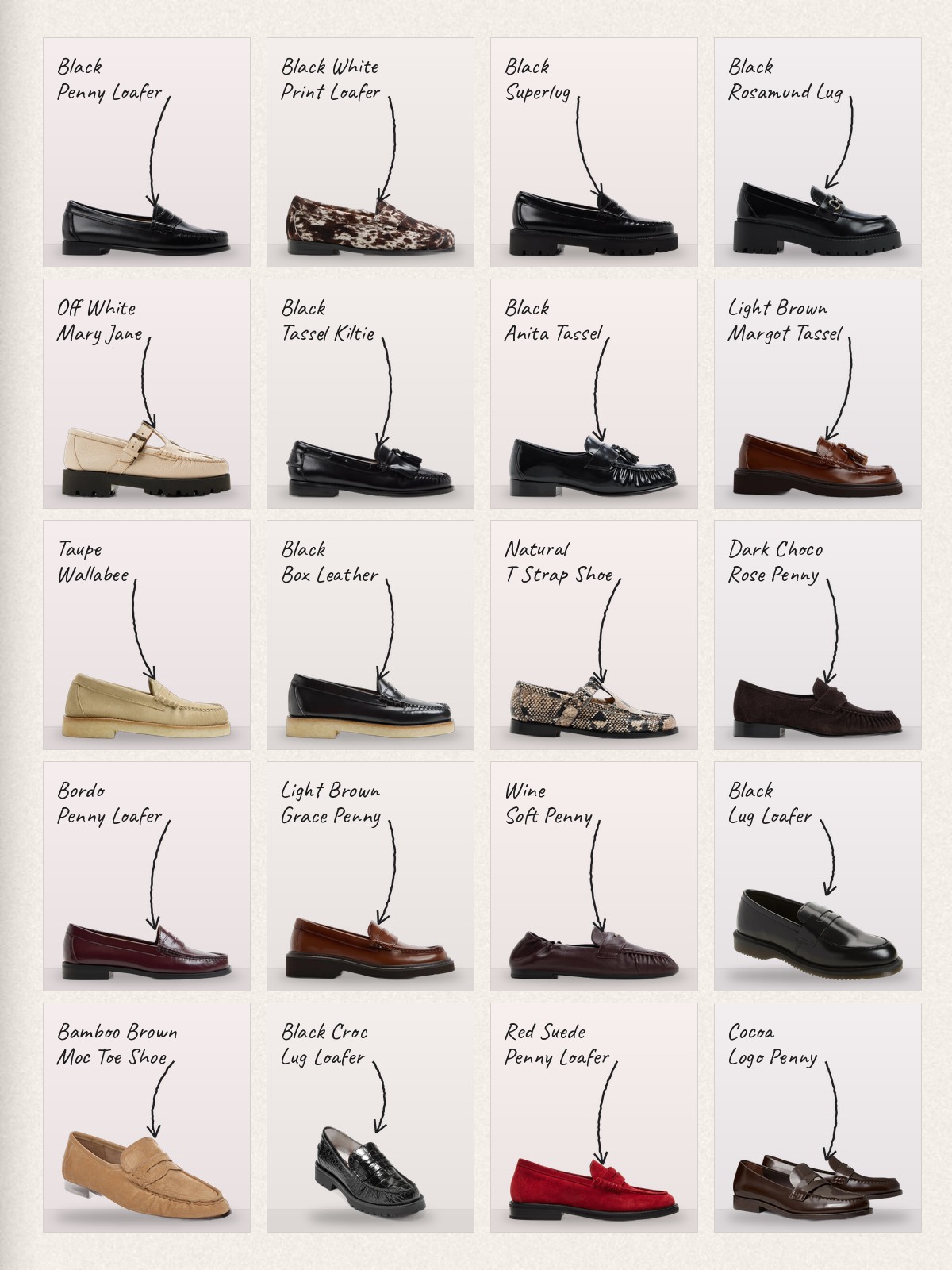
A thicker sole changes the line of a loafer before it changes the outfit. The black Whitney Superlug keeps the penny strap and moc toe shape, with a chunky sponge rubber sole; the wine version gives the same outline a deeper red-brown note. I would put either under straight jeans or a long skirt so the heavier base has some room.
The black Rosamund adds vintage-inspired monogram hardware and a raised heel, and antique brown softens that detail while keeping the sponge rubber outsole. For a more open front, the off-white Fisherman Mary Jane has a woven vamp and buckle strap; the medium-brown version warms up the same texture. The black Fisherman Mary Jane keeps the weave but makes a stronger contrast with dark tights. With a plain crewneck and cropped trousers, I would let the shoe do the talking; with a skirt, sheer tights keep the strap visible.
The penny keeper makes these feel related to the classic Whitney, but the sole and strap placement change the silhouette. Before buying, I would check that the buckle sits comfortably across the instep and that the heel does not lift as I walk around the fitting room. What I would skip: the off-white woven Mary Jane if the rest of the outfit already has a busy knit or print; the strap and vamp have plenty going on without competition.

Whitney Superlug Weejuns
G.H. Bass
$210

Whitney Superlug Weejuns
G.H. Bass
$210

Rosamund Lug Penny Loafer
G.H. Bass
$160

Rosamund Lug Penny Loafer
G.H. Bass
$160

Mary Jane Fisherman Super Lug
G.H. Bass
$79.98

Mary Jane Fisherman Super Lug
G.H. Bass
$99.98

Mary Jane Fisherman Super Lug Weejuns
G.H. Bass
$220

Mary Jane Fisherman Super Lug Weejuns
G.H. Bass
$99.98

Tassels and kiltie fronts
A 1980 style guide reported that preppy Americans were buying Weejuns as quickly as the company could make them; the tassel versions are a more decorated branch of that campus story. The black Esther keeps the hand-sewn moccasin seams, beefroll edge, and twin tassels under a kiltie; wine and dark-chocolate Esther versions repeat that front in warmer shades.
The black Anita is quieter at the toe, with small gathered accents and a memory-foam insole. Medium brown keeps the same glove-soft upper, and the antique-brown suede option lets texture do the talking. Margot in black and light brown wears tassels with a sponge rubber outsole, so I would pair it with ankle-length trousers, a chunky knit, or a clean denim skirt rather than add another ornament.
Tassels can tip formal fast. I would check that they sit evenly and that the kiltie lies flat before choosing an Esther. What I would skip: the kiltie front if I want a very spare, uninterrupted line under a narrow trouser. The Anita or Margot is the calmer choice for that outfit, while the wine Esther can hold its own with a plain skirt and tights.


Suede and colored penny loafers
Color is easier to judge next to the clothes I actually reach for, not in isolation. The taupe suede Wallabee, made with suede from English tannery Charles F. Stead, reads softer beside camel or brown tights; the black box-leather version looks sharper with gray flannel. Both use the Clarks Originals last and a natural crepe outsole.
The natural leather Mary Jane has a buckled T-strap, while the dark-chocolate Rose adds a gathered toe and branded coin detail. Antique brown Rose gives the same gathered front a worn-in color. For a more straightforward penny shape, the Bordo Blythe has a whale-tail keeper and flexible rubber outsole; light-brown Grace brings two-tone burnished leather; wine Rumi trades a classic heel for a scrunch back and softer upper.
This is where I would decide whether I want the heritage reference to be obvious or only suggested. I would check the suede in daylight, look at the grain and color across both shoes, then try the strap with the hem I plan to wear. I would skip the wine Rumi if I wanted a crisp, tailored finish; its gathered heel and soft upper suit a looser outfit better.


Penny loafers beyond the Weejun
By 1980, one Toledo style guide had penny loafers in its list of women's prep clothes, alongside blazers, sweaters, oxford shirts, and slacks. I like that the shoe was not only a men's campus shorthand; these options make the same coin-slot idea easy to take in a different direction.
The black Temara from Dr. Martens has polished leather, a broad strap, apron toe, and grooved rubber sole; cherry red gives it a brighter edge. Sam Edelman's Lizbeth comes in bamboo-brown or black suede, with a gathered moc toe and low heel, so I would set it against dark denim or a gray skirt. Cole Haan's black croc-print Treena brings a chunky lug sole and a raised profile; Steve Madden's Madison keeps a one-inch heel with a more understated apron toe in black leather or red suede. Tory Burch's cocoa Classic Penny Loafer ends on a lower profile, with a logo coin keeper.
I would compare the upper across all pairs at eye level, then check the vamp against my instep and the sole against the day I am dressing for. A dressier shoe can still feel relaxed with straight-leg pants; a lug sole asks for a longer hem or a deliberately heavier sock.


One penny, several directions
I would choose in this order: a black or wine Whitney if I want the original penny-strap outline; a Superlug or Fisherman Mary Jane if I want the sole to announce itself; then a tassel, suede, or color if I want the front to do more work. The coin-slot story stays useful not because I need to carry change there, but because one small cutout turned a practical-looking shoe into a shorthand for how people dress.
If I could keep one reference in mind, it would be Wilton in 1876: a town and a shoemaker before the shoe became everybody's campus shorthand. I would pick the pair that makes tomorrow's outfit simpler and let the rest of the story travel with it. If you want to keep browsing, I also put together Black Loafers and YSL Loafers Dupe.






