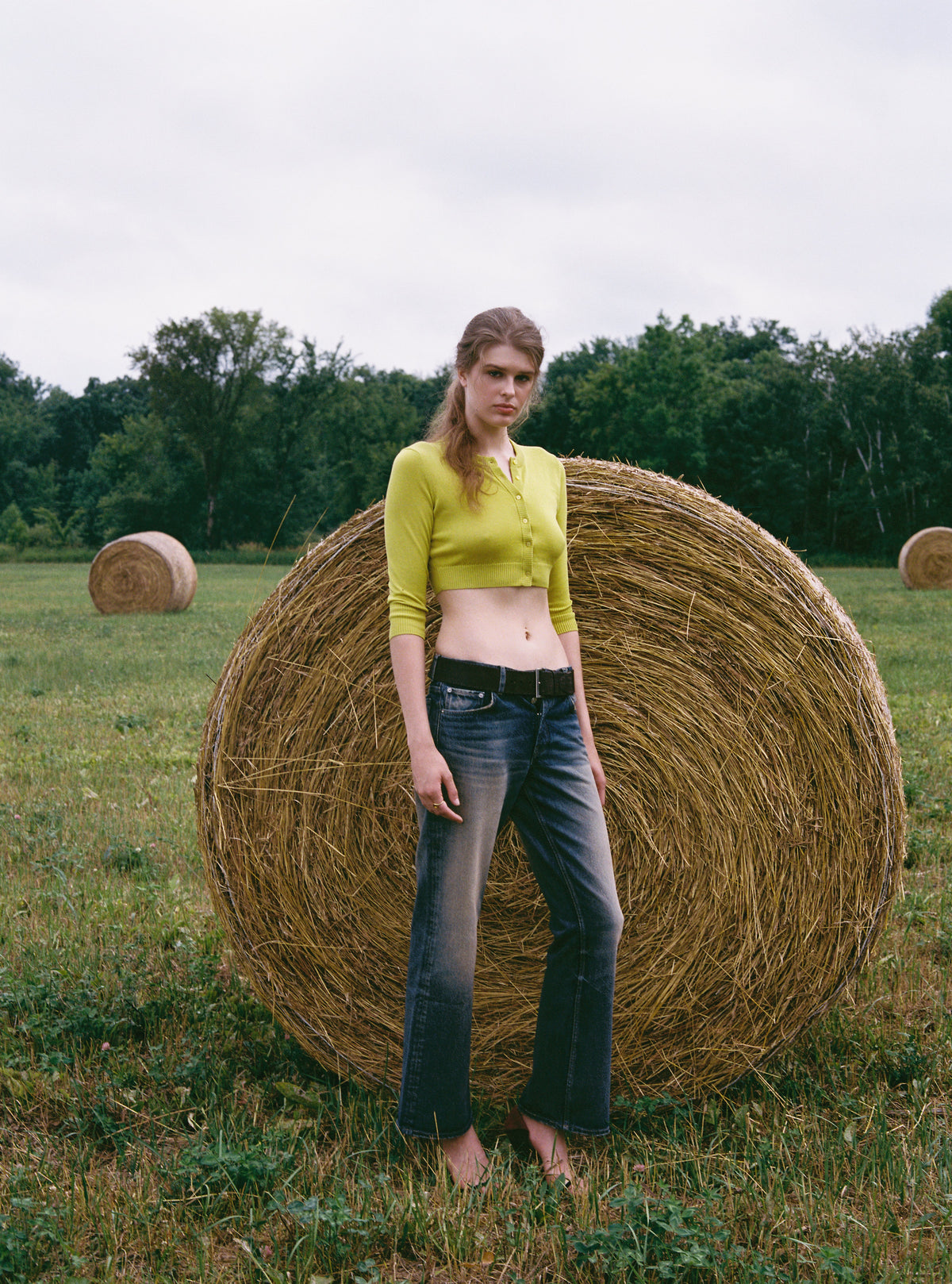
Good American builds its denim, tops, dresses, shorts, and outerwear around an extended size range and a fit-first design process rather than treating sizing as an afterthought. That approach is showing up across more labels now, but Good American made it the whole premise from the start. This edit sorts the label by category so fit, not the size range alone, decides what is actually worth trying.
Good American

Start With The Fit
Good American's strongest argument is not a slogan but a fitting-room fact: the label built its size range into the pattern from the start, not as an add-on rack. The denim is where that promise has to prove itself, since a straight or bootcut jean lives or dies on rise and ease, not on branding. The Vintage Straight Jeans and the Always Fits Bootcut Jeans sit at opposite ends of that range, one closer to a classic cut and the other built with more stretch through the seat. Compare either against jeans you already own rather than assuming a broader size range guarantees a better line. A jean earns its place by letting you move without adjusting the waistband, not by the story printed on its hangtag.

Vintage Straight Jeans
Good American
$158

Always Fits Bootcut Jeans
Good American
$168

Ghost Waist Low Rise Bootcut Jeans
Good American
$168

Good True Straight Jeans
Good American
$158

Good Low Rise Bootcut Jeans
Good American
$168

The Denim Oversized Shirt
Good American
$148

Vintage Low Rise Bootcut Jean
Good American
$158

Good Classic Bootcut Jeans
Good American
$98

Vintage Wide Jean
Good American
$158

Always Fits Good Legs Straight Jeans
Good American
$158

Vintage Straight Jean
Good American
$98

Ghost Waist Low Loose Jean
Good American
$168

Soft Tech Good Classic Bootcut Jeans
Good American
$169

Good Legs Flare Jeans
Good American
$98

Soft Tech Good Legs Skinny Jeans
Good American
$158

Soft Tech Good Petite Bootcut Jeans
Good American
$168

Low Boot Jeans
Good American
$158

Compression Good Legs Flare Jeans
Good American
$168

Soft Tech Good True Straight Jeans
Good American
$174

The Denim V Neck Dress
Good American
$168

High Barrel Ankle Jeans
Good American
$158

Good Low Rise Loose Jeans
Good American
$158

Good Petite 90's Jeans
Good American
$158

Vintage Barrel Ankle Jeans
Good American
$158
Tops Built For Layering
The tops are where Good American's fit work becomes easiest to see day to day, since a tank or a tee gets worn under something else as often as it gets worn alone. The Layered Tee is designed with that double duty in mind, cut to sit under a jacket without bunching at the waist. The Cropped Rugby Polo Shirt takes a more structured route, shortening the classic polo shape rather than just resizing it. Bodysuits and ribbed tanks nearby lean on stretch instead of cut, a different way of solving the same fit question. Try the size you would normally reach for alongside one neighboring size before deciding, since the range exists precisely so that comparison is possible.

The Better Than Suede Overshirt
Good American
$198

The Cropped Rugby Polo Shirt
Good American
$128

The Rib Scoop Boatneck Top
Good American
$78

The Layered Tee
Good American
$68

The Patch Pocket Shirt
Good American
$158

The Sculpting Modern Tank Top
Good American
$78

The Cap Sleeve Tee
Good American
$58

The Weightless Sculpting Modern Tank Bodysuit
Good American
$78

The Micro Cable Polo Shirt
Good American
$148

The Sculpting Deep V Bodysuit
Good American
$78

The Rib Scoop Top
Good American
$68

The Rib Splay Top
Good American
$58

The Keepsake Tank Top
Good American
$78

The Easy Polo Top
Good American
$78

Linen Strapless Top
Good American
$98

The Knit Vest Top
Good American
$118

The Linen Corset Top
Good American
$128

Super Stretch One Shoulder Tank Top
Good American
$48

The Oversized Tee
Good American
$68

The Rib Strappy Tank Top
Good American
$98
Dresses Across Several Lengths
The dresses run from a structured mini to a high-neck maxi, which is a wider range than most denim-first labels bother stocking. The Structured Linen Mini Dress keeps its shape through the fabric rather than boning, so the fit still depends on getting the size right. The Velvet High Neck Maxi Dress covers more skin and asks for more attention to length, since a maxi that sits wrong at the hem reads differently than a mini that does. Crochet and mesh versions nearby suggest the label is testing more textures than its denim reputation would predict. Judge any of these the same way as the jeans: by how the fabric sits, not by the size printed on the tag.

The Knit Rugby Mini Dress
Good American
$148

Sculpting Sweetheart Midi Dress
Good American
$149

The Structured Linen Mini Dress
Good American
$148

The Cap Sleeve Mini Dress
Good American
$178

The Pointelle Mini Dress
Good American
$78

Weightless Sculpting Mini Dress
Good American
$98

Mini Button Front Dress
Good American
$178

Crochet Mini Dress
Good American
$144

Velvet High Neck Maxi Dress
Good American
$198

Velvet Mini Dress
Good American
$188

Barrel Long Sleeve Mini Dress
Good American
$198

Mesh Ruched Maxi Dress
Good American
$168

Crystal Strapless Mini Dress
Good American
$198

Gauze Mesh Maxi Dress
Good American
$132

Sculpting Crystal Sweetheart Midi Dress
Good American
$189

Satin Lace Up Maxi Dress
Good American
$229
Shorts In Two Fabrics
The shorts split cleanly into two fabrics, a fitted micro short and a tailored trouser short, and the two ask for different occasions. The Micro Short is built to sit close, more like the denim in the rest of the edit than like a separate category. The Luxe Suiting Trouser Shorts trade that closeness for a straighter leg and a suiting fabric, which reads as intentional rather than casual. A poplin boxer short nearby splits the difference again, loose through the leg but still tailored at the waist. Pick based on how much shape you want through the leg, since fabric weight changes that more than the cut on the label.

The Better Than Suede Micro Short
Good American
$128

The Micro Short
Good American
$98

Linen Trouser Shorts
Good American
$148

Micro Shorts
Good American
$98

Poplin Pull On Boxer Shorts
Good American
$98

Luxe Suiting Trouser Shorts
Good American
$128

Vintage Mid Shorts
Good American
$128

Bombshell Shorts
Good American
$118
Skirts With A Denim Habit
The skirts borrow denim's plain instincts even when the fabric is not denim at all. The Micro Buckle Skirt keeps a utilitarian hardware detail that would look at home on the jeans a few categories over. The Matte Jersey Midi Pencil Skirt goes quieter, relying on a close jersey fit instead of any trim. A houndstooth mini and a pleated version nearby add pattern without changing the label's preference for a simple silhouette. Any of these work best with the plainer tops from earlier in the edit rather than another statement piece.

The Micro Buckle Skirt
Good American
$168

Soft Stretch Ponte Mini Skirt
Good American
$158

The Trouser Mini Skirt in Charcoal Mini Houndstooth
Good American
$128

The Pleated Skirt
Good American
$138

The Eyelet Skirt
Good American
$98

Good 90's Tiger Mini Skirt
Good American
$138

Good 90s Mini Skirt
Good American
$148

Matte Jersey Midi Pencil Skirt
Good American
$168
Outerwear As The Final Layer
The outerwear closes the edit with the most traditionally tailored pieces in the whole label. The Field Jacket keeps a utility silhouette that matches the denim's plain, functional attitude. The Essential Suiting Oversized Blazer moves further from that, borrowing proportions from menswear tailoring rather than workwear. A cropped trench and a canvas jacket nearby split the difference between the two, structured but shorter. A jacket is the easiest place to test the label's fit claims without committing to a full outfit change, since it goes over whatever you already own.

The Heritage Jacket
Good American
$278

The Field Jacket
Good American
$198

Cropped Trench Jacket
Good American
$188

Barrel Sleeve Denim Jacket
Good American
$218

Canvas Jacket
Good American
$188

The Oversized Blazer in Charcoal Mini Houndstooth
Good American
$248

Essential Suiting Oversized Blazer
Good American
$248

Essential Suiting Sculpted Blazer
Good American
$228
Our honest take
Good American's real case is made in the fitting room, not in the size range printed on a rack card. The denim proves the point most directly, since a straight or bootcut cut either sits right on the body it was built for or it does not, and no marketing changes that. The tops, dresses, shorts, skirts, and outerwear repeat the same logic in different fabrics, with fit doing more work than any single design detail. If you take one thing away, try the size you usually reach for next to one neighboring size before deciding anything, because the label's whole premise depends on that comparison actually happening. I would not buy an entire wardrobe here on the strength of the sizing story alone. The pieces worth keeping are the ones where the fabric moves the way you need it to and the seams sit where they should, which is the same test any other label has to pass. Judge the clothes, not the ambition behind them.