Choosing hair dye colors starts with knowing what kind of change you want: a lasting shift, a soft tint or something bright. Here are the permanent kits, the semi-permanent and vivid shades, and the shampoos and conditioners that look after color once it is in.
Hair Dye Colors, From a Paris Chemist's Formula to Your Bathroom Sink
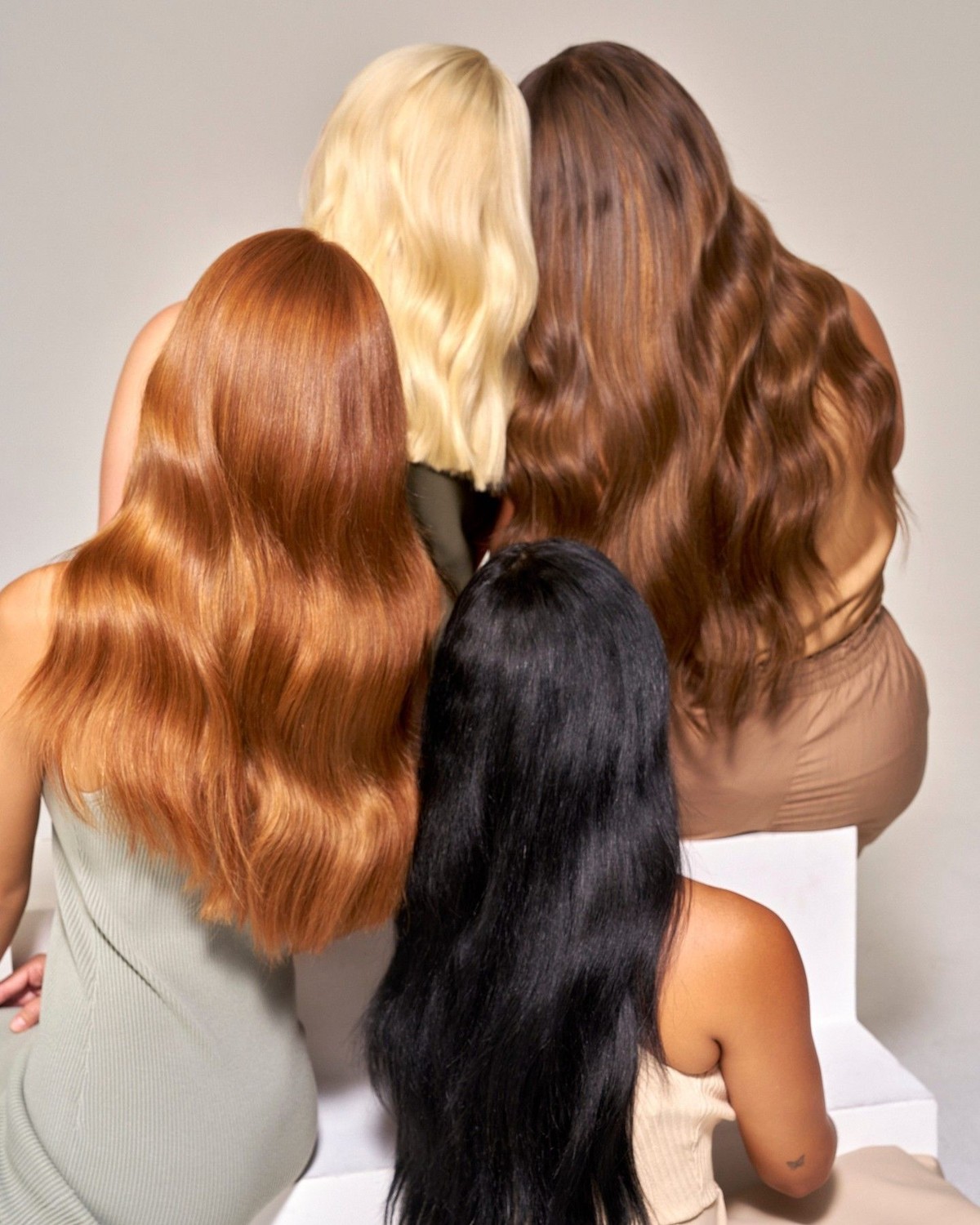
Eugène Schueller, a French chemist, developed a hair dye formula called l'Auréale and sold his products to Parisian hairdressers. On 31 July 1909 he registered his company as the Société Française de Teintures Inoffensives pour Cheveux, the name that would eventually become L'Oréal. I think about that every time I stand in front of a wall of boxes, because hair dye colors have gone from a chemist's experiment to something you can do at your own sink on a Sunday afternoon.
The FDA says coal-tar hair dyes include permanent, semi-permanent and temporary dyes, and the permanent ones are what you want if the goal is a lasting change. A dermatology education source describes how they work: they first lighten, or lift, the existing color using ammonia and peroxide, then deposit the new shade. That lift is why a permanent kit can change your color completely, and also why it deserves a little more care.
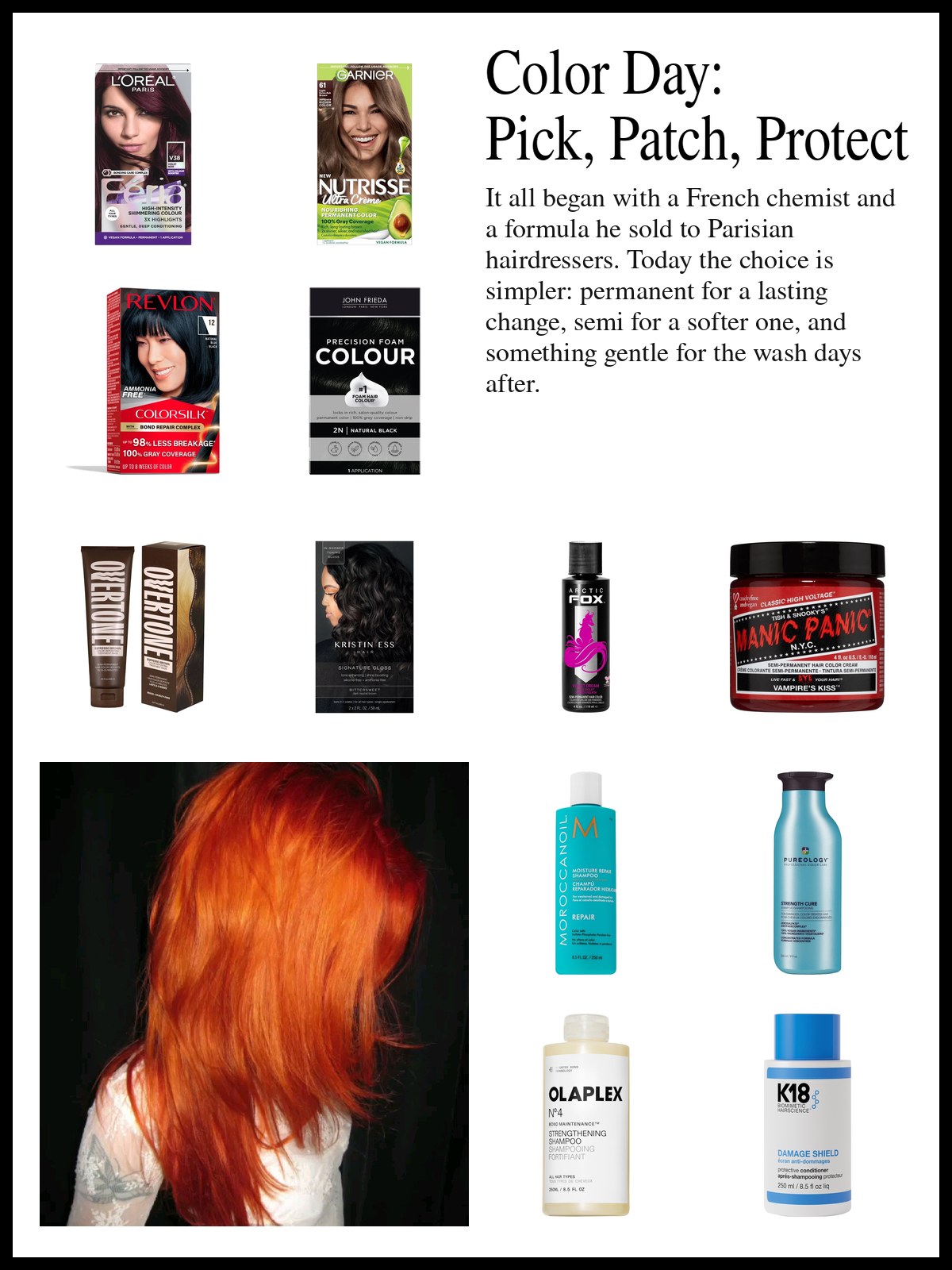
L'Oréal Paris Feria in Deep Violet is the dramatic one, for dark hair that wants a jewel-toned glow. Garnier's Nutrisse Nourishing Color Creme is a familiar, easy box. Revlon's ColorSilk in 12 Blue Black is the deep, inky option with a bond repair complex. John Frieda's Luminous Black Precision Foam is a foam that is easy to spread evenly. Schwarzkopf's Simply Color is the straightforward pick, and Pravana's ChromaSilk Permanent Creme is the one from a salon-focused line.
Whatever you pick, the FDA advises a patch test on your skin every time before dyeing your hair, even if you have used the same box before.
Permanent hair color kits

Feria Permanent Hair Color - Deep Violet
L'Oréal Paris
$12.99

Nutrisse Nourishing Permanent Hair Color Creme
Garnier
$8.99

ColorSilk Permanent Hair Color with Bond Repair Complex - 12 Blue Black -
Revlon
$5.49

Luminous Black Precision Foam Color, Hair Color Foam
John Frieda
$11.99

Simply Color Permanent Hair Color
Schwarzkopf
$12.59

ChromaSilk Permanent Creme Hair Color Dye
Pravana
$14.39
Softer tints and louder shades
Not everyone wants the commitment. Semi-permanent dyes have no lift, according to that same dermatology source, which means they coat and tint rather than lighten. So they are gentler in spirit, they fade gradually, and they show best when your starting shade is a good match for the one on the jar.
Overtone's Espresso Brown Hair Mask is a color conditioner, and it is the one I would try if you have brown or blonde hair and want a richer tone without much fuss. Kristin Ess's Hair Gloss in Bittersweet is made for dark brown hair, a semi-permanent tint and toner that adds a little depth and shine.
Then come the fun ones. Arctic Fox in Violet and Manic Panic Classic in Red are the bold, well-known jars, best on hair that has already been lightened. Splat's Midnight Indigo is a deep blue with a dark, inky feel. Pravana's ChromaSilk VIVIDS Direct Dye in Magenta is the loudest of the group, a bright pink-purple that looks best in strong light.
A tip that will save you a mess: put a towel over your shoulders, wear gloves, and apply petroleum jelly along your hairline so the shade does not stain your skin. Rinse until the water runs clear, and use a cold rinse at the end. Bright shades leave color on pillowcases and collars for the first few washes, so put down something old.
Semi-permanent, demi and bright colors

Espresso Brown Semi-Permanent Hair Color Mask
Overtone
$14.99

Hair Gloss in Bittersweet for Dark Brown Hair - Semi Permanent Dye + Toner
Kristin Ess
$14.99

Semi-Permanent Hair Color Dye - Violet
Arctic Fox
$11.39

Classic Semi-Permanent Hair Color - Red
Manic Panic
$13.99

Semi-Permanent Hair Color - Midnight Indigo
Splat
$9.79

ChromaSilk VIVIDS Semi-Permanent Hair Color, Magenta
Pravana
$14.39

Color Depositing Mask in Wheat - A LA Plage
IGK
$32

Purple Mask
Verb
$22
Wash days after color
Fresh color is happiest when the wash days after it are gentle. Hot water, harsh shampoo and skipped conditioner all fade a shade faster than you would like, so this is the shelf I would set up before dyeing anything.
Moroccanoil's Moisture Repair Shampoo for Damaged Hair is a soft, everyday cleanse. Pureology's Strength shampoo for damaged hair is made for damaged, color-treated strands, and I like it when hair feels a little brittle. Olaplex's No.4 Bond Maintenance Shampoo is the one for medium hair that has been lightened or dyed often. It is designed to strengthen and hydrate, and it is one I reach for in the weeks after a big change.
K18's Damage Shield Protective Conditioner is the protective layer, a conditioner made for color-treated hair that helps shield it from daily damage. Oribe's Supershine Hydrating Conditioner is the glossy finish, a smooth, easy feeling that makes a new shade look polished.
What I would skip: washing daily in very hot water, and dyeing over hair that is already dry or damaged just because a box is in the cupboard. Wait a few weeks between rounds, use a real conditioner every time, and go for a professional if you want a big jump in shade. Rushing is what damages hair, not the color itself.
Shampoos, conditioners and glosses for after you dye

Moisture Repair Shampoo for Damaged Hair
Moroccanoil
$30

Strength Cure Shampoo for Damaged Hair
Pureology
$39

No.4 Bond Maintenance Strengthening, Hydrating Hair Repair Shampoo for Medium Hair
Olaplex
$34

DAMAGE SHIELD Protective Conditioner
K18
$39

Supershine Hydrating Conditioner
Oribe
$164

No. 4P Blonde Enhancer Purple Toning Shampoo
Olaplex
$34

Beautiful Color Shampoo for Color Treated Hair
Oribe
$49

Beautiful Color Conditioner for Color Treated Hair
Oribe
$52
Before you open the box
A small routine makes the biggest difference. Patch test first, read the whole leaflet, and set a timer so you do not guess. Choose the shade that is close to your natural one if you are new to this, because small steps are far easier to fix than large ones.
Afterward, wash less often, keep the water lukewarm and use conditioner every time. Give your hair a week or two before you decide if you love it, since color always looks a little different once it dries. If your scalp itches, burns or swells at any point, rinse right away and see a doctor. Keep the bottles labeled, note the date and the shade in your phone, and take a quick photo in daylight so next time you remember exactly what you did. Color should feel fun. It should never feel painful, and it is always fine to let a professional handle the difficult jumps.