Choose the Hoka Challenger for road-to-trail comfort and Speedgoat for technical-trail grip; your usual surface decides which shoe makes sense.

Hoka Challenger vs Speedgoat: Which Trail Shoe Should You Buy?
Start With the Surface
Choose the Hoka Challenger if your run starts on pavement and moves onto gravel or groomed trail; choose the Speedgoat when mud, rock, or steep climbs dominate. The Hoka Challenger vs Speedgoat question is really about route, not a universal winner.
The Challenger’s 4 mm Durabrasion lugs are shallower and quieter on pavement. The Speedgoat’s 5 mm Vibram Megagrip lugs bite deeper into soft, wet ground, but that extra tread feels firmer and noisier on tarmac and wears faster over long road sections. I would not buy mountain tread for a route that is mostly sidewalk.
People searching Hoka Speedgoat vs Challenger usually need to sort out fit as much as grip: the Challenger has a roomier forefoot, while the Speedgoat holds the foot more firmly on rough ground. Both lines have GTX versions, but the membrane runs warmer and can still let water in over the collar. My rule is simple: choose Challenger for a mixed surface week, Speedgoat when traction is the daily problem.
Challenger for Mixed Terrain
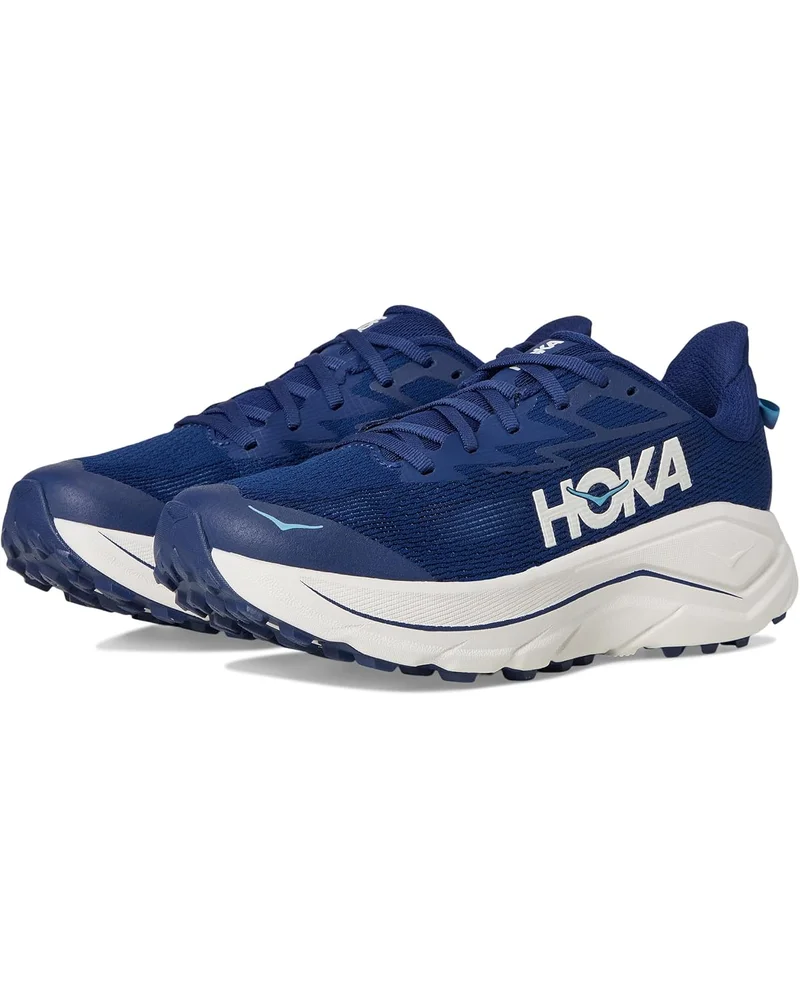
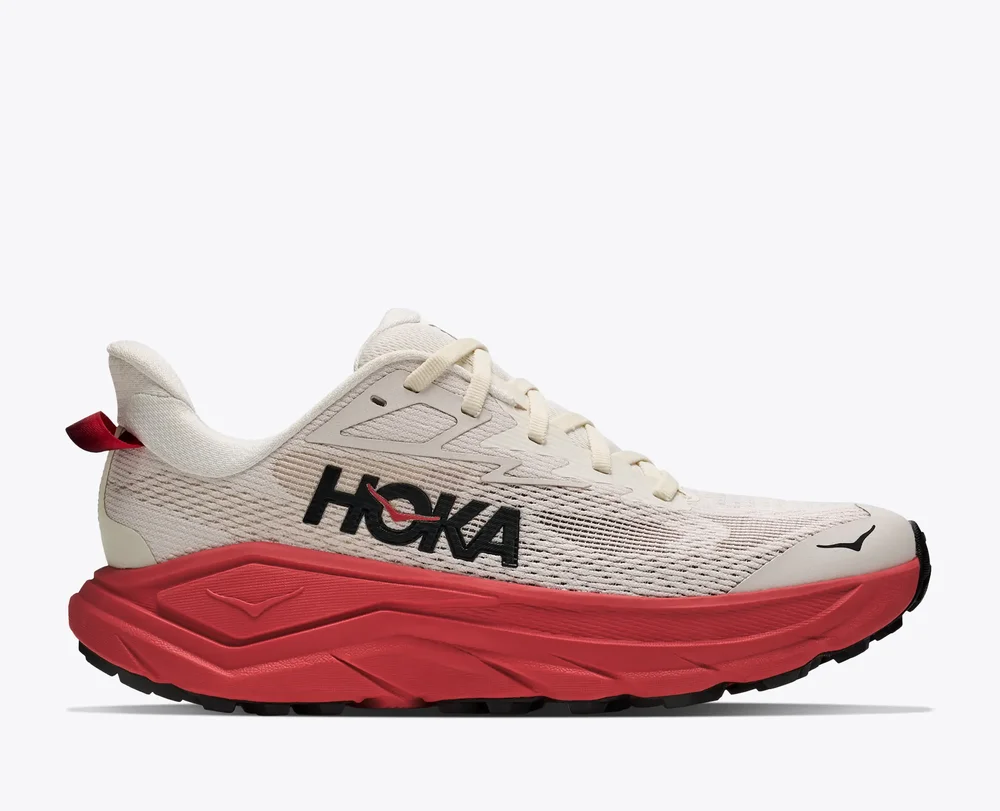
The Challenger began in 2015 as a lighter, less aggressive all-terrain shoe for mixed road and trail, and that brief still guides my pick. Challenger 8 in Midnight Blue/Grout is the standard 4 mm-lug version; the Alabaster/Burnt Red colorway has the same easygoing surface mix, so I would choose by color rather than expect a new ride.
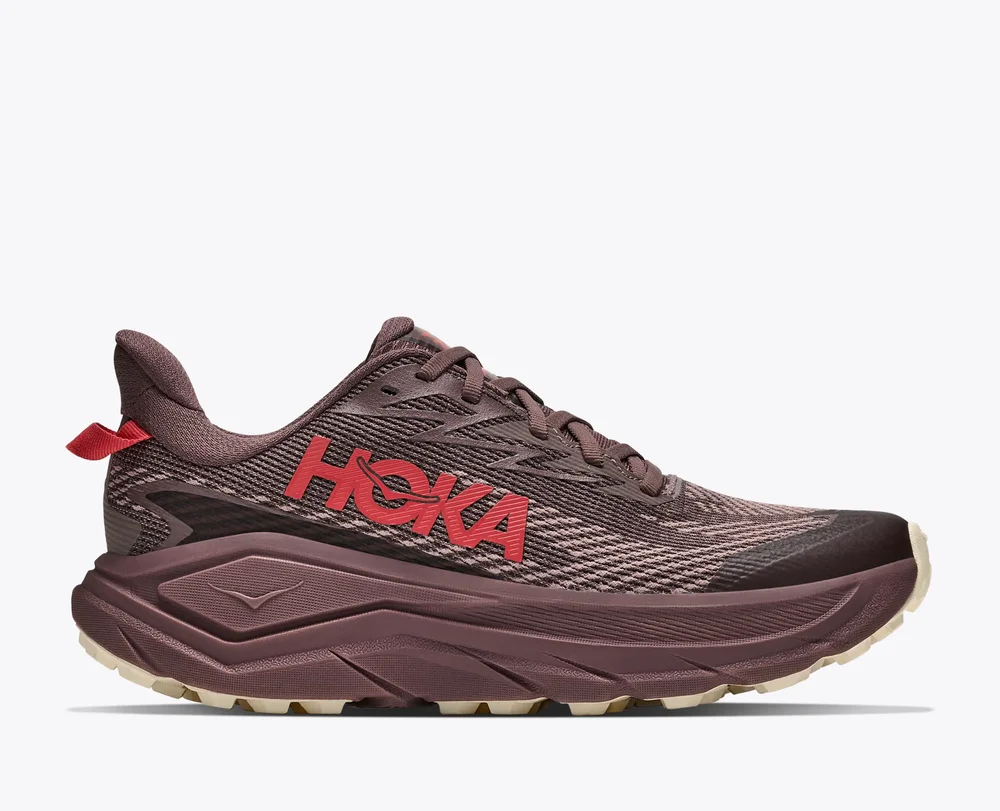
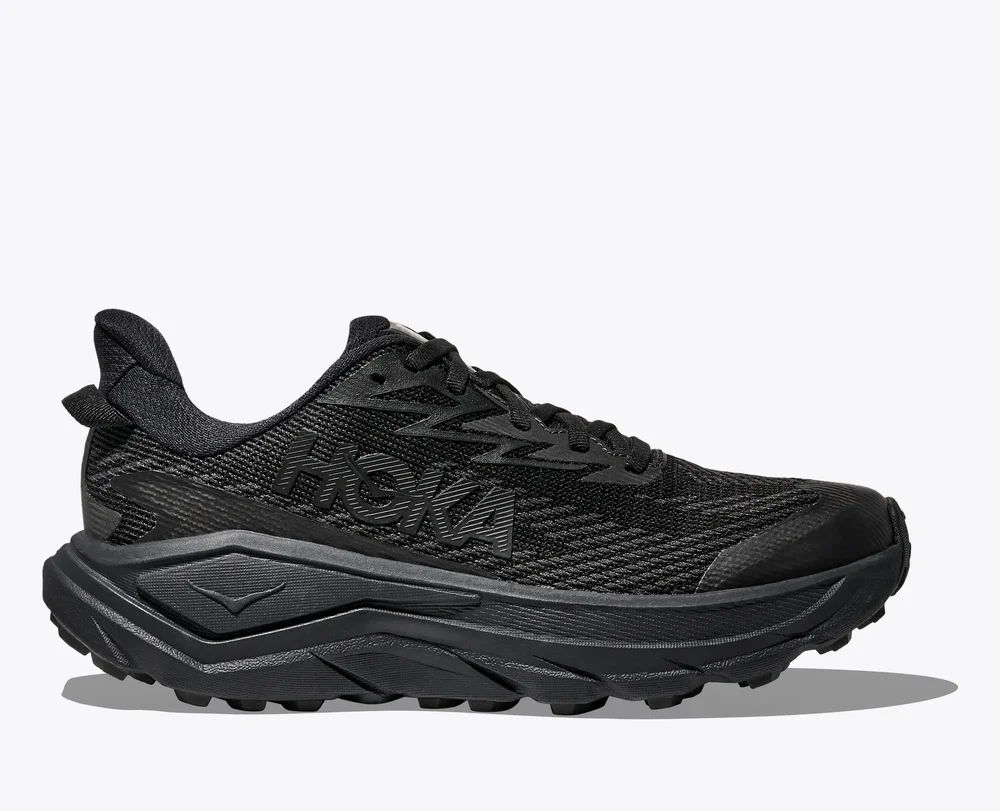
Challenger 8 GTX in Smoky Quartz/Alabaster and Challenger 8 GTX in Black/Carbon Black add GORE-TEX Invisible Fit to that road-to-trail setup. I like them for cold, wet runs, but would skip a waterproof upper for warm days. If Challenger vs Speedgoat still feels close, start with a regular Challenger when pavement is part of the route; it is the calmer choice for gravel, towpaths, and groomed dirt.
Speedgoat for Technical Trails
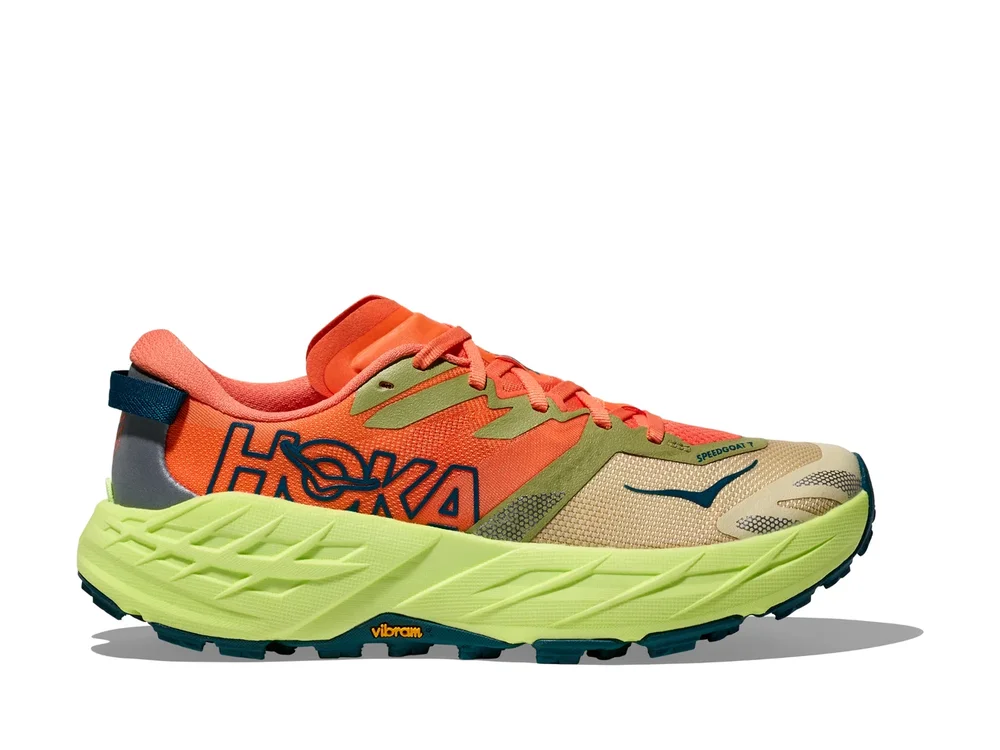
The original Speedgoat arrived in 2015 with ultrarunner Karl “Speedgoat” Meltzer’s input, built for rugged mountain terrain. I like that the current line still has a clear job: Speedgoat 7 in Persimmon/Neon Yuzu is the standard trail pick, with 5 mm Vibram Megagrip lugs for mud, rock, and steep climbs.
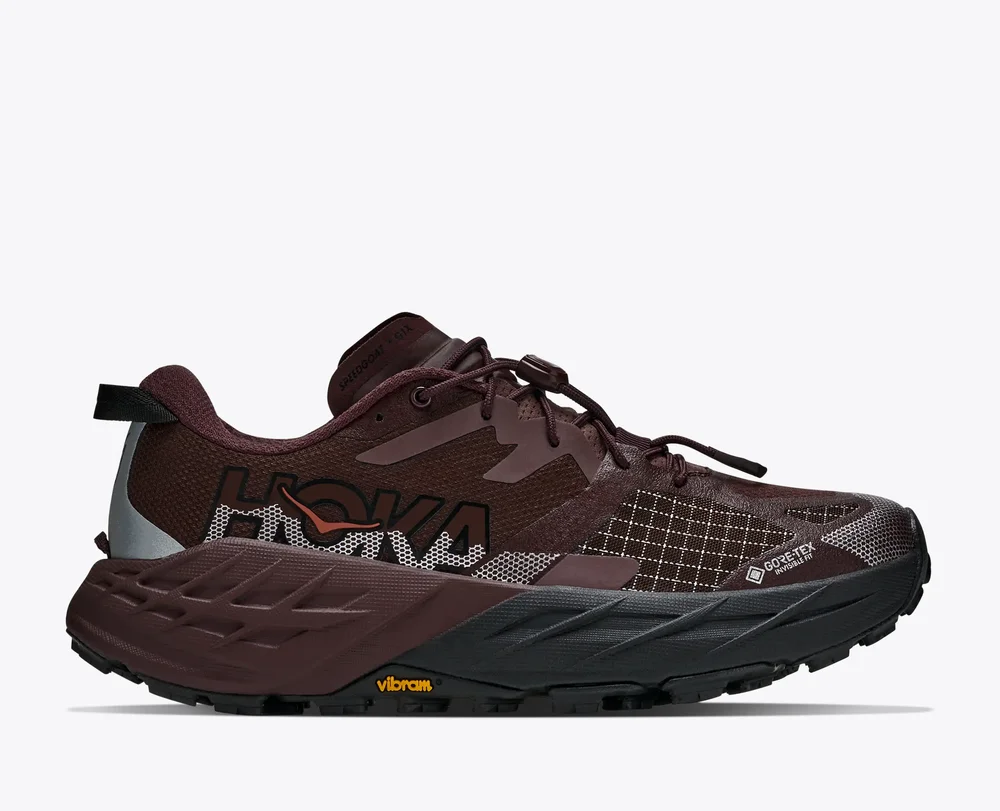
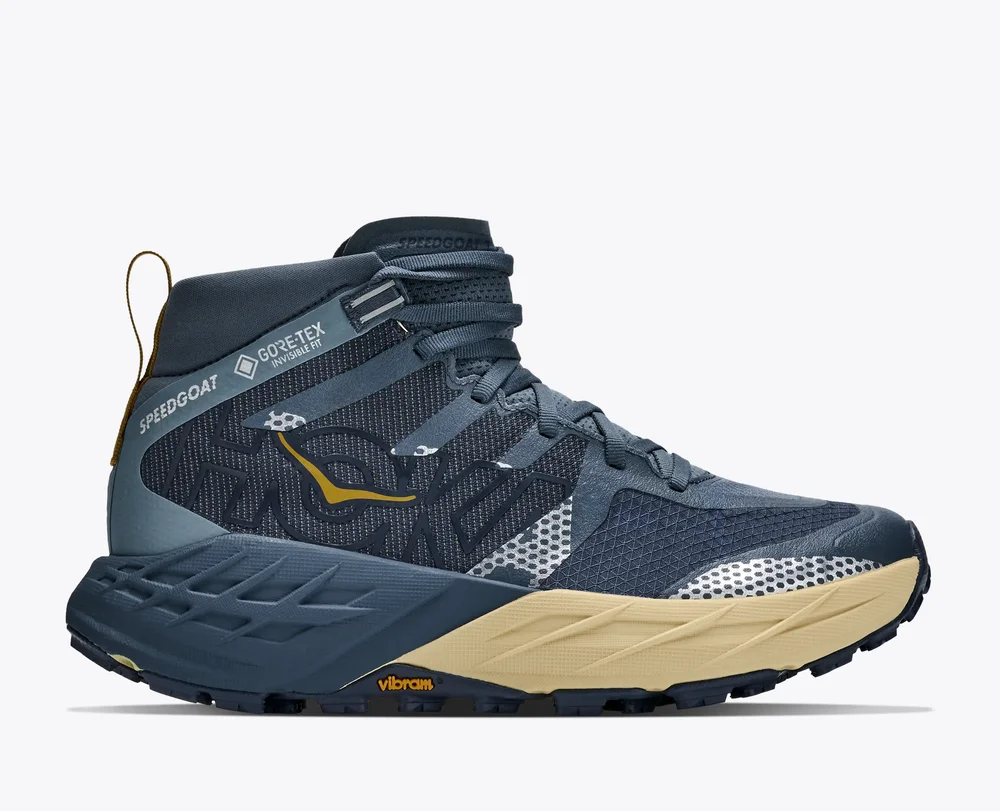
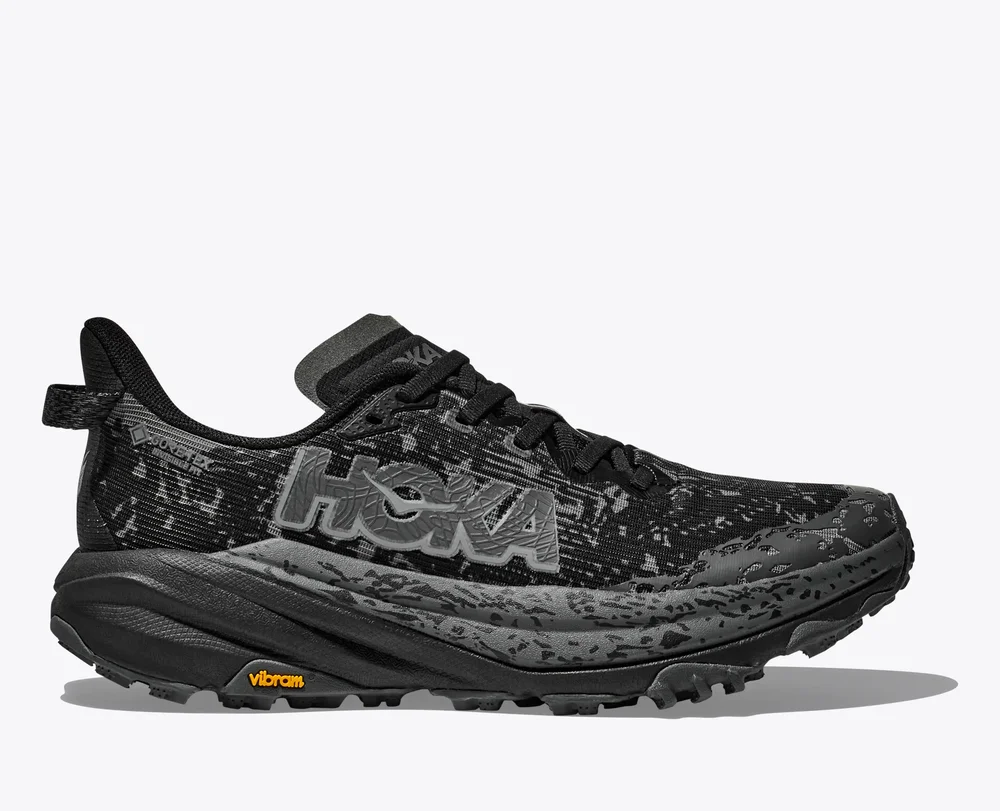
Speedgoat 7 GTX in Deep Mauve/Black adds a waterproof upper while keeping the technical tread. Speedgoat 7 Hike GTX in Faded Navy/Barley Flour is another weather-ready choice, built for hiking and fastpacking with a more protective upper. Speedgoat 6 GTX in Black/Outer Orbit keeps the GORE-TEX and Megagrip pairing from the previous generation. I would choose Speedgoat when rough, wet trail is routine, not just because the lugs look more serious.
Other Trail Builds
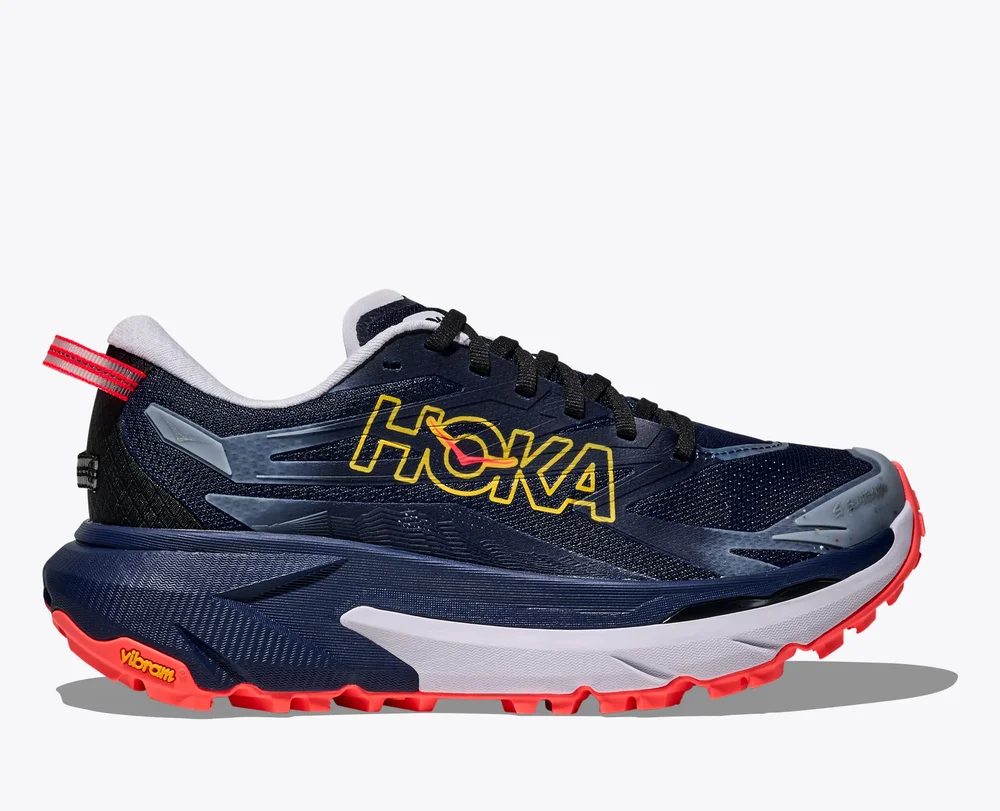
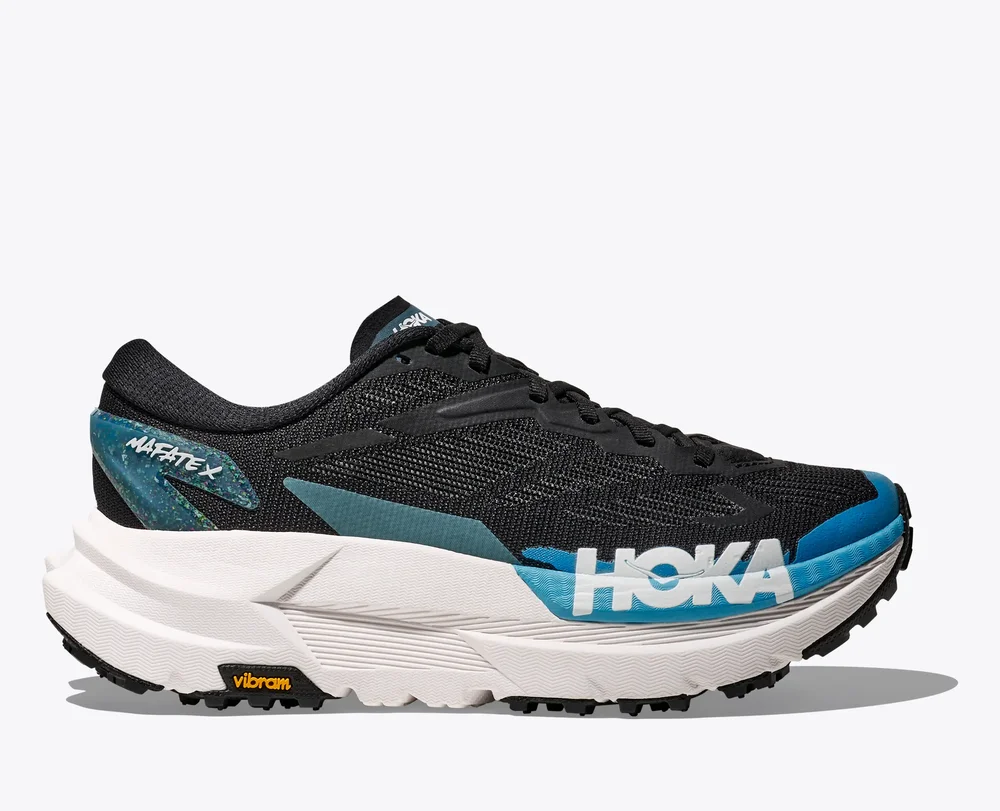
If neither shoe covers every kind of trail day, HOKA’s other trail models split into longer-distance cushion and race-minded gear. Mafate 5 pairs maximum cushioning with gaiter attachment points and Vibram Megagrip; I would reach for it when rough mileage and foot protection matter. Mafate X is the ambitious long-haul pick, with a PEBA layer and forked carbon plate, and I would save that extra propulsion for a race-focused day.
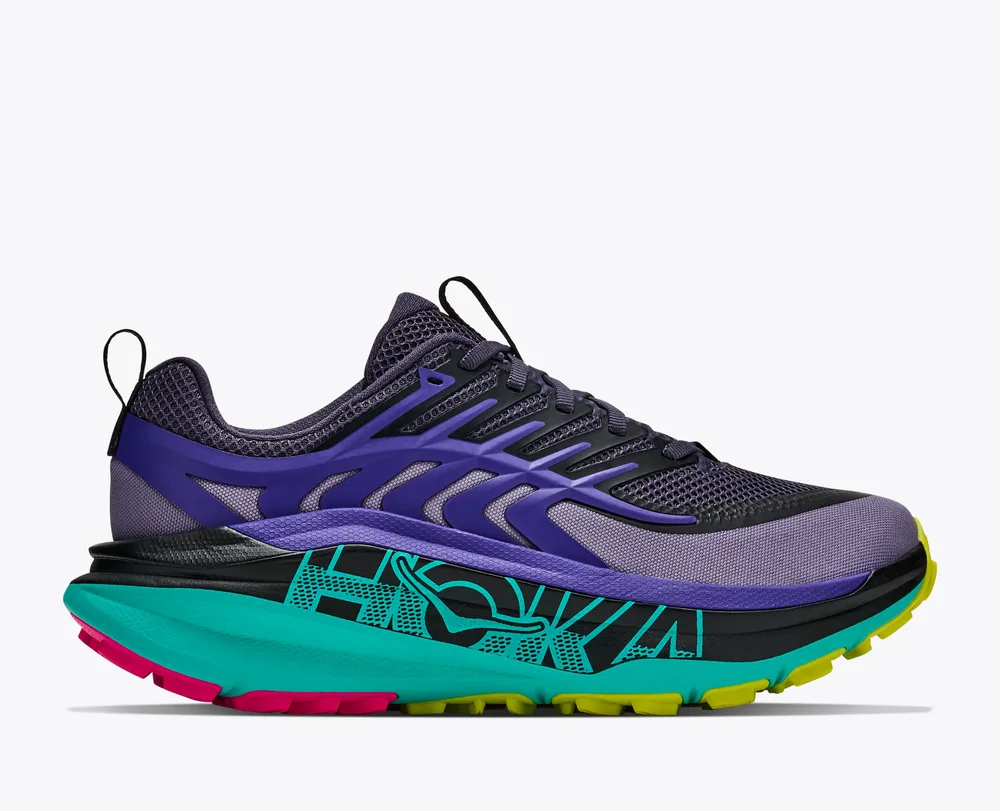
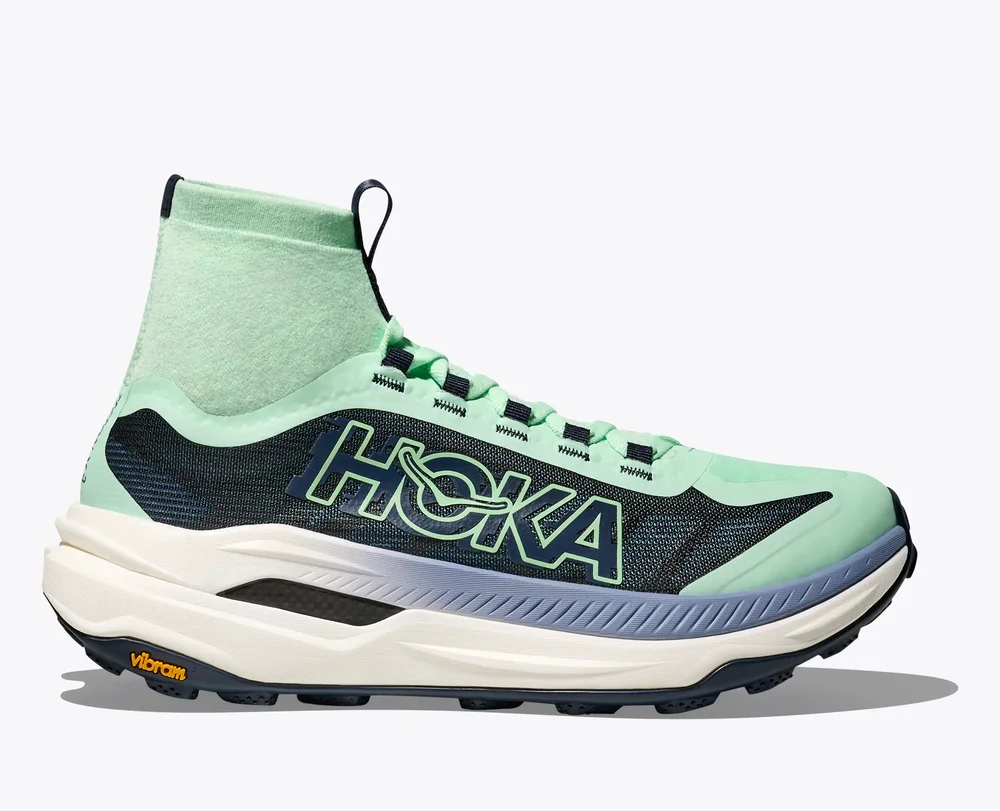
Stinson 8 softens the decision with an H-Frame midsole for stable road-to-trail cushioning. Tecton X 3 is the faster build, using carbon-plate winglets and a gaiter-like knit collar to balance trail propulsion with debris coverage. Buy the Challenger if pavement and easy dirt share your route. Buy the Speedgoat if steep, rocky, or muddy ground is the weekly norm. I would start with the Challenger for mixed surfaces and reach for a more specialized ride only when the terrain asks for it.