Carolyn Bessette's minimal uniform, broken into buyable parts: fine-gauge knitwear, tailored trousers and the bias slip dress, in a tight neutral palette.
How to Build the Minimal Uniform
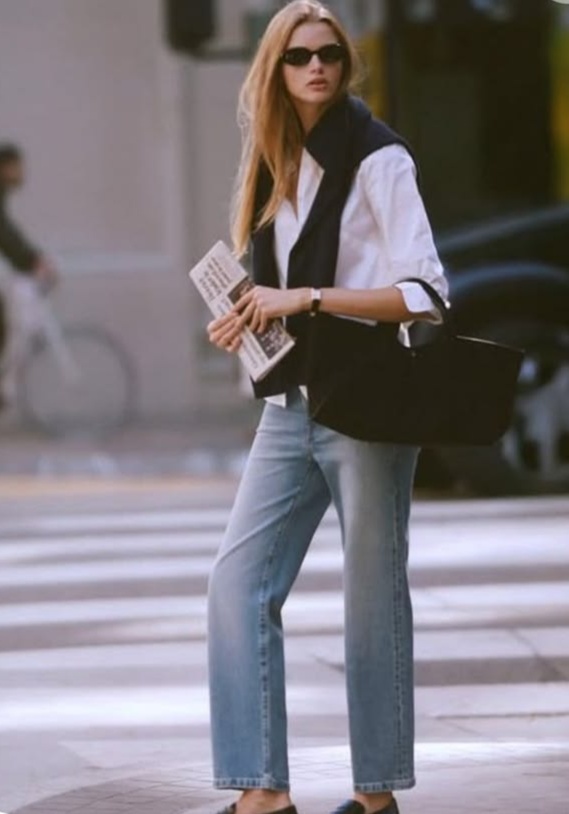
The uniform, piece by piece
Carolyn Bessette Kennedy's style holds up because it was a uniform rather than a wardrobe. The vocabulary was small and repeated: fine-gauge knitwear worn plain, flat-front tailored trousers, a bias slip or column dress, a shift, and almost nothing else. The palette was tighter still, mostly black, ivory, grey, camel and navy, with pattern used almost never.
That narrowness is the whole method. When every piece is in the same four colours and a similar weight of fabric, anything combines with anything, and the result looks intentional without any styling. It is also why the look reads as expensive at any price point: there is no visual noise to give away what something cost.
The pieces below follow her three anchors, in order. Knitwear worn on its own. Trousers with a jacket over them. And the slip or shift dress, which is the one item that does both day and evening.
Fine-gauge knitwear, worn plain

Lyell Sweater
Ann Demeulemeester
$650

Carrick Crewneck Sweater
Jonathan Simkhai
$445

Laris Sweater
Alexis
$275

Lesley Cropped Sweater Macadamia
CAMI NYC
$245

Cashmere Windowpane Crewneck
White & Warren
$395

Loftus Pure Cashmere High Neck Jumper
Joseph
$238

Areld Twisted Rib Crew Neck Sweater
Ann Demeulemeester
$590

Cotton Crewneck
Jonathan Simkhai
$130
Fabric, gauge and the fit rules
Gauge matters more than fibre. What made the knitwear work was fineness: a thin, close-fitting crewneck or turtleneck that sits like a shirt rather than a sweater. Look for words like superfine, extra fine, 12 gauge or fine rib. A chunky cable is a different look entirely, however good the cashmere.
On trousers, flat front and a straight or slightly wide leg, breaking just above the shoe. The rise should sit at or near the natural waist, because a low rise shortens the leg line and undoes the whole point. Wool crepe, compact milano knit, gabardine and heavier viscose all hold a clean line. Avoid anything with stretch high enough to cling at the thigh.
For dresses, a true bias cut in silk, satin or a fine crepe de soie. It should skim the hip with no pull across the front, and the hem should sit at mid-calf or lower. A shift is the alternative when you want no cling at all: straight through the body, ending at or just below the knee.
Fit is the expensive-looking part, and it is also the cheapest to fix. A hem and a waist adjustment on a mid-price trouser will beat an unaltered designer one every time.
Tailored trousers and the jacket over them

Joubert Silk Satin Jacket
Joseph
$595

Meade Wide Leg Tencel Trouser
CAMI NYC
$330

Channing Jacket
Alexis
$645

Colton Utility Jacket
Jonathan Simkhai
$395

Marlowe Trouser
Rat & Boa
$160

Fera Straight Leg Cropped Trousers
Ann Demeulemeester
$553
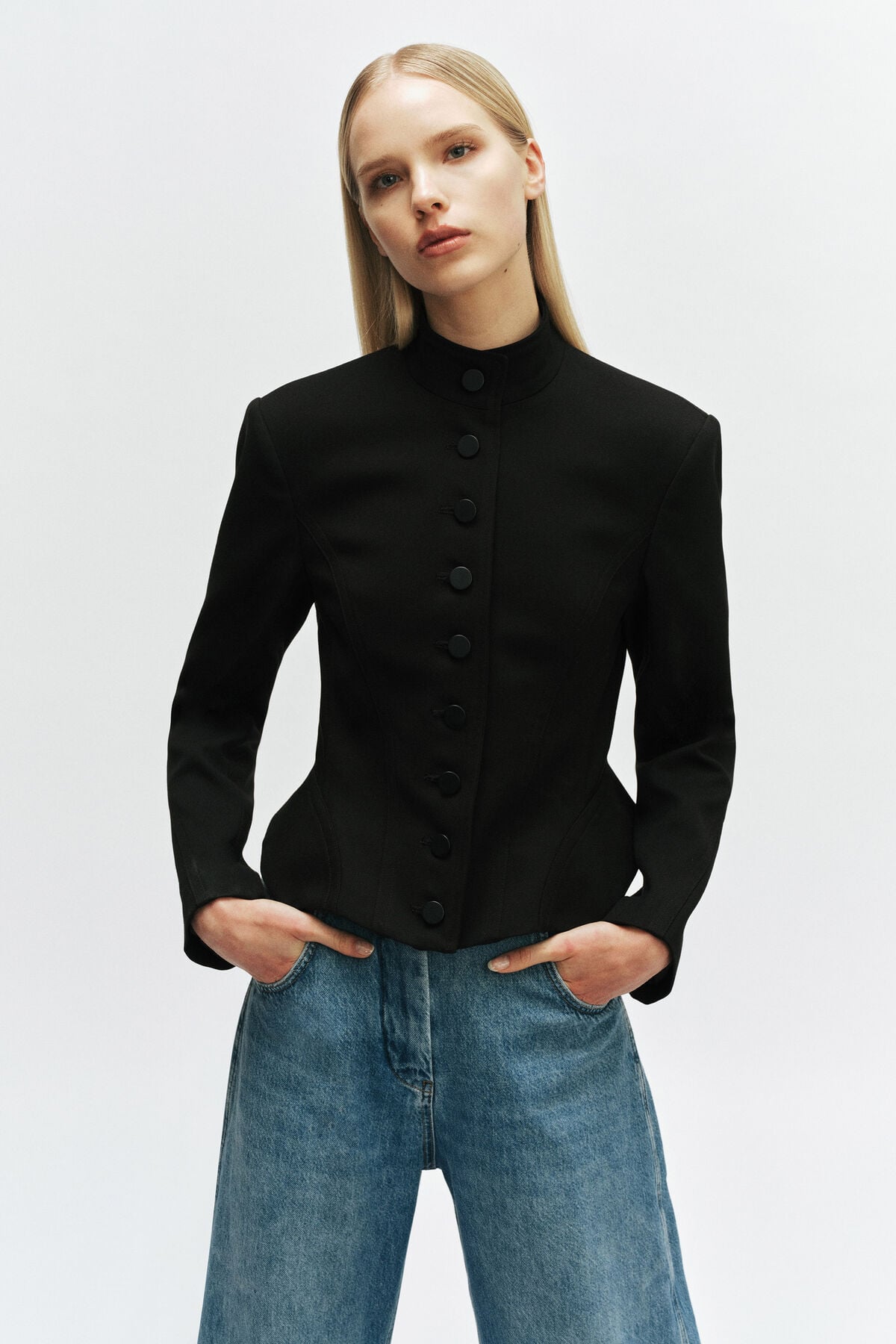
Octavia Structured Jacket
Bardot
$199

Coleman Gabardine Stretch Trousers
Joseph
$295
How to wear the palette
Work in one column of colour and let the texture do the variation. Black fine knit with black trousers, or ivory knit with camel trousers, is more effective than mixing four neutrals in one outfit. If you want contrast, put it between top and bottom rather than scattering it: ivory over black, never ivory plus grey plus camel plus navy.
Keep accessories to a count of two. A flat or low shoe, a small structured bag, and either a watch or a single chain, but not both. The absence of jewellery is doing real work here; adding a stack immediately makes it read as a different decade.
Layering follows the same logic. A fine knit under a slip dress, a jacket over trousers, a long coat over everything, all in adjacent tones. Sleeves pushed up, shirt untucked or half tucked, nothing fastened all the way. The looseness is what keeps a very plain outfit from looking severe.
Slip dresses and shift dresses

Harpor Satin Mini Dress
Jonathan Simkhai
$357

Chenes Silk Blend Pleated Dress
Joseph
$378

Tova Slip Dress
Rat & Boa
$265

Jacka Satin Cape Midi Dress
Jonathan Simkhai
$845

Cloe Silk Satin Dress
Joseph
$495

Marabella Satin Midi Dress
Jonathan Simkhai
$645

Zuzi Silk Blend Crepe Dress
Joseph
$675

Joanna Off Shoulder Satin Midi Dress
Jonathan Simkhai
$875
A note from the Phia editors
The reason this style is still copied is that it costs almost nothing in decision-making. Four colours, six shapes, and the outfit is decided before you open the wardrobe. That is a genuinely useful thing to steal, separate from any nostalgia about the era.
We would spend the money on the trousers and the knitwear, and be relaxed about the rest. Those two carry the look, they get worn most, and they are the items where fabric and fit are immediately visible. A bias dress is easier to get right cheaply, because the cut does the work.
If you take one thing away, take the palette discipline. Cut your neutrals down to four and buy only within them for one season. The wardrobe gets smaller, the outfits get easier, and everything starts looking more expensive than it is.