There are really only four ways to wear a shirt with the waistband, and each one changes your proportions differently. Full tuck all the way round makes the waist the highest point and the legs longest, which is why it reads formal.
How to Tuck Shirts
The half tuck and three others that work
The tuck is the styling decision, not the shirt
There are really only four ways to wear a shirt with the waistband, and each one changes your proportions differently. Full tuck all the way round makes the waist the highest point and the legs longest, which is why it reads formal. The half tuck, front only or one side only, keeps that line but softens it. The French tuck, just the front centre pushed in, is the least committed and the most forgiving over the middle. And the open untucked shirt is a layer rather than a top, which is a different job entirely.
The reason a tuck fails is almost never technique. It is fabric and length. A stiff shirt bunches at the waistband, a short shirt pulls out when you raise your arms, and a shirt with a curved hem tucks better than a straight one. So this issue is arranged by fabric, because the fabric decides which tuck is available to you.
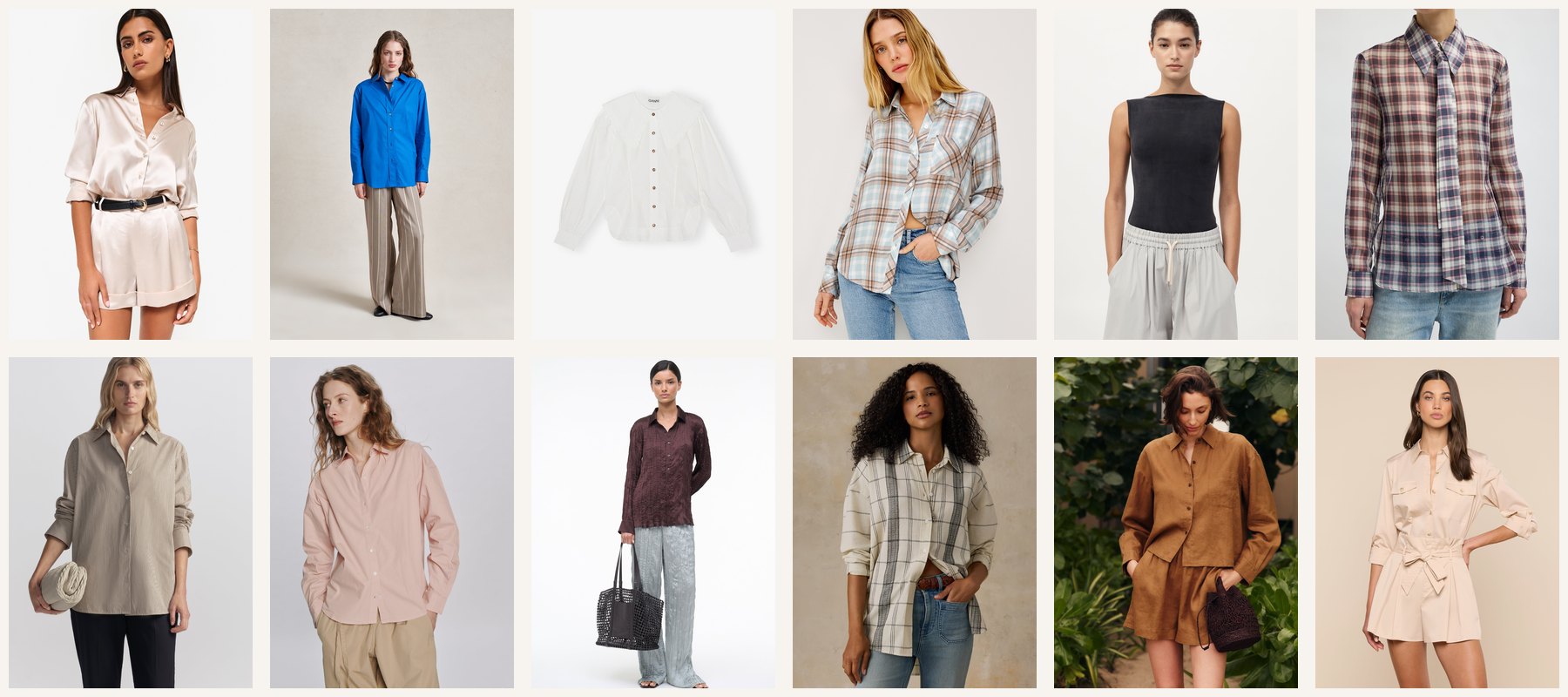
Below, three shirts that respond differently to a tuck: the silk one, the crisp poplin and the oversized one. Khaite, Tibi, Nili Lotan and Joseph turn up, and Rails takes the Label Love.
Let's Shop. The Silk Shirt
Silk and satin are the fabrics that tuck most cleanly, because they are thin and slippery and create almost no bulk at the waistband. That is also why they slide out again, so this is the one category where a full tuck genuinely helps.
What to look for. A curved shirt tail rather than a straight hem, since a straight hem creates two hard corners inside your waistband. Enough length below the waist to hold, which usually means at least 15 centimetres of hem. And a weight of silk that is not the very thinnest, since fine silk shows the waistband ridge underneath. L'Agence and CAMI NYC do the tuckable versions well, Nili Lotan and Khaite the investment shirts, Ganni and Joseph the ones with a bit more personality. If you want the easiest possible version, take a satin blouse in a colour close to your trouser.

Crosby Silk Blouse Oat
CAMI NYC
$295

Silk Cotton Plaid Blouse with Removable Tie
Tibi
$595

Mason Relaxed Silk Shirt
A.L.C.
$495

Silk Cami - Black
St. Agni
$349

Dani Cotton-Silk Blouse
L'Agence
$325

GAIA SILK SHIRT
Nili Lotan
$690

3D Floral Satin Button-Down Shirt - Light Blue
JW PEI
$159

Bodine Top in Dark Olive Silk
Khaite
$1,380
The Crisp Poplin
Poplin and oxford are where the half tuck earns its reputation, because the fabric has body, so it holds a fold instead of collapsing. Push one side or the front into the waistband and it stays where you put it.
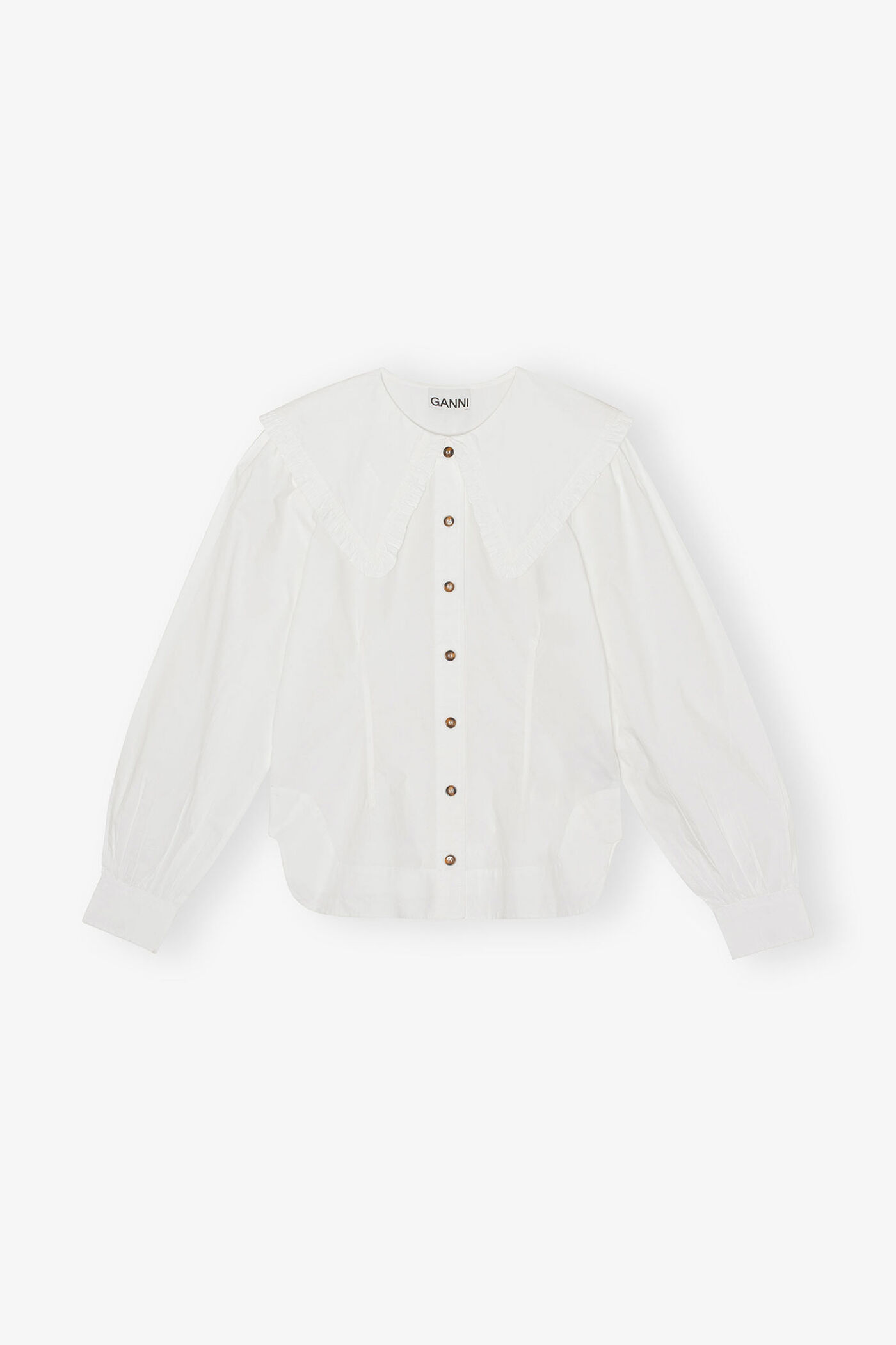
Buying notes. Look at the weave: a fine poplin presses sharp and reads formal, an oxford has visible texture and reads casual, and both tuck well. Check whether there is a back yoke and pleats, since pleats add bulk at the waistband and will show under a fitted skirt. Cotton with a small percentage of stretch tucks flatter than pure cotton but creases more oddly. La Ligne's perfect cotton shirt and Rails' oxford are the everyday picks, ATM Collection and L'Agence the crisper versions, and Ganni's poplin with a frill collar is the one that does not need anything else.

The Perfect Cotton Shirt
La Ligne
$195

Mason Relaxed Cotton Stripe Shirt
A.L.C.
$235

Textured Cotton Relaxed Shirt - Salt Stone
Faherty
$188

Pearson Poplin Shirt
L'Agence
$295

Nador Cotton Sateen Blouse
Joseph
$177

TRAVIS COTTON SHIRT
Nili Lotan
$490
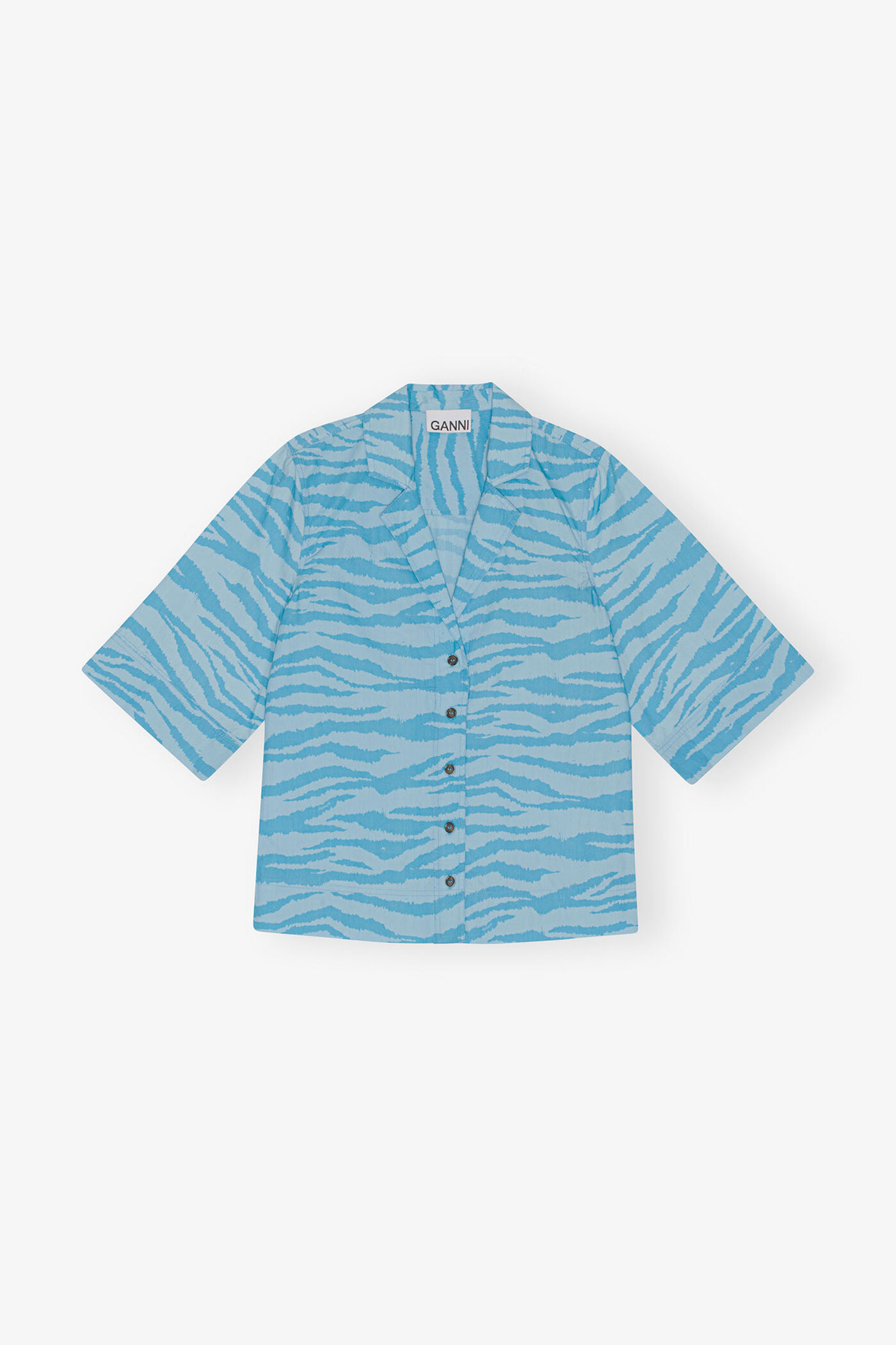
Printed Cotton Shirt
Ganni
$107.5

Napier Cotton Poplin Shirt White
CAMI NYC
$285
The Oversized Shirt
An oversized shirt is the hardest to tuck and the best untucked, which is worth accepting rather than fighting. If you do want to tuck it, the French tuck is the only one that works, because a full tuck on a voluminous shirt creates a ring of gathered fabric around your hips.
The other option is the one I use most: leave it open over a cami and let the waistband show underneath. That way the shirt becomes a layer and the tuck question disappears. What to check when buying: shoulder seams that drop deliberately rather than accidentally, a hem that is level rather than very long at the back if you plan to wear it open, and a fabric with enough weight to hang rather than billow. Jenni Kayne and La Ligne do the clean versions, CAMI NYC the cropped shape that solves tucking by being short, Staud and Ganni the ones with a print.


Label Love: Rails
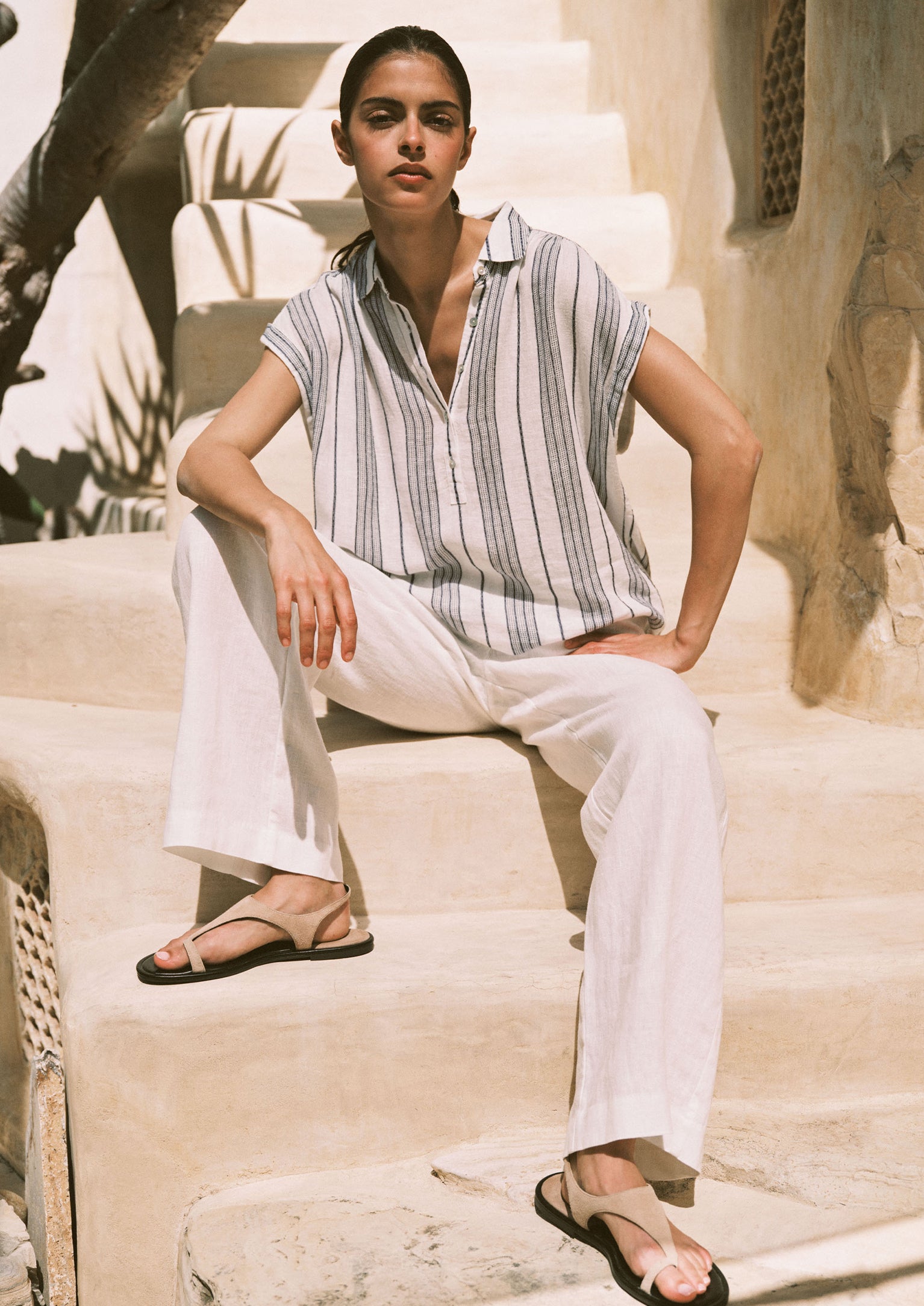
Rails is the shirt brand in this issue, and the reason is fit consistency. It has been making essentially the same set of shirt blocks for years, so once you know your size in one, you know it across the range, which is unusual and genuinely useful.
How the range splits. The Sinclair and Wyatt shapes are the classic relaxed button-downs and the ones to buy first. The Beck and Hunter styles are the striped and checked versions of the same idea. The lighter gauze and chenille fabrics are softer and drape rather than hold, so they suit a French tuck rather than a full one. Prices sit in the low to mid hundreds, which is the band where a shirt stops feeling disposable. Sizing runs relaxed, so if you want a tuckable shirt rather than an open layer, consider taking one size down.


The Shopping List
The shirts on my radar this month.
St. Agni cupro jersey top in black, softer than a shirt and it tucks flat.
Staud Suki shirt, the one with a bit of drama at the collar.
Jenni Kayne linen ease shirt, for wearing open over everything.
La Ligne Alain shirt, the plain white one that ends the search.
Rails Cito in Atlantis stripe, a stripe that is not navy.
Faherty coastal poplin camp shirt, the most casual thing on the list.
Nili Lotan Renard cotton overshirt, the layer rather than the top.
ATM Collection solid Max shirt in white, the crispest of the lot.


Style Notes
My rules for the tuck.
Match the tuck to the fabric. Silk takes a full tuck, poplin takes a half tuck, an oversized shirt takes a French tuck or none at all.
Check the hem shape before you buy. A curved tail tucks. A straight hem with side vents does not, it bunches.
Tuck before you fasten the waistband, then raise both arms. If it pulls out, the shirt is too short for tucking and should be worn open.
A cropped shirt is a tuck you never have to redo. If the tuck genuinely irritates you, buy the length instead of fighting it.
If you take one thing away: pick the tuck for the fabric in your hand, not the outfit in your head. Stiff shirts hold a half tuck, slippery shirts need a full one, and anything oversized looks better left out than forced in.