Some jewellery genuinely survives showers, pools and the sea. It comes down to metal, setting and whether anything is glued.
Jewelry You Can Wear in Water
What water does and does not damage
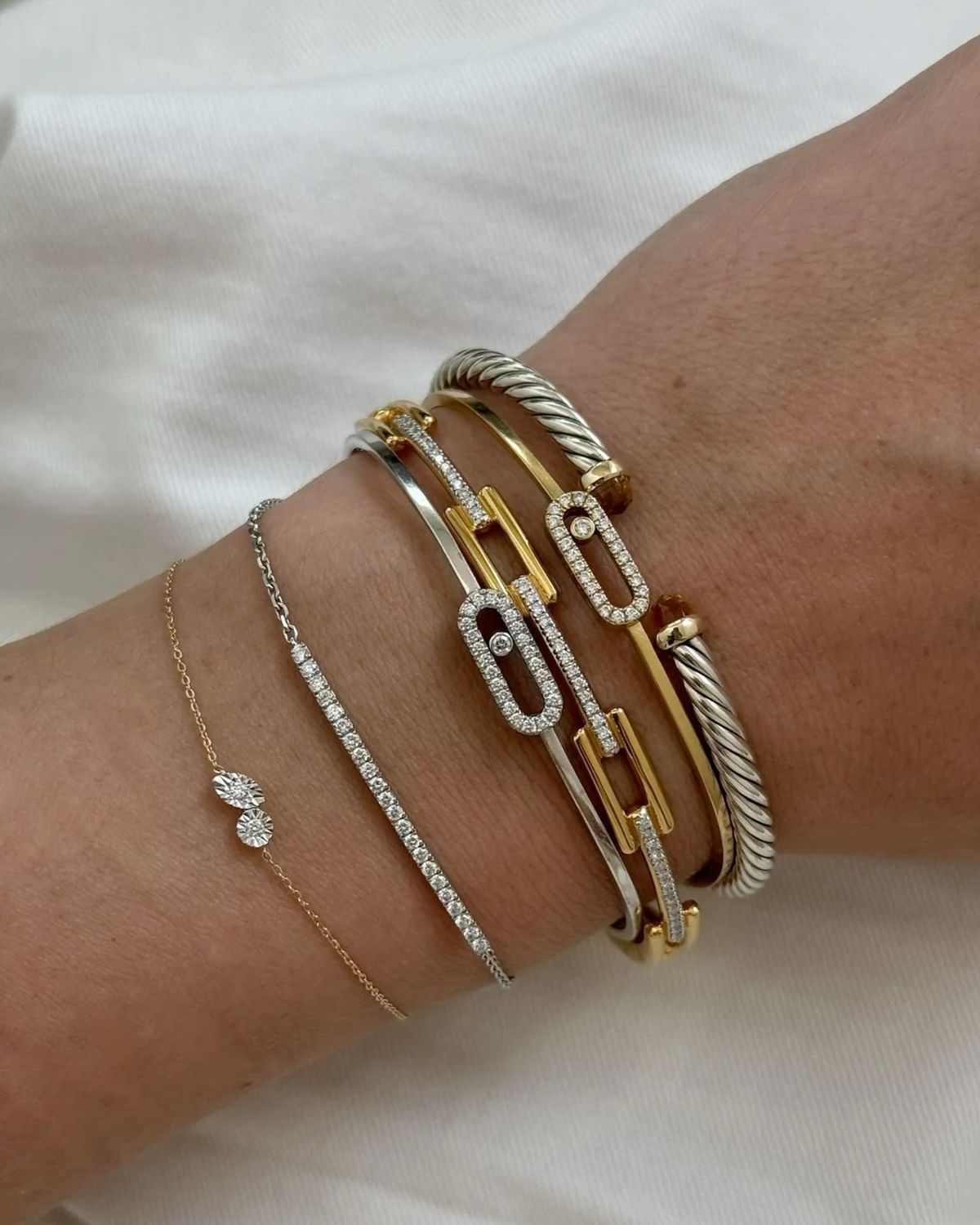
Plain water is not the problem. What damages jewellery is what is dissolved in the water and what happens around it. Solid gold and platinum are essentially inert and can be worn in a shower indefinitely. Sterling silver will tarnish faster with repeated wetting but is not harmed structurally. Plated pieces are where water does real damage, because moisture works into any tiny break in the plating and lifts it from the base metal, and once that starts it spreads. Chlorine is the genuine aggressor. It attacks the alloy metals in gold over repeated exposure, which weakens claws and can eventually cause a setting to fail, so a pool is worse for a stone-set ring than the sea is. Salt water is milder but accelerates tarnish and gets into crevices. Hot water and soap together are the everyday version of this, which is why the shower is fine for a plain band and less fine for a piece with glued components or porous stones.
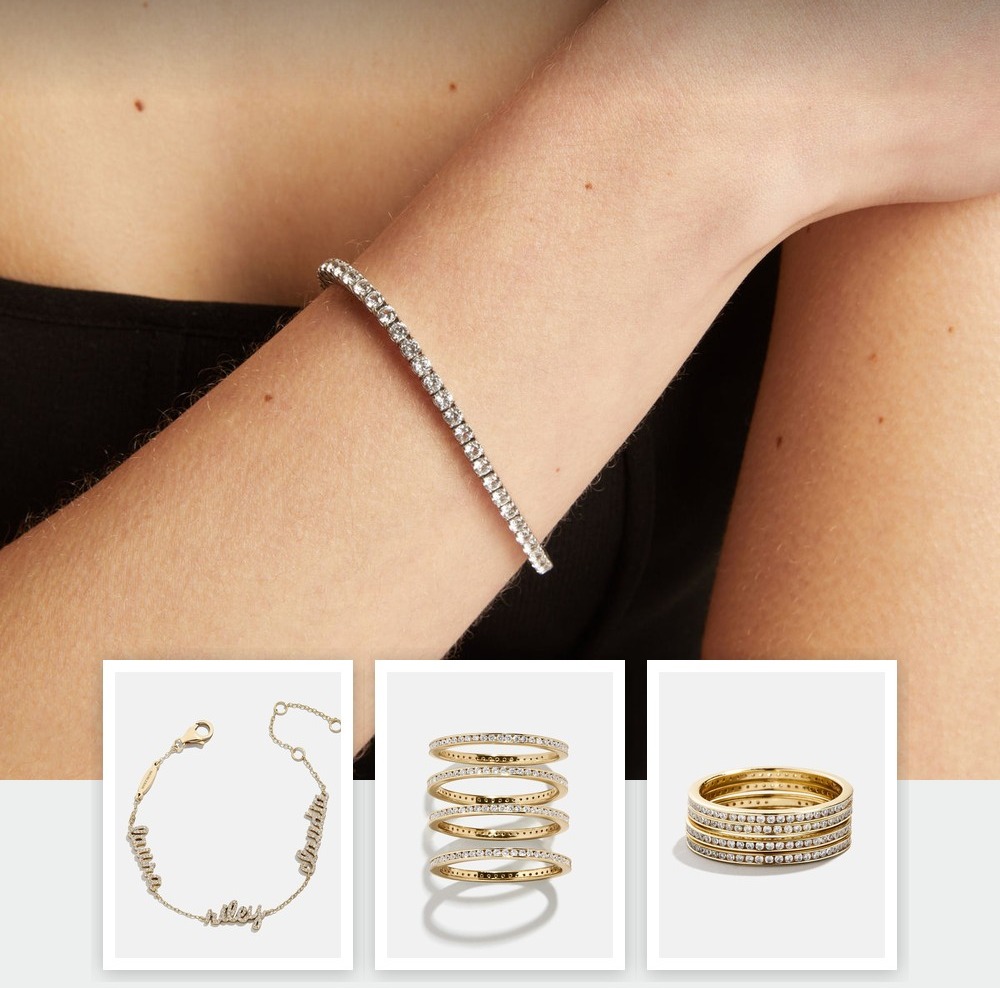
Solid gold and Unbreakable styles

14K Stacked Baguette Diamond Huggie Earrings
Jenny Bird
$1,295

14K Princess Cut Diamond Drop Earrings
Jenny Bird
$995

14K Stacked Baguette Diamond Stud Earrings
Jenny Bird
$995

14K Princess Cut Double Diamond Drop Earrings
Jenny Bird
$950

Unbreakable Lab Grown White Sapphire Tennis Necklace
Aurate New York
$348

14K Gold/Pavé Custom Block Multi Name Bracelet
BaubleBar
$198

Unbreakable Lab Grown White Sapphire Tennis Bracelet
Aurate New York
$198

14K Gold/Pavé Custom Script Multi Name Bracelet
BaubleBar
$198
Stones, settings and what to leave on the side
The stones decide most of it. Diamonds, sapphires and rubies are hard and non-porous and untroubled by water. Pearls, opals, turquoise and coral are porous or organic and should never be worn in water, since they absorb it and can crack, discolour or dull permanently. Emeralds are frequently oil-treated and repeated washing strips the treatment, which makes internal fractures more visible. Setting matters as much as stone. A bezel holds a stone in metal with no gaps and survives daily wetting. Claws create channels where water and soap collect, which is how a stone loosens over years, and anything glued rather than set will eventually let go. Practically, that means a plain solid band, plain hoops, a solid chain and bezel-set hard stones are the pieces that can simply live on you. Anything with claws, anything porous and anything plated is a piece to take off, and the honest advice is to take it off at the door rather than at the poolside.


Our honest take
Solid metal and no claws is the whole formula. If you want jewellery you never remove, buy a plain solid band, plain solid hoops or studs, and a solid chain, and you can stop thinking about it. Skip plated pieces for this role entirely, whatever the marketing says about waterproof coatings, because the coating is the thing that fails. Take rings off before a pool rather than the sea, which is the opposite of what most people assume. Never wear pearls or opals in water. And be aware that hand cream and sunscreen do more visible damage than water does, since they leave a film that dulls a finish and needs a proper clean rather than a rinse. If you take one thing away, check whether anything on the piece is glued, because glue is what actually fails in water.
Shop brands in this edit




Next read
Secondhand Louis Vuitton Damier Ebene Or Damier Azur
Damier Ebene and Damier Azur are the same coated canvas in two colourways, and the secondhand market treats them as two different products.
Read Editorial
Secondhand Silk My Favs
My sixteen selects of scarves below are all ninety centimetre squares, split into two price bands