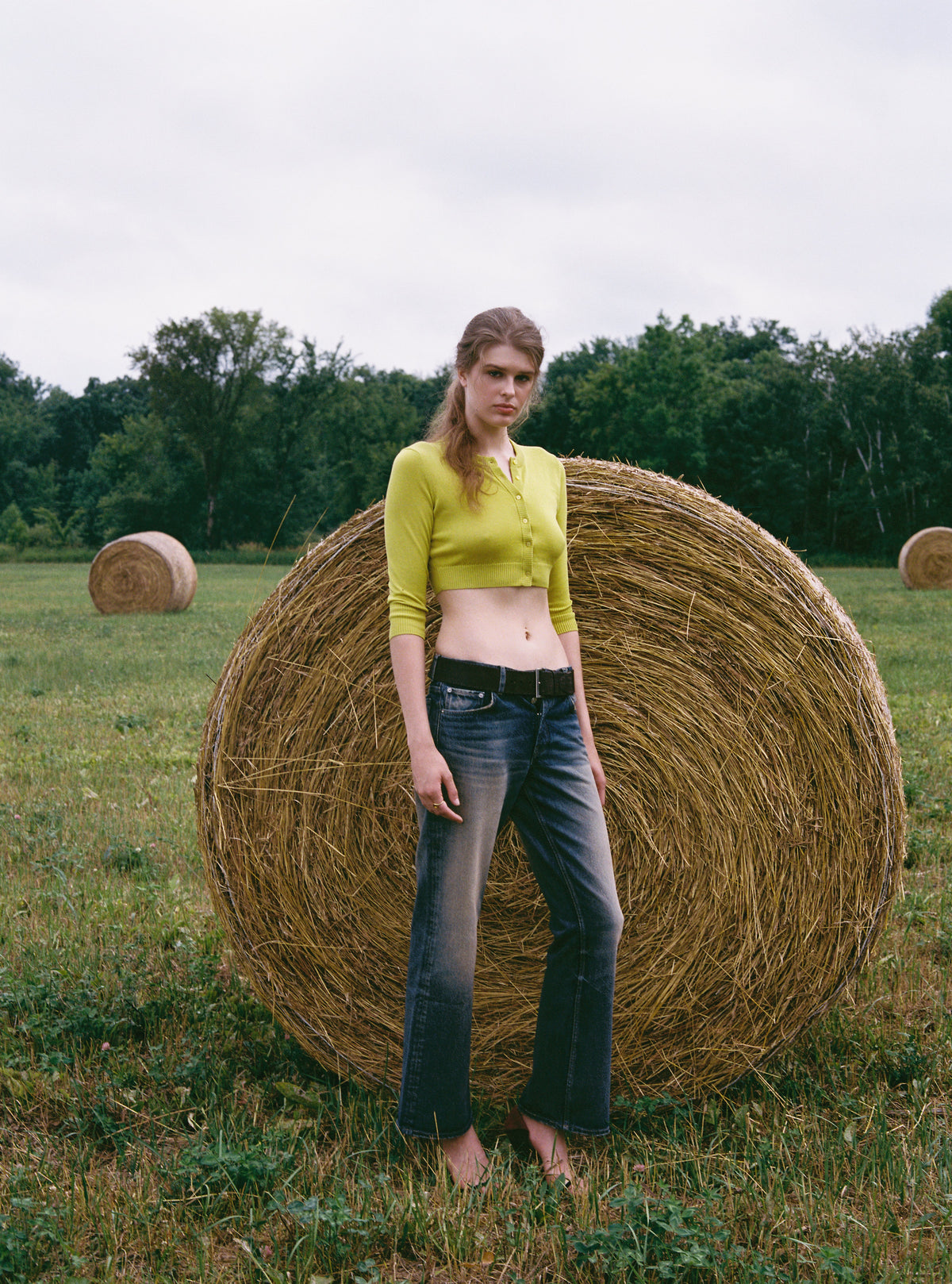
Joseph Ettedgui started by selling Kenzo knitwear from the window of his London hair salon in the early 1970s, then launched his own ready-to-wear label under his name in 1983. Notes on the cashmere, tailoring and trousers that still run on the same instinct for shape over logos.
Joseph

Knitwear Before Anything Else
Joseph Ettedgui did not start as a designer. Casablanca born, he opened a hairdressing salon on King's Road in Chelsea in 1969, and it was there, selling Kenzo knitwear from the shop window soon after, that he found his real business. That early instinct for a considered sweater over a loud statement still defines the label he launched under his own name in 1983. The Cetus Cashair sweater and the Alodina ribbed turtleneck both work the way his first Kenzo pieces did: close through the body, long enough in the sleeve to layer under something else. Polo necks and turtlenecks stand in for a collar without needing one. The point was never luxury for its own sake, it is a sweater for a wet commute and a long lunch without changing anything else about the outfit.

Mila brushed knitted turtleneck sweater
Joseph
$835

Niata silk polo shirt
Joseph
$435

Delfina mohair and silk-blend sweater
Joseph
$665

Ribbed wool-blend polo sweater
Joseph
$465

Cetus Cashair cashmere sweater
Joseph
$485

Alodina ribbed wool turtleneck sweater
Joseph
$815

Lily cashmere-blend sweater
Joseph
$945

Melby cashmere-blend sweater
Joseph
$555
Structure From A Retail Pioneer
Ettedgui built his reputation on structure as much as fabric, and the Norman Foster designed Sloane Street store he opened in 1979 made that literal, all steel and glass at a time when fashion retail still looked cluttered. The outerwear here carries the same instinct. The Fiore belted wool-blend coat gives a soft layer a firmer outline, so a look does not collapse into one texture. The Caspian shearling coat trades polish for warmth without losing that same shape underneath. A belted waist or a wide lapel does most of the work of making an outfit feel finished. Choose the coat by the silhouette already worn on repeat, not by which fabric sounds most expensive.

Fiore belted virgin wool-blend coat
Joseph
$1,605

Laia alpaca and wool-blend coat
Joseph
$2,445

Kyro reversible shearling jacket
Joseph
$3,025

Melda alpaca and wool-blend coat
Joseph
$2,205

Caspian shearling coat
Joseph
$3,725

Manu belted shearling-trimmed leather jacket
Joseph
$4,045

Nico shearling jacket
Joseph
$2,575

Dona wool and cashmere-blend coat
Joseph
$2,305
Trousers For A Working Wardrobe
The trousers span everything from stretch gabardine to suede, which is really a question of how much movement a day needs. The Viola cashmere-blend flared pants read dressed up without a blazer attached, since the flare and the fiber already do that work. Suede shows up straight leg and flared both, a texture that reads more evening than the gabardine pieces beside it. Silk satin, as in the Isaak maxi skirt, shifts the whole selection toward something closer to eveningwear than daywear. Pick the fabric for the room being dressed for, then let the cut follow.

Tafira stretch-gabardine straight-leg pants
Joseph
$555

Duke leather cropped flared pants
Joseph
$1,855

New Coleman paneled suede mid-rise slim-fit pants
Joseph
$1,815

Duke suede flared pants
Joseph
$1,815

Viola cashmere-blend flared pants
Joseph
$815

Coleman stretch-jersey skinny pants
Joseph
$435

Helius paneled suede midi skirt
Joseph
$1,865

Mitae straight-leg pants
Joseph
$885

Paneled stretch-leather leggings
Joseph
$1,735

New Coleman cotton-blend gabardine straight-leg pants
Joseph
$485

Isaak silk-satin maxi-skirt
Joseph
$665

Dijon silk-satin mid-rise straight-leg pants
Joseph
$785

Jnane linen and silk-blend wide-leg pants
Joseph
$815

Paver cotton-gauze tapered pants
Joseph
$595

Folia shirred tiered seersucker maxi skirt
Joseph
$1,045

Paver pleated cotton tapered pants
Joseph
$595

Elba tie-detailed crepe de chine maxi skirt
Joseph
$685

Duke cropped leather flared pants
Joseph
$1,785

Stretch-garbardine leggings
Joseph
$435

Morissey pleated stretch-wool twill straight-leg pants
Joseph
$665
Where Tailoring Turns Soft
This is the part of the range where tailoring gives way to softer fabrics. The Myra woven blazer is the structured anchor, cut to sit over a camisole or a silk tank rather than a shirt. Everything else leans toward drape: gathered linen, silk satin, cotton poplin, textured knit. The Nova gathered linen and silk-blend maxi dress is the clearest example, loose through the body but still shaped at the waist. Pair the blazer with one of the tanks for a look that reads considered rather than thrown together.

Myra woven blazer
Joseph
$1,255

Cloe silk-satin midi dress
Joseph
$785

Cloe silk-satin tank
Joseph
$395

Thea striped cotton-poplin blouse
Joseph
$625

Gaia silk-satin camisole
Joseph
$465

Nova gathered linen and silk-blend maxi dress
Joseph
$1,355

Eris gathered linen and silk-blend blouse
Joseph
$835

Kathe gathered cotton-poplin midi dress
Joseph
$945

Bayt cutout textured-knit tank
Joseph
$315

Tell knitted silk tank
Joseph
$385

Emi off-the-shoulder shirred seersucker top
Joseph
$685

Fassia cotton-poplin blouse
Joseph
$385
Discipline Over Novelty
Joseph is not reinventing quiet dressing, it is executing it with unusual discipline, the same discipline Ettedgui brought to his first minimalist stores decades ago. The strength of this range is proportion: cashmere that shows its own shape, outerwear with enough structure to carry it, trousers and skirts in fabrics that shift one silhouette from day to evening. Nothing here tries to be the loudest piece in a photograph, and that restraint is the whole appeal. Buy for the silhouette already worn on repeat rather than the mood board saved for later, because a wardrobe built one considered texture at a time still needs pieces that talk to each other. Start with a knit and a coat, then let the trousers and blazer follow once it is clear what actually gets reached for.