Kitsch shampoo started as a hair tie business in a Los Angeles apartment and grew into a line of solid bars. Here are eight Kitsch shampoos, plus the conditioner bars and the two accessories that make bars last.
Kitsch Shampoo, From Handmade Hair Ties to Solid Bars
Hair Ties First, Then Bars
In 2010 Cassandra Thurswell was 25, had about $30,000 in savings, and was making hair ties by hand in her Los Angeles apartment. That is how Kitsch started, according to a CNBC profile from earlier this year. For more than a decade the brand sold the things around your hair, like elastics, satin pillowcases, shower caps and towels, before it sold anything that went on it.
When Kitsch did move into hair care, it did it in solid form. Thurswell told Fortune, "We're not the first ones to make solid shampoo and conditioner, but I'd like to think we're the first ones to make true haircare in solid form with the right pH." She has also said the bars were meant to be an upgrade in how hair feels, not only a way to cut plastic bottles, although cutting plastic was a big part of it.
That is what makes Kitsch shampoo worth a look. The bars are small, they last, and they travel well, which anyone who has had a shampoo bottle open in a suitcase will appreciate. In January the brand launched its first liquid shampoos, so there is now a bottle option too.
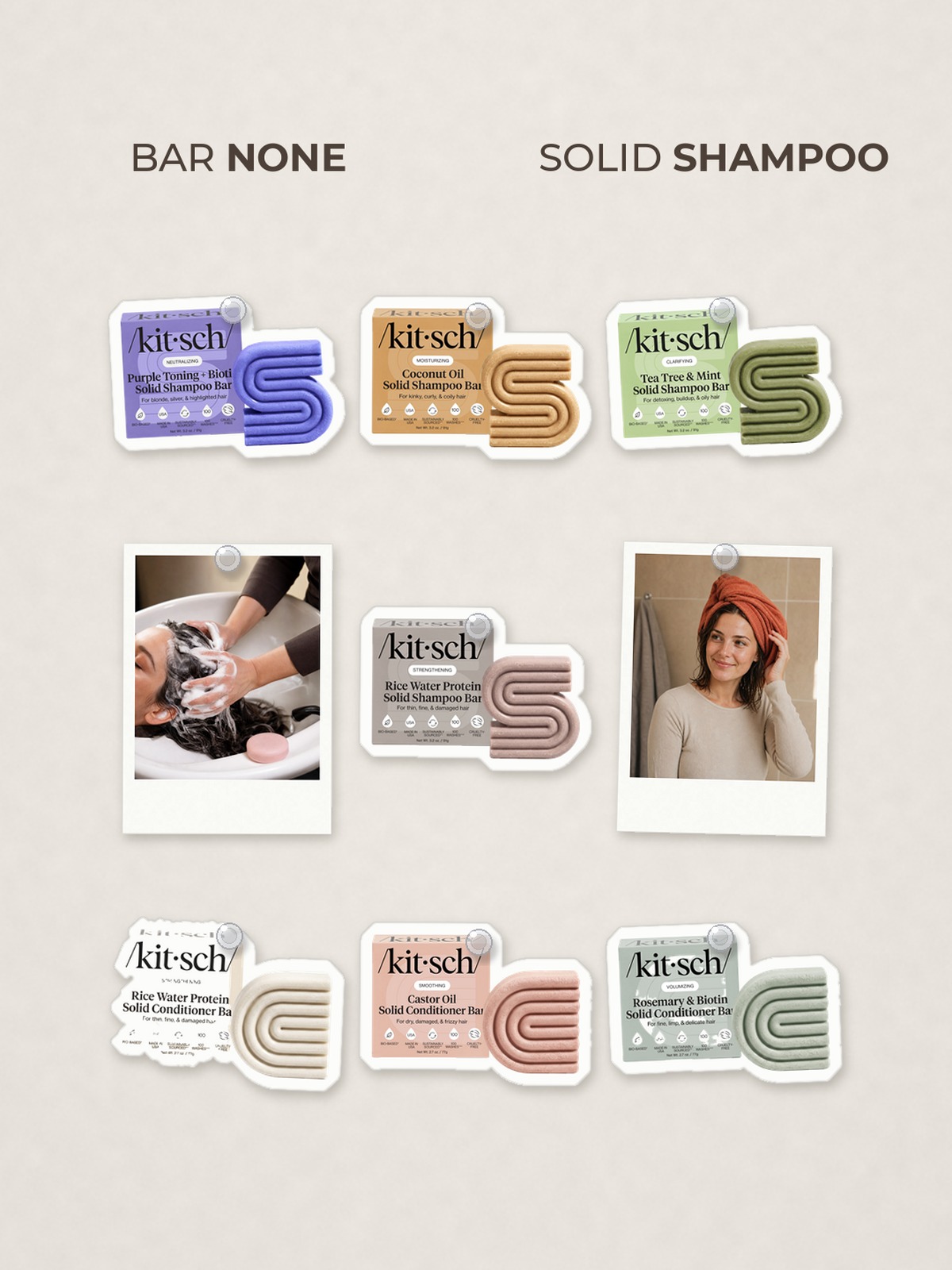
The first grid is seven Kitsch shampoo bars and the new Rice Water liquid shampoo. The second is the matching conditioner bars, a soap dish and a bar bag.
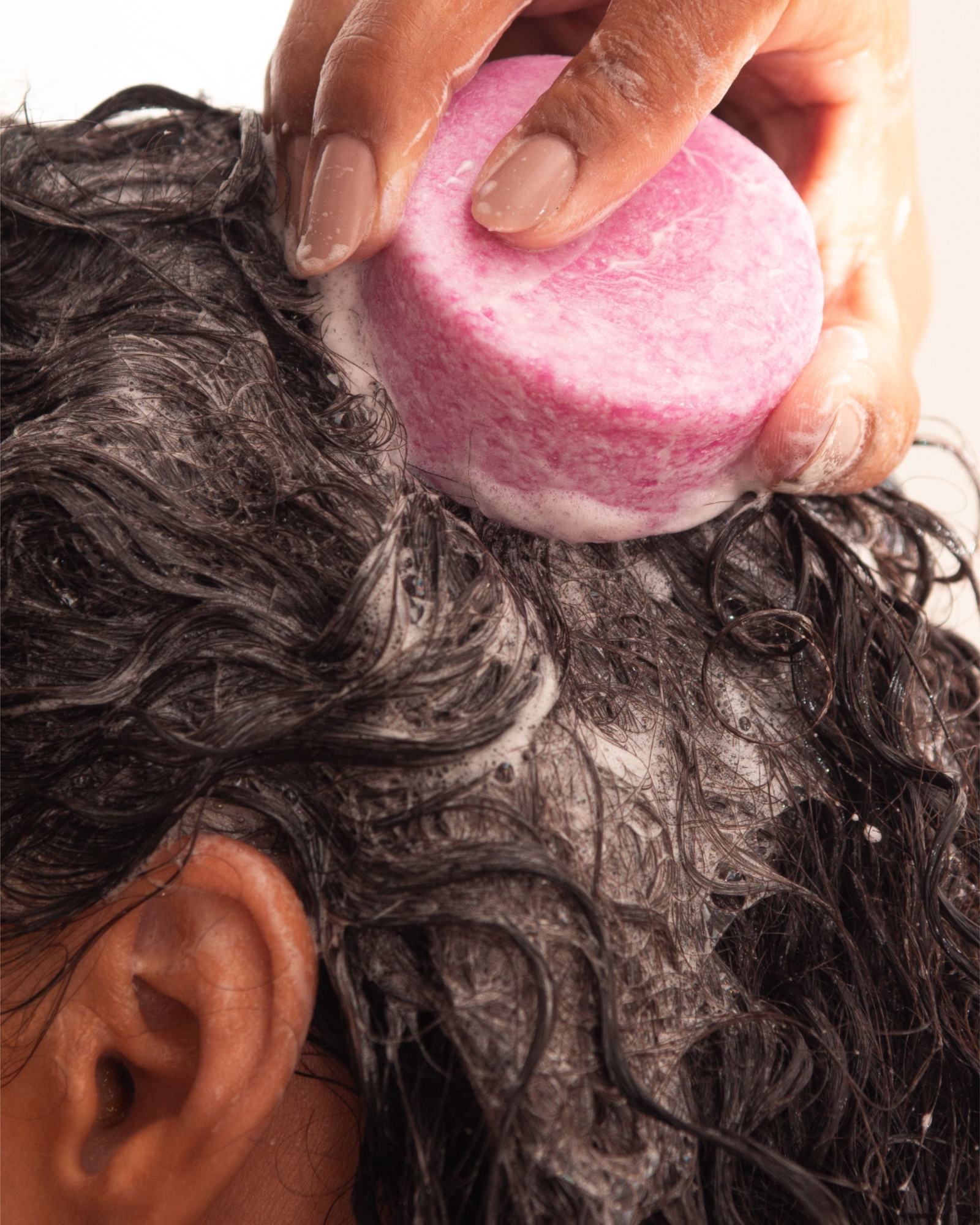
A tip before you start: rub the bar between wet hands or glide it straight over wet roots, then work the lather through. Bars need more water than bottles.
Seven Bars and One Bottle
Each bar is named for the ingredient doing the main work, which makes choosing pretty easy.
The Rice Water Shampoo Bar is the one I would start with for fine or flat hair. It is made with a rice protein the brand says is clinically shown to boost volume and shine in five washes. The Rosemary & Biotin Volumizing bar is the other pick for fine hair, made with an amaranth peptide the brand says thickens strands.
For dry hair there are three. The Coconut Oil bar is made for kinky, curly and coily hair and cleanses without leaving it stripped. The Castor Oil Nourishing bar is for breakage, and the Repairing Argan Oil bar uses a bond technology called Everbond, for damaged hair.
The Purple Toning bar is, according to Kitsch, the first solid purple shampoo bar with biotin, and it is safe for blonde, grey and white hair. The Tea Tree & Mint Clarifying bar has a cooling tingle and an ingredient aimed at visible flakes, which makes it a good once-a-week reset.
Then there is the Rice Water Shampoo in a bottle, one of the brand's first liquid shampoos, with the same rice protein idea as the bar.
What I would skip: leaving any bar sitting in a puddle. A wet bar melts away fast, and that is usually where people decide bars are not for them.
Kitsch shampoo bars and the Rice Water bottle

Rice Water Shampoo Bar for Hair Growth
Kitsch
$16

Purple Toning Shampoo Bar for Color Treated & Grey Hair
Kitsch
$16

Coconut Oil Shampoo Bar for Dry Damaged Hair
Kitsch
$16

Tea Tree & Mint Clarifying Shampoo Bar
Kitsch
$16

Castor Oil Nourishing Shampoo Bar
Kitsch
$16

Rosemary & Biotin Volumizing Shampoo Bar
Kitsch
$16

Repairing Argan Oil Shampoo Bar
Kitsch
$16

Rice Water Shampoo for Hair Growth
Kitsch
$16
Conditioner Bars, a Dish and a Bag
Conditioner bars confuse people more than shampoo bars, so here is how they work. You glide the bar down your wet lengths a few times, as if you were painting on the conditioner, then comb it through with your fingers and rinse.
The Rice Water Conditioner Bar pairs with the rice shampoo for fine hair, and the Rosemary & Biotin Volumizing Conditioner Bar gives fine hair softness without weight. The Castor Oil Nourishing Conditioner Bar and the Coconut Oil Conditioner Bar are for dry, damaged hair, and the coconut one is made for kinky, curly and coily hair. The Purple Toning Conditioner Bar keeps blonde and grey hair cool between washes, and the Tea Tree & Mint Clarifying Conditioner Bar finishes the scalp reset.
The last two items are the ones I would actually buy first. The Terracotta Self-Draining Soap Dish keeps bars dry between showers, and the Shampoo Bar Bag is a mesh pouch that turns a bar into foam fast and hangs to dry. Both make bars last noticeably longer.
A pairing tip: if you travel, cut a bar in half and pack one half in a small tin. It is the easiest liquid-free shampoo for a carry-on.
What I would skip: using a conditioner bar at the roots. Keep it from the ears down, especially on fine hair.
Conditioner bars and bar care

Rice Water Conditioner Bar for Hair Growth
Kitsch
$16

Castor Oil Nourishing Conditioner Bar
Kitsch
$16

Rosemary & Biotin Volumizing Conditioner Bar
Kitsch
$16

Purple Toning Conditioner Bar for Color-Treated & Grey Hair
Kitsch
$16

Tea Tree & Mint Clarifying Conditioner Bar
Kitsch
$16

Coconut Oil Conditioner Bar for Dry Damaged Hair
Kitsch
$16

Terracotta Self-Draining Soap Dish
Kitsch
$16

Shampoo Bar Bag
Kitsch
$5
Give It Two Weeks
I think Kitsch shampoo is best judged after two weeks, not two washes. Hair often feels different while it adjusts from bottled shampoo, and the bars tend to win you over once you have a routine. Pick the bar for your hair, add the matching conditioner bar, and put both on a draining dish. Bars also take up almost no room. It is a small change from a brand that started with hair ties, and it makes a shower shelf look a lot calmer.