La Roche-Posay Mela B3 serum is built around Melasyl, a molecule the brand says took 18 years of research, paired with 10% niacinamide. Here is how I would use it, which other dark spot serums sit well beside it, and the daily sunscreens that keep spots from coming back.
La Roche-Posay Mela B3 Serum and the Dark Spot Routine Around It

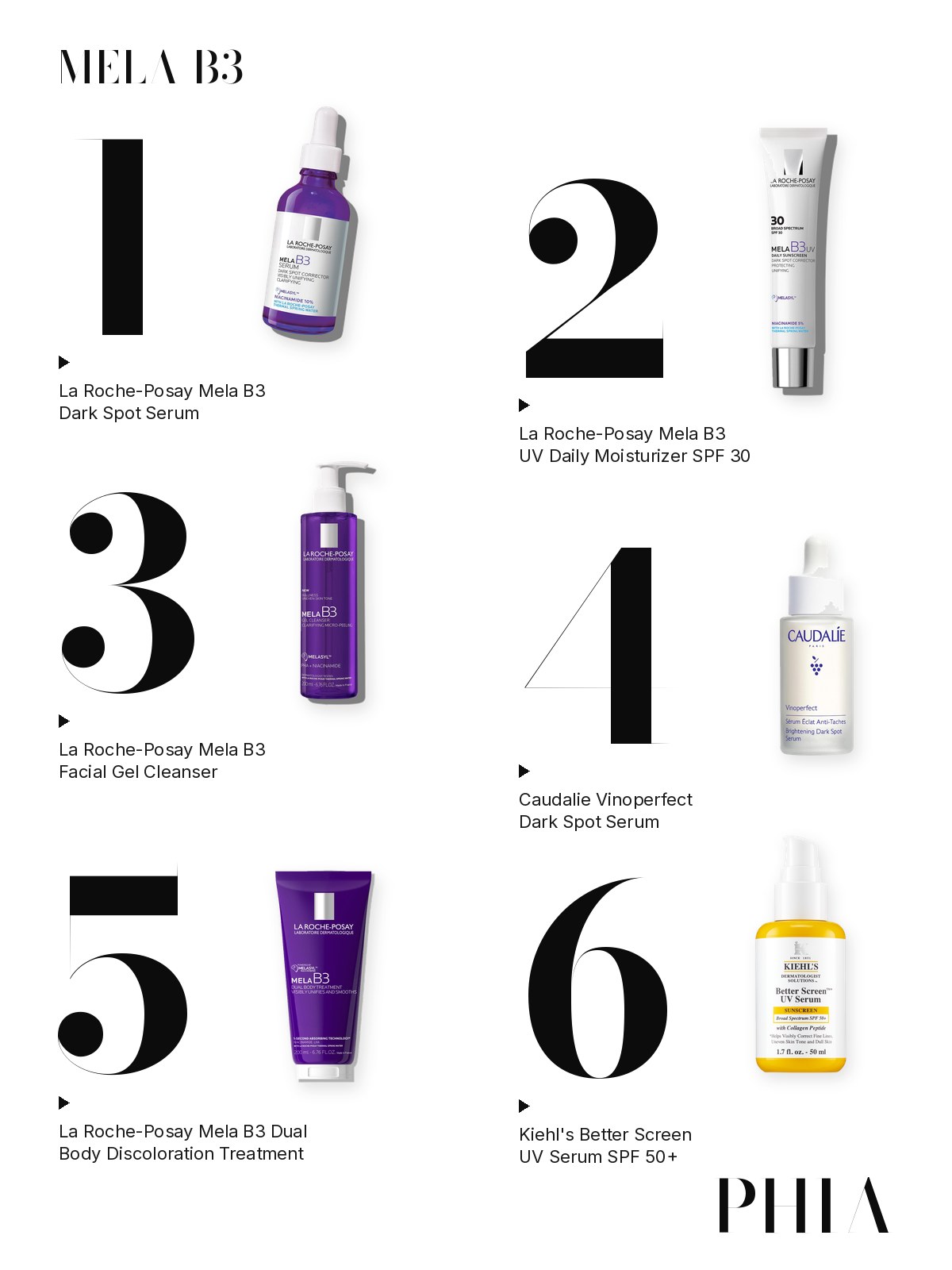
In March 2024, L'Oréal Groupe announced Melasyl, a molecule it described as the result of 18 years of research, and the first place it landed was La Roche-Posay. That story matters here, because the La Roche-Posay Mela B3 serum is the product the whole range is built around. The brand says it pairs Melasyl with 10% niacinamide to visibly reduce sun spots, age spots and post-acne marks, and that it was tested on all skin tones. I like that the claim is specific. It is a serum for marks, not a general glow product.
The rest of the Mela B3 family is easy to read once you know that. The Mela B3 UV Daily Moisturizer SPF 30 is the daytime partner, and the brand says it visibly corrects uneven tone. The Mela B3 Facial Gel Cleanser exfoliates to reveal a more even tone. There is a Dual Body Discoloration Treatment, a Double Dose Discoloration Treatment that the brand says fades age spots by 30 percent, and an Eyes treatment aimed at dark circles with light-reflecting pigments. Beyond the line, the Vitamin C12 Serum has 12% pure vitamin C to even tone, and the Glycolic B5 10% serum pairs glycolic and kojic acid for dark spots and texture.
A simple test: start the serum on its own for two weeks, on clean skin, before you add a second active. If nothing stings, then bring in the rest.
La Roche-Posay Mela B3 and brightening care

Mela B3 Dark Spot Serum With Melasyl + Niacinamide
La Roche-Posay
$44.99

Mela B3 UV Daily Moisturizer SPF 30 With Melasyl + Niacinamide
La Roche-Posay
$34.99

Mela B3 Facial Gel Cleanser With Melasyl + Niacinamide
La Roche-Posay
$26.99

Mela B3 Dual Body Discoloration Treatment with Melasyl
La Roche-Posay
$27.99

Mela B3 Double Dose Discoloration Treatment with Melasyl
La Roche-Posay
$54.99

Mela B3 Eyes Discoloration Treatment with Melasyl
La Roche-Posay
$44.99

Vitamin C12 Serum
La Roche-Posay
$44.99

Glycolic B5 10% Pure Glycolic Acid Serum
La Roche-Posay
$44.99
Other dark spot serums I would try
Not every dark spot serum works the same way, and that is the fun part. Caudalie Vinoperfect uses a patented vine sap viniferine and is sold as a vitamin C alternative. Topicals Faded combines tranexamic acid, niacinamide and azelaic acid in one serum for spots and post-breakout marks. EADEM Milk Marvel is a weightless milky serum with niacinamide and encapsulated vitamin C, and the brand says it fades spots in 14 days. The other EADEM, The Mark, is a small concentrate with 5% tranexamic acid, alpha arbutin and kojic acid that you dab on one spot at a time.
innisfree Rapid Vitamin C adds green tea enzymes that gently exfoliate. The INKEY List Tranexamic Acid Hyperpigmentation Treatment is a nighttime gel. Beauty of Joseon Glow Deep Serum has rice bran water and alpha arbutin for dullness, and The Ordinary Alpha Arbutin 2% + Hyaluronic Acid is the plainest one here, no fragrance, no extras.
Pairing tip: use one brightening serum in the morning and keep any acid or tranexamic formula for night, so you are never stacking everything on the same cheek.
What I would skip: layering three of these at once because the shelf looks pretty. Pick one, give it a month, then decide.
Dark spot serums

Vinoperfect Brightening Dark Spot Serum Vitamin C Alternative
Caudalie
$82
&link=https%3A%2F%2Fwww.sephora.com%2Fproduct%2Ffaded-brightening-clearing-serum-for-dark-spots-discoloration-P515090%3FskuId%3D2842755%26phia%3D2)
Faded Brightening Serum for Dark Spots and Discoloration (UNSCENTED)
Topicals
$28

Milk Marvel Dark Spot Serum with Niacinamide and Vitamin C
EADEM
$68

Rapid Vitamin C Korean Brightening Serum for Dark Spots + Post-Breakout Marks
innisfree
$32

The Mark Advanced Targeted Dark Spot Concentrate with 5% Tranexamic Acid, 1% Alpha Arbutin & 1% Kojic Acid for Hyperpigmentation, Acne Marks & Age Spots
EADEM
$38

Tranexamic Acid Hyperpigmentation Treatment
The INKEY List
$19

Glow Deep Serum with Rice + Alpha-Arbutin for Brightening Dull Skin & Dark Spots
Beauty of Joseon
$17

Alpha Arbutin 2% + Hyaluronic Acid for Hyperpigmentation
The Ordinary
$11.5
Sunscreen is the other half
Dark spots come back with sun, so this grid matters as much as any serum. Kiehl's Better Screen UV Serum is an SPF 50+ sunscreen serum with collagen peptide, and the brand calls it lightweight. Beauty of Joseon Day Dew is a water-resistant SPF 50 the brand says leaves no white cast. innisfree Invisible Barrier is an SPF 47 serum with green tea and hyaluronic acid. Supergoop Unseen Sunscreen is the invisible gel that doubles as a primer, and it is fragrance free. ISDIN Fusion Water Magic is an SPF 40 liquid the brand calls acne-safe.
Two of these speak to spots directly. Paula's Choice 5% Vitamin C Sheer Facial Moisturizer SPF 50 brings vitamin C into the sunscreen step, and Caudalie Vinosun Protect is a mineral SPF 50 with niacinamide and viniferine that the brand says reduces the look of dark spots. Tatcha The Milky Sunscreen is an SPF 50+ with ectoin and Okinawa aloe for a milky, disappearing finish.
How to wear it: two fingers of sunscreen for face and neck, every morning, and again at midday if you are outside.
What I would skip: a sunscreen that feels tacky on your skin, however good it sounds. You will stop wearing it, and then the serum has nothing to protect.
Daily face sunscreens

Better Screen UV Serum SPF 50+ Facial Sunscreen with Collagen Peptide
Kiehl's Since 1851
$45

Day Dew Sunscreen Lightweight Water-Resistant SPF 50
Beauty of Joseon
$18

Invisible Barrier Korean Sunscreen Serum SPF 47 with Jeju Green Tea + Hyaluronic Acid
innisfree
$20

Unseen Sunscreen Invisible Broad Spectrum SPF 50 PA +++
Supergoop!
$38

Fusion Water Magic SPF 40 Non-comedogenic Moisturizing Sunscreen with Hyaluronic Acid and Vitamin E
ISDIN
$38

5% Vitamin C Sheer Facial Moisturizer SPF 50
Paula's Choice
$45

The Milky Sunscreen Broad Spectrum SPF 50+ with Encapsulated Ectoin + Vitamin E
Tatcha
$50

Vinosun Protect Brightening Daily Mineral Face Sunscreen SPF 50 with Niacinamide
Caudalie
$39
Putting the routine together
Here is how I would put it together. Mornings: a gentle cleanser, one brightening serum, then sunscreen, always. Evenings: cleanse, then the stronger dark spot serum, and moisturizer if your skin needs it. If you want the La Roche-Posay Mela B3 serum as your anchor, add the Mela B3 SPF 30 moisturizer or one of the sunscreens above on top, and keep everything else simple. Change one thing at a time so you can tell what is working. Dark spots fade slowly, so take a photo in the same light once a month instead of checking the mirror every day. If your skin is sensitive or you are unsure about an active, a dermatologist can tell you more than a product page can.